This short film pays tribute to professor Saleemul Huq, an environmental and climate change giant who died on 28 October 2023.
Professor Saleemul Huq OBE (1952-2023)
Following the passing of Professor Saleemul Huq, senior fellow of IIED. This book of remembrance is open to all who wish to share their memories of Saleem.
Article, 29 October 2023
Professor Saleemul Huq was an environmental and climate change giant and senior fellow and dear friend of IIED and many IIED colleagues past and present.
The honour was awarded in recognition of his work to build climate expertise in Bangladesh, the UK and across the world.
Saleem was an expert on the links between climate change and sustainable development, particularly from the perspective of vulnerable developing countries. A constant voice for climate action and justice for the global South, he was the lead author of chapters in the third, fourth and fifth assessment reports of the Intergovernmental Panel on Climate Change. Huq’s work with the IPCC spanned 1997 to 2014 and he contributed to reports that led to the panel being awarded the Nobel Peace Prize in 2007.
He set up the climate change research group at IIED in 2000 and was its initial director – continuing as a senior fellow until 2021 – and worked across the institute to ensure climate was at the heart of all that IIED did.
IIED executive director Tom Mitchell said: “I would like to offer my deepest sympathy and condolences to Saleem’s family and loved ones on behalf of IIED. There was no one quite like Saleem and I will remember his unique combination of warmth, generosity of spirit, academic prowess and enormous standing in climate science.
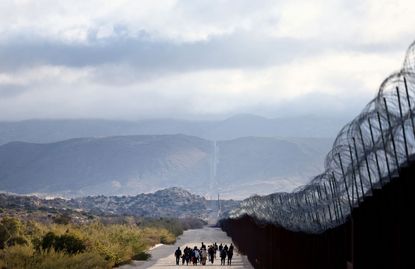
Asylum-seeking migrants walk toward a makeshift camp to await processing by the U.S. Border Patrol after crossing into the United States past a gap in the border barrier Dec. 1, 2023 in Jacumba Hot Springs, CaliforniaPUBLISHED 5 DAYS AGO
Immigration policy has been a hot-button issue for generations, in the United States and around the world. But waves of people fled their homes by land or by sea in 2023, triggering migrant crisis after migrant crisis in multiple regions. Battles over migration policy stoked domestic political feuds and diplomatic clashes.
International Organization for Migration officials told delegates at the United Nations’ COP28 climate conference that more than half of forced “internal displacements,” which totaled 32.6 million people last year, were driven by climate-related events, according to Forbes. Wars, like Russia’s invasion of Ukraine and the conflict between Israel and Hamas, drove more people to seek a better life in a new country, and increased tensions once they got there.
Here are some of the migration routes where the crisis was intense in 2023:
The U.S.-Mexico border
A “growing wave of migration” exploded at the U.S.-Mexico border in 2023, The Wall Street Journal reported recently. It hit especially hard in the small border city of Eagle Pass, Texas, where Mayor Rolando Salinas Jr. declared a state of emergency as the number of migrants entering from Mexico hit 3,000 per day. “We are on pace for this to be the worst of the border crisis yet, and we’ve seen some doozies,” said Rep. Tony Gonzalez (R-Texas), whose district includes Eagle Pass. The migrants included people fleeing turmoil in Venezuela, drug cartel violence in Ecuador and other once-safe countries, gang violence in Haiti, and a broad economic downturn across Latin America blamed on the Covid-19 pandemic.
But the impact wasn’t just felt at the U.S.-Mexico border. New York City Mayor Eric Adams declared a state of emergency as thousands of migrants — more than 146,000 between spring 2022 and November 2023 — arrived from the southern border. Many were sent north by Texas’ Republican governor, Greg Abbott, to cities run by Democrats in a campaign to pressure President Joe Biden to crack down at the border. Adams warned the city was facing a humanitarian crisis that would cost $12 billion over three years, The New York Times reported. City officials said in November their homeless shelters had no room for any more asylum-seekers.
The EU and UK
European nations have faced a huge influx of migrants in recent years. The EU is on track to receive more than one million asylum seekers in 2023, the most since a wave of people in 2015 and 2016, most of them fleeing Syria’s civil war. In Germany — already home to three million refugees, the most since waves of ethnic Germans returned from Eastern Europe after World War II — Chancellor Olaf Scholz is under pressure from overwhelmed states to do something about a more than 70 percent rise in asylum applications in 2023. “I don’t want to use big words,” Scholz told reporters in November, according to Politico, “but I think this is a historic moment.”
Italy and the United Kingdom joined forces in October to lead a European effort to fight “illegal migration.” Italy’s right-wing prime minister, Giorgia Meloni, came to power last year after vowing “to clamp down on unauthorized arrivals from North Africa with harsher immigration laws, restrictions on sea rescue charities, and plans to build migrant reception camps in Albania,” Reuters reported. U.K. Prime Minister Rishi Sunak’s conservative government wants to pay Rwanda to process asylum applications for people arriving illegally in the U.K., which Sunak said would help “break the cycle of tragedy” of people-smuggling using small boats, the BBC reported. The UK also is taking steps to curb legal migration, including a higher minimum salary.
South to South
Migrant waves to Western countries get most of the headlines, but most migration occurs between countries in the same region. “That has put a significant burden on states that border conflict zones, like Uganda, which sits alongside both South Sudan and the Democratic Republic of Congo,” according to the World Politics Review. Fighting between Sudan’s army and paramilitaries has internally displaced three million people, and sent 926,841 people seeking refuge in Egypt, Libya, Chad, the Central African Republic, South Sudan, Ethiopia, and other neighboring countries, according to the United Nations International Organization for Migration.
These crises threaten to only get worse as rising global temperatures fuel mass climate migrations, according to Fortune. Global carbon emissions are rising, and climate scientists say the greenhouse gasses already accumulated in our atmosphere all but guarantee that Earth’s average temperature rise will exceed the tipping point of two degrees Celsius, which it did briefly in November 2023. This, according to Fortune, could make countries like Bolivia or Yemen “vacant states,” as their people leave seeking “fertile” ground, with their leaders unable to give them reason to stay. As Fortune put it: “Solar panels for an Eritrean village won’t keep its boys from fleeing the country’s hopeless economy and austere politics.”
Critics say the deal is still severely lacking when it comes to addressing the climate concerns of developing nations
Asia faces multiple obstacles to its clean energy transition, with countries such as China, India and Indonesia failing to provide clear timelines for ending coal usage
The United Nations Climate Change Conference in Dubai ended on Wednesday with a message signalling the eventual end to the fossil fuel era, but its lack of a clear timeline could leave parts of developing Asia increasingly vulnerable to climate shocks, experts said.
The conference, also known as Cop28, adopted within minutes of its presentation the proposed text for a final climate deal that acknowledges for the first time the need for “transitioning away from fossil fuels” and “accelerating action in this critical decade” to achieve net-zero carbon emissions by 2050.
The text also includes agreements to triple the deployment of renewable energy and double the rate of efficiency gains by the end of the decade.
Since November, more than 1,500 refugees have arrived in Indonesia’s Aceh province, triggering anger among the locals.
A Rohingya woman rests on a beach following her arrival in Blang Raya, Pidie, Aceh province, Indonesia [Reuters]
Published On 10 Dec 202310 Dec 2023
Over 300 Rohingya refugees have arrived on the coast of Aceh province in Indonesia after weeks of drifting across the sea from Bangladesh.
The emaciated survivors – children, women and men – told of running out of supplies and of fearing death at sea as they landed on the unwelcoming shores of the villages of Pidie and Aceh Besar in the pre-dawn hours of Sunday morning.
“The boat was sinking. We had no food or water left,” told Shahidul Islam, a 34-year-old survivor, saying he had left from a refugee camp in Bangladesh.
A group of 180 refugees arrived by boat at 3am local time (20:00 GMT on Saturday) on a beach in the Pidie regency of Aceh province.
The second boat carrying 135 refugees landed in neighbouring Aceh Besar regency hours later after being adrift at sea for more than a month, while a third boat is missing.
UN Steps Up Pressure for Gaza Cease-Fire With Strongest Move Since 1971
United Nations chief Antonio Guterres, in a letter to the Security Council, invoked the use of Article 99 of the Charter of the UN over the war in Gaza. Article 99 states that “the Secretary-General may bring to the attention of the Security Council any matter which in his opinion may threaten the maintenance of international peace and security,” according to Stéphane Dujarric, spokesperson for the UN Secretary-General
UN Secretary-General Antonio Guterres used a rarely exercised power to warn the Security Council on Wednesday of an impending “humanitarian catastrophe” in Gaza and urged its members to demand an immediate humanitarian ceasefire. The UN Security Council – of which most members are favourable to a ceasefire – is likely to meet Friday to discuss the matte
Invoking a rarely used article of the UN Charter, Secretary-General António Guterres on Wednesday called on the Security Council to “press to avert a humanitarian catastrophe” in Gaza and unite in a call for a full humanitarian ceasefire between Israel and Palestinian militants.
In a letter to the Council, Mr. Guterres invoked Article 99, contained in Chapter XV of the Charter.
This says that the UN chief “may bring to attention of the Security Council any matter which in his opinion, may threaten the maintenance of international peace and security.”
In a statement to journalists along with the letter, UN Spokesperson Stéphane Dujarric said that this was the first time Mr. Guterres had felt compelled to invoke Chapter 99, since taking office in 2017.
This International Day of Solidarity comes during one of the darkest chapters in the history of the Palestinian people. I am horrified by the death and destruction that have engulfed the region, which is overwhelmed with pain, anguish and heartache.
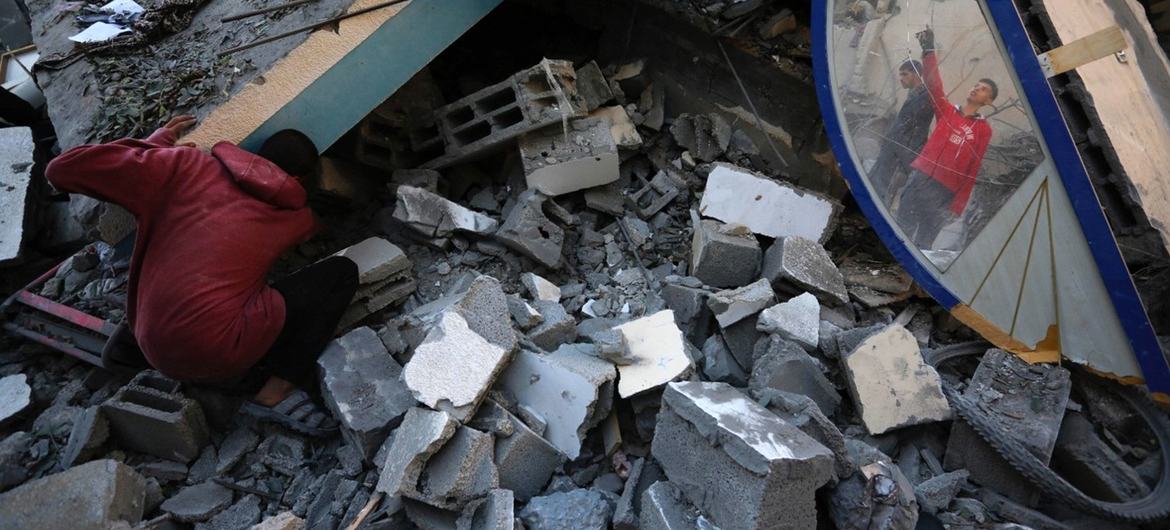
Palestinians in Gaza are suffering a humanitarian catastrophe. Almost 1.7 million people have been forced from their homes – but nowhere is safe. Meanwhile, the situation in the occupied West Bank, including East Jerusalem, risks boiling over.
I express my sincere condolences to the thousands of families who are mourning loved ones. This includes members of our own United Nations family killed in Gaza, representing the largest loss of personnel in the history of our organization.
I have been clear in my condemnation of the terror attacks by Hamas on 7 October. But I have also been clear that they cannot justify the collective punishment of the Palestinian people.
Across the region, the United Nations Relief and Works Agency is an indispensable lifeline, delivering vital support to millions of Palestinian refugees. It is more important than ever that the international community stands with UNRWA as a source of support for the Palestinian people.
Above all, this is a day for reaffirming international solidarity with the Palestinian people and their right to live in peace and dignity.
That must start with a long-term humanitarian ceasefire, unrestricted access for lifesaving aid, the release of all hostages, the protection of civilians and an end to violations of international humanitarian law. We must be united in demanding an end to the occupation and the blockade of Gaza.
It is long past time to move in a determined, irreversible way towards a two-State solution, on the basis of United Nations resolutions and international law, with Israel and Palestine living side-by-side in peace and security with Jerusalem as the capital of both States.
The United Nations will not waver in its commitment to the Palestinian people. Today and every day, let us stand in solidarity with the aspirations of the Palestinian people to achieve their inalienable rights and build a future of peace, justice, security and dignity for all.
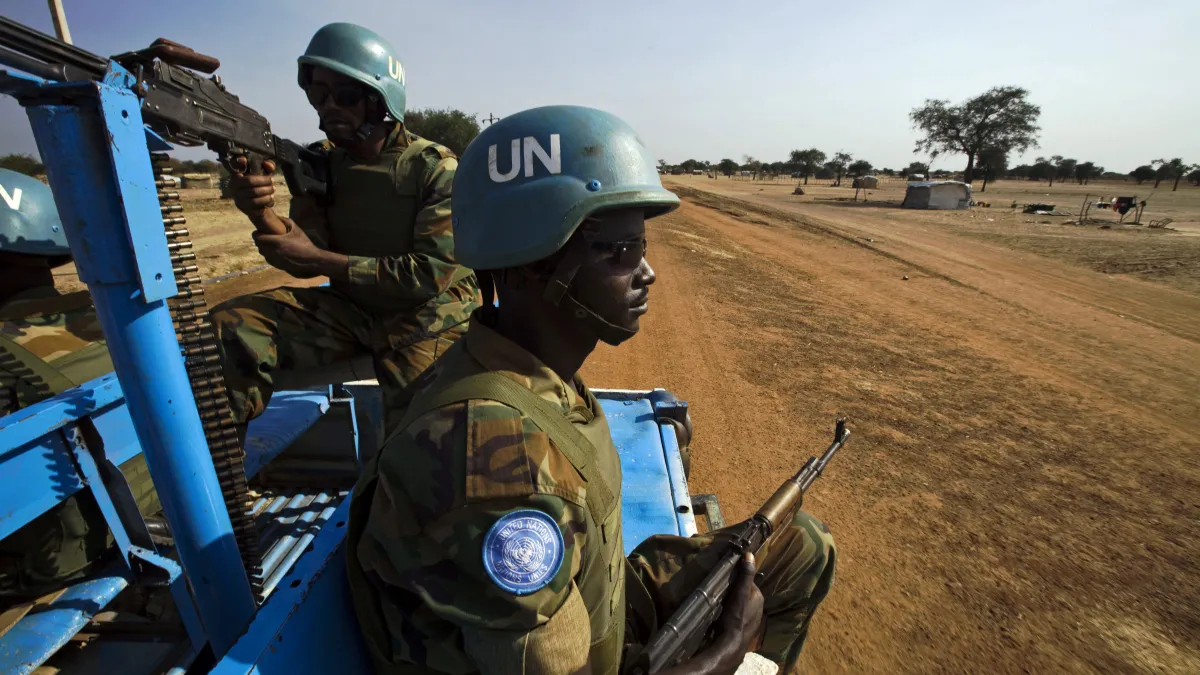
The world lacks a global police force capable of stopping violence in its tracks. However, it does have UN peacekeepers, who can help wind down conflicts and prevent them from recurring.
TS. NGUYỄN VIỆT LÂM Bộ Ngoại giao 21:46, ngày 17-05-2020
TCCS – Tháng 1-2020, Tổng Thư ký Liên hợp quốc An-tô-ni-ô Gu-tơ-rết trong phát biểu về các ưu tiên năm 2020 của Liên hợp quốc đã nhấn mạnh vai trò của phụ nữ trong tham gia, giải quyết các thách thức toàn cầu, bao gồm chương trình phụ nữ, hòa bình và an ninh. Đây cũng là vấn đề lần đầu tiên được Hội đồng Bảo an Liên hợp quốc chính thức thảo luận kể từ năm 2000. Đến nay, vấn đề này đã và đang được triển khai rộng khắp trên toàn cầu, đồng thời được lồng ghép đa dạng vào nhiều chương trình, hoạt động của Liên hợp quốc cũng như các quốc gia thành viên.
Phó Tổng thư ký Liên hợp quốc Amina Mohammed duyệt đội danh dự Lực lượng gìn giữ hòa bình Liên hợp quốc tại sân bay quốc tế Aden Abdulle, Thủ đô Mogadishu (Somalia), ngày 23-10-2019_Ảnh: UN
Có thể nói, vai trò và sự tham gia của phụ nữ trong công tác gìn giữ hòa bình được Liên hợp quốc nhìn nhận kể từ khi tổ chức này ra đời thông qua sự thành lập Ủy ban địa vị phụ nữ vào năm 1946. Nỗ lực bảo đảm bình đẳng giới cũng ngày càng được củng cố với việc Liên hợp quốc thông qua Công ước về xóa bỏ mọi hình thức phân biệt đối xử đối với phụ nữ (năm 1979), Tuyên bố về việc tham gia của phụ nữ trong thúc đẩy hòa bình và hợp tác quốc tế (năm 1982) và tổ chức các Hội nghị quốc tế về phụ nữ tại Thủ đô Bắc Kinh (Trung Quốc, năm 1995). Đặc biệt, năm 2000, Hội đồng Bảo an Liên hợp quốc đã thông qua Nghị quyết số 1325 về chương trình phụ nữ, hòa bình và an ninh, theo đó vấn đề phụ nữ, hòa bình và an ninh trở thành một trong những chương trình thảo luận chính tại Hội đồng Bảo an, sau đó được thúc đẩy tại nhiều cơ chế khác của Liên hợp quốc(1). Đây được coi là văn kiện quan trọng mang tính lịch sử, đánh dấu lần đầu tiên Hội đồng Bảo an ghi nhận ảnh hưởng của xung đột vũ trang đối với phụ nữ và trẻ em gái; thừa nhận những giá trị và đóng góp của phụ nữ đối với gìn giữ hòa bình, giải quyết xung đột và kiến tạo hòa bình. Nghị quyết nhấn mạnh tầm quan trọng của việc tham gia đầy đủ và bình đẳng của phụ nữ là những chủ thể năng động trong vấn đề hòa bình và an ninh.
Hiện nay, chương trình phụ nữ, hòa bình và an ninh được đề cập trong 10 nghị quyết của Hội đồng Bảo an(2) và là chủ đề thảo luận thường niên của Hội đồng Bảo an vào tháng 10 hằng năm theo hình thức thảo luận mở với văn kiện thông qua thường là Nghị quyết Hội đồng Bảo an hoặc Tuyên bố Chủ tịch của Hội đồng Bảo an(3). Một số khía cạnh khác của các chủ đề này cũng được khai thác thảo luận dưới hình thức cuộc họp Arria-formula(4). Chương trình phụ nữ, hòa bình và an ninh bao gồm bốn trụ cột chính: 1- Sự tham gia; 2- Ngăn ngừa xung đột; 3- Bảo vệ; 4- Cứu trợ và phục hồi(5).
Tình hình thực hiện chương trình phụ nữ, hòa bình và an ninh
Từ năm 2000 đến nay, tại Hội đồng Bảo an Liên hợp quốc, chương trình phụ nữ, hòa bình và an ninh được trao đổi, thảo luận xoay quanh các vấn đề: 1- Tăng cường vai trò và sự tham gia của phụ nữ trong tiến trình phòng ngừa, giải quyết xung đột, xây dựng và gìn giữ hòa bình.2- Từ năm 2008, Hội đồng Bảo an đã thông qua các Nghị quyết số 1820, 1888, 1960, 2106, 2467, nhìn nhận các hình thức bạo lực tình dục đối với phụ nữ được coi là tội ác chiến tranh, tội ác chống lại loài người; các quốc gia có vai trò và trách nhiệm giải quyết nguồn gốc bạo lực đối với phụ nữ và trẻ em gái; nhấn mạnh vai trò của Hội đồng Bảo an trong tăng cường giám sát việc thực thi của các bên tham gia xung đột. 3- Thiết lập và tăng cường sử dụng các biện pháp đánh giá, theo dõi việc thực hiện các nội dung của chương trình phụ nữ, hòa bình và an ninh. 4- Đào tạo, tăng cường năng lực cho lực lượng phòng ngừa và giải quyết tình trạng bạo lực tình dục trong xung đột vũ trang; kêu gọi hình thành các nhóm chuyên gia tại nơi xảy ra bạo lực tình dục; tăng cường ngân sách dành cho đào tạo, phân tích và các chương trình giới. 5- Vai trò của phụ nữ trong các hoạt động gìn giữ hòa bình và phòng ngừa bạo lực tình dục trong xung đột vũ trang. 6- Vai trò của các tổ chức khu vực, tiểu khu vực trong củng cố chính sách, tăng cường vai trò, sự tham gia của phụ nữ và trẻ em gái trong tiến trình hướng tới bảo đảm lợi ích của phụ nữ và trẻ em gái bị ảnh hưởng bởi bạo lực tình dục trong xung đột vũ trang. 7- Vai trò của các tổ chức chính trị – xã hội (CSO) trong thúc đẩy sự tham dự của phụ nữ giải quyết xung đột, giải quyết bạo lực tình dục, xây dựng hòa bình…
Click here for the PDF version Puede encontrar aquí los números de “Noticias de Acción de las ONG” en español. Priere de trouver ci-joint les bulletins “NGO Action News” en français. للحصول على الترجمة العربية لأنباء عن أعمال المنظمات غير الحكومية،يرجى زيارة هنا
Middle East On 25 October, the Institute for Palestine Studies published an article titled “Real Names of Stolen Villages, Illegal Settlements of the Gaza Perimeter,” noting the violent history of the farming communities surrounding Gaza.
On 25 October, the BADIL Resource Center for Palestinian Residency and Refugee Rights published an open letter to the UN General Assembly and its member states, calling on them to enforce an unconditional ceasefire, provide unrestricted and unconditional humanitarian aid, prevent additional displacement, and end the blockade on the Gaza Strip.
On 24 October, Addameer Prisoner Support and Human Rights Association shared a letter sent by the Palestinian Human Rights Organizations Council to the International Committee of the Red Cross (ICRC), expressing alarm over the recent deaths of two Palestinian prisoners in Israeli detention, and calling on the ICRC to ensure the safety and well-being of Palestinian prisoners and detainees.
The United Nations is a reflection of the world as it is – and an aspiration of the world we know it can be.
It is our responsibility to help build that world of peace, sustainable development and human rights for all.
I know we can do it. The Charter of the United Nations – which entered into force 78 years ago today – points the way.
Above all, it is rooted in a spirit of determination to heal divisions, repair relations, and build peace.
To expand opportunities, and leave no one behind.
To ensure justice, equality and empowerment for women and girls.
To provide life-saving relief to those in need.
And to be flexible enough to address challenges that did not even exist when the UN was born – from the existential climate crisis to the perils and promise of artificial intelligence.
The United Nations is guided by timeless values and principles, but it must never be frozen in time. That is why we must always keep strengthening ways of working and applying a 21st century lens to all we do.
On this United Nations Day, let us commit with hope and determination to build the better world of our aspirations.
Let us commit to a future that lives up to the name of our indispensable organization.
We are a divided world. We can and must be united nations.
Following the request from the Minister of the Interior Gerald Darmanin asking the prefects in France to ban all pro-Palestinian demonstrations, Jean-Claude Samouiller, President of Amnesty International France said:
“The ban on all demonstrations in support of the Palestinians in France constitutes a serious and disproportionate attack on the right to demonstrate.
Faced with the atrocities committed by Hamas in southern Israel, and also the blockade and very heavy bombings in the Gaza Strip, it is important that civil society actors can mobilize peacefully and publicly, in particular those calling on those engaged in the conflict to respect the rights of civilian populations. This is why there cannot be a systematic ban on the right to peacefully demonstrate support for the rights of the Palestinian populations.
Under international law, a ban on demonstrations can only be considered as a last resort. Authorities should always seek to protect and facilitate the rights to freedom of expression and peaceful assembly in the first place.Jean-Claude Samouiller, President of Amnesty International France
A ban can only be legal if it is motivated by a specific threat and if it is demonstrated that no other less restrictive measure could guarantee public order.”
World map showing country classifications per the IMF[1] and the UN[2] (last updated April 2023). The countries in light blue form the “Global North”, the rest are mostly categorized as belonging to the “Global South”, with few exceptions under some listings.
The concept of Global North and Global South (or North–South divide in a global context) is used to describe a grouping of countries along the lines of socio-economic and political characteristics. The Global South is a term that broadly comprises countries in the regions of Africa, Latin America and the Caribbean, Asia (without Israel, Japan, and South Korea), and Oceania (without Australia and New Zealand), according to the United Nations Conference on Trade and Development (UNCTAD).[3][4][a] Most of the countries in the Global South are characterized by low income, dense population, poor infrastructure, and often political or cultural marginalization.[5] The Global South forms one side of the divide; on the other is the Global North (broadly comprising Northern America and Europe, Israel, Japan and South Korea, as well as Australia and New Zealand, according to the UNCTAD).[3][4][a] As such, the terms Global North and Global South do not refer to the cardinal directions of north and south as many of the Global South countries are geographically located in the Northern Hemisphere.
The UN and the multilateral system are in crisis – what the Global South must do
Monica Herz Full Professor, Institute of International Relations (PUC-Rio), Associate Dean for Research of the Social Science Center (PUC-Rio), Senior Researcher, BRICS Policy Center, Pontifícia Universidade Católica do Rio de Janeiro (PUC-Rio)
Giancarlo Summa Co-fundador com Mônica Herz do projeto MUDRAL (Multilateralismo e Direita Radical na América Latina), Pesquisador no Centre d’Études Sociologiques et Politiques Raymond Aron (CESPRA), École des Hautes Études en Sciences Sociales (EHESS)
Addressing the UN General Assembly on Wednesday, leaders from African nations voiced their commitment to achieving sustainable development and called for a more equitable and prosperous world.
A recurring theme in speeches delivered by the Presidents of Seychelles, Namibia, Ghana, Angola, Sierra Leone and Liberia was the urgent need to rebuild trust and rekindle global solidarity in the face of complex changes.
“Cho đến nay, mặc dù chính phủ đã đạt được một số thành tựu phát triển nhất định, sự bất bình đẳng và phân biệt đối xử vẫn là những rào cản lớn đối với việc thực hiện các quyền của NKT. Báo cáo này cho thấy kỳ thị và phân biệt đối xử từ phía các cơ quan Nhà nước, xã hội, gia đình và của chính NKT ảnh hưởng đến tất cả các khía cạnh của cuộc sống của NKT. Theo đó, các quy định về pháp luật về kỳ thị, phân biệt đối xử cũng cần được tăng cường, bởi hiện nay các quy định của pháp luật mới dừng ở việc đưa ra khái niệm về phân biệt đối xử trực tiếp mà chưa đề cập đến các điều chỉnh hợp lý, hầu như chưa nhắc đến việc phân biệt đối xử gián tiếp, phân biệt đối xử của tổ chức, và thiếu các chế tài và cơ chế giải quyết khiếu nại hiệu quả.”
Báo cáo Phân tích Bối cảnh thực thi Quyền của NKT ở Việt Nam cho thấy Việt Nam đang sẵn sàng điều phối các nguồn lực đang tăng lên, quá trình số hóa, cũng như khả năng chuyên môn của tất cả các bên liên quan, để hiện thực hóa tầm nhìn với các tham vọng lớn về NKT. Chính phủ Việt Nam cam kết rõ ràng về công tác hòa nhập khuyết tật trong nỗ lực đạt được Chương trình nghị sự 2030 và các MTPTBV. Khung quốc gia bước đầu đã được đưa ra và đang trong quá trình hoàn thiện. Nhiều cơ hội trong các lĩnh vực cải cách pháp luật, nâng cao nhận thức, nâng cao năng lực, lập kế hoạch và thực hiện để khắc phục những khó khăn hiện có. Trọng tâm chung được đặt vào công tác điều phối, tăng cường tính minh bạch và trách nhiệm giải trình. Điều này đồng nghĩa với việc các bên liên quan bao gồm đại diện chính phủ ở tất cả các cấp, NKT, các tổ chức của và vì NKT, khối tư nhân, các tổ chức của Liên hợp quốc và các đối tác phát triển khác sẽ có vị thế phù hợp trong hợp tác và cải thiện cuộc sống của tất cả các NKT trên toàn quốc.
Báo cáo phân tích bối cảnh này được các tổ chức của Liên hợp quốc (LHQ) tại Việt Nam thực hiện dưới sự điều phối của Chương trình Phát triển Liên hợp quốc (UNDP) và sự đóng góp kỹ thuật của Quỹ Dân số Liên hợp quốc (UNFPA) và Quỹ Nhi đồng Liên hợp quốc (UNICEF) trong mối quan hệ đối tác chặt chẽ với các cơ quan chính phủ và các tổ chức của và vì NKT. Báo cáo cho thấy bề rộng của các vấn đề cần được giải quyết để đảm bảo NKT không bị bỏ lại phía sau và tiềm năng của họ được hỗ trợ để phát huy tối đa. Dựa trên nghiên cứu chuyên sâu và các hội thảo tham vấn, những khuyến nghị của báo cáo này sẽ nêu bật các lĩnh vực cần nghiên cứu thêm và các bước thực thi trong tương lai.






 CVD
CVD 