
When we rise in the morning and listen to the radio or read the newspaper, we are confronted with the same sad news: violence, crime, wars, and disasters. I cannot recall a single day without a report of something terrible happening somewhere. Even in these modern times it is clear that one’s precious life is not safe. No former generation has had to experience so much bad news as we face today; this constant awareness of fear and tension should make any sensitive and compassionate person question seriously the progress of our modern world.
It is ironic that the more serious problems emanate from the more industrially advanced societies. Science and technology have worked wonders in many fields, but the basic human problems remain. There is unprecedented literacy, yet this universal education does not seem to have fostered goodness, but only mental restlessness and discontent instead. There is no doubt about the increase in our material progress and technology, but somehow this is not sufficient as we have not yet succeeded in bringing about peace and happiness or in overcoming suffering.
We can only conclude that there must be something seriously wrong with our progress and development, and if we do not check it in time there could be disastrous consequences for the future of humanity. I am not at all against science and technology – they have contributed immensely to the overall experience of humankind; to our material comfort and well-being and to our greater understanding of the world we live in. But if we give too much emphasis to science and technology we are in danger of losing touch with those aspects of human knowledge and understanding that aspire towards honesty and altruism.
Science and technology, though capable of creating immeasurable material comfort, cannot replace the age-old spiritual and humanitarian values that have largely shaped world civilization, in all its national forms, as we know it today. No one can deny the unprecedented material benefit of science and technology, but our basic human problems remain; we are still faced with the same, if not more, suffering, fear, and tension. Thus it is only logical to try to strike a balance between material developments on the one hand and the development of spiritual, human values on the other. In order to bring about this great adjustment, we need to revive our humanitarian values.
I am sure that many people share my concern about the present worldwide moral crisis and will join in my appeal to all humanitarians and religious practitioners who also share this concern to help make our societies more compassionate, just, and equitable. I do not speak as a Buddhist or even as a Tibetan. Nor do I speak as an expert on international politics (though I unavoidably comment on these matters). Rather, I speak simply as a human being, as an upholder of the humanitarian values that are the bedrock not only of Mahayana Buddhism but of all the great world religions. From this perspective I share with you my personal outlook – that:
Chuyên mục: Phát triển bền vững – Sustainable development
Lãng phí thực phẩm – bài toán khó của phát triển bền vững tại Việt Nam
Hồ Nguyên Thảo
Thứ Ba, 6/09/2022
Kinh tế Sài Gòn Online – Việt Nam hiện đứng thứ hai trong khu vực châu Á – Thái Bình Dương về nạn lãng phí thực phẩm, với hơn 8 triệu tấn thực phẩm bị thất thoát hay vất bỏ mỗi năm khi vẫn còn ăn được hoặc tận dụng được, gây tổn hại khoảng 3,9 tỉ đô la Mỹ mỗi năm, gần 2% GDP hiện nay. Tỷ lệ lãng phí thực phẩm của Việt Nam hiện cao gấp hai lần các nền kinh tế tiên tiến và giàu có trên thế giới.
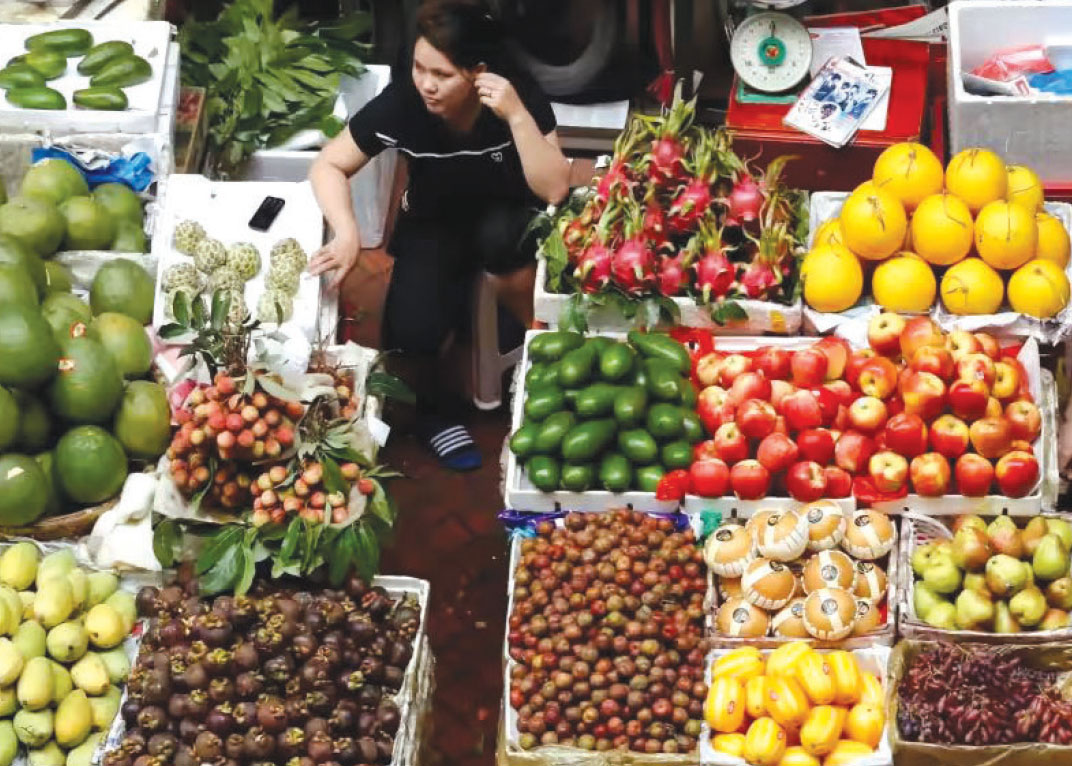
Chống lãng phí thực phẩm đòi hỏi sự tham gia trên nhiều lĩnh vực của người dân, doanh nghiệp và nhà nước. Và đây cũng là một mục tiêu phát triển bền vững mà Liên hiệp quốc đề ra.
Tiếp tục đọc “Lãng phí thực phẩm – bài toán khó của phát triển bền vững tại Việt Nam”
Sapa: thấy dự án, không thấy giang sơn
NĐT – 03:34 | Thứ bảy, 24/02/2018 0
Anh lái xe nghêu ngao hát: “Dù có đi bốn phương trời, mà vẫn ngỡ đang ở Nhổn…” lúc chúng tôi chạy tránh thị trấn Sapa để vượt đèo Ô Quy Hồ sang Bình Lư đi Sìn Hồ (Lai Châu). Không chỉ chúng tôi, những người từng yêu Sapa nay đều hầu như không còn ai muốn chui vào “đống bê tông lổn nhổn” ấy nữa, dù nó ngay trước mặt.
Nếu lấy mốc 1897 chính quyền Pháp mở cuộc điều tra dân số đầu tiên về các tộc người vùng núi cao, từ đó Sapa được phát hiện, tính đến nay tròn 120 năm. Tôi lên đó đầu những năm 90 thế kỷ trước, rồi còn vài lần nữa, nhưng không sao nhớ nổi chuyện mỗi lần, hơn 30 năm rồi còn gì.

Sapa có ba giá trị lớn: khí hậu, cảnh quan và cuộc sống người thiểu số. Ảnh: Thanh Vy
ILO: Chỉ 6% lao động giúp việc gia đình được hưởng an sinh xã hội toàn diện
ILO – Lao động giúp việc gia đình đóng góp quan trọng cho xã hội, cung cấp dịch vụ chăm sóc thiết yếu cho gia đình và hộ gia đình, nhưng họ vẫn chưa được đánh giá đúng mức.
Ngày 16 tháng 6 năm 2022

GENEVA ‒ Theo một báo cáo mới của Tổ chức Lao động Quốc tế (ILO), chỉ có 6% lao động giúp việc gia đình trên toàn thế giới được tiếp cận an sinh xã hội toàn diện.
Điều này đồng nghĩa với việc hơn 94% trong số họ không được tiếp cận đầy đủ các cơ chế bảo vệ, bao gồm chế độ liên quan đến chăm sóc y tế, ốm đau, thất nghiệp, tuổi già, tai nạn nghề nghiệp, gia đình, thai sản, thương tật và tử tuất.
Tiếp tục đọc “ILO: Chỉ 6% lao động giúp việc gia đình được hưởng an sinh xã hội toàn diện”
Global Climate Agreements: Successes and Failures
International efforts, such as the Paris Agreement, aim to reduce greenhouse gas emissions. But experts say countries aren’t doing enough to limit dangerous global warming.
Summary
- Countries have debated how to combat climate change since the early 1990s. These negotiations have produced several important accords, including the Kyoto Protocol and the Paris Agreement.
- Governments generally agree on the science behind climate change but have diverged on who is most responsible and how to set emissions-reduction goals.
- Experts say the Paris Agreement is not enough to prevent the global average temperature from rising 1.5°C. When that happens, the world will suffer devastating consequences, such as heat waves and floods.
What are the most important climate agreements?
Is there a consensus on the science?
Why is the 1.5°C goal so critical?Which countries are responsible?
Are the commitments made under the Paris Agreement enough?
What are the alternatives to the Paris Agreement?
Introduction
Over the last several decades, governments have collectively pledged to slow global warming. But despite intensified diplomacy, the world could soon face devastating consequences of climate change.
Through the Kyoto Protocol and the Paris Agreement, countries agreed to reduce greenhouse gas emissions, but the amount of carbon dioxide in the atmosphere keeps rising, heating the Earth at an alarming rate. Scientists warn that if this warming continues unabated, it could bring environmental catastrophe to much of the world, including staggering sea-level rise, record-breaking droughts and floods, and widespread species loss.
Dozens of countries made new commitments during a UN climate conference known as COP26 in November 2021. Still, experts, activists, and citizens remain concerned that these pledges are not ambitious enough.
What are the most important international agreements on climate change?
Tiếp tục đọc “Global Climate Agreements: Successes and Failures”
For 110 years, climate change has been in the news. Are we finally ready to listen?
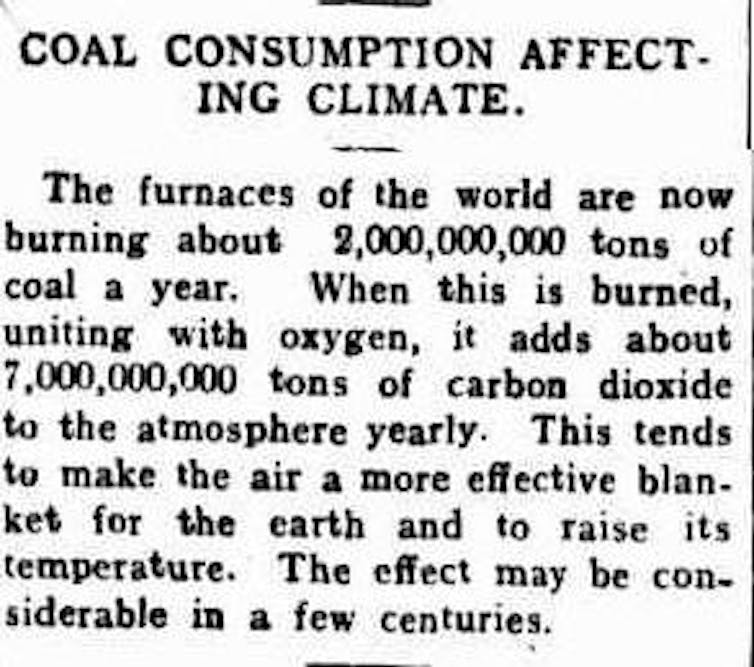
On August 14 1912, a small New Zealand newspaper published a short article announcing global coal usage was affecting our planet’s temperature.
This piece from 110 years ago is now famous, shared across the internet this time every year as one of the first pieces of climate science in the media (even though it was actually a reprint of a piece published in a New South Wales mining journal a month earlier).
So how did it come about? And why has it taken so long for the warnings in the article to be heard – and acted on?
The fundamental science has been understood for a long time
American scientist and women’s rights campaigner Eunice Foote is now widely credited as being the first person to demonstrate the greenhouse effect back in 1856, several years before United Kingdom researcher John Tyndall published similar results.
Her rudimentary experiments showed carbon dioxide and water vapour can absorb heat, which, scaled up, can affect the temperature of the earth. We’ve therefore known about the relationship between greenhouse gases and Earth’s temperature for at least 150 years.
Tiếp tục đọc “For 110 years, climate change has been in the news. Are we finally ready to listen?”
Arctic is warming nearly four times faster than the rest of the world
The Earth is approximately 1.1℃ warmer than it was at the start of the industrial revolution. That warming has not been uniform, with some regions warming at a far greater pace. One such region is the Arctic.
A new study shows that the Arctic has warmed nearly four times faster than the rest of the world over the past 43 years. This means the Arctic is on average around 3℃ warmer than it was in 1980.
This is alarming, because the Arctic contains sensitive and delicately balanced climate components that, if pushed too hard, will respond with global consequences.
Why is the Arctic warming so much faster?
A large part of the explanation relates to sea ice. This is a thin layer (typically one metre to five metres thick) of sea water that freezes in winter and partially melts in the summer.
The sea ice is covered in a bright layer of snow which reflects around 85% of incoming solar radiation back out to space. The opposite occurs in the open ocean. As the darkest natural surface on the planet, the ocean absorbs 90% of solar radiation.
When covered with sea ice, the Arctic Ocean acts like a large reflective blanket, reducing the absorption of solar radiation. As the sea ice melts, absorption rates increase, resulting in a positive feedback loop where the rapid pace of ocean warming further amplifies sea ice melt, contributing to even faster ocean warming.
Tiếp tục đọc “Arctic is warming nearly four times faster than the rest of the world“
We need to get serious about the renewable energy revolution—by including nuclear power
By Michael Edesess | May 5, 2022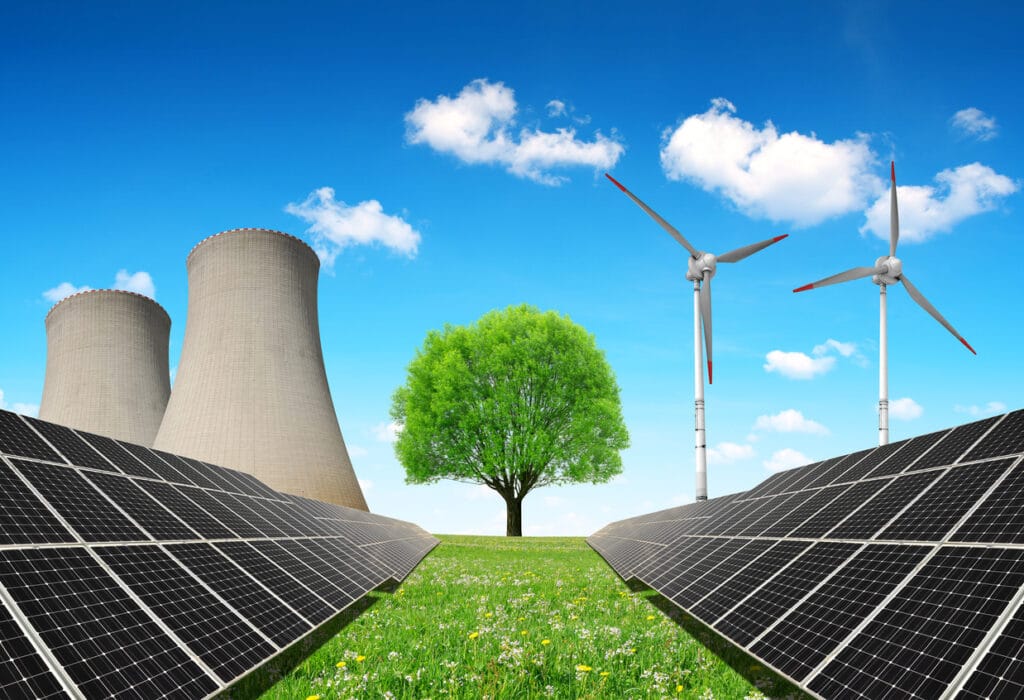
One of my favorite quotes is from Sherlock Holmes: “Once you have eliminated the impossible, whatever remains, however implausible, must be the truth.”[1] This motto implicitly guides the ambitious plan to decarbonize all energy envisioned by most renewable energy enthusiasts. The only problem is that, not only is the alternative they dismiss not impossible, it could be much less implausible than the one they advocate.
The renewables army. A huge number of extremely earnest and bright people are working on trying to make the renewable energy future come true. They work at, or have passed through, the most elite institutions of our time, the top universities, the top financial firms, the most innovative corporations and startups. At the center of much of their effort is the Rocky Mountain Institute, the nonprofit research think-tank whose board I chaired more than 20 years ago. (They call it a “think-and-do” tank, which is more fitting.) RMI coordinates meetings (recently mostly Zoom meetings) with very smart participants from some of the foremost companies working on decarbonizing their businesses, companies like Google, Apple, Microsoft. It’s a pleasure to watch them think, discuss, and work out problems. It was an enormous pleasure to be on RMI’s board, especially to interact intellectually with the most brilliant individual I have ever met, RMI’s co-founder Amory Lovins.
Poverty and equity are now more than just reducing extreme poverty
VNN – April, 29/2022 – 08:45
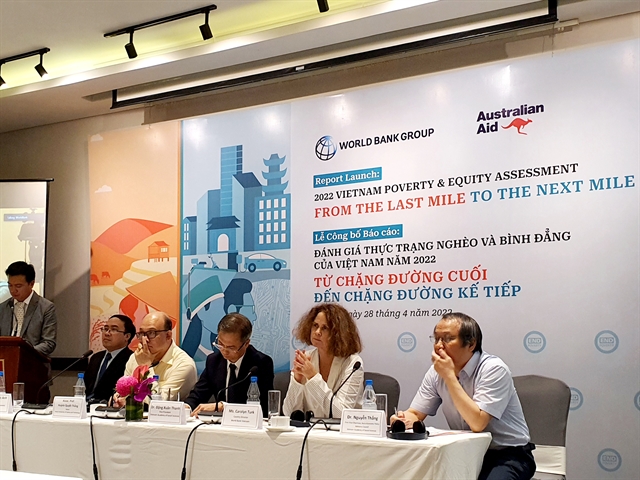
Panelists at the launch of the 2022 Poverty and Equity Assessment by World Bank in Việt Nam. — VNS Photo Nhật Hồng
HÀ NỘI — The poverty and equity agenda is no longer only about raising minimum living standards and tackling chronic poverty – it is also about creating new, sustainable economic pathways for a more aspirational population.
The statement was introduced by Judy Yang, World Bank senior economist and co-author of the institution’s latest Poverty and Equity Assessment in Việt Nam.
Tiếp tục đọc “Poverty and equity are now more than just reducing extreme poverty”
6 Big Findings from the IPCC 2022 Report on Climate Impacts, Adaptation and Vulnerability
February 27, 2022 By Kelly Levin, Sophie Boehm and Rebecca Carter Cover Image by: Roop_Dey/iStock
The newest report from the Intergovernmental Panel on Climate Change (IPCC) paints a troubling picture: Climate change is already impacting every corner of the world, and much more severe impacts are in store if we fail to halve greenhouse gas emissions this decade and immediately scale up adaptation.
Following on the first installment of the IPCC’s Sixth Assessment Report, Working Group II’s contribution, released on February 28, 2022, draws from 34,000 studies and involved 270 authors from 67 countries. It provides one of the most comprehensive examinations of the intensifying impacts of climate change and future risks, particularly for resource-poor countries and marginalized communities. The 2022 IPCC report also details which climate adaptation approaches are most effective and feasible, as well as which groups of people and ecosystems are most vulnerable.
UN Secretary-General Antonio Guterres called the report “an atlas of human suffering and a damning indictment of failed climate leadership.
Here are six takeaways from the report:
1. Climate impacts are already more widespread and severe than expected.
Climate change is already causing widespread disruption in every region in the world with just 1.1 degrees C (2 degrees F) of warming.
Tương lai của miền Tây
Đọc thêm: Phát triển ĐBSCL – TĐH >>

Trương Chí Hùng
Nhà văn, VNExpress
Bằng là bạn học cấp hai của tôi. Hết lớp 9, Bằng thôi học dù thành tích đứng thứ nhì toàn trường.
Chú Sáu, ba của Bằng, lúc đó nói, nhà ruộng đất nhiều, cần gì học, ở nhà làm ruộng cũng sống khỏe re. Ở tuổi 16, Bằng không nghĩ được gì nhiều, người lớn nói sao nghe vậy. Vài năm sau, Bằng trở thành lao động trụ cột trong nhà. Một mình cậu quán xuyến hai mẫu ruộng, mỗi năm canh tác ba vụ, của ăn không thiếu. Rồi Bằng lấy vợ, sanh con, xây dựng một gia đình như bao gia đình khác ở quê tôi.
Tiếp tục đọc “Tương lai của miền Tây”Vietnam Sets Ambitious Goals in New National Industrial Policy But Can It Stay Competitive?
- Vietnam’s new industrial policy, Resolution No. 23-NQ/TW outlines big goals and solutions to boost industrialization in Vietnam, notably with the ambition to be among the top ASEAN economies in terms of industrial competitiveness.
- Looking at the current top-performing industries, Vietnam is well on track to achieve its goals
- However, more needs to be done if the country wants to remain competitive in the future, especially with the advent of Industry 4.0.
In September 2020, the Vietnamese government issued an action plan implementing Resolution No 23/NQ/TW, which sets out a national industrial policy until 2030 with a vision towards 2045. The resolution was first signed in March 2018.
What are the goals outlined in the policy, and how does Vietnam intend to accomplish these goals? We assess the current status of industrialization in the country, take a closer look at the contents of the national policy and action plan, and identify future opportunities and challenges.
What’s in the new industrial policy?
The action plan to implement the national industrial development policy contains six main goals:
Xe đạp công cộng TPHCM chạy thử nghiệm, chính thức lăn bánh từ 10.12
TPHCM – Hệ thống xe đạp công cộng vừa được vận hành thử nghiệm tại trạm trên vỉa hè đường Lê Lợi (quận 1). Nhiều trạm đậu xe đạp khác đang được gấp rút thi công sơn kẻ ô đỗ, lắp đặt biển báo… để khai trương mô hình này từ ngày 10.12.


Tiếp tục đọc “Xe đạp công cộng TPHCM chạy thử nghiệm, chính thức lăn bánh từ 10.12”
Khu đô thị mới ở Việt Nam – Xây thành phố vì người dân hay vì lợi nhuận?
ZN – Quá trình xâm lấn đô thị làm gia tăng khoảng cách xã hội giữa những cư dân ngoại ô giàu có và hàng nghìn người dân “bị bỏ lại phía sau”.


Danielle Labbé là phó giáo sư quy hoạch đô thị của Đại học Montreal (Canada). Bà từng theo học tại Đại học Xây dựng Hà Nội năm 2001 và nghiên cứu rất nhiều về quy hoạch ở khu phố cổ Hà Nội. Hiện nay Labbe đang sống và làm việc tại Québec, chủ yếu nghiên cứu và giảng dạy các vấn đề liên quan đến quy hoạch đô thị.
Hơn 20 năm trước, mô hình khu đô thị mới lần đầu tiên được đề xuất ở Việt Nam. Các nhà quy hoạch, làm chính sách lẫn người dân đều kỳ vọng khu đô thị mới sẽ cung cấp đầy đủ nhà ở cho cư dân thành thị trong không gian sống tiện nghi.
Đồng thời, khu đô thị mới được xây dựng sẽ giải quyết vấn đề phát triển đô thị hỗn loạn, tự phát khắp Việt Nam. Thay vào đó nó được kỳ vọng tạo ra cảnh quan đô thị mới hiện đại, văn minh và đồng bộ.
Tuy nhiên sau hai thập kỷ, viễn cảnh về những khu đô thị mới hiện đại, người dân có nhà để ở, chủ đầu tư thu lợi từ dự án không hề tốt đẹp như đã hứa.
Tiếp tục đọc “Khu đô thị mới ở Việt Nam – Xây thành phố vì người dân hay vì lợi nhuận?”
Seven Transformations for More Equitable and Sustainable Cities
Foreword
Our planet needs successful cities-cities that are centers of innovation and productivity, cities where every family thrives, cities that realize the promise of low-carbon prosperity.
We are not yet building the cities we need. One in two people live in cities and 2.5 billion more will do so by 2050. Cities produce over 80% of GDP but also 70% of global GHG emissions. Our cities are growing, while inequality widens and livelihoods dwindle. Urban infrastructure is not keeping pace with the surge in residents. With many cities already struggling to meet people’s basic needs, global development and climate challenges are increasingly urban challenges. A sustainable future depends on whether cities can transform. Is there a path to transformative change that can make cities more prosperous, more equal, and low-carbon at the same time?
Tiếp tục đọc “Seven Transformations for More Equitable and Sustainable Cities”
 CVD
CVD 