Định kiến giới ngay trong sách giáo khoa ảnh hưởng gì đến học sinh?

thanhnien.vn 02/05/2023 17:03 GMT+7

Hàng ngàn học sinh nói sách giáo khoa mang định kiến giới khi nam giới thường gắn với công việc được cho rằng có địa vị cao, trong khi nghề nghiệp của nữ giới có địa vị thấp hơn hoặc chỉ đóng vai trò phụ tá.

Nghề nghiệp của nam giới thường có địa vị cao

Khi khảo sát gần 7.000 học sinh về định kiến giới ở trường học, tổ chức Saigon Children’s Charity (saigonchildren) và Viện Nghiên cứu quản lý phát triển bền vững (MSD) cho hay phần lớn học sinh nói sách giáo khoa thường gắn nhân vật nam với các công việc đòi hỏi sức mạnh hoặc kỹ thuật cao, chẳng hạn như bác sĩ, cảnh sát, luật sư và kỹ sư. Ngược lại, nhân vật nữ thường liên quan đến hoạt động giáo dục hoặc chăm sóc như giáo viên, nội trợ, y tá hoặc thư ký.
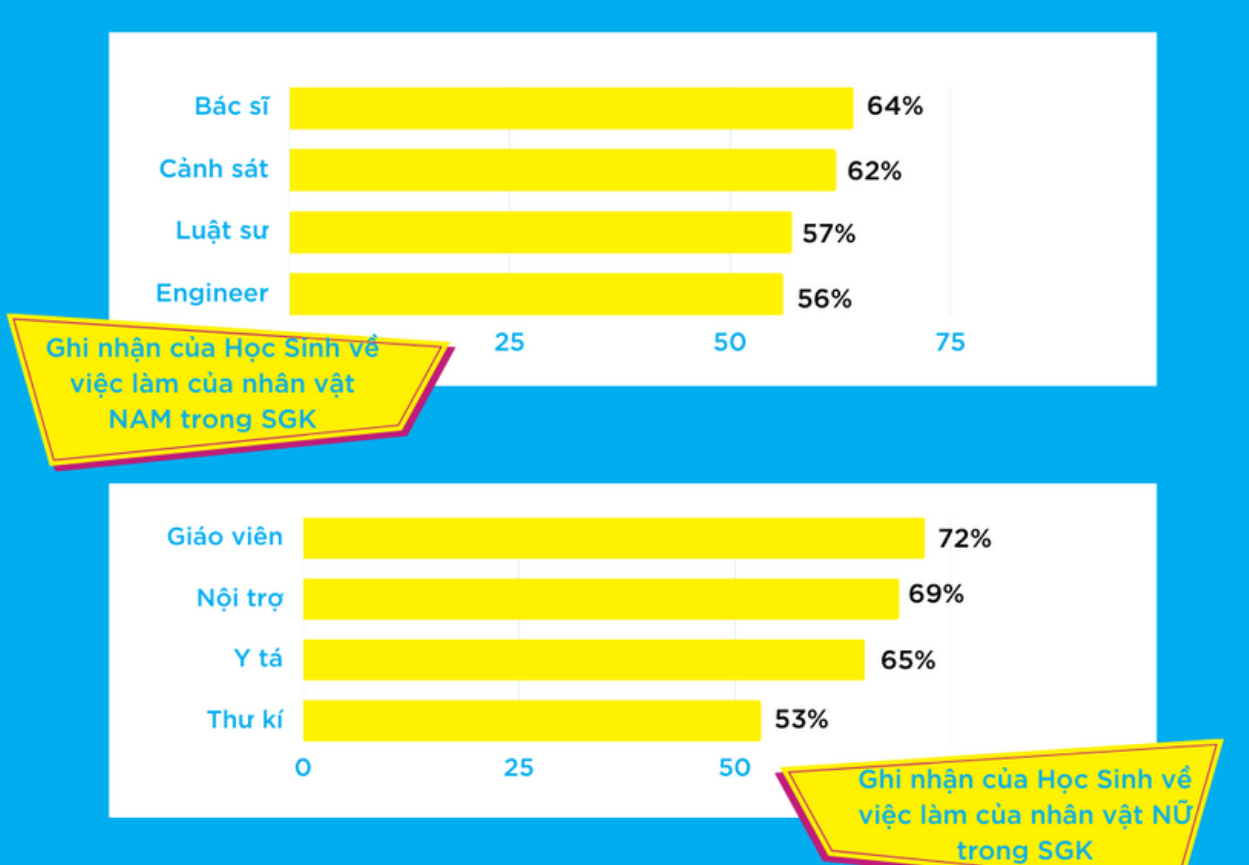
Trong sách giáo khoa, nghề nghiệp của nam giới thường có địa vị cao - Ảnh 1.
Ghi nhận của học sinh về việc làm của các nhân vật trong sách giáo khoa, theo báo cáo của tổ chức Saigon Children’s Charity và Viện Nghiên cứu quản lý phát triển bền vững

“Những địa vị được miêu tả dành riêng cho hai giới trong sách giáo khoa hàm chứa định kiến, với phần lớn các nghề nghiệp do nam giới đảm nhận là những việc có địa vị cao, trong khi các nghề nghiệp được khắc họa dành cho nữ giới có địa vị thấp hơn hoặc nữ giới chỉ đảm nhận vai trò là phụ tá cho ngành nghề của nam giới”, nhóm nghiên cứu nhấn mạnh trong báo cáo công bố ngày 27.4.

Với kết quả khảo sát như trên, nhóm nghiên cứu chỉ ra rằng việc thể hiện các nghề nghiệp khác nhau trong sách giáo khoa dựa trên giới tính có thể ảnh hưởng đáng kể đến lựa chọn nghề nghiệp và vai trò trong xã hội của học sinh, đặc biệt ở Việt Nam, nơi vai trò giới và thứ bậc xã hội truyền thống vẫn còn ảnh hưởng mạnh mẽ đến kỳ vọng của xã hội.

Điều này cũng ảnh hưởng đến nguyện vọng chọn ngành của nữ sinh, khi các em có thể tự cho rằng khả năng của bản thân bị giới hạn trong một số ngành nghề được cho là “phù hợp” với giới tính, hoặc không có hứng thú để tìm hiểu về các lĩnh vực khác, chẳng hạn như khoa học, công nghệ, kỹ thuật và toán học (STEM).
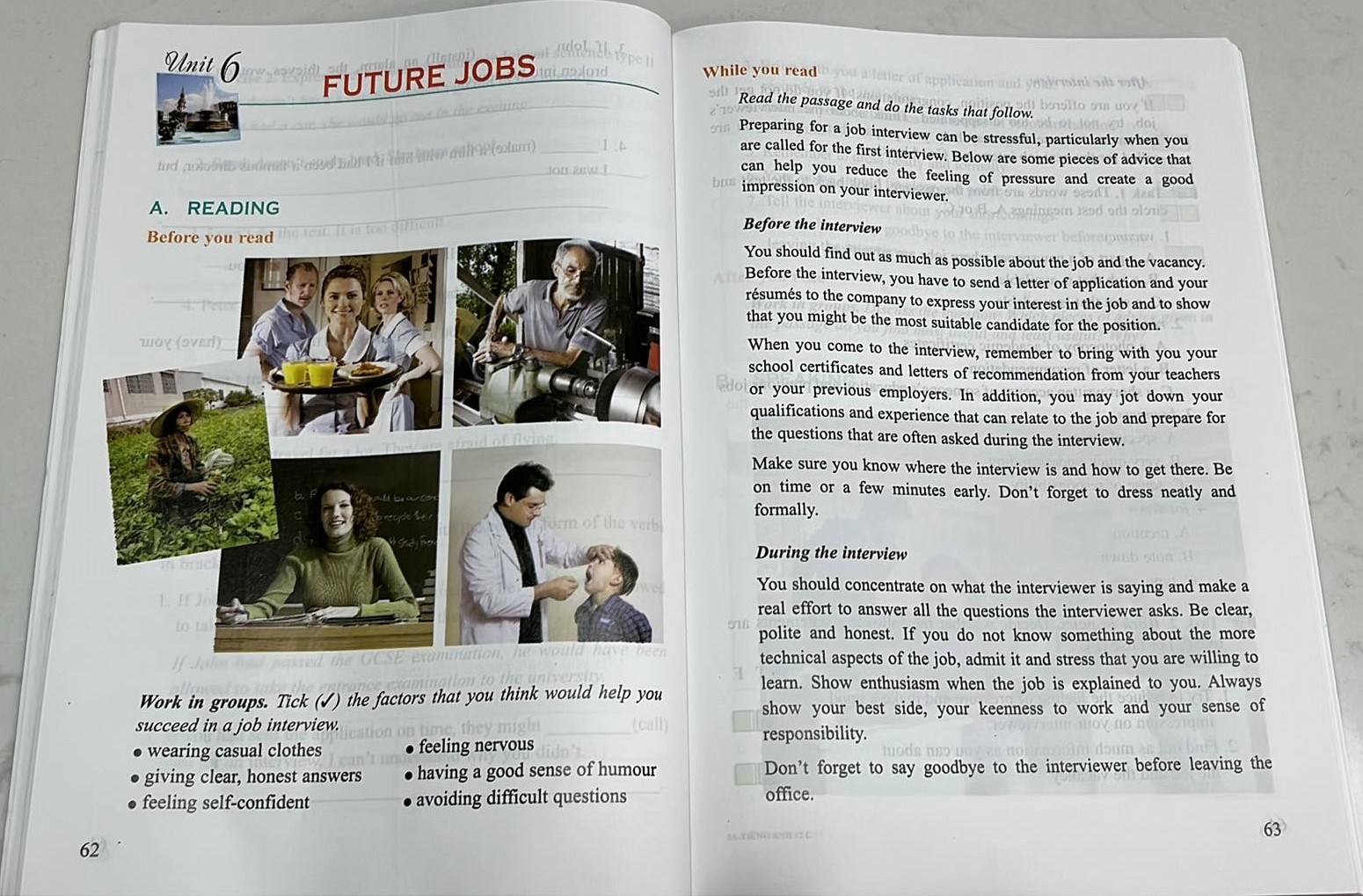
Trong sách giáo khoa, nghề nghiệp của nam giới thường có địa vị cao - Ảnh 2.
Ở chủ đề về nghề nghiệp tương lai trong sách giáo khoa tiếng Anh lớp 12 chương trình hiện hành, nam giới gắn với công việc bác sĩ, kỹ sư, còn nữ giới là giáo viên, phục vụ

Tiếp tục đọc “Định kiến giới ngay trong sách giáo khoa ảnh hưởng gì đến học sinh?”

Nhóm ‘nhặt sạn định kiến giới trong sách giáo khoa Tiếng Việt’ đoạt giải nhất Hội thi Sáng kiến Giới

tamviet.tienphong.vn 30/09/2023 | 20:02

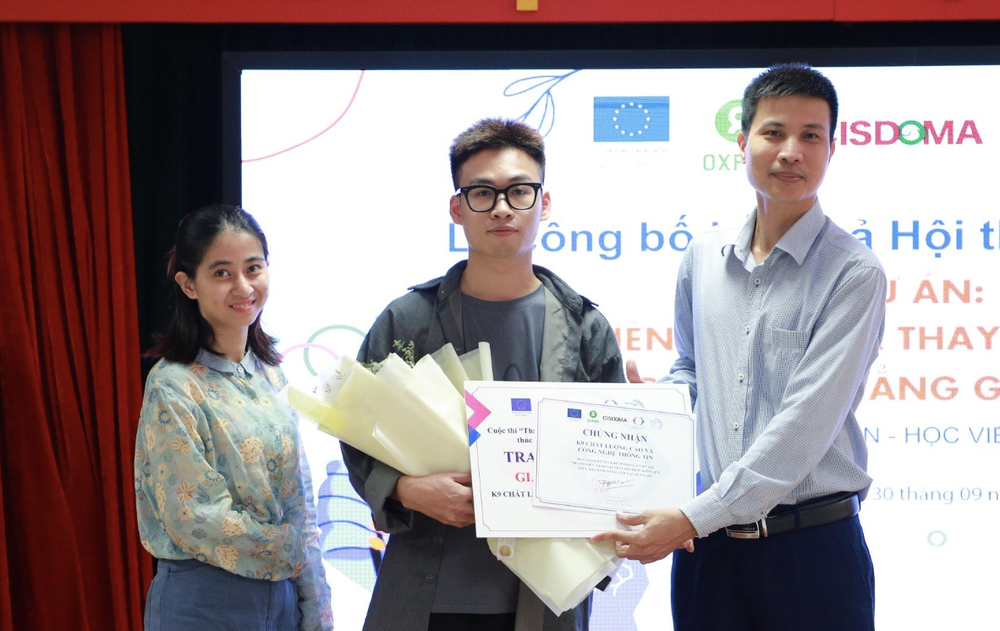
TPO – Chiều 30/9, Khoa Giới và Phát triển tại Học viện Phụ nữ Việt Nam đã tổ chức trao giải mùa thứ 3 cho Hội thi Sáng kiến Giới. 

Cụ thể, chiều 30/9, Khoa Giới và Phát triển tại Học viện Phụ nữ Việt Nam, đơn vị tổ chức Dự án “Thanh niên tham gia thay đổi định kiến giới, thúc đẩy bình đẳng giới tại Việt Nam”, đã trao giải mùa thứ 3 cho Hội thi Sáng kiến Giới.

https://image.tienphong.vn/w1000/Uploaded/2023/tpuokbj/2023_09_30/screen-shot-2023-09-30-at-182854-2973.png
Tiến sĩ Nguyễn Tuấn Minh, đại diện Ban tổ chức trao giải cho sinh viên.

Buổi Lễ được dẫn dắt bởi TS. Dương Kim Anh, Phó Giám đốc Học viện Phụ nữ Việt Nam và Trưởng Khoa Giới và Phát triển, cùng ông Đào Ngọc Ninh, Phó viện trưởng Viện Tư vấn Phát triển Kinh tế Xã hội Nông thôn và Miền núi (CISDOMA). Sự kiện diễn ra trong không khí phấn khích của chuỗi hoạt động chào mừng tân sinh viên khóa K11 và kỷ niệm 8 năm thành lập Khoa Giới & Phát triển.

Tiếp tục đọc “Nhóm ‘nhặt sạn định kiến giới trong sách giáo khoa Tiếng Việt’ đoạt giải nhất Hội thi Sáng kiến Giới”

Countries are still falling short in developing textbooks free of gender-based stereotypes

UNESCO.org Global Education Monitoring Report

2020 Gender Report DOWNLOAD PDF

The Beijing Declaration and Platform for Action called on countries to develop curricula, textbooks and teaching aids free of gender-based stereotypes for all levels of education, including teacher training

Textbooks can perpetuate stereotypes by associating certain characteristics with particular groups. Inappropriate images and descriptions can make students from non-dominant backgrounds feel misrepresented, misunderstood, frustrated and alienated.

Textbooks are powerful factors in construction of gender identities. They transmit knowledge and present social and gender norms, shaping the world view of children and young people. Gender norms and values not only shape attitudes and practices but also influence aspirations and dictate expected behaviours and attributes for males and females (Heslop, 2016). In some contexts, textbooks are the first – and sometimes only – books a young person reads, and so can have a lasting impact on their perceptions. That means that, through textbooks, discriminatory norms and values can be challenged. Strategic objective B.4 of the Beijing Declaration and Platform for Action called on countries to develop curricula, textbooks and teaching aids free of gender-based stereotypes for all levels of education, including teacher training, in cooperation with all concerned – publishers, teachers, public authorities and parents’ associations.

WOMEN ARE UNDER-REPRESENTED IN TEXTBOOKS

In many countries, girls and women are under-represented in textbooks, and when they are included, they are depicted in traditional roles. In Afghanistan, women were almost completely absent from grade 1 textbooks published in the 1990s. Since 2001, they have been represented more frequently, but usually in passive and domestic roles, shown as mothers, caregivers, daughters and sisters. They are mostly represented as dependent, with teaching being the only career open to them (Sarvarzade and Wotipka, 2017). A review of 95 primary and secondary compulsory education textbooks in the Islamic Republic of Iran showed that women accounted for 37% of images. About half the images showing women were related to family and education, while work environments appeared in less than 7%. There were no images of women in about 60% of Farsi and foreign language textbooks, 63% of science textbooks and 74% of social science textbooks (Paivandi, 2008).

Tiếp tục đọc “Countries are still falling short in developing textbooks free of gender-based stereotypes”

How much progress is being made on the UN’s Sustainable Development Goals?

weforum.org

A slowdown in progress on key areas is putting the 2030 Sustainable Development Goals 'in peril'.

A slowdown in progress on key areas is putting the 2030 Sustainable Development Goals ‘in peril’.

  • Multiple global crises continue to put the 2030 Sustainable Development Goals ‘in peril’, the UN says.
  • Its 2023 update report shows a significant reversal of progress in key areas such as child vaccination rates and income inequality between countries.
  • These challenges will be the focus of the World Economic Forum’s Sustainable Development Impact Meetings on 18-22 September 2023.

The 2030 Agenda for Sustainable Development was adopted by all United Nations’ (UN) member states in 2015. “A shared blueprint for peace and prosperity for people and the planet, now and into the future”, it is based on 17 Sustainable Development Goals (SDGs), which the UN describes as an urgent call for action. The organization says that ending global poverty requires focusing on strategies that reduce inequality and spur economic growth, while also tackling climate change.

The Sustainable Development Goals Report 2022 painted a worrying picture of progress in almost all areas, but the 2023 update delivers an even graver warning: “The promises enshrined in the SDGs are in peril,” the UN states. This year marks the halfway point to the 2030 Agenda deadline, increasing global urgency to ignite progress.

Tiếp tục đọc “How much progress is being made on the UN’s Sustainable Development Goals?”

CLIMATE INEQUALITY REPORT 2023, FAIR TAXES FOR A SUSTAINABLE FUTURE IN THE GLOBAL SOUTH

World Inequality Database

The climate crisis has begun to disrupt human societies by severely  affecting the very foundations of human livelihood and social organisation. Climate impacts are not equally distributed across the world: on average,  low- and middle-income countries suffer greater impacts than their richer counterparts. At the same time, the climate crisis is also marked by significant inequalities within countries. Recent research reveals a high concentration of global greenhouse gas emissions among a relatively small fraction of the population, living in emerging and rich countries. In addition, vulnerability to numerous climate impacts is strongly linked to income and wealth, not just between countries but also within them.

The aim of this report is twofold. It endeavours first to shed light on these various dimensions of climate inequality in a systematic and detailed analysis, focusing on low- and middle-income countries in particular. It then builds on these insights, together with additional empirical work and interviews with experts, to suggest pathways to development cooperation,and tax and social policies that tackle climate inequalities at their core.

Full report: https://wid.world/wp-content/uploads/2023/01/CBV2023-ClimateInequalityReport-2.pdf

ATLAS of SDGs – Sustainable Development Goals 2023

datatopics.worldbank.org

The Atlas of Sustainable Development Goals 2023 presents interactive storytelling and data visualizations about the 17 Sustainable Development Goals. It highlights trends for selected targets within each goal and introduces concepts about how some SDGs are measured.

Explore stories for the 17 SDGs

The Atlas draws from the World Bank’s World Development Indicators database, as well as from a wide variety of relevant data sources, including international organizations, scientists, and other researchers worldwide.

We hope readers will find this fourth edition in the Atlas series engaging and informative, and will be inspired to discover, understand, and visualize progress towards achieving the SDGs, adopted by all member states of the United Nations in 2015.

For first time, every player at the Women’s World Cup will be paid at least $30K

FILE - The United States players hold the trophy as they celebrate winning the Women's World Cup final soccer match against The Netherlands at the Stade de Lyon in Decines, outside Lyon, France on July 17, 2019. More prize money than ever will be awarded at this year's Women's World Cup, and the players stand to get direct payments from FIFA this time. (AP Photo/Francisco Seco, File)

1 of 2 | 

FILE – The United States players hold the trophy as they celebrate winning the Women’s World Cup final soccer match against The Netherlands at the Stade de Lyon in Decines, outside Lyon, France on July 17, 2019. More prize money than ever will be awarded at this year’s Women’s World Cup, and the players stand to get direct payments from FIFA this time. (AP Photo/Francisco Seco, File)

ASSOCIATED PRESSRead More

The United States team celebrates a win against Wales during a FIFA Women's World Cup send-off soccer match in San Jose, Calif., Sunday, July 9, 2023. (AP Photo/Josie Lepe)

2 of 2 | 

The United States team celebrates a win against Wales during a FIFA Women’s World Cup send-off soccer match in San Jose, Calif., Sunday, July 9, 2023. (AP Photo/Josie Lepe)

ASSOCIATED PRESS APnews.com

A group of players across the globe asked FIFA late last year to increase the prize money for this summer’s Women’s World Cup. There had been pleas from the women to boost those funds before, but this time it was different.

The players not only wanted a prize pool equal with the men’s World Cup, they also sought a guarantee that a percentage of the prize money would go directly to the players themselves.

->

Sustainable development goals: no time for hesitation

Among the 17 sustainable development goals Vietnam committed to at the 2030 Agenda, only four have been fulfilled so far and two have been delayed.

VNA Sunday, April 30, 2023 09:42  

Hanoi (VNA) – Among the 17 sustainable development goals Vietnam committed to at the 2030 Agenda, only four have been fulfilled so far and two have been delayed.

Domestic and foreign experts shared the view that there are only seven years left, so there is no time for hesitation. Vietnam needs to make greater efforts and stay resolved to accomplish its goals.

Vietnam’s multidimensional poverty rate dropped to 3.6% from 9.2% during the 2016-2022 period. (Photo: baochinhphu.vn)

Tiếp tục đọc “Sustainable development goals: no time for hesitation”

Bê bối thu gom đồ cũ để tái chế của H&M nói gì về thời trang bền vững?

vietecera.com

Nguồn: USA Today

1. Chuyện gì đã xảy ra?

Ngày 19/6 vừa qua, một nhóm phóng viên của Thuỵ Điển đã phát hiện nhiều nghi vấn và đặt ra các câu hỏi về chiến dịch tái chế quần áo cũ của hãng thời trang H&M nước này.

Để thể hiện thiện chí phát triển bền vững với môi trường, H&M đã bắt đầu thực hiện chiến dịch quyên góp quần áo cũ và tái chế vào năm 2013 tại 40 thị trường trên toàn thế giới, trong đó có Việt Nam.

Những khách hàng đem quần áo cũ của hãng đến bỏ vào thùng sẽ nhận được phiếu giảm giá cho lần mua hàng sau. Tuy nhiên các cáo buộc đã chỉ ra, đa phần quần áo cũ bị bán lại sang Châu Phi hoặc những nước nghèo, để rồi phần lớn trong số đó bị vứt bỏ hoặc đốt.

Những lời nói dối hoa mỹ vừa bị phát giác của hãng này sẽ làm cho người tiêu dùng sẽ càng dè dặt hơn khi mua sắm quần áo, đồng thời mất niềm tin vào những cam kết bền vững của các hãng thời trang khác.

2. Bê bối của H&M đã được phát hiện từ đâu?

Cụ thể, nhóm phóng viên của báo Borsen đã giấu thiết bị theo dõi gắn chip GPS vào trong 10 sản phẩm còn dùng tốt và bỏ vào thùng thu gom tại các cửa hàng của H&M. Dữ liệu thu được cho thấy quần áo cũ được đưa tới 3 cơ sở phân loại tại Đức, sau đó 3 trong số 10 sản phẩm đã theo tàu biển tới Beni – quốc gia ở Tây Phi.

Bên cạnh đó, tờ Vasterbottens cũng cho hay từ đầu năm 2023 cho tới nay, 3 công ty nhận quần áo cũ của H&M đã xuất khẩu 5.711 kiện quần áo sang châu Phi, tương đương hơn một triệu sản phẩm may mặc. Tuy nhiên, một nửa trong số đó đã bị vứt bỏ vì nhiều lý do như rách hỏng, không phù hợp với khí hậu châu Phi, quá rộng, quá chật hoặc màu sắc, kiểu dáng không phù hợp với văn hóa địa phương.

Kết quả là thay vì bị bỏ đi ở châu Âu, số quần áo cũ của H&M đã di chuyển tổng cộng 60.000 km bằng tàu biển và xe tải, tương đương với một lần rưỡi vòng quanh thế giới, để bị vứt bỏ ở châu Phi.

Thêm nữa, lượng chất thải cho việc chuyên chở số sản phẩm này sang các nước châu Phi và nước nghèo, để rồi sau đó một nửa bị vứt bỏ bừa bãi ra môi trường mà không được xử lý khiến cho các “chiến dịch xanh” của H&M trở nên khó chấp nhận trong mắt công chúng.

3. Các chiến dịch vì môi trường của H&M từng gây tiếng vang thế nào?

The Limits to Growth – 50 Years Ago and Today

intereconomics.eu

By Thomas DöringBirgit Aigner-Walder

The Limits to Growth was published 50 years ago. Ordered by the Club of Rome, the study was a milestone in the analysis of the economic, demographic, technical and ecological effects of the existing economic system. In industrialised Western countries in particular, the critical examination of the development model of continuous economic growth led to a broad discussion about the far-reaching implications of a global economy focusing on growth, on a planet with finite natural resources.

Criticism of the growth paradigm, dominant in both market-based and planned economic systems, has existed (almost) as long as economic growth itself. For example, Thomas Malthus (1798) reflected on the natural boundaries of economic and population growth very early on (Hussen, 2018). However, Meadows et al. (1972) carried out a notably broad system analysis. On the one hand, they examined existing ecological as well as socio-economic development trends and their global effects in detail. Secondly, the use of computer models to simulate different development scenarios of the world economy, based on the availability of data, was a methodological novelty at the time.

Tiếp tục đọc “The Limits to Growth – 50 Years Ago and Today”

World Bee Day 20 May – We all depend on the survival of bees

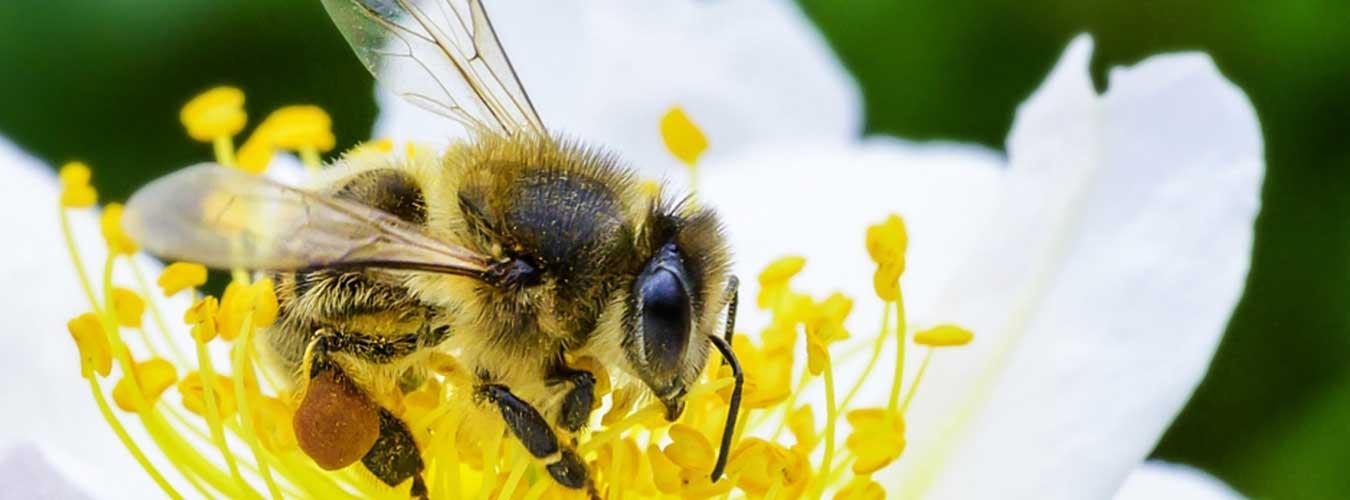
A bee drinks nectar of a flower

Three out of four crops across the globe producing fruits, or seeds for use as human food depend, at least in part, on bees and other pollinators. PHOTO:Photo FAO/Greg Beals

UN.org

Bees and other pollinators, such as butterflies, bats and hummingbirds, are increasingly under threat from human activities.

Pollination is, however, a fundamental process for the survival of our ecosystems. Nearly 90% of the world’s wild flowering plant species depend, entirely, or at least in part, on animal pollination, along with more than 75% of the world’s food crops and 35% of global agricultural land. Not only do pollinators contribute directly to food security, but they are key to conserving biodiversity.

To raise awareness of the importance of pollinators, the threats they face and their contribution to sustainable development, the UN designated 20 May as World Bee Day.

The goal is to strengthen measures aimed at protecting bees and other pollinators, which would significantly contribute to solving problems related to the global food supply and eliminate hunger in developing countries.

We all depend on pollinators and it is, therefore, crucial to monitor their decline and halt the loss of biodiversity.

Bee engaged: Celebrating the diversity of bees and beekeeping  systems

20 May 2022, 13:00–14:45 CEST
Agenda Register | Webcast

Tiếp tục đọc “World Bee Day 20 May – We all depend on the survival of bees”

Những người tiên phong kéo sợi tơ từ lá dứa

Nông nghiệp – Thứ Tư 06/07/2022 , 06:35 (GMT+7)

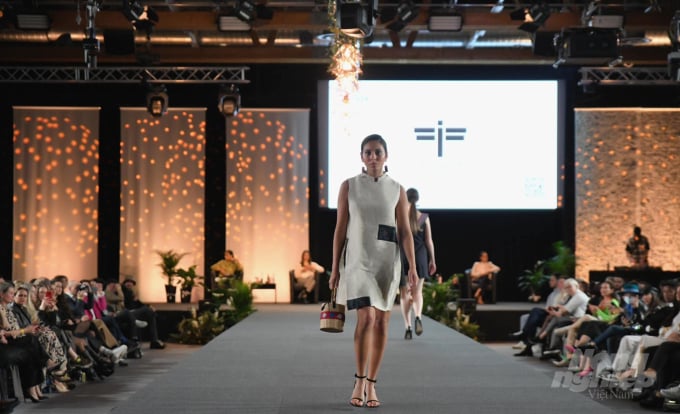
Khi thấy cô người mẫu Tây mặc váy dệt bằng sợi tơ dứa của mình trình diễn tại Thụy Sĩ, Nguyễn Văn Hạnh, Vũ Thị Liễu – đồng sáng lập Ecosoi mừng muốn phát khóc.

Người mẫu mặc trang phục dệt bằng sợi tơ dứa của Ecosoi. Ảnh: Nhân vật cung cấp.
Người mẫu mặc trang phục dệt bằng sợi tơ dứa của Ecosoi. Ảnh: Nhân vật cung cấp.

Một bộ váy 5 – 6 triệu

Không mừng sao được khi các công ty may đang loay hoay tìm vùng nguyên liệu xanh và bền vững để đáp ứng nhu cầu xuất khẩu đi các thị trường khó tính như châu Âu, Nhật, trong khi đó Công ty CP Nghiên cứu sản xuất và Phát triển sợi (Ecosoi) mới thành lập đã tiên phong khai thác sợi từ lá dứa, biến rác phế phẩm nông nghiệp thành tài nguyên.

Tiếp tục đọc “Những người tiên phong kéo sợi tơ từ lá dứa”

A Human Approach to World Peace

The 14th Dalai Lama of Tibet

When we rise in the morning and listen to the radio or read the newspaper, we are confronted with the same sad news: violence, crime, wars, and disasters. I cannot recall a single day without a report of something terrible happening somewhere. Even in these modern times it is clear that one’s precious life is not safe. No former generation has had to experience so much bad news as we face today; this constant awareness of fear and tension should make any sensitive and compassionate person question seriously the progress of our modern world.
 
It is ironic that the more serious problems emanate from the more industrially advanced societies. Science and technology have worked wonders in many fields, but the basic human problems remain. There is unprecedented literacy, yet this universal education does not seem to have fostered goodness, but only mental restlessness and discontent instead. There is no doubt about the increase in our material progress and technology, but somehow this is not sufficient as we have not yet succeeded in bringing about peace and happiness or in overcoming suffering.
 
We can only conclude that there must be something seriously wrong with our progress and development, and if we do not check it in time there could be disastrous consequences for the future of humanity. I am not at all against science and technology – they have contributed immensely to the overall experience of humankind; to our material comfort and well-being and to our greater understanding of the world we live in. But if we give too much emphasis to science and technology we are in danger of losing touch with those aspects of human knowledge and understanding that aspire towards honesty and altruism.
 
Science and technology, though capable of creating immeasurable material comfort, cannot replace the age-old spiritual and humanitarian values that have largely shaped world civilization, in all its national forms, as we know it today. No one can deny the unprecedented material benefit of science and technology, but our basic human problems remain; we are still faced with the same, if not more, suffering, fear, and tension. Thus it is only logical to try to strike a balance between material developments on the one hand and the development of spiritual, human values on the other. In order to bring about this great adjustment, we need to revive our humanitarian values.
 
I am sure that many people share my concern about the present worldwide moral crisis and will join in my appeal to all humanitarians and religious practitioners who also share this concern to help make our societies more compassionate, just, and equitable. I do not speak as a Buddhist or even as a Tibetan. Nor do I speak as an expert on international politics (though I unavoidably comment on these matters). Rather, I speak simply as a human being, as an upholder of the humanitarian values that are the bedrock not only of Mahayana Buddhism but of all the great world religions. From this perspective I share with you my personal outlook – that:

Tiếp tục đọc “A Human Approach to World Peace”

Lãng phí thực phẩm – bài toán khó của phát triển bền vững tại Việt Nam

Hồ Nguyên Thảo

Thứ Ba, 6/09/2022

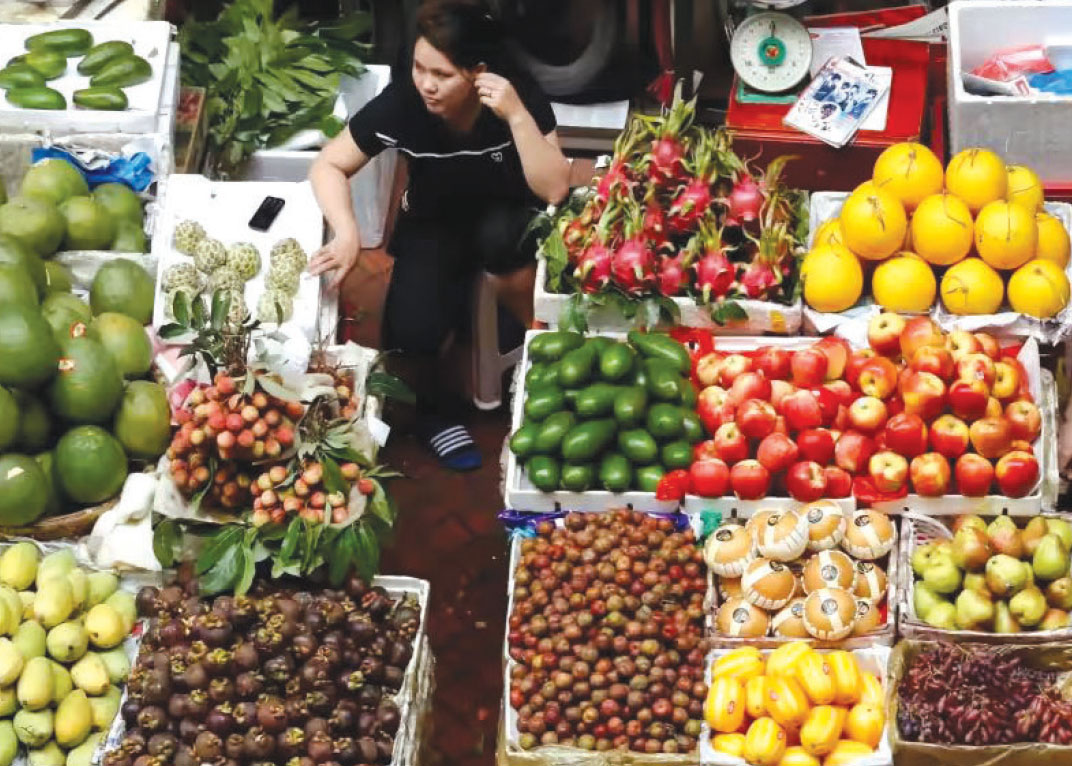
Kinh tế Sài Gòn Online Việt Nam hiện đứng thứ hai trong khu vực châu Á – Thái Bình Dương về nạn lãng phí thực phẩm, với hơn 8 triệu tấn thực phẩm bị thất thoát hay vất bỏ mỗi năm khi vẫn còn ăn được hoặc tận dụng được, gây tổn hại khoảng 3,9 tỉ đô la Mỹ mỗi năm, gần 2% GDP hiện nay. Tỷ lệ lãng phí thực phẩm của Việt Nam hiện cao gấp hai lần các nền kinh tế tiên tiến và giàu có trên thế giới.

Sự gia tăng của tầng lớp trung lưu tại Việt Nam khiến hàng hóa tiêu dùng tăng nhanh, cùng với đó là nạn lãng phí thực phẩm nhiều gấp đôi các nước phát triển. Ảnh: Reuters

Chống lãng phí thực phẩm đòi hỏi sự tham gia trên nhiều lĩnh vực của người dân, doanh nghiệp và nhà nước. Và đây cũng là một mục tiêu phát triển bền vững mà Liên hiệp quốc đề ra.

Tiếp tục đọc “Lãng phí thực phẩm – bài toán khó của phát triển bền vững tại Việt Nam”

ILO: Chỉ 6% lao động giúp việc gia đình được hưởng an sinh xã hội toàn diện

ILOLao động giúp việc gia đình đóng góp quan trọng cho xã hội, cung cấp dịch vụ chăm sóc thiết yếu cho gia đình và hộ gia đình, nhưng họ vẫn chưa được đánh giá đúng mức.

Ngày 16 tháng 6 năm 2022

© Kate Holt / Solidarity Center

GENEVA ‒ Theo một báo cáo mới của Tổ chức Lao động Quốc tế (ILO), chỉ có 6% lao động giúp việc gia đình trên toàn thế giới được tiếp cận an sinh xã hội toàn diện.

Điều này đồng nghĩa với việc hơn 94% trong số họ không được tiếp cận đầy đủ các cơ chế bảo vệ, bao gồm chế độ liên quan đến chăm sóc y tế, ốm đau, thất nghiệp, tuổi già, tai nạn nghề nghiệp, gia đình, thai sản, thương tật và tử tuất.

Tiếp tục đọc “ILO: Chỉ 6% lao động giúp việc gia đình được hưởng an sinh xã hội toàn diện”