Câu chuyện bảo hộ mía đường ở VN tồn tại cả mấy chục năm nay, đến giờ vẫn không có lối thoát, bằng chứng là đường lậu luôn tìm cách đi vào VN. Sở dĩ có đường lậu vì đường trong nước đắt quá, mà đường các nước khác lại rẻ hơn.
VN mang tiếng bảo hộ/ bảo vệ cho nông dân nhưng thực tế nông dân chẳng được bảo vệ, chẳng được bán mía với giá cao, nên nghèo vẫn nghèo. Đã vậy, người tiêu dùng lại phải mua đường giá cao. Một mũi tên trúng 2 con chim: nông dân và người tiêu dùng.
Cách xử lý vấn đề rất giản dị: Nhà nước ngừng bảo hộ mía đường và để thị trường có tự do cạnh tranh.
PTH
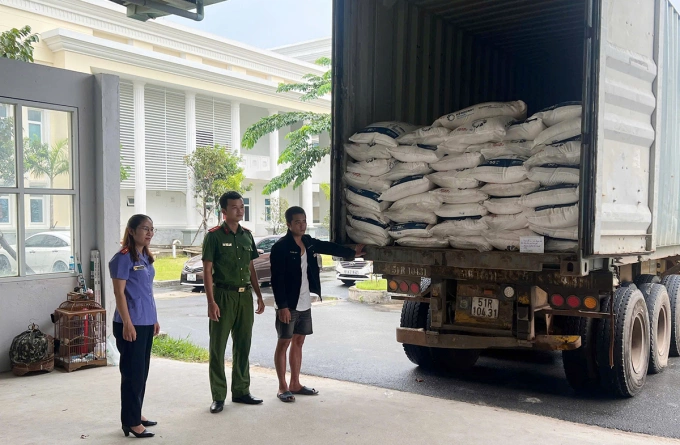
Lén chở lậu 40 tấn đường từ Campuchia về TP HCM
Ai hưởng lợi từ bảo hộ mía đường?
Ai hưởng lợi từ bảo hộ mía đường? – Kỳ 1
Ai hưởng lợi từ bảo hộ mía đường – Kỳ 2: Cạnh tranh để ‘giải thoát’ nông dân
Ai hưởng lợi từ bảo hộ mía đường? – Kỳ 3: Không thể cứ bắt người tiêu dùng chịu thiệt
Ai hưởng lợi từ bảo hộ mía đường? – Kỳ 4: Hãy coi nhập đường từ Lào như một phép thử
Tài xế Bùi Xuân Trọng, 33 tuổi, thừa nhận được thuê chở 800 bao đường cát lậu, trọng lượng 40 tấn, theo đường mòn từ Campuchia về TP HCM thì bị cảnh sát phát hiện.
Ngày 23/9, Trọng bị Công an TP HCM bắt tạm giam để điều tra về hành vi Vận chuyển trái phép hàng hóa qua biên giới.
Bùi Xuân Trọng (phải) và tang vật trên xe. Ảnh: Công an cung cấp
(Chinhphu.vn) – Người đầu tiên ở Việt Nam nhiễm HIV vào 30 năm trước là một phụ nữ sống tại TPHCM. Hiện người phụ nữ này vẫn được theo dõi, điều trị tại Bệnh viện Bệnh nhiệt đới TPHCM và sống khỏe mạnh nhờ tuân thủ điều trị.
Nuôi trồng thủy sản biển (Marine aquaculture hay mariculture) là hình thức nuôi dưỡng và khai thác sinh vật thủy sinh trong môi trường nước mặn tự nhiên, bao gồm các khu vực như vùng ven bờ, eo vịnh, biển mở, vùng triều, trên triều và khu vực quanh các hải đảo
Hoạt động này không chỉ nhằm cung cấp sản phẩm thủy sản phục vụ nhu cầu tiêu dùng trong nước và xuất khẩu, mà còn góp phần giảm áp lực lên nguồn lợi khai thác tự nhiên, cải thiện sinh kế và tăng cường sự hiện diện, thực thi chủ quyền quốc gia trên biển.
Việt Nam, với đường bờ biển dài hơn 3.260 km và vùng đặc quyền kinh tế rộng khoảng 1 triệu km², với tài nguyên nước dồi dào, sở hữu diện tích lớn các bãi triều, vùng ngập mặn tại cửa sông, khu vực ven đảo, các eo vụng kín gió và vùng biển xa bờ, phân bố đa dạng trên nhiều vùng và tiểu vùng sinh thái đặc thù thuận lợi cho phát triển nuôi biển. Ngoài ra, nguồn gen thủy sản bản địa phong phú với nhiều nhóm loài có giá trị kinh tế cao là một lợi thế chiến lược để phát triển ngành nuôi trồng thủy sản biển theo hướng công nghiệp, bền vững và hội nhập quốc tế.
NOAA Fisheries announced its Marine Mammal Protection Act comparability determinations in the Federal Register, covering about 2,500 fisheries across 135 nations. Of these, 240 fisheries from 46 nations were denied comparability findings, restricting their ability to export to the United States.
In August 2025, NOAA Fisheries announced its 2025 Marine Mammal Protection Act comparability finding determinations in the Federal Register. These determinations cover approximately 2,500 fisheries in 135 nations seeking to export fish and fish products to the United States. Comparability finding determinations are made for each nation on a fishery-by-fishery basis. A total of 240 fisheries from 46 nations were denied comparability findings.
NOAA Fisheries conducted a detailed analysis of each comparability finding application submitted by harvesting nations. Details regarding each nation’s comparability finding determination are categorized in the lists below. Each harvesting nation’s Comparability Finding Application Final Report can be accessed by clicking on the nation under Lists 1, 2, and 3 below. Additional documents detailing NOAA Fisheries’ evaluation process, the fisheries denied and granted comparability findings for each nation, and the trade information associated with fishery denials (including Harmonized Tariff Codes) can be found at the bottom of this page.
Nations whose fisheries were denied comparability findings are prohibited from importing fish and fish product from those fisheries into the United States beginning January 1, 2026, and may reapply for a comparability finding for the affected fisheries at any time after January 1, 2026. More information on seafood import restrictions and how they will be implemented under this program, is available here.
On the day French MPs gave themselves a round of applause for approving legislation to reintroduce a banned pesticide last month, a figure rose from the public gallery to shout: “You are supporters of cancer … and we will make it known.”
Fleur Breteau made it known. Her outburst and appearance – she lost her hair during chemotherapy for breast cancer – boosted a petition against the “Duplomb law” to well over 2m signatures.
On Thursday, France’s constitutional court struck down the government’s attempt to reintroduce the pesticide acetamiprid – a neonicotinoid banned in France in 2018 but still used as an insecticide in other EU countries as well as the UK – in a judgment that took everyone by surprise. The ruling said the legislature had undermined “the right to live in a balanced and healthy environment” enshrined in France’s environmental charter.
mekongeye.com Produced in partnership with the Putlizer Center
Long-term intensive chemical use in Laos’ banana farms has degraded the country’s once-fertile soil, and it may take nearly half a century to restore it.
Laos’ fertile soil and its proximity to China have created ideal conditions for banana cultivation to meet the surging demand from Chinese consumers.
This fruit frenzy has attracted Chinese companies to seek farmland in Laos, a landlocked country that has embraced a “green agriculture” approach to combat poverty.
With government approval, the sector has expanded, offering jobs, infrastructure development, and revenue from land once considered undervalued.
However, an investigation by Mekong Eye and the Rainforest Investigations Network (RIN) reveals that the fruit plantation boom has left a legacy of soil degradation and uncertain livelihoods for many local farmers.
OUDOMXAY & BOKEO, LAOS – Northern Laos is experiencing soil degradation after years of monocropping and widespread chemical use on banana farms operated by Chinese entrepreneurs.
Thiep doesn’t remember the name of the Chinese fruit company that leased his family’s land, only that it was one of the first to arrive in his northern Lao village in 2007.
After a decade of monocropping bananas, the company left and then returned the land to his family. But in the interim, the earth had changed in ways Thiep and his household couldn’t have anticipated.
“The soil is unusually hard and dry, not like it used to be. We had to replace the plow with a stronger one just to break the ground,” Thiep recalled.
His family members invested extra effort into its first rice crop after reclaiming the plotland. That year, they enjoyed a bumper harvest that was more than they had before the arrival of the Chinese company. But it was the last time they saw such abundance.
“The yield kept decreasing after that,” Thiep said, planting seedlings in the flooded paddy. “Before we leased it out, this plot produced 60 bags of rice. Now it’s down to 30, not enough for the family to eat.”
Nearly two decades ago, Chinese entrepreneurs, attracted by geographic proximity, blanketed northern Laos with banana plantations.
Exporting bananas to China quickly became an economic mainstay, replacing the long reliance on subsistence rice farming. The plantations not only created local jobs but also increased income for households leasing their land to companies.
But investment capital is bittersweet: it may have provided the region with a ladder out of the depths of poverty, but it has ushered in new perils.
Some local workers have reportedly fallen ill or died after pesticide spraying on farms.
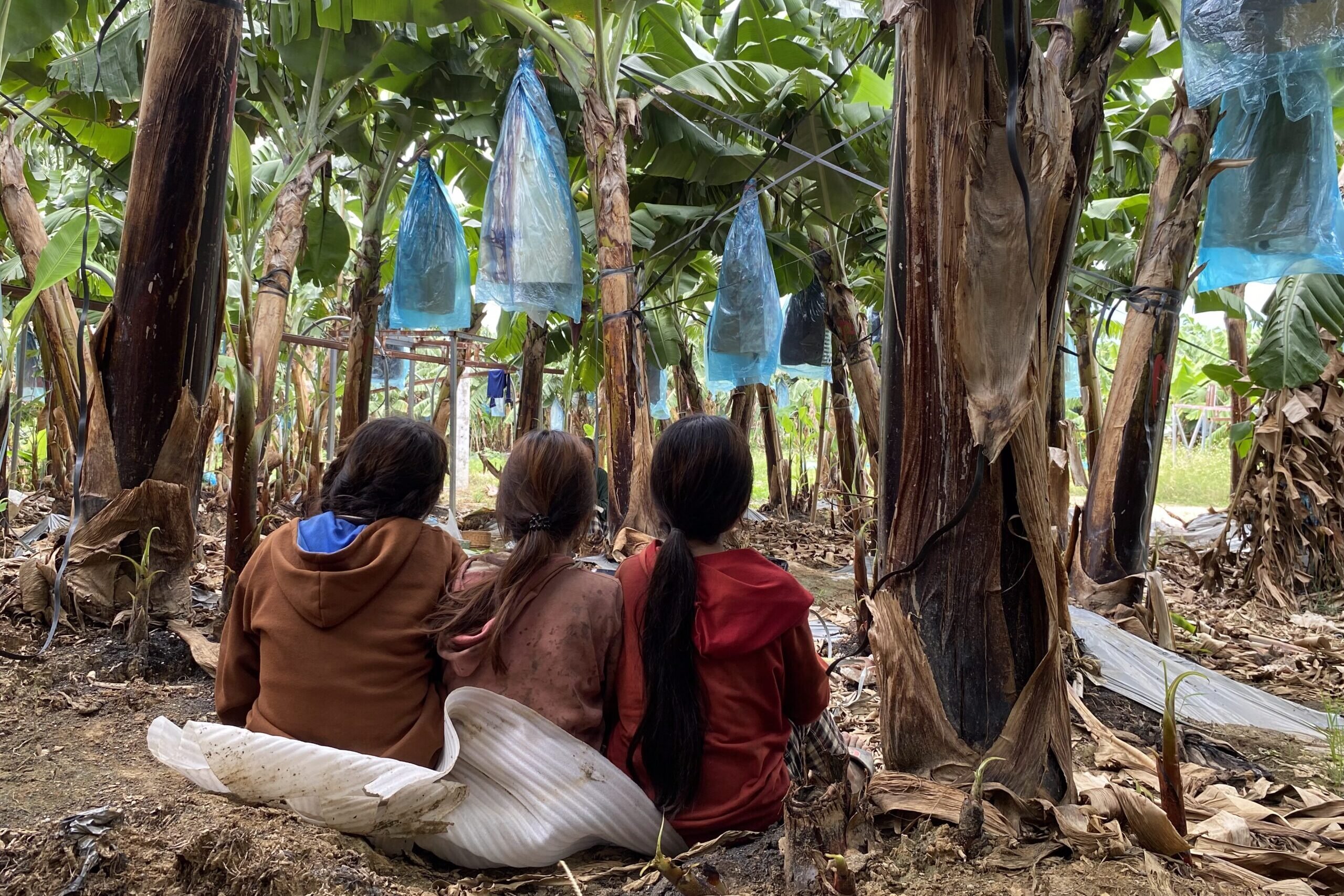
Young Hmong workers rest after long hours of labor on a banana plantation in Oudomxay province, northern Laos. Many, including children under 15, face direct exposure to hazardous agricultural chemicals used in the plantations.
A 2017 study, conducted with the Lao government’s involvement, found that agricultural chemicals – used intensively and without consistent management on banana plantations – had poisoned rivers and soil, and harmed the health of residents and plantation workers.
Among the chemicals identified were paraquat – a highly toxic herbicide banned in several countries, including Laos and China – and chlorothalonil, a hazardous substance banned in the EU in 2020 due to its potential to pollute groundwater and cause cancer.
Facing the issue, an official from the Ministry of Industry and Commerce verbally stated in early 2017 that the Prime Minister’s Office had ordered a ban on all commercial banana cultivation, according to the Laos News Agency. However, our reporter was unable to find any official orders on public platforms dating back to 2016.
VTV.vn – Vấn đề lớn nhất lúc này là phải thực hiện nghiêm những quy định về thực phẩm biến đổi gen để bảo vệ quyền lợi người tiêu dùng.
Ngô và đậu tương là hai loại thực phẩm có tỷ lệ giống biến đổi gen lớn nhất ở Việt Nam. Loại dùng để làm thức ăn chăn nuôi có tiêu chuẩn hoàn toàn khác với loại làm thực phẩm cho người. Dù đã có quy định về việc ghi nhãn đối với thực phẩm có chứa sinh vật biến đổi gen, sản phẩm của sinh vật biến đổi gen. Tuy nhiên, quy định này chưa được thực hiện nghiêm. Nên người tiêu dùng đang không được đảm bảo quyền minh bạch thông tin về những sản phẩm này.
Hơn 6,5 triệu tấn ngô và đậu tương, là khối lượng được nhập khẩu vào nước ta từ đầu năm đến nay để làm nguyên liệu chế biến thức ăn chăn nuôi. Trong đó, Brazil, Hoa Kỳ và Canada là 3 đối tác lớn cung cấp đậu tương cho Việt Nam. Đây cũng là các quốc gia hàng đầu thế giới về trồng ngô, đậu tương biến đổi gen. Điều đáng nói là khi những sản phẩm này được nhập khẩu về Việt Nam… thì việc hậu kiểm cũng như quản lý lại khá lỏng lẻo và thiếu minh bạch.
Bời Lời vốn là tên của một vùng đất nằm ở phía Đông Nam của tỉnh Tây Ninh. Sau ngày giải phóng miền Nam được lấy để đặt tên cho một nông trường ở Trảng Bàng. Trải qua gần nửa thế kỷ, lớp lớp đất Bời Lời gian khó thuở xưa nay đã trở thành miền xanh cây trái bạt ngàn.
Chỉ có điều, lẩn khuất dưới màu xanh tưởng như bình yên và trù phú ấy dường như đang có một Bời Lời khác, chất chứa nhiều nỗi đau nhức nhối, ngay trên đồng đất.
Đoàn Văn Vươn, nhân vật chính vụ cưỡng chế đất đai Tiên Lãng hơn 13 năm trước nói: Cả cuộc đời tôi gắn chặt với đất, cuối cùng gói lại trong một chữ cay.
13 năm sau vụ cưỡng chế đất đai Tiên Lãng, tôi hẹn gặp ông Đoàn Văn Vươn, ông vui vẻ nhận lời và không quên dặn: Vẫn ngay chỗ ngày trước thôi, từ Cống Rộc rẽ vào độ trăm bước, vẫn thuộc xã Vinh Quang, huyện Tiên Lãng, Thành phố Hải Phòng.
Vietnam’s first marine protected area (MPA), Nha Trang Bay, has lost nearly 200 hectares (494 acres) of coral reef since it was established in 2002, according to a new study.
Major drivers of the coral decline include coastal development, warming sea temperatures and devastating crown-of-thorns starfish (Acanthaster planci) outbreaks worsened by overfishing and nutrient pollution.
The study calls for stronger conservation measures inside Nha Trang Bay and other MPAs, including pollution control, active reef restoration and inclusive community governance.
Experts say Nha Trang Bay offers lessons for other MPAs in Southeast Asia facing similar threats.
See All Key Ideas
Vietnam’s first marine protected area, Nha Trang Bay, has lost nearly 200 hectares (494 acres) of coral reef since its creation in 2002, a new study shows. The alarming decline raises fresh questions about how effective conservation efforts have been in protecting one of the country’s most iconic coastal ecosystems.
Jonathan Hanitzsch rests after collecting trash off the coast of Hon Mot Island on Feb. 7, 2025, in Nha Trang, Vietnam. (AP Photo/Yannick Peterhans)
By YANNICK PETERHANS and ANIRUDDHA GHOSALUpdated 9:02 AM GMT+7, March 5, 2025Share
NHA TRANG, Vietnam (AP) — The gentle waves off the coast of central Vietnam’s Nha Trang obscure an open secret: The life-giving coral reefs below are dying. The waters are eerily devoid of fish. The bounty of the ocean is coming to an end.
This is why Binh Van — who fished in these waters for over two decades — now charters his boat to Vietnamese tourists wanting to experience the thrill of fishing in the deep waters of the South China Sea. But there is only squid, which is flourishing in oceans warmed by climate change, to catch. His passengers don’t mind as the boat moves away from Nha Trang’s twinkling beach resorts. But Van is pensive.
Nguyen Tuan Hai drives Rainbow Diver’s boat to Madonna Rock, Feb. 7, 2025, in Nha Trang, Vietnam. (AP Photo/Yannick Peterhans)
It wasn’t always like this. There was a time when he’d catch 70 kilograms (154 pounds) of fish, like tuna and grouper, in one night. He can’t make money on the squid.
Japan’s agriculture minister has resigned because of political fallout over his comment that he “never had to buy rice” because he got it from supporters as gifts.Read More
Japan’s agriculture minister has resigned because of political fallout over his comment that he “never had to buy rice” because he got it from supporters as gifts. (Produced by Elaine Carroll)Read More
AAANguyễn Văn Quại, 63, walked slowly on the muddy dirt path in his yard, his hands clasped behind his back. He stopped beside a tree split in half, its branches dipping into the stagnant water of a narrow moat, and gestured towards the rest of his leafless crop — their trunks yellow, their bark cracked and brittle.
This story was supported by the Pulitzer Center.
Nguyễn Văn Quại points to his durian trees in Ngũ Hiệp.
For decades, Quại has called Ngũ Hiệp home. The small island on the Mekong River in Tiền Giang Province is less than two hours inland from the sea. His family first farmed rice but turned to durian, a more lucrative crop, in the early 1990s. Now, more than 200 trees stand in his yard, their thorny fruit bringing in hundreds of millions of VND.
Southern China is facing a surge in agricultural pests migrating from neighboring Southeast Asian countries, including Laos, Myanmar, and Cambodia. This pest migration, driven by climate-related factors, poses a growing threat to regional food security.
A recent study highlights the role of extreme weather in this phenomenon. Researchers found that the ongoing El Niño event, marked by unusually warm ocean temperatures in the Equatorial Pacific, is contributing to hotter and more humid conditions, which are ideal for pest breeding.
In addition to favorable breeding conditions, strong seasonal winds are carrying these pests into Southern China, facilitating their rapid spread and increasing the risk of crop damage.
While wind is a major factor in their movement, scientists note that insect migration is also influenced by environmental stressors such as extreme heat, drought, and the presence of predators.
Insects migrate in response to immediate environmental cues, the study explains. They may move to escape harsh conditions, find food, avoid overcrowding, or locate new habitats suitable for reproduction.
The problem isn’t confined to China. In Laos, climate change is also taking a toll. The country has experienced record-breaking heatwaves, reaching 43.2 degrees Celsius in 2024, along with persistent water shortages and weakened agricultural infrastructure.
These factors have led to crop failures, livestock losses, and growing food insecurity. An estimated 82 percent of households lack access to safe water, compounding the crisis for rural communities.
Globally, climate change is expected to worsen food insecurity. Rising temperatures and shifting rainfall patterns are already making it more difficult to grow crops in traditional farming regions.
By 2100, nearly 30 percent of the world’s food crops may be exposed to climate conditions they have never encountered before. While much of the focus is on staple crops like rice and wheat, many other plants grown in equatorial regions could also suffer under the changing climate.
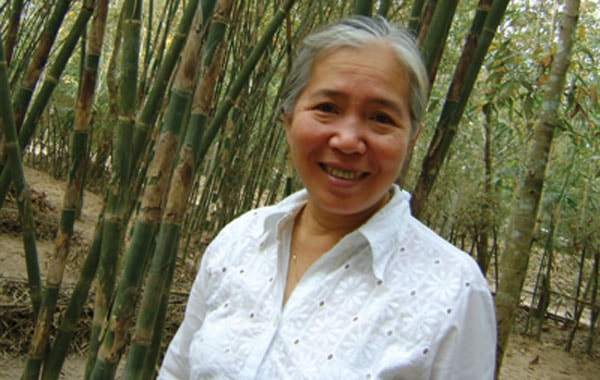
Tiến sĩ Diệp Thị Mỹ Hạnh là người đưa ra ý tưởng, sau đó trực tiếp xây dựng Làng tre Phú An (Bến Cát, Bình Dương) – một bảo tàng tre lớn nhất trong khu vực Đông Nam Á và năm 2010 đã nhận được giải thưởng Xích đạo (Equator Prize) của Liên Hiệp Quốc về đa dạng sinh học.
Tiến sĩ Diệp Thị Mỹ Hạnh là người đưa ra ý tưởng, sau đó trực tiếp xây dựng Làng tre Phú An (Bến Cát, Bình Dương) – một bảo tàng tre lớn nhất trong khu vực Đông Nam Á và năm 2010 đã nhận được giải thưởng Xích đạo (Equator Prize) của Liên Hiệp Quốc về đa dạng sinh học.
Đọc E-paper
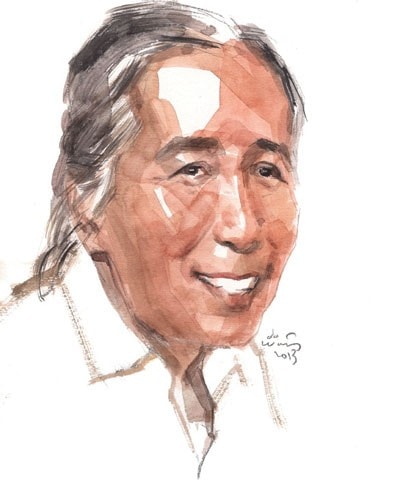
TS Diệp Thị Kiều Trang – Tranh: Hoàng Tường
Bà nhiệt tình và thân thiện với tất cả những ai đến chơi hay tìm hiểu về Làng tre, từ những học sinh tiểu học đến các vị khách nước ngoài chỉ kịp ghé tham quan lúc đã hơn 9 giờ tối.
Bà có vẻ bề ngoài mạnh mẽ và lạc quan nên không mấy ai biết được bà đã phải trăn trở mỗi đêm để tìm cách duy trì làng tre này. Chúng tôi mở đầu câu chuyện với bà bằng câu hỏi thành thực: “Động cơ nào thúc đẩy bà xây dựng Làng tre?” và bà vui vẻ trả lời.
Rất nhiều người thắc mắc vì sao tôi từ bỏ cuộc sống an nhàn cùng gia đình, con cái ở nước ngoài để về đây lăn lộn với Làng tre. Ngay cả tôi cũng không thể lý giải được. Có lẽ vì tôi mê tre quá.
Với tôi, cây tre không chỉ là một loài thực vật vô tri vô giác, mà gần như là một thực thể sống, biết yêu thương và vui buồn. Vì vậy, tôi đã đưa những giống tre từ cao nguyên về trồng ở trên vùng đất đắp cao hay trồng gần những chiếc cầu khỉ của miền Tây và làm thêm dòng kênh nhân tạo để cây… đỡ nhớ nhà!
* Có đặc điểm gì ở tre khiến bà mê loài cây này đến thế?
– Theo quan niệm của người phương Đông, cây tre, cây trúc tượng trưng cho mẫu người quân tử với những tính cách kiên cường, ngay thẳng mà hòa hiếu, độ lượng. Quần thể tre cho thấy một xã hội thuận hòa kỷ cương, theo quy luật “Tre già măng mọc”, chứ không phải tranh sống theo kiểu “Cá lớn nuốt cá bé”.
Tôi thấy vui khi công việc của mình đã “minh oan” cho cây tre nhiều điều. Chẳng hạn dân gian thường cho rằng phải qua vài chục năm, tre mới nở hoa. Khi nở hoa, tất cả mọi tinh hoa, mọi chất dinh dưỡng mà cây tạo ra được đều tập trung trong những bông hoa, chất dinh dưỡng dự trữ trong thân cây cũng bị tiêu hao hết nên tre sẽ chết.
Tuy nhiên, sau khi nghiên cứu, tôi thấy nhiều giống tre mỗi năm trổ hoa một lần, có cây hai, ba năm trổ hoa một lần mà không chết.




 CVD
CVD 