Good Morning Vietnam, Energy-wise

energyathass

Vietnam, a leading indicator for the rest of the developing world, has seen tremendous growth in per capita energy consumption.

During a recent family vacation in Vietnam, I learned that the country is a microcosm for several major trends in energy consumption in the developing world: (1) there’s a thriving middle class, (2) hot and humid weather is driving air conditioning demand and (3) rural electrification rates are very high. (We also loved the food, culture and beaches, and we were gripped by the poignant remnants of the American War, as it’s known locally. I highly recommend it as a vacation destination if that’s your thing.)

Let’s start with some basic facts: Vietnam has seen extraordinary growth in per capita energy consumption over the past several decades. Since 1990, the earliest year for which data are available for most countries, total per capita energy consumption in Vietnam has more than doubled. (All the country-level data in this post come from the World Bank Development Indicators.) This puts Vietnam in the top 3% of countries in the world in terms of growth in per capita energy consumption. Of the countries with more than 5 million people, only China and Thailand have had more rapid growth. Tiếp tục đọc “Good Morning Vietnam, Energy-wise”

1,200 megawatt Vietnam coal plant gets funding, but Standard Chartered pulls out over climate policy conflict

The London-headquartered bank withdrew from the US$1.87 billion coal-fired power plant’s financing consortium, but eight other banks, including Singapore’s OCBC and DBS and Malaysia’s Maybank, closed the deal.

eco-business_What will be one of Vietnam’s largest coal-fired power stations has secured enough funding to get built, but a key member of the financing syndicate has pulled out following a campaign that highlighted a major conflict with the bank’s climate policy.

Financing closed on the US$1.87 billion, 1,200 megawatt Nghi Son 2 coal-fired power plant last week. But London-headquartered Standard Chartered Bank—which was initially part of a consortium of nine banks that includes Singapore’s Oversea-Chinese Banking Corporation (OCBC) and DBS, Malaysia’s Maybank and Japan Bank for International Cooperation—was absent from the final list of financiers.

A campaign by green groups Greenpeace and Market Forces pointed out that by financing the coal plant, StanChart was in breach of its own policy on energy and climate change. That policy rules out providing loans for coal plants above a certain emissions intensity.

The coal financing deal also goes against the Equator Principles, a framework for banks to assess the environmental and social risk of the infrastructure projects they finance, that StanChart signed in 2003.

Vietnam is well-placed for clean energy investment, but Singapore’s major banks continue to miss opportunities to fund a clean energy development pathway, instead locking in polluting coal for decades to come.

Julien Vincent, executive director, Market Forces

Tiếp tục đọc “1,200 megawatt Vietnam coal plant gets funding, but Standard Chartered pulls out over climate policy conflict”

Goldman environmental prize: top awards dominated by women for first time

theguardian.com

Winners are all grassroots activists who have taken on powerful vested interests

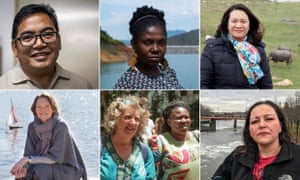
Goldman environment prizewinners 2018: (clockwise from top left) Manny Calonzo, Francia Márquez, Nguy Thi Khanh, LeAnne Walters, Makoma Lekalakala and Liz McDaid, Claire Nouvian.
 Goldman environment prizewinners 2018: (clockwise from top left) Manny Calonzo, Francia Márquez, Nguy Thi Khanh, LeAnne Walters, Makoma Lekalakala and Liz McDaid, Claire Nouvian. Photograph: 2018 Goldman Environmental Prize

The world’s foremost environmental prize has announced more female winners than ever before, recognising the increasingly prominent role that women are playing in defending the planet.
Tiếp tục đọc “Goldman environmental prize: top awards dominated by women for first time”

Why (nuclear) fusion?

thebulletin.org

Robert J. Goldston

The 2014 Intergovernmental Panel on Climate Change (IPCC) Fifth Assessment Report included publication on the web of a wide range of scenarios for the future, produced by energy and environment modelers from all over the world. If we select an  internationally coordinated set of scenarios that are consistent with a temperature rise of less than 2 degrees Celsius (3.6 degrees Fahrenheit) above the pre-industrial era—the upper-limit goal of the Paris Climate Accords—and average their projections, we find the projection for future electricity production in the table below, shown in units of annually averaged gigawatts electrical <GWe>.

IPCC Projected Worldwide Annually Averaged Electrical Power Production <GWe>

2020 2050 2100
Solar 30 650 3720
Nuclear 400 1120 2230
Wind 150 930 2170
Biomass 40 540 1500
Hydro 410 640 850
Coal + Oil 920 860 770
Gas 780 980 620
Geothermal 30 84 100
Total 2770 5800 11900

This IPCC-based mean scenario relies heavily on solar and wind, which vary strongly on a daily and seasonal basis. By the time these intermittent energy sources become dominant, later in the century, we may well have developed the capability to mitigate their daily variation using energy storage. Seasonal variation, however, is hundreds of times harder to compensate, and it is difficult to imagine how this can be done effectively. As solar and wind grow in scale they will need to occupy sites with higher variability, and when they become a large fraction of the energy supply, later in the century, the costs associated with their variability will grow.

Tiếp tục đọc “Why (nuclear) fusion?”

Mời tham gia buổi trao đổi giao thương với các doanh nghiệp Năng Lượng Hàn Quốc 9/5/2018 và ngày 10/5/2018

Link đăng ký tham gia :https://goo.gl/forms/UFZxieYiisIxkXqi1

Kính gửi quý công ty các doanh nghiệp ngành năng lượng Việt Nam;Nhằm tạo cầu nối để xây dựng các mối quan hệ kinh doanh, mở rộng thị trường với các đối tác Hàn Quốc, phòng xúc tiến thương mại Hàn Quốc CHINNGUU.VN gửi thư mời đến với các quý công ty doanh nghiệp ngành năng lượng Việt Nam đến tham gia buổi giao thương với các doanh nghiệp Hàn Quốc ngày 9/5/2018 và ngày 10/5/2018 địa điểm tại Trung tâm Hội chợ và Triển lãm Sài Gòn SECC số 799 Nguyễn Văn Linh, Tân Phú, Quận 7, Hồ Chí Minh

Đến với buổi giao thương, quý công ty sẽ gặp mặt trực tiếp với các đối tác Hàn Quốc mà quý công ty đăng ký muốn gặp mặt, có sự hỗ trợ của thông dịch viên, qua đó thúc đẩy thương mại giữa hai bên và có cơ hội mở rộng thêm các mối quan hệ cùng với các doanh nghiệp cùng ngành trong và ngoài nước.

Kính mong quý đối tác doanh nghiệp Việt Nam đăng ký tham gia buổi giao thương ngày 9/5/ 2018 và ngày 10/5/2018 với các đối tác Hàn Quốc

Mọi thắc mắc xin liên hệ : HotLine: 0909130366

    • Địa điểm: Trung tâm Hội chợ và Triển lãm Sài Gòn (SECC) số  799 Nguyễn Văn Linh, Tân Phú, Quận 7, Hồ Chí Minh
    • Thời gian: 8:00 – 17:00 ( đăng ký theo khung giờ theo link đăng ký để ban tổ chức có thể sắp xếp)

Tiếp tục đọc “Mời tham gia buổi trao đổi giao thương với các doanh nghiệp Năng Lượng Hàn Quốc 9/5/2018 và ngày 10/5/2018”

Hợp tác sông Mekong: Hãy xới to vấn đề

TVNTheo như châm ngôn của Eisenhower về việc xới tung vấn đề để giải quyết nó, việc mở rộng hợp tác vượt quá khuôn khổ nguồn nước tiến tới năng lượng và các lĩnh vực tài nguyên khác sẽ mở ra những cơ hội mới cho hợp tác khu vực trên cơ sở có qua có lại và hiệp lực. 

Khi được hỏi về thành công của mình với tư cách là một người lính và một chính trị gia, Tổng thống Mỹ Eisenhower đã trả lời: Bất cứ lúc nào tôi gặp phải vấn đề không thể giải quyết, tôi luôn luôn xới to nó lên. Tôi không thể giải quyết nó bằng cách cố gắng ép nó nhỏ đi, nhưng nếu tôi làm cho nó đủ lớn, tôi có thể nhìn thấy bản phác họa của giải pháp”.

Cách tiếp cận của Eisenhower có thể tương tự với tình hình của sông Mekong ngày nay.

Thủy điện,Mekong,Đồng bằng sông Cửu Long,Lào,Campuchia
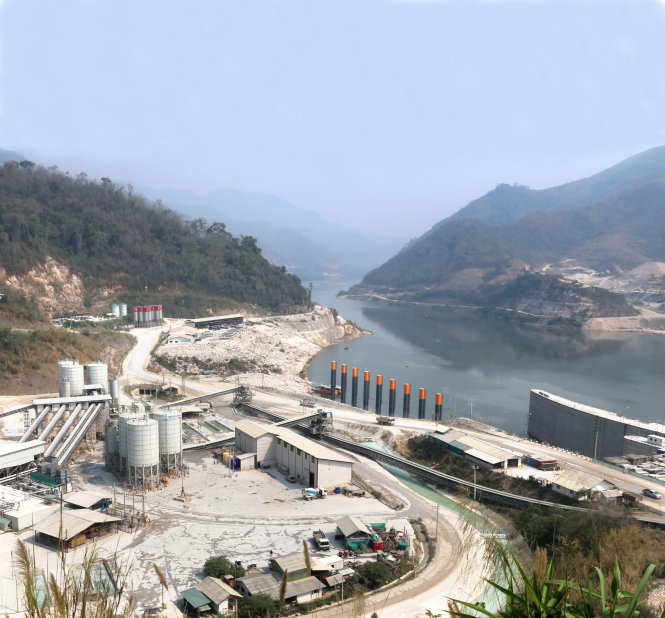
Hình ảnh công trình xây dựng đập thủy điện Xayaburi của Lào trong quá trình gấp rút hoàn thành (tháng 4/2016). Ảnh: TTO

Tiếp tục đọc “Hợp tác sông Mekong: Hãy xới to vấn đề”

Đập Sê Kông 1 đe dọa Đồng bằng Sông Cửu Long

NCĐT – GREGORY A. THOMAS – JAKE BRUNNER (*) Thứ Sáu | 06/04/2018 16:21 

Đập Sê Kông 1 có khả năng làm giảm lượng trầm tích bồi đắp cho Đồng bằng Sông Cửu Long và giảm đáng kể sản lượng đánh bắt cá tại Campuchia.

Sông Sê Kông bắt nguồn từ Thừa Thiên-Huế, Việt Nam chảy qua Lào, và đổ vào Campuchia. Đây là dòng nhánh lớn cuối cùng của sông Mê Kông chưa bị cản trở bởi các đập thủy điện và có tầm quan trọng đặc biệt, không thể thay thế được đối với an ninh lương thực của khu vực và với sức sản xuất của vùng Châu thổ Sông Mê Kông. Hai sông nhánh lớn khác, cùng với Sê Kông tạo thành các lưu vực 3S, là Srepôk và Se San đã bị chặn ngay trước nơi chúng nhập với dòng chính sông Mê Công bởi đập Hạ Sesan 2 được hoàn thành vào cuối năm 2017. Tiếp tục đọc “Đập Sê Kông 1 đe dọa Đồng bằng Sông Cửu Long”

Renewable Energy Auctions: A Guide to Design

IRENA

Auctions for contracts to develop power-generation capacity have emerged as an essential policy instrument for many countries to promote the transition to renewable energy sources and technologies. This six-volume guide from the International Renewable Energy Agency (IRENA) notes more than 60 countries using renewable energy auctions by 2015, mainly in order to attract competition and drive down costs.

Renewable Energy Auctions: A Guide to Design aims to advise policy makers on the implications of different approaches to such auctions. The set – structured around key auction design elements – offers choices and recommendations to support optimal decision-making in different contexts. Auction designs can emphasise cost effectiveness, supply security or socio-economic development objectives. Tiếp tục đọc “Renewable Energy Auctions: A Guide to Design”

More than 30 investors to pour money into electricity-from-waste plants

Last update 07:30 | 05/12/2017
VietNamNet Bridge – The government’s commitment to purchase all electricity output generated from waste-to-energy projects have encouraged more investors to develop projects in HCMC.

vietnam economy, business news, vn news, vietnamnet bridge, english news, Vietnam news, news Vietnam, vietnamnet news, vn news, Vietnam net news, Vietnam latest news, Vietnam breaking news, WTE technology, waste treatment, Da Phuoc

The HCMC authorities have called for investment in waste-to-electricity projects 

HCMC produces 8,500 tons of domestic waste every day which is treated by Vietstar, Tam Sinh Nghia Investment & Development JSC, Vietnam Waste Solutions and Citenco.

The municipal authorities have called on investors to invest in waste-to-energy plants which generate electricity and protect the environment.

HCMC produces 8,500 tons of domestic waste every day which is treated by Vietstar, Tam Sinh Nghia Investment & Development JSC, Vietnam Waste Solutions and Citenco.

According to Thoi bao Kinh Te Sai Gon , 34 investors, Vietnamese and foreign, have shown their willingness to develop projects to improve dumping grounds and treat waste with waste-to-energy technology.

These include foreign investors that use modern technologies such as Trisun Green Energy Corporation and Hitachi Zosen from Japan, Keppel – Tien Phuoc joint operation (Singapore), Naavovo Energy INC (Canada) and Sudokwon SLC (South Korea) Tiếp tục đọc “More than 30 investors to pour money into electricity-from-waste plants”

At this rate, it’s going to take nearly 400 years to transform the energy system

technologyreview

Here are the real reasons we’re not building clean energy anywhere near fast enough.

Fifteen years ago, Ken Caldeira, a senior scientist at the Carnegie Institution, calculated that the world would need to add about a nuclear power plant’s worth of clean-energy capacity every day between 2000 and 2050 to avoid catastrophic climate change. Recently, he did a quick calculation to see how we’re doing.

Not well. Instead of the roughly 1,100 megawatts of carbon-free energy per day likely needed to prevent temperatures from rising more than 2 ˚C, as the 2003 Science paper by Caldeira and his colleagues found, we are adding around 151 megawatts. That’s only enough to power roughly 125,000 homes.

At that rate, substantially transforming the energy system would take, not the next three decades, but nearly the next four centuries. In the meantime, temperatures would soar, melting ice caps, sinking cities, and unleashing devastating heat waves around the globe (see “The year climate change began to spin out of control”).

Caldeira stresses that other factors are likely to significantly shorten that time frame (in particular, electrifying heat production, which accounts for a more than half of global energy consumption, will significantly alter demand). But he says it’s clear we’re overhauling the energy system about an order of magnitude too slowly, underscoring a point that few truly appreciate: It’s not that we aren’t building clean energy fast enough to address the challenge of climate change. It’s that—even after decades of warnings, policy debates, and clean-energy campaigns—the world has barely even begun to confront the problem. Tiếp tục đọc “At this rate, it’s going to take nearly 400 years to transform the energy system”

Vietnam files complaint with WTO over US solar tariffs

pv-magazine.com

The Vietnamese authorities have submitted a complaint to the World Trade Organization (WTO) to request formal consultations with Washington over its recently announced 30% tariff on crystalline silicon PV imports.

Powering Up: Mekong Basin Connect

stimson_logo_blue 3  Announcement

Powering Up: Mekong Basin Connect

Countries in the Mekong Basin need a strategic, basin-wide approach to efficiently develop the basin’s water and energy resources in ways that protect the natural productivity of the river system. Otherwise, poorly coordinated hydropower planning on the Mekong mainstream and its tributaries will lead this resource rich region into a water and food security crisis.

In 2017, Stimson’s Energy, Water, and Sustainability program launched the Mekong Basin Connect Initiative, led by the Stimson Center, the International Union for the Conservation of Nature (IUCN), UC Berkeley’s Energy Resources Group, and The Nature Conservancy, to identify and promote new and pathways to achieve this ambitious goal. Click on the image below to learn more about Mekong Basin Connect.

Click to view Field Notes

Standard Chartered ‘breaching climate policy’ with Vietnam coal plant investment

climatechangenews

The London-based bank plans to co-finance Nghi Son 2 power plant, which NGOs say uses dirty old technology, against company and OECD guidelines

A railway coal depot in northern Vietnam (Pic: Flickr/garycycles8)

By Chloe Farand for DeSmog UK

A London-based bank has been accused of breaching its climate pledges over the financing of a heavily polluting coal-fired power plant in Vietnam.

Standard Chartered, a UK bank which supports British companies trading abroad, plans to co-finance the $2.5bn (£1.81bn) Nghi Son 2 coal plant in Thanh Hoa province, Vietnam.
Tiếp tục đọc “Standard Chartered ‘breaching climate policy’ with Vietnam coal plant investment”

Funding coal in Southeast Asia is ‘collective suicide’

eco-business.com – Experts at the Unlocking capital for sustainability forum observed that the finance sector, hampered by a short-term approach to investing, is lagging on sustainability, and that the financing of coal should be phased out as soon as possible.

Hydrogen: Fuel for Our Future?

worldwatch.org

Hydrogen-powered cars like this one may be commonplace in the future.

Hydrogen Powered CarOn July 18, BP and GE announced plans to jointly develop up to 15 new hydrogen power plants for generating electricity over the coming decade. The hydrogen will be derived from fossil fuels, including coal and natural gas. While the plants will emit greenhouse gases, the companies will employ carbon capture technologies they claim will reduce carbon dioxide (CO2) emissions by 90 percent. Although the operations will not be pollution-free, some environmentalists welcome the companies’ investment in hydrogen technology as a key development in bringing about a hydrogen economy. Tiếp tục đọc “Hydrogen: Fuel for Our Future?”