Nuclear energy: Where China is getting with small modular and fusion reactors

On Oct. 13 of this year, the PRC state media outlet CPNN, reported that China is pulling ahead in advanced nuclear power technology development with the launch of the large-scale production “Hualong One” (also known as HPR1000). As it develops, China not only aims to tackle the transmission bottleneck in the south, but also to export to countries like Pakistan as the PRC’s “business card” to the world.

China’s dual goals of localization and export orientation have long defined its nuclear strategy. Led by state-owned giants such as the China National Nuclear Corporation (CNNC), Beijing has invested heavily in domestic innovation while aggressively expanding into overseas markets. Beijing has sought to expand its reactor sales to markets such as Argentina and the United Kingdom, while also securing control over upstream uranium resources. CNNC’s 2019 acquisition of Namibia’s Rössing Uranium Mine, one of the world’s largest open-pit uranium operations, underscored China’s growing dominance across the nuclear value.

Beijing’s policy support for state-owned enterprises has enabled it to build a vertically integrated nuclear industry, driving rapid advances in small modular reactors (SMRs), fourth-generation technologies, and nuclear fusion research (the Artificial Sun). Furthermore, intensifying US–China competition is reshaping global nuclear exports and deepening the geopolitical risks of dependence on Chinese nuclear systems.

Tiếp tục đọc “Nuclear energy: Where China is getting with small modular and fusion reactors”

The Nuclear Revival: How Nuclear Reactors Have Evolved

#CNAInsider We chart the evolution of nuclear power, from the first controlled chain reaction to today’s small, micro modular reactors and the pursuit of fusion. New designs are being tailored to meet the energy needs of remote communities, AI infrastructure, and climate-conscious cities.

The episode highlights how nuclear power is being adapted to local contexts, featuring China’s pebble-bed reactor, Finland’s underground district heating plant, and Indonesia’s floating nuclear concept. It also examines Westinghouse’s portable microreactor and the fusion research underway at ITER in France and KSTAR in South Korea. Engineers, scientists, and policy experts weigh in on how nuclear energy is being reimagined to deliver clean, reliable power in a rapidly changing world.

Indonesia’s Floating Nuclear Power Plant Plan To Power Thousands Of Its Islands

How Small Nuclear Reactors Are Transforming Power Grids In China & Finland

The human cost of France’s nuclear tests in the Pacific

https://www.youtube.com/watch?v=4UFe4tRMZ0Y

Al Jazeera English – 10-8-2023

For 30 years, France undertook nuclear testing in its Pacific territory, French Polynesia.

In recent years, investigations have revealed the effects of the tests were far greater than France has officially acknowledged.

A total of 193 nuclear tests were undertaken, including 41 atmospheric tests that exposed the local population and site workers to high levels of radiation.

Today, children across the Pacific islands are still dealing with the nuclear fallout.

Cancer and other developmental diseases plague new generations born after the last test in 1996.

101 East investigates the costs of France’s nuclear tests in French Polynesia.

Đầu tư cho KH&CN hạt nhân thế nào cho hiệu quả?

TS – Thanh Nhàn

Nếu đơn thuần chỉ nhìn vào lợi ích kinh tế, rất nhiều người không thấy được giá trị mà cơ sở hạ tầng khoa học và các thiết bị nghiên cứu lớn như lò phản ứng nghiên cứu có thể đem lại cho một ngành, nhiều ngành, thậm chí cho cả xã hội.

Đoàn công tác VINATOM làm việc với TS. Khaled Toukan, Chủ tịch Ủy ban Năng lượng nguyên tử Jordan và các cán bộ của Ủy ban.

Jordan tháng mười một, khoảng thời gian đẹp nhất, dễ chịu nhất trong năm của quốc gia có khí hậu theo kiểu Địa Trung Hải: mát mẻ, nhiều mưa vào mùa đông và nóng khô mùa hè. Mặc dù thuộc về khu vực Trung Đông, kho dầu mỏ hàng đầu thế giới, nhưng vùng đất này không có nhiều tài nguyên thiên nhiên, và đặc biệt không có dầu mỏ. Có lẽ, đây là một phần lý do giải thích vì sao giữa các quốc gia Trung Đông giàu có nhờ khai thác vàng đen như UAE, Qatar, Kuwait… thì Jordan lại có vẻ kém tiếng, thậm chí lép vế. Tuy nhiên đó đã là quá khứ bởi từ năm, sáu năm trở lại đây, Jordan đã nổi lên như một hiện tượng. “Jordan hầu như đã đạt tới tầm quốc tế trong lĩnh vực năng lượng nguyên tử, họ đang dần dần phát triển theo hướng đó bởi có trong tay những cơ sở hạ tầng mơ ước nhất về năng lượng nguyên tử và vật lý hạt nhân là lò phản ứng nghiên cứu đa mục tiêu và trung tâm máy gia tốc Synchrotron. Và hơn nữa, họ có những con người có năng lực và tầm nhìn”, TS. Trần Chí Thành, Viện trưởng Viện Năng lượng nguyên tử Việt Nam (VINATOM), nhận xét như vậy ngay khi còn chưa rời Jordan.

Tiếp tục đọc “Đầu tư cho KH&CN hạt nhân thế nào cho hiệu quả?”

How small modular reactors may fuel nuclear power’s comeback

Al Jazeera English – 1 thg 11, 2022

Nuclear power gained a bad reputation following the disasters at Chernobyl, Fukushima and Three Mile Island.

Now, with global energy disruptions caused by Russia’s war in Ukraine and sky-high fuel prices means aging nuclear plants are getting a new lease on life.

And there is new type of nuclear plant is on the horizon- one that could revolutionize the industry.

They are called Small Modular Reactors, or SMRs for short.

Al Jazeera’s Rob Renolds reports from San Luis Obispo California.

7 reasons why nuclear energy is not the answer to solve climate change

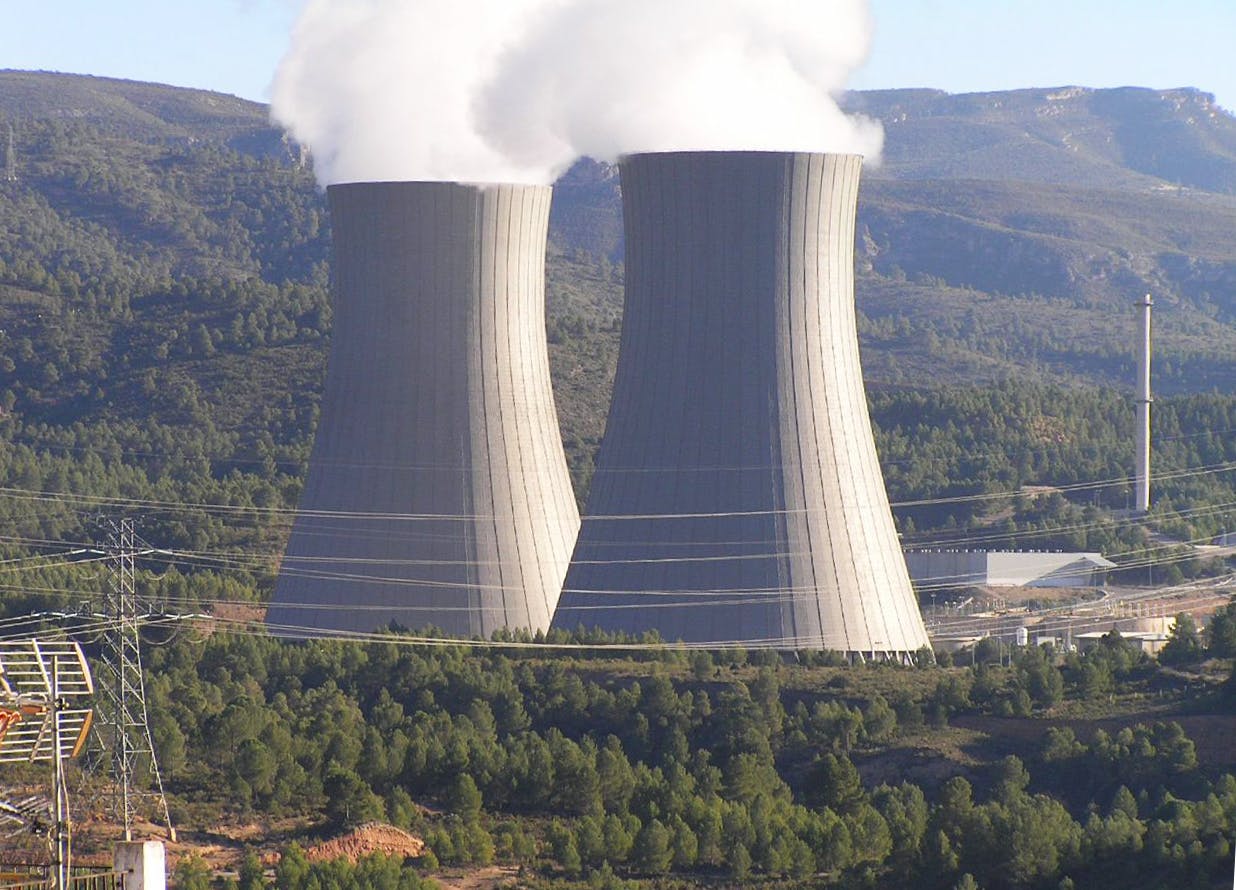
Cofrentes Nuclear Power Plant located about 2 kilometers southeast of Cofrentes, Spain
Mark Z. Jacobson

Mark Z. Jacobson

Professor of Civil and Environmental Engineering, Director, Atmosphere/Energy Program, Stanford University   

oneearth – There is a small group of scientists that have proposed replacing 100% of the world’s fossil fuel power plants with nuclear reactors as a way to solve climate change. Many others propose nuclear grow to satisfy up to 20 percent of all our energy (not just electricity) needs. They advocate that nuclear is a “clean” carbon-free source of power, but they don’t look at the human impacts of these scenarios. Let’s do the math…

Tiếp tục đọc “7 reasons why nuclear energy is not the answer to solve climate change”

Điện hạt nhân ở Việt Nam – tiến hay lùi?

Điện hạt nhân ở Việt Nam - tiến hay lùi? - 1
Điện hạt nhân đang đóng góp trên 10% sản lượng điện toàn cầu (Ảnh minh họa: IT)

Vương Hữu Tấn

DT – Thứ ba, 21/06/2022 – 12:00

Vấn đề điện hạt nhân tiếp tục được đề cập tại kỳ họp Quốc hội vừa qua. Theo Ủy ban Kinh tế, với lộ trình giảm phát thải tiến tới đạt mức phát thải ròng bằng 0 vào năm 2050, đây là lĩnh vực cần được nghiên cứu, xem xét trong quá trình phát triển giai đoạn tiếp theo.

Quốc hội nước ta đã phê duyệt chủ trương xây dựng nhà máy điện hạt nhân Ninh Thuận năm 2009 và Thủ tướng đã phê duyệt quy hoạch 8 địa điểm xây dựng các nhà máy. Năm 2016 vì các lý do khách quan, Quốc hội ban hành nghị quyết dừng thực hiện dự án này. 8 địa điểm đã được quy hoạch trong quyết định của Thủ tướng, trong đó có 2 địa điểm ưu tiên tại Ninh Thuận (Phước Dinh và Vĩnh Hải) được sử dụng cho nhà máy điện hạt nhân đầu tiên, đến nay về nguyên tắc đang được bảo lưu, chờ quyết định mới của Thủ tướng.

Tại nghị trường vừa qua, một đại biểu đề nghị xóa bỏ quy hoạch các địa điểm này, số khác muốn duy trì để sử dụng khi tái khởi động dự án điện hạt nhân Ninh Thuận trong tương lai. Bộ trưởng Bộ Công Thương thì khẳng định việc dừng thực hiện chủ trương đầu tư dự án điện hạt nhân Ninh Thuận không có nghĩa là “hủy bỏ”. Như vậy đây là vấn đề còn bỏ ngỏ, chờ quyết định cuối cùng của cấp có thẩm quyền.

Tiếp tục đọc “Điện hạt nhân ở Việt Nam – tiến hay lùi?”

We need to get serious about the renewable energy revolution—by including nuclear power

thebulletin.org

By Michael Edesess | May 5, 2022

One of my favorite quotes is from Sherlock Holmes: “Once you have eliminated the impossible, whatever remains, however implausible, must be the truth.”[1] This motto implicitly guides the ambitious plan to decarbonize all energy envisioned by most renewable energy enthusiasts. The only problem is that, not only is the alternative they dismiss not impossible, it could be much less implausible than the one they advocate.

The renewables army. A huge number of extremely earnest and bright people are working on trying to make the renewable energy future come true. They work at, or have passed through, the most elite institutions of our time, the top universities, the top financial firms, the most innovative corporations and startups. At the center of much of their effort is the Rocky Mountain Institute, the nonprofit research think-tank whose board I chaired more than 20 years ago. (They call it a “think-and-do” tank, which is more fitting.) RMI coordinates meetings (recently mostly Zoom meetings) with very smart participants from some of the foremost companies working on decarbonizing their businesses, companies like Google, Apple, Microsoft. It’s a pleasure to watch them think, discuss, and work out problems. It was an enormous pleasure to be on RMI’s board, especially to interact intellectually with the most brilliant individual I have ever met, RMI’s co-founder Amory Lovins.

Tiếp tục đọc “We need to get serious about the renewable energy revolution—by including nuclear power”

Việt Nam có đủ điều kiện phát triển điện hạt nhân

NLVN – 06:47 | 22/06/2021 – Nhân loại đã và đang đương đầu với thách thức thiếu nguồn năng lượng, các nguồn thủy năng, dầu, khí đang dần cạn kiệt, nguồn than trữ lượng khá hơn thì phải hạn chế sử dụng do phát thải khí nhà kính. Với Việt Nam chúng ta đang tìm cách chuyển dịch cơ cấu các nguồn năng lượng, trong đó giải pháp hợp lý được đa số thừa nhận là phối hợp năng lượng tái tạo với điện hạt nhân.


PGS, TS. BÙI HUY PHÙNG – HỘI ĐỒNG KHOA HỌC TẠP CHÍ NĂNG LƯỢNG VIỆT NAM

Điện hạt nhân: Việt Nam có nên nghiên cứu trở lại? - VietNamNet

Tiếp tục đọc “Việt Nam có đủ điều kiện phát triển điện hạt nhân”

Phát triển năng lượng nguyên tử: Không chỉ là hợp tác quốc tế

TS – 29/12/2021 07:10 – Thanh Nhàn

“Làm thế nào để hợp tác quốc tế trong lĩnh vực năng lượng thực sự hiệu quả?”, câu hỏi ấy khó trả lời hơn người ta tưởng bởi cho đến nay chúng ta vẫn chưa có một chính sách đột phá cho lĩnh vực này.


TS. Ayman Hawari, giám đốc Chương trình lò phản ứng hạt nhân của trường ĐH North Carolina (Mỹ) trao đổi với TS. Trần Chí Thành bên lò phản ứng PULSTAR của trường. Nguồn: North Carolina

Tiếp tục đọc “Phát triển năng lượng nguyên tử: Không chỉ là hợp tác quốc tế”

Hydrogen Production and Uses – The role of nuclear power

worldd-nuclear.org

(Updated November 2021)

  • Hydrogen is increasingly seen as a key component of future energy systems if it can be made without carbon dioxide emissions. 
  • It is starting to be used as a transport fuel, despite the need for high-pressure containment.   
  • The use of hydrogen in the production of liquid transport fuels from crude oil is increasing rapidly, and is vital where tar sands are the oil source. 
  • Hydrogen can be combined with carbon dioxide to make methanol or dimethyl ether (DME) which are important transport fuels. 
  • Hydrogen also has future application as industrial-scale replacement for coke in steelmaking and other metallurgical processes. 
  • Nuclear energy can be used to make hydrogen electrolytically, and in the future high-temperature reactors are likely to be used to make it thermochemically. 
  • The energy demand for hydrogen production could exceed that for electricity production today. 

Hydrogen is not found in free form (H2) but must be liberated from molecules such as water or methane. It is therefore not an energy source and must be made, using energy. It is already a significant chemical product, about half of annual pure hydrogen production being used in making nitrogen fertilisers via the Haber process and about one-quarter to convert low-grade crude oils (especially those from tar sands) into liquid transport fuels. There is a lot of experience handling hydrogen on a large scale, though it is not as straightforward as natural gas.  

Tiếp tục đọc “Hydrogen Production and Uses – The role of nuclear power”

Điều kiện ‘cần’ và ‘đủ’ để Việt Nam tái khởi động chương trình điện hạt nhân

NLVN – 08:29 | 10/09/2020 

Như chúng ta đều biết, trong dự thảo Báo cáo Quy hoạch điện VIII, Viện Năng lượng (Bộ Công Thương) đã đưa ra phương án xem xét phát triển nhà máy điện hạt nhân sau năm 2030, để cập nhật thêm thông tin, chuyên gia Tạp chí Năng lượng Việt Nam đã có cuộc phỏng vấn TS. Trần Chí Thành – Viện trưởng Viện Năng lượng Nguyên tử Việt Nam (Bộ Khoa học Công nghệ) về những nhận định xung quanh vấn đề này. Tuy nhiên, chủ trương dừng dự án điện hạt nhân đã được Quốc hội thông qua vào năm 2016, vì vậy, TS. Trần Chí Thành trả lời với tư cách là một nhà nghiên cứu trong lĩnh vực công nghệ và an toàn điện hạt nhân [1].

TS. Trần Chí Thành.


Xin ông cho biết hiện trạng các nhà máy điện hạt nhân (ĐHN) và xu thế phát triển loại nguồn điện này trên thế giới trong hai thập kỷ tới?

Tiếp tục đọc “Điều kiện ‘cần’ và ‘đủ’ để Việt Nam tái khởi động chương trình điện hạt nhân”

Nuclear Technology Review 2021 – International Atomic Energy Agency

Full report here

The Agency’s 2020 projections remained largely in line with the previous year’s
projections. In the high case, global nuclear electricity generating capacity was
projected to increase by 82% to 715 gigawatts (electrical) (GW(e)) by 2050,
corresponding to 11% of global electricity generation, versus around 10% in
2019. The low case projected a decrease of 7% to 363 GW(e), representing a
6% share of global electricity generation.

At the end of 2020, the world’s total nuclear power capacity was 392.6 GW(e),
generated by 442 operational nuclear power reactors in 32 countries. The
nuclear sector adapted to national guidelines with regard to the coronavirus
disease (COVID-19) pandemic by taking effective measures. At the outset of the
pandemic in early 2020, the Agency established the COVID-19 Nuclear Power
Plant Operating Experience Network to help share information on measures
taken to mitigate the pandemic and its impact on the operation of nuclear power
plants (NPPs). None of the 32 countries with operating nuclear power plants
reported any impact on safe and reliable NPP operation due to the pandemic.

As a clean, reliable, sustainable and modern energy source, nuclear power makes
a significant contribution to reducing greenhouse gas emissions worldwide,
while fulfilling the world’s increasing energy demands and supporting sustainable
development and post COVID-19 pandemic recovery. Nuclear power supplied
2553.2 terawatt-hours of electricity in 2020, accounting for nearly a third of the
world’s low carbon electricity production. It is widely recognized that, to address
the challenges of a clean energy transition, nuclear power will have to play a
significant role.
Tiếp tục đọc “Nuclear Technology Review 2021 – International Atomic Energy Agency”

Nuclear research center to be built in Vietnam

Friday, December 10, 2021 |

(VOVWORLD) – A nuclear science and technology research center with a 10-MWt nuclear reactor will be built in Vietnam, according to the Vietnam Atomic Energy Institute. 

Nuclear research center to be built in Vietnam - ảnh 1
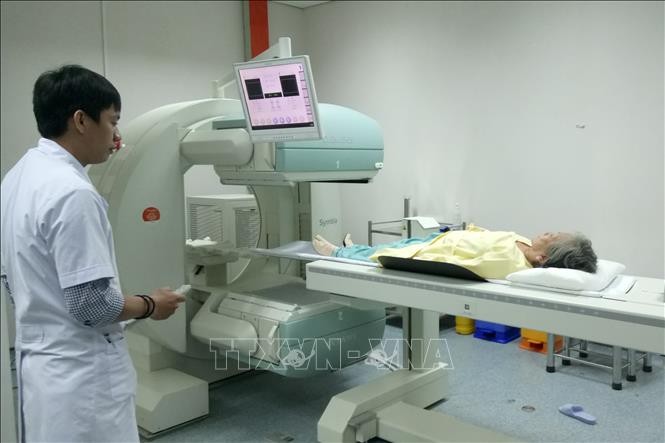
The Dong Nai General Hospital uses nuclear technology in early diagnosis of cancer. (Photo: VNA)

Dr. Tran Chi Thanh, Director of the Vietnam Atomic Energy Institute, said procedures to build the research center started in 2019.

The project is part of an agreement between Vietnam and Russia signed in November, 2011. The new research center will replace a nuclear reactor in Da Lat in Central Vietnam to boost nuclear applications for socio-economic development.

Khai thác kênh ngang số một trên lò phản ứng hạt nhân Đà Lạt

TS – 27/10/2021 14:16 – Phạm Ngọc Sơn

Lần đầu tiên kể từ khi khôi phục lò phản ứng hạt nhân Đà Lạt, việc khai thác dòng neutron nhiệt trên kênh ngang số một của lò được thực hiện.

Tiếp tục đọc “Khai thác kênh ngang số một trên lò phản ứng hạt nhân Đà Lạt”