VNY – Jun 30, 2016
Trong khi Việt Nam còn chưa có nhà máy điện hạt nhân thì một số người Trung Quốc đang ồn ào bình luận để thổi phồng về khả năng hạt nhân của Việt Nam có thể đe dọa an ninh hạt nhân đối với Trung Quốc.
Conversations on Vietnam Development

VNY – Jun 30, 2016
Trong khi Việt Nam còn chưa có nhà máy điện hạt nhân thì một số người Trung Quốc đang ồn ào bình luận để thổi phồng về khả năng hạt nhân của Việt Nam có thể đe dọa an ninh hạt nhân đối với Trung Quốc.
April 26, 2016 | 7:45 pm
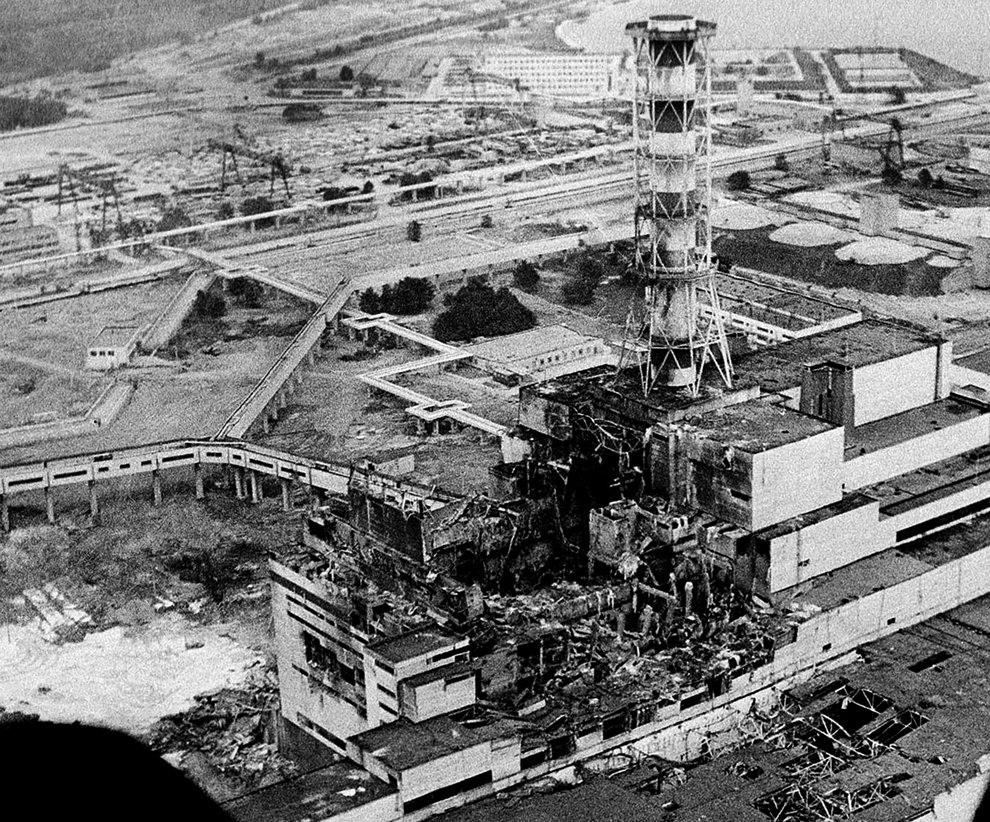
news.vice.com – Thirty years ago today, the Number 4 reactor at Chernobyl blew itself to smithereens, resulting in the worst nuclear disaster in history. A radiation cloud drifted over Europe, contaminating food sources that to this day continue to be monitored. Fifty-thousand residents in the nearby city of Pripyat were permanently evacuated. Dozens of people lost their lives.
Yet about 20 years after the disaster, an extensive two-year study led by seven UN agencies and involving the governments of Ukraine, Russia, and Belarus found that the biggest health threat from Chernobyl wasn’t the result of radiation — it was fatalism. People assumed they were going to die early due to radiation exposure, and so failed to take care of themselves as years passed. Tiếp tục đọc “The Lessons of Chernobyl May Be Different Than We Thought”


The map above shows which countries have operating commercial nuclear power stations and which ones do not as of April, 2016. At last count, 31 countries generate at least some of their electricity needs via nuclear power.
Here are 13 interesting facts about these countries and nuclear power. Tiếp tục đọc “Nuclear Vs Non-Nuclear Powered Countries: 2016 Facts”
Indeed, throughout my career I always perceived a dark nuclear cloud hanging over my head, threatening no less than the extinction of civilization.
During the Cold War we had a half dozen nuclear crises, of which the Cuban Missile Crisis was the most dangerous, and I was close enough to these crises that they made a deep personal impression on me. I believed then, and I believe to this day, that we got through these crises and avoided a nuclear catastrophe as much by good luck as by good management. Tiếp tục đọc “William J. Perry on nuclear war and nuclear terrorism”
Is Vietnam diverting its civilian know-how to create an indigenous nuclear weapons program? Not yet, says the CSS’ Oliver Thränert, but increased tensions or overt conflict with China could lead Hanoi to develop its own nuclear deterrent.
By Oliver Thränert for Center for Security Studies (CSS)
ISN – For many years, the international nuclear non-proliferation regime has been in deep crisis. This became apparent most recently when the ninth Review Conference of the Parties to the Treaty on the Non-Proliferation of Nuclear Weapons (NPT) in May 2015 ended without a common final document. At the same time, a number of threshold countries are planning to begin using nuclear energy for peaceful purposes. In a time of increasing international tensions, some of them might build on know-how acquired through their civilian programs to safeguard their national security needs through a nuclear weapons program in the near future. Vietnam is an interesting case in point. Irrespective of certain delays in the development of its peaceful nuclear program, the country has progressed quite far. At the same time, it is engaged in an increasingly precarious conflict with its main neighbor, nuclear-armed China. Currently, there are no signs of a Vietnamese nuclear weapons program. In the framework of the nuclear non-proliferation regime, the country is a model of transparency and cooperation. But it is uncertain whether this will always remain the case. On the contrary, Hanoi might change its policy if the conflict with China should come to a head while the NPT continues to be weakened.
Vietnam’s strategic situation
Vietnam might complete its first nuclear reactor within a few years, ahead of ambitious neighbors such as Indonesia or Malaysia. The country’s main motivations are its growing energy requirements and the desire to diversify its energy sources. Considerations of prestige may also be a factor. As a threshold nation, Vietnam aims to achieve the same level as Asia’s developed nations. With a view to China, Hanoi probably also wishes to demonstrate the high level of global confidence that the country enjoys in sensitive matters of security policy. Tiếp tục đọc “Nonproliferation and Nuclear Energy: The Case of Vietnam”
While hundreds died in the evacuation, none perished as a result of exposure to radiation.
technologyreview : The Fukushima Daiichi nuclear accident, which began on March 11, 2011, uprooted thousands of Japanese people, set the worldwide nuclear power industry back a decade, and caused a run on potassium iodide (said to help ward off thyroid cancer). What it didn’t do was kill anyone from radioactive fallout.
A Greenpeace report released this week, “Nuclear Scars: The Lasting Legacies of Chernobyl and Fukushima,” takes a harsher view, saying that “the health consequences of the Chernobyl and Fukushima catastrophes are extensive.” But most of the report dwells on Chernobyl, and it notes that the primary effects of Fukushima were “mental health disorders, such as depression, anxiety and Post Traumatic Stress Disorder.” Put another way: fear and panic resulting from the accident (and from the loss of homes and livelihoods) were more dangerous than the radiation.
Tiếp tục đọc “The Effects of Fukushima Linger after Five Years, but Not from Radiation”

eastasiaforum_ The scale of the disaster was massive: a 9.0 magnitude earthquake, the most powerful to hit Japan in recorded history, which triggered a 40-metre-high tsunami that took out the Fukushima Daiichi nuclear power plant. Over 20,000 perished, an evacuation zone carved out around Fukushima Daiichi will remain uninhabitable for tens of thousands of years, and 100,000 people from the evacuation zone and surrounding areas are still living as nuclear refugees. Tiếp tục đọc “Lessons from Fukushima”
On the opening day of the investigation, Mr Naoto Kan, the former Prime Minister of Japan and leader at the time of the nuclear accident, joined the crew of the Greenpeace flagship, the Rainbow Warrior. As the country nears the fifth anniversary of the Fukushima disaster Mr. Kan called for a complete phase out of nuclear power.
“I once believed Japan’s advanced technology would prevent a nuclear accident like Chernobyl from happening in Japan. But it did not, and I was faced with the very real crisis of having to evacuate about 50 million people at risk from the Fukushima Daiichi nuclear accident. I have since changed my mind,” said Mr. Kan on board the Greenpeace ship, Rainbow Warrior. “We do not need to take such a big risk. Instead we should shift to safer and cheaper renewable energy with potential business opportunities for our future generations.”
Tokyo Electric Power Company (TEPCO) has produced over 1.4 million tonnes of radioactive contaminated water in an effort to cool the hundreds of tonnes of molten reactor fuel in Fukushima Daiichi reactor units 1, 2 and 3 [1]. In addition to the initial releases of liquid nuclear waste during the first weeks of the accident and the daily releases from the plant ever since, contamination also flows from land, particularly the forests and mountains of Fukushima, and will continue to contaminate the Pacific Ocean for at least 300 years.(2)
“The Fukushima disaster is the single largest release of radioactivity into the marine environment in history. There is an urgent need to understand the impacts this contamination is having on the ocean, how radioactivity is both dispersing and concentrating and its implications,” said Shaun Burnie, Senior Nuclear Specialist with Greenpeace Germany.
“TEPCO failed to prevent a multiple reactor meltdown and five years later it’s still an ongoing disaster. It has no credible solution to the water crisis they created and is failing to prevent the further contamination of the Pacific Ocean.”
thehill – Earlier this month, President Obama released a budget proposal for 2017, which includes billions of dollars for controversial modernization programs for each leg of the nuclear triad — land-based, sea-based and aircraft missiles — and cuts to nuclear nonproliferation programs. This is troubling for a number of reasons, never mind the irony that this spending spree comes from the same man who delivered a 2009 speech in Prague pledging “America’s commitment to seek the peace and security of a world without nuclear weapons.”
Of top concern are requests to allocate $95.6 million for the research and development of a new nuclear-tipped cruise missile, replacing the current air-launched cruise missile whose mission has long-since faded into irrelevance. The plan would also nearly double our cruise missile collection to around 1,000 missiles. These additions have been denounced by a chorus of military experts and former national security advisors, including the father of the nuclear-armed cruise missile, former Secretary of Defense William Perry.
Other nuclear modernization programs in the budget request include:
Date: November 26, 2015
Source:University of Texas at Austin
Summary:Research shows that rock salt, used by Germany and the United States as a subsurface container for radioactive waste, might not be as impermeable as thought.
Research from The University of Texas at Austin shows that rock salt, used by Germany and the United States as a subsurface container for radioactive waste, might not be as impermeable as thought or as capable of isolating nuclear waste from groundwater in the event that a capsule or storage vessel failed.
sciencedaily – A team of researchers from the university has used field testing and 3-D micro-CT imaging of laboratory experiments to show that rock salt can become permeable. Their findings, published in the Nov. 27 issue of Science, has implications for oil and gas operations, and, most notably, nuclear waste storage. The team includes researchers from the university’s Cockrell School of Engineering and Jackson School of Geosciences.
“What this new information tells us is that the potential for permeability is there and should be a consideration when deciding where and how to store nuclear waste,” said Maša Prodanovic, assistant professor in the Department of Petroleum and Geosystems Engineering. “If it’s an existing nuclear waste storage site, you may want to re-evaluate it with this new information.”
Salt generally blocks fluid flow at shallow depth, a feature that allows oil reservoirs to form. But scientists have long suspected that salt becomes permeable at greater depth. Jackson School professor James E. Gardner confirmed this theory through laboratory experiments with synthetic rock salt. Tiếp tục đọc “Nuclear waste storage sites in rock salt may be more vulnerable than previously thought”
Allen Greenberg | Nov 29, 2015

Here’s a nice bit of irony:
Energybiz – James Hansen, the scientist who was first to raise the alarm about climate change, fueling calls to shut down coal-fired power plants, will later this week urge the expansion of nuclear power.
In other words, depending on how things work out, utilities that were forced to close down or convert their coal-powered operations because of Hansen’s work, could soon find themselves thanking him for encouraging policymakers and regulators to approve plans to build new nuclear plants.
Hansen will issue his call in Paris, during the two-week climate conference that kicks off Monday. The conference is expected to draw some 20,000 attendees, including President Obama and 120 or so other world leaders.
The hope of the climate talks is to keep global temperatures from rising more than 2 degrees Celsius compared to pre-industrial levels. Few, however, expect the conference to deliver anything meaningful. That’s because the pledges being made to cut greenhouse gas emissions are voluntary and are unlikely to be enough to stave off environmental catastrophe. Tiếp tục đọc “Obama’s nuclear play”

This week, Xi Jinping made his first visit to the United Kingdom as the president of the People’s Republic of China. Both governments hope that the visit will inaugurate a “golden era” of trade relations. President Xi’s visit highlights the budding cooperation between the two countries in the area of civilian nuclear energy. Among the roughly £30 billion in deals inked between the two countries was a Chinese commitment to partially fund the first nuclear plant to be built in the United Kingdom since 1995 and the first new nuclear plant in the European Union since the 2011 Fukushima accident. The announcement during Xi’s visit of an agreement to allow substantial Chinese participation in the UK civil nuclear program signifies a new era for China’s nuclear export program and perhaps for the global nuclear industry. It also provides fodder for ongoing debates about the costs and benefits of using nuclear power to address climate change and the national security implications of allowing foreign investment in critical infrastructure. We outline the scope of nuclear cooperation, explain the key factors driving the deal, and discuss the potential implications for the global nuclear industry. Tiếp tục đọc “The UK-China Civilian Nuclear Agreement”
Published by American Academy of Arts and Sciences,
Cambridge, MA 02138, 2014
Download the PDF
In 2006, with the adoption of the document “Strategy for Peaceful Uses of Atomic Energy up to 2020,” Vietnam’s government officially announced its long-term plan to meet rising domestic energy consumption by including nuclear energy in its energy portfolio. The following year, another document, “Strategy Implementation Master Plan,” was released to provide further details on the roadmap that the Vietnamese government intended to follow to develop a nuclear energy program. According to the latter document, Vietnam’s nuclear program would include the construction of two 1,000 megawatt of electrical power (MWe) reactors in Phuoc Dinh in the southern Ninh Thuan province by 2015, originally scheduled to be in operation by 2020. Following this, another 2,000 MWe nuclear power plant (with two reactors) is set to be built in Vinh Hai, a seaside community 40 kilometers from Phuoc Vinh, and scheduled to come online by 2021.
Despite recent obstacles that have forced the government to delay construction on the first two nuclear plants, Vietnam is thus poised to become the first state to operate nuclear plants in Southeast Asia, outpacing countries such as Indonesia and Malaysia, which have long been interested in nuclear energy. Tiếp tục đọc “Nuclear Power in Vietnam: International Responses and Future Prospects”
ENGLISH: Cyber Security at Civil Nuclear Facilities: Understanding the Risks
Theo một báo cáo mới của Chatham House, nguy cơ xảy ra tấn công mạng nghiêm trọng vào các cơ sở hạ tầng hạt nhân dân sự đang lớn dần, khi các cơ sở ngày càng phụ thuộc nhiều hơn vào các hệ thống kỹ thuật số và tăng mức độ sử dụng phần mềm thương mại hàng loạt sẵn có.
Báo cáo cho thấy xu hướng số hóa kết hợp với sự thiếu nhận thức ở cấp điều hành về các rủi ro liên quan, nghĩa là nhân viên nhà máy hạt nhân có thể không nhận ra ở mức độ đầy đủ về những nguy cơ về an ninh mạng ở nhà máycủa họ, do đó không chuẩn bị đầy đủ để đối phó với các cuộc tấn công có thể xảy ra.

Những phát hiện cụ thể bao gồm:
• Quan niệm thông thường rằng tất cả các cơ sở hạt nhân là ‘air gapped’ (cách ly khỏi hệ thống internet công cộng) thực ra chỉ là lời đồn. Những lợi ích thương mại từ việc kết nối internet nghĩa là một số cơ sở hạt nhân hiện nay có lắp đặt kết nối VPN, mà nhà vận hành cơ sở đôi khi không biết.
• Các công cụ tìm kiếm có thể dễ dàng xác định các thành phần cơ sở hạ tầng quan trọng với các kết nối như vậy.
• Thậm chí, tại các cơ sở được coi là air gapped – cách ly với hệ thống internet công cộng, bộ phận bảo về này này có thể bị chọc thủng chỉ với một ổ đĩa flash.
• Những nguy cơ và lỗ hổng trong chuỗi cung ứng có nghĩa là thiết bị được sử dụng tại một cơ sở hạt nhân có nguy cơ thỏa hiệp bất kỳ lúc nào. Tiếp tục đọc “An ninh mạng tại cơ sở điện hạt nhân dân sự: Hiểu về các rủi ro”
 CVD
CVD 