A still image taken from a handout video made available by the Russian Defence Ministry press service shows a general view of the Chernobyl Nuclear Power Plant in Pripyat, Ukraine, 7 March 2022. Russian President Putin on 24 February 2022 announced a “special military operation against Ukraine”. Martial law has been introduced in Ukraine, and explosions are heard in many cities including Kyiv. [Handout photo/EPA/EFE]
Ukraine said on Wednesday (9 March) there was a danger of a radiation leak at the Chernobyl nuclear power station after electricity was cut off to the plant, but the UN nuclear watchdog saw “no critical impact on security”.
Zaporizhzhia nuclear power plant in southern Ukraine. The two tall smokestacks are at a coal-fired generating station about 3km beyond the nuclear plant. Photo credit: Ralf1969 via Wikimedia Commons.
As the Russian invasion of Ukraine began to unfold, Russia’s swift occupation of the Chernobyl reactor complex and the surrounding exclusion zone sparked widespread speculation and concern.[1] The concern was not limited to whether the occupation would cause further radioactive release from Chernobyl;[2] it also included possible Russian military action against other Ukrainian nuclear facilities. These fears were further accelerated when Russian forces shelled and apparently occupied the Zaporizhzhia nuclear power complex near Enerhodar, Ukraine.[3] There have also been reports of attacks on a former Radon disposal site near Kyiv.[4]
World leaders have expressed concerns, and the UN Security Council held an emergency meeting on Friday to discuss the issue. At the meeting, the US ambassador told the emergency session that the assault on the Zaporizhzhia nuclear power plant “represents a dire threat to the world.” [5] The IAEA’s Board of Governors passed a resolution that deplored the Russian invasion and urged Russia to allow Ukraine to continue to control its nuclear facilities. The board’s resolution was similar to a UN General Assembly resolution passed on March 3rd.[6] Despite the high levels of concern the reactors at Zaporizhzhia do not appear to have been damaged and there has been no reported radiation release from the facility.
Russian troops seize Europe’s largest nuclear power plant in southeastern Ukraine, after attack sparks fire.
Published On 4 Mar 20224 Mar 2022
Russian forces have captured Ukraine’s Zaporizhzhia nuclear power plant, the largest in Europe, according to regional officials.
Ukrainian authorities said on Friday Russian shelling had caused a fire at a building in the plant complex that was later put out. The blaze raised alarm from leaders worldwide of a potential massive disaster. Russia blamed the attack on Ukrainian saboteurs, calling it a “monstrous provocation”.
Here is what we know so far:
Where is it located?
The Zaporizhzhia nuclear power plant is located in the southern Ukraine steppe on the Dnieper River, some 550 kilometres (342 miles) southeast of Ukraine’s capital, Kyiv, and about 525km (325 miles) south of Chernobyl, the site of the world’s worst nuclear power plant accident in 1986, which has also now been seized by Russian forces.
The plant has a total capacity of about 6,000 megawatts, enough to power about roughly four million homes.
On Wednesday, residents carrying Ukrainian flags had blocked the road to the plant, in an apparent standoff with Russian forces.
What happened?
But on Friday Russian troops were accused of attacking the plant, in an assault Ukraine’s President Volodymyr Zelenskyy branded “nuclear terror” and said could endanger the continent.
A video feed from the plant showed shelling and smoke rising near a building at the plant compound.
NLVN – 06:47 | 22/06/2021 – Nhân loại đã và đang đương đầu với thách thức thiếu nguồn năng lượng, các nguồn thủy năng, dầu, khí đang dần cạn kiệt, nguồn than trữ lượng khá hơn thì phải hạn chế sử dụng do phát thải khí nhà kính. Với Việt Nam chúng ta đang tìm cách chuyển dịch cơ cấu các nguồn năng lượng, trong đó giải pháp hợp lý được đa số thừa nhận là phối hợp năng lượng tái tạo với điện hạt nhân.
PGS, TS. BÙI HUY PHÙNG – HỘI ĐỒNG KHOA HỌC TẠP CHÍ NĂNG LƯỢNG VIỆT NAM
“Làm thế nào để hợp tác quốc tế trong lĩnh vực năng lượng thực sự hiệu quả?”, câu hỏi ấy khó trả lời hơn người ta tưởng bởi cho đến nay chúng ta vẫn chưa có một chính sách đột phá cho lĩnh vực này.
TS. Ayman Hawari, giám đốc Chương trình lò phản ứng hạt nhân của trường ĐH North Carolina (Mỹ) trao đổi với TS. Trần Chí Thành bên lò phản ứng PULSTAR của trường. Nguồn: North Carolina
Hydrogen is increasingly seen as a key component of future energy systems if it can be made without carbon dioxide emissions.
It is starting to be used as a transport fuel, despite the need for high-pressure containment.
The use of hydrogen in the production of liquid transport fuels from crude oil is increasing rapidly, and is vital where tar sands are the oil source.
Hydrogen can be combined with carbon dioxide to make methanol or dimethyl ether (DME) which are important transport fuels.
Hydrogen also has future application as industrial-scale replacement for coke in steelmaking and other metallurgical processes.
Nuclear energy can be used to make hydrogen electrolytically, and in the future high-temperature reactors are likely to be used to make it thermochemically.
The energy demand for hydrogen production could exceed that for electricity production today.
Hydrogen is not found in free form (H2) but must be liberated from molecules such as water or methane. It is therefore not an energy source and must be made, using energy. It is already a significant chemical product, about half of annual pure hydrogen production being used in making nitrogen fertilisers via the Haber process and about one-quarter to convert low-grade crude oils (especially those from tar sands) into liquid transport fuels. There is a lot of experience handling hydrogen on a large scale, though it is not as straightforward as natural gas.
Như chúng ta đều biết, trong dự thảo Báo cáo Quy hoạch điện VIII, Viện Năng lượng (Bộ Công Thương) đã đưa ra phương án xem xét phát triển nhà máy điện hạt nhân sau năm 2030, để cập nhật thêm thông tin, chuyên gia Tạp chí Năng lượng Việt Nam đã có cuộc phỏng vấn TS. Trần Chí Thành – Viện trưởng Viện Năng lượng Nguyên tử Việt Nam (Bộ Khoa học Công nghệ) về những nhận định xung quanh vấn đề này. Tuy nhiên, chủ trương dừng dự án điện hạt nhân đã được Quốc hội thông qua vào năm 2016, vì vậy, TS. Trần Chí Thành trả lời với tư cách là một nhà nghiên cứu trong lĩnh vực công nghệ và an toàn điện hạt nhân [1].
TS. Trần Chí Thành.
Xin ông cho biết hiện trạng các nhà máy điện hạt nhân (ĐHN) và xu thế phát triển loại nguồn điện này trên thế giới trong hai thập kỷ tới?
Căn cứ Hiến pháp nước Cộng hòa xã hội chủ nghĩa Việt Nam năm 1992 đã được sửa đổi, bổ sung một số điều theo Nghị quyết số 51/2001/QH10; Quốc hội ban hành Luật năng lượng nguyên tử,
Luật này áp dụng đối với tổ chức, cá nhân trong nước, người Việt Nam định cư ở nước ngoài, tổ chức, cá nhân nước ngoài, tổ chức quốc tế tiến hành các hoạt động trong lĩnh vực năng lượng nguyên tử tại Việt Nam.
The Agency’s 2020 projections remained largely in line with the previous year’s
projections. In the high case, global nuclear electricity generating capacity was
projected to increase by 82% to 715 gigawatts (electrical) (GW(e)) by 2050,
corresponding to 11% of global electricity generation, versus around 10% in
2019. The low case projected a decrease of 7% to 363 GW(e), representing a
6% share of global electricity generation.
At the end of 2020, the world’s total nuclear power capacity was 392.6 GW(e),
generated by 442 operational nuclear power reactors in 32 countries. The
nuclear sector adapted to national guidelines with regard to the coronavirus
disease (COVID-19) pandemic by taking effective measures. At the outset of the
pandemic in early 2020, the Agency established the COVID-19 Nuclear Power
Plant Operating Experience Network to help share information on measures
taken to mitigate the pandemic and its impact on the operation of nuclear power
plants (NPPs). None of the 32 countries with operating nuclear power plants
reported any impact on safe and reliable NPP operation due to the pandemic.
As a clean, reliable, sustainable and modern energy source, nuclear power makes
a significant contribution to reducing greenhouse gas emissions worldwide,
while fulfilling the world’s increasing energy demands and supporting sustainable
development and post COVID-19 pandemic recovery. Nuclear power supplied
2553.2 terawatt-hours of electricity in 2020, accounting for nearly a third of the
world’s low carbon electricity production. It is widely recognized that, to address
the challenges of a clean energy transition, nuclear power will have to play a
significant role. Tiếp tục đọc “Nuclear Technology Review 2021 – International Atomic Energy Agency”→
(VOVWORLD) – A nuclear science and technology research center with a 10-MWt nuclear reactor will be built in Vietnam, according to the Vietnam Atomic Energy Institute.
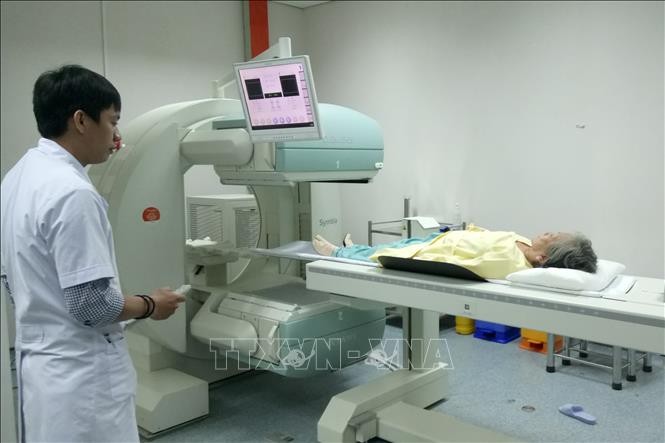
The Dong Nai General Hospital uses nuclear technology in early diagnosis of cancer. (Photo: VNA)
Dr. Tran Chi Thanh, Director of the Vietnam Atomic Energy Institute, said procedures to build the research center started in 2019.
The project is part of an agreement between Vietnam and Russia signed in November, 2011. The new research center will replace a nuclear reactor in Da Lat in Central Vietnam to boost nuclear applications for socio-economic development.
President Joe Biden has set ambitious goals for fighting climate change: To cut U.S. carbon emissions in half by 2030 and to have a net-zero carbon economy by 2050. The plan requires electricity generation—the easiest economic sector to green, analysts say—to be carbon-free by 2035.
Where is all that clean electricity going to come from?
A few figures from the U.S. Energy Information Administration (EIA) illustrate the challenge. In 2020 the United States generated about four trillion kilowatt-hours of electricity. Some 60 percent of that came from burning fossil fuels, mostly natural gas, in some 10,000 generators, large and small, around the country. All of that electricity will need to be replaced—and more, because demand for electricity is expected to rise, especially if we power more cars with it.
Việt Nam tích cực tham gia vào chương trình nghiên cứu và ứng dụng công nghệ hạt nhân của Cơ quan Năng lượng Nguyên tử Quốc tế (IAEA).
Tổng giám đốc IAEA Rafael Mariano Grossi ghi nhận và đánh giá cao sự đóng góp của Việt Nam đối với Dự án ReNuAL 2. Nguồn: TTXVN
Đóng góp cho Dự án ReNuAL 2 thể hiện trách nhiệm, vị thế và tinh thần chủ động của Việt Nam trong thúc đẩy phát triển công nghệ hạt nhân vì mục đích hòa bình. Do đó, IAEA tuyên bố sẵn sàng hỗ trợ Việt Nam phát triển, ứng dụng công nghệ hạt nhân trong ứng phó với đại dịch Covid-19, y tế, điều trị ung thư, phát triển nông nghiệp, biến đổi khí hậu, tăng trưởng bền vững.
Cho đến nay, ngay cả những quốc gia tiên tiến về KH&CN vẫn chưa có giải pháp nào coi là hoàn hảo về một nguồn năng lượng xanh không phát thải carbon.
TS. Trần Chí Thành là một chuyên gia về công nghệ hạt nhân và an toàn hạt nhân. Ảnh: Thanh Nhàn.
Tuy nhiên, ngay cả khi không tồn tại giải pháp nào hoàn hảo thì vẫn có những lựa chọn tối ưu – nghĩa là vừa đảm bảo an ninh năng lượng mà vẫn hạn chế phát thải, TS. Trần Chí Thành, Viện trưởng Viện Năng lượng nguyên tử Việt Nam, cho biết như vậy qua góc nhìn của một chuyên gia về công nghệ hạt nhân và an toàn hạt nhân.
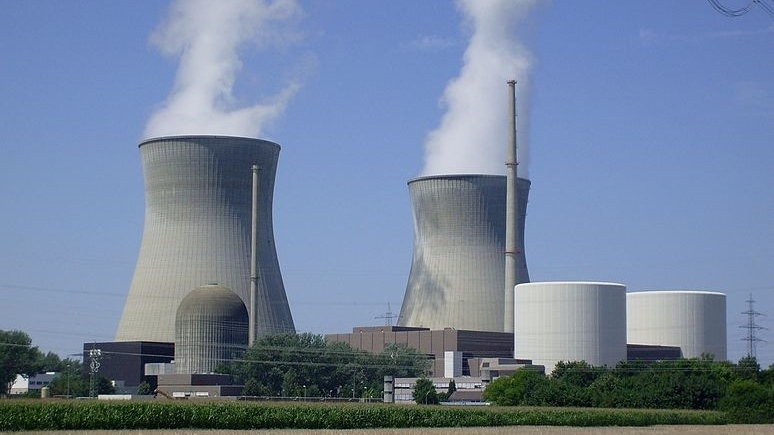
The cooling tower at the Mülheim-Kärlich nuclear power plant collapses during a controlled demolition near Koblenz, Germany, on Aug. 9, 2019. The plant was shut down on Sept. 9, 1988. THOMAS FREY/DPA/AFP VIA GETTY IMAGES
For years, the proponents of wind and solar energy have promised us a green future with electricity too cheap to meter, new energy infrastructure with little environmental impact on the land, and deep cuts in carbon emissions. But despite the rapid growth of renewable energy, that future has yet to materialize. Instead, many of the places that are furthest along in transitioning to renewable energy are today facing a crisis of power shortages, sky-high electricity prices, and flat or rising carbon emissions.
In California, Gov. Gavin Newsom has ordered companies owning backup diesel generators to operate them nonstop when electricity demand is high in order to avoid rolling blackouts. In Britain, exploding natural gas prices have shuttered factories, bankrupted power companies, and threaten to cause food shortages. Germany, meanwhile, is set for the biggest jump in greenhouse emissions in 30 years due to surging use of coal for power generation, which the country depends on to back up weather-dependent wind and solar energy and fill the hole left by its shuttered nuclear plants.
The proximate cause of all these crises has been surging natural gas prices as the world recovers from the COVID-19 pandemic. But the underlying problem is that despite huge bets on renewable energy over the last several decades, California, Britain, and Germany have chosen fossil fuels over carbon-free nuclear energy to backstop their electrical systems.


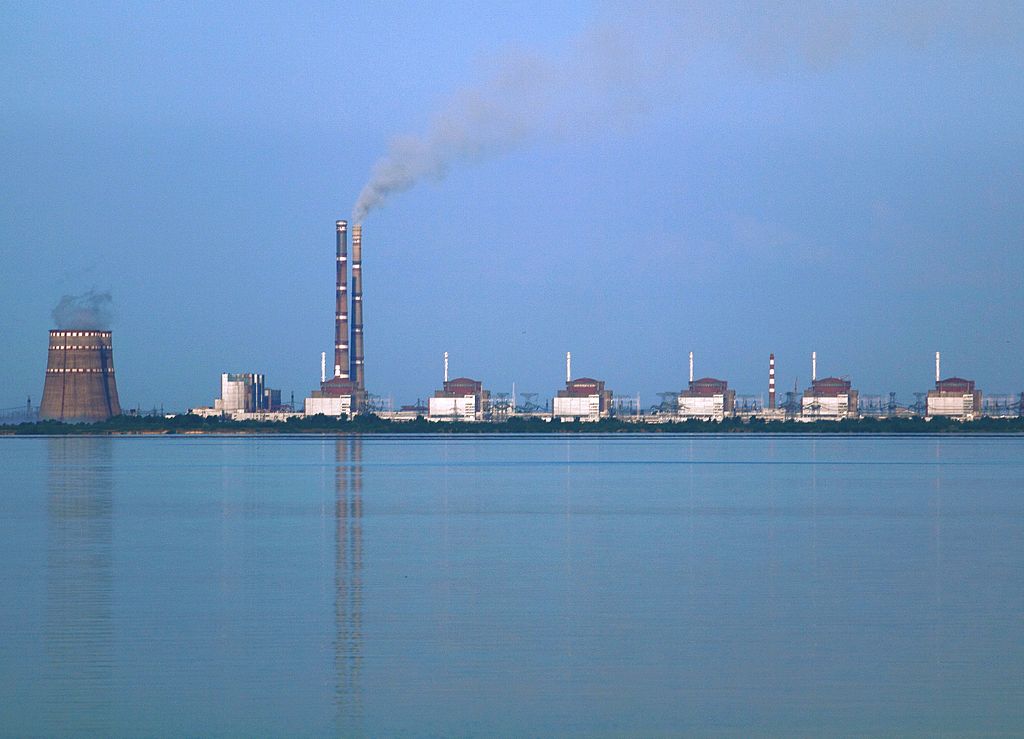 Zaporizhzhia nuclear power plant in southern Ukraine. The two tall smokestacks are at a coal-fired generating station about 3km beyond the nuclear plant. Photo credit: Ralf1969 via Wikimedia Commons.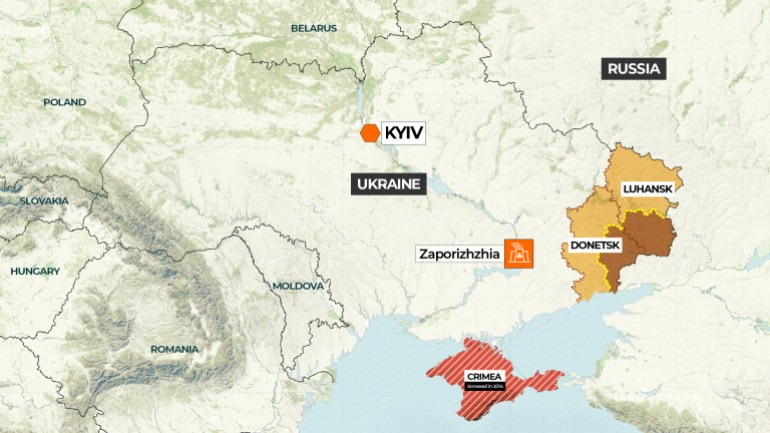




 CVD
CVD 