Bộ ảnh thiên nhiên hoang dã của Ma Rừng đẹp đến nỗi người xem phải kêu lên thảng thốt: Đáng yêu thế này, sao ai kia nhẫn tâm tận diệt chim trời?
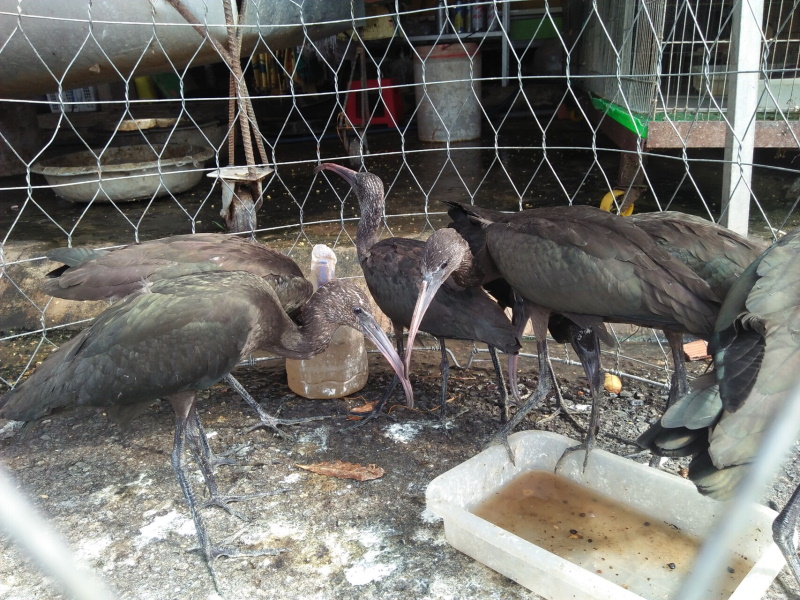
Khứu hông đỏ- Chim đặc hữu cao nguyên Lâm Viên. Cấp độ bảo tồn NT ( Sắp bị đe dọa)
Tìm hiểu về nghề làm ảnh, chụp ảnh với máy phim đen trắng từ khi còn là nam sinh trung học, tới nay ông Nguyễn Thanh Liêm đã gắn bó với chiếc máy ảnh hơn 40 năm.
Tuy nhiên, phần lớn thời gian trong quãng đời đó, ông cất máy để làm kinh tế gia đình và đi … trồng rừng. Nguyễn Thanh Liêm từng lội rừng dọc Trường Sơn, am hiểu đại ngàn và nghiện trồng cây gây rừng tới mức được bạn bè, đồng nghiệp gọi quen luôn cái biệt danh độc đáo là “Ma Rừng”.
Bạn có biết: Hoạt động nuôi nhốt gấu lấy mật ở Việt Nam đã tồn tại HƠN 2 THẬP KỈ
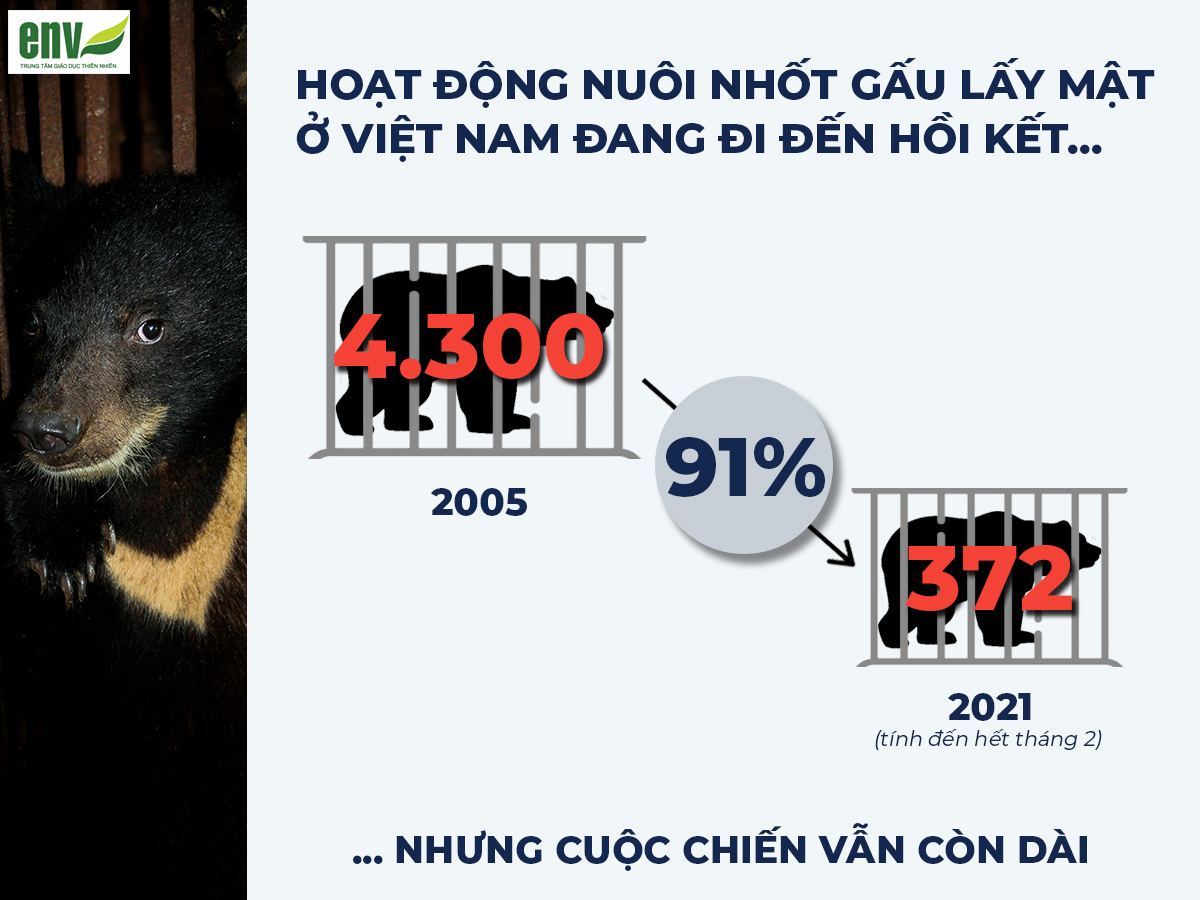
Đỉnh điểm là năm 2005 với 4.300 cá thể gấu bị nuôi nhốt trên khắp cả nước. Đây cũng là năm công tác bảo vệ gấu bắt đầu được đẩy mạnh.
15 năm trôi qua, số gấu bị nuôi nhốt lấy mật trên cả nước đã giảm 91% (từ 4300 cá thể gấu trong năm 2005 xuống chỉ còn 372 cá thể gấu tính đến hết tháng 2/2021). 39 tỉnh thành trên cả nước không có gấu bị nuôi nhốt lấy mật. Trong năm 2020, 32 cá thể gấu đã được sống cuộc sống mới tại các trung tâm cứu hộ.
Hoạt động nuôi nhốt gấu lấy mật đang dần đi đến hồi kết, nhưng cuộc chiến vẫn còn dài. Chỉ còn lại những điểm nóng về nuôi nhốt gấu, cũng là những thử thách khó khăn nhất. Hãy cùng ENV hành động để bảo vệ gấu tại Việt Nam!
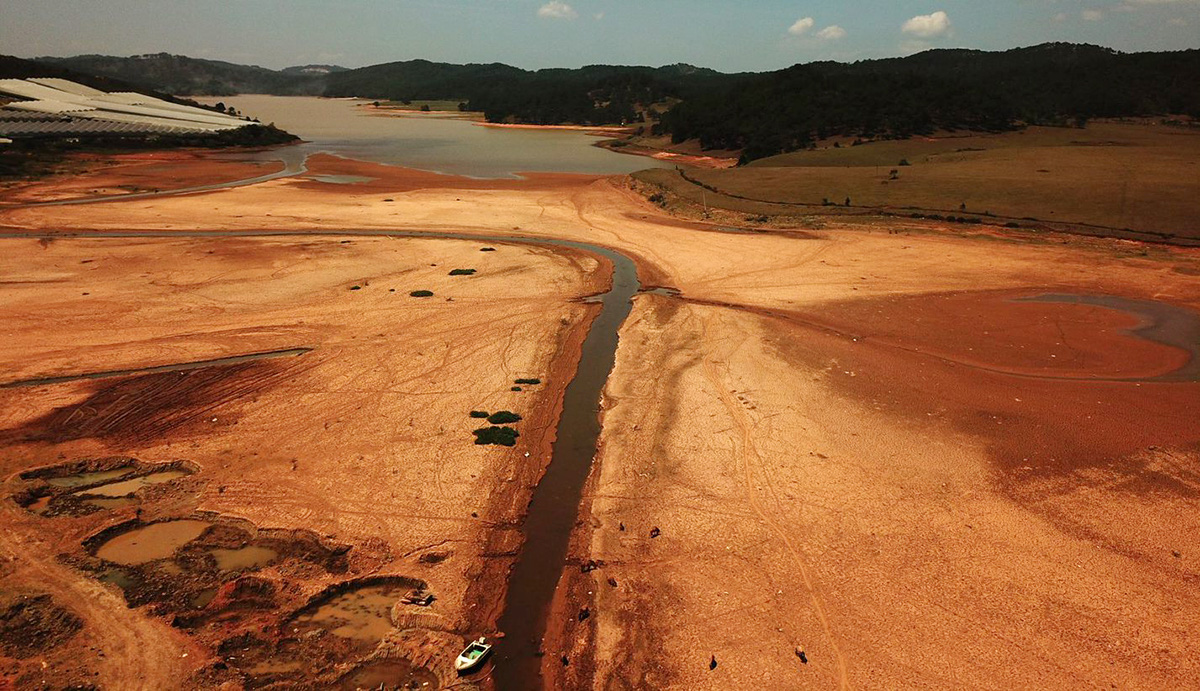
TTO – Hồ Đankia – Suối Vàng là nguồn cấp nước cho toàn TP Đà Lạt và vùng lân cận. Nay phần lớn lòng hồ cạn khô, nứt nẻ. Hồ tuyệt đẹp giữa rừng đang chết và nước đang cạn kiệt từng ngày. Cách nào cứu nguồn nước cho Đà Lạt?
Lượng nước rất nhỏ dồn lại ở khu vực trũng giữa lòng hồ, hai nhà máy nước sử dụng nước tại đây để lọc cấp cho TP Đà Lạt và huyện Lạc Dương – Ảnh: ĐỨC THỌ
Nếu để hồ Đankia – Suối Vàng tiếp tục khô cạn và ô nhiễm, 10 năm nữa Đà Lạt không có nước uống – đó là cảnh báo được nêu ra trong một kỳ họp HĐND tỉnh Lâm Đồng năm 2017. Nay người Đà Lạt đang lo âu, có vẻ như điều tồi tệ nhất đang đến sớm hơn dự kiến.
Gần 15 năm qua, hàng nghìn hộ dân ở huyện Thạch Hà (Hà Tĩnh) sống trong cảnh “ở không được, đi không xong” khi mỏ sắt Thạch Khê bất động.
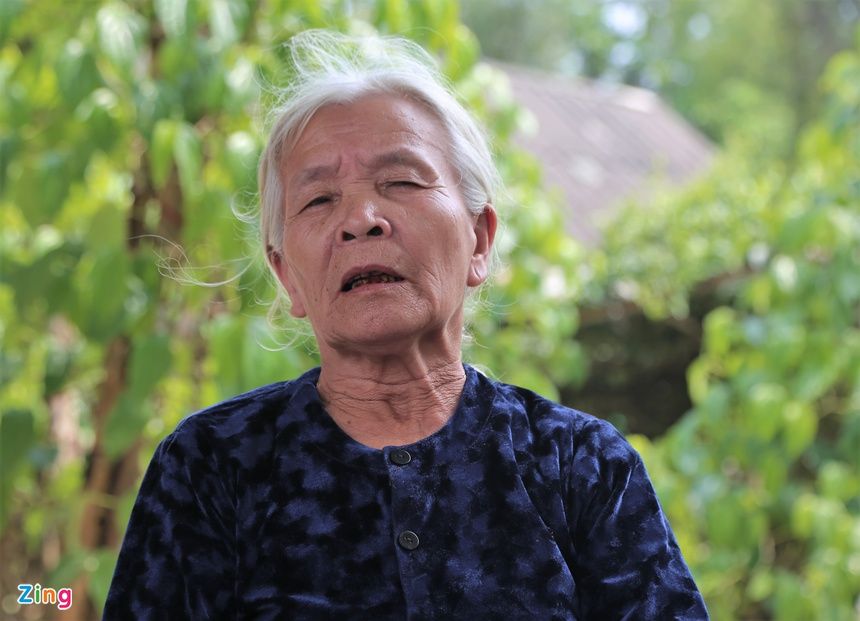
“Cả nghìn hộ dân phải bỏ nhà, bỏ đất canh tác để nhường đất cho dự án mỏ sắt Thạch Khê. Ai cũng nghĩ cuộc sống sẽ tốt hơn tại nơi ở mới nhưng mọi điều ngược lại. Thiếu nước sạch, thiếu đất, thiếu việc làm đã khiến không ít người quay về bên moong mỏ, giữa lúc mỏ sắt đang nằm im lìm”, bà Nguyễn Thị Phú (75 tuổi, thôn Văn Sơn, xã Đỉnh Bàn, huyện Thạch Hà, Hà Tĩnh), tâm sự.
Bà Phú lo lắng với cuộc sống cạnh mỏ sắt. (Ảnh: Phạm Trường)
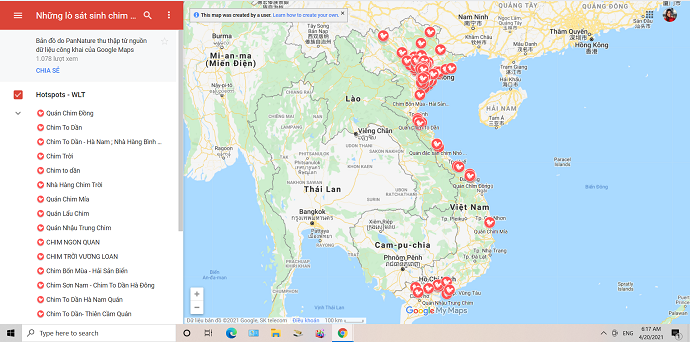
nature.org.vn – Bản đồ các địa điểm quảng bá món đặc sản “chim to dần”, chim hoang dã, chim trời, … dưới đây do PanNature thu thập từ nguồn dữ liệu công khai trên Google Maps. Từ nguồn dữ liệu công cộng này, chúng ta có thể hình dung được mức độ phổ biến cũng như nhu cầu sử dụng các loài chim hoang dã ở các địa phương trên cả nước.
Trong tổng số 164 địa điểm thu thập được, miền Bắc có 129 điểm, miền Trung 24 điểm, và miền Nam 11 điểm. Hà Nội (50), Hà Nam (15) và Bắc Ninh (14) là những nơi có mật độ các nhà hàng, quán nhậu chim trời nhiều nhất. Số liệu ở các khu vực khác có thể chưa phản ánh hết thực tế do hạn chế về dữ liệu địa điểm công khai.
Dữ liệu cập nhật đến 7/4/2021. Chúng tôi sẽ tiếp tục cập nhật dữ liệu lên bản đồ này để phản ánh đầy đủ hơn về tình trạng tiêu thụ các loài chim hoang dã ở Việt Nam. Các bạn có thể giúp gửi thông tin cho chúng tôi để bổ sung thêm các địa điểm.
Với 63 vùng chim quan trọng toàn cầu và 7 vùng chim đặc hữu, Việt Nam được xác định là một trong những khu vực quan trọng bậc nhất trong mạng lưới các tuyến đường bay chim di cư và các loài chim đặc hữu. Các Vườn Quốc gia Xuân Thủy (tỉnh Nam Định), Tràm Chim (tỉnh Đồng Tháp), Mũi Cà Mau (tỉnh Cà Mau)… có ý nghĩa đặc biệt quan trọng đối với các loài chim hoang dã, di cư. Trong số 49 loài chim đặc hữu của khu vực Đông Dương, Việt Nam chiếm 33 loài, trong đó 10 loài chỉ có ở Việt Nam1.
Trong xu hướng suy giảm đa dạng sinh học toàn cầu, các loài chim Việt Nam đang phải đối mặt với nguy cơ suy giảm số lượng, thậm chí nhiều loài đứng trước nguy cơ tuyệt chủng. Việt Nam có 918 loài chim thuộc 24 bộ và 101 họ2, trong đó có 109 loài cần quan tâm bảo tồn, 11 loài cực kỳ nguy cấp, 19 loài nguy cấp, 28 loài sắp nguy cấp và 50 loài sắp bị đe dọa.
Nhiều loại động vật hoang dã của Việt Nam được pháp luật ưu tiên bảo vệ. Ảnh: PanNature, 2020.
Bên cạnh các nguyên nhân mất môi trường sống do con người chuyển đổi mục đích sử dụng đất, đốt rừng làm nương rẫy, khai thác tài nguyên quá mức, ô nhiễm môi trường, v.v. một vấn nạn nổi cộm, nhức nhối diễn ra trong nhiều năm qua là việc săn bắt, tiêu thụ các loài chim hoang dã, di cư tại nhiều địa phương. Điển hình như các vi phạm xảy ra tại chợ chim Thạnh Hóa (Long An3) hay Cát Bà (Hải Phòng4). Theo phản ánh của báo chí, các cơ sở giết mổ, nhà hàng có thực đơn chim hoang dã hiện diện tại Hà Nội, Bắc Ninh, Hà Nam, Vĩnh Phúc, Nghệ An, Hà Tĩnh5. Theo kết quả khảo sát trực tuyến người dân tại Việt Nam do Công ty tư vấn chiến lược và điều tra thị trường GlobeScan và Tổ chức Quốc tế về Bảo tồn Thiên nhiên (WWF) thực hiện trong tháng 3/2020 với 5.000 người được lựa chọn ngẫu nhiên, có đến 15% trong số đó đã mua hoặc biết ai mua động vật hoang dã, trong đó chim sống chiếm 48%.
Trong tủ lạnh một nhà hàng đặc sản chim trời. Ảnh: PanNature.
Với độ phủ của Internet ngày càng rộng rãi, các gian hàng buôn bán chim trời và các loài động vật hoang dã cũng hoạt động nhộn nhịp và có phần ít bị kiểm soát hơn chợ trời, nhà hàng. Người bán công khai sản phẩm từ tươi sống đến thành phẩm, thậm chí là cả video quá trình săn bắt hoặc giết mổ, trên Facebook, Youtube, Zalo và các nền tảng khác.
Nhà hàng đặc sản chim hoang dã tại Hà Nam. Ảnh: Hoàng Chiên/Dân Việt.
Nhà hàng đặc sản chim hoang dã tại Hà Nam. Ảnh: Hoàng Chiên/Dân Việt.
Quảng cáo công khai “đặc sản” trên mạng Internet. Ảnh chụp màn hình.
Các quy định pháp luật hiện hành về bảo tồn đa dạng sinh học và các giống loài động thực vật hoang dã, cụ thể như Luật Đa dạng sinh học; Luật Lâm nghiệp; Bộ Luật Hình sự; Nghị định số 64/2019/NĐ-CP; Thông tư số 04/2017/TT-BNNPTNT là cơ sở để bảo vệ các loài chim trời. Nhiều loài chim hoang dã, di cư đã được đưa vào Danh mục loài nguy cấp, quý, hiếm được ưu tiên bảo vệ để quản lý, bảo vệ theo quy định của pháp luật như loài Sếu đầu đỏ, Cò mỏ thìa, Rẽ mỏ thìa… Tuy nhiên, các cơ quan chức năng cho rằng việc phát hiện, xử lý vi phạm về chim hoang dã vẫn còn gặp nhiều khó khăn, thách thức. Một trong những nguyên nhân chính được cho là do công tác phối hợp giữa các lực lượng nhằm phát hiện, truy bắt, xử lý các đối tượng vi phạm chưa chặt chẽ, thiếu kịp thời.
TTO – Chỉ trong vòng 2 năm gần đây, VN có thêm 35 sân golf, nâng tổng số sân golf cả nước lên 75 sân. Các địa phương đang đua nhau làm sân golf nên hàng trăm sân golf khác dự kiến sẽ hoạt động trong những năm tới.
Ảnh: QUANG ĐỊNH
Theo các chuyên gia, đang có tình trạng các chủ dự án lợi dụng việc cho phép sử dụng 10% tổng diện tích đất sân golf xây dựng các công trình phục vụ hoạt động sân golf để xây khách sạn, biệt thự nghỉ dưỡng phục vụ mục đích kinh doanh trái phép.
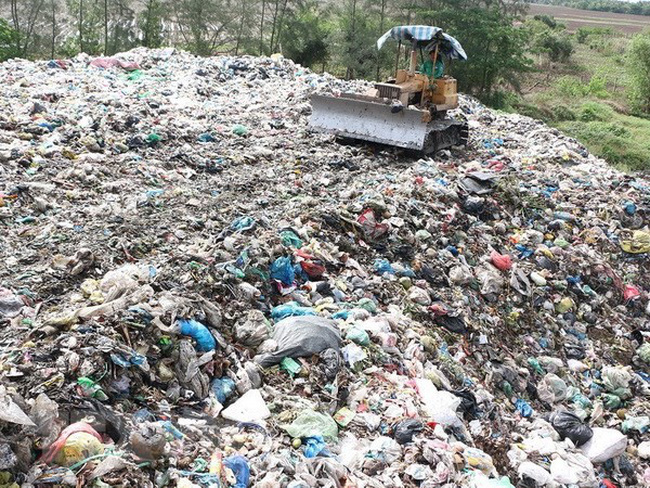
Vẫn còn 6,3% khối lượng chất thải rắn sinh hoạt đô thị và 17% khối lượng chất thải rắn sinh hoạt nông thôn không được thu gom và bị thải bỏ ra môi trường xung quanh.
Theo đánh giá của Chính phủ, rác thải sinh hoạt đô thị, nông thôn chưa được phân loại, thu gom, xử lý hiệu quả, gây ô nhiễm môi trường, mất vệ sinh.
Hiện nay, khoảng 70% khối lượng chất thải rắn sinh hoạt được thu gom được xử lý bằng phương pháp chôn lấp với khối lượng khoảng 35.000 tấn/ngày nhưng chỉ có khoảng 20% trong số các bãi chôn lấp là bãi chôn lấp hợp vệ sinh, còn lại là các bãi chôn lấp không hợp vệ sinh hoặc các bãi tập kết chất thải cấp xã.
Đó là thực tế được nêu tại báo cáo vê công tác bảo vệ môi trường năm 2020 của Chính phủ gửi đến các vị đại biểu Quốc hội tại kỳ họp thứ 11 vừa qua.
The towering symbols of progress – skyscrapers – are actually symbolic of a steadily worsening quality of life. We breathe polluted air and lose time we can never regain.
Ngo Chi Tung
I wake my children up at 5:30 every weekday for our 12.5 km commute from Cau Dien Ward in Nam Tu Liem District to the city center. It takes us 1-1.5 hours.
Winter days are the worst. Dawn doesn’t break by 6 a.m., and seeing my third grader daughter shiver as she sits inside the school guard’s booth to wait for the school to open breaks my heart, each time.
It gets even worse in the afternoon. The journey home has always been long, but by 5 p.m. it is almost like a pilgrimage that would demoralize even the most devout believers. I’ve now become used to being stuck on the road for hours, while my daughter has learned to frequent the school guard’s booth, like many of her classmates, as they wait for their parents to show up.
Điều tra độc quyền: Sun Group, Địa Ngục Tự và ma trận chiếm lĩnh rừng quốc gia Tam Đảo
23/09/2019 – 07:00
PNO – Khi được giao nhiệm vụ đi tìm hiểu thông tin về dự án của Tập đoàn Sun Group tại rừng quốc gia Tam Đảo – Tam Đảo II, có giá trị 25.000 tỷ đồng, chúng tôi đã lạc vào ‘rừng thông tin’ chính thống và không chính thống.
Ông Toàn dẫn phóng viên vào thất định làm trò đồi bại
Lời tòa soạn: Từ Vườn Quốc gia Tam Đảo đến núi Bà Nà, núi rừng tan nát, chim muông cây cỏ bị thiêu rụi bởi mặt trời, nhưng mặt trời không phải từ trên cao, mà từ Sun Group (Tập đoàn Mặt trời).
Họ phá núi, đốn rừng, mở đường để dựng bê tông, xây khu vui chơi, đặt trạm kiểm soát, thu tiền. Sun Group xứng đáng được gọi là “trời”, bởi được che chắn từ hạ giới có tên là im lặng của chính quyền từ trung ương đến địa phương.
Và vẫn “bổn cũ soạn lại”, một mớ hư hư thực thực: trấn yểm long mạch, khởi phát tâm linh… đẻ ra từ liên kết giữa thầy chùa biến thái với doanh nghiệp hòng lùa người ta vào ma trận với đích duy nhất: kiếm tiền…
Đã từ lâu những tiếng nói phản biện, kêu cứu, uất ức về những dự án tàn phá tự nhiên của Sun Group vang lên, nhưng tất cả đều như một trò đùa. Không chặn bàn tay lông lá này lại thì long mạch đúng nghĩa sẽ bị chặt yểm, tà khí sẽ lộng hành, lòng người sẽ nát tan, non nước sẽ tả tơi.
By AFP March 24, 2021 | 11:09 am GMT+7 VNExpressTrang Nguyen has spent much of her life trying to end the illegal wildlife trade. Photo by AFP/Nhac Nguyen.As a small girl, Trang Nguyen saw a bear stabbed through the chest with a giant needle at her neighbor’s house in northern Vietnam.
The bear, flat on its back, was being pumped for its bile, a fluid drawn from its gallbladder that has long been used in traditional medicine to treat liver disease.
“I had seen visitors to Hanoi zoo who brought sticks to poke animals and it really made my blood boil,” Trang, the founder of local conservation group WildAct, told AFP.
“But conservation wasn’t something I really wanted to do until I witnessed what happened to this bear.”
It was the first of her many encounters with a global multi-billion-dollar illegal wildlife trade that devastates species the world over, fuels corruption and threatens human health.
She has gone undercover in South Africa to snare traffickers and secured a PhD in traditional medicine’s impact on wildlife.
Trang has also set up her home country’s first postgraduate course for aspiring conservationists, to help more Vietnamese make it to the top of her field.
In the 1990s, decades of war and isolation meant environmental awareness was a new notion in Vietnam.
(NLĐO) – Thú rừng thui nằm lổn ngổn trên quày, chủ hàng vung dao chặt thịt chó mời chào du khách, dưới bến thuyền thanh niên tụ tập đánh bài, quán nhậu xập xình bia rượu…
Những tưởng sự trần trụi trên chỉ có ở nơi chốn xô bồ. Nhưng không, đấy là chùa Hương. Chùa Hương trong mùa hành hương mà vậy đấy.
Đánh bài trên đường vào chùa Hương. Ảnh: Ngô Nhung
Được xây dựng đã hơn 3 thế kỷ, chùa Hương với nhiều danh thắng và truyền thống tín ngưỡng đã trở thành nét văn hóa in sâu trong tâm linh của người Việt, đặc biệt là người dân các tỉnh phía Bắc. Lễ hội chùa Hương là một trong những lễ hội lớn nhất trong năm của Việt Nam. Ấy vậy mà từ lâu, những trò bán buôn đã làm vấy bẩn chốn này. Tiếp tục đọc “Chùa Hương bị vấy bẩn đến phản cảm!”→
TS – 01/03/2021 07:15 – Vịnh Nha Trang, một trong những vịnh đẹp nhất thế giới, được đánh giá là có đa dạng sinh học cao so với nhiều vùng ven bờ khác ở Việt Nam, đã giảm tới 90% lượng san hô khỏe mạnh, phong phú so với bốn thập niên trước.
Rạn san hô khu vực Hòn Mun, vịnh Nha Trang. Nguồn: Ảnh do Ban Quản lý vịnh Nha Trang cung cấp/ Báo Người Lao động.
Đây là kết quả nghiên cứu được công bố vào năm ngoái của nhóm các nhà khoa học tại Viện Sinh thái học và Tiến hóa, Viện Hàn lâm Khoa học Nga và Viện Hải dương học tại Nha Trang công bố trên tạp chí Marine and Freshwater Research1. Tiếp tục đọc “Suy giảm 90% san hô ở Vịnh Nha Trang”→
Washington [US], March 1 (ANI): Raising concerns over the dipping water-levels of the Mekong River and upstream dams in China, Principal Deputy Assistant Secretary of State for East Asian and Pacific Affairs Ambassador Atul Keshap points out that upstream dams in China that exacerbate droughts are hurting the communities and ecosystems that have relied for countless generations on the Mekong River’s natural flood pulse.
Speaking at the Indo-Pacific conference on Strengthening Transboundary River Governance, Keshap on Saturday (local time) said the conference report launched at the event is excellent and summarizes our work examining the challenges facing the Mekong River basin and its ties to the economies, livelihoods, and culture of nearly 70 million people.
“We remain concerned just as we were in October during the conference–that record droughts and the upstream dams in China that exacerbate them are hurting the communities and ecosystems that have relied for countless generations on the Mekong River’s natural flood pulse,” he said as reported by the Frontier Post.








 Trang Nguyen has spent much of her life trying to end the illegal wildlife trade. Photo by AFP/Nhac Nguyen.As a small girl, Trang Nguyen saw a bear stabbed through the chest with a giant needle at her neighbor’s house in northern Vietnam.


 CVD
CVD 