mekongeye – Residents of the Mekong Delta are seeing houses tumble into rivers and livelihoods disappear due to erosion driven by sand mining
Local government workers use sandbags to fill in areas of subsidence along the Hau River in Chau Phu district, An Giang province, Vietnam (Image: Dinh Tuyen)
Editor’s note: In light of increasingly volatile seasons, the unquantified effects from hydropower, and continued sand mining, mainland Southeast Asia finds itself combating ever more mercurial sandbanks. For the highly populated Mekong Delta region of Vietnam, homes being washed away has become a regular facet of the wet season. But the effects of overdevelopment on the Mekong are felt across the Mekong basin. In Cambodia, the recent consequences have been stark: in May, Vannak Si and Bun Thoeun Srey Leak, both 12, died when a bank gave way in Kandal province, on the border with Vietnam. As the land beneath river-dwellers’ feet becomes ever more unstable, the sand mining and concrete industry defy solutions, as mainland Southeast Asia continues with breakneck development.
When a riverbank subsided and gave way four years ago, Tran Van Bi’s house collapsed into a river in Vietnam’s Mekong Delta. Everything his family had accumulated over 32 years was gone in an instant.
7 November 2022 at 9:10 (Updated on 7 November 2022 at 18:17)
Traditional slash and burn farming lands ethnic minorities in jail as authorities try to preserve country’s forests.
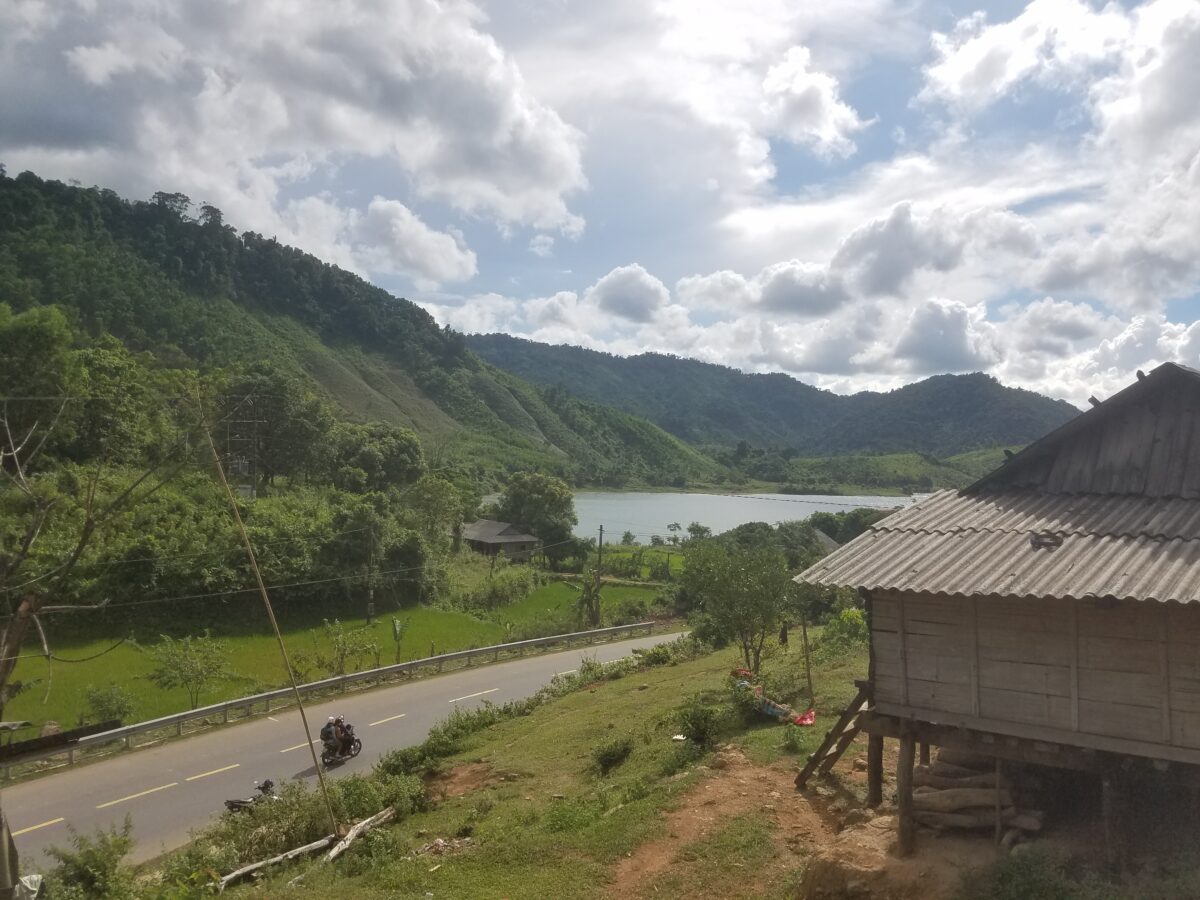
Many people in Dakrong district do not own any farmland. Instead, they are surrounded by a protected forest, hydropower plants and a special-use forest. PHOTO: Nguyen Dac Thanh
QUANG TRI, VIETNAM – One afternoon at the end of 2017, officials in Dakrong district in Central Vietnam’s Quang Tri province visited Ho Thi Nieng’s house. They claimed she and her husband had “burned the protected forest to do farming.”
“We had been cultivating that land for a long time and there had never been a problem,” 26-year-old Nieng, who belongs to the Van Kieu ethnic minority in Ta Leng village, said as she recalled her panic at the accusation.
The following year, in 2018, the young mother was sentenced to nine months in jail for burning the forest to farm it. Nieng’s husband, Ho Van Hai, 32, was also charged with the same crime, but received a suspended sentence – he was only “helping his wife” and had two young children.
552 vụ xâm phạm động vật hoang dã bị xử lý hình sự từ năm 2015 – 2020. Con số này được cho là vẫn chưa tương xứng với thực tế buôn bán, xâm phạm động vật hoang dã đã và đang diễn ra ở Việt Nam.
Một trong 7.000 xác rùa biển chết được công an Nha Trang phát hiện trong kho của Hoàng Tuấn Hải. Năm 2018, Hải bị kết án bốn năm sáu tháng tù. Ảnh: ENV
Nguyễn Hữu Huệ, 52 tuổi, giám đốc một công ty thương mại, bị Công an Hà Nội bắt vào tháng 7.2019, khi đang vận chuyển 7 xác hổ đông lạnh trên xe ô tô. Mỗi xác hổ có thể nặng tới 300kg được Huệ trực tiếp sang Lào thu mua rồi vận chuyển về Việt Nam. Cơ quan điều tra xác định Huệ cầm đầu một đường dây buôn bán các loài động vật nguy cấp, quý hiếm xuyên quốc gia trong nhiều năm qua. Năm 2020, Tòa án Nhân dân thành phố Hà Nội xét xử và tuyên phạt Huệ 6 năm tù giam. Hai đồng phạm bị bắt cùng Huệ – Phan Văn Vui (34 tuổi) và Hồ Anh Tú (28 tuổi) – mỗi người bị tù 5 năm sau khi bị kết tội vi phạm các quy định về bảo vệ các loài nguy cấp, quý hiếm.
Trung tâm Giáo dục thiên nhiên (Education for Nature Vietnam – ENV) nhận định, hình phạt này chưa đủ tính răn đe đối với một “ông trùm” buôn hổ như Huệ, nhất là trong bối cảnh tình trạng tội phạm về động vật hoang dã đang diễn biến hết sức phức tạp tại Việt Nam. Dữ liệu thu thập được từ các phiên toà từ năm 2018-20120 cho thấy, các án phạt quá nhẹ so với mức độ phạm tội không hiếm ở Việt Nam, mặc dù trong hơn ba năm gần đây, Việt Nam đã tăng đáng kể án phạt cho tội phạm về động vật hoang dã.
Những dự án đường cao tốc mới nổi lên sau đại dịch đang đe dọa sự sống còn các khu rừng của Việt Nam.
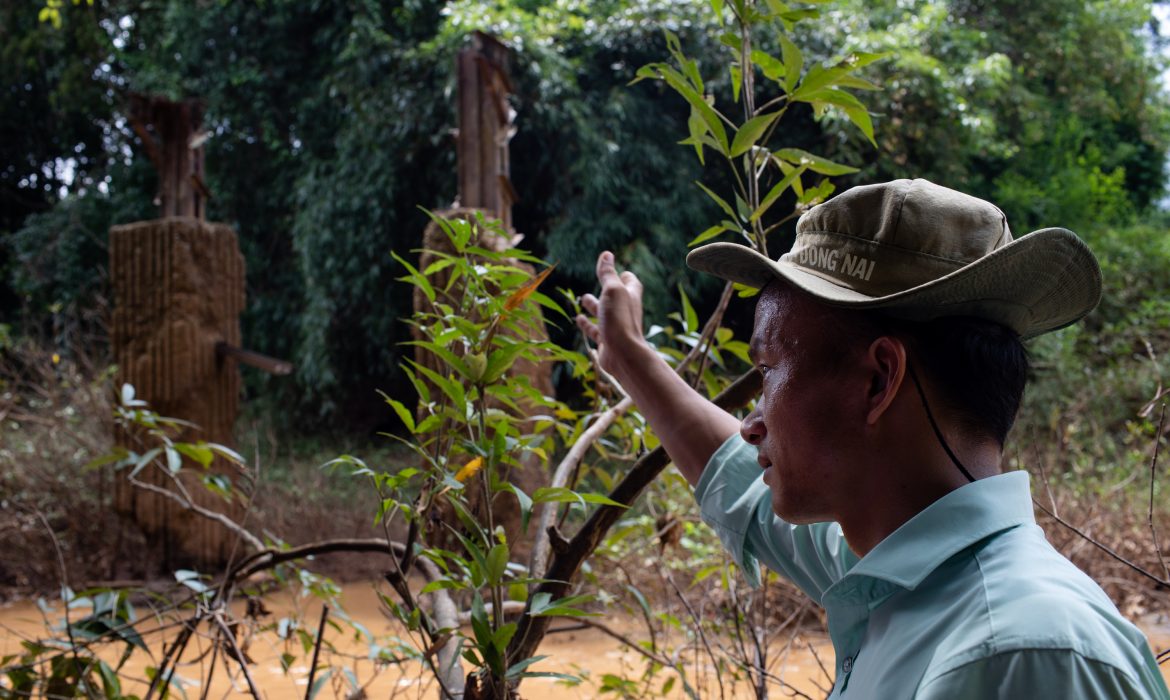
Chuyên gia thực vật Võ Quang Trung chỉ tay về dấu tích còn sót lại của cầu Mã Đà được xây trong chiến tranh. Cây cầu nằm giữa địa phận tỉnh Đồng Nai và Bình Phước. Ảnh: Thành Nguyễn.
Võ Quang Trung, 34 tuổi, chuyên gia thực vật của Khu Bảo tồn Văn hóa – Thiên nhiên Đồng Nai, say sưa kể về sự thông minh và tinh nghịch của những chú voi con ở rừng Mã Đà, thuộc khu bảo tồn.
“Ở đây có khoảng 20 con voi hoang dã, là khu vực duy nhất trong cả nước có voi Việt Nam thuần chủng, vì khu rừng không có biên giới với bất kỳ quốc gia nào”, Trung nói.
Vào tháng ba, chính quyền tỉnh Bình Phước, nơi có một phần Mã Đà, đã kiến nghị Thủ tướng Phạm Minh Chính cho phép xây dựng một tuyến đường cao tốc xuyên qua lõi rừng. Nếu dự án được thông qua, đồng nghĩa 44 ha rừng trong khu bảo tồn sẽ bị đốn hạ.
Mã Đà là một phần của khu dự trữ sinh quyển thế giới được UNESCO công nhận. Bởi vậy, việc xây dựng đường cao tốc này được cho là bất hợp pháp. Nhưng vẫn có khả năng dự án này sẽ thành hiện thực, đẩy số phận của quần thể voi quý hiếm cũng như của Mã Đà phải đối mặt với một tương lai chấp chới. “Không có sự can thiệp của UNESCO, Việt Nam vẫn có đầy đủ các quy định bảo vệ môi trường tự nhiên, nhưng việc thực thi pháp luật thường không hiệu quả lắm”. Nguyễn Hoàng Trí, Chủ tịch Ủy ban Quốc gia về Con người và Sinh quyển của UNESCO cho biết. “Nó [dự án] thậm chí còn không nên có trong suy nghĩ, chứ đừng nói đến việc đưa ra xem xét” ông nói thêm.
Sự bùng nổ của đàn lợn đã không đi cùng với khả năng xử lý chất thải, đe dọa môi trường tự nhiên, sức khỏe và sinh kế của người dân.
Tháng ba, sau nhiều năm chịu đựng mùi hôi của phân lợn, Nguyễn Thị Bông, 47 tuổi, cùng những phụ nữ thôn 5, xã Phú An, huyện Tân Phú, tỉnh Đồng Nai, kéo nhau lên Ủy ban Nhân dân xã khiếu nại một trại nuôi lợn.
“Không thể thở nổi. Ban đêm đi ngủ còn phải đeo khẩu trang”, Bông ngồi bên hiên nhà kể lại, trong một buổi chiều tháng sáu hiếm hoi có thể mở toang cửa nhà đón gió hè. “Cái mùi ấy hôi tanh nồng nặc làm tôi đau đầu, choáng váng”.
Năm 2014, trại lợn quy mô 10.000 con cùng các hố chứa chất thải lộ thiên mọc lên cạnh nhà bà. Chất thải dẫn ra từ trang trại sớm nhuộm đen ao cá gần nhà. Trong khi đàn ông, người trẻ trong làng đi học, đi làm xa, những phụ nữ trung niên làm việc tại nhà như Bông hứng chịu nhiều nhất sự ô nhiễm này.
Trại lợn đã rút cạn bầu không khí trong lành của một vùng quê với đồi núi bao bọc. Không chỉ mỗi ngôi làng của Bông ngạt thở trong chất thải chăn nuôi. Có hàng loạt ngôi làng như vậy ở Đồng Nai, cũng như trên khắp Việt Nam. Sự bùng nổ của đàn lợn đã không đi cùng với khả năng xử lý chất thải, đe dọa môi trường tự nhiên, sức khỏe và sinh kế của người dân bản địa.
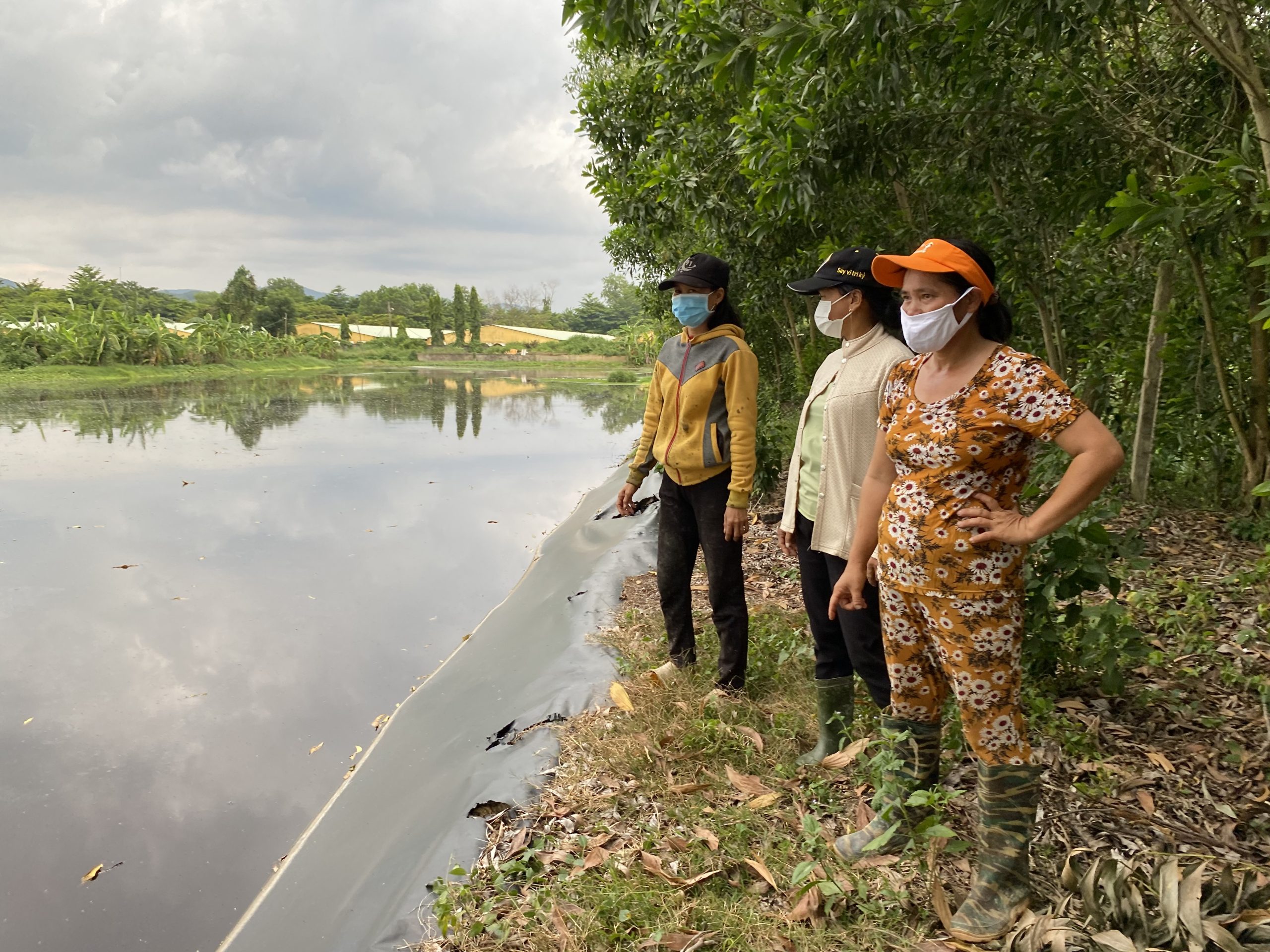
Những người phụ nữ ở xã Phú An, Tân Phú, Đồng Nai đang đứng trước một hố nước thải của trại lợn. Ảnh: Võ Kiều Bảo Uyên.
Hôm nay (21.3) là Ngày Thế giới trồng cây do Tổ chức Lương thực và Nông nghiệp Liên Hiệp Quốc (FAO) phát động từ năm 2013, kêu gọi các địa phương, quốc gia cùng nỗ lực trồng cây và nâng cao nhận thức bảo tồn rừng, phát triển bền vững. Ngày 21.3 còn là Ngày Quốc tế về Rừng khích lệ các quốc gia tổ chức các chiến dịch trồng rừng, trước thực trạng rừng trên thế giới đang ngày càng suy giảm về chất lượng và diện tích.
Hoạt động trồng rừng từ nhiều đơn vị, tổ chức xã hội với sự chung tay của cộng đồng vẫn đang được tiếp tục nỗ lực duy trì. Ảnh: CTV
For decades, people across South-east Asia have been hunting wild animals for food. But commercial pressures and cheaper snaring methods are causing the region’s forests to be emptied faster than they can be replenished — with repercussions for human and forest health.
They were taken to the wildlife rescue centre not in cages but in fine mesh bags, as though they were already fresh meat being sold by the gram.
But the four ferret badgers were still alive and kicking.
The mammals had been literally rescued from the jaws of death.
VIETNAM AND CAMBODIA – Local policemen had seized them from a restaurant and taken them to Save Vietnam’s Wildlife’s facility located within Cuc Phuong National Park, about a two-hour drive from Hanoi.
“The restaurant bought them from people who caught them from the forest,” said Mr Tran Van Truong, who as captive coordinator is in charge of the facility’s operations. “They are a bit stressed now, but they seem okay otherwise. We can probably release them back into the wild after a few days.”
Not all of man’s wild quarry are as lucky.
Demand for bushmeat and exotic pets from city dwellers is contributing to the emptying of South-east Asia’s forests. ST PHOTO: MARK CHEONG
Trapping wild animals for bushmeat may be illegal in Vietnam, but the practice is still widespread in the country. In other parts of South-east Asia too, the Covid-19 pandemic and its likely origins in the wildlife trade has had nary an impact on the region’s appetite for wild meat.
Wild animals are still being taken from the forests in large numbers, to be eaten or kept as pets, and we discovered how voracious appetites for them were still during visits to Vietnam and Cambodia in September.
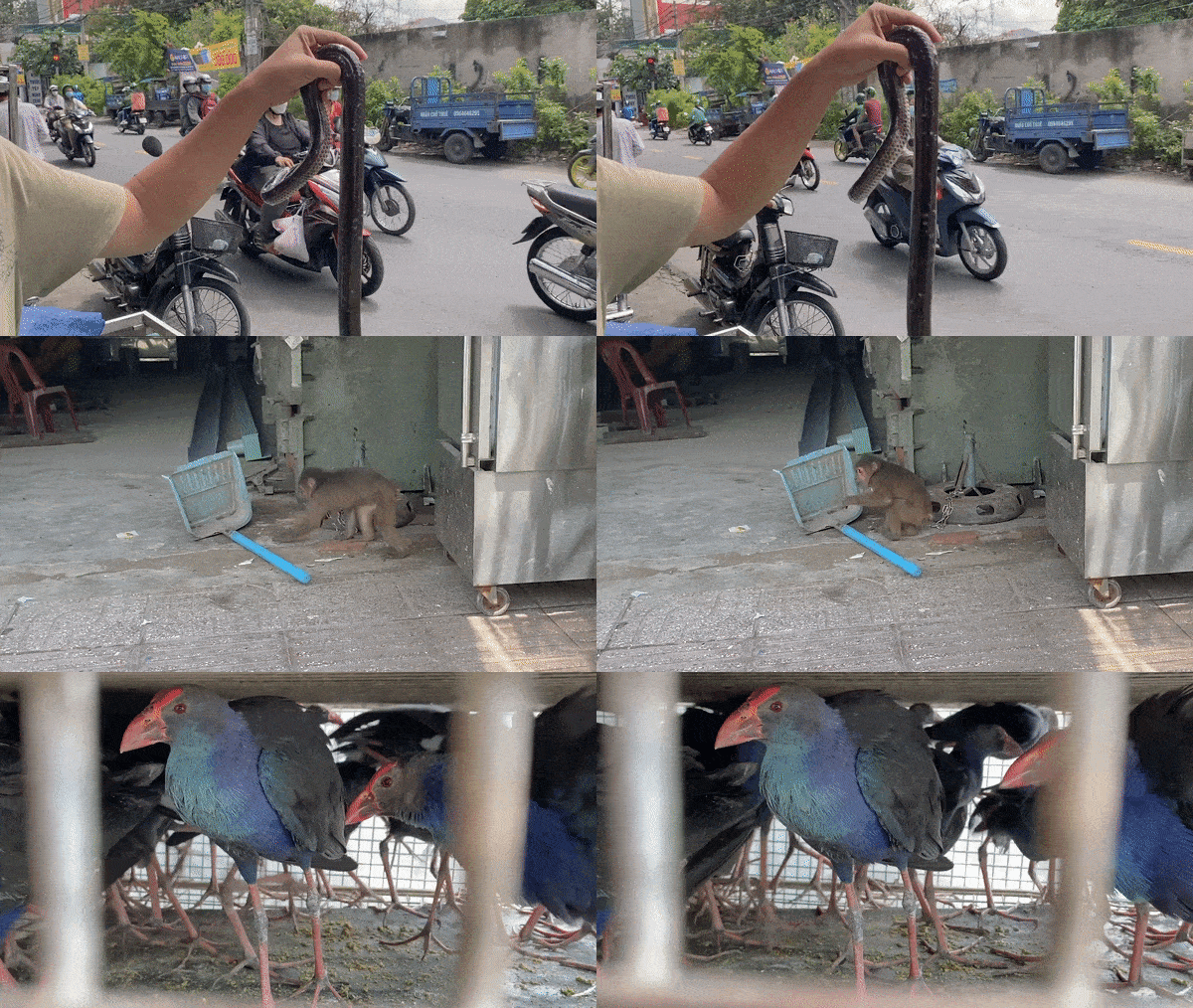
Wild animals sold at a market in Ho Chi Minh City. VIDEO: ANTON L. DELGADO
TTCT – Khi người ta không chỉ “đặt tên cho dòng sông” mà còn trao cho nó các quyền lợi hợp pháp như thứ con người được hưởng, liệu có giúp nó được bảo vệ tốt hơn trước muôn mối đe dọa?
Minh họa: Matt Chinworth/Mother Jones
Trong bài báo sau này sẽ gây tiếng vang năm 1972, giáo sư luật Christopher Stone, người được cho là đã khởi động phong trào trao “nhân vị tính” (personhood) cho thiên nhiên, viết: “Tôi nghiêm túc đề xuất trao quyền lợi hợp pháp cho các khu rừng, đại dương, dòng sông và những cái gọi là ‘thực thể thiên nhiên’ khác trong môi trường – nói chung là cả môi trường tự nhiên”.
Ông cho rằng các tổ chức môi trường nên được quyền xin làm giám hộ cho những ngọn núi hay con suối mà họ cho rằng đang bị đe dọa và đại diện các thực thể thiên nhiên này trước tòa, tương tự cách con người suy sút năng lực vì bệnh tật hay tuổi tác có thể nhờ quyền giám hộ khi có vấn đề pháp lý.
Giáo sư Stone dạy tại Trường Luật Đại học Southern California từ năm 1965 cho đến khi qua đời hồi tháng 5-2021. Không bất ngờ khi không phải ai cũng lập tức đón nhận ý tưởng trao cho thiên nhiên đúng các quyền con người đang hưởng của ông. Trong nước, nhiều ý kiến chỉ trích, phê phán Stone, nhưng cũng có những thay đổi được nhen nhóm. Bên ngoài nước Mỹ, ý tưởng này lại được ủng hộ khá nhiều, hàng chục năm sau đó.
Quy hoạch đô thị và những giải pháp phi công trình được nhà quy hoạch Nguyễn Đỗ Dũng phân tích với Người Đô Thị như một trong những lời giải cho bài toán “biến” ngập lụt từ thách thức trở thành sức mạnh đô thị của TP.HCM.
Người đi đường ở TP.HCM đánh vật với dòng nước sau trận mưa lớn chiều 26.9 vừa qua. Ảnh: Zing
Đầu tư gần 30.000 tỉ đồng từ năm 2008, nhiều khu vực trước đây ở TP.HCM được ví như “rốn ngập” nay đã không còn nữa, nhưng những tuyến đường chưa từng ngập giờ trở thành “sông”. Tương tự, số điểm ngập bắt đầu tăng trở lại (năm 2008: 126 điểm ngập, năm 2011: 58 điểm, năm 2015 còn 23 điểm ngập, năm 2016 tăng 59 điểm).
Tuy nhiên theo các chuyên gia, con số này vẫn chưa phản ánh hết thực trạng. Cùng với kinh nghiệm và nghiên cứu của mình, theo ông nguyên nhân chính nào dẫn đến tình trạng này?
High-profile initiatives to plant millions of trees are being touted by governments around the world as major contributions to fighting climate change. But scientists say many of these projects are ill-conceived and poorly managed and often fail to grow any forests at all.
It was perhaps the most spectacular failed tree planting project ever. Certainly the fastest. On March 8, 2012, teams of village volunteers in Camarines Sur province on the Filipino island of Luzon sunk over a million mangrove seedlings into coastal mud in just an hour of frenzied activity. The governor declared it a resounding success for his continuing efforts to green the province. At a hasty ceremony on dry land, an official adjudicator from Guinness World Records declared that nobody had ever planted so many trees in such a short time and handed the governor a certificate proclaiming the world record. Plenty of headlines followed.
But look today at the coastline where most of the trees were planted. There is no sign of the mangroves that, after a decade of growth, should be close to maturity. An on-the-ground study published in 2020 by British mangrove restoration researcher Dominic Wodehouse, then of Bangor University in Wales, found that fewer than 2 percent of them had survived. The other 98 percent had died or were washed away.
LTS. Gần 20 năm tâm huyết với các vấn đề trên dòng Mekong cũng như đồng bằng sông Cửu Long (ĐBSCL), bác sĩ Ngô Thế Vinh không chỉ là một nhà văn với hai tác phẩm Cửu Long cạn dòng, Biển Đông dậy sóng và Mekong – dòng sông nghẽn mạch, ông còn là một nhà hoạt động môi trường bền bỉ. Ông đã có những chuyến đi dọc dòng Mekong dài 4.800km, từ Tây Tạng đổ xuống Biển Đông. Người Đô Thị có cuộc phỏng vấn ông Ngô Thế Vinh về các vấn đề nóng bỏng hiện nay trên dòng Mekong và ĐBSCL.
Thưa, dù đã 17 năm trôi qua, từ những chuyến đi dọc dòng sông Mekong dài 4.800km, bức tranh sống động mà ông “phác họa” về những tác hại khủng khiếp do các con đập thủy điện gây ra cho đời sống người dân lưu vực sông Mekong đến nay vẫn nóng hổi tính thời sự. Từ những dự cảm rất sớm về những hậu quả do các đập thủy điện gây ra trên dòng Mekong và cho ĐBSCL nói riêng, ông nhận định gì về thực trạng hiện nay?
Năm 2000, khi nói “Cửu Long cạn dòng”, nhiều người xem đó là phát biểu “nghịch lý” bởi đó là năm có lụt lớn ở miền Tây. Một vị tu sĩ đang tất bật lo việc cứu trợ, mới nghe tên cuốn sách đã phát biểu: “Đang lũ lụt ngập trời với nhà trôi người chết mà lại nói “Cửu Long cạn dòng” là thế nào?” Nhưng cần hiểu rằng lũ và hạn tương ứng với mùa mưa và mùa khô là chu kỳ tự nhiên đã có hàng ngàn năm trên dòng Mekong và các vùng châu thổ, và đến nay thì mức độ càng trầm trọng và gay gắt.
Chúng ta không thể đổ lỗi hết cho “thiên tai”, mà cần can đảm gọi cho đúng tên những yếu tố “nhân tai” bởi do chính con người gây ra qua suốt quá trình phát triển không bền vững và có tính tự hủy từ nhiều thập niên qua, đã làm gãy đổ sự cân bằng của cả một hệ sinh thái vốn phức tạp nhưng cũng hết sức mong manh của dòng Mekong.
Băng qua Biển Hồ đến khu Bảo tồn sinh thái Tonle Sap (nguồn: tư liệu Ngô Thế Vinh)
Cambodian authorities have greenlit studies for a major hydropower dam on the Mekong River in Stung Treng province, despite a ban on dam building on the river that’s been in place since 2020.
Plans for the 1,400-megawatt Stung Treng dam have been around since 2007, but the project, under various would-be developers, has repeatedly been shelved over criticism of its impacts.
This time around, the project is being championed by Royal Group, a politically connected conglomerate that was also behind the hugely controversial Lower Sesan 2 dam on a tributary of the Mekong, prompting fears among local communities and experts alike.
This story was supported by the Pulitzer Center’s Rainforest Investigations Network where Gerald Flynn is a fellow.
STUNG TRENG, Cambodia — A long-dormant plan to build a mega dam on the mainstream of the Mekong River in Cambodia’s northeastern Stung Treng province appears to have been revived this year, leaving locals immediately downstream of the potential sites worried and experts confounded.
Four years ago, I traveled around America, visiting historical archives. I was looking for documents that might reveal the hidden history of climate change – and in particular, when the major coal, oil and gas companies became aware of the problem, and what they knew about it.
I pored over boxes of papers, thousands of pages. I began to recognize typewriter fonts from the 1960s and ‘70s and marveled at the legibility of past penmanship, and got used to squinting when it wasn’t so clear.
What those papers revealed is now changing our understanding of how climate change became a crisis. The industry’s own words, as my research found, show companies knew about the risk long before most of the rest of the world.
Surprising discoveries
At an old gunpowder factory in Delaware – now a museum and archive – I found a transcript of a petroleum conference from 1959 called the “Energy and Man” symposium, held at Columbia University in New York. As I flipped through, I saw a speech from a famous scientist, Edward Teller (who helped invent the hydrogen bomb), warning the industry executives and others assembled of global warming.
We need only call to mind the first half of 2022 for an array of the extreme, energy-related global challenges we all face. Around the world, local versions of climate change effects—the temperatures, wildfires, droughts, storms, flooding—underscore how important it is for us to transition away from our overdependence on fossil fuels. And our energy sources don’t just have environmental implications but security ones as well. The Russian invasion of Ukraine is the latest rendition of the resource curse. At the heart of it all, fossil fuels are what enabled and amplified the murderous narcissism we see in Vladimir Putin and created a country with an unbalanced and unhealthy domestic economy able to profoundly destabilize energy flows and prices around the world.
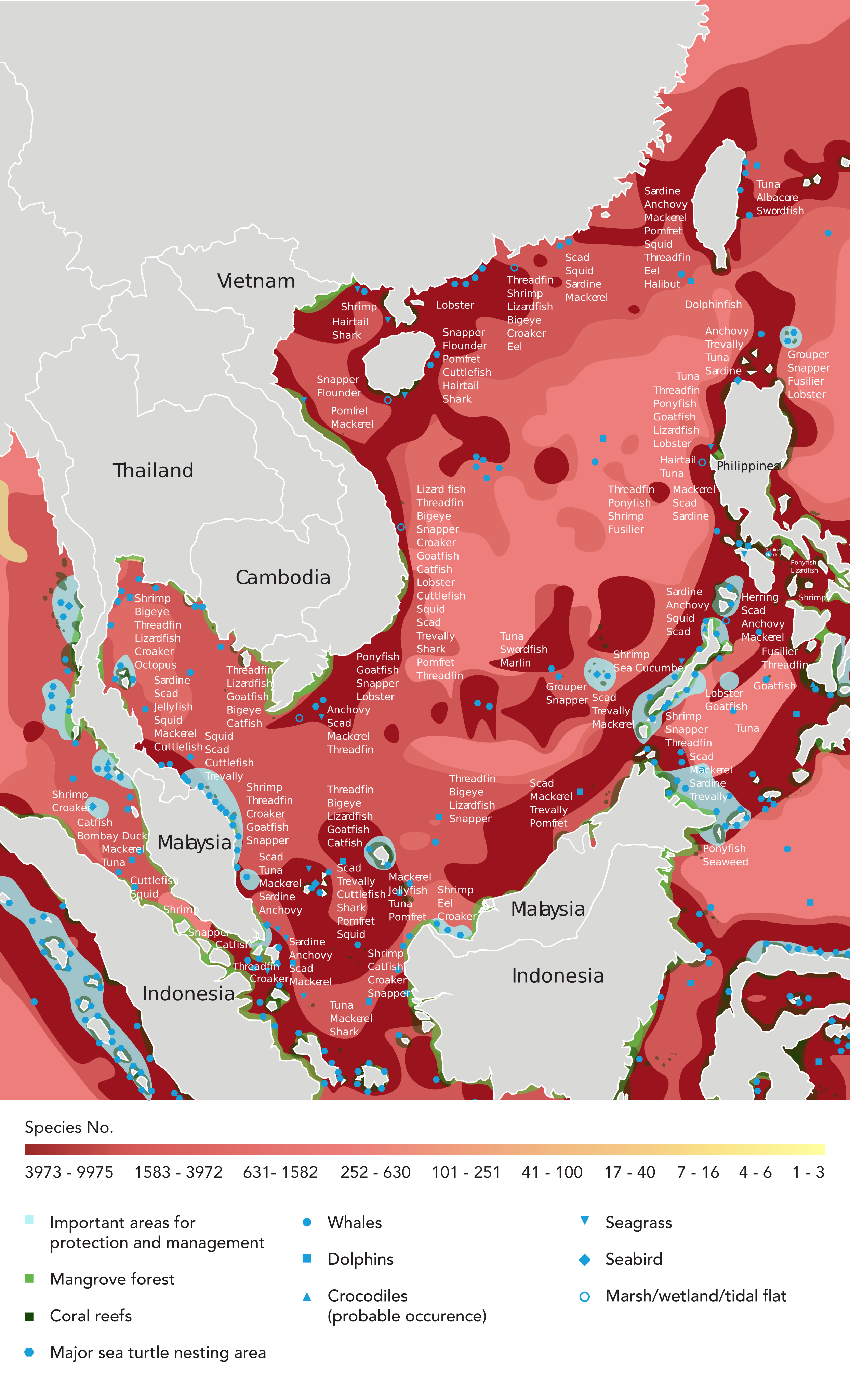
The South China Sea (SCS) brings together its own assortment of these complex challenges and factors. Competing security concerns, resource needs, and nationalisms shape the motivations of the claimants. Much of the attention and conflict has centred on the oil and gas in the seabed. Estimates of SCS hydrocarbon volumes vary; only some of these resources are proven reserves that have been confirmed and measured, and are actually recoverable. But even in more generous assessments, the SCS only provides us with a small percentage of the global total of oil and gas reserves, and even less of the overall energy mix if we include non-fossil-fuel energy sources.
Beyond hydrocarbons, in a two-way tie with the adjacent Coral Triangle, the SCS has the highest level of marine biodiversity in the world. SCS fisheries feed and employ millions of people in the region. It’s true that conflict over these living marine resources also drives the territorial disputes in the region, and a wide variety of human activity degrades the SCS ecosystem. Yet drilling for hydrocarbons in the SCS threatens this vulnerable marine habitat even more, while also clearly contributing to geopolitical and security tensions in the region—and to climate change.
Given how destabilizing oil and gas pursuits have been for the SCS since the 1970s, we might ask ourselves whether we want to keep drilling for fossil fuels there. Do the costs and risks outweigh the benefits?
Download this 21-page report (button above) from Dr. Tabitha Grace Mallory, an inaugural John H. McArthur Research Fellow, an initiative of the Asia Pacific Foundation of Canada, and the Founder of China Ocean Institute and Affiliate Professor, Jackson School of International Studies, University of Washington.
Below, explore the rich marine biodiversity of the South China Sea, one of the most hotly-contested maritime jurisdictions on the planet, in this original map created by the author and APF Canada graphic designer Chloe Fenemore, based on historical and contemporary maps cited in the full report.
Tabitha Grace Mallory is the Founder of China Ocean Institute and Affiliate Professor, Jackson School of International Studies, University of Washington. Dr. Mallory specializes in Chinese foreign and environmental policy. She conducts research on China and global ocean governance and has published work on China’s fisheries and oceans policy.
Dr. Mallory is an inaugural John H. McArthur Research Fellow, an initiative of the Asia Pacific Foundation of Canada launched in 2021 to provide research opportunities for exceptional, mid-career scholars who are working on programs and research areas with direct relevance to Canada and Canada’s interests in Asia.
The costs of doing nothing vastly outweigh the costs of decarbonising a global economy which, since the Industrial Revolution, has been powered by fossil fuels. That may seem self-evident today, when catastrophic fires and floods offer daily reminders of how expensive continued inaction on climate change is. But 15 years ago, that insight was ground-breaking.
The 2006 Stern Review on the Economics of Climate Change, for which I was a senior economist, was the first time a G7 government had used economic analysis to spell out the case for urgently reducing greenhouse gas emissions. A decade and a half on, its conclusions and recommendations are as valid as ever.








 CVD
CVD 