Deep-sea mining for minerals: What is the issue?

IUCN.org

What is the issue?
Why is this important?
What can be done?
More information

  • Deep-sea mining is the process of retrieving mineral deposits from the deep seabed – the ocean below 200m.
  • Depleting terrestrial deposits and rising demand for metals mean deep-sea mining may begin soon, even thoughresearch suggests that it could destroy habitats and wipe out species.
  • Deep-sea mining should be halted until the criteria specified by IUCN are met, including the introduction of assessments, effective regulation and mitigation strategies.
  • Comprehensive studies are neededto improve our understanding of deep-sea ecosystems and the vital services they provide to people, such as food and carbon sequestration.

What is the issue?

Deep-sea mining is the process of extracting and often excavating mineral deposits from the deep seabed. The deep seabed is the seabed at ocean depths greater than 200m, and covers about two-thirds of the total seafloor. Research suggests deep-sea mining could severely harm marine biodiversity and ecosystems, but we still lack the knowledge and means to implement protections.

Despite this, there is growing interest in the mineral deposits of the seabed. This is said to be due to depleting terrestrial deposits of metals such as copper, nickel, aluminium, manganese, zinc, lithium and cobalt. Demand for these metals is also increasing to produce technologies like smartphones, wind turbines, solar panels and batteries.

featured image

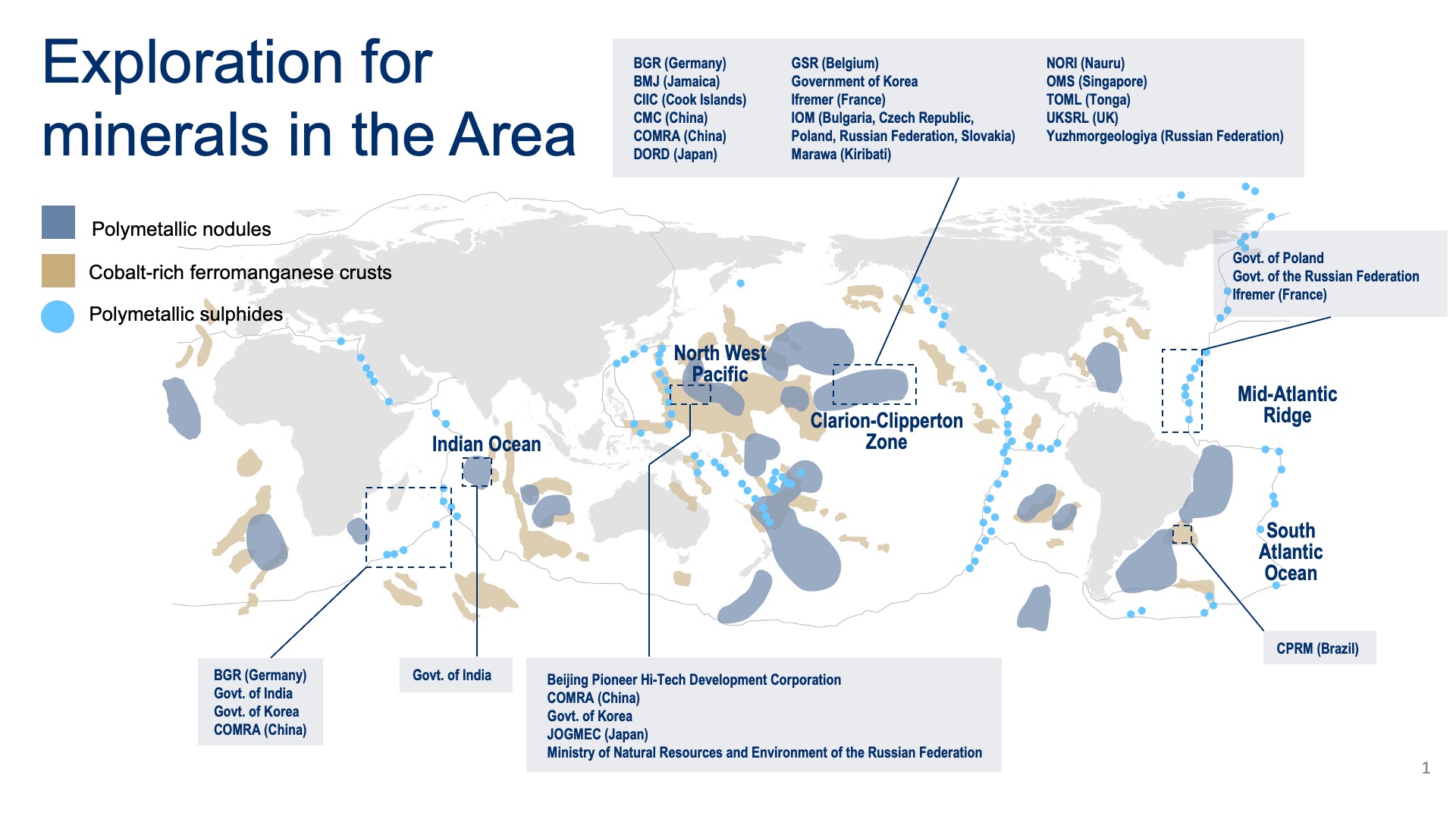
ISA, 2021

By May 2022, the International Seabed Authority (ISA), which regulates activities in the seabed beyond national jurisdiction (‘the Area’), had issued 31 contracts to explore deep-sea mineral deposits. More than 1.5 million km2 of international seabed, roughly the size of Mongolia, has been set aside for mineral exploration.

Tiếp tục đọc “Deep-sea mining for minerals: What is the issue?”

Asia’s Sinking Cities: Ho Chi Minh City | Vietnam

CNA Insider – 3/2/2021

Climate change has threatened to erase major cities in Vietnam, including its biggest metropolis, Ho Chi Minh City. A historic downpour which sank many parts of the city late last year was seen as a mere tip of the iceberg. It’s predicted that by 2050, the city will go underwater if no concrete measures are taken to prevent the phenomenon of rising sea levels, land subsidence, weak soil foundation due to groundwater extraction, rapid developments and population growth. What has been done to respond to the gradual sinking of the city? Can it survive a looming threat to its existence?

Which countries are most exposed to the EU’s proposed carbon tariffs?

resourcetrade.earth Chris Kardish, Mattia Mäder, Mary Hellmich, and Maia Hall, 20 August 2021

The European Union (EU) is moving ahead with the world’s first border tax on the carbon content of imported goods which aims to strengthen its increasingly ambitious climate targets and policies, but is attracting criticism. How would it work and which trading partners are most vulnerable to its impacts?

Steel mill in Novokuznetsk, Russia. (Sergei Bobylev\TASS via Getty Images)

Contents

The EU is accelerating its climate ambition over the coming decade to support its 2050 long-term strategy of reaching net-zero greenhouse gas (GHG) emissions. Key aspects of this acceleration include raising its emissions reduction target from 40 per cent to at least 55 per cent below 1990 levels by 2030 and implementing a sweeping set of policy changes – especially to its flagship emissions trading system (ETS) which puts a price on pollution by requiring companies to purchase allowances for their emissions.

The costs of the allowances have skyrocketed recently and now hovers around record levels of €50 per tonne of carbon dioxide equivalent or above. This is due – at least in part – to those participating in the market expecting a tighter supply of allowances as the EU increases its climate targets. Prices are expected to continue rising over the coming decade as the EU implements its ambitious climate agenda.

Tiếp tục đọc “Which countries are most exposed to the EU’s proposed carbon tariffs?”

“The Mekong is Dying”: How China’s River Diplomacy Neglects Locals, Exacerbates Climate Change

File image of the aerial view of the Jinghong Hydropower Station on the Lancang River, the Chinese part of the Mekong River, in Jinghong city, Xishuangbanna Dai Autonomous Prefecture, southwest China’s Yunnan province. Imaginechina Limited / Alamy Stock Photo

Chinaglobalsouth.com

The rainy season would usually start in May, but this was late June and it was still not raining much. Niwat Roykaew, who grew up on the bank of the Mekong River in Thailand’s northern Chiang Rai province, noticed. 

Born and raised in the Chiang Khong district, Roykaew, 63, was taught to observe the Mekong River to tell the season. But, in the past two decades, the river has become unpredictable like it has “pulsated out of tune”.

Niwat Roykaew is a Thai activist who campaigns for China to share data about water restrictions by its dams upstream.

“The water would get high for two days, then on the third day it would suddenly drop, even during the rainy season,” said Roykaew. 

Local residents like him knew that this delay could mean another year of drought. Since at least 2019, that’s what has happened: the monsoon rain is late, and when it comes, it departs early.

The Mekong River’s water levels in the lower basin, including in Thailand, are now very unstable, being heavily affected both by climate change and hydropower dams upstream that are mostly powered by China, according to local residents, activists, and experts.

Tiếp tục đọc ““The Mekong is Dying”: How China’s River Diplomacy Neglects Locals, Exacerbates Climate Change”

A Thirst for Sand:

The rising demand for sand to resume post-pandemic growth drives unregulated and illegal sand mining in the Mekong River, where people living along its banks have lost their houses and fortunes to severe erosion.

By Le Dinh Tuyen, Pratch Rujivanarom, Teng Yalirozy and Lay Sopheavotey

mekongeye.com

One October morning in Vietnam’s Dong Thap province, 72-year-old Nguyen Thi Cam sat on the banks of the Mekong River, staring at dredgers hoovering up sand in the distance.

“My house was over there before,” she said, pointing to a raft floating about 50 meters from the riverbank.

“After running away from erosion twice, the house is now located here,” she said of the old, dilapidated building by the river, where the shore was jagged and looked as if it could collapse at any time.

For more than a decade, sand mining had eaten away at the foundations of Cam’s old houses. A 25-hectare islet where she used to source corn and vegetables had disintegrated too.

The insatiable hunger for sand has intensified in the Mekong region – the home to Cambodia, Laos, Myanmar, Thailand and Vietnam – in the past decade due to urbanization and growing construction sectors that promise development in these countries.

Many expressways are planned or have been built, especially in Cambodia and Vietnam, where road networks are seen as the main source of investment. Infrastructure projects – ranging from airports and ports to railways – will likely be revived in the post-Covid-19 pandemic era for economic recovery.

The demand for real estate is strong in Thailand as the growing number of middle-class seek new houses and condominium units, while the sector remains one of the most profitable investment opportunities.

Tiếp tục đọc “A Thirst for Sand:”

Traditional forest ritual protects Mother Nature

VNN – May 03, 2023 – 08:35

RITUAL: Under shaggy vines, Sui Dơih (centre) – the celebrant – prepares offerings including a roasted pig, grilled meat, wine, chicken liver and a piece of raw pork.

For ethnic minorities in the Tây Nguyên (Central Highlands) and mountainous regions across the country, the forest does not simply refer to materials and resources, but also a broad spiritual culture.

Forest worship practices have existed in the consciousness and life of ethnic minorities for a long time, featured in local ceremonies and festivals based on concepts of the universe and animism and represented by sacred forest gods.

Among them is the religious practice of cúng rừng (forest god worship) of the Jrai community in the Central Highlands province of Gia Lai. The event is a major tradition showing attachment to Mother Nature. Tiếp tục đọc “Traditional forest ritual protects Mother Nature”

Thế giằng co trong bảo vệ san hô

Tia sáng – 28/6/23 – Thu Quỳnh

Có lẽ biển khơi giàu tôm cá rồi sẽ chỉ còn là quá khứ, khi san hô, mái nhà sinh sôi trú ngụ của các loài sinh vật biển, đang lâm vào thế giằng co giữa sức ép phát triển kinh tế trong ngắn hạn và bảo vệ môi trường, mà phần thắng thế không thuộc về môi trường.

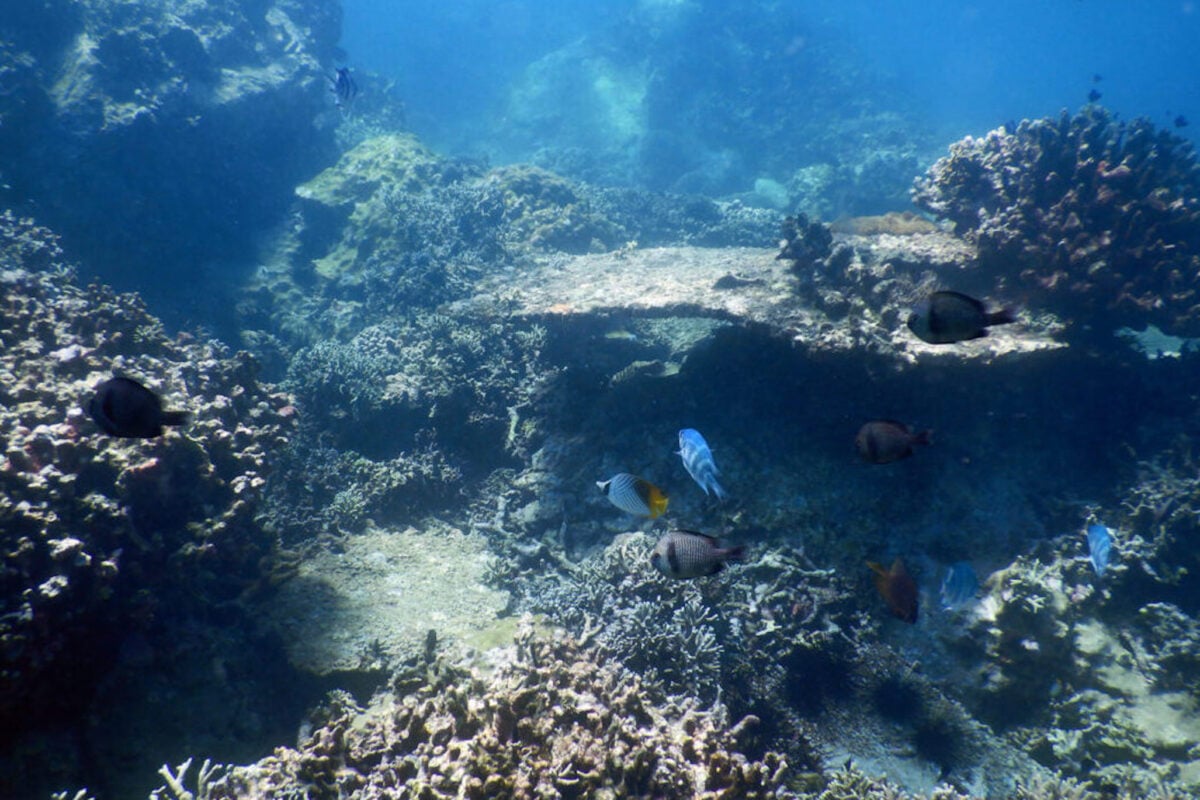
Rạn san hô Hòn Chồng, Nha Trang. Ảnh: Tkachenko

Ngay sát không gian ồn ào, đông đúc khách du lịch của bờ biển Nha Trang – một trong 29 vịnh đẹp nhất hành tinh, chỉ còn sót lại rạn san hô Hòn Chồng đẹp đẽ hiếm hoi. Nhưng dù là bãi đẻ bãi giống cho tôm cá ngoài biển giờ đây thi thoảng mới bắt gặp một vài con cá bé tẹo lẩn trốn thật nhanh giữa những nhánh san hô, không hề có đàn cá lội đông đúc như những tờ rơi quảng bá rạn san hô Nha Trang. Vừa chỉ cho tôi một số cụm san hô bị tẩy trắng, bị bệnh, giáo sư Konstantin Tkachenko, nhà khoa học ở Đại học Samara, Nga, có 30 năm nghiên cứu san hô nhìn vào nhiệt kế thở dài “30oC là ngưỡng nhiệt độ cuối cùng san hô có thể chịu đựng. Nếu mức nhiệt của nước lên tới 31-32oC liên tục quá bốn tuần thì san hô sẽ bị tẩy trắng không thể phục hồi”. Có nhiều nguy cơ bủa vây quanh những rạn san hô đẹp đẽ này trong khi bản thân chúng lại quá nhạy cảm trước tác động của biến đổi khí hậu, của môi trường và dĩ nhiên là con người…

Tiếp tục đọc “Thế giằng co trong bảo vệ san hô”

Cổ Cò vạn dặm…

QUẢNG NAM ONLINE – QUỐC TUẤN – 17/06/2023 08:00 

Tuyến sông Cổ Cò đoạn qua Quảng Nam kỳ thực chỉ dài chưa đầy 20km, thế nhưng hành trình để dòng sông phục sinh sau bao năm vẫn nghe xa xôi như vạn dặm…

Khung cảnh thường thấy với các dự án dở dang bên dòng sông Cổ Cò chưa nạo vét xong. Ảnh: Q.T

Những lời hứa bỏ lại

Loáng một cái đã hết nửa năm 2023, thời gian cũng vùi vào cát những lời cam kết về tiến độ phục sinh dòng sông Cổ Cò.

Trong số những “lời hứa” mà các bên liên quan ký kết thực hiện vào một ngày cuối năm 2021, chỉ có việc bàn giao mặt bằng toàn bộ cầu Ông Điền là về đích vượt thời hạn. Phần còn lại, đã 6 tháng hoặc hơn một năm trôi qua nhiều “lời hứa” vẫn ngủ quên theo con nước của dòng sông này.

Thực ra, những động thái cố gắng lay thức nhịp thở của Cổ Cò vẫn luôn thường trực nhưng con đường thông dòng của sông cũng dùng dằng tựa như số phận thăng trầm trăm năm của Cổ Cò.

Tiếp tục đọc “Cổ Cò vạn dặm…”

As livelihoods clash with development, Vietnam’s Cần Giờ mangroves are at risk

Mongabay – by Lam Nguyen and Danielle Keeton-Olsen on 28 February 2023

  • Cần Giờ, a coastal district of Ho Chi Minh City, is home to a 75,740-hectare (187,158-acre) mangrove forest, planted and maintained as part of post-war reforestation efforts.
  • The district’s residents largely depend on aquaculture, shellfish gathering and small-scale ecotourism for their livelihoods.
  • The government and developers hope to market the area as an ecotourism city based on its natural beauty and post-war success story, but major projects could disrupt Cần Giờ’s precarious balance between ecosystems and livelihoods.
  • All names of sources in Cần Giờ have been changed so people could speak freely without fearing repercussions from authorities.

Tiếp tục đọc “As livelihoods clash with development, Vietnam’s Cần Giờ mangroves are at risk”

Forest elephants are our allies in the fight against climate change, finds research

theconversation.com

Forest elephant extinction would exacerbate climate change. That’s according to a new study in Nature Geoscience which links feeding by elephants with an increase in the amount of carbon that forests are able to store.

The bad news is that African forest elephants – smaller and more vulnerable relatives of the better known African bush elephant – are fast going extinct. If we allow their ongoing extermination to continue, we will be also worsening climate change. The good news is that if we protect and conserve these elephants, we will simultaneously fight climate change.

Elephants are fascinating animals, and I have studied them for more than 15 years. They are intelligent, sentient, and highly social. But their single most remarkable feature is their size. Evolutionarily, elephants gambled on becoming massive enough to deter predators like lions and tigers.

African forest elephant range is highlighted in light green. The largest surviving population is in Gabon, on the coast of central Africa. IUCN / u/DarreToBeCC BY-SA

In exchange, they became slaves to their appetite. Elephants need huge amounts of food everyday, something like 5-10% of their body mass. A typical three-tonne female could eat 200 kg of plant material in one day. Her family may need to consume more than a tonne of food per day.

Our mission is to share knowledge and inform decisions.

Tiếp tục đọc “Forest elephants are our allies in the fight against climate change, finds research”

Hidden carbon: Fungi and their ‘necromass’ absorb one-third of the carbon emitted by burning fossil fuels every year

theconversation.com

Beneath our feet, remarkable networks of fungal filaments stretch out in all directions. These mycorrhizal fungi live in partnership with plants, offering nutrients, water and protection from pests in exchange for carbon-rich sugars.

Now, new research shows this single group of fungi may quietly be playing a bigger role in storing carbon than we thought.

How much bigger? These microscopic filaments take up the equivalent of more than a third (36%) of the world’s annual carbon emissions from fossil fuels – every year.

As we search for ways to slow or stop the climate crisis, we often look to familiar solutions: cutting fossil fuel use, switching to renewables and restoring forests. This research shows we need to look down too, into our soils.

This shows how mycorrhizal fungi (fine white filaments) connect to plant root systems (yellow) and out into the soil. Scivit/Wikipedia

This fungi-plant partnership is 400 million years old

Mycorrhizal fungi are hard to spot, but their effects are startling. They thread networks of microscopic filaments through the soil and into the roots of almost every plant on earth.

But this is no hostile takeover. They’ve been partnering with plants for more than 400 million years. The length of these complex relationships has given them a vital role in our ecosystems.

Tiếp tục đọc “Hidden carbon: Fungi and their ‘necromass’ absorb one-third of the carbon emitted by burning fossil fuels every year”

THE PALE BLUE DOT OF EARTH: The Only Home We’ve Ever Known – CHẤM XANH MỜ TRÁI ĐẤT: Ngôi nhà duy nhất con người chúng ta từng biết đến

Earth as a small blue dot in a fuzzy beam of light.

THE PALE BLUE DOT OF EARTH “That’s here. That’s Home. That’s us.”Image: NASA / JPL

“Hãy nhìn lại cái chấm đó. Cái Chấm đó chính là đây. Là nhà. Là chúng ta. Trên cái Chấm có tất cả những người thương yêu của bạn, có tất cả những ai bạn biết, những ai bạn từng nghe nhắc tới, và cả mọi con người đã từng tồn tại, từng sống trọn vẹn cuộc đời của họ. Cái Chấm đó là tổng hòa hỗn hợp của vui sướng và bất hạnh của mọi con người chúng ta, là hàng ngàn tôn giáo tín ngưỡng, mọi ý thức hệ, các học thuyết kinh tế, mọi thợ săn và thợ rèn, mọi anh hùng và kẻ hèn hạ, mọi nhà sáng lập và kẻ huỷ diệt nền văn minh, tất cả vua chúa và thường dân, tất cả đôi lứa đang yêu, tất cả ai làm cha mẹ và những đứa trẻ đầy triển vọng, mọi nhà phát minh và nhà thám hiểm, các thầy giảng các giáo viên, tất cả các chính trị gia tham nhũng, các “siêu sao”, các “lãnh đạo tối cao”, tất cả những vị thánh và kẻ tội đồ trong lịch sử loài người chúng ta đều sống ở đó – ở trên một cái Chấm hạt bụi lơ lửng trong một vệt nắng.

Trái Đất là một sân khấu siêu nhỏ trong một vũ đài vũ trụ mênh mông. Hãy nghĩ về những dòng sông  đầy máu dưới tay của những vị tướng và hoàng đế, để mà trong vinh quang và chiến thắng, họ có thể trở thành những bá chủ nhất thời của một phần tí ti trong cái dấu Chấm đó.  Hãy nghĩ về sự tàn khốc vô tận mà cư dân ở một góc tí ti này giáng xuống người dân ở một góc tí ti khác mà những con người  ở đó thì đều giống nhau đến mức khó có thể phân biệt được, hãy nghĩ về mức độ nhầm lẫn thường xuyên của những con người đó, về sự háo hức tàn sát nhau về lòng căm thù sục sôi như thế.

Sự giả tạo của chúng ta, tự huyễn hoặc về cái sự quan trọng của chính mình, cái sự ảo tưởng rằng chúng ta có đặc quyền trong Vũ trụ bị thách thức bởi điểm Chấm mờ này. Hành tinh  Trái Đất của chúng ta chỉ là một cái đốm lẻ loi, bao trùm bởi bóng tối vũ trụ bao la. Trong cái sự mù mờ của chúng ta, trong vũ trụ vô tận này, không hề có một dấu vết nào cho thấy sẽ có sự giúp đỡ đến từ một nơi nào khác (ngoài cái Chấm này) để cứu rỗi chúng ta khỏi chính mình.

Cho đến nay trong mọi nơi mà ta từng biết đến, Trái Đất là thế giới duy nhất cho phép sự sống neo đậu và trú ẩn. Không một hành tinh nào khác, ít nhất là trong tương lai gần, mà loài người chúng ta có thể di cư đến. Vâng, đến thăm thì được, chứ định cư thì chưa đâu. Dù muốn hay không, thì Trái Đất vẫn là nơi cho ta cư trú ở thời điểm hiện tại.

Người ta nói thiên văn học là một trải nghiệm khiêm nhường và để xây dựng chí khí. Có lẽ không có cách bày tỏ nào tốt hơn về sự tự phụ ngu xuẩn của loài người bằng hình ảnh xa xôi về thế giới nhỏ bé của chúng ta. Đối với tôi, hình ảnh cái Chấm này nhấn mạnh trách nhiệm của chúng ta để đối xử tử tế với nhau hơn, để giữ gìn và trân trọng cái Chấm xanh mờ nhạt này, ngôi nhà duy nhất mà con người chúng ta biết đến.”

— Carl Sagan, Pale Blue Dot, 1994

Look again at that dot. That’s here. That’s home. That’s us. On it everyone you love, everyone you know, everyone you ever heard of, every human being who ever was, lived out their lives. The aggregate of our joy and suffering, thousands of confident religions, ideologies, and economic doctrines, every hunter and forager, every hero and coward, every creator and destroyer of civilization, every king and peasant, every young couple in love, every mother and father, hopeful child, inventor and explorer, every teacher of morals, every corrupt politician, every “superstar,” every “supreme leader,” every saint and sinner in the history of our species lived there–on a mote of dust suspended in a sunbeam.

The Earth is a very small stage in a vast cosmic arena. Think of the rivers of blood spilled by all those generals and emperors so that, in glory and triumph, they could become the momentary masters of a fraction of a dot. Think of the endless cruelties visited by the inhabitants of one corner of this pixel on the scarcely distinguishable inhabitants of some other corner, how frequent their misunderstandings, how eager they are to kill one another, how fervent their hatreds.

Our posturings, our imagined self-importance, the delusion that we have some privileged position in the Universe, are challenged by this point of pale light. Our planet is a lonely speck in the great enveloping cosmic dark. In our obscurity, in all this vastness, there is no hint that help will come from elsewhere to save us from ourselves.

The Earth is the only world known so far to harbor life. There is nowhere else, at least in the near future, to which our species could migrate. Visit, yes. Settle, not yet. Like it or not, for the moment the Earth is where we make our stand.

It has been said that astronomy is a humbling and character-building experience. There is perhaps no better demonstration of the folly of human conceits than this distant image of our tiny world. To me, it underscores our responsibility to deal more kindly with one another, and to preserve and cherish the pale blue dot, the only home we’ve ever known.

— Carl Sagan, Pale Blue Dot, 1994

What are NDCs – Nationally Determined Contributions, and how do they drive climate action?

UNDP.org May 31, 2023

NDC explainer visual

Summary

  • Nationally Determined Contributions, or NDCs, are countries’ self-defined national climate pledges under the Paris Agreement, detailing what they will do to help meet the global goal to pursue 1.5°C, adapt to climate impacts and ensure sufficient finance to support these efforts.
  • NDCs represent short- to medium-term plans and are required to be updated every five years with increasingly higher ambition, based on each country’s capabilities and capacities.
  • Concrete progress is already being made towards achievement of the Paris Agreement, particularly in developing countries. For example, pledges from African countries are more robust than the global average in terms of explaining how targets will be achieved. 
  • NDCs represent politically backed commitments by countries. If used right, they could be our way out of tackling the world’s current crises – not just the climate crisis, but other systemic problems like biodiversity loss and energy security as well.

What are Nationally Determined Contributions and where do they come from? 

The Paris Agreement changed the face of climate action.

The legally binding international treaty, which was adopted in 2015 by all 196 Parties to the UN Climate Convention in Paris, established universal global goals endorsed by all countries. Primarily, this includes ensuring global average temperature rise is held well below 2°C above pre-industrial levels and pursuing efforts to limit the increase to 1.5°C.  It also includes an aim to increase the ability to adapt to climate impacts, and make finance flows consistent with country needs to achieve these goals.  

Tiếp tục đọc “What are NDCs – Nationally Determined Contributions, and how do they drive climate action?”

Các vụ buôn lậu ngà voi, sừng tê giác có xu hướng dịch chuyển ra ngoài Bắc

vov.vn Thứ Tư, 09:50, 03/05/2023

VOV.VN – Mặt hàng động vật hoang dã là ngà voi, sừng tê giác có chiều hưởng chuyển dịch từ các cảng biển thuộc khu vực miền Nam, miền Trung ra các tỉnh phía Bắc như Hải Phòng, Quảng Ninh…

Theo Tổng cục Hải quan, tháng 4, hoạt động buôn lậu, vận chuyển trái phép hàng hóa qua tuyến biên giới Việt Nam – Lào, Việt Nam – Campuchia vẫn diễn biến hết sức phức tạp. Đặc biệt là hoạt động buôn lậu, vận chuyển trái phép ma túy, pháo nổ, vàng, thuốc lá điếu, ngoại tệ, thực phẩm… qua biên giới các tỉnh Bình Phước, Tây Ninh, Long An, Đồng Tháp, An Giang, Kiên Giang; Hoạt động vận chuyển hàng hóa gửi kho ngoại quan (Hải Phòng, TPHCM, Bà Rịa – Vũng Tàu, Bình Dương, Đồng Nai) quá cảnh đi Trung Quốc, Campuchia tiếp tục tiềm ẩn rủi ro trong việc xảy ra các tình trạng đánh tráo, rút ruột thẩm lậu vào nội địa.

Trên tuyến đường biển, các đối tượng buôn lậu, vận chuyển trái phép qua biên giới tập trung vào mặt hàng có lợi nhuận cao như xăng dầu, than, khoáng sản, hàng điện tử, điện lạnh đã qua sử dụng, phế liệu, hàng đông lạnh, gia cầm…, sử dụng nhiều thủ đoạn tinh vi, các chiêu thức mới, hoạt động có tổ chức như ngụy trang tàu chở hàng lậu thành khai thác thủy sản, gia cố các bồn bể trên các phương tiện xuất nhập cảnh để che đậy việc mua bán, vận chuyển trái phép hàng lậu…

cac vu buon lau nga voi, sung te giac co xu huong dich chuyen ra ngoai bac hinh anh 1
Ngà voi nhập lậu do Hải quan Hải Phòng chủ trì bắt giữ tháng 3/2023.

Đặc biệt, mặt hàng động vật hoang dã là ngà voi, sừng tê giác có chiều hưởng chuyển dịch từ các cảng biển thuộc khu vực miền Nam, miền Trung ra các tỉnh phía Bắc như Hải Phòng, Quảng Ninh…

Ngoài ra, tình hình tội phạm ma túy vẫn diễn biến phức tạp, nhất là tuyến hàng không và các khu vực biên giới ở Tây Bắc, miền Trung, Tây Nam bộ…

Trong tháng 4, ngành Hải quan đã phát hiện, bắt giữ, xử lý gần 1.466 vụ vi phạm pháp luật về hải quan, tổng trị giá hàng vi phạm ước tính 455 tỷ đồng, cơ quan Hải quan đã khởi tố 5 vụ, kiến nghị cơ quan chức năng khởi tố 20 vụ, số tiền thu nộp ngân sách gần 90 tỷ đồng.

Ông Nguyễn Văn Cẩn, Tổng cục trưởng Tổng cục Hải quan cho biết: “Đầu năm rộ lên có những đối tượng, doanh nghiệp với doanh số, kim ngạch xuất khẩu bất thường và từ đó chúng tôi lần theo đối với các hành vi xuất khống, hành vi giả mạo hồ sơ, lợi dụng hoàn thuế giá trị gia tăng và chúng tôi đã khởi tố một số vụ án, chuyển cho cơ quan điều tra chuyên trách để tiến hành xử lý. Và hiện nay đang phối hợp với lực lượng chức năng của Bộ Công an để điều tra sâu và mở rộng các đối tượng khác”./.