Các bài viết của GS. THÁI CÔNG TỤNG

(Update Jan. 5, 2018)
​Xin phổ biến/đăng tải rộng rãi.
Rất đa tạ.
Thay mặt Anh Em nhóm Lymha,
Hà Trung Liêm​

CÁC BÀI VIẾT CỦA GIÁO SƯ THÁI CÔNG TỤNG ĐƯỢC ĐĂNG TẢI TẠI TRANG BLOG MEKONG-CUULONG.
(Để đọc bài xin bấm vào đường kết nối màu xanh)

1. Sông ngòi miền Bắc Việt Nam

2. Sông ngòi miền Trung

3. Sông ngòi miền Cao Nguyên Việt Nam Tiếp tục đọc “Các bài viết của GS. THÁI CÔNG TỤNG”

Student uses catfish fat to create bioplastics

Last update 07:10 | 08/01/2018
VietNamNet Bridge – Vu Thị Mai Anh, 23, a student at the Hanoi University of Education, has conducted research on isolating and selecting bacteria capable of converting basa fish (catfish) fat into Polyhydroxyalkanoates (PHA). 

vietnam economy, business news, vn news, vietnamnet bridge, english news, Vietnam news, news Vietnam, vietnamnet news, vn news, Vietnam net news, Vietnam latest news, Vietnam breaking news, catfish fat, PHA, biotechnology

Vu Thi Mai Anh

After being subdivided and selected, microorganisms are cultured in catfish fat and converted into environmentally friendly bioplastics.

The research won first prize in the field of food technology at Euréka 2017, a contest for technology students organized by the HCM City Youth Union. Tiếp tục đọc “Student uses catfish fat to create bioplastics”

Top 10 HAPPY environmental stories of 2017

Mongabay.com

  • Throughout 2017, scientists discovered new populations of rare wildlife, and rediscovered some species that were previously thought to be extinct.
  • Some countries created large marine protected areas, while a few others granted land rights to indigenous communities.
  • In 2017, we also saw the ever-increasing potential of technology to improve conservation monitoring and efforts.

The past year may have seemed like doom and gloom for the environment, but there was plenty to be thankful for. So once again, we bring you some of the happier environmental stories of 2017 (in no particular order). These include rediscoveries of species that were once thought to be extinct, local communities being granted land rights, and the emergence of new technologies that are boosting conservation efforts.

1. New populations of rare wildlife were found

This year, conservationists discovered some new populations of threatened wildlife. Take, for example, the helmeted hornbill (Rhinoplax vigil). A research team recorded a new and “unexpectedly rich population” of this critically endangered bird in western Borneo. For a species that is now nearly extinct because of poaching, this discovery boosts hope for its future.

It was good news for the Grauer’s gorilla (Gorilla beringei graueri) as well. Surveys in the Democratic Republic of Congo’s Maiko National Park revealed several previously uncounted individuals of Grauer’s gorillas in just 1 percent of the park. The researchers think that there might be many more gorillas living inside the largely unexplored 10,885-square-kilometer (4,000-square-mile) park. Tiếp tục đọc “Top 10 HAPPY environmental stories of 2017”

Mời tham gia khảo sát về chất lượng không khí tại Việt Nam

️MỜI THAM GIA KHẢO SÁT VỀ CHẤT LƯỢNG KHÔNG KHÍ VIỆT NAM 2017 tại đây  http://bit.ly/ONhiemKhongKhi

Quan sát trong hai năm qua cho thấy, ô nhiễm không khí là một trong những chủ đề môi trường, xã hội và kinh tế rất đáng quan tâm ở Việt Nam.
♻️ Chất lượng không khí ở Việt Nam đang trong tình trạng đáng báo động. WHO đã có thư gửi đến nhân viên của họ tại Hà Nội để cảnh báo về vấn đề ô nhiễm không khí đang ở mức nguy hiểm tại Hà Nội thời gian gần đây. Trong thời gian tới, không khí ở Hà Nội sẽ tiếp tục duy trì tình trạng này, và có khả năng đạt ngưỡng như các thành phố ô nhiễm nhất thế giới như Dehi (Ấn Độ), Bắc Kinh (Trung Quốc) và Ulaanbaatar (Mông Cổ). Tiếp tục đọc “Mời tham gia khảo sát về chất lượng không khí tại Việt Nam”

Ocean plastic pollution – what role can social science play?

29 November 2017

IDS is partnering with the EU, UN, Chatham House and other organisations to host a high level side event on circular economy solutions to tackling ocean plastic pollution, during this year’s United Nations Environment Assembly in Nairobi (4-6 December). The event will showcase specific examples of collaborative action and policies that aim to reduce plastic waste, address unsustainable consumption and production patterns and redirect investment for a clean, efficient and circular economy. Ahead of the event, I want to highlight the importance of a universal development approach and transformative social science research, as solutions to the ocean plastics problem.

A large sculpture of a shark made out of plastic waste found in the ocean.

Ocean plastics pollution – not just an environmental issue

Plastics pollution of oceans has emerged as a major global environmental crisis. Between 4.8 and 12.7 million tonnes of plastics enter the ocean each year. It is devastating for marine ecosystems and the accumulation of microplastics in food chains pose a risk to human health. And the issue is becoming more serious.  By 2050, plastics production is expected to increase to over 2000 tonnes per year, up from 311 million tonnes in 2014.

Plastics end up in the ocean as the result of chains of human activities in different parts of the world. We are all contributing to it. China, Indonesia and the Philippines have been identified as the top three sources of ocean plastics pollution by the Ocean Conservancy. While litter found on the sea floor around the UK has risen 150% in the last year and UK plastic waste drifts to the artic where is has a very damaging impact on one of the most vulnerable ecosystems in the world.

Tiếp tục đọc “Ocean plastic pollution – what role can social science play?”

Conserving Forests Could Cut Carbon Emissions As Much As Getting Rid of Every Car on Earth

Globalforestwatch.org

By Susan MinnemeyerNancy Harris and Octavia Payne

Cantonal Hojancha was once a major cattle ranching region. Most of this area was cleared for pasture only 30 years ago. Now, many of the residents have moved into the service industry, and the pasture land has slowly converted back to forest. Photo by Aaron Minnick (World Resources Institute)

New analysis from The Nature Conservancy, WRI and others estimates that stopping deforestation, restoring forests and improving forestry practices could cost-effectively remove 7 billion metric tons of carbon dioxide annually, or as much as eliminating 1.5 billion cars—more than all of the cars in the world today!

In fact, forests are key to at least six of the study’s 20 “natural climate solutions,” which could collectively reduce 11.3 billion metric tons of greenhouse gas emissions per year. That’s as much as halting global oil consumption, and would get us one-third of the way toward limiting global warming to 2 degrees C (3.6 degrees F) above pre-industrial levels — the threshold for avoiding catastrophic effects of climate change — by 2030.

Stopping Deforestation Offers the Biggest Benefit

Tiếp tục đọc “Conserving Forests Could Cut Carbon Emissions As Much As Getting Rid of Every Car on Earth”

Plankton decline hits marine food chain

DW_Plankton is the basis for the entire marine food web – and it is under threat. From the Mediterranean to the Pacific, animals have been struggling to survive, due apparently to changes with plankton.

Food chains represent the greatest interdependency within the webs of life. The marine food chain, for instance, is essential for oceans – and depends on plankton. But environmental changes and human activities may be threatening plankton– and therefore all marine animals.

According to a recent study,the biomass of sardines and anchovies has been decreasing at alarming rates in the Mediterranean Sea. At the same time, sea lions are struggling to forage on the coasts of California. Both cases have shed light on how a single food chain element can affect all others.

While it is still unknown whether species will be able to adapt to new conditions, the marine food chain is already experiencing drastic changes – and plankton plays a crucial role across the board.

“If anything happens to the plankton, an immediate cascade effect will take place on the food chain,” Ivan Nagelkerken, a University of Adelaide’s biology professor, told DW.

Shark swimming (Picture: Imago/OceanPhoto)Even top predators depend on plankton – indirectly

Building blocks of life

Plankton are tiny aquatic organisms that drift through the sea, forming the basis of the marine food chain.

For plankton, both quantity and quality – in terms of nutrients – affect life up the food chain. Tiếp tục đọc “Plankton decline hits marine food chain”

Phát hiện ô nhiễm môi trường, hãy gọi ngay: 086.900.0660

11:26, 31/10/2017 (GMT+7)

(TN&MT) – Ngày 30/10, Tổng cục Môi trường (Bộ TN&MT) đã công bố đường dây nóng cấp trung ương để tiếp nhận phản ánh, kiến nghị về ô nhiễm môi trường theo số điện thoại 086.900.0660

baotainguyenmoitruong_Theo đó, khi phát hiện những hành vi xả chất thải gây ô nhiễm môi trường; các vụ việc ô nhiễm, suy thoái môi trường, người dân có thể gọi ngay đến Đường dây nóng của Tổng cục môi trường theo số 086.900.0660

Đường dây nóng 086.900.0660 sẽ tiếp nhận thông tin phản ánh, kiến nghị về ô nhiễm môi trường liên tục 24/24 giờ trong ngày và 7 ngày trong tuần (bao gồm cả ngày nghỉ, ngày lễ).

Phát hiện ô nhiễm môi trường, hãy gọi ngay: 086.900.0660

Tiếp tục đọc “Phát hiện ô nhiễm môi trường, hãy gọi ngay: 086.900.0660”

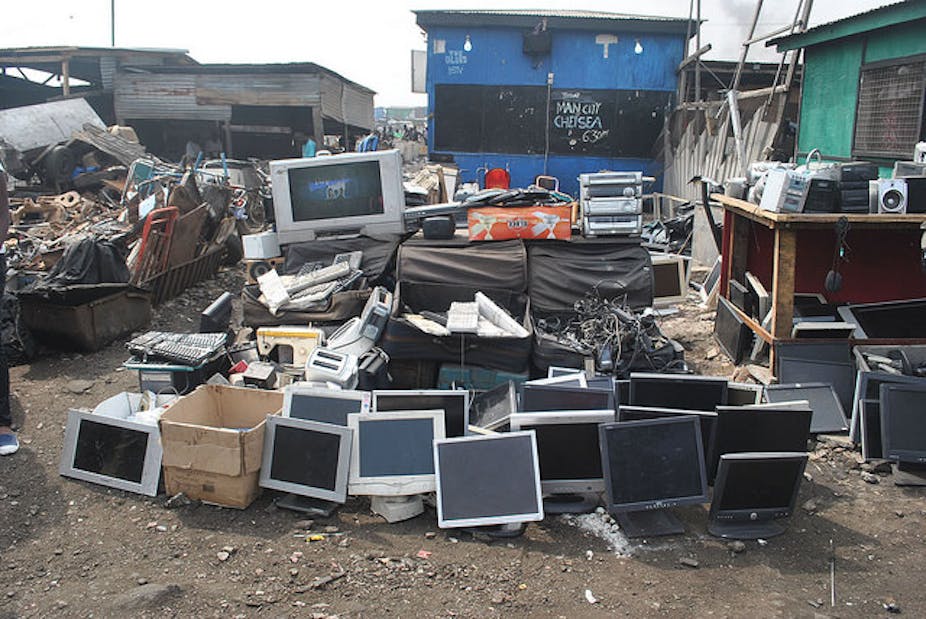
Beyond recycling: solving e-waste problems must include designers and consumers

theconversation_Agbogbloshie, an area in the city of Accra Ghana, is usually portrayed as an e-waste dump. A more accurate picture would include the repair and refurbishment economy. Agbogbloshie Makerspace Platform

Tiếp tục đọc “Beyond recycling: solving e-waste problems must include designers and consumers”

E-Waste in East and South-East Asia Jumps 63% in Five Years

  • 2017•01•15     BONN

    unu.edu

    The volume of discarded electronics in East and South-East Asia jumped almost two-thirds between 2010 and 2015, and e-waste generation is growing fast in both total volume and per capita measures, new UNU research shows.

    Driven by rising incomes and high demand for new gadgets and appliances, the average increase in e-waste across all 12 countries and areas analysed — Cambodia, China, Hong Kong, Indonesia, Japan, Malaysia, the Philippines, Singapore, South Korea, Taiwan, Province of China, Thailand and Vietnam — was 63% in the five years ending in 2015 and totalled 12.3 million tonnes, a weight 2.4 times that of the Great Pyramid of Giza.

    China alone more than doubled its generation of e-waste between 2010 and 2015 to 6.7 million tonnes, up 107%. Tiếp tục đọc “E-Waste in East and South-East Asia Jumps 63% in Five Years”

Forest business forum held in Hà Nội

vietnamnews Update: November, 09/2017 – 11:00

Deputy General Director of the Việt Nam Administration of Forestry, Cao Chí Công, gives a speech at the Asia Pacific Business Forum, organised by the Forest Stewardship Council on Wednesday in Hà Nội. — VNS/FSC Photo
Viet Nam News HÀ NỘI — The Forest Stewardship Council (FSC) has held its first ever Asia Pacific Business Forum in Hà Nội to provide an exclusive occasion for FSC certified forest product suppliers in the region to connect with local and international buyers.

The event, which took place on Wednesday, also aimed to promote forest suppliers’ FSC labelled products available in domestic, regional and world markets. Tiếp tục đọc “Forest business forum held in Hà Nội”

3,200 children join Valuing Nature in Childhood Programme

vietnamnews Update: November, 06/2017 – 17:35

Children play a game to learn about wildlife in Cúc Phương National Park. — Photo Save Vietnam’s Wildlife
Viet Nam News NINH BÌNH — Some 3,200 children in northern Ninh Bình Province’s Nho Quan District are expected to join this school year’s Valuing Nature in Childhood Programme.

The programme which was officially launched on Sunday, is being implemented by Save Việt Nam’s Wildlife.

As scheduled, the children will be divided into 116 groups. They will participate in the programme until May 2018. Tiếp tục đọc “3,200 children join Valuing Nature in Childhood Programme”

How environmental crime became an EU security priority for 2018-21

The next goal for conservation NGOs is to ensure the EU’s raw ivory export ban is actually implemented. An EU public consultation on ivory is expected soon. [USFWS Mountain-Prairie / Flickr]

euractive_In May 2017, EU justice ministers decided that environmental crimes – including wildlife trafficking and waste crimes – would be one of the EU’s ten priorities for the fight against serious and organised crime during the 2018-21 policy cycle. Catherine Bearder evokes how this decision came to being.
Tiếp tục đọc “How environmental crime became an EU security priority for 2018-21”