Rising fertilizer costs decimate poor Mekong farmers’ livelihoods despite their vital role in feeding millions.
BANGKOK, THAILAND ― Skyrocketing prices for fertilizers and agricultural production has pushed farmers in the Mekong region into severe debt and poverty.
Many have been forced to abandon their farms or have been unable to pay their debts and have lost their land, despite their roles in ensuring food security for millions of people.
“This is the worst year for farmers. Everything is more expensive, except rice prices, and they keep dropping,” said Prasert Tangthong, 58, a farmer with a small holding in Sing Buri province in central Thailand.
LTS. Gần 20 năm tâm huyết với các vấn đề trên dòng Mekong cũng như đồng bằng sông Cửu Long (ĐBSCL), bác sĩ Ngô Thế Vinh không chỉ là một nhà văn với hai tác phẩm Cửu Long cạn dòng, Biển Đông dậy sóng và Mekong – dòng sông nghẽn mạch, ông còn là một nhà hoạt động môi trường bền bỉ. Ông đã có những chuyến đi dọc dòng Mekong dài 4.800km, từ Tây Tạng đổ xuống Biển Đông. Người Đô Thị có cuộc phỏng vấn ông Ngô Thế Vinh về các vấn đề nóng bỏng hiện nay trên dòng Mekong và ĐBSCL.
Thưa, dù đã 17 năm trôi qua, từ những chuyến đi dọc dòng sông Mekong dài 4.800km, bức tranh sống động mà ông “phác họa” về những tác hại khủng khiếp do các con đập thủy điện gây ra cho đời sống người dân lưu vực sông Mekong đến nay vẫn nóng hổi tính thời sự. Từ những dự cảm rất sớm về những hậu quả do các đập thủy điện gây ra trên dòng Mekong và cho ĐBSCL nói riêng, ông nhận định gì về thực trạng hiện nay?
Năm 2000, khi nói “Cửu Long cạn dòng”, nhiều người xem đó là phát biểu “nghịch lý” bởi đó là năm có lụt lớn ở miền Tây. Một vị tu sĩ đang tất bật lo việc cứu trợ, mới nghe tên cuốn sách đã phát biểu: “Đang lũ lụt ngập trời với nhà trôi người chết mà lại nói “Cửu Long cạn dòng” là thế nào?” Nhưng cần hiểu rằng lũ và hạn tương ứng với mùa mưa và mùa khô là chu kỳ tự nhiên đã có hàng ngàn năm trên dòng Mekong và các vùng châu thổ, và đến nay thì mức độ càng trầm trọng và gay gắt.
Chúng ta không thể đổ lỗi hết cho “thiên tai”, mà cần can đảm gọi cho đúng tên những yếu tố “nhân tai” bởi do chính con người gây ra qua suốt quá trình phát triển không bền vững và có tính tự hủy từ nhiều thập niên qua, đã làm gãy đổ sự cân bằng của cả một hệ sinh thái vốn phức tạp nhưng cũng hết sức mong manh của dòng Mekong.
Băng qua Biển Hồ đến khu Bảo tồn sinh thái Tonle Sap (nguồn: tư liệu Ngô Thế Vinh)
Trong 18 tháng vừa qua, do sự hạn chế đi lại của đại dịch Covid, sự quan tâm chú ý đến các vấn đề môi trường trong khu vực ở hầu hết các khía cạnh đều ít nhiều bị hạn chế hoặc lơ là. Đây có thể là lý do vì sao chúng ta đã không kịp nhận biết khi một doanh nghiệp nhà nước của Việt Nam, Công ty Xây dựng Sông Đà 6, khởi động việc xây dựng đập Sê Kông A (hay còn gọi là đập Sê Kông 1) tại CNDCND Lào.
Nếu được xây dựng ở vị trí này trên dòng chính sông Sê Kông, con đập sẽ cắt hầu hết sự kết nối của Sê Kông với dòng chính Mê Công, và vì vậy sẽ chặn đứng sự di cư của nhiều loài cá lên vùng sinh sản ở thượng nguồn. Sông Sê Kông là dòng nhánh lớn cuối cùng trong hệ thống sông Mê Công hầu như còn chảy thông suốt và việc xây dựng đập Sê Kông A sẽ đe dọa trực tiếp đến trữ lượng cá và an ninh lương thực khu vực: https://nhipcaudautu.vn/phong-cach-song/dap-se-kong-1-de-doa-dong-bang-song-cuu-long-3323435/.
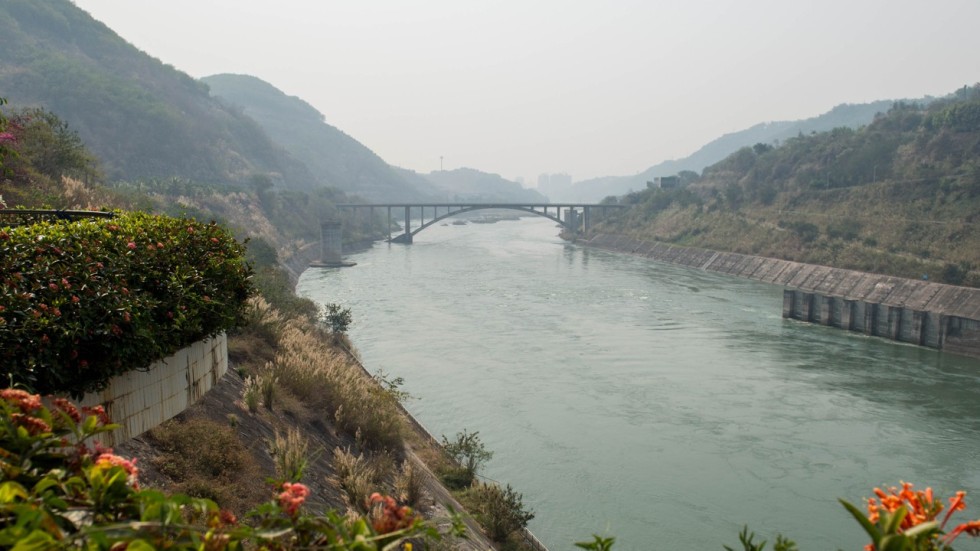
Thứ Ba, 07-09-2021, 18:53 – Lưu vực sông Mekong. (Ảnh: Duy Khương/TTXVN)
ND – Số lượng nước sông Mê Công từ thượng nguồn về đồng bằng sông Cửu Long năm 2020 giảm 157 tỷ m3 so với năm 2011. Lượng phù sa bùn cát năm cũng giảm tương ứng 14 triệu tấn so với năm 2017…
Trong khuôn khổ Đại hội Tổ chức các cơ quan Kiểm toán tối cao châu Á (ASOSAI) 15 diễn ra ngày từ ngày 6 đến 8/9 theo hình thức trực tuyến, Kiểm toán Nhà nước Việt Nam đã trình bày, chia sẻ báo cáo kết quả kiểm toán việc quản lý nguồn nước lưu vực sông Mê Công gắn với việc thực hiện mục tiêu phát triển bền vững.
Đây là một trong những nội dung quan trọng của Tuyên bố Hà Nội – sáng kiến được Việt Nam đề xuất với vai trò Chủ tịch Tổ chức các cơ quan Kiểm toán tối cao châu Á (ASOSAI) nhiệm kỳ 2018-2021 (Đại hội ASOSAI 14).
The geopolitics of the Mekong river continue to evolve, with key announcements from China, Thailand and the Mekong River Commission.
Editorial
Recent weeks have seen new developments in the ongoing tension over the Mekong river and its waters, as the river basin faces ecological crises and its waters play an ever-larger role in geopolitics.
HONOLULU (29 July 2020)—In recent years, relations with Southeast Asia have emerged as an important pillar of US engagement with the Indo-Pacific region. The Association of Southeast Asian Nations (ASEAN) is central to US foreign policy in the region, with a growing focus on the five countries bound together by the Mekong River—Cambodia, Lao PDR, Myanmar, Thailand, and Vietnam.
Fishing boats are unloaded on Tonle Sap Lake, which is fed by the Mekong River in Cambodia. Conservationists warn that dam construction on the Mekong could threaten the food supply of more than 40 million people who rely on fish from the river as an important source of protein. Photo: Jason South/Fairfax Media/Getty Images.
As they emerge from a tumultuous history, these countries must confront new elements of great-power competition even as their youthful populations push for economic growth and integration into the wider region and the world. Among other impacts, urbanization, infrastructure expansion, and climate change all affect the Mekong River, the natural resources along its banks, and the 240 million people who live in the region.
FILE PHOTO: A local villager drive a boat where the future site of the Luang Prabang dam will be on the Mekong River, outskirt of Luang Prabang province, Laos, February 5, 2020. REUTERS/Panu Wongcha-um/File Photo
BANGKOK: Laos is pushing ahead with a hydropower project on the Mekong River, despite reservations aired by neighbouring countries over its potential to harm fisheries and farming downstream, the Mekong River Commission (MRC) said on Wednesday (Jul 10.
FROM THE OUTSIDE Nha Hang Lang Nghe, in Danang, looks like any other respectable restaurant in Vietnam. Tables are invitingly laid out in the shade of a lush garden, and festive traditional art lines attractive brick walls. Families laugh over hot pots, and businessmen clink glasses.
Yet the veneer of wholesome normality masks a dark truth: Critically endangered giant river fish are Lang Nghe’s signature dish. Although it’s illegal to sell them in Vietnam, signs at the entryway entice diners with photos of imperiled Mekong giant catfish (“tasty meat, rich in omega-3”) and giant barbs (“good for men”), while a video showing a 436-pound giant catfish being cooked and eaten plays on a screen inside. Advertisements on social media likewise boast of the delightful flavor of the enormous fish, and of their rarity. Tiếp tục đọc “Critically Endangered Giant Fish on Menu at Luxury Restaurants”→
The Mekong has long cast a mystical spell over adventurers, wildlife experts, and
scientists enchanted by its spectacular rapids and waterfalls, along with its endangered dolphins, giant manta rays, and Siamese crocodiles. The river’s biodiversity is second only to the Amazon.
In recent years, however, this great international river – which flows through six countries – has increasingly grabbed the attention of engineers, technocrats, and energy consultants on a very different kind of mission: to exploit its roaring currents in pursuit of hydropower.
Any idea of environmental protection for the wonders of the Mekong has been marginalized by China’s grand Belt and Road Initiative (BRI) with its focus firmly fixed on trade, infrastructure development, and, along the Mekong, dam construction. Tiếp tục đọc “The Unfolding Mekong Development Disaster –”→
Countries in the Mekong Basin need a strategic, basin-wide approach to efficiently develop the basin’s water and energy resources in ways that protect the natural productivity of the river system. Otherwise, poorly coordinated hydropower planning on the Mekong mainstream and its tributaries will lead this resource rich region into a water and food security crisis.
In 2017, Stimson’s Energy, Water, and Sustainability program launched the Mekong Basin Connect Initiative, led by the Stimson Center, the International Union for the Conservation of Nature (IUCN), UC Berkeley’s Energy Resources Group, and The Nature Conservancy, to identify and promote new and pathways to achieve this ambitious goal. Click on the image below to learn more about Mekong Basin Connect.
Stimson Southeast Asia program director Brian Eyler recently visited Plov Tuok, a community of 800 floating homes atop of Cambodia’s Tonle Sap Lake — the largest lake in Southeast Asia and the world’s largest inland fishery. The visit was facilitated by the International Union for the Conservation of Nature (IUCN), and Brian witnessed first-hand the progress of fish conversation zones that were established by local villagers and IUCN in 2014.
KANDAL, Cambodia: Cambodian fisherman Sles Hiet lives at the mercy of the Mekong: A massive river that feeds tens of millions but is under threat from the Chinese dams cementing Beijing’s physical – and diplomatic – control over its Southeast Asian neighbours.
The Beijing-led Lancang-Mekong Cooperation mechanism was set up to help ease tensions over development projects, but environmental groups are yet to be convinced
Foreign ministers from the six countries through which the Mekong flows met in southwestern China last month to approve a draft of a five-year development plan for the river. But as state leaders prepare to finalise the proposal at a meeting in Cambodia later this month, environmental groups have expressed concern over what it could mean for Southeast Asia’s longest waterway.
VietNamNet Bridge – Ministers of labour from Cambodia, Laos, Myanmar, Thailand and Viet Nam (CLMTV) – agreed to improve their migration management system and share responsibilities in contributing to safe labour migration.
A welder work at a mechanical workshop. Ministers of labour from Cambodia, Laos, Myanmar, Thailand and Viet Nam agreed to boost safe migration workers among countries in a conference in Da Nang. Photos: Cong Thanh/VNS
The reaffirmation was included in the CLMTV joint declaration on safe labour migration at the 2nd Ministerial Conference on Labour Co-operation in CLMTV in Da Nang yesterday.


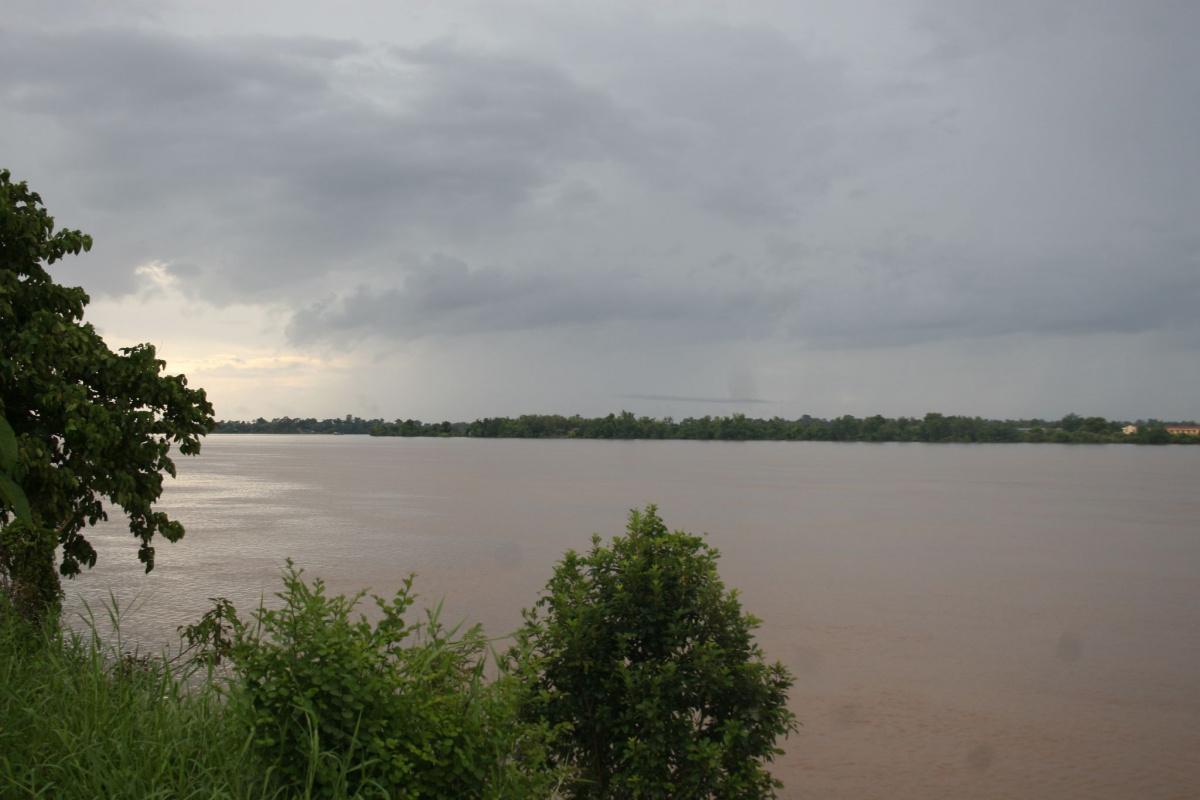
 Lưu vực sông Mekong. (Ảnh: Duy Khương/TTXVN)
 Announcement



 CVD
CVD 