Rác thải công nghệ tại Việt Nam đang tăng rất nhanh, đặc biệt là rác điện tử (điện thoại, laptop, thiết bị gia dụng) và rác thải mới như tấm pin năng lượng mặt trời. Các loại rác này chứa nhiều kim loại nặng và hóa chất độc hại, gây nguy cơ lớn cho môi trường và sức khỏe cộng đồng.
Mặc dù Việt Nam đã có quy định như Luật Bảo vệ môi trường 2020 và cơ chế trách nhiệm mở rộng của nhà sản xuất (EPR), việc thực hiện vẫn còn nhiều hạn chế do hạ tầng thu gom – tái chế chưa đồng bộ, công nghệ xử lý còn lạc hậu và doanh nghiệp chưa thực hiện nghiêm túc. Trong tương lai, lượng rác thải công nghệ và tấm pin mặt trời sẽ tăng mạnh (dự báo hàng trăm nghìn tấn), vì vậy cần hoàn thiện chính sách, tăng đầu tư công nghệ tái chế hiện đại, xây dựng hệ thống thu gom hiệu quả và nâng cao ý thức người dân, doanh nghiệp.
Robert Calabretta holds his baby photo from before he was adopted out of South Korea to a family in the United States, Thursday, Feb. 15, 2024, at his apartment in New York. (AP Photo/David Goldman)
SEOUL, South Korea (AP) — As the plane descended into Seoul, Robert Calabretta swaddled himself in a blanket, his knees tucked into his chest like a baby in the womb. A single tear ran down his cheek.
The 34-year-old felt like a newborn — he was about to meet his parents for the first time since he was 3 days old.
Most of his life, he thought they’d abandoned him for adoption to the United States. When he finally found them, he learned the truth: The origin story on his adoption paperwork was a lie. Instead, he said, his parents were told in 1986 that their infant was very sick and they thought he had died.
“I am so sorry,” his birth father had written when they found each other, his words interrupted by fits of weeping. “I miss you. How did you endure this cruel world?”
Robert Calabretta sits for a portrait at the restaurant where he works, Feb. 15, 2024, in New York. (AP Photo/David Goldman)
Calabretta is among a growing and vocal community of victims of an adoption system they accuse of searching out children for would-be parents, rather than finding parents for vulnerable children — sometimes with devastating consequences only surfacing today.
South Korea’s government, Western countries and adoption agencies worked in tandem to supply some 200,000 Korean children to parents overseas, despite years of evidence they were being procured through questionable or downright unscrupulous means, an investigation led by The Associated Press found. Those children grew up and searched for their roots — and some realized they are not who they were told.
Their stories have sparked a reckoning that is rocking the international adoption industry, which was built in South Korea and spread around the world. European countries have launched investigations and halted international adoption. The South Korean government has accepted a fact-finding commission under pressure from adoptees, and hundreds have submitted their cases for review.
Nearly 250,000 South Korean children were adopted to the West as “orphans” in the 60 years following the Korean War. Some to loving homes. Others to tragic ends. Raised in places where they looked like nobody else, many were told to forget their past and be grateful.
But the innate desire to understand where you came from has led many Korean adoptees to search for their roots. In the process, they discover lies in their past and families they never knew existed. In this documentary, correspondent Wei Du travels around the world to meet Korean adoptees and accompany a few on their journey to reclaim who they are. Together, they reveal how an “orphan rescue” mission separated families and erased the roots of hundreds of thousands.
00:00 Meet the adoptees 01:44 The lie of Korea’s “orphans” 03:04 A song I no longer recognise 05:15 Why 10,000 Korean children were sent to Sweden 07:11 How Sweden became a hub for Korean adoptions 10:29 Why the US took in so many Korean children 15:06 GI babies: Korea’s children of US soldiers 19:54 Cult leader’s adopted Korean children 24:13 “Saved from prostitution”? The truth of my adoption 27:55 Why this US couple adopted in 2005 32:03 Lies in our adoption stories 38:22 How Sweden pressured Korea to give up more children 42:49 Chase’s biological sister visits for his 20th birthday 46:15 Anna’s life in Sweden: Always different 48:54 Phil’s search for his birth family 52:46 Rebuilding siblinghood: Mary & Chase’s struggle 58:17 Catherine’s complex relationship with her adoptive mother 1:00:47 Catherine and Anna reunite after 50 years 1:06:58 Phil returns to Korea after 50 years 1:08:58 Koroot: NGO supporting Korean adoptees 1:10:15 Were adoption agencies in it for the money? 1:11:53 “A child supply market”: Moses Farrow 1:17:24 Korea investigates human rights violations in adoption 1:19:26 Confronting the orphanage manager who sent him abroad 1:23:41 Adoptees find comfort in each other 1:26:25 Han Tae-soon’s hunt for her kidnapped daughter 1:29:28 The fight for truth continues
How did two countries with the same language, culture, and history turn out so differently?
Last Updated April 28, 2023
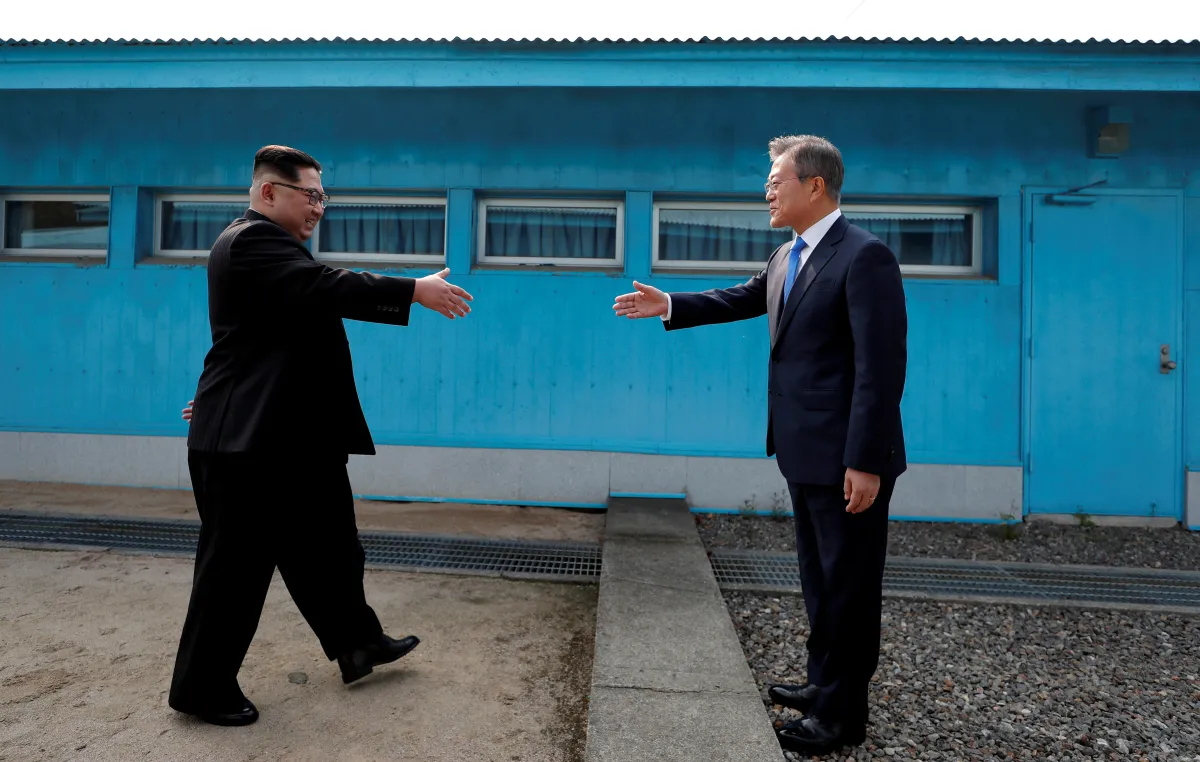
South Korean President Moon Jae-in and North Korean leader Kim Jong Un shake hands at the truce village of Panmunjom inside the demilitarized zone separating the two Koreas, South Korea, April 27, 2018.
Source: Korea Summit Press Pool via Reuters.SHARE
South Korea is one of the world’s most successful economies. It’s home to billion-dollar corporations like Samsung and produces some of the best high-tech electronics. But just across the border, North Korea is one of the most impoverished countries in the world. How can two countries with the same language, culture, and history—that were, not long ago, one united country—turn out so differently?
North and South Korea had been one nation for over a thousand years. Theoretically, they could have developed similarly after splitting in 1945, at the end of World War II. In fact, North Korea possessed the resources to outpace the south in development. But the political and economic decisions their leaders made destined the countries for completely different futures.
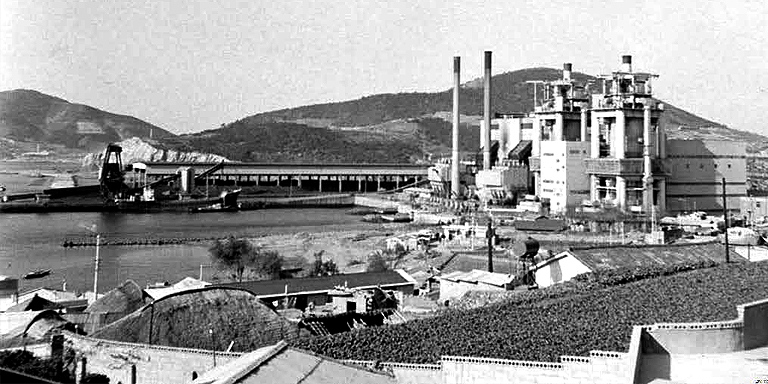
Policies in the Republic of Korea initially focused on improving energy supply and security to support its economic growth. Photo of the Busan thermoelectric power plant courtesy of the National Archives of Korea.
Despite a lack of domestic energy resources, the Republic of Korea has become one of the largest economies in the world.
Overview
The Republic of Korea rose from being one of the poorest countries in the 1960s to one of the top 10 economies in the 21st century. This achievement would not have been possible without the key role of energy. Over the last half-century, the country has rapidly built and upgraded its electricity infrastructure, diversified its energy supply mix, developed a robust nuclear industry, and become a pioneer in liquefied natural gas (LNG) trade. Tiếp tục đọc “Energy Policy Experiments: Lessons from the Korean Experience”→
TTCT– Đề nghị nối lại đàm phán hai miền Nam Bắc Triều Tiên của ông Kim Jong Un trong thông điệp đầu năm 2018 không là một bất ngờ, mà là một diễn biến tất yếu.
Những nứt gãy liên Triều bao giờ mới có cơ hội hàn gắn? Ảnh: matzav.com
Ông Kim đã chọn văn phòng Trung ương Đảng Lao động Triều Tiên để đọc bài diễn văn chúc mừng năm mới, hoan ca thắng lợi này, và dùng đại từ “tôi” trong xưng hô để khẳng định vai trò lãnh đạo tối cao của ông với toàn thể Đảng Lao động.
Việc sử dụng đại từ “tôi”, vốn quen thuộc ở những chế độ mà vai trò – chiếc ghế lãnh đạo đồng nhất với trách nhiệm và tài trí cá nhân – người lãnh đạo, gián tiếp quả quyết ông Kim là “tác giả” của những chiến thắng này.
Từ vị trí đó, nhân danh Đảng Lao động và Chính phủ Triều Tiên, ông “chân thành cảm ơn nhân dân và quân đội Triều Tiên đã giành chiến thắng” có một không hai trong “lịch sử 5.000 năm” của đất nước này: một cách nói khác để khẳng định rằng CHDCND Triều Tiên (và ông) mới là Triều Tiên “chính tông”, chứ không phải Hàn Quốc. Tiếp tục đọc “Khi ông Kim Jong Un đề nghị đàm phán …”→
BĐT – Hàn Quốc đã nhanh chóng vượt Trung Quốc trở thành thị trường nhập siêu lớn nhất của Việt Nam. Nhưng điều này liệu có bất thường và đáng lo? Nên hiểu thế nào cho đúng về nhập siêu từ Hàn Quốc trong bối cảnh hội nhập toàn cầu?
25/07/2017 08:46
Từ đầu năm tới nay, việc Samsung Display, rồi LG Display tăng vốn đầu tư để mở rộng nhà máy đã khiến lượng nhập khẩu từ Hàn Quốc tăng lên
Nhập siêu lớn từ Hàn Quốc, lỗi tại Samsung, LG?
Khi Hàn Quốc vượt qua Trung Quốc và trở thành thị trường nhập siêu lớn nhất của Việt Nam (thực tế là từ tháng 4/2017, chứ không phải là bây giờ – sau khi Tổng cục Hải quan chính thức công bố số liệu xuất nhập khẩu 6 tháng đầu năm, với nhập siêu từ Hàn Quốc là trên 16 tỷ USD, còn từ Trung Quốc là 14,1 tỷ USD), dư luận đã đổ dồn ánh mắt vào Samsung, LG – hai nhà đầu tư lớn của Hàn Quốc tại Việt Nam hiện nay. Tiếp tục đọc “Nhập siêu lớn từ Hàn Quốc: Hiểu thế nào cho đúng?”→
TTCT– Học võ ngày nay không chỉ huỳnh huỵch đấm với đá! Sự hấp dẫn của những bài quyền taekwondo được cải biên đôi chút để biểu diễn trên nền nhạc sôi động đã khiến nhiều môn phái khác phải chạy theo…
Đội tuyển Vovinam TP.HCM tập luyện chuẩn bị cho đấu trường võ nhạc.-Nguyên Khôi
Vâng, không riêng gì taekwondo, nhiều môn sinh các môn võ khác như vovinam, võ cổ truyền, karatedo… đang ráo riết tập luyện để chuẩn bị tham gia đấu trường võ nhạc lần đầu tiên được tổ chức tại VN vào đầu năm 2018. Tiếp tục đọc “Đời thay đổi, võ cũng đổi thay”→
Mình giới thiệu với các bạn bộ phim Buộc phải im lặng (Chữ Hàn: 도가니; phiên âm: Dogani; tên tiếng Anh: The Crucible, cũng có tên khác là Silenced).
Sau khi bộ phim ra mắt, tổng thống Hàn Quốc Lee Myung-bak (nhiệm kỳ 2008 – 2013) đã lên tiếng kêu gọi thay đổi luật pháp và thể chế với loại tội phạm tấn công tình dục. Một tháng sau đó, dưới sức ép của dư luận, quốc hội Hàn Quốc nhất trí thông qua dự luật sửa đổi về tội phạm tình dục hay còn được biết đến với tên gọi “Luật Dogani”. Tiếp tục đọc “Giới thiệu phim Buộc phải im lặng”→
Phần 1- Lật lại sự can dự của lính Hàn Quốc ở Việt Nam?
VNY – 16 thg 6, 2017 – Từ ngày 22/9/1963 đến ngày 30/4/1975, Hàn Quốc đã gửi 312.853 lượt binh lính sang tham chiến ở Việt Nam.
Phần 2- Hàn Quốc đã giàu lên nhờ cuộc chiến Việt Nam thế nào?
18 thg 6, 2017 – Trong 8 năm đưa quân sang Việt Nam, Hàn Quôc được cho là đã thu được hơn 5 tỷ USD từ nhiều nguồn của Mỹ. Nhờ đó, GDP của Hàn Quốc trong 10 năm từ 1963 đến 1973 đã tăng gấp 4 lần.
(NLĐO)- Việt Nam đề nghị Chính phủ Hàn Quốc không có các hành động và phát ngôn gây tổn thương tới tình cảm của nhân dân Việt Nam, ảnh hưởng tiêu cực tới quan hệ hợp tác hữu nghị hai nước.
Ngày 12-6, trả lời câu hỏi của phóng viên đề nghị cho biết quan điểm của Việt Nam trước việc ngày 6-6, Tổng thống Hàn Quốc Moon Jae-in đã phát biểu vinh danh những “người có công” Hàn Quốc tham chiến tại nước ngoài, trong đó có chiến tranh Việt Nam, Người Phát ngôn Bộ Ngoại giao Lê Thị Thu Hằng cho biết về vấn đề này, ngày 9-6, đại diện Bộ Ngoại giao đã giao thiệp nghiêm khắc với đại diện Đại sứ quán Hàn Quốc tại Việt Nam.
TTO – Bình Nhưỡng đã năm lần thử hạt nhân và hơn chục lần bắn thử các loại tên lửa. Không biết bao nhiêu lời răn đe, không biết bao nhiêu biện pháp trừng phạt đã được công bố nhưng có vẻ đâu vẫn hoàn đấy. Vì sao vậy?
Binh lính Triều Tiên trong lễ duyệt binh ngày 15-4 – Ảnh: Reuters
nytimes_NGHIA BINH, Vietnam — Growing up in this village of rice paddies and banana trees, Doan Thi Huong was known as a gentle girl and a diligent student, her brother said.
She left home at 17 to study pharmacology in Hanoi, the capital, and has returned home only about twice a year in the decade since, said her brother, Doan Van Binh. He said that he rarely pressed his sister for details about her life, and did not realize until a few days ago that she had been working in Malaysia.
Vietnamese Doan Thi Huong is seen in this undated handout released by the Royal Malaysia Police to Reuters on February 19, 2017. Doan was arrested in connection with the murder of Kim Jong Nam. Royal Malaysia Police/Handout via Reuters
HANOI: The Vietnamese woman arrested as a suspect in killing the half-brother of North Korea’s leader thought she was taking part in a prank video, Vietnam’s foreign ministry said on Saturday.




 Từ đầu năm tới nay, việc Samsung Display, rồi LG Display tăng vốn


 CVD
CVD 