Vietnam has major data leak problem, citizens suffer

VNE – By Luu Quy   August 19, 2022 | 09:00 pm GMT+7

Vietnam has major data leak problem, citizens suffer

An incoming call with an unknown caller from outside of Vietnam. Photo by VnExpress/Luu QuyMinh Huy, a university student in Ho Chi Minh City, said he and his family have been terrorized by phone calls demanding repayment of loans he never took.

Someone has been calling Huy repeatedly over the past month, saying he owed money with high interest that will balloon to tens of millions of dong (VND10 million= $427.26) if it is not paid back quickly. When he denied ever using the service, the caller brought out a screenshot of an apparent contract with accurate personal information like ID card numbers, phone numbers and email addresses, even relevant information on Huy’s family members.

“This is information I’ve shared with multiple services online when I signed up for various accounts, but I have never submitted them to any credit service,” Huy said.

Tiếp tục đọc “Vietnam has major data leak problem, citizens suffer”

Cyber slavery: inside Cambodia’s online scam gangs –

Illicit industry traffics thousands of victims from China through Southeast Asia

“The videos provide a window into the dark world run by transnational criminal networks able to smuggle people from China, through Vietnam and into Cambodia and Myanmar”

SHAUN TURTON, Contributing WriterSEPTEMBER 1, 2021 06:00 JST

PHNOM PENH — The first punch lands on the left side of the young man’s face, the second on the right.

Several more follow. Knees strike his stomach. He cannot defend himself, his hands are cuffed. His attacker, face outside the frame, has his fist wrapped in cloth.

He drags his victim by the lapels into the middle of the frame, faces him to the camera and tells him to speak.

“Dad, I’m in Cambodia, I’m not inside of China,” says the young man, through tears, his voice breaking and blood streaming from his nose. “I beg you, please send money.”

The ransom video, which was sent to the victim’s parents, was one of several shown to Nikkei Asia by Li*, a person who helps rescue human trafficking victims in Cambodia.

This ransom video supplied to Nikkei shows a handcuffed man being beaten with a stick while other victims watch in horror. 

Another video shows a shirtless man cuffed on the ground being beaten with a stick while two more captives, handcuffed to a nearby window grill, watch on in terror. In a third, a grounded man, a foot on his neck, writhes in pain as he is electrocuted with a Taser.

The videos provide a window into the dark world run by transnational criminal networks able to smuggle people from China, through Vietnam and into Cambodia and Myanmar.

Tiếp tục đọc “Cyber slavery: inside Cambodia’s online scam gangs –”

Forced to Scam: Cambodia’s Cyber Slaves

Al Jazeera English – 15 – 7- 2022

Chinese cyber-scam operations are stealing tens of billions of dollars from victims around the world.

But few realise that thousands of those perpetrating these frauds are victims too.

Young men and women are enslaved, tortured and forced to scam in countries like Cambodia.

In an exclusive report, 101 East investigates Chinese cyber-slave syndicates operating in Cambodia and exposes the powerful and politically connected people protecting them.

Forced to Scam: Cambodia’s Cyber Slaves | 101 East Documentary

The semiconductor problem

The military relies on advanced semiconductors. The U.S. doesn’t make any.

Chips on display in Taiwan.
Chips on display in Taiwan.Credit…Ann Wang/Reuters
David Leonhardt

By David Leonhardt

NYTimes – July 14, 2022

The most advanced category of mass-produced semiconductors — used in smartphones, military technology and much more — is known as 5 nm. A single company in Taiwan, known as TSMC, makes about 90 percent of them. U.S. factories make none.

The U.S.’s struggles to keep pace in semiconductor manufacturing have already had economic downsides: Many jobs in the industry pay more than $100,000 a year, and the U.S. has lost out on them. Longer term, the situation also has the potential to cause a national security crisis: If China were to invade Taiwan and cut off exports of semiconductors, the American military would be at risk of being overmatched by its main rival for global supremacy.

Tiếp tục đọc “The semiconductor problem”

The Fourth Industrial Revolution: a seductive idea requiring critical engagement

Published: June 8, 2022 2.58pm BST The Conversation

Authors

  1. Ruth Castel-Branco, Research Manager, University of the Witwatersrand
  2. Hannah J. Dawson, Senior Researcher, Southern Centre for Inequality Studies, University of the Witwatersrand

Disclosure statement

The authors do not work for, consult, own shares in or receive funding from any company or organisation that would benefit from this article, and have disclosed no relevant affiliations beyond their academic appointment.

Partners

University of the Witwatersrand provides support as a hosting partner of The Conversation AFRICA.

View all partners

CC BY NDWe believe in the free flow of information

Republish our articles for free, online or in print, under Creative Commons licence.

Technological innovation can indeed be beneficial for the working class. Photo by JNS/Gamma-Rapho via Getty Images

Narrative frames are fundamental to unifying ideologies. They frame what is possible and impossible, which ideas can be accepted and which must be rejected. In her book, Digital Democracy, Analogue Politics, storyteller and political analyst Nanjala Nyabola examines the framing of the Fourth Industrial Revolution narrative in this light.

Tiếp tục đọc “The Fourth Industrial Revolution: a seductive idea requiring critical engagement”

German court rules YouTube could be accountable for illegal content

By Laura Kabelka | EURACTIV.com

 euractive.com – 3 Jun 2022

“We need to examine the full details of today’s ruling to better understand how it impacts our viewers and the platform,” a YouTube spokesperson told EURACTIV. [Michael Vi/Shutterstock]

Online video sharing platforms such as YouTube could be liable for content uploads that infringe copyrights if they fail to act immediately, according to a ruling from Germany’s top court on Thursday (2 June).

The ruling is part of a larger fight of the creative and entertainment industry against illegally uploaded material, where large online platforms play an important role. Even if third parties posted the uploads, online platforms could find themselves in court.

“We need to examine the full details of today’s ruling to better understand how it impacts our viewers and the platform,” a YouTube spokesperson told EURACTIV. 

According to Germany’s Federal Court of Justice, this would also apply to shared hosting services that stored data and provided access to online users. 

Tiếp tục đọc “German court rules YouTube could be accountable for illegal content”

bot

By

What is a bot?

A bot — short for robot and also called an internet bot — is a computer program that operates as an agent for a user or other program or to simulate a human activity. Bots are normally used to automate certain tasks, meaning they can run without specific instructions from humans.

An organization or individual can use a bot to replace a repetitive task that a human would otherwise have to perform. Bots are also much faster at these tasks than humans. Although bots can carry out useful functions, they can also be malicious and come in the form of malware.

Tiếp tục đọc “bot”

The European Union is planning new legislation aimed at curbing the worst harms associated with artificial intelligence.

technologyreview.com

By Melissa Heikkilä

May 13, 2022

Europe's AI Act concept

MS TECH | NGA

It’s a Wild West out there for artificial intelligence. AI applications are increasingly used to make important decisions about humans’ lives with little to no oversight or accountability. This can have devastating consequences: wrongful arrests, incorrect grades for students, and even financial ruin. Women, marginalized groups, and people of color often bear the brunt of AI’s propensity for error and overreach. 

The European Union thinks it has a solution: the mother of all AI laws, called the AI Act. It is the first law that aims to curb these harms by regulating the whole sector. If the EU succeeds, it could set a new global standard for AI oversight around the world.

But the world of EU legislation can be complicated and opaque. Here’s a quick guide to everything you need to know about the EU’s AI Act. The bill is currently being amended by members of the European Parliament and EU countries. 

What’s the big deal?

The AI Act is hugely ambitious. It would require extra checks for “high risk” uses of AI that have the most potential to harm people. This could include systems used for grading exams, recruiting employees, or helping judges make decisions about law and justice. The first draft of the bill also includes bans on uses of AI deemed “unacceptable,” such as scoring people on the basis of their perceived trustworthiness. 

Tiếp tục đọc “The European Union is planning new legislation aimed at curbing the worst harms associated with artificial intelligence.”

Panic in the crypto market has Janet Yellen’s attention

[TĐH: I still can’t understand why the governments of the world still haven’t banned criptocurencies completely. They are a huge threat to the world’s financial stability.]

Julia Horowitz byline

By Julia HorowitzCNN Business

Updated 1230 GMT (2030 HKT) May 12, 2022

Cryptocurrencies take Hollywood, sports and politics by storm

London (CNN Business)Investors in stocks, bonds and commodities are all on edge right now. But in the market for cryptocurrencies, unease has morphed into full-on panic, catching the attention of regulators in Washington tasked with maintaining financial stability.

What’s happening: As of last Friday, the price of bitcoin had plunged almost 50% from its all-time high as traders — concerned about whether the Federal Reserve’s bid to fight inflation could tip the economy into a recession — dumped riskier investments. >

E.U. Takes Aim at Social Media’s Harms With Landmark New Law

nytimes.com

The Digital Services Act would force Meta, Google and others to combat misinformation and restrict certain online ads. How European officials will wield it remains to be seen.

Margrethe Vestager and Thierry Breton, top European officials, were among the main policymakers behind the Digital Services Act.
Margrethe Vestager and Thierry Breton, top European officials, were among the main policymakers behind the Digital Services Act.Credit… Thierry Monasse/Getty Images
Adam Satariano

By Adam Satariano

Adam Satariano, who is based in London, has covered European tech since 2016 and previously reported on Apple and Silicon Valley from San Francisco.

April 22, 2022

The European Union reached a deal on Saturday on landmark legislation that would force Facebook, YouTube and other internet services to combat misinformation, disclose how their services amplify divisive content and stop targeting online ads based on a person’s ethnicity, religion or sexual orientation.

Tiếp tục đọc “E.U. Takes Aim at Social Media’s Harms With Landmark New Law”

Campuchia và Bakong

Thư Kỳ – 18/01/2022 09:49

(KTSG) Có lẽ chúng ta sẽ nghe nói nhiều về Bakong trong thời gian tới – đây là đồng tiền kỹ thuật số do Ngân hàng Trung ương Campuchia phát hành, vừa được báo Nikkei (Nhật) trao giải một trong những sản phẩm và dịch vụ xuất sắc nhất năm 2021 vào tuần trước.

Campuchia khám phá các giao dịch xuyên biên giới thông qua Bakong -  CryptoLeakVN

Tháng 10-2020, Ngân hàng Quốc gia Campuchia trở thành một trong những ngân hàng trung ương đầu tiên trên thế giới phát hành đồng tiền kỹ thuật số quốc gia hoạt động trên nền tảng chuỗi khối (blockchain).

Tiếp tục đọc “Campuchia và Bakong”

Xếp hạng dữ liệu mở Việt Nam tốt hơn Thái Lan, Lào, Campuchia

VNN – 17/11/2021    16:56 GMT+7

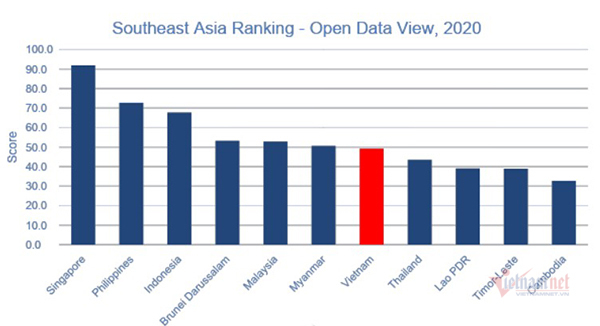
Theo dữ liệu của Open Data Watch, trong khu vực Đông Nam Á, đối với xếp hạng về dữ liệu mở Việt Nam tốt hơn Thái Lan, Lào, Đông Timor và Campuchia.

     Xếp hạng dữ liệu mở Việt Nam chỉ tốt hơn Thái, Lào, Campuchia - VietNamNet
Xếp hạng về dữ liệu mở giữa các quốc gia tại khu vực Đông Nam Á năm 2020. Số liệu: Open Data Watch

Việt Nam mạnh về hạ tầng nhưng yếu về chính sách

Đó là nhận định được đưa ra bởi Ngân hàng Thế giới trong một hội nghị vừa được tổ chức mới đây về dữ liệu mở. 

Trong bảng xếp hạng về dữ liệu mở năm 2020 của Open Data Watch, Singapore hiện đứng hàng đầu trên thế giới, tiếp đó là một số quốc gia châu Âu như Ba Lan, Phần Lan, Đan Mạch, Thụy Điển… 

Tiếp tục đọc “Xếp hạng dữ liệu mở Việt Nam tốt hơn Thái Lan, Lào, Campuchia”

 Ro Khanna wants to save Silicon Valley from itself

January 24, 2022

By Blake Hounshell and Leah Askarinam

On Politics


Representative Ro Khanna writes in a new book that too much wealth is concentrated in too few hands, and too many digital jobs are crowded into a handful of tech hubs.

T.J. Kirkpatrick for The New York Times

Not your average political book

It’s not often that you meet a member of Congress who is eager to discuss the German philosopher Jürgen Habermas.

But Representative Ro Khanna is not like most members of Congress. He represents one of the wealthiest districts in America — a chunk of Silicon Valley that is home to tech behemoths like Apple and Intel — yet he was a co-chair of Bernie Sanders’ 2020 presidential campaign. He’s a former intellectual property lawyer whose 2016 House bid was backed by venture capitalists and tech moguls, but he’s also a prominent critic of social media companies like Facebook.

Tiếp tục đọc ” Ro Khanna wants to save Silicon Valley from itself”

This is the real story of the Afghan biometric databases abandoned to the Taliban

technologyreview.com

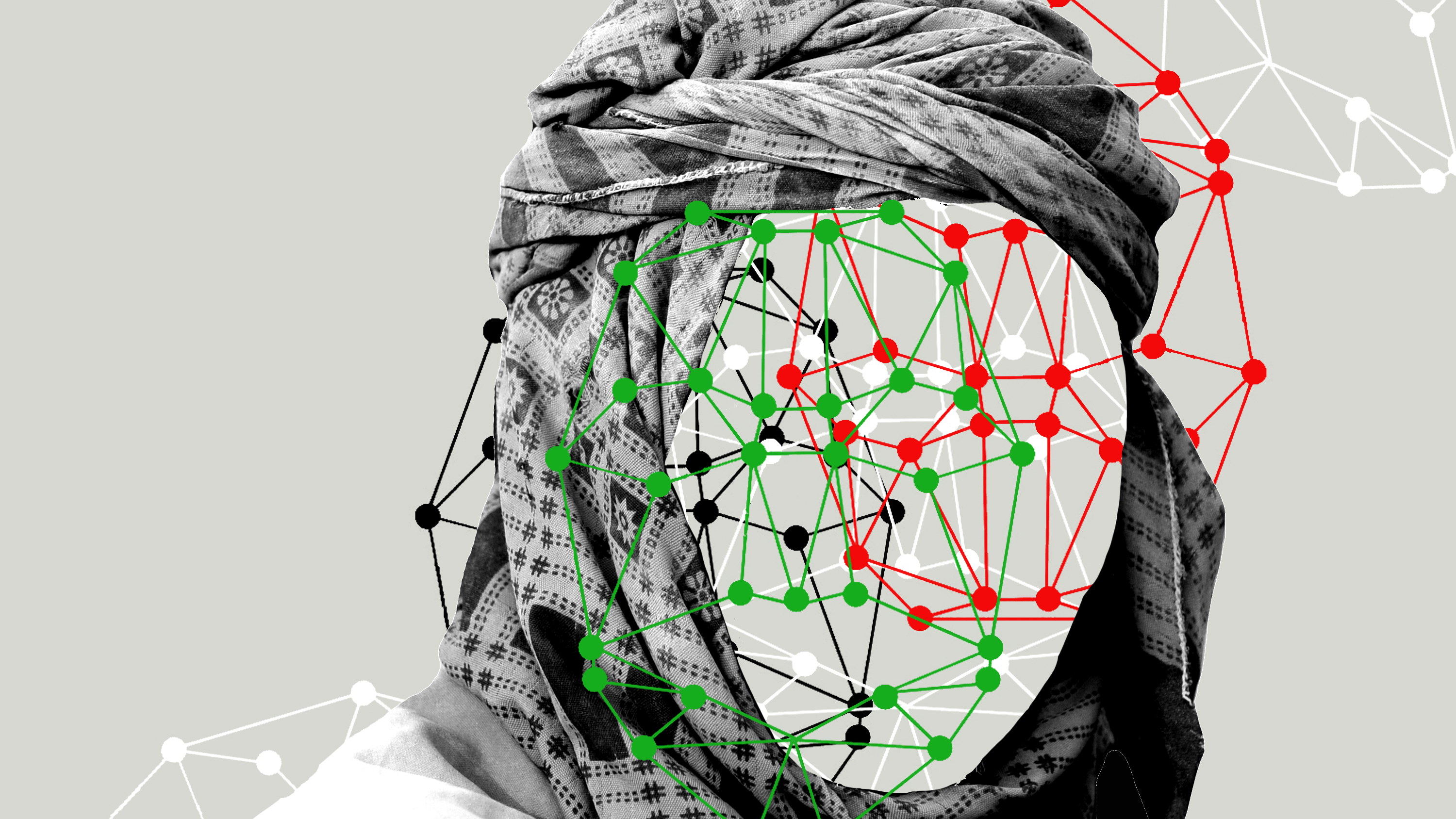
By capturing 40 pieces of data per person—from iris scans and family links to their favorite fruit—a system meant to cut fraud in the Afghan security forces may actually aid the Taliban.By 

August 30, 2021

afghans targeted by biometric data

ANDREA DAQUINO

As the Taliban swept through Afghanistan in mid-August, declaring the end of two decades of war, reports quickly circulated that they had also captured US military biometric devices used to collect data such as iris scans, fingerprints, and facial images. Some feared that the machines, known as HIIDE, could be used to help identify Afghans who had supported coalition forces.

According to experts speaking to MIT Technology Review, however, these devices actually provide only limited access to biometric data, which is held remotely on secure servers. But our reporting shows that there is a greater threat from Afghan government databases containing sensitive personal information that could be used to identify millions of people around the country. 

MIT Technology Review spoke to two individuals familiar with one of these systems, a US-funded database known as APPS, the Afghan Personnel and Pay System. Used by both the Afghan Ministry of Interior and the Ministry of Defense to pay the national army and police, it is arguably the most sensitive system of its kind in the country, going into extreme levels of detail about security personnel and their extended networks. We granted the sources anonymity to protect them against potential reprisals. 

Related Story

Tiếp tục đọc “This is the real story of the Afghan biometric databases abandoned to the Taliban”

Nỗi phiền… công nghệ

XÊ NHO 3/1/2022 6:10 GMT+7

TTCTĐừng ảo tưởng công nghệ “thông minh” sẽ đem lại sự tiện dụng, thoải mái như một cây đũa thần; nó chỉ là các món đồ chơi có thể đem lại sự phiền toái và sự thất vọng.

 Ảnh: Gizmodo

P. là một người yêu công nghệ, mỗi tối đọc xong chương sách định đi ngủ, anh ước gì có thể ra lệnh cho chiếc đèn trong phòng để nó tự tắt, khỏi mất công ngồi dậy đến bấm công tắc đèn. Vì thế khi đọc thấy có loại đèn tuýp 1,2 mét tích hợp wifi, có thể điều khiển bằng điện thoại di động, P. đặt mua ngay. Đèn mang thương hiệu của một hãng trong nước nhưng ứng dụng tải về chỉ có tiếng Anh. P. đoán đây là sản phẩm của các công ty bên Trung Quốc, hãng trong nước đặt sản xuất rồi ghi nhãn của mình; còn ứng dụng thì được giao trọn gói, chưa thể Việt hóa ngay.

Tiếp tục đọc “Nỗi phiền… công nghệ”