Đừng ảo tưởng ‘đạo cao một sào, ma cao một trượng’

Song Nghi – Thứ Ba, 13/06/2023

(KTSG) – Trong tháng qua, có hai thông tin không vui cho giới công nghệ nước nhà: Việt Nam đứng thứ 2 thế giới về số lượng ứng dụng (app) gian lận bị Apple gỡ bỏ và đứng đầu thế giới về lạm dụng không gian mạng để gian lận.

Theo công bố của Bộ Thông tin và Truyền thông, cứ 100 đồng đến từ thu nhập gian lận trên YouTube thì có 55 đồng do người Việt Nam làm ra. Để chấm dứt những “danh hiệu” đáng xấu hổ này, ngoài việc càn quét của các nền tảng công nghệ, thiết nghĩ các cơ quan chức năng nhà nước cũng phải có thêm những biện pháp mạnh tay hơn nữa.

Đây là hậu quả từ xu hướng xấu đã phát triển khá mạnh hàng chục năm qua trong giới cung cấp dịch vụ và phát triển ứng dụng công nghệ Việt Nam và thế giới: Tìm cách trục lợi, hay nói thẳng là gian lận, để kiếm tiền bất chính từ các kẽ hở của các nền tảng toàn cầu như Apple, Google, YouTube…

Nếu xem việc phát triển các dịch vụ, ứng dụng trên những nền tảng công nghệ của các tập đoàn lớn… một cách nghiêm chỉnh, tuân thủ quy định là “trắng” thì bên cạnh những nhà phát triển “trắng”, ở Việt Nam cũng có không ít nhà phát triển “đen” chuyên tìm cách lách luật để kiếm tiền kiểu chào bán dịch vụ “lên top 10 kết quả tìm kiếm Google”.

Tiếp tục đọc “Đừng ảo tưởng ‘đạo cao một sào, ma cao một trượng’”

Các đối tác nước ngoài mong Luật Viễn thông sửa đổi mở cơ hội với Internet vệ tinh

Trịnh Nguyễn – Thứ Năm 23/03/2023 21:49 (GMT+7)

VietTimes –  Sáng 23/3, Liên đoàn Thương mại và Công nghiệp Việt Nam đã tổ chức hội thảo về Dự thảo Luật Viễn thông (sửa đổi). Đây là một bộ luật được các đối tác nước ngoài quan tâm với mong muốn mở ra cơ hội cho họ.

Các đối tác nước ngoài rất quan tâm đến việc Việt Nam sửa đổi Luật Viễn thông

Theo ý kiến của bà Nguyễn Việt Hà, Phó Chủ tịch Hiệp hội Thương Mại Hoa Kỳ tại Hà Nội (AmCham Hanoi), một xu hướng trong ngành viễn thông đang được nhiều quốc gia trên thế giới quan tâm hiện nay đó là sự phát triển dịch vụ viễn thông qua vệ tinh.

Tiếp tục đọc “Các đối tác nước ngoài mong Luật Viễn thông sửa đổi mở cơ hội với Internet vệ tinh”

Death threats, trolling and sexist abuse: climate scientists report online attacks

nature.com

Survey highlights experiences of dozens of climate researchers who have endured online harassment related to their work.

Close-up of the hands of a woman typing on a laptop at night
Among 468 survey respondents, 39% said they have experienced online harassment or abuse related to their climate research.Credit: Oscar Wong/Getty

In 2013, Richard Betts called the police because someone online threatened to string him up with piano wire. The threat happened after Betts, a climate scientist at the University of Exeter, UK, tweeted about the rising temperatures the world would experience the following year. This wasn’t the first time someone had responded negatively to his comments about climate change; nor would it be the last. And Betts isn’t alone.

survey by the international non-governmental organization Global Witness hints at the extent of online abuse faced by scientists working on climate topics worldwide, some of which takes a toll on their work or well-being.

Tiếp tục đọc “Death threats, trolling and sexist abuse: climate scientists report online attacks”

War Propaganda

historians.org

From What Is Propaganda? (1944) By Ralph D. Casey (Published July 1944)

The Nazis prepared for war from the moment Hitler came into power in 1933. In the feverish building up of German striking power, they had the support of the professional military men. The Nazis not only produced the weapons of war; they geared their economy for the strain of a future conflict. They carried on political intrigues to promote their purposes. Their propaganda machine had long been a going concern when Hitler felt ready to strike at Poland, the first step in an ambitious plan to lay the world at his feet.

Military, economic, political, and propaganda weapons were forged for the fray. Britain and France and, soon after, other peaceful nations were compelled to forge them to resist the Nazi onrush.

Today’s war is four-dimensional. It is a combination of military, economic, political, and propaganda pressure against the enemy. An appeal to force alone is not regarded as enough, in the twentieth century, to win final and lasting victory. War is fought on all four fronts at once—the military front, the economic front, the political front, and the propaganda front.

To understand how this four-dimensional warfare has come about, we have to look at history. We have to go back to the rise of nationalism in the eighteenth century.

Before the American and French revolutions took place at the end of the eighteenth century, many armies fought in the pay of monarchies, such as the Bourbons, Hapsburgs, and Hohenzollerns, or of individual leaders. They were mercenary armies. They did not fight for patriotic motives. They did not fight for causes. They fought because fighting was their business. No fight, no pay!

Tiếp tục đọc “War Propaganda”

Word war: In Russia-Ukraine war, information became a weapon

APnews.com

By DAVID KLEPPERFebruary 23, 2023

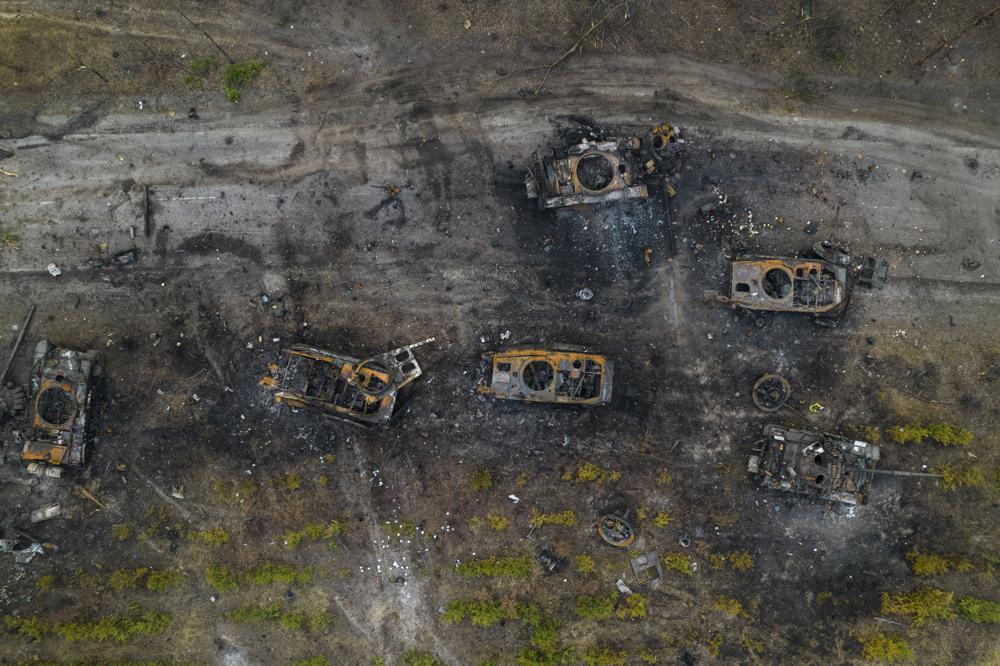
FILE - Destroyed Russian armored vehicles sit on the outskirts of Kyiv, Ukraine, March 31, 2022. In the year since Russia invaded Ukraine, disinformation and propaganda have emerged as key weapons in the Kremlin's arsenal. (AP Photo/Rodrigo Abd, File)

FILE – Destroyed Russian armored vehicles sit on the outskirts of Kyiv, Ukraine, March 31, 2022. In the year since Russia invaded Ukraine, disinformation and propaganda have emerged as key weapons in the Kremlin’s arsenal. (AP Photo/Rodrigo Abd, File)

WASHINGTON (AP) — Russia’s invasion of Ukraine is the deadliest conflict in Europe since World War II, and the first to see algorithms and TikTok videos deployed alongside fighter planes and tanks.

The online fight has played out on computer screens and smartphones around the globe as Russia used disinformation, propaganda and conspiracy theories to justify its invasion, silence domestic opposition and sow discord among its adversaries.

Now in its second year, the war is likely to spawn even more disinformation as Russia looks to break the will of Ukraine and its allies.

MORE WAR COVERAGE

Tiếp tục đọc “Word war: In Russia-Ukraine war, information became a weapon”

Internet Việt Nam mong manh thế nào?

VNE – Thứ năm, 9/2/2023, 06:00 

Tuyến cáp quang biển sắp bị thanh lý đang là sợi dây nguyên vẹn duy nhất kết nối Việt Nam với mạng lưới Internet toàn cầu.

Trong 5 cáp quang biển kết nối Việt Nam với thế giới, SMW-3 là sợi cáp già cỗi nhất, dự kiến được “nghỉ hưu” vào năm 2024. Nhưng nay, sợi cáp lại trở thành “con đường lành lặn” duy nhất giữ kết nối Internet qua biển cho hơn 70 triệu người dùng Việt Nam.

Đây là lần thứ hai trong 24 năm hoạt động, SMW-3 rơi vào tình cảnh này. Lần đầu năm 2007, khi một trong hai tuyến cáp của Việt Nam bị cắt trộm. Và lần này, khi 4 trên 5 tuyến cáp quang biển cùng lúc gặp sự cố. Điểm khác biệt là 16 năm trước, số người dùng Internet Việt Nam chỉ 17,7 triệu, còn nay đã tăng hơn 4 lần, đặt áp lực lớn lên sợi cáp già nua này.

Tiếp tục đọc “Internet Việt Nam mong manh thế nào?”

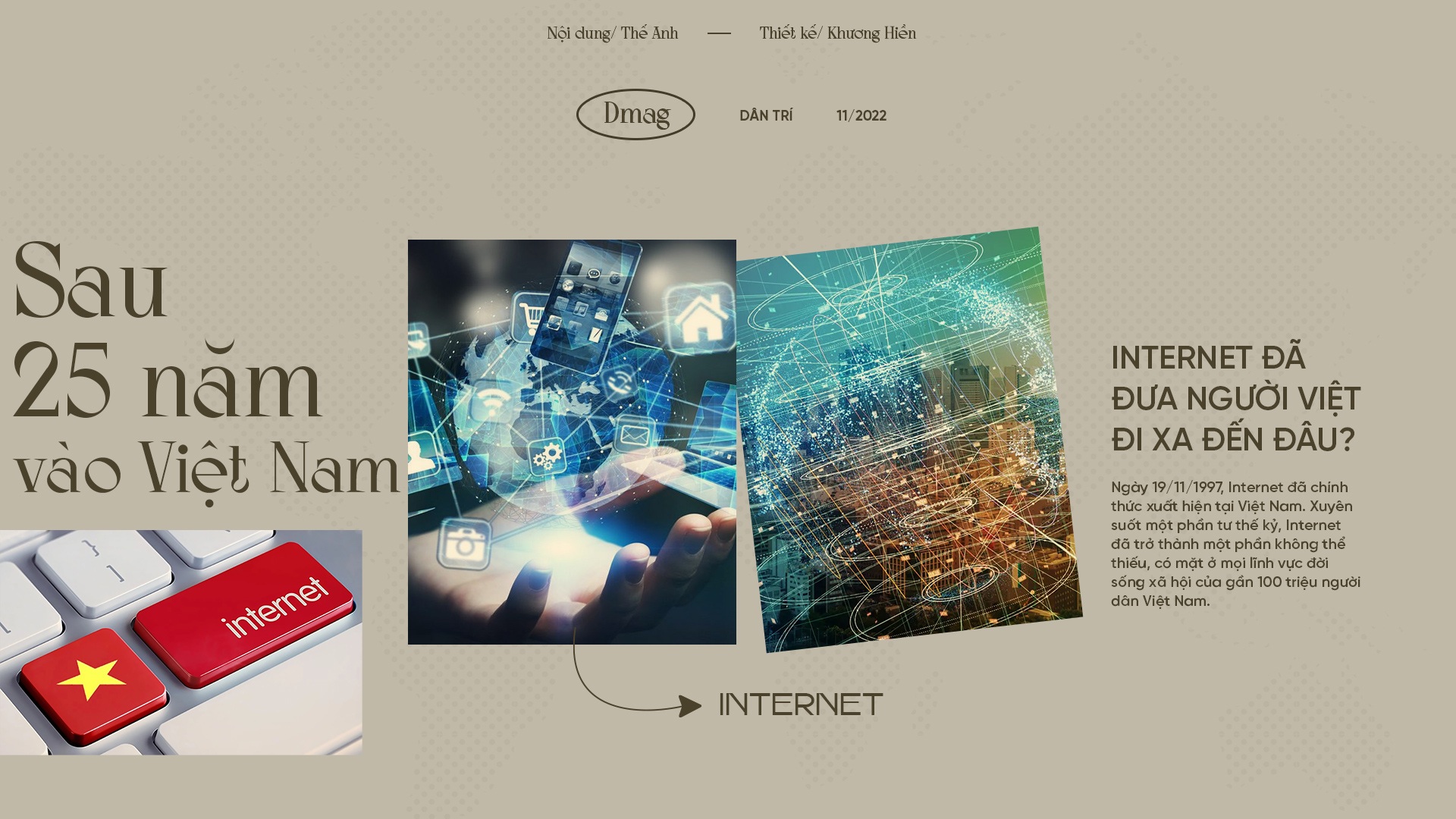
Internet đã đưa người Việt đi xa đến đâu?

Sau 25 năm vào Việt Nam, Internet đã đưa người Việt đi xa đến đâu?

DT – Các báo cáo mới nhất cho biết Việt Nam hiện có gần 70 triệu người dùng sử dụng Internet trên khắp lãnh thổ. Con số này tương đương với hơn 70,3% trên tổng dân số và cao hơn mức trung bình của thế giới (62,5%).

Đối với thế hệ trẻ hiện nay, Internet đã trở thành một phần quen thuộc, không thể thiếu trong đời sống. Không ai có thể phủ nhận được vai trò và tầm quan trọng của Internet đối với cuộc sống hiện đại ngày nay. Dù vậy, không phải ai cũng có thể biết được quá trình mà Internet “bước chân” vào Việt Nam và dần trở nên phổ biến như hiện tại.

Tiếp tục đọc “Internet đã đưa người Việt đi xa đến đâu?”

Mạng trong nước “lép vế” trước các nhà mạng nước ngoài ​ ​

SGGPO  Thứ Ba, 1/11/2022 10:20

Các quy định pháp luật hiện hành chủ yếu tập trung quản lý rất chặt các mạng xã hội trong nước. Một số quy định đã trở nên lạc hậu, bất cập, khiến cho các mạng xã hội trong nước gặp nhiều khó khăn. Các dịch vụ mạng xã hội nước ngoài chi phối đến gần 70% thị phần doanh thu quảng cáo trực tuyến.

Bộ trưởng Bộ TT-TT Nguyễn Mạnh Hùng

Bộ trưởng Bộ TT-TT Nguyễn Mạnh Hùng

Báo cáo trả lời chất vấn vừa được Bộ trưởng Bộ TT-TT Nguyễn Mạnh Hùng gửi đến ĐBQH nêu nhận định, các quy định pháp luật hiện hành chủ yếu tập trung quản lý rất chặt các mạng xã hội trong nước. Một số quy định đã trở nên lạc hậu, bất cập trước sự phát triển rất nhanh của Internet và công nghệ, khiến cho các mạng xã hội trong nước gặp nhiều khó khăn trong việc thu hút người dùng, phát triển kinh doanh.

Mạng nước ngoài chiếm gần 70% thị phần

Tiếp tục đọc “Mạng trong nước “lép vế” trước các nhà mạng nước ngoài ​ ​”

Vietnam has major data leak problem, citizens suffer

VNE – By Luu Quy   August 19, 2022 | 09:00 pm GMT+7

Vietnam has major data leak problem, citizens suffer

An incoming call with an unknown caller from outside of Vietnam. Photo by VnExpress/Luu QuyMinh Huy, a university student in Ho Chi Minh City, said he and his family have been terrorized by phone calls demanding repayment of loans he never took.

Someone has been calling Huy repeatedly over the past month, saying he owed money with high interest that will balloon to tens of millions of dong (VND10 million= $427.26) if it is not paid back quickly. When he denied ever using the service, the caller brought out a screenshot of an apparent contract with accurate personal information like ID card numbers, phone numbers and email addresses, even relevant information on Huy’s family members.

“This is information I’ve shared with multiple services online when I signed up for various accounts, but I have never submitted them to any credit service,” Huy said.

Tiếp tục đọc “Vietnam has major data leak problem, citizens suffer”

Cyber slavery: inside Cambodia’s online scam gangs –

Illicit industry traffics thousands of victims from China through Southeast Asia

“The videos provide a window into the dark world run by transnational criminal networks able to smuggle people from China, through Vietnam and into Cambodia and Myanmar”

SHAUN TURTON, Contributing WriterSEPTEMBER 1, 2021 06:00 JST

PHNOM PENH — The first punch lands on the left side of the young man’s face, the second on the right.

Several more follow. Knees strike his stomach. He cannot defend himself, his hands are cuffed. His attacker, face outside the frame, has his fist wrapped in cloth.

He drags his victim by the lapels into the middle of the frame, faces him to the camera and tells him to speak.

“Dad, I’m in Cambodia, I’m not inside of China,” says the young man, through tears, his voice breaking and blood streaming from his nose. “I beg you, please send money.”

The ransom video, which was sent to the victim’s parents, was one of several shown to Nikkei Asia by Li*, a person who helps rescue human trafficking victims in Cambodia.

This ransom video supplied to Nikkei shows a handcuffed man being beaten with a stick while other victims watch in horror. 

Another video shows a shirtless man cuffed on the ground being beaten with a stick while two more captives, handcuffed to a nearby window grill, watch on in terror. In a third, a grounded man, a foot on his neck, writhes in pain as he is electrocuted with a Taser.

The videos provide a window into the dark world run by transnational criminal networks able to smuggle people from China, through Vietnam and into Cambodia and Myanmar.

Tiếp tục đọc “Cyber slavery: inside Cambodia’s online scam gangs –”

German court rules YouTube could be accountable for illegal content

By Laura Kabelka | EURACTIV.com

 euractive.com – 3 Jun 2022

“We need to examine the full details of today’s ruling to better understand how it impacts our viewers and the platform,” a YouTube spokesperson told EURACTIV. [Michael Vi/Shutterstock]

Online video sharing platforms such as YouTube could be liable for content uploads that infringe copyrights if they fail to act immediately, according to a ruling from Germany’s top court on Thursday (2 June).

The ruling is part of a larger fight of the creative and entertainment industry against illegally uploaded material, where large online platforms play an important role. Even if third parties posted the uploads, online platforms could find themselves in court.

“We need to examine the full details of today’s ruling to better understand how it impacts our viewers and the platform,” a YouTube spokesperson told EURACTIV. 

According to Germany’s Federal Court of Justice, this would also apply to shared hosting services that stored data and provided access to online users. 

Tiếp tục đọc “German court rules YouTube could be accountable for illegal content”

The European Union is planning new legislation aimed at curbing the worst harms associated with artificial intelligence.

technologyreview.com

By Melissa Heikkilä

May 13, 2022

Europe's AI Act concept

MS TECH | NGA

It’s a Wild West out there for artificial intelligence. AI applications are increasingly used to make important decisions about humans’ lives with little to no oversight or accountability. This can have devastating consequences: wrongful arrests, incorrect grades for students, and even financial ruin. Women, marginalized groups, and people of color often bear the brunt of AI’s propensity for error and overreach. 

The European Union thinks it has a solution: the mother of all AI laws, called the AI Act. It is the first law that aims to curb these harms by regulating the whole sector. If the EU succeeds, it could set a new global standard for AI oversight around the world.

But the world of EU legislation can be complicated and opaque. Here’s a quick guide to everything you need to know about the EU’s AI Act. The bill is currently being amended by members of the European Parliament and EU countries. 

What’s the big deal?

The AI Act is hugely ambitious. It would require extra checks for “high risk” uses of AI that have the most potential to harm people. This could include systems used for grading exams, recruiting employees, or helping judges make decisions about law and justice. The first draft of the bill also includes bans on uses of AI deemed “unacceptable,” such as scoring people on the basis of their perceived trustworthiness. 

Tiếp tục đọc “The European Union is planning new legislation aimed at curbing the worst harms associated with artificial intelligence.”

E.U. Takes Aim at Social Media’s Harms With Landmark New Law

nytimes.com

The Digital Services Act would force Meta, Google and others to combat misinformation and restrict certain online ads. How European officials will wield it remains to be seen.

Margrethe Vestager and Thierry Breton, top European officials, were among the main policymakers behind the Digital Services Act.
Margrethe Vestager and Thierry Breton, top European officials, were among the main policymakers behind the Digital Services Act.Credit… Thierry Monasse/Getty Images
Adam Satariano

By Adam Satariano

Adam Satariano, who is based in London, has covered European tech since 2016 and previously reported on Apple and Silicon Valley from San Francisco.

April 22, 2022

The European Union reached a deal on Saturday on landmark legislation that would force Facebook, YouTube and other internet services to combat misinformation, disclose how their services amplify divisive content and stop targeting online ads based on a person’s ethnicity, religion or sexual orientation.

Tiếp tục đọc “E.U. Takes Aim at Social Media’s Harms With Landmark New Law”

Dữ liệu y tế Việt Nam trong thời đại số: Quyền riêng tư của chúng ta ở đâu?

TS – 30/11/2020 07:12 – Hảo Linh

Dữ liệu về sức khỏe của chúng ta hiện nay do những ai nắm giữ và khai thác, được lưu trữ và chia sẻ cho những đâu, chính chúng ta có được tiếp cận chúng không? Có lẽ là không. Buổi hội thảo “Chuyển đổi số và an toàn dữ liệu trong lĩnh vực y tế” do Hội Truyền thông số Việt Nam tổ chức vào ngày 18/11 cho biết rằng: trong gần 20 năm đẩy mạnh “chuyển đổi số”, số hóa các hoạt động trong lĩnh vực y tế, nhà nước chưa có quy định nào về quyền của chủ thể dữ liệu. Nói cách khác, chúng ta chưa có quyền gì đối với những dữ liệu về sức khỏe của chính chúng ta và do chúng ta góp phần tạo ra.

Y bác sĩ ở Đại học Y Dược TP.HCM đang hội chẩn dựa trên bệnh án điện tử. Ảnh: Hoàng Hưng/báo Sài Gòn giải phóng.

Tiếp tục đọc “Dữ liệu y tế Việt Nam trong thời đại số: Quyền riêng tư của chúng ta ở đâu?”

Facebook, Meta, Metaverse: Cuộc chạy trốn khủng hoảng đạo đức?

TS – 27/12/2021 07:00 – Hải Đăng – Hảo Linh

Khi Mark Zuckerberg tuyên bố Facebook sẽ chính thức đổi tên thành Meta giữa những tố cáo của Frances Haugen, một cựu kỹ sư dữ liệu của Facebook, về bằng chứng cho sự tắc trách của công ty này xung quanh một chuỗi những bê bối về chính trị – xã hội, giới quan sát công nghệ không khỏi cảm thấy bi quan cho sự khủng hoảng đạo đức của Zuckerberg nói riêng, và của tập đoàn mạng xã hội do Zuckerberg đứng đầu nói chung.

Thuật toán của Facebook ưu tiên cho các post có nhiều phản ứng giận dữ, bởi càng giận dữ, người ta càng bình luận và chia sẻ nhiều. Ảnh: The Washington Post.

Tiếp tục đọc “Facebook, Meta, Metaverse: Cuộc chạy trốn khủng hoảng đạo đức?”