China wants to lead the world on AI regulation — will the plan work?

nature.com

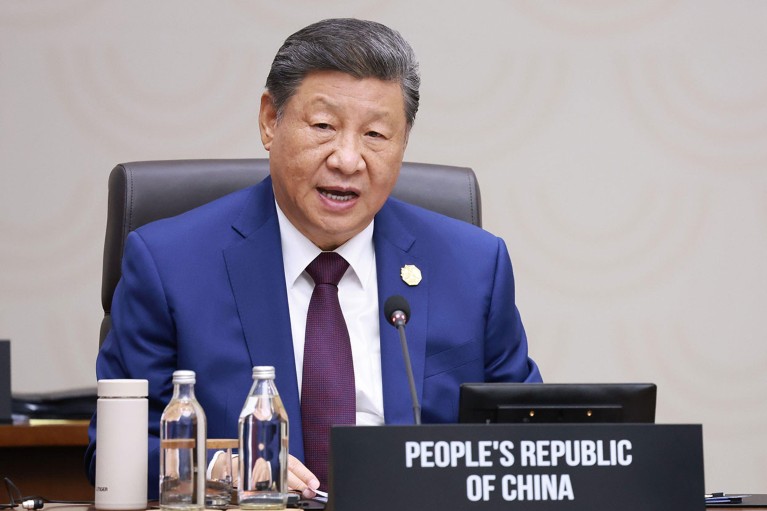
Having placed artificial intelligence at the centre of its own economic strategy, China is driving efforts to create an international system to govern the technology’s use.

Chinese President Xi Jinping speaks at the APEC Economic Leaders' Meeting.
Chinese president Xi Jinping speaking at the 2025 Asia-Pacific Economic Cooperation meeting in Gyeongju, South Korea.Credit: Yonhap via AP/Alamy

Despite risks ranging from exacerbating inequality to causing existential catastrophe, the world has yet to agree on regulations to govern artificial intelligence. Although a patchwork of national and regional regulations exists, for many countries binding rules are still being fleshed out.

Tiếp tục đọc “China wants to lead the world on AI regulation — will the plan work?”

The cost of human labor behind AI development

Digital sweatshops of the Global South

So, where does this hidden labor take place? According to Casilli’s research, workers are in countries including Kenya, India, the Philippines, and Madagascar — regions with high levels of digital literacy, access to English- or French-speaking workers, and little in the way of labor protection or union representation. 

Do Better Team

Behind most of today’s AI models lies the labor of workers in the Global South, who are exposed to disturbing content and poor working conditions. This reality raises urgent questions about the transparency and ethics of AI development.

Picture working 10-hour days tagging distressing images to train an AI model — and getting paid not in money, but in a kilogram of sugar. This isn’t dystopian fiction, but reality for some of the workers behind today’s most advanced artificial intelligence. 

While the development of AI is undoubtedly enhancing the lives of many by streamlining processes and offering efficient solutions, it also raises a pressing question: What is the true cost of AI, and who is paying for it? 

Antonio Casilli, Professor of Sociology at Télécom Paris and Founder of DipLab, addressed this question during an Esade seminar on the promises and perils of the digitalization of work. The event was part of the kick-off for the DigitalWORK research project, which explores how digital technologies are transforming work and promoting fair, equitable and transparent labor conditions, with Anna Ginès i Fabrellas and Raquel Serrano Olivares (Universitat de Barcelona) as principal investigators. 

AI isn’t autonomous, it’s human-powered

Tiếp tục đọc “The cost of human labor behind AI development”

How many data centers are there in the USA

Businss Insider

Satellite images show how data centers are changing America’s landscape

Business insider

Suburban homes next to data centers
Data centers across the street from residential housing are not an uncommon scene in Virginia. 
  • There are over a thousand planned or existing data centers across the US, according to a BI investigation.
  • Major tech companies are racing to construct even more as the AI boom continues. But at what cost?
  • Satellite images show where these facilities are cropping up and why they’re a nuisance to many.

Build, baby, build. That’s the mantra behind the AI boom sweeping America.

This year, alone, Amazon, Meta, Microsoft, and Google are projected to spend about $320 billion in capex, mostly for AI infrastructure, according to an analysis of financial statements by Business Insider.

At the heart of this AI infrastructure growth are data centers that house the specialized hardware and high-speed networking equipment, driving the intensive computations behind large language models. However, AI needs more.

Because AI learns by processing increasingly large amounts of data, improving it requires more computational power, which in turn necessitates more data centers.

A BI investigation found 1,240 data centers across America are already built or approved for construction by the end of 2024.

Tiếp tục đọc “How many data centers are there in the USA”

Đề xuất đưa sở hữu trí tuệ thành tài sản sinh lời

Dự thảo Luật Sở hữu trí tuệ sửa đổi mở đường để quyền sáng chế, tác phẩm và giải pháp công nghệ có thể định giá, giao dịch và thế chấp như tài sản kinh tế.

VNExpress Thứ hai, 27/10/2025, 16:03 (GMT+7

Chiều 27/10, Chính phủ trình Quốc hội dự án Luật sửa đổi, bổ sung một số điều của Luật Sở hữu trí tuệ. Đây là lần điều chỉnh quy mô lớn nhất từ trước tới nay, với 75 điều được sửa đổi, hai điều bổ sung và 8 điều bãi bỏ. Mục tiêu là hoàn thiện hành lang pháp lý cho đổi mới sáng tạo, thương mại hóa kết quả nghiên cứu và quản lý hiệu quả tài sản trí tuệ trong nền kinh tế số.

Tiếp tục đọc “Đề xuất đưa sở hữu trí tuệ thành tài sản sinh lời”

The battle for the future of the internet is underway

Analysis by Lisa Eadicicco, CNN

Updated 7 hr ago

OpenAI's new ChatGPT Atlas browser is a challenge to Google Chrome.

OpenAI’s new ChatGPT Atlas browser is a challenge to Google Chrome. Philip Dulian/picture alliance/dpa/Getty Images

The tug-of-war over the internet’s future escalated dramatically on Tuesday after OpenAI unveiled a new product that takes direct aim at the heart of Google’s core business: controlling the world’s front door to the internet.

OpenAI this week released ChatGPT Atlas, a desktop web browser infused with the popular AI chatbot. The product is more than just a way to expand ChatGPT, which now has more than 800 million weekly users. It’s an attempt to become the pathway to websites, social media and other online services, giving it a more direct role in everything people do online. Google has dominated that business for two decades. OpenAI is betting it can start to take over.

Tiếp tục đọc “The battle for the future of the internet is underway”

FP Flash Point: The risks AI poses to democracy

DECEMBER 8, 2024| VIEW IN BROWSER|SUBSCRIBE
Álvaro Bernis illustration for Foreign Policy
Ahead of the U.S. election, some analysts worried that artificial intelligence could imperil election integrity. Although AI did not end up disrupting the vote, experts aren’t writing off the risks it poses to democracy.“I think it would be foolhardy to say: ‘Well, there’s been no major disaster yet, so we’re okay here,’” Gary Marcus, a scientist and AI expert, recently told FP’s Rishi Iyengar. “That’d be like saying we made a bunch of steamships, so this one’s invincible, and whoops, you hit an iceberg.”In this edition of Flash Points, FP contributors consider the ways AI could endanger democratic societies and how policymakers might face down those threats.—Chloe Hadavas
1. AI’s Alarming Trend Toward Illiberalism

Left ungoverned, the technology opens pathways to undermine democracy. By Ami Fields-Meyer, Janet Haven
Tiếp tục đọc “FP Flash Point: The risks AI poses to democracy”

Made in China only: China looks domestically for growth but will it succeed? 

CNA Insider – 18-6-2024

Whether by choice or circumstance, China is looking inward for its economic growth.

President Xi Jinping wants Chinese consumers to spend their way to growth, buying up domestically made goods. At the same time, the government will invest more in “New Productive Forces” – A.I, Green Tech and Advanced Computing – all for the goal of moving up the value chain and shedding China’s reliance on foreign technology.

In this period of “de-coupling” and trade wars, Beijing might have little choice but to become more self-sufficient. Yet, an overly inward-looking and nationalistic China could discourage foreign investors. Are domestic consumption and production enough to jumpstart China’s sputtering economy?

Tiếp tục đọc “Made in China only: China looks domestically for growth but will it succeed? “

Xác thực bằng dữ liệu sinh trắc học: Cần cẩn trọng trước những bước đi “không thể đảo ngược”!

PHAN DƯƠNG HIỆU

Tia sáng – 2-7-2024

Trong kho sinh trắc sẽ có nhiều mức độ, mỗi lần phải sử dụng một mức độ cao hơn là một bước đi “không thể đảo ngược”. Và nếu cứ leo thang mức độ dần dần, rồi đến nước phải sử dụng cả dữ liệu gene, đó sẽ là bước tận cùng, để rồi nếu thua là không còn vũ khí nào khác.

Phải sử dụng hình ảnh thực, tức thời để xác nhận giao dịch (trên 10 triệu)? Điều gì sẽ xảy ra khi những kho dữ liệu này bị tấn công, đường truyền, thiết bị đầu cuối bị đe doạ?

Tiếp tục đọc “Xác thực bằng dữ liệu sinh trắc học: Cần cẩn trọng trước những bước đi “không thể đảo ngược”!”

Vận động bằng AI, mặt trận mới trong cuộc bầu cử Ấn Độ

ANTG – Thứ Năm, 02/05/2024, 06:41

Các hình đại diện gọi cử tri bằng tên thân mật, nói chuyện với họ qua tin nhắn bằng bất kỳ ngôn ngữ nào. Đấy là những gì được tạo ra từ trí tuệ nhân tạo (AI) và đang tràn ngập trên môi trường kỹ thuật số của Ấn Độ sau khi nước này bắt đầu cuộc tổng tuyển cử 2024.

Tràn ngập nội dung giả mạo bằng AI

Để có cái nhìn thoáng qua về vị trí của trí tuệ nhân tạo trong các chiến dịch bầu cử, hãy nhìn vào Ấn Độ, khi quốc gia đông dân nhất thế giới bắt đầu tiến hành các cuộc tổng tuyển cử vào ngày 19/4 vừa qua.

Một phiên bản Thủ tướng Narendra Modi do AI tạo ra đã được chia sẻ trên ứng dụng nhắn tin WhatsApp cho thấy khả năng tiếp cận siêu cá nhân hóa ở quốc gia có gần một tỷ cử tri. Trong video – một clip demo không rõ nguồn – hình đại diện của ông Modi đề cập trực tiếp đến tên của một loạt cử tri.

Cử tri Ấn Độ đeo mặt nạ hình Thủ tướng Modi để bày tỏ sự ủng hộ Đảng BJP của nhà lãnh đạo này. Ảnh: Reuters.
Tiếp tục đọc “Vận động bằng AI, mặt trận mới trong cuộc bầu cử Ấn Độ”

The Race to Regulate Artificial Intelligence

Why Europe Has an Edge Over America and China

foreignaffairs.com June 27, 2023 By Anu Bradford

Artificial intelligence is taking the world by storm. ChatGPT and other new generative AI technologies have the potential to revolutionize the way people work and interact with information and each other. At best, these technologies allow humans to reach new frontiers of knowledge and productivity, transforming labor markets, remaking economies, and leading to unprecedented levels of economic growth and societal progress.

At the same time, the pace of AI development is unsettling technologists, citizens, and regulators alike. Even ardent techno-enthusiasts—including figures such as OpenAI CEO Sam Altman and Apple co-founder Steve Wozniak—are issuing warnings about how unregulated AI can lead to uncontrollable harms, posing severe threats to individuals and societies. The direst predictions concern AI’s ability to obliterate labor markets and make humans obsolete or—under the most extreme scenario—even destroy humanity.

With tech companies racing to advance artificial intelligence capabilities amid intense criticism and scrutiny, Washington is facing mounting pressure to craft AI regulation without quashing innovation. Different regulatory paradigms are already emerging in the United States, China, and Europe, rooted in distinct values and incentives. These different approaches will not only reshape domestic markets—but also increasingly guide the expansion of American, Chinese, and European digital empires, each advancing a competing vision for the global digital economy while attempting to expand its sphere of influence in the digital world.

Stay informed.

Tiếp tục đọc “The Race to Regulate Artificial Intelligence”

BRIBES FOR BIAS: CAN Artificial Intelligent – AI BE CORRUPTED?

The potential abuse of artificial intelligence for private gain has profound implications for our economic, political and social lives

transperency.org

Recently your social media feed may have been flooded with headlines on the advances in Artificial Intelligence (AI) or even AI-generated images. Text-to-image algorithms such as Dall-E2 and Stable Diffusion are becoming hugely popular. ChatGPT, a chatbot developed by OpenAI, is now the world’s best-performing large language model, reaching 1 million users in its first week – a rate of growth much faster than Twitter, Facebook or TikTok.

As AI demonstrates its ability to craft poetrywrite code and even pollinate crops by imitating bees, the governance community is waking up to the impact of artificial intelligence on the knotty problem of corruption. Policy institutes and academics have pointed to the potential use of AI to detect fraud and corruption, with some commentators heralding these technologies as the “next frontier in anti-corruption.”

Tiếp tục đọc “BRIBES FOR BIAS: CAN Artificial Intelligent – AI BE CORRUPTED?”

Yuval Noah Harari: ‘I don’t know if humans can survive AI’

For the first time, we’ve invented something that takes power away from us, says the Israeli historian and author of Sapiens

ByHarry de Quetteville23 April 2023 • 8:00am

Israeli historian, philosopher and best-selling author Yuval Noah Harari
Harari says he keeps his phone switched off, in a drawer, and is on an “information diet” CREDIT: Oded Balilty

Stories have always been vital to Yuval Harari, the Israeli historian-cum-philosopher. The unique capacity of our species to be bound and united by intangible narratives, even across oceans, was central to Sapiens, his mind-bogglingly popular chronicle of our species’ rise, which catapulted him to seer-like status after its publication in English nearly a decade ago. 
Perhaps that is why he is so profoundly concerned today about the rise of a challenger to our tale-telling mastery – artificial intelligence (AI). 

Tiếp tục đọc “Yuval Noah Harari: ‘I don’t know if humans can survive AI’”

Elon Musk warns AI could cause ‘civilization destruction’ even as he invests in it

Clare Duffy

By Clare Duffy, CNN

Updated 3:54 PM EDT, Mon April 17, 2023

03:15New YorkCNN — 

Elon Musk warned in a new interview that artificial intelligence could lead to “civilization destruction,” even as he remains deeply involved in the growth of AI through his many companies, including a rumored new venture.

“AI is more dangerous than, say, mismanaged aircraft design or production maintenance or bad car production, in the sense that it is, it has the potential — however small one may regard that probability, but it is non-trivial — it has the potential of civilization destruction,” Musk said in a teaser clip Fox News shared of his interview with Tucker Carlson, which is set to air in two parts on Monday and Tuesday nights.

Tiếp tục đọc “Elon Musk warns AI could cause ‘civilization destruction’ even as he invests in it”

‘Noah’ and ‘Daren’ report good news about Venezuela. They’re deepfakes.

The avatars are the latest tool in Venezuela’s disinformation campaign, experts say

By María Luisa Paúl

March 2, 2023 at 5:00 a.m. EST Washington Post

(Illustration by Hailey Haymond/The Washington Post; iStock)

Hosts on Venezuelan state-owned television station VTV have been touting positive news coverage about their country from “una agencia gringa” — an American news agency. “This information isn’t coming from VTV, it’s not coming from me … these are numbers from an American news outlet,” one host exclaimed while showing clips of English-speaking anchors reporting favorably on Venezuela hosting baseball’s Caribbean Series and the country’s tourism industry.

Are you on Telegram? Subscribe to our channel for the latest updates on Russia’s war in Ukraine.

But the reporters in those videos aren’t real. Their names are Daren and Noah, and they’re computer-generated avatars crafted by Synthesia, a London-based artificial intelligence company.

Tiếp tục đọc “‘Noah’ and ‘Daren’ report good news about Venezuela. They’re deepfakes.”

The AI arms race is on. Are regulators ready?

BY REBECCA KLAR – 02/14/23 5:03 AM ET

SHARETWEET

The Microsoft Bing logo and the website’s page are shown in this photo taken in New York on Tuesday, Feb. 7, 2023. Microsoft is fusing ChatGPT-like technology into its search engine Bing, transforming an internet service that now trails far behind Google into a new way of communicating with artificial intelligence. (AP Photo/Richard Drew)

The race among tech companies to roll out generative artificial intelligence (AI) tools is raising concerns about how mistakes in technology and blind spots in regulation could hasten the spread of misinformation, elevate biases in results and increase the harvesting and use of Americans’ personal data.

So far tech giants Microsoft and Google are leading the race in releasing new AI tools to the public, but smaller companies and startups are expected to make progress in the field.

Tiếp tục đọc “The AI arms race is on. Are regulators ready?”