Inside Italy’s designer bag sweatshops | 101 East Documentary
Al Jazeera English – 21-11-2024
101 East goes undercover in Italy to expose the sweatshops making bags for some of the world’s leading luxury brands.
The Italian city of Prato is a manufacturing hub for some of the world’s leading luxury brands.
But the city harbours a dark secret – sweatshops where thousands of migrants endure harsh working conditions and low wages.
In this undercover investigation, 101 East gets rare access inside the sweatshops making products for designer labels and exposes the ugly side of a $200bn industry.
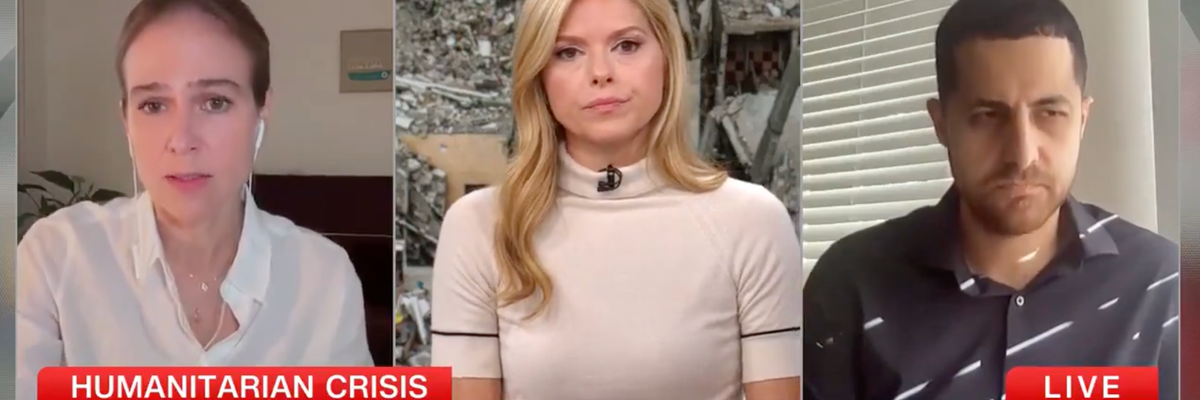
“History books will be written on this and countries will have to reckon—media agencies will have to reckon—with their major role in the genocide,” said Dr. Tanya Haj-Hassan.
Dr. Tanya Haj-Hassan (left) pushes back on CNN anchor Kate Bolduan’s (center) description of the Gaza genocide as a “humanitarian crisis” during an October 7, 2024 interview.
(Photo: CNN screen grab)
Oct 11, 2024
Human rights advocates on Friday highlighted a rare instance in which a U.S. corporate media outlet allowed a pro-Palestinian voice to set the record straight about Israel’s crimes against humanity in Gaza.
Earlier this week, CNN “News Central” aired a panel segment on the anniversary of the October 7, 2023 Hamas-led attack on Israel and Israel’s retaliatory war. Anchor Kate Bolduan noted that around 1,200 people were killed during the Hamas attack—although she did not say that at least some of them were slain by Israeli forces in “friendly fire” incidents and under the Hannibal Directive—and that 250 others were kidnapped.
Trường phổ cập Tam Hà (TP. Thủ Đức) (1) là cơ sở giáo dục ưu tiên tiếp nhận học sinh có hoàn cảnh đặc biệt. Mỗi em có một hoặc hơn một rào cản tiếp cận hệ thống giáo dục công lập lẫn tư thục. Thiếu hồ sơ, giấy tờ theo quy định. Không đủ khả năng chi trả. Bị khiếm thị. Mắc chứng tự kỷ… Những thân phận hẩm hiu được gột rửa, nâng đỡ. Trường giàu tình thương, trò hạnh phúc.
Ba thế hệ ở hẻm rau muống
“Hẻm rau muống” là cách người địa phương gọi hẻm 252 đường Tam Bình, TP. Thủ Đức.
From the Gaza war to Ukraine – the role of international law has been under intense scrutiny recently. What exactly is international law? How does it work? And what’s the point of it, if so often it doesn’t seem to lead to the accountability and justice that many people want? Sandra Gathmann takes #AJStartHere to The Hague – the home of the International Court of Justice (ICJ) and International Criminal Court (ICC) – to explain.
US authorities arrested about 50,000 Chinese nationals for illegal entry at America’s southern border between January 2023 and May 2024. Chinese migrants are the fastest-growing group illegally entering the US from Mexico, with their numbers spiking after China eased pandemic travel restrictions in late 2022. Most of the Chinese asylum seekers begin pursuing new lives in communities like Monterey Park, a Los Angeles suburb with a large Chinese community. The Post spoke with some of the new arrivals about the challenges they face in the US. Their experiences revealed a complex picture of migration, adaptation and American dreams at times fulfilled – yet often shattered.
Has the world forgotten Sudan? After more than a year of civil war, Sudan is facing one of the world’s worst humanitarian disasters. Thousands have been killed, millions displaced and children are dying of hunger. In the western region of Darfur, an old conflict has been reignited and there are new warnings about the risk of genocide in the fight for city of el-Fasher. #AJStartHere with Sandra Gathmann explains what’s happening.
In this documentary, the filmmaker follows Master Luu Ngoc Duc, one of the most prominent spirit mediums in Hanoi, and his vibrant community through their rituals and everyday life. The film explores how effeminate and gay men in homophobic Vietnam have traditionally found community and expression in the country’s popular Mother Goddess Religion, Đạo Mẫu.
TTCT – Chuyện sinh viên Mỹ biểu tình trong khuôn viên nhà trường không có gì lạ, nhưng khi ban giám hiệu Đại học Columbia kêu cảnh sát tới giải tán sinh viên rồi bắt đi hơn 100 người, vụ việc trở nên lớn chuyện.
Sinh viên dựng lều để biểu tình lâu dài trước Đại học Columbia. Ảnh: Reuters
Các cuộc biểu tình tương tự lan rộng ra các trường đại học, kéo theo nhiều vụ bắt bớ khác.
2h chiều thứ tư 17-4, hiệu trưởng Đại học Columbia, bà Minouche Shafik, bước ra khỏi tòa nhà Quốc hội Mỹ, thở phào nhẹ nhõm. Bà tưởng đâu đã thoát tình cảnh như hai đồng nghiệp, hiệu trưởng Đại học Harvard Claudine Gay và Đại học Pennsylvania (UPenn) Liz Magill từng rơi vào, khi bị mời ra điều trần trước Ủy ban Giáo dục Hạ viện.
Hai bà này trả lời lấp lửng, còn tùy bối cảnh, khi được hỏi việc kêu gọi diệt chủng dân Do Thái có vi phạm nội quy ứng xử của nhà trường không. Dư luận phản ứng dữ dội, hai bà lần lượt phải từ chức.
àn sóng biểu tình ủng hộ người Palestine và kêu gọi chấm dứt cuộc chiến của Israel ở Dải Gaza đang diễn ra tại ít nhất 50 đại học ở Mỹ.
Các sinh viên dựng lều trại trong cuộc biểu tình ủng hộ người Palestine tại khuôn viên Đại học Columbia ở TP New York (Mỹ) hôm 26-4 – Ảnh: Reuters
Tính đến ngày 27-4 (giờ Việt Nam), các sinh viên đã dựng lều phản đối trong khuôn viên của ít nhất 50 trường đại học, cao đẳng ở Mỹ, từ các trường nổi tiếng trong nhóm Ivy League cho đến các trường công lập. Nhiều sinh viên cho biết sẽ không dừng việc biểu tình cho đến khi yêu cầu được đáp ứng.
In this combination of images from body-camera videos, medics prepare to inject sedatives to Ivan Gutzalenko in Richmond, Calif., in 2021; Hunter Barr in Colorado Springs, Colo., in 2020, and Wesley Garrett-Henry in San Diego, Calif., in 2020. (Richmond Police Department, Colorado Springs Police Department, San Diego Police Department via AP)
Demetrio Jackson was desperate for medical help when the paramedics arrived.
The 43-year-old was surrounded by police who arrested him after responding to a trespassing call in a Wisconsin parking lot. Officers had shocked him with a Taser and pinned him as he pleaded that he couldn’t breathe. Now he sat on the ground with hands cuffed behind his back and took in oxygen through a mask.
Then, officers moved Jackson to his side so a medic could inject him with a potent knockout drug.
On 21 September, 2022, an IT specialist with the Austrian Raiffeisen Bank, Timur Izmailov, was leading a normal life in Moscow. Three weeks later Izmailov found himself serving as a soldier in Russia’s 27th motorized rifle brigade near the Ukrainian city of Svatove, when he was eventually killed by mortar fire. How does a 33-year-old techie make his way from his cubicle to the frontline of an unprovoked war in a neighbouring democratic state?
Timur’s journey began on 24 February, 2022, when President Vladimir Putin ordered the all-out military invasion of Ukraine in continuation of a war started in 2014. The response was immediate. The Ukrainian people and their leadership — with the support of the democratic allies — have defended themselves against armed aggression despite gross human rights violations.
Western sanctions imposed on Russia created an extremely hostile commercial environment for companies such as Raiffeisen to continue their operations in the aggressor state. Many international firms pulled out, announcing plans to leave or suspend activity in Russia. But many more international companies continue to operate and pay taxes, thus contributing to the occupation of Ukraine and undermining the financial support provided to Ukraine by their own governments.
On 21 September 2022, President Vladimir Putin issued the mobilization decree that obliged companies to immediately assist in conscripting soldiers and help equip the Russian army. The results of this piece of legislation were immediately felt by many, including Timur Izmailov. Raiffeisen’s attempts to shield their staff from the draft failed.
How do bank employees in other countries feel knowing this is happening to their colleagues in Russia? How does a client of Raiffeisen based in Vienna feel, knowing the employees of his bank might soon become soldiers sent to the battlefield to kill innocent civilians in Ukraine?
An additional stopover on the companies’ journey from compliance to complicity happened last July, when Putin signed a new law allowing the government to impose special economic measures to support “counter-terrorism and other operations outside of Russia”. Once introduced, such measures would require companies to provide goods and services in support of these operations and impose significant penalties for failing to do so. In accordance with the law of 7 October 2022, the Russian subsidiary of Raiffeisen Bank International is now obliged to provide loan payment holidays to the troops fighting in Ukraine. Moreover, the bank is required to write off the entire debt in case of a soldier’s death. This legal requirement concerns other financial institutions that still operate in Russia, namely Intesa Sanpaolo, OTP Bank, ING Bank, Credit Agricole, Citibank, Credit Europe Bank and UniCredit.
This loan relief scheme has already triggered criticism from Ukraine’s central bank, as well as from investors concerned about reputational impact. The requirement for banks to grant payment holidays to soldiers “illustrates the dangers of operating in jurisdictions where companies can…be forced into actions that go directly against their corporate values,” said Eric Christian Pederson of Nordea Asset Management. “We feel that it is right for companies to withdraw from Russia, given its unprovoked attack on Ukraine,” he added.
Friedrich Gustav Emil Martin Niemöller (14 January 1892 – 6 March 1984) was a German theologian and Lutheran pastor. He is best known for his opposition to the Nazi regime during the late 1930s and for his widely quoted 1946 “First they came …“
In Germany they first came for the Communists, and I didn’t speak up because I wasn’t a Communist. Then they came for the Jews, and I didn’t speak up because I wasn’t a Jew. Then they came for the trade unionists, and I didn’t speak up because I wasn’t a trade unionist. Then they came for the Catholics, and I didn’t speak up because I was a Protestant. Then they came for me and by that time no one was left to speak up.
Visitors stand in front of the quotation from Martin Niemöller that is on display in the Permanent Exhibition of the United States Holocaust Memorial Museum. Niemöller was a Lutheran minister and early Nazi supporter who was later imprisoned for opposing Hitler’s regime.
By Khang A Tủa and Alex Nguyễn 29 January 2024 at 18:36 (Updated on 30 January 2024 at 10:29)
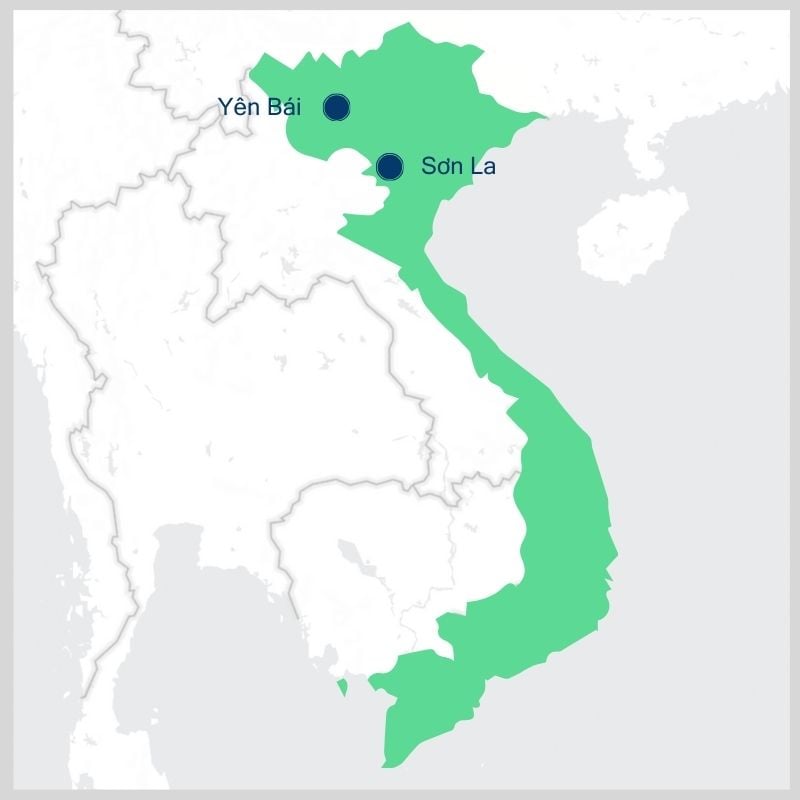
After decades of pursuing development goals, Hmong people in northern Viet Nam face a battle to preserve disappearing indigenous corn
Cúa bua (in Vietnamese), or quav npua (in Hmong) , an indigenous corn variety in Chế Cu Nha, Mù Cang Chải district, Yên Bái province.
YÊN BÁI & SƠN LA, VIET NAM – Early one winter morning, Khang Chờ Dê of Chế Cu Nha hamlet in Yên Bái province was woken by loud knocking on his door. Sào, his relative, needed some red corn kernels, an indigenous crop used by Hmong people in northern Viet Nam for spiritual offerings to ward off bad luck.
The son of a shaman, Dê understood the importance of red corn in ritual practices. He quickly took some kernels from his kitchen, wrapped them up neatly and handed them to his relative.
Back in bed, the 46-year-old farmer pondered the scarcity of the indigenous cúa bua (in Vietnamese), or quav npua (in Hmong)corn seeds in Chế Cu Nha, his family’s ancestral home. For generations, indigenous corn crops have been essential to Hmong spiritual and cultural traditions, as well as helping to strengthening their autonomy in agricultural cultivation.




![Visitors stand in front of the quotation from Martin Niemöller that is on display in the Permanent Exhibition of the United States ... [LCID: img4857]](https://encyclopedia.ushmm.org/images/large/6496052e-1383-4c7a-b28b-28286277ced7.jpg)

 CVD
CVD 