Nhức nhối lựa chọn giới tính thai nhi

Nhức nhối lựa chọn giới tính thai nhi

  • Kỳ 1: Nhiều bệnh viện lớn công khai làm trái luật
  • Kỳ 2: Điểm mặt các ‘trùm’ môi giới
  • Kỳ 3: Xuất ngoại ‘săn’ con trai

***

TT – 13/01/2025 10:25 GMT+7

Nhức nhối lựa chọn giới tính thai nhi – Kỳ 1: Nhiều bệnh viện lớn công khai làm trái luật

THU HIẾN, TRÚC QUYÊN, ĐAN THUẦN

19 năm qua (từ năm 2006), chênh lệch giới tính khi sinh ở Việt Nam vẫn ở mức rất cao, có năm 114 bé trai/100 bé gái. Và bình quân mỗi năm Việt Nam có gần 46.000 thai nhi gái không được chào đời, theo Quỹ Dân số Liên hợp quốc (UNFPA).

Người Việt ra cả nước ngoài để chọn giới tính thai nhi. Trong ảnh: bác sĩ của một bệnh viện ở Thái Lan tư vấn, mô phỏng quy trình thực hiện IVF lựa chọn giới tính thai nhi – Ảnh: TRÚC QUYÊN

Nhóm phóng viên Tuổi Trẻ đã có nhiều ngày vào Nam ra Bắc, sang tận Thái Lan – nơi được những tay môi giới lựa chọn giới tính thai nhi gọi là “trung tâm công nghiệp tạo ra con người” – để tìm câu trả lời cho câu hỏi: Vì sao chênh lệch giới tính khi sinh ở Việt Nam vẫn ở mức cao đáng báo động?

Tiếp tục đọc “Nhức nhối lựa chọn giới tính thai nhi”

Dress Codes: Why don’t women get as many pockets as men?

By Jacqui Palumbo, CNN

Published 8:02 AM EDT, Wed April 9, 2025

Dua Lipa took advantage of the pockets in the vintage Chanel gown she wore to the 2023 Met Gala — a gesture that was not lost on many women who commented positively about the look online. Noam Galai/The Hollywood Reporter/Getty Images

Editor’s Note: Examining clothes through the ages, Dress Codes investigates how the rules of fashion have influenced different cultural arenas — and your closet.CNN — 

It’s a familiar exchange to many women: “I love your dress.” “Thanks, it has pockets!”

So coveted is the spacious inset pouch in womenswear that when they exist, they are likely to attract attention. Take Dua Lipa’s look at the 2023 Met Gala — a vintage, cream-colored Chanel gown with pockets she was able to slip her hands inside, to the delight of many internet users, or Emma Stone’s decision to stuff the exaggerated hip pockets of her red Louis Vuitton dress with popcorn at Saturday Night Live’s 50th anniversary celebration.

Usable pockets seem like an obvious feature to include in ready-to-wear garments, but that is far from the case. It is standard for dresses and skirts to be pocketless, and when pockets do exist in slacks and blazers, they can be deceptively small. Other times, they’re just deceptive: see the fake pockets that come as a shallow lip over a disappointing seam on a pair of jeans, or a jacket with flaps but no actual opening beneath it.

Yet the demand for pockets is clear. Online, fantasies for pocket space find a like-minded audience, from designer Nicole McLaughlin’s hyperfunctional creations made from upcycled materials (chip-and-dip work vest, anyone?) to Y2K throwback creator Erin Miller cramming childhood paraphernalia into her old JNCO jeans, Mary Poppins-style. The question is rinsed and repeated in forums and on social media: Why don’t women get as many pockets as men?

Tiếp tục đọc “Dress Codes: Why don’t women get as many pockets as men?”

How the climate crisis fuels gender inequality

The climate crisis may be a collective problem, but its impacts do not fall equally. Women and girls often bear the heaviest burdens.

November 30, 2023

Editor’s note

This story is part of As Equals, CNN’s ongoing series on gender inequality. For information about how As Equals is funded and more, check out our FAQ.

Climate change acts as a threat multiplier, finding existing injustices and amplifying them. Women and girls already grapple with gender inequality, but when extreme weather devastates a community, the UN found that inequalities worsen: Intimate partner violence spikes, girls are pulled from school, daughters are married early, and women and girls forced from their homes face a higher risk of sexual exploitation and trafficking.

“When we look at who’s affected worse, who’s on the frontlines of the climate crisis, it’s primarily women — women in poor and vulnerable countries,” Selwin Hart, UN Special Adviser to the Secretary-General on Climate Action and Just Transition, told CNN. “And unfortunately, our policies or strategies are really not geared to address this challenge.”

To explore the complex links between gender and climate change, CNN worked with seven women photojournalists who spent time with women and girls in seven countries across the Global South to document the challenges they face.

This visual project gives a snapshot of the myriad ways the human-induced climate crisis is upending their lives, but also shows how they are fighting back. Every image shows both struggle and survival, the battle to live a decent life in a swiftly changing climate.

Girls’ education in Nigeria

The Center for Girls’ Education runs a series of programs in Nigeria to help girls stay in school. One in every five of the world’s children who are out of school is in Nigeria, according to UNICEF, and it is girls who are impacted the most.

Photographs by Taiwo Aina for CNN

More than 10 million children between 5 and 14 years old are absent from classrooms across Nigeria, according to UNICEF. For girls, the statistics are even bleaker: In states in the northeast and northwest of the country, fewer than half attend school.

This education crisis is the result of a tangle of factors, including poverty, geography and gender discrimination, the UN agency adds. But against the backdrop of these individual factors is the broader context of the climate crisis.

Nigeria is growing hotter and dryer, and extreme weather such as flash floods and landslides are becoming fiercer and more frequent. Climate disasters can make schools inaccessible and classrooms unsafe. Communities struggling to cope with extreme weather sometimes turn to their children to help or to earn extra money to support the family. And girls, whose attendance at school is already discouraged in some communities, are often most affected.

For every additional year the average girl attends school, her country’s resilience to climate disasters can be expected to improve by 3.2 points on an index that measures vulnerability to climate-related disasters, according to estimates from the Brookings Institution.

There are efforts to support girls’ education and equip them with the resources to cope with a fast-changing climate. The Center for Girls’ Education in the northern Nigerian city of Zaria runs programs to help girls stay in school and offers training on how to cope with the impacts of extreme weather.

“I feel when we give the girls education on climate change, how to mitigate it, it will go a long way in helping the girls in how to support themselves in times of difficulties, and even help them prepare for it,” said Habiba Mohammed, director of the Center for Girls’ Education.

Asiya Sa’idu, 17

Tiếp tục đọc “How the climate crisis fuels gender inequality”

The deadly truth about a world built for men – from stab vests to car crashes

theguardian.com

Crash-test dummies based on the ‘average’ male are just one example of design that forgets about women – and puts lives at risk

Caroline Criado PerezSat 23 Feb 2019 08.59 GMTShare822

When broadcaster Sandi Toksvig was studying anthropology at university, one of her female professors held up a photograph of an antler bone with 28 markings on it. “This,” said the professor, “is alleged to be man’s first attempt at a calendar.” Toksvig and her fellow students looked at the bone in admiration. “Tell me,” the professor continued, “what man needs to know when 28 days have passed? I suspect that this is woman’s first attempt at a calendar.”

Women have always tracked their periods. We’ve had to. Since 2015, I’ve been reliant on a period tracker app, which reassures me that there’s a reason I’m welling up just thinking about Andy Murray’s “casual feminism”. And then there’s the issue of the period itself: when you will be bleeding for up to seven days every month, it’s useful to know more or less when those seven days are going to take place. Every woman knows this, and Toksvig’s experience is a neat example of the difference a female perspective can make, even to issues that seem entirely unrelated to gender.

For most of human history, though, that perspective has not been recorded. Going back to the theory of Man the Hunter, the lives of men have been taken to represent those of humans overall. When it comes to the other half of humanity, there is often nothing but silence. And these silences are everywhere. Films, news, literature, science, city planning, economics, the stories we tell ourselves about our past, present and future, are all marked – disfigured – by a female-shaped “absent presence”. This is the gender data gap.

These silences, these gaps, have consequences. They impact on women’s lives, every day. The impact can be relatively minor – struggling to reach a top shelf set at a male height norm, for example. Irritating, certainly. But not life-threatening. Not like crashing in a car whose safety tests don’t account for women’s measurements. Not like dying from a stab wound because your police body armour doesn’t fit you properly. For these women, the consequences of living in a world built around male data can be deadly.

The gender data gap is both a cause and a consequence of the type of unthinking that conceives of humanity as almost exclusively male. In the 1956 musical My Fair Lady, phoneticist Henry Higgins is baffled when, after enduring months of his hectoring put-downs, his protege-cum-victim Eliza Doolittle finally bites back. “Why can’t a woman be more like a man?” he grumbles.

Tiếp tục đọc “The deadly truth about a world built for men – from stab vests to car crashes”

Medical Misogyny: Why Are Women Overlooked In Healthcare Systems Globally?

Many of the world’s healthcare systems are male-centred, rooted in patriarchal concepts and gender bias. From women’s access to healthcare being contingent on the willingness or financial capability of male relatives, to the exclusion of women in clinical trials, to the dismissal of women’s medical concerns and decisions about their own health and bodies, misogyny is prevalent in modern medicine, often resulting in misdiagnoses and even death. The issue of what’s now called obstetric violence has emerged, as more female patients speak out about their mistreatment and abuse by medical practitioners, particularly around the vulnerable time of childbirth.

The World Health Organization describes obstetric violence as “abuse, disrespect and mistreatment in childbirth that result in violations of women’s dignity by health professionals”.

But while awareness of medical misogyny is growing, many cultural, social, and legal barriers prevent its complete eradication.

00:00 Introduction

00:53 Indian women’s limited access to healthcare

07:12 Gender disparity in UK medical research

14:56 The rise of obstetric violence

Định kiến giới ngay trong sách giáo khoa ảnh hưởng gì đến học sinh?

thanhnien.vn 02/05/2023 17:03 GMT+7

Hàng ngàn học sinh nói sách giáo khoa mang định kiến giới khi nam giới thường gắn với công việc được cho rằng có địa vị cao, trong khi nghề nghiệp của nữ giới có địa vị thấp hơn hoặc chỉ đóng vai trò phụ tá.

Nghề nghiệp của nam giới thường có địa vị cao

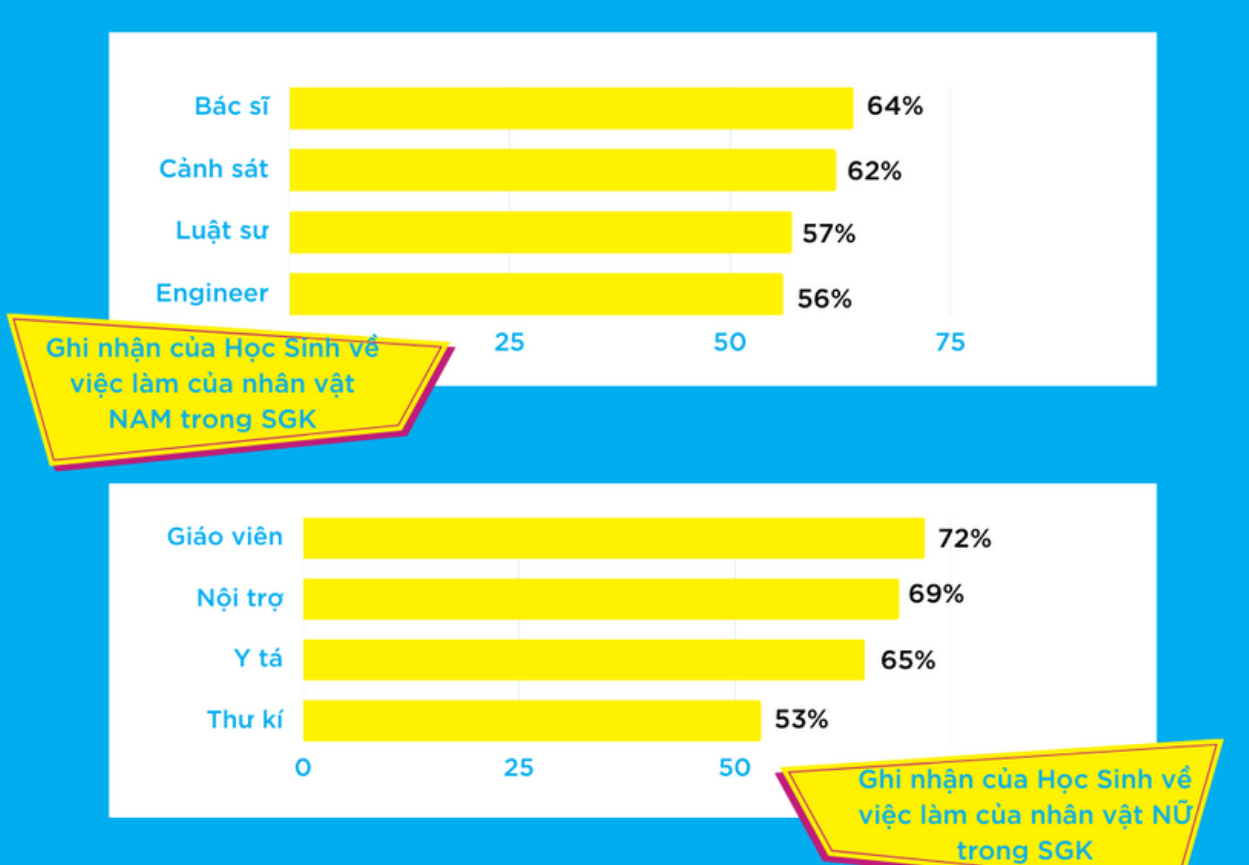
Khi khảo sát gần 7.000 học sinh về định kiến giới ở trường học, tổ chức Saigon Children’s Charity (saigonchildren) và Viện Nghiên cứu quản lý phát triển bền vững (MSD) cho hay phần lớn học sinh nói sách giáo khoa thường gắn nhân vật nam với các công việc đòi hỏi sức mạnh hoặc kỹ thuật cao, chẳng hạn như bác sĩ, cảnh sát, luật sư và kỹ sư. Ngược lại, nhân vật nữ thường liên quan đến hoạt động giáo dục hoặc chăm sóc như giáo viên, nội trợ, y tá hoặc thư ký.

Trong sách giáo khoa, nghề nghiệp của nam giới thường có địa vị cao - Ảnh 1.
Ghi nhận của học sinh về việc làm của các nhân vật trong sách giáo khoa, theo báo cáo của tổ chức Saigon Children’s Charity và Viện Nghiên cứu quản lý phát triển bền vững

“Những địa vị được miêu tả dành riêng cho hai giới trong sách giáo khoa hàm chứa định kiến, với phần lớn các nghề nghiệp do nam giới đảm nhận là những việc có địa vị cao, trong khi các nghề nghiệp được khắc họa dành cho nữ giới có địa vị thấp hơn hoặc nữ giới chỉ đảm nhận vai trò là phụ tá cho ngành nghề của nam giới”, nhóm nghiên cứu nhấn mạnh trong báo cáo công bố ngày 27.4.

Với kết quả khảo sát như trên, nhóm nghiên cứu chỉ ra rằng việc thể hiện các nghề nghiệp khác nhau trong sách giáo khoa dựa trên giới tính có thể ảnh hưởng đáng kể đến lựa chọn nghề nghiệp và vai trò trong xã hội của học sinh, đặc biệt ở Việt Nam, nơi vai trò giới và thứ bậc xã hội truyền thống vẫn còn ảnh hưởng mạnh mẽ đến kỳ vọng của xã hội.

Điều này cũng ảnh hưởng đến nguyện vọng chọn ngành của nữ sinh, khi các em có thể tự cho rằng khả năng của bản thân bị giới hạn trong một số ngành nghề được cho là “phù hợp” với giới tính, hoặc không có hứng thú để tìm hiểu về các lĩnh vực khác, chẳng hạn như khoa học, công nghệ, kỹ thuật và toán học (STEM).

Trong sách giáo khoa, nghề nghiệp của nam giới thường có địa vị cao - Ảnh 2.
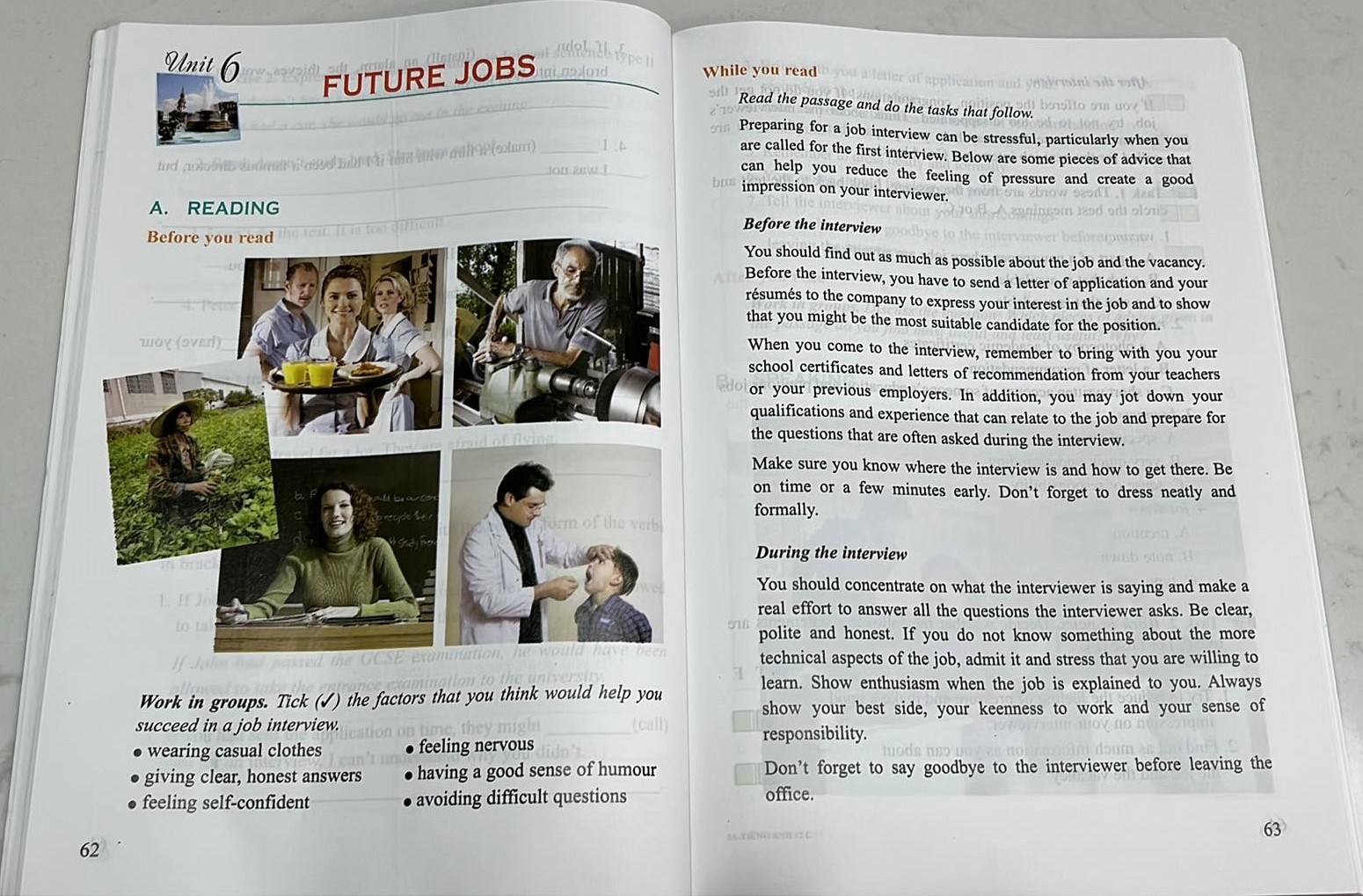
Ở chủ đề về nghề nghiệp tương lai trong sách giáo khoa tiếng Anh lớp 12 chương trình hiện hành, nam giới gắn với công việc bác sĩ, kỹ sư, còn nữ giới là giáo viên, phục vụ

Tiếp tục đọc “Định kiến giới ngay trong sách giáo khoa ảnh hưởng gì đến học sinh?”

Nhóm ‘nhặt sạn định kiến giới trong sách giáo khoa Tiếng Việt’ đoạt giải nhất Hội thi Sáng kiến Giới

tamviet.tienphong.vn 30/09/2023 | 20:02

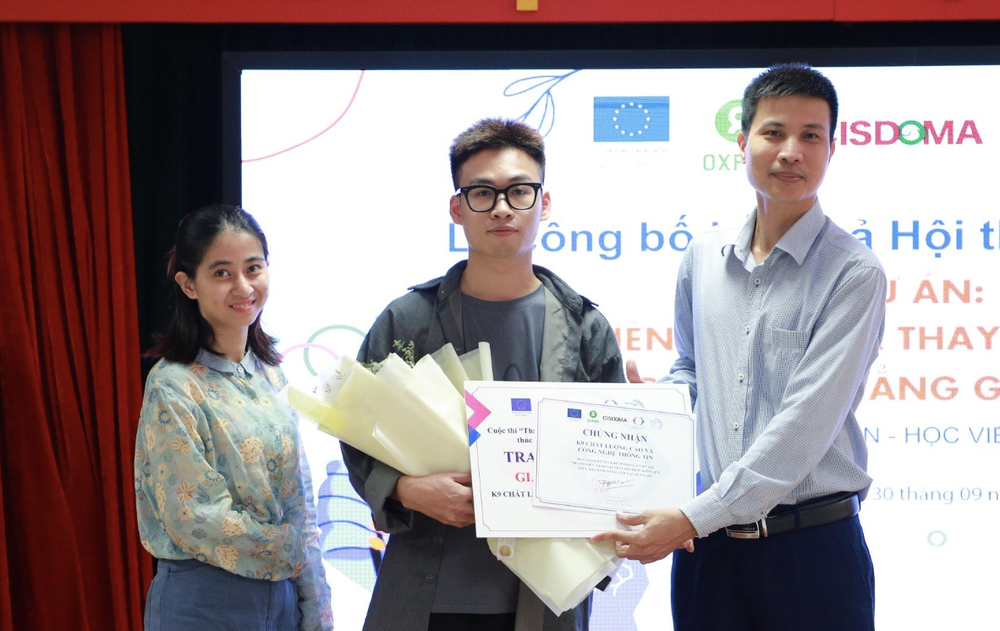
TPO – Chiều 30/9, Khoa Giới và Phát triển tại Học viện Phụ nữ Việt Nam đã tổ chức trao giải mùa thứ 3 cho Hội thi Sáng kiến Giới. 

Cụ thể, chiều 30/9, Khoa Giới và Phát triển tại Học viện Phụ nữ Việt Nam, đơn vị tổ chức Dự án “Thanh niên tham gia thay đổi định kiến giới, thúc đẩy bình đẳng giới tại Việt Nam”, đã trao giải mùa thứ 3 cho Hội thi Sáng kiến Giới.

https://image.tienphong.vn/w1000/Uploaded/2023/tpuokbj/2023_09_30/screen-shot-2023-09-30-at-182854-2973.png
Tiến sĩ Nguyễn Tuấn Minh, đại diện Ban tổ chức trao giải cho sinh viên.

Buổi Lễ được dẫn dắt bởi TS. Dương Kim Anh, Phó Giám đốc Học viện Phụ nữ Việt Nam và Trưởng Khoa Giới và Phát triển, cùng ông Đào Ngọc Ninh, Phó viện trưởng Viện Tư vấn Phát triển Kinh tế Xã hội Nông thôn và Miền núi (CISDOMA). Sự kiện diễn ra trong không khí phấn khích của chuỗi hoạt động chào mừng tân sinh viên khóa K11 và kỷ niệm 8 năm thành lập Khoa Giới & Phát triển.

Tiếp tục đọc “Nhóm ‘nhặt sạn định kiến giới trong sách giáo khoa Tiếng Việt’ đoạt giải nhất Hội thi Sáng kiến Giới”

Countries are still falling short in developing textbooks free of gender-based stereotypes

UNESCO.org Global Education Monitoring Report

2020 Gender Report DOWNLOAD PDF

The Beijing Declaration and Platform for Action called on countries to develop curricula, textbooks and teaching aids free of gender-based stereotypes for all levels of education, including teacher training

Textbooks can perpetuate stereotypes by associating certain characteristics with particular groups. Inappropriate images and descriptions can make students from non-dominant backgrounds feel misrepresented, misunderstood, frustrated and alienated.

Textbooks are powerful factors in construction of gender identities. They transmit knowledge and present social and gender norms, shaping the world view of children and young people. Gender norms and values not only shape attitudes and practices but also influence aspirations and dictate expected behaviours and attributes for males and females (Heslop, 2016). In some contexts, textbooks are the first – and sometimes only – books a young person reads, and so can have a lasting impact on their perceptions. That means that, through textbooks, discriminatory norms and values can be challenged. Strategic objective B.4 of the Beijing Declaration and Platform for Action called on countries to develop curricula, textbooks and teaching aids free of gender-based stereotypes for all levels of education, including teacher training, in cooperation with all concerned – publishers, teachers, public authorities and parents’ associations.

WOMEN ARE UNDER-REPRESENTED IN TEXTBOOKS

In many countries, girls and women are under-represented in textbooks, and when they are included, they are depicted in traditional roles. In Afghanistan, women were almost completely absent from grade 1 textbooks published in the 1990s. Since 2001, they have been represented more frequently, but usually in passive and domestic roles, shown as mothers, caregivers, daughters and sisters. They are mostly represented as dependent, with teaching being the only career open to them (Sarvarzade and Wotipka, 2017). A review of 95 primary and secondary compulsory education textbooks in the Islamic Republic of Iran showed that women accounted for 37% of images. About half the images showing women were related to family and education, while work environments appeared in less than 7%. There were no images of women in about 60% of Farsi and foreign language textbooks, 63% of science textbooks and 74% of social science textbooks (Paivandi, 2008).

Tiếp tục đọc “Countries are still falling short in developing textbooks free of gender-based stereotypes”

‘I almost lost my will to live’: preference for sons is leaving young women in China exploited and abused


Hình ảnh chán đời

Published: September 1, 2023 1.52pm BST The Conversation

Author: Chih-Ling Liu Senior Lecturer in Marketing, Lancaster University

Disclosure statement: Chih-Ling Liu does not work for, consult, own shares in or receive funding from any company or organisation that would benefit from this article, and has disclosed no relevant affiliations beyond their academic appointment.

Partners:

Lancaster University provides funding as a founding partner of The Conversation UK.

CC BY ND


China has a gender crisis. The country has a huge surplus of men – around 722 million compared to 690 million women in 2022. This is largely because of sex-selective abortions linked to China’s one-child policy, which ended in 2015.

Though popular belief is that the policy was strictly enforced, many Chinese couples managed to have more than one child by paying fines, accepting benefit deprivations, or proclaiming their membership of a minority ethnic group. Often, they chose to do so because their first child was a girl. The one-child policy lasted three and a half decades, replaced by the two-child policy in 2016 and the three-child policy in 2021. But even today, the belief that boys have more value than girls persists.

Tiếp tục đọc “‘I almost lost my will to live’: preference for sons is leaving young women in China exploited and abused”

Spain team quits as federation boss refuses to resign in kiss scandal

reuters.com

MADRID, Aug 25 (Reuters) – Spanish soccer boss Luis Rubiales on Friday refused to resign for grabbing star player Jenni Hermoso’s head and kissing her on the lips after Spain’s Women’s World Cup victory, leading the national team to mutiny and the government to denounce his “macho actions”.

In a joint statement sent via their FUTPRO union, all 23 of the cup-winning squad including Hermoso, as well as 32 other squad members, said they would not play internationals while Rubiales remains head of the Royal Spanish Football Federation (RFEF).

In the same statement, Hermoso denied Rubiales’ contention that the kiss he gave her at the medal ceremony after Spain beat England 1-0 in the final in Sydney, Australia, was consensual.

Tiếp tục đọc “Spain team quits as federation boss refuses to resign in kiss scandal”

‘The sleeping giant has awoken’: The legacy of the 2023 Women’s World Cup

Aljazeeraa.com

As the record-breaking 2023 Women’s World Cup ends, many see an exciting future – and many challenges – for the game.

Spain’s Jennifer Hermoso celebrates after winning the World Cup [Amanda Perobelli/Reuters]

By Alex Thomas Published On 21 Aug 202321 Aug 2023

Sydney, Australia – The success of the World Cup in Australia and New Zealand has led to some grand predictions about the future of women’s football – and perhaps the boldest is that it will eventually surpass the men’s game.

“I’ve always said this and people thought I’m crazy but I think women’s football will be bigger than men’s football”, former New Zealand captain Rebecca Smith told Al Jazeera.

It might look like a contentious claim but few know the game as well as Smith.

Tiếp tục đọc “‘The sleeping giant has awoken’: The legacy of the 2023 Women’s World Cup”

Taliban edicts suffocating women and girls in Afghanistan: UN experts

UN Human rights

GENEVA (19 June 2023) – Relentless edicts issued by the Taliban since taking power in Afghanistan in August 2021 have severely restricted the rights of women and girls and suffocated every dimension of their lives, UN experts* said today.

“Women and girls in Afghanistan are experiencing severe discrimination that may amount to gender persecution – a crime against humanity – and be characterised as gender apartheid, as the de facto authorities appear to be governing by systemic discrimination with the intention to subject women and girls to total domination,” the experts said.

Tiếp tục đọc “Taliban edicts suffocating women and girls in Afghanistan: UN experts”

The world needs more women coaches,

Olympics.com 23 Jan 2023

While great strides have been made to balance the number of male and female athletes participating in the Olympic Games, the number of female coaches at elite level remains remarkably low. This new series will highlight the various initiatives taken by the International Olympic Committee (IOC) to tackle this important issue and share the journeys of inspirational women coaches who are beating the odds and proving that “if she believes it, she can be it”. 

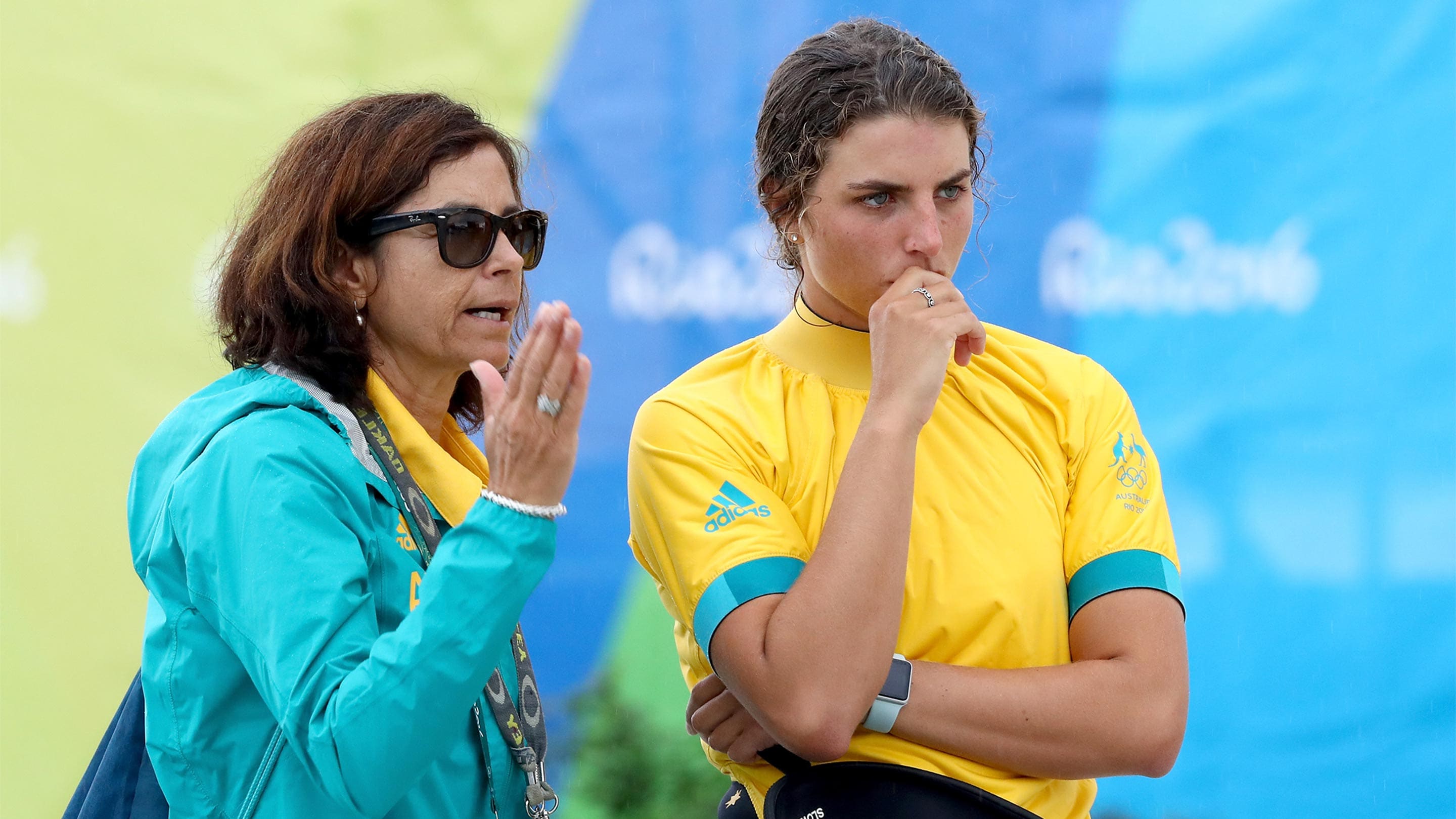
Getty Images 2016

In the first article of the series, the IOC speaks to the canoe coach and two-time Olympian, Myriam Fox-Jerusalmi, who has called for more female coaches at elite level, reminding women there is a “door open for them” to become coaches.

Last December, Myriam Fox-Jerusalmi was honoured with an IOC Coaches Lifetime Achievement Award, which recognises coaches who have dedicated their lives to their athletes. Fox-Jerusalmi has done just that and gone above and beyond. After representing France in K1 at Barcelona 1992 and Atlanta 1996, where she won bronze, Fox-Jerusalmi has gone on to create a successful coaching career over the past 25 years. On top of helping her daughter Jessica Fox to win 12 world titles and four Olympic medals, she’s been instrumental in helping to develop the women’s canoe slalom Olympic programme and achieve gender equality.

Fox-Jerusalmi welcomed the visibility that the Lifetime Achievement Award had brought to Australia and to canoeing, adding it showed that women could become Olympic coaches too. “Maybe now it shows that it’s possible and there’s recognition for the coaching job, because there’s not enough women coaching around the globe,” she said.

Tiếp tục đọc “The world needs more women coaches,”

How female coaches can help bring professional men’s football into the 21st century

theconversation.com Published: March 8, 2021

Author Pete HolmesSenior Lecturer in Sport Coaching, Nottingham Trent University

Football coaches with training footballers blurred out.
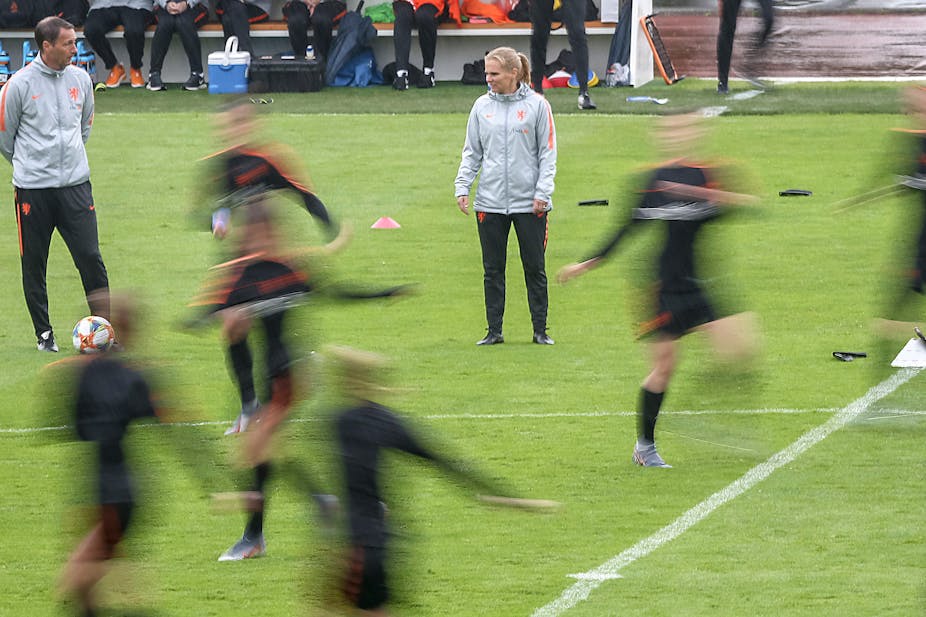
Football coach Sarina Wiegman training the Netherlands team at the 2019 Women’s World Cup in France. Pro Shots/Alamy Live News

As the 2020 American NFL season drew to a close with Tom Brady winning his record seventh Super Bowl, it was interesting to note another sporting first: the three women involved in the game – two coaches and one official.

With eight women currently coaching in the NFL, there’s still a long way to go when it comes to parity, but it does seem that women are finally breaking into elite men’s sports coaching in the US.

Sadly, the same cannot be said about most major team sports in the UK. Many elite sports, including rugby and cricket have a poor record in this regard. But perhaps the most high profile sport yet to embrace female coaches is professional football (soccer).

One contributing factor may be that when experienced top flight female coaches are linked to men’s football, the expectation seems to be that they should start at the bottom. Consider the case of Emma Hayes, the manager of Chelsea – the reigning Women’s Super League champions. Despite this leading position, Hayes was recently linked with the vacant manager’s job at the men’s side AFC Wimbledon – a team which is currently struggling to clear the relegation zone of the third tier of English football in League One.

Tiếp tục đọc “How female coaches can help bring professional men’s football into the 21st century”

For first time, every player at the Women’s World Cup will be paid at least $30K

FILE - The United States players hold the trophy as they celebrate winning the Women's World Cup final soccer match against The Netherlands at the Stade de Lyon in Decines, outside Lyon, France on July 17, 2019. More prize money than ever will be awarded at this year's Women's World Cup, and the players stand to get direct payments from FIFA this time. (AP Photo/Francisco Seco, File)

1 of 2 | 

FILE – The United States players hold the trophy as they celebrate winning the Women’s World Cup final soccer match against The Netherlands at the Stade de Lyon in Decines, outside Lyon, France on July 17, 2019. More prize money than ever will be awarded at this year’s Women’s World Cup, and the players stand to get direct payments from FIFA this time. (AP Photo/Francisco Seco, File)

ASSOCIATED PRESSRead More

The United States team celebrates a win against Wales during a FIFA Women's World Cup send-off soccer match in San Jose, Calif., Sunday, July 9, 2023. (AP Photo/Josie Lepe)

2 of 2 | 

The United States team celebrates a win against Wales during a FIFA Women’s World Cup send-off soccer match in San Jose, Calif., Sunday, July 9, 2023. (AP Photo/Josie Lepe)

ASSOCIATED PRESS APnews.com

A group of players across the globe asked FIFA late last year to increase the prize money for this summer’s Women’s World Cup. There had been pleas from the women to boost those funds before, but this time it was different.

The players not only wanted a prize pool equal with the men’s World Cup, they also sought a guarantee that a percentage of the prize money would go directly to the players themselves.

->