
| Thomson Reuter Foundation | |
| By Sadiya Ansari | Contributor | |
| This newsletter contains images that may be disturbing. Harrowing images of malnourished children in Gaza have intensified international pressure on Israel to increase humanitarian aid to the enclave.This week, Hamas-run health authorities in Gaza said that 93 children were among the 180 people who have already died from hunger-related causes. These deaths come on top of more than 60,000 Palestinians, mostly civilians, the health authorities in Gaza say have been killed since Israel launched its military offensive in the strip in October 2023. Almost 470,000 people in Gaza are enduring famine-like conditions, according to the World Health Organization (WHO), with 90,000 women and children in need of specialist nutrition treatments. WHO chief Tedros Adhanom Ghebreyesus described the situation as “mass starvation” that was “man-made”, laying the blame squarely at the Israeli blockade.While Israel has denied a policy of starvation, it controls most aspects of how food reaches and is distributed in Gaza. This includes access into Gaza, transport logistics and who is permitted to distribute aid. Today we’ll unpack the policy on aid entering the territory. 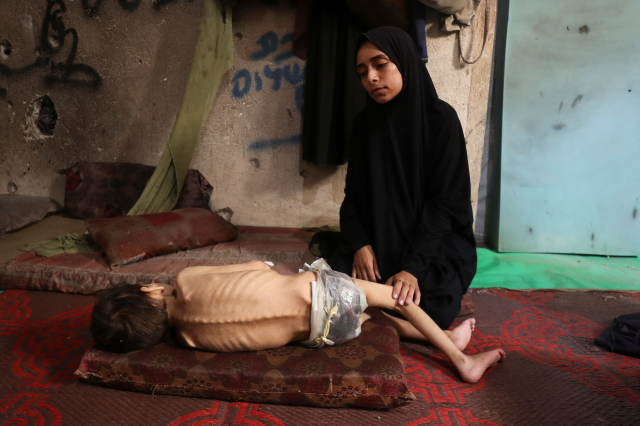 A Palestinian mother sits next to her malnourished son, at a school where they shelter amid a hunger crisis, in Gaza City, July 24, 2025. REUTERS/Mahmoud Issa A Palestinian mother sits next to her malnourished son, at a school where they shelter amid a hunger crisis, in Gaza City, July 24, 2025. REUTERS/Mahmoud IssaThe policy Israel controls access into Gaza, including for humanitarian organisations, as a result of a blockade by land, air and sea<a | |
Chuyên mục: War Crimes – Geneva Conventions of 1949
Israel has abducted and jailed 1,000,000 Palestinians since 1967 — US group’s report.
Israel has abducted and jailed 1,000,000 Palestinians since 1967 — US group’s reportTel Aviv has jailed Palestinians at an average of 47 per day, says a new study, adding US “bankrolled this oppression” against Palestinians for nearly 700 months.
On February 24, Israeli occupation troops abducted Fidaa Assaf from the village of Kafr Laqif in Palestine’s Qalqilya governorate. She was returning from Ramallah Medical Complex after undergoing medical examinations.
Palestinian officials later revealed that the female prisoner, who is married and a mother, was subjected to multiple strip searches and verbal abuse.
They also noted that she was detained in a cell described as unhygienic and infested with insects, and was deprived of water and food for several days.
Tiếp tục đọc “Israel has abducted and jailed 1,000,000 Palestinians since 1967 — US group’s report.”
Palestinians in Gaza are facing a death sentence
Doctors Without Borders / MSF-USA
We are running out of time to save lives. The humanitarian situation in Gaza is catastrophic, as a result of the ongoing Israeli-imposed siege that has lasted for over two months. We call on the Israeli authorities and their supporters to abide by International Humanitarian Law and follow the principles which allow for unhindered humanitarian aid for people trapped inside the Strip. Tiếp tục đọc “Palestinians in Gaza are facing a death sentence”
From Gaza to Vietnam, what is the value of a photo?
Two maimed children, two iconic images – and no end to barbarity in sight.
- Belén Fernández Al Jazeera columnist Published On 30 Apr 202530 Apr 2025

This month, Palestinian photographer Samar Abu Elouf won the 2025 World Press Photo of the Year award for her image titled Mahmoud Ajjour, Aged Nine, taken last year for The New York Times.
Ajjour had both of his arms blown off by an Israeli strike on the Gaza Strip, where Israel’s ongoing genocide has now killed at least 52,365 Palestinians since October 2023. In the award-winning photograph, the boy’s head and armless torso are cast in partial shadow, his gaze nevertheless intense in its emptiness.
Tiếp tục đọc “From Gaza to Vietnam, what is the value of a photo?”
Gaza: Aid groups running out of food
For nearly 60 days, no food, fuel, medicine or other item has entered the Gaza Strip, blocked by Israel. Aid groups are running out of food to distribute. Markets are nearly bare. Palestinian families are left struggling to feed their children. We discussed that with out guest Arwa Damon, founder of the International Network for Aid, Relief and Assistance (INARA)
The World Food Programme runs out of food in Gaza as Israeli blockade continues
The World Food Programme has run out of food 54 days after Israel imposed a complete blockade on the Gaza Strip. NBC News’ Matt Bradley reports on what families in Gaza are facing as Israel’s blockade continues.
WFP runs out of food stocks in Gaza, warns of famine
War Crimes under Rome Statute of the International Criminal Court
Below is Artile 8, entitled War Crimes, of Rome Statute of the International Criminal Court, to help you analyze war times committed in Russia-Ukraine war and Israel-Hamas war. (Some boldfaced emphases are by CVD)
| Article 82 War crimes | Điều 82 Hình tội chiến tranh |
| 1. The Court shall have jurisdiction in respect of war crimes in particular when committed as part of a plan or policy or as part of a large-scale commission of such crimes. | 1. Tòa sẽ có thẩm quyền tài phán về các hình tội chiến tranh đặc biệt khi được thực hiện như một phần của kế hoạch hoặc của chính sách hoặc như một phần của vi phạm những tội đó ở quy mô lớn. |
| 2. For the purpose of this Statute, “war crimes” means: | 2. Cho mục đích của Đạo luật này, “hình tội chiến tranh” nghĩa là: |
| (a) Grave breaches of the Geneva Conventions of 12 August 1949, namely, any of the following acts against persons or property protected under the provisions of the relevant Geneva Convention: (i) Wilful killing; (ii) Torture or inhuman treatment, including biological experiments; (iii) Wilfully causing great suffering, or serious injury to body or health; (iv) Extensive destruction and appropriation of property, not justified by military necessity and carried out unlawfully and wantonly; (v) Compelling a prisoner of war or other protected person to serve in the forces of a hostile Power; (vi) Wilfully depriving a prisoner of war or other protected person of the rights of fair and regular trial; (vii) Unlawful deportation or transfer or unlawful confinement; (viii) Taking of hostages. | (a) Vi phạm nghiêm trọng các Công ước Geneva ngày 12-8-1949, nghĩa là, bất cứ hành vi nào sau đây nhằm vào người hoặc tài sản được bảo vệ dưới các điều khoản của Công ước Geneva liên quan: (i) Cố ý giết người; (ii) Tra tấn hoặc đối xử vô nhân đạo, kể cả các thí nghiệm sinh học; (iii) Cố ý gây ra đau đớn lớn hoặc làm tổn thương nghiêm trọng đến cơ thể hoặc sức khỏe; (iv) Hủy diệt và chiếm đoạt tài sản trên diện rộng, không có lý do chính đáng bởi nhu cầu quân sự và được thực hiện phi pháp và bừa bãi; (v) Buộc tù nhân chiến tranh hoặc người được bảo vệ khác phục vụ trong lực lượng của Thế lực thù địch; (vi) Cố ý tước quyền được xét xử trong phiên tòa công bằng và bình thường của tù nhân chiến tranh hoặc người được bảo vệ khác; (vii) Trục xuất phi pháp hoặc chuyển phi pháp hoặc giam giữ phi pháp; (viii) Bắt làm con tin. |
| (b) Other serious violations of the laws and customs applicable in international armed conflict, within the established framework of international law, namely, any of the following acts: (i) Intentionally directing attacks against the civilian population as such or against individual civilians not taking direct part in hostilities; (ii) Intentionally directing attacks against civilian objects, that is, objects which are not military objectives; (iii) Intentionally directing attacks against personnel, installations, material, units or vehicles involved in a humanitarian assistance or peacekeeping mission in accordance with the Charter of the United Nations, as long as they are entitled to the protection given to civilians or civilian objects under the international law of armed conflict; (iv) Intentionally launching an attack in the knowledge that such attack will cause incidental loss of life or injury to civilians or damage to civilian objects or widespread, long-term and severe damage to the natural environment which would be clearly excessive in relation to the concrete and direct overall military advantage anticipated; (v) Attacking or bombarding, by whatever means, towns, villages, dwellings or buildings which are undefended and which are not military objectives; (vi) Killing or wounding a combatant who, having laid down his arms or having no longer means of defence, has surrendered at discretion; (vii) Making improper use of a flag of truce, of the flag or of the military insignia and uniform of the enemy or of the United Nations, as well as of the distinctive emblems of the Geneva Conventions, resulting in death or serious personal injury; (viii) The transfer, directly or indirectly, by the Occupying Power of parts of its own civilian population into the territory it occupies, or the deportation or transfer of all or parts of the population of the occupied territory within or outside this territory; (ix) Intentionally directing attacks against buildings dedicated to religion, education, art, science or charitable purposes, historic monuments, hospitals and places where the sick and wounded are collected, provided they are not military objectives; (x) Subjecting persons who are in the power of an adverse party to physical mutilation or to medical or scientific experiments of any kind which are neither justified by the medical, dental or hospital treatment of the person concerned nor carried out in his or her interest, and which cause death to or seriously endanger the health of such person or persons; (xi) Killing or wounding treacherously individuals belonging to the hostile nation or army; (xii) Declaring that no quarter will be given; (xiii) Destroying or seizing the enemy’s property unless such destruction or seizure be imperatively demanded by the necessities of war; (xiv) Declaring abolished, suspended or inadmissible in a court of law the rights and actions of the nationals of the hostile party; (xv) Compelling the nationals of the hostile party to take part in the operations of war directed against their own country, even if they were in the belligerent’s service before the commencement of the war; (xvi) Pillaging a town or place, even when taken by assault; (xvii) Employing poison or poisoned weapons; (xviii) Employing asphyxiating, poisonous or other gases, and all analogous liquids, materials or devices; (xix) Employing bullets which expand or flatten easily in the human body, such as bullets with a hard envelope which does not entirely cover the core or is pierced with incisions; (xx) Employing weapons, projectiles and material and methods of warfare which are of a nature to cause superfluous injury or unnecessary suffering or which are inherently indiscriminate in violation of the international law of armed conflict, provided that such weapons, projectiles and material and methods of warfare are the subject of a comprehensive prohibition and are included in an annex to this Statute, by an amendment in accordance with the relevant provisions set forth in articles 121 and 123; (xxi) Committing outrages upon personal dignity, in particular humiliating and degrading treatment; (xxii) Committing rape, sexual slavery, enforced prostitution, forced pregnancy, as defined in article 7, paragraph 2 (f), enforced sterilization, or any other form of sexual violence also constituting a grave breach of the Geneva Conventions; (xxiii) Utilizing the presence of a civilian or other protected person to render certain points, areas or military forces immune from military operations; (xxiv) Intentionally directing attacks against buildings, material, medical units and transport, and personnel using the distinctive emblems of the Geneva Conventions in conformity with international law; (xxv) Intentionally using starvation of civilians as a method of warfare by depriving them of objects indispensable to their survival, including wilfully impeding relief supplies as provided for under the Geneva Conventions; (xxvi) Conscripting or enlisting children under the age of fifteen years into the national armed forces or using them to participate actively in hostilities. | (b) Các vi phạm nghiêm trọng khác về luật và tập tục được áp dụng trong xung đột vũ trang quốc tế, trong khuôn khổ luật quốc tế đã thiết lập, nghĩa là, bất cứ hành vi nào sau đây: (i) Cố ý chỉ đạo các tấn công nhằm vào nhóm dân thường hoặc nhằm vào cá nhân dân thường không tham gia chiến sự trực tiếp; (ii) Cố ý chỉ đạo các tấn công nhằm vào các mục tiêu dân thường, là những mục tiêu không có mục đích quân sự; (iii) Cố ý chỉ đạo các tấn công nhằm vào nhân viên, cơ sở, vật chất, đơn vị hoặc phương tiện giao thông liên quan đến hỗ trợ nhân đạo hoặc nhiệm vụ giữ hòa bình theo Hiến chương Liên hợp quốc, trong khi những người và vật dụng này được quyền nhận bảo vệ dành cho dân thường hoặc các mục tiêu dân thường theo luật quốc tế về xung đột vũ trang; (iv) Cố ý phát động tấn công với ý thức tấn công đó sẽ gây tổn hại đi kèm về tính mạng hoặc thương tích cho dân thường hoặc thiệt hại cho các mục tiêu dân thường hoặc thiệt hại nghiêm trọng trên diện rộng và lâu dài đối với môi trường tự nhiên rõ ràng là quá mức so với toàn bộ lợi thế quân sự cụ thể và trực tiếp đã tính trước; (v) Tấn công hoặc ném bom, bằng bất kỳ phương tiện nào, phố, làng, nhà ở hoặc các tòa nhà không phòng thủ và không có mục đích quân sự; (vi) Giết hoặc làm bị thương chiến sĩ đã hạ vũ khí hoặc không còn phương tiện phòng thủ, đã đầu hàng không điều kiện; (vii) Dùng không đúng phép cờ ngừng bắn, cờ hiệu hoặc quân hiệu và quân phục của kẻ thù hoặc của Liên hợp quốc, cũng như các biểu tượng đặc biệt của Công ước Geneva, tạo ra chết hoặc bị thương nghiêm trọng; (viii) Việc Lực lượng Đang chiếm đóng chuyển, trực tiếp hoặc gián tiếp, một phần dân số của mình vào lãnh thổ mình chiếm đóng, hoặc trục xuất hoặc chuyển, bên trong hoặc bên ngoài lãnh thổ bị chiếm đóng, tất cả hoặc một phần dân số của lãnh thổ bị chiếm đóng; (ix) Cố ý chỉ đạo các tấn công nhằm vào các tòa nhà dành cho tôn giáo, giáo dục, nghệ thuật, khoa học hoặc mục đích từ thiện, di tích lịch sử, bệnh viện và những nơi gom tụ người bệnh và người bị thương, miễn là những nơi đó không có mục đích quân sự; (x) Bắt những người thuộc quyền bên địch để cắt xẻo cơ thể hoặc để thí nghiệm y tế hoặc khoa học dưới bất kỳ dạng nào mà không có lý do chính đáng về điều trị y tế, nha khoa hoặc bệnh viện cho người đó cũng như không được thực hiện vì lợi ích của họ, và gây chết hoặc gây nguy hiểm nghiêm trọng cho sức khoẻ của người đó hoặc những người đó; (xi) Một cách xảo trá giết hoặc gây thương tích những người thuộc quốc gia hoặc quân đội bên địch; (xii) Tuyên bố không tha chết; (xiii) Tiêu diệt hoặc tịch thu tài sản của bên địch trừ khi tiêu diệt hoặc tịch thu đó là bị yêu cầu bắt buộc do nhu cầu chiến tranh; (xiv) Tuyên bố bãi bỏ, đình chỉ hoặc không chấp nhận trước tòa các quyền và hành động của kiều dân bên địch; (xv) Buộc kiều dân bên địch tham gia các hoạt động chiến tranh nhằm vào chính nước của họ, ngay cả khi họ đã phục vụ tham chiến trước khi bắt đầu chiến tranh; (xvi) Cướp một thành phố hay một địa phương, ngay cả khi đã chiếm được bằng tấn công; (xvii) Dùng chất độc hoặc vũ khí có độc; (xviii) Dùng khí ngạt, khí độc hoặc khí khác, và mọi chất lỏng, vật liệu hoặc thiết bị tương tự; (xix) Dùng đạn dễ nở hoặc dễ thành mỏng và rộng trong cơ thể con người, như đạn có vỏ cứng không bọc lõi hoàn toàn hoặc đạn có xẻ các khía; (xx) Dùng vũ khí, vật phóng và nguyên liệu và cách thức chiến tranh có tính gây thương tích quá mức hoặc đau khổ không cần thiết hoặc có tính sát thương bừa bãi vi phạm luật quốc tế về xung đột vũ trang, miễn là các vũ khí, vật phóng, nguyên liệu, và cách thức chiến tranh đó là đối tượng của lệnh cấm toàn diện và được ghi ra trong phụ lục của Đạo luật này, bằng một tu chính án phù hợp với các quy định liên quan được nêu tại điều 121 và 123; (xxi) Xúc phạm nhân phẩm một cách tàn bạo, đặc biệt là sỉ nhục và hạ thấp nhân phẩm; (xxii) Hiếp dâm, nô lệ tình dục, cưỡng bức mại dâm, cưỡng bức mang thai, như được định nghĩa trong điều 7, khoản 2 (f), cưỡng bức triệt sản hoặc bất kỳ hình thức bạo lực tình dục nào khác cũng tạo thành vi phạm nghiêm trọng Công ước Geneva; (xxiii) Dùng sự có mặt của dân thường hoặc người được bảo vệ khác để làm cho các điểm, vùng hoặc lực lượng quân sự nào đó được khỏi bị tấn công quân sự; (xxiv) Cố ý chỉ đạo các tấn công nhằm vào các tòa nhà, vật chất, đơn vị và phương tiện giao thông, và nhân viên y tế có các biểu tượng đặc biệt của Công ước Geneva phù hợp với luật quốc tế; (xxv) Cố ý sử dụng nạn bỏ đói thường dân như một phương thức chiến tranh bằng cách tước đoạt của họ những đồ vật cần thiết cho sự sống còn của họ, bao gồm cả việc cố ý cản trở hàng cứu trợ theo quy định của Công ước Geneva; xxvi. Bắt đi lính hoặc tòng quân trẻ dưới 15 tuổi vào lực lượng vũ trang quốc gia hoặc dùng các em để tích cực tham gia chiến sự. |
| (c) In the case of an armed conflict not of an international character, serious violations of article 3 common to the four Geneva Conventions of 12 August 1949, namely, any of the following acts committed against persons taking no active part in the hostilities, including members of armed forces who have laid down their arms and those placed hors de combat by sickness, wounds, detention or any other cause: (i) Violence to life and person, in particular murder of all kinds, mutilation, cruel treatment and torture; (ii) Committing outrages upon personal dignity, in particular humiliating and degrading treatment; (iii) Taking of hostages; (iv) The passing of sentences and the carrying out of executions without previous judgement pronounced by a regularly constituted court, affording all judicial guarantees which are generally recognized as indispensable. | (c) Trường hợp xung đột vũ trang không có tính quốc tế, vi phạm nghiêm trọng Điều 3 chung của cả 4 Công ước Geneva ngày 12-8-1949, nghĩa là, bất kỳ hành vi nào sau đây chống lại những người không tích cực tham gia chiến sự, kể cả thành viên của các lực lượng vũ trang đã hạ vũ khí và những người không thể chiến đấu do đau yếu, thương tích, cầm tù hoặc bất kỳ lý do nào khác: (i) Bạo lực đối với tính mạng và bản thân, đặc biệt là giết người dưới mọi hình thức, cắt xẻo, đối xử và tra tấn dã man; (ii) Xúc phạm nhân phẩm một cách tàn bạo, đặc biệt là sỉ nhục và hạ thấp nhân phẩm; (iii) Bắt làm con tin; (iv) Phán án và thực hiện các vụ hành quyết mà trước đó không có phán quyết được tuyên án bởi một tòa án được thành lập bình thường, với tất cả bảo đảm tư pháp nói chung được công nhận là phải có. |
| (d) Paragraph 2 (c) applies to armed conflicts not of an international character and thus does not apply to situations of internal disturbances and tensions, such as riots, isolated and sporadic acts of violence or other acts of a similar nature. | (d) Đoạn 2 (c) áp dụng cho các xung đột vũ trang không có tính quốc tế và do đó không áp dụng cho các tình huống nhiễu loạn và căng thẳng nội bộ, chẳng hạn như bạo loạn, các hành động bạo lực cô lập và lẻ tẻ hoặc các hành vi khác có tính chất tương tự. |
| (e) Other serious violations of the laws and customs applicable in armed conflicts not of an international character, within the established framework of international law, namely, any of the following acts: (i) Intentionally directing attacks against the civilian population as such or against individual civilians not taking direct part in hostilities; (ii) Intentionally directing attacks against buildings, material, medical units and transport, and personnel using the distinctive emblems of the Geneva Conventions in conformity with international law; (iii) Intentionally directing attacks against personnel, installations, material, units or vehicles involved in a humanitarian assistance or peacekeeping mission in accordance with the Charter of the United Nations, as long as they are entitled to the protection given to civilians or civilian objects under the international law of armed conflict; (iv) Intentionally directing attacks against buildings dedicated to religion, education, art, science or charitable purposes, historic monuments, hospitals and places where the sick and wounded are collected, provided they are not military objectives; (v) Pillaging a town or place, even when taken by assault; (vi) Committing rape, sexual slavery, enforced prostitution, forced pregnancy, as defined in article 7, paragraph 2 (f), enforced sterilization, and any other form of sexual violence also constituting a serious violation of article 3 common to the four Geneva Conventions; (vii) Conscripting or enlisting children under the age of fifteen years into armed forces or groups or using them to participate actively in hostilities; (viii) Ordering the displacement of the civilian population for reasons related to the conflict, unless the security of the civilians involved or imperative military reasons so demand; (ix) Killing or wounding treacherously a combatant adversary; (x) Declaring that no quarter will be given; (xi) Subjecting persons who are in the power of another party to the conflict to physical mutilation or to medical or scientific experiments of any kind which are neither justified by the medical, dental or hospital treatment of the person concerned nor carried out in his or her interest, and which cause death to or seriously endanger the health of such person or persons; (xii) Destroying or seizing the property of an adversary unless such destruction or seizure be imperatively demanded by the necessities of the conflict; (xiii) Employing poison or poisoned weapons; (xiv) Employing asphyxiating, poisonous or other gases, and all analogous liquids, materials or devices; (xv) Employing bullets which expand or flatten easily in the human body, such as bullets with a hard envelope which does not entirely cover the core or is pierced with incisions. 2. Paragraphs 2 (e) (xiii) to 2 (e) (xv) were amended by resolution RC/Res.5 of 11 June 2010 (adding paragraphs 2 (e) (xiii) to 2 (e) (xv)). | (e) Các vi phạm nghiêm trọng khác về áp dụng luật và tập tục trong xung đột vũ trang không có tính quốc tế, trong khuôn khổ luật quốc tế đã thiết lập, nghĩa là, bất cứ hành vi nào sau đây: (i) Cố ý chỉ đạo các tấn công nhằm vào nhóm dân thường hoặc nhằm vào cá nhân dân thường không tham gia chiến sự trực tiếp; (ii) Cố ý chỉ đạo các tấn công nhằm vào các tòa nhà, vật chất, đơn vị ý tế và phương tiện giao thông, và nhân viên có các biểu tượng đặc biệt của Công ước Geneva phù hợp với luật quốc tế; (iii) Cố ý chỉ đạo các tấn công nhằm vào nhân viên, cơ sở, vật chất, đơn vị hoặc phương tiện giao thông liên quan đến hỗ trợ nhân đạo hoặc nhiệm vụ giữ hòa bình theo Hiến chương Liên hợp quốc, khi những người và vật này được quyền nhận bảo vệ dân thường hoặc các mục tiêu dân thường theo luật quốc tế về xung đột vũ trang; (iv) Cố ý chỉ đạo các tấn công nhằm vào các tòa nhà dành cho tôn giáo, giáo dục, nghệ thuật, khoa học hoặc mục đích từ thiện, di tích lịch sử, bệnh viện và những nơi gom tụ người bệnh và người bị thương, miễn là những nơi đó không có mục đích quân sự; (v) Cướp một thành phố hay địa phương, ngay cả khi đã chiếm được bằng tấn công; (vi) Hiếp dâm, nô lệ tình dục, cưỡng bức mại dâm, cưỡng bức mang thai, như được định nghĩa trong điều 7, khoản 2 (f), cưỡng bức triệt sản hoặc bất kỳ hình thức bạo lực tình dục nào khác cũng tạo thành vi phạm nghiêm trọng trọng Điều 3 chung của 4 Công ước Geneva; (vii) Bắt đi lính hoặc tòng quân trẻ dưới 15 tuổi vào nhóm hoặc lực lượng vũ trang hoặc dùng các em để tích cực tham gia chiến sự; (viii) Ra lệnh di dời nhóm dân thường vì những lý do liên quan đến xung đột, trừ khi vì lý do an ninh của những người dân thường đó hoặc vì lý do quân sự bắt buộc đòi hỏi; (ix) Một cách xảo trá giết hoặc làm bị thương chiến sĩ bên địch; (x) Tuyên bố không tha chết; (xi) Bắt những người thuộc quyền bên khác trong xung đột để cắt xẻo cơ thể hoặc để thí nghiệm y tế hoặc khoa học dưới bất kỳ dạng nào mà không có lý do chính đáng về điều trị y tế, nha khoa hoặc bệnh viện cho người đó cũng như không được thực hiện vì lợi ích của họ, và gây chết hoặc gây nguy hiểm nghiêm trọng cho sức khoẻ của người đó hoặc những người đó; (xii) Tiêu diệt hoặc tịch thu tài sản của bên địch trừ khi tiêu diệt hoặc tịch thu đó là bị yêu cầu bắt buộc do nhu cầu xung đột; (xiii) Dùng chất độc hoặc vũ khí có độc; (xiv) Dùng khí ngạt, khí độc hoặc khí khác, và mọi chất lỏng, vật liệu hoặc thiết bị tương tự; (xv) Dùng đạn dễ nở hoặc dễ thành mỏng và rộng trong cơ thể con người, như đạn có vỏ cứng không bọc lõi hoàn toàn hoặc đạn có xẻ các khía. 2. Khoản 2 (e) (xiii) đến 2 (e) (xv) đã được sửa đổi theo nghị quyết RC/Res.5 ngày 11- 6-2010 (bổ sung khoản 2 (e) (xiii) thành 2 (e) (xv)). |
| (f) Paragraph 2 (e) applies to armed conflicts not of an international character and thus does not apply to situations of internal disturbances and tensions, such as riots, isolated and sporadic acts of violence or other acts of a similar nature. It applies to armed conflicts that take place in the territory of a State when there is protracted armed conflict between governmental authorities and organized armed groups or between such groups. | (f) Khoản 2 (e) áp dụng cho các xung đột vũ trang không có tính quốc tế và do đó không áp dụng cho các tình huống nhiễu loạn và căng thẳng nội bộ, chẳng hạn như bạo loạn, các hành động bạo lực cô lập và lẻ tẻ hoặc các hành vi khác có tính chất tương tự. Khoản 2 (e) áp dụng cho các xung đột vũ trang diễn ra trong lãnh thổ Quốc gia khi có xung đột vũ trang kéo dài giữa các cơ quan chính quyền và các nhóm vũ trang có tổ chức hoặc giữa các nhóm vũ trang có tổ chức. |
| 3. Nothing in paragraph 2 (c) and (e) shall affect the responsibility of a Government to maintain or re-establish law and order in the State or to defend the unity and territorial integrity of the State, by all legitimate means. | 3. Không quy định nào trong khoản 2 (c) và (e) sẽ ảnh hưởng đến trách nhiệm của Chính phủ trong duy trì hoặc thiết lập lại luật và trật tự trong Quốc gia hoặc bảo vệ sự thống nhất và toàn vẹn lãnh thổ của Quốc gia, bằng mọi cách chính đáng. |
Laos Maps Showing Sites of US Bombings Resurface: ‘Kissinger’s Legacy’
newsweek.com By Ellie Cook Security & Defense Reporter
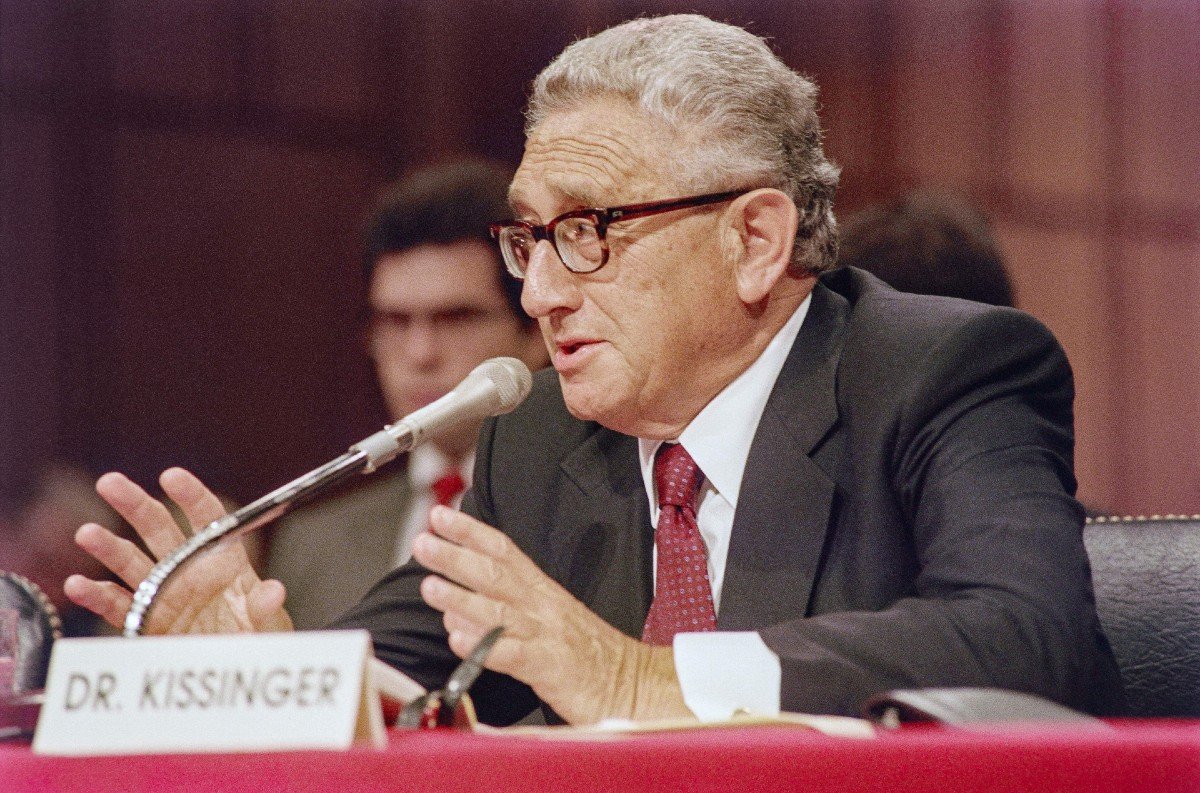
Resurfaced maps showing the heavy Cold War bombardment of Laos have fed the controversial legacy of diplomatic giant Henry Kissinger following his death.
Kissinger, a former secretary of state and national security adviser who is credited with shaping decades of U.S. foreign policy, died at his Connecticut home aged 100 on Wednesday.
Kissinger “played central roles in the opening to China, negotiating the end of the Yom Kippur War in the Middle East, and helping to bring America’s role in the Vietnam War to a close,” the diplomat’s international geopolitical consulting firm said in a statement on his passing.
The influential diplomat won the 1973 Nobel Peace Prize along with Vietnamese diplomat Le Duc Tho “for jointly having negotiated a cease-fire in Vietnam in 1973.” The latter declined the prize.
But as tens of thousands of U.S. soldiers died in Vietnam, anger in the U.S. was also spurred on by the extensive bombing of neighboring countries Laos and Cambodia.
The U.S. was attempting to disrupt a logistics chain — known as the Ho Chi Minh trail — running from Laos into Vietnam, which was used by North Vietnamese forces.
Laos is the most bombed country in the world. Between 1964 and 1973, the U.S. dropped more than 270 million bombs on the country, which had a population of around 3 million at the time.
U.S. aircraft dropped a new wave of bombs on Laos every eight minutes for nearly 10 years on average.
Tiếp tục đọc “Laos Maps Showing Sites of US Bombings Resurface: ‘Kissinger’s Legacy’”
Commission of Inquiry finds further evidence of war crimes in Ukraine
© Yevhen Nosenko
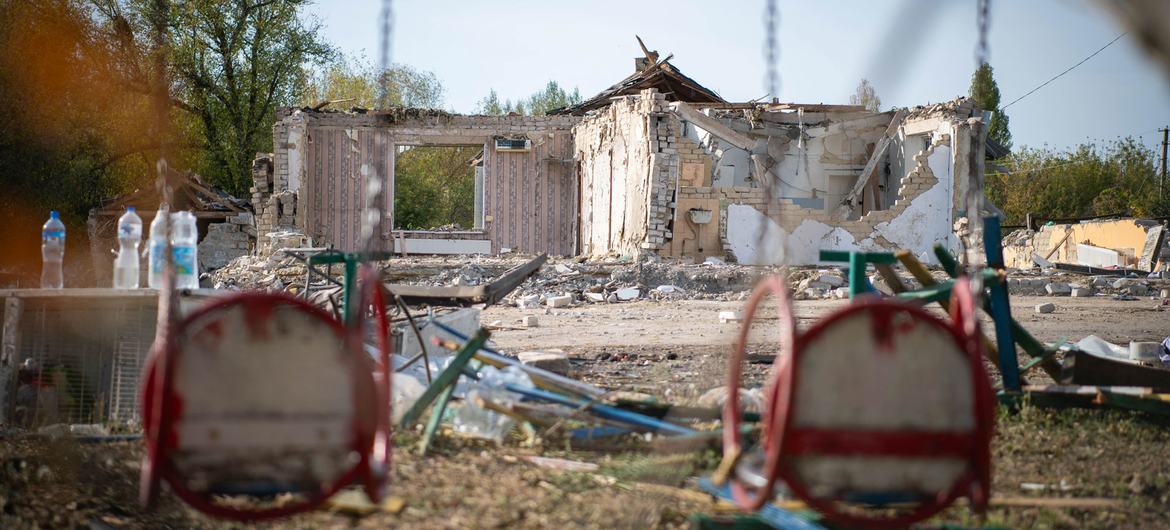
A playground lies in ruins near in the village of Groza in eastern Ukraine.
A new UN report has found continued evidence of war crimes and human rights violations committed by Russian authorities in Ukraine, including torture, rape and the deportation of children.
Tiếp tục đọc “Commission of Inquiry finds further evidence of war crimes in Ukraine”‘Increasingly brazen’ war crimes evident in Myanmar
UN.org
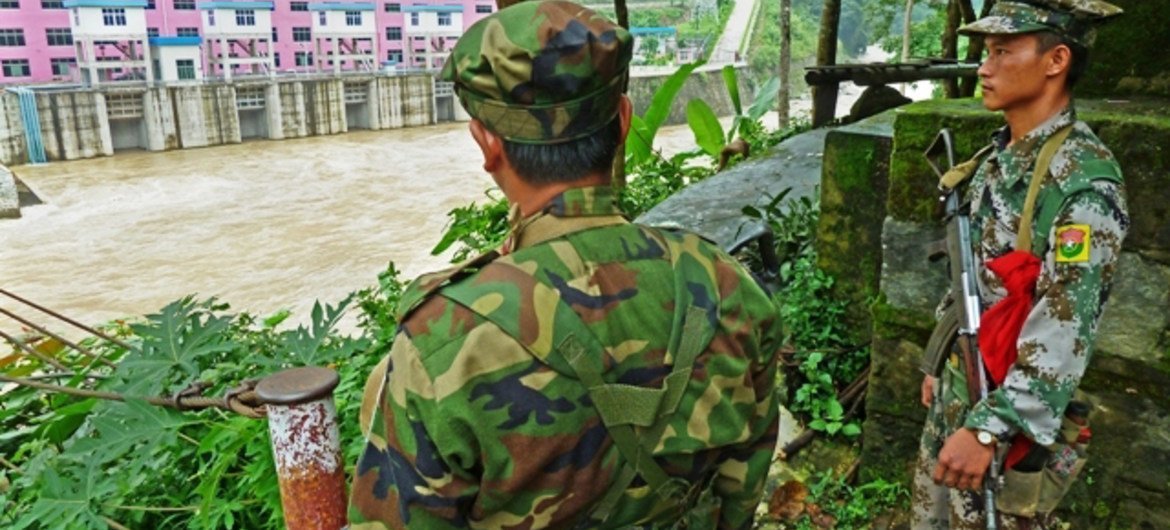
IRIN/Steve Sandford. Two soldiers stand guard at a post in northern Myanmar. (file)
The Independent Investigative Mechanism for Myanmar (IIMM) on Tuesday revealed compelling evidence of the country’s military and affiliate militias engaging in more frequent and audacious war crimes and crimes against humanity.
These include indiscriminate attacks on civilians from aerial bombing, mass executions of civilians and detained combatants, and large-scale and intentional burning of civilian homes and buildings, resulting in the destruction of entire villages in some cases, the Mechanism said in a news release.
Tiếp tục đọc “‘Increasingly brazen’ war crimes evident in Myanmar”The ICC issued arrest warrants on Friday for Putin and Russian official Maria Lvova-Belov
Russia scoffs but Putin could stand trial for alleged war crimes, ICC chief prosecutor says
By Caitlin Hu, CNN
Updated 9:03 PM EDT, Fri March 17, 2023

ICC chief prosecutor reacts to Putin arrest warrant
The International Criminal Court’s chief prosecutor believes Russian President Vladimir Putin could stand trial for alleged crimes committed during Russia’s war in Ukraine, he told CNN on Friday, despite Moscow’s arguments that it is not subject to the court’s decisions.
In an interview with CNN’s Clarissa Ward, Chief Prosecutor Karim Khan pointed to historic trials of Nazi war criminals, former Yugoslavian President Slobodan Milošević, and former Liberian leader Charles Taylor, among others.
“All of them were mighty, powerful individuals and yet they found themselves in courtrooms,” he said.
Tiếp tục đọc “The ICC issued arrest warrants on Friday for Putin and Russian official Maria Lvova-Belov”Russia using rape as ‘military strategy’ in Ukraine: UN envoy
By Philip Wang, Tim Lister, Josh Pennington and Heather Chen, CNN
Updated 2:35 AM EDT, Sat October 15, 2022
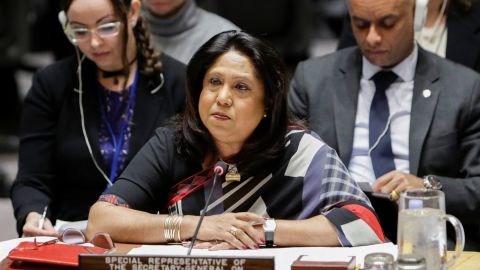
Pramila Patten, Special Representative of the UN Secretary-General on Sexual Violence in Conflict, at a Security Council meeting in New York in 2018.Xinhua/ShutterstockCNN —
Russia is using rape and sexual violence as part of its “military strategy” in Ukraine, a UN envoy said this week.
The claim follows data released by a panel of UN experts recently that verified “more than a hundred cases” of rape or sexual assault incidents reported in Ukraine since February.
“When you hear women testify about Russian soldiers equipped with Viagra, it’s clearly a military strategy,” Pramila Patten, UN Special Representative on Sexual Violence in Conflict, said in an interview with AFP on Thursday.
Tiếp tục đọc “Russia using rape as ‘military strategy’ in Ukraine: UN envoy”
Ukraine’s ‘Nuremberg Moment’ Amid Flood of Alleged Russian War Crimes
So many crimes are being documented that they need a new court.
By Robbie Gramer, a diplomacy and national security reporter at Foreign Policy, and Amy Mackinnon, a national security and intelligence reporter at Foreign Policy.

JUNE 10, 2022, 3:48 PM
As Russia continues its assault on Ukraine, top Biden administration officials are working behind the scenes with the Ukrainian government and European allies to document a tsunami of war crimes allegedly committed by Russian forces.
Putin’s War
How the world is dealing with Russia’s invasion of Ukraine.
But the sheer volume of the documented war crime cases could be too overwhelming for Ukraine’s justice system as well as for the International Criminal Court (ICC), raising questions of how many cases will be brought to trial and how many accused Russian war criminals could ultimately face justice.
Tiếp tục đọc “Ukraine’s ‘Nuremberg Moment’ Amid Flood of Alleged Russian War Crimes”
International law: Ethnic Cleansing – Luật quốc tế: Thanh lọc Sắc tộc

UN Photo/John Isaac
Tiếp tục đọc “International law: Ethnic Cleansing – Luật quốc tế: Thanh lọc Sắc tộc”
International law: War crimes – Luật quốc tế: Hình tội chiến tranh

War Crimes in Ukraine
War Crimes by Russia’s Forces in Ukraine
PRESS STATEMENT
ANTONY J. BLINKEN, SECRETARY OF STATE
MARCH 23, 2022
Since launching his unprovoked and unjust war of choice, Russian President Vladimir Putin has unleashed unrelenting violence that has caused death and destruction across Ukraine. We’ve seen numerous credible reports of indiscriminate attacks and attacks deliberately targeting civilians, as well as other atrocities. Russia’s forces have destroyed apartment buildings, schools, hospitals, critical infrastructure, civilian vehicles, shopping centers, and ambulances, leaving thousands of innocent civilians killed or wounded. Many of the sites Russia’s forces have hit have been clearly identifiable as in-use by civilians. This includes the Mariupol maternity hospital, as the UN Office of the High Commissioner for Human Rights expressly noted in a March 11 report. It also includes a strike that hit a Mariupol theater, clearly marked with the word “дети” — Russian for “children” — in huge letters visible from the sky. Putin’s forces used these same tactics in Grozny, Chechnya, and Aleppo, Syria, where they intensified their bombardment of cities to break the will of the people. Their attempt to do so in Ukraine has again shocked the world and, as President Zelenskyy has soberly attested, “bathed the people of Ukraine in blood and tears.”
Every day that Russia’s forces continue their brutal attacks, the number of innocent civilians killed and wounded, including women and children, climbs. As of March 22, officials in besieged Mariupol said that more than 2,400 civilians had been killed in that city alone. Not including the Mariupol devastation, the United Nations has officially confirmed more than 2,500 civilian casualties, including dead and wounded, and emphasizes the actual toll is likely higher.
Tiếp tục đọc “War Crimes in Ukraine” CVD
CVD 