
Chuyên mục: Các bộ luật quốc tế
The North Atlantic Treaty
Washington D.C. – 4 April 1949
- 04 Apr. 1949
- |Last updated: 10 Apr. 2019 14:16
- English
- Czech
- Danish
- German
- Greek
- Spanish
- Estonian
- French
- Croatian
- Hungarian
- Armenian
- Icelandic
- Italian
- Hebrew
- Georgian
- Lithuanian
- Latvian
- Dutch
- Norwegian
- Polish
- Portuguese
- Russian
- Slovenian
- Albanian
- Turkish
- Ukrainian
The Parties to this Treaty reaffirm their faith in the purposes and principles of the Charter of the United Nations and their desire to live in peace with all peoples and all governments.
They are determined to safeguard the freedom, common heritage and civilisation of their peoples, founded on the principles of democracy, individual liberty and the rule of law. They seek to promote stability and well-being in the North Atlantic area.
They are resolved to unite their efforts for collective defence and for the preservation of peace and security. They therefore agree to this North Atlantic Treaty :
Article 1
The Parties undertake, as set forth in the Charter of the United Nations, to settle any international dispute in which they may be involved by peaceful means in such a manner that international peace and security and justice are not endangered, and to refrain in their international relations from the threat or use of force in any manner inconsistent with the purposes of the United Nations.
Tiếp tục đọc “The North Atlantic Treaty”Russia using rape as ‘military strategy’ in Ukraine: UN envoy
By Philip Wang, Tim Lister, Josh Pennington and Heather Chen, CNN
Updated 2:35 AM EDT, Sat October 15, 2022
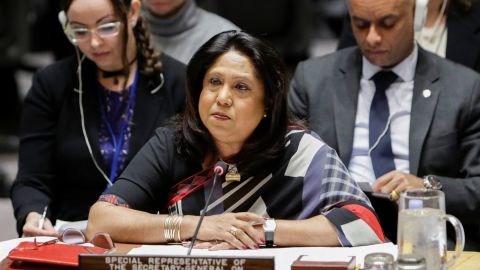
Pramila Patten, Special Representative of the UN Secretary-General on Sexual Violence in Conflict, at a Security Council meeting in New York in 2018.Xinhua/ShutterstockCNN —
Russia is using rape and sexual violence as part of its “military strategy” in Ukraine, a UN envoy said this week.
The claim follows data released by a panel of UN experts recently that verified “more than a hundred cases” of rape or sexual assault incidents reported in Ukraine since February.
“When you hear women testify about Russian soldiers equipped with Viagra, it’s clearly a military strategy,” Pramila Patten, UN Special Representative on Sexual Violence in Conflict, said in an interview with AFP on Thursday.
Tiếp tục đọc “Russia using rape as ‘military strategy’ in Ukraine: UN envoy”
The right of privacy in the digital age
Human Rights Council
Fifty-first session
12 September–7 October 2022
Agenda items 2 and 3
Annual report of the United Nations
High Commissioner for Human Rights and
reports of the Office of the High Commissioner
and the Secretary-General
Promotion and protection of all human rights, civil,
political, economic, social and cultural rights,
including the right to development
The right to privacy in the digital age
Report of the Office of the United Nations High Commissioner for
Human Rights*
Summary
The present report, submitted pursuant to Human Rights Council resolution 48/4,
discusses recent trends and challenges concerning the right to privacy. The report focuses,
in particular, on: (a) the abuse of intrusive hacking tools; (b) the key role of encryption in
ensuring the enjoyment of the right to privacy and other rights; and (c) wide-spread
monitoring of public spaces. It highlights the risk of creating systems of pervasive
surveillance and control that may undermine the development of vibrant and rightsrespecting societies.
I. Introduction
II. Surveillance of personal devices and communications
A. Hacking
B. Restriction on encryption
III. Surveillance of the public
A. Surveillance of public places
B. Online monitoring
C. Human rights impact
D. Human rights requirements
IV. Conclusion and recommendations
Lịch sử hình thành và phát triển của hệ thống pháp luật Việt Nam
.
| STT | Thời gian | Tên Bộ Luật | Nội dung |
| 1 | Thời Lý | Bộ luật Hình thư | – Đây được xem là bộ luật quốc gia thành văn đầu tiên trong lịch sử lập pháp nước nhà.- Hình thư gồm 3 quyển, trong đó bao gồm các quy định: + Tổ chức của triều đình, quân đội và hệ thống quan lại. + Biện pháp trừng trị đối với những hành vi nguy hiểm cho xã hội. + Sở hữu và mua bán đất đai, tài sản, quy định về thuế… |
| 2 | Thời Trần | Quốc triều hình luật | – Kế thừa nội dung của Hình thư từ thời Lý và bổ sung và điều chỉnh nhất định về hình phạt, thủ tục tố tụng và chế độ tư hữu đất đai, tài sản. |
| 3 | Thời vua Lê Thánh Tông | Bộ luật Hồng Đức | – Bao gồm 722 điều, chia thành 12 chương, 6 quyển.- Trong đó, có các nội dung về hành chính, hình sự, dân sự, hôn nhân gia đình và tố tụng.- Đây được đánh giá là thành tựu có giá trị đặc biệt quan trọng trong lịch sử pháp luật Việt Nam. |
| 4 | Thời Nguyễn | Bộ luật Gia Long | – Bao gồm 398 Điều, chia thành 22 quyển và 6 lĩnh vực.- Trong đó, có các nội dung quy định về: + Tổ chức nhà nước và hệ thống quan lại. + Tội danh và hình phạt. + Quản lý dân cư và đất đai. + Ngoại giao và nghi lễ cung đình. + Tổ chức quân đội và quốc phòng. + Xây dựng, bảo vệ đê điều, lăng tẩm.- Được đánh giá là một trong hai bộ luật tổng hợp có quy mô lớn và nội dung phong phú. |
| 5 | 09/11/1946 | Hiến pháp 1946 | – Đây là bản án Hiến pháp đầu tiên của nước Cộng hòa xã hội chủ nghĩa Việt Nam sau khi chủ tịch Hồ Chí Minh công bố Bản Tuyên ngôn Độc lập.- Bản Hiến pháp này khẳng định quyền tự do dân chủ của dân tộc Việt Nam ta.- Bao gồm: 7 chương và 70 điều, trong đó có các nội dung quy định về: + Chính thể. + Nghĩa vụ quyền lợi của công dân. + Cơ cấu tổ chức của Nghị viên nhân dân, Chính phủ, HĐND, Ủy ban hành chính và cơ quan tư pháp.Kể từ ngày 19/12/1946 – Ngày Toàn quốc kháng chiến, Nhà nước Việt Nam đã ban hành 479 văn bản pháp luật, trong đó có 243 sắc lệnh, 46 Thông tư và 12 văn bản khác. |
| 6 | 01/01/1960 | Hiến pháp 1959 | – Bao gồm 10 chương và 112 Điều. Trong đó, có các nội dung chính quy định về: + Chế độ chính trị, kinh tế và xã hội. + Trách nhiệm và quyền hạn của các cơ quan nhà nước. + Quyền và nghĩa vụ của mỗi công dân…Sau khi Hiến pháp 1959 được thông qua, hoạt động lập pháp của nước ta chỉ quan tâm đến lĩnh vực tổ chức bộ máy nhà nước, nghĩa vụ quân sự và pháp luật hình sự. Các lĩnh vực khác ít được quan tâm hơn. |
| 7 | 19/12/1980 | Hiến pháp 1980 | – Hiến pháp này ra đời nhằm thể chế hóa đường lối chủ trưởng của Đảng Cộng sản Việt Nam trong giai đoạn mới. Đây là Hiến pháp của thời kỳ quá độ lên chủ nghĩa xã hội trong phạm vi cả nước.Bao gồm 12 chương và 147 Điều. Trong đó, có các nội dung chính quy định về: + Chính trị, kinh tế, văn hóa và xã hội. + Quyền và nghĩa vụ cơ bản của công dân. + Cơ cấu tổ chức và nguyên tắc hoạt động của cơ quan nhà nước.Đáng lẽ sau khi Hiến pháp này thông qua thì hệ thống pháp luật Việt Nam có một khởi sắc mới, tuy nhiên, thực tế hoạt động xây dựng pháp luật sau khi bản Hiến pháp này được thông qua không có được khởi sắc cần thiết.Hoạt động lập pháp tập trung chủ yếu về các lĩnh vực tổ chức bộ máy nhà nước, pháp luật hình sự, lĩnh vực quân sự… |
| 8 | 18/04/1992 | Hiến pháp 1992 | – Hiến pháp này khẳng định Nhà nước phát triển kinh tế hàng hóa nhiều thành phần theo cơ chế thị trường định hướng XHCN, Nhà nước ghi nhận quyền tự do kinh doanh của công dân.- Bao gồm 12 chương và 147 Điều. Trong đó, có các nội dung chính quy định về: +Chế độ chính trị, kinh tế, văn hóa, xã hội, quốc phòng, an ninh. + Quyền và nghĩa vụ cơ bản của công dân. + Cơ cấu, nguyên tắc tổ chức và hoạt động của cơ quan nhà nước. + Thể chế hóa mối quan hệ giữa Đảng lãnh đạo, nhân dân làm chủ.- Từ sau khi Hiến pháp 1992 được thông qua, hệ thống pháp luật Việt Nam có những bước phát triển nhảy vọt |
| 9 | 07/01/2002 | Nghị quyết 51/2001/QH10(sửa đổi Hiến pháp 1992) | Sau gần 10 năm thi hành, Hiến pháp 1992 bộc lộ nhiều thiếu sót và bất cập so với thực tế, Nghị quyết 51 ra đời với mục đích hoàn thiện Hiến pháp 1992.Khẳng định rõ Nhà nước Cộng hòa xã hội chủ nghĩa Việt Nam là Nhà nước pháp quyền xã hội chủ nghĩa của nhân dân, do nhân dân, vì nhân dân. Quyền lực nhà nước thống nhất, có sự phân công và phối hợp giữa các cơ quan nhà nước trong việc thực hiện quyền lập pháp, hành pháp, tư pháp. |
| 10 | 01/01/2014 | Hiến pháp 2013 | – Bao gồm 11 chương và 120 Điều, trong đó bao gồm các nội dung chính về: + Chế độ chính trị, kinh tế, văn hóa, xã hội, bảo vệ môi trường, giáo dục. + Quyền con người, quyền và nghĩa vụ cơ bản của công dân. + Tổ chức bộ máy nhà nước. + Bảo vệ Tổ quốc.- Hiến pháp 2013 ra đời đánh dấu bước hoàn thiện hoạt động lập pháp của nước nhà trong thời kỳ hội nhập và phát triển.>>> Xem chi tiết Phân tích toàn văn Hiến pháp 2013 |
Sự hình thành và vận động của hệ thống pháp luật
Tiếp tục đọc “Lịch sử hình thành và phát triển của hệ thống pháp luật Việt Nam”
The Emperor is Wearing No Clothes: Beyond Hydrocarbons in the South China Sea
Published:October 3, 2022 – Author: Tabitha Grace Mallory
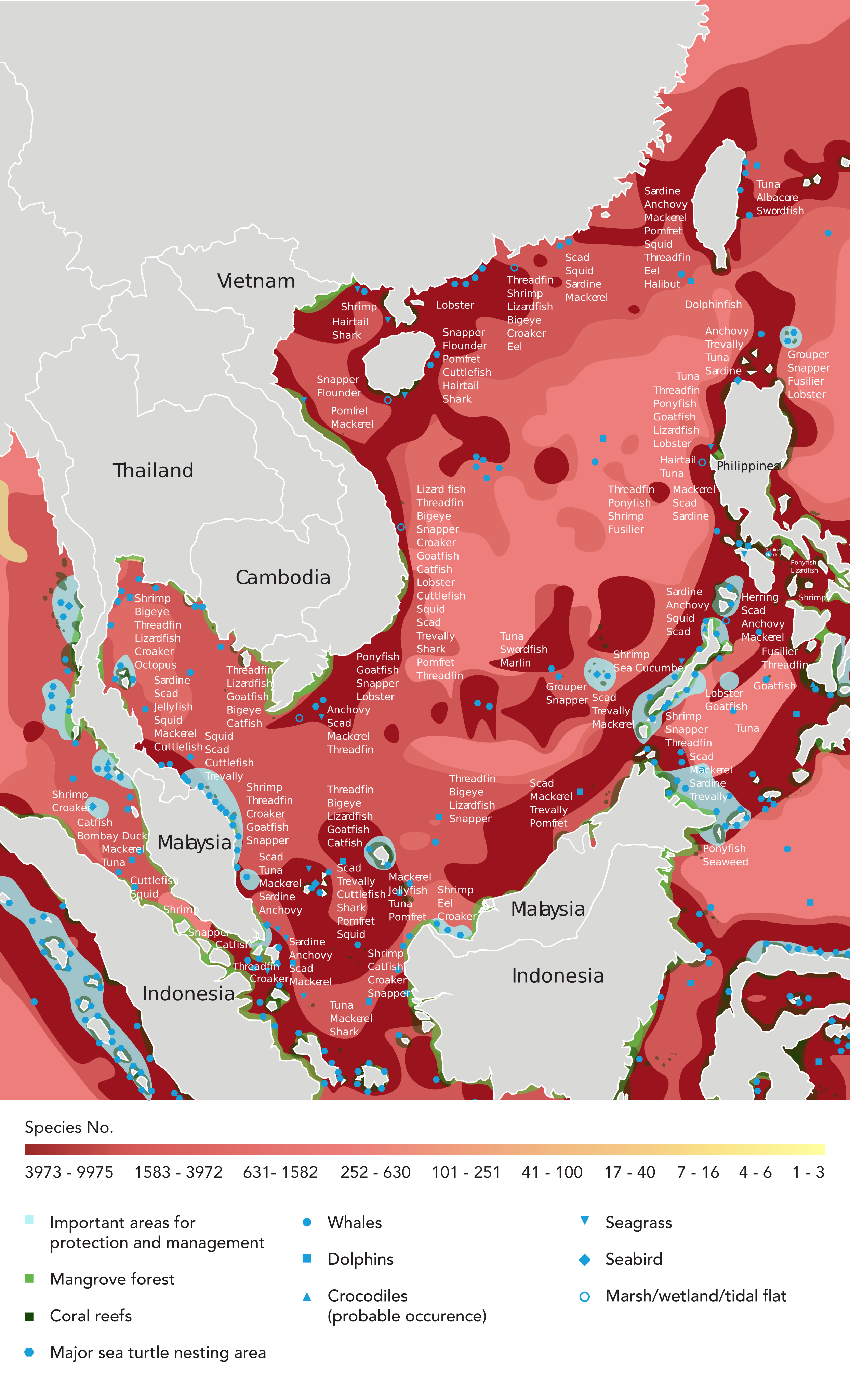
Feature Map: Biodiversity in the South China Sea
We need only call to mind the first half of 2022 for an array of the extreme, energy-related global challenges we all face. Around the world, local versions of climate change effects—the temperatures, wildfires, droughts, storms, flooding—underscore how important it is for us to transition away from our overdependence on fossil fuels. And our energy sources don’t just have environmental implications but security ones as well. The Russian invasion of Ukraine is the latest rendition of the resource curse. At the heart of it all, fossil fuels are what enabled and amplified the murderous narcissism we see in Vladimir Putin and created a country with an unbalanced and unhealthy domestic economy able to profoundly destabilize energy flows and prices around the world.
The South China Sea (SCS) brings together its own assortment of these complex challenges and factors. Competing security concerns, resource needs, and nationalisms shape the motivations of the claimants. Much of the attention and conflict has centred on the oil and gas in the seabed. Estimates of SCS hydrocarbon volumes vary; only some of these resources are proven reserves that have been confirmed and measured, and are actually recoverable. But even in more generous assessments, the SCS only provides us with a small percentage of the global total of oil and gas reserves, and even less of the overall energy mix if we include non-fossil-fuel energy sources.
Beyond hydrocarbons, in a two-way tie with the adjacent Coral Triangle, the SCS has the highest level of marine biodiversity in the world. SCS fisheries feed and employ millions of people in the region. It’s true that conflict over these living marine resources also drives the territorial disputes in the region, and a wide variety of human activity degrades the SCS ecosystem. Yet drilling for hydrocarbons in the SCS threatens this vulnerable marine habitat even more, while also clearly contributing to geopolitical and security tensions in the region—and to climate change.
Given how destabilizing oil and gas pursuits have been for the SCS since the 1970s, we might ask ourselves whether we want to keep drilling for fossil fuels there. Do the costs and risks outweigh the benefits?
Download this 21-page report (button above) from Dr. Tabitha Grace Mallory, an inaugural John H. McArthur Research Fellow, an initiative of the Asia Pacific Foundation of Canada, and the Founder of China Ocean Institute and Affiliate Professor, Jackson School of International Studies, University of Washington.
Below, explore the rich marine biodiversity of the South China Sea, one of the most hotly-contested maritime jurisdictions on the planet, in this original map created by the author and APF Canada graphic designer Chloe Fenemore, based on historical and contemporary maps cited in the full report.
Feature Map: Biodiversity in the South China Sea

Tabitha Grace Mallory
Tabitha Grace Mallory is the Founder of China Ocean Institute and Affiliate Professor, Jackson School of International Studies, University of Washington. Dr. Mallory specializes in Chinese foreign and environmental policy. She conducts research on China and global ocean governance and has published work on China’s fisheries and oceans policy.
Dr. Mallory is an inaugural John H. McArthur Research Fellow, an initiative of the Asia Pacific Foundation of Canada launched in 2021 to provide research opportunities for exceptional, mid-career scholars who are working on programs and research areas with direct relevance to Canada and Canada’s interests in Asia.
After 40 years, UNCLOS remains significant to Vietnam

Why UNCLOS Matters
fulcrum – PUBLISHED 20 SEP 2022

Editor’s Note:
This article is part of “UNCLOS 40th Anniversary Series – Why UNCLOS Matters” conceptualised by the Blue Security programme. The series, which commemorates the 40th anniversary of the U.N. Convention on the Law of the Sea, brings together established and emerging maritime security scholars from Southeast Asia and the broader Indo-Pacific to address the pertinence and relevance of UNCLOS. Blue Security brings together Australian and Southeast Asian experts to look at a range of maritime security issues across the region. The series was developed by Dr. Troy Lee-Brown and Dr. Bec Strating. It is published in collaboration with the team at Fulcrum.
UNCLOS’s relevance to Vietnam is significant, but the Convention must be updated if Vietnam and other signatories are to succeed in dealing with contemporary challenges in maritime affairs.
Tiếp tục đọc “After 40 years, UNCLOS remains significant to Vietnam”
Trung Quốc không thể cản trở hàng hải quốc tế xuyên qua Eo biển Đài Loan

. .
| China cannot hinder international navigation through Taiwan Strait (Published on Pacific Forum on June 22, 2022) | Trung Quốc không thể cản trở hàng hải quốc tế xuyên qua Eo biển Đài Loan (Đăng trên Pacific Forum ngày 22/6/2022) |
| By Tran Đinh Hoanh Tran Đinh Hoanh is an international litigator and writer in Washington DC. | Tác giả: Trần Đình Hoành Trần Đình Hoành là luật sư tranh tụng quốc tế và tác giả viết sách tại Washington DC. |
Tiếp tục đọc “Trung Quốc không thể cản trở hàng hải quốc tế xuyên qua Eo biển Đài Loan”
ICSID Releases 2022 Versions of its Rules and Regulations

NEWS RELEASESJUNE 22, 2022
The International Centre for Settlement of Investment Disputes (ICSID) has published the 2022 ICSID Rules and Regulations for resolving international investment disputes, which come into effect on July 1, 2022.
View the Regulations (2022 Version)
The updated rules for arbitration, mediation, conciliation, and fact-finding are the outcome of over 5 years of collaboration with State officials, legal counsel, adjudicators, businesses representatives, and civil society. They incorporate innovations designed to make ICSID cases more efficient for parties, to broaden access to ICSID’s facilities and services, and to ensure greater public transparency in the conduct and outcome of proceedings.
This is the first amendment to the ICSID rules since 2006, and the most extensive modernization of ICSID procedures in the Centre’s history.
Innovations introduced in the 2022 Rules and Regulations include:
Tiếp tục đọc “ICSID Releases 2022 Versions of its Rules and Regulations”Ukraine’s ‘Nuremberg Moment’ Amid Flood of Alleged Russian War Crimes
So many crimes are being documented that they need a new court.
By Robbie Gramer, a diplomacy and national security reporter at Foreign Policy, and Amy Mackinnon, a national security and intelligence reporter at Foreign Policy.

JUNE 10, 2022, 3:48 PM
As Russia continues its assault on Ukraine, top Biden administration officials are working behind the scenes with the Ukrainian government and European allies to document a tsunami of war crimes allegedly committed by Russian forces.
Putin’s War
How the world is dealing with Russia’s invasion of Ukraine.
But the sheer volume of the documented war crime cases could be too overwhelming for Ukraine’s justice system as well as for the International Criminal Court (ICC), raising questions of how many cases will be brought to trial and how many accused Russian war criminals could ultimately face justice.
Tiếp tục đọc “Ukraine’s ‘Nuremberg Moment’ Amid Flood of Alleged Russian War Crimes”
Rome Statute of the International Criminal Court – Đạo luật Rome của Tòa Hình sự Quốc tế (Phần 2 – Từ Điều 5 đến Điều 8bis)
Rome Statute of the International Criminal Court – Đạo luật Rome của Tòa Hình sự Quốc tế

Download English version at the ICC website >>
Dịch sang tiếng Việt: PhạmThu Hương & Trần Đình Hoành
(Trọn bộ – version Jan. 11, 2023)
Rome Statute of the International Criminal Court – Đạo luật Rome của Tòa Hình sự Quốc tế (Dẫn nhập và Phần I)
Dịch sang tiếng Việt: PhạmThu Hương & Trần Đình Hoành
| Rome Statute of the International Criminal Court | Đạo luật Rome của Tòa Hình sự Quốc tế |
| PREAMBLE | DẪN NHẬP |
The States Parties to this Statute, Conscious that all peoples are united by common bonds, their cultures pieced together in a shared heritage, and concerned that this delicate mosaic may be shattered at any time, Mindful that during this century millions of children, women and men have been victims of unimaginable atrocities that deeply shock the conscience of humanity, Recognizing that such grave crimes threaten the peace, security and well-being of the world, Affirming that the most serious crimes of concern to the international community as a whole must not go unpunished and that their effective prosecution must be ensured by taking measures at the national level and by enhancing international cooperation, Determined to put an end to impunity for the perpetrators of these crimes and thus to contribute to the prevention of such crimes, Recalling that it is the duty of every State to exercise its criminal jurisdiction over those responsible for international crimes, Reaffirming the Purposes and Principles of the Charter of the United Nations, and in particular that all States shall refrain from the threat or use of force against the territorial integrity or political independence of any State, or in any other manner inconsistent with the Purposes of the United Nations, Emphasizing in this connection that nothing in this Statute shall be taken as authorizing any State Party to intervene in an armed conflict or in the internal affairs of any State, Determined to these ends and for the sake of present and future generations, to establish an independent permanent International Criminal Court in relationship with the United Nations system, with jurisdiction over the most serious crimes of concern to the international community as a whole, Emphasizing that the International Criminal Court established under this Statute shall be complementary to national criminal jurisdictions, Resolved to guarantee lasting respect for and the enforcement of international justice, Have agreed as follows: | Các Quốc gia Thành viên của Đạo luật này, Ý thức rằng mọi dân tộc hợp nhất với nhau bằng những liên kết chung, văn hóa của họ hợp lại với nhau trong một di sản chung, và đều lo ngại bức tranh tinh xảo này có thể bị vỡ bất kỳ lúc nào, Quan tâm rằng trong thế kỷ này, hàng triệu trẻ em, phụ nữ và đàn ông là nạn nhân của những tàn ác không thể tưởng tượng nổi, gây sốc dữ dội cho lương tâm nhân loại, Thừa nhận rằng những hình tội nghiêm trọng như vậy đe dọa hòa bình, an ninh và an sinh của thế giới, Khẳng định rằng những hình tội nghiêm trọng nhất, mà cộng đồng quốc tế nói chung quan tâm, phải bị trừng phạt và việc truy tố hiệu lực phải được đảm bảo bằng các biện pháp ở cấp quốc gia và bằng cách tăng cường hợp tác quốc tế, Quyết tâm chấm dứt việc không trừng phạt các thủ phạm của những hình tội này và, do đó, góp phần ngăn chặn những hình tội đó, Nhớ rằng nhiệm vụ của mọi Quốc gia là hành xử thẩm quyền tài phán hình sự đối với những kẻ chịu trách nhiệm về những hình tội quốc tế, Tái xác nhận các Mục đích và Nguyên tắc của Hiến chương Liên hợp quốc, và đặc biệt rằng mọi Quốc gia sẽ kiềm chế đe dọa hoặc dùng vũ lực vi phạm sự toàn vẹn lãnh thổ hoặc độc lập chính trị của bất kỳ Quốc gia nào, hoặc làm bất kỳ điều gì mâu thuẫn với các Mục đích của Liên hợp quốc, Nhấn mạnh ở đây rằng chẳng có gì trong Đạo luật này được coi là ủy quyền cho bất kỳ Quốc gia Thành viên nào can thiệp vào xung đột vũ trang hoặc vào công việc nội bộ của bất kỳ Quốc gia nào, Kiên quyết, vì những mục tiêu này và vì các thế hệ hiện tại và tương lai, thành lập một Tòa Hình sự Quốc tế thường trực và độc lập trong liên hệ với hệ thống Liên hợp quốc, có thẩm quyền tài phán đối với những hình tội nghiêm trọng nhất mà cộng đồng quốc tế nói chung quan tâm. Nhấn mạnh rằng Tòa Hình sự Quốc tế được thành lập theo Đạo luật này sẽ bổ sung cho thẩm quyền tài phán hình sự của các quốc gia, Quyết định đảm bảo sự tôn trọng lâu dài, và việc thực thi, công lý quốc tế, Đã đồng ý như sau: |
| PART 1. ESTABLISHMENT OF THE COURT | PHẦN 1. THÀNH LẬP TÒA |
| Article 1 The Court An International Criminal Court (“the Court”) is hereby established. It shall be a permanent institution and shall have the power to exercise its jurisdiction over persons for the most serious crimes of international concern, as referred to in this Statute, and shall be complementary to national criminal jurisdictions. The jurisdiction and functioning of the Court shall be governed by the provisions of this Statute. | Điều 1 Tòa Tòa Hình sự Quốc tế (“Tòa”), do đây, được thành lập. Tòa sẽ là một định chế lâu dài và sẽ có quyền hành xử thẩm quyền tài phán đối với những người vi phạm những hình tội nghiêm trọng nhất mà quốc tế quan tâm, như được nêu ra trong Đạo luật này, và sẽ bổ sung cho thẩm quyền tài phán hình sự của các quốc gia. Thẩm quyền tài phán và hoạt động của Tòa sẽ được điều hành bởi các điều khoản của Đạo luật này. |
| Article 2 Relationship of the Court with the United Nations The Court shall be brought into relationship with the United Nations through an agreement to be approved by the Assembly of States Parties to this Statute and thereafter concluded by the President of the Court on its behalf. | Điều 2 Liên hệ của Tòa với Liên hợp quốc Tòa sẽ được đưa vào liên hệ với Liên hợp quốc thông qua một thỏa thuận được Hội đồng các Quốc gia Thành viên của Đạo luật này phê duyệt và sau đó được Chủ tịch Tòa thay mặt Tòa ký kết. |
| Article 3 Seat of the Court 1. The seat of the Court shall be established at The Hague in the Netherlands (“the host State”). 2. The Court shall enter into a headquarters agreement with the host State, to be approved by the Assembly of States Parties and thereafter concluded by the President of the Court on its behalf. 3. The Court may sit elsewhere, whenever it considers it desirable, as provided in this Statute. | Điều 3 Trụ sở Tòa 1. Trụ sở Tòa được thành lập tại The Hague [La Hay] ở Hà Lan (“Quốc gia chủ nhà”). 2. Tòa sẽ ký một thỏa thuận về trụ sở với Quốc gia chủ nhà, được Hội đồng các Quốc gia Thành viên phê duyệt và sau đó được Chủ tịch Tòa thay mặt Tòa ký kết. 3. Tòa có thể đặt ở nơi khác, bất cứ khi nào Tòa muốn, như được quy định trong Đạo luật này. |
| Article 4 Legal status and powers of the Court 1. The Court shall have international legal personality. It shall also have such legal capacity as may be necessary for the exercise of its functions and the fulfilment of its purposes. 2. The Court may exercise its functions and powers, as provided in this Statute, on the territory of any State Party and, by special agreement, on the territory of any other State. | Điều 4 Địa vị pháp lý và quyền hành của Tòa 1. Tòa có tư cách pháp nhân quốc tế. Tòa cũng có năng lực pháp lý có thể cần thiết cho việc hành xử các chức năng của Tòa và cho việc thực hiện các mục đích của Tòa. 2. Tòa có thể hành xử các chức năng và quyền hành của mình, như được quy định trong Đạo luật này, trên lãnh thổ của bất kỳ Quốc gia Thành viên nào và, theo thỏa thuận đặc biệt, trên lãnh thổ của bất kỳ Quốc gia nào. |
Rome Statute of the International Criminal Court – Đạo luật Rome của Tòa Hình sự Quốc tế (Mục lục)
Dịch sang tiếng Việt: PhạmThu Hương & Trần Đình Hoành
Rome Statute of the International Criminal Court – the Crime of Aggression – Đạo luật Rome của Tòa Hình sự Quốc tế về Tội Xâm lược: Điều 8 bis – Hình tội xâm lược
| Rome Statute of the International Criminal Court – the Crime of Aggression | Đạo luật Rome của Tòa Hình sự Quốc tế – Tội Xâm lược |
| Article 8 bis -Crime of aggression | Điều 8 bis – Hình tội xâm lược |
| 1. For the purpose of this Statute, “crime of aggression” means the planning, preparation, initiation or execution, by a person in a position effectively to exercise control over or to direct the political or military action of a State, of an act of aggression which, by its character, gravity and scale, constitutes a manifest violation of the Charter of the United Nations. | 1. Cho mục đích của Đạo luật này, “tội xâm lược” nghĩa là lập kế hoạch, chuẩn bị, khởi sự hay xúc tiến, bởi một người trong một chức vị hành xử hiệu lực sự kiểm soát hay điều khiển hành vi chính trị hay quân sự của một Quốc gia, một hành vi xâm lược mà, bởi bản chất, tính nghiêm trọng và quy mô của nó, tạo nên một vi phạm hiển nhiên đến Hiến chương Liên hợp quốc. |
| 2. For the purpose of paragraph 1, “act of aggression” means the use of armed force by a State against the sovereignty, territorial integrity or political independence of another State, or in any other manner inconsistent with the Charter of the United Nations. Any of the following acts, regardless of a declaration of war, shall, in accordance with United Nations General Assembly resolution 3314 (XXIX) of 14 December 1974, qualify as an act of aggression: a) The invasion or attack by the armed forces of a State of the territory of another State, or any military occupation, however temporary, resulting from such invasion or attack, or any annexation by the use of force of the territory of another State or part thereof; b) Bombardment by the armed forces of a State against the territory of another State or the use of any weapons by a State against the territory of another State; c) The blockade of the ports or coasts of a State by the armed forces of another State; d) An attack by the armed forces of a State on the land, sea or air forces, or marine and air fleets of another State; e) The use of armed forces of one State which are within the territory of another State with the agreement of the receiving State, in contravention of the conditions provided for in the agreement or any extension of their presence in such territory beyond the termination of the agreement; f) The action of a State in allowing its territory, which it has placed at the disposal of another State, to be used by that other State for perpetrating an act of aggression against a third State; g) The sending by or on behalf of a State of armed bands, groups, irregulars or mercenaries, which carry out acts of armed force against another State of such gravity as to amount to the acts listed above, or its substantial involvement therein. | 2. Cho mục đích của đoạn 1, “hành vi xâm lược” nghĩa là sự sử dụng vũ lực quân sự bởi một Quốc gia chống lại chủ quyền, toàn vẹn lãnh thổ hay độc lập chính trị của một Quốc gia khác, hay dưới bất kỳ hình thức nào không phù hợp với Hiến chương Liên hợp quốc. Bất kỳ hành vi nào sau đây, dù có tuyên chiến hay không, đều, theo đúng Nghị quyết 2214 (XXIX) ngày 14 tháng 12 năm 1974, là hành vi xâm lược: a) Xâm lấn hay tấn công do các lực lượng vũ trang của một Quốc gia vào lãnh thổ của một Quốc gia khác, hay sự chiếm đóng quân sự, dù tạm thời đến đâu, sinh ra từ sự xâm lấn hay tấn công đó, hay bất kỳ sự sát nhập nào bằng vũ lực lãnh thổ hay một phần lãnh thổ của một Quốc gia khác; b) Oanh kích do các lực lượng vũ trang của một Quốc gia vào lãnh thổ của một Quốc gia khác hay sự sử dụng bất kỳ vũ khí nào bởi một Quốc gia vào lãnh thổ của một Quốc gia khác; c) Phong tỏa các cảng và bờ biển của một Quốc gia bằng các lực lượng vũ trang của một Quốc gia khác; d) Một cuộc tấn công do các lực lượng vũ trang của một Quốc gia vào các lực lượng trên bộ, trên biển hay trên không hay các hạm đội hoặc phi đội của một Quốc gia khác; e) Sử dụng các lực lượng vũ trang của một Quốc gia đang ở trong lãnh thổ của một Quốc gia khác với sự thỏa thuận của Quốc gia tiếp nhận, ngược với những điều kiện đã quy định trong thỏa thuận hay trong bất kỳ sự gia hạn hiện diện nào của các lực lượng vũ trang đó trong lãnh thổ đó sau khi sự thỏa thuận đã hết hạn. f) Hành động của một Quốc gia, đã đặt lãnh thổ của mình dưới quyền sử dụng của một Quốc gia khác, cho phép lãnh thổ của mình được Quốc gia khác đó sử dụng để thực hiện một hành vi xâm lược chống lại một Quốc gia thứ ba; g) Việc gửi, bởi hay thay mặt một Quốc gia, các băng đảng, các nhóm, các lực lượng không chính quy hay lính đánh thuê vũ trang, để thực hiện các hành vi vũ lực quân sự vào một Quốc gia khác nghiêm trọng đến mức tạo thành các hành vi xâm lược kể trên, hay nhúng tay đáng kể vào việc gửi quân đó. |
| (TĐH chuyển ngữ) | |
| mmmmmmm |
Chuỗi bài:
- International law: Crime of genocide – Luật quốc tế: Hình tội diệt chủng
- International law: Crimes against humanity – Luật quốc tế: Hình tội chống loài người
- International law: War crimes – Luật quốc tế: Hình tội chiến tranh
- International law: Ethnic Cleansing – Luật quốc tế: Thanh lọc Sắc tộc
- Đạo luật Rome của Tòa Hình sự Quốc tế về Tội Xâm lược: Điều 8 bis – Hình tội xâm lược
 CVD
CVD 