Quế, hồi Việt Nam với ‘nỗi đau’ bán thô, thương nhân Ấn Độ đến tận Yên Bái thu mua

vnbusiness –  29/9/2023 | 08:32 

Việt Nam là quốc gia sản xuất và xuất khẩu quế đứng thứ ba thế giới về sản lượng, sau Indonesia, Trung Quốc. Tuy vậy, do sản phẩm Việt Nam chủ yếu xuất thô nên thường gắn nhãn mác của nước ngoài, giá trị thu về thấp, thậm chí có tình trạng xuất khẩu tận vườn như câu chuyện thương nhân Ấn Độ tìm đến Yên Bái để thu mua.

Sản phẩm quế, hồi Việt Nam vẫn chưa xây dựng được thương hiệu ở thị trường thế giới. 

Bộ Công Thương cho biết, trên bản đồ dược liệu thế giới, Việt Nam được đánh giá có nguồn dược liệu đa dạng, tỷ lệ dược liệu tự nhiên quý hiếm vẫn còn khá phong phú. Theo thống kê, hiện nước ta có khoảng trên 5.100 loài cây dược liệu, có nhiều tiềm năng, lợi thế để phát triển dược liệu trở thành một ngành kinh tế.

Tiếp tục đọc “Quế, hồi Việt Nam với ‘nỗi đau’ bán thô, thương nhân Ấn Độ đến tận Yên Bái thu mua”

Vietnam’s forests have been cleared to supply the world’s timber industry (2 parts)

pulitzercenter.org – APRIL 4, 2023

Vietnam’s Forests Have Been Cleared To Supply the World’s Timber Industry

author image

In Central Vietnam’s factory, wood chips are accumulated in the rear of a three-wheel vehicle used to transport acacia wood to the processing machine. Image by Thanh Nguyen.

Vietnam is ranked the fifth-largest country in the world, second in Asia, and the largest in Southeast Asia in furniture exports. Vietnamese furniture has been directly exported to 120 countries and territories.

However, behind this impressive figure is that series of natural forests that have been cut down and quickly. These forest land areas have been occupied for growing short-term timber trees.

Deforestation makes natural disasters in Vietnam more severe, local people suffer the most from the consequences.

An investigation will be published on Mekong Eye.

Tiếp tục đọc “Vietnam’s forests have been cleared to supply the world’s timber industry (2 parts)”

The Unexpected Twist in Vietnam’s Renewable Energy Saga

fulcrumm.sg PUBLISHED 4 JAN 2024 LE HONG HIEP

Punishment awaits the senior officials who allowed Vietnam’s renewable energy quest to go off the rails, despite its apparent initial success. This policy crisis has the potential to affect other economic sectors if no clear end is in sight.

In late 2023, the Inspection Commission of the Central Committee of the Communist Party of Vietnam (CPV) found that Tran Tuan Anh, head of CPV’s Central Economic Commission, and Trinh Dinh Dung, former deputy prime minister, were among the senior government officials responsible for “shortcomings in the advisory and policy-making processes for the development of solar and wind power projects, as well as in the implementation of the amended Power Development Plan VII” (PDP7). The Commission therefore recommended disciplinary actions be taken against Anh, Dung and some other senior officials involved.

Anh served as the minister of industry and trade while Dung was deputy prime minister overseeing economic affairs, including the energy sector, from 2016 to 2021. During their tenure, Vietnam experienced a remarkable surge in renewable energy, with numerous solar and wind power projects completed in just three years. According to Vietnam Electricity (EVN), the state-owned utility company, this led to a significant increase in Vietnam’s renewable energy output, rising from a mere 997 GWh in 2018 to an impressive 37,865 GWh in 2022. Vietnam therefore emerged as Southeast Asia’s renewable energy leader, accounting for 69 per cent of the region’s solar and wind power generation by 2022.

Such successes, however, did not come without problems. Last April, an inspection by the Government Inspectorate revealed numerous violations in the licensing and certification of renewable energy projects. For example, the amended PDP7 outlined a goal of installing 850MW of solar power by 2020, increasing to 4,000MW by 2025. Similarly, the plan projected 800MW of wind power by 2020, with a target of 2,000MW by 2025. However, as of May 2023, the total installed capacity of wind, solar, and rooftop solar projects in Vietnam had already reached a staggering 21,839MW, greatly surpassing targets set in PDP7.

This sudden surge in renewable energy has caused a strain on the national power grid, particularly in the central region where most renewable energy projects are located. Moreover, during the same period, there was a lack of new traditional power plants constructed, which are necessary to provide a stable baseload for renewable energy sources that are more weather-dependent and thus less reliable. This has created significant safety concerns for the national power system. Consequently, EVN had to curtail the amount of power it purchased from renewable sources, resulting in substantial financial losses for project owners.

A main driver behind Vietnam’s rapid growth in renewable energy has been the implementation of high feed-in tariffs (FITs) for certified projects that began commercial operation before specific deadlines. For instance, solar farms that became operational by 30 June 2019 were eligible for a FIT of 9.35 US cents/kWh, while onshore and offshore wind farms that began commercial operation by 1 November 2021 received FITs of 8.5 US cents/kWh and 9.8 US cents/kWh, respectively. Meanwhile, the FIT for rooftop solar projects operated before 31 December 2020 is 8.38 US cents/kWh. These FITs are locked in for 20 years.

This sudden surge in renewable energy has caused a strain on the national power grid, particularly in the central region where most renewable energy projects are located.

These attractive FITs sparked fierce competition among local investors to build solar and wind projects but most of them had no track record in the energy sector. They mainly leveraged connections, often involving under-the-table payments, to secure project licenses, then relied heavily on bank financing or corporate bonds to fund project development. Due to the pandemic and cut-throat competition for equipment and contractors, 62 wind projects failed to start operation before the FIT deadlines. Unable to sell their output to EVN, these projects faced severe financial difficulties. Even projects that qualified for the FITs faced mounting issues. Aside from the curtailment imposed by EVN, the Government Inspectorate found violations in the certification of many projects, putting them at risk of disqualification from the FITs. Foreign investors acquiring projects from local investors may face potential losses if similar violations are found.

The situation also negatively impacts the state and the broader economy. Most FIT rates are higher than average electricity retail prices, meaning that the state and end-users are essentially subsidising renewable energy projects. These high FITs have contributed to EVN’s mounting accumulative losses over the past two years, reaching VND55 trillion (US$2.3 billion) by September 2023. The government therefore has had no choice but to allow EVN to raise electricity retail prices, putting upward pressure on inflation and undermining Vietnam’s competitiveness.

In light of these grave consequences, the government has been trying to contain the damage. For example, EVN stopped buying power from rooftop solar projects completed after 31 December 2020, leaving thousands of investors in limbo. Authorities have also conducted thorough inspections into most renewable energy projects. Projects found to have committed serious violations, such as lacking construction permits or failing to secure proper land usage purpose conversion and commercial operation certification, may have their power purchase agreements with EVN terminated.

Last month, EVN even proposed lowering the FITs for 38 projects but quickly withdrew the proposal after just one day. This sudden reversal may reflect the government’s struggle in finding a satisfactory solution. Being lenient will perpetuate losses for the state budget but a heavy-handed approach could cause extensive financial losses for investors, potentially affecting the banking system, given investors’ heavy reliance on bank financing. This could also negatively impact investors’ confidence in Vietnam’s investment climate and raise doubts about the country’s commitment to energy transition.

At present, there seems to be no straightforward solution. It is not clear yet how Vietnam will effectively address and learn from this situation for future policy decisions. However, it is inevitable that those responsible for this predicament will soon face serious consequences for what could potentially become one of the most significant policy mishaps in Vietnam’s recent history.

2024/2

Le Hong Hiep is a Senior Fellow and Coordinator of the Vietnam Studies Programme at ISEAS – Yusof Ishak Institute.

Vietnam 2023 economic growth slows to 5.05% as exports fall

By Khanh Vu

December 29, 20237:59 AM GMT Updated 7 days ago

A man paints steel structures of a new factory in Hanoi

HANOI, Dec 29 (Reuters) – Vietnam’s economic growth slowed to 5.05% this year from an expansion of 8.02% last year, official data showed on Friday, weighed by weak global demand while public investment stalled amid an intensified anti-graft crackdown.

This year’s gross domestic product (GDP) growth was below a government target of 6.5% and lower than average growth of 5.87% during the previous decade, according to data released by the government’s General Statistics Office (GSO).

Vietnam is a regional manufacturing hub that relies heavily on trade. Exports in 2023 fell 4.4% from last year to $355.5 billion, with shipments of smartphones, its largest foreign currency earner, dropping 8.3%, the GSO said in its report.

Tiếp tục đọc “Vietnam 2023 economic growth slows to 5.05% as exports fall”

More than 100 container ships rerouted from Suez canal to avoid Houthi attacks

theguardian.com

Cape of Good Hope diversion adds 6,000 nautical miles and three or four weeks to delivery times and has driven up oil prices

Jasper Jolly @jjpjollyWed 20 Dec 2023 14.24 GMT

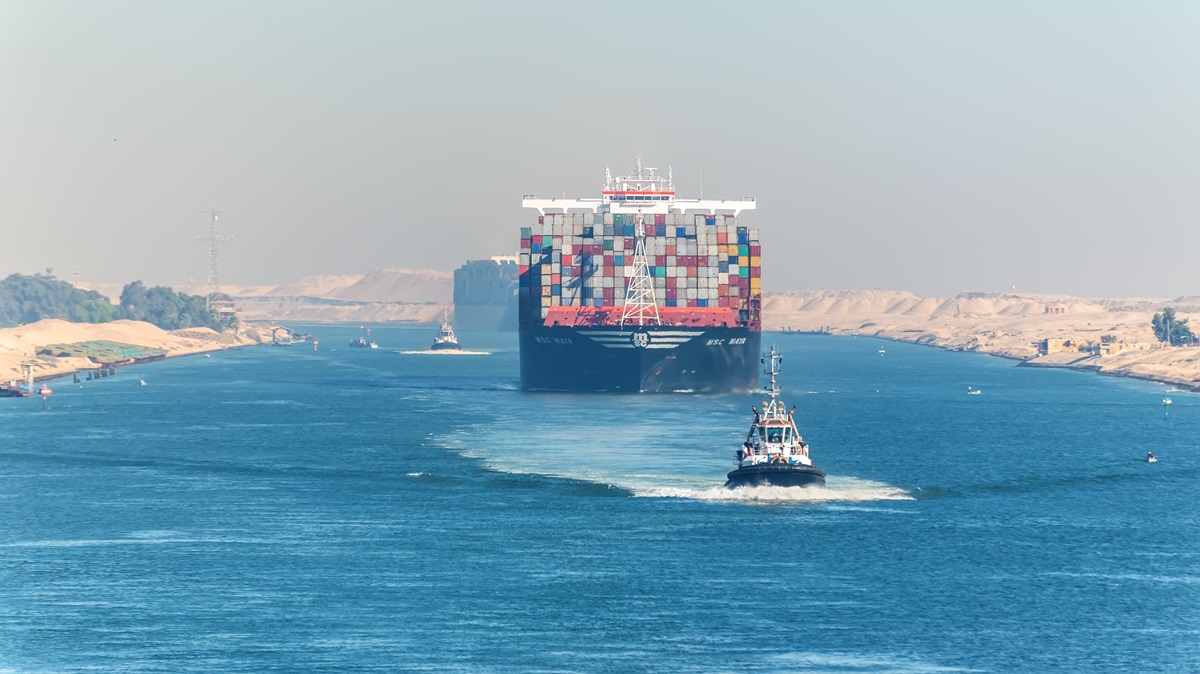
More than 100 container ships have been rerouted around southern Africa to avoid the Suez canal, in a sign of the disruption to global trade caused by Houthi rebels attacking vessels on the western coast of Yemen.

The shipping company Kuehne and Nagel said it had identified 103 ships that had already changed course, with more expected to go around South Africa’s Cape of Good Hope.

Tiếp tục đọc “More than 100 container ships rerouted from Suez canal to avoid Houthi attacks”

How—and Why—Yemen’s Houthi Rebels Are Poised to Seriously Disrupt the Global Economy

time.com

Loaded containers stacked on top of a cargo ship sailing in a canal, Suez Canal, Red sea, Egypt
Loaded containers stacked on top of a cargo ship sailing in the Suez Canal.Camille Delbos—Art In All of Us/Corbis/Getty Images

BY GREGORY BREW

DECEMBER 19, 2023 12:00 AM EST

Gregory Brew is a historian of international energy, U.S. foreign policy, the Cold War, U.S.-Iranian relations, and modern Iran. He is currently an Analyst at Eurasia Group.

After two months, the crisis in the Middle East is poised to seriously disrupt the global economy as well as regional stability—thanks to the Houthis, a rebel Shi’a group in Yemen, and their successful effort to disrupt shipping through the Red Sea.

While attacks by the Houthis on commercial shipping began on November 19, they escalated last week, with the Yemeni rebels firing anti-ship ballistic missiles at several passing ships and hitting one (the first time such a weapon has ever been used successfully). As none of the ships were bound for Israel or owned by Israeli companies, the attacks signaled the Houthis were stepping up their efforts to pressure local commerce as a way to force Israel to suspend its campaign in Gaza.

https://imasdk.googleapis.com/js/core/bridge3.609.1_en.html#goog_2071400301

Shipping companies got the message. Five of the largest shipping firms announced they would redirect their container ships away from the Bab al Mandab strait, the strategic waterway through which ships must pass on their way to the Suez Canal and which handles over 10% of global commerce.

Tiếp tục đọc “How—and Why—Yemen’s Houthi Rebels Are Poised to Seriously Disrupt the Global Economy”

[2 bài] Thiếu vắc xin Tiêm chủng mở rộng: Có thể phá huỷ thành tựu phòng, chống dịch của ngành y tế -Thế bế tắc của vắc xin nội địa

Thiếu vắc xin Tiêm chủng mở rộng: Có thể phá huỷ thành tựu phòng, chống dịch của ngành y tế

Ngọc Thuý – Thứ Bảy 30/09/2023 12:16 (GMT+7)

VietTimes – Sau gần 20 năm vắng bóng, căn bệnh bạch hầu đã xuất hiện trở lại tại Hà Giang và Điện Biên với hàng chục người mắc bệnh, trong đó có 3 ca tử vong. Điều này một lần nữa cho thấy tính nghiêm trọng của việc thiếu vắc xin.

Tiêm phòng vắc xin đầy đủ, đúng lịch sẽ giúp trẻ tránh được bệnh và góp phần giảm tải cho các bệnh viện

3 ca tử vong do bạch hầu tại tỉnh Điện Biên và Hà Giang đều có điểm chung là chưa tiêm phòng vắc xin ngừa bệnh bạch hầu hoặc đã từng tiêm nhưng chưa đủ liều, dẫn đến khi mắc bệnh, bệnh nhân chuyển nặng nhanh và tử vong sau vài ngày phát bệnh. Dịch bạch hầu là một minh chứng thực tiễn cho thấy vấn đề vắc xin cấp thiết ra sao, khi nó liên quan đến tính mạng của người dân.

Tiếp tục đọc “[2 bài] Thiếu vắc xin Tiêm chủng mở rộng: Có thể phá huỷ thành tựu phòng, chống dịch của ngành y tế -Thế bế tắc của vắc xin nội địa”

Siêu thị và chợ: “Cuộc chiến” thấy trước đoạn kết?

Tiasang – 29-11-2023 – THANH NHÀN

“Cuộc cách mạng siêu thị” (supermarket revolution) ở Việt Nam rút cục có dẫn đến sự lụi tàn của chợ truyền thống trong lòng đô thị, nơi chúng đã tồn tại hàng thế kỷ? Và nếu điều này thực sự xảy ra thì hệ quả sẽ là gì?

Chợ Cửa Nam thời Pháp thuộc.

Trong ký ức mà thời gian đang phủ dần các dải mờ, bà Cao Thu Hà, một người nay tuổi ngoài 90 đã sống ở đường Cột Cờ (Hà Nội) trước năm 1945 (mang tên đường Điện Biên Phủ kể từ năm 1964), còn nhớ bác bếp của gia đình hay xách làn đi chợ Cửa Nam cách nhà không xa, “một chợ lớn, sầm uất và nhộn nhịp với đủ loại rau trái, quà bánh theo mùa, đặc biệt có giò lụa, chả quế thơm phức và bánh giò nóng hổi rất ngon”. 

Tiếp tục đọc “Siêu thị và chợ: “Cuộc chiến” thấy trước đoạn kết?”

Joint Statement on Higher Airspace Operations (HAO)

US DEPARTMENT OF STATE

MEDIA NOTE

OFFICE OF THE SPOKESPERSON

DECEMBER 18, 2023

The text of the following joint statement was released by the Governments of the United States of America, Canada, the European Union and its Member States (Belgium, Bulgaria, Czechia, Denmark, Germany, Estonia, Ireland, Greece, Spain, France, Croatia, Italy, Cyprus, Latvia, Lithuania, Luxembourg, Hungary, Malta, Netherlands, Austria, Poland, Portugal, Romania, Slovenia, Slovakia, Finland, Sweden), Japan, and the United Kingdom expressing support for ICAO’s efforts to address the challenges and opportunities associated with higher airspace operations.

Begin Text:

Tiếp tục đọc “Joint Statement on Higher Airspace Operations (HAO)”

UNCTAD releases Handbook of Statistics 2023

UNCTAD.org

14 December 2023

The annual handbook provides key data and indicators on how the economy has evolved across regions, countries and sectors.

© Shutterstock/Nguyen Quang Ngoc Tonkin | Workers dry coffee beans in Gia Lai, Viet Nam.

UNCTAD released on 14 December its Handbook of Statistics 2023 – the global reference for trade and development trends published each year.

It provides official statistics on how the global economy has evolved across regions, countries and sectors. An online version allows people to interact with the data, charts and graphs.

By using “nowcasts”, the handbook provides data-driven real-time estimates of current developments. These can assist governments in anticipating shifts in trade and the economy before final official statistics are available.

“Timely and quality data are critical now more than ever in an era of multiple global crises,” says Anu Peltola, head of UNCTAD Statistics. “These statistics will help countries take evidence-based decisions to tackle today’s challenges rather than yesterday’s.”

Below are some of the key trends for 2022 and 2023 highlighted in the report.

International trade dynamics

  • Trade in goods falls: Following a strong recovery from COVID-19 in 2021, goods exports increased by 11.4% in 2022, reaching $29 trillion. But statistics show a 4.6% decrease in merchandise trade in the first half of 2023, and UNCTAD nowcasts a continued year-on-year decline for the third and fourth quarters.
  • Trade in services continues to rise: Trade in services rebounded by 14.8% in 2022, surpassing pre-pandemic levels. Services trade grew more in developing countries, which in 2022 reached their highest global market share to date at 30%. Globally, UNCTAD nowcasts around 7% growth for trade in services in 2023.
  • Tiếp tục đọc “UNCTAD releases Handbook of Statistics 2023”

Những người chờ được giải cứu

CAND – Thứ Hai, 11/12/2023, 13:47

LTS: Tiểu thương, kinh doanh hộ gia đình, những đơn vị sản xuất nhỏ…, họ có thể được xem là những “phận bèo” trong nền kinh tế khi chính sách, ưu đãi vẫn chưa thực sự hướng tới họ. Nhưng họ chắc chắn không phải là “bèo bọt” trong nền kinh tế khi đóng góp của họ trong tổng thể là không thể đong đếm được.

Ai thương người sản xuất?

Anh bạn tôi làm chủ một nhà may nhỏ khá thành công khoảng hơn 10 năm trước, nhưng thời điểm này đang cực kỳ khó khăn.

Tiếp tục đọc “Những người chờ được giải cứu”

Ngã ba đường cho nước Đức

ANTG – Thứ Tư, 16/08/2023, 10:35

Trong những số liệu mới được Văn phòng Thống kê Liên bang Đức (Destatis) công bố ngày 11/8, có không ít những tín hiệu tích cực. Tuy vậy, đối với các chuyên gia quốc tế, dường như đó cũng chỉ là thứ ánh sáng lập lòe của hiện tượng, chứ không phản ánh đúng bản chất thực tế. Và do đó, khi “trái tim của cựu lục địa” tiềm ẩn nhiều vấn đề đáng lo ngại, cả cơ thể – Liên minh châu Âu (EU) cũng sẽ có những lý do để lo âu.

Sự trì trệ của nền kinh tế Đức cũng chính là mối lo âu dành cho toàn EU cũng như Eurozone.

Tiếp tục đọc “Ngã ba đường cho nước Đức”

Climate change impacts on seaports: A growing threat to sustainable trade and development

UNCTAD.org

04 June 2021 Written by Regina Asariotis, Article No. 75 [UNCTAD Transport and Trade Facilitation Newsletter N°90 – Second Quarter 2021]

© Jan Hoffmann

Seaports are essential for global trade-led development, and for the ‘Blue Economy’. They provide access to global markets and supply-chains for all countries, and are integral to maritime transport, as well as fisheries, offshore energy development, and many economic activities in coastal zones. With over 80 % of world trade volume carried by sea – from port to port -, they are crucial infrastructure nodes that  underpin global supply chains and are key to future trade and development prospects, particularly of developing States which currently account for around  60 % of goods loaded and unloaded globally. At the same time, ports are particularly exposed to various natural hazards, due to their locations along open coasts or in low-lying estuaries and deltas; their setting makes them susceptible to impacts of climatic hazards such as rising sea levels, storm surges, waves and winds,  riverine and pluvial flooding, as well as  tectonic events (e.g. tsunamis).  

Tiếp tục đọc “Climate change impacts on seaports: A growing threat to sustainable trade and development”

Một số vấn đề ứng phó với biến đổi khí hậu trong quy hoạch các đô thị ven biển Việt Nam

moc.gov.vn

Việt Nam là một trong số những quốc gia chịu ảnh hưởng nặng nề nhất của biến đổi khí hậu (BĐKH) trên thế giới. Trong những năm gần đây, biến đổi khí hậu đã gây ra nhiều hiện tượng như lũ lụt, sạt lở đất, gió bão, nước biển dâng, xâm nhập mặn…với tần suất ngày càng cao, mức độ tàn phá ngày càng nặng nề hơn đối với môi trường, đời sống kinh tế – xã hội Việt Nam.

Với bờ biển dài (trên 3.200km) và diện tích đồng bằng ven biển rộng lớn (135.946km2), Việt Nam đã xây dựng được hơn 405 đô thị ven biển. Đó là các thành phố cảng, trung tâm kinh tế biển, các đô thị du lịch và thương mại, dịch vụ – đóng vai trò quan trọng trong sự phát triển kinh tế của Việt Nam. Biến đổi khí hậu tạo ra những thiệt hại về kinh tế – xã hội ở các đô thị ven biển nhiều hơn bất cứ nơi nào khác vì vậy quy hoạch đô thị khu vực này cần phải có giải pháp kịp thời về cấu trúc đô thị, sử dụng đất, tổ chức không gian môi trường, cơ sở hạ tầng, cảnh quan, … để đô thị phát triển bền vững và chống chịu, tự phục hồi trước những diễn biến bất thường của BĐKH. Bài viết giới thiệu những ảnh hưởng của BĐKH đối với hệ thống đô thị ven biển Việt Nam và một số giải pháp quy hoạch đô thị nhằm giảm nhẹ và thích ứng với các tác động của BĐKH.

1. Giới thiệu

Việt Nam có bờ biển dài, đồng bằng ven biển rộng là cái nôi để phát triển hệ thống đô thị ven biển đa dạng, phong phú trở thành những trung tâm kinh tế, du lịch và dịch vụ quan trọng, đóng góp to lớn cho sự phát triển kinh tế của Việt Nam. Là một trong số những quốc gia được đánh giá là bị ảnh hưởng nghiêm trọng nhất trên thế giới, Biến đổi khí hậu có ảnh hưởng sâu rộng đến mọi lĩnh vực của đời sống, kinh tế – xã hội và môi trường Việt Nam. Đặc biệt các đô thị ven biển Việt Nam hiện nay đang phải đối mặt với các thách thức lớn của BĐKH như hiện tượng nước biển dâng, xâm nhập mặn, lũ lụt, và thiên tai… làm giảm quỹ đất xây dựng, phá hoại hệ thống hạ tầng xã hội và hạ tầng kỹ thuật, suy giảm nguồn nước, xáo trộn và ảnh hưởng đến chất lượng cuộc sống, sinh kế của người dân đô thị. Trước những yêu cầu thực tế, Quy hoạch đô thị cần có những thay đổi về cách tiếp cận để góp phần giảm thiểu các tác động bất lợi của BĐKH, giúp các đô thị ven biển Việt Nam chuyển hóa, thích ứng và chống chịu được BĐKH.

Tiếp tục đọc “Một số vấn đề ứng phó với biến đổi khí hậu trong quy hoạch các đô thị ven biển Việt Nam”