Vietnam’s Low-Cost COVID-19 Strategy

theaseanpost.com – Hong Kong Nguyen, 13 April 2020
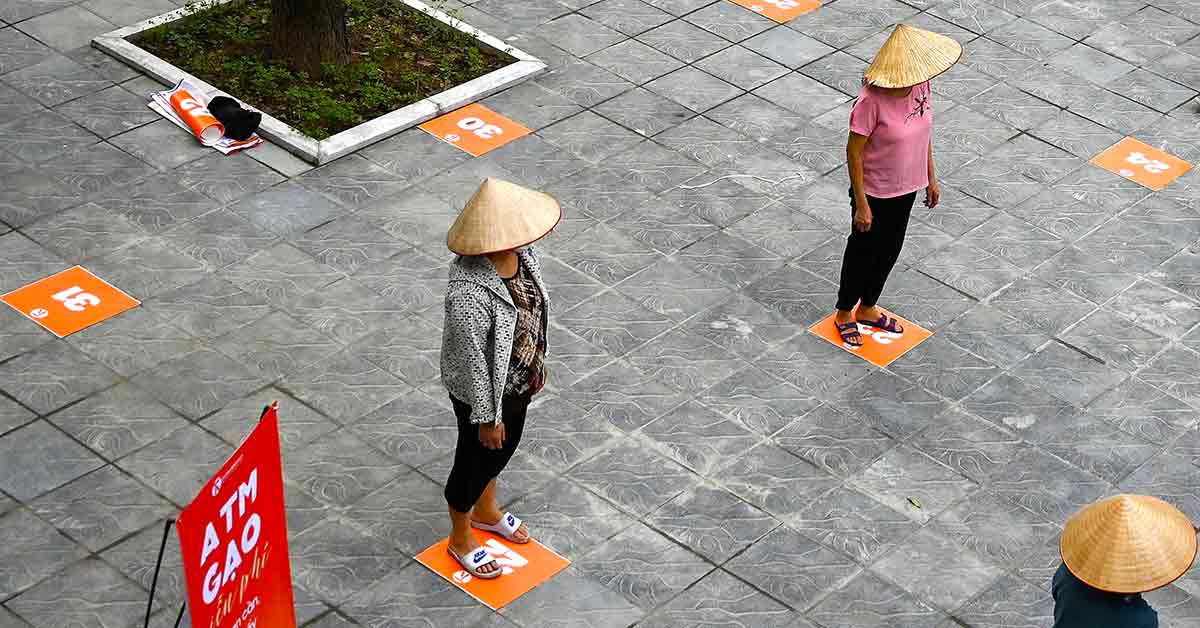
Residents wearing face masks practice social distancing as they wait in a queue for free rice, amid Vietnam’s nationwide social isolation effort as a preventive measure against the spread of the COVID-19 coronavirus, in Hanoi on 11 April, 2020. (AFP Photo)

As COVID-19 expands across the southern hemisphere, governments there have a lot to learn from Vietnam’s approach. Clear communication and government-citizen cooperation that leveraged technology are the main reasons why the country has had relatively few cases.

Much attention has been paid to other models in Asia. Taiwanese health authorities investigated cases of pneumonia reported in Wuhan before community spread occurred. South Korea installed a nonstop emergency response system to screen all travellers entering the country from Wuhan in early January. Similarly, Singapore mobilised an inter-agency taskforce for extensive contact tracing, targeted community quarantine, and aggressive testing, while also covering the costs of screening and treatment. Tiếp tục đọc “Vietnam’s Low-Cost COVID-19 Strategy”
UK-Vietnam project wins prestigious Newton Prize

The project designs a communications system that can work even when extreme weather and natural disasters strike

By Tuoi Tre News

November 22, 2017, 16:00 GMT+7

​UK-Vietnam project wins prestigious Newton Prize
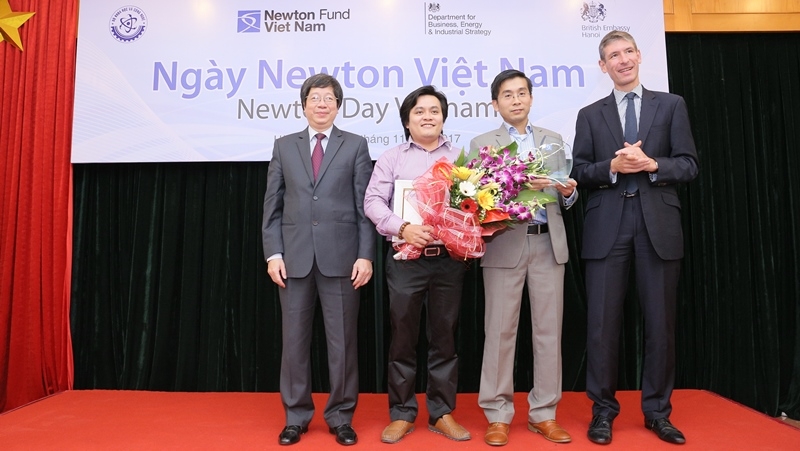
Two researchers at the awards ceremony

Two researchers from Vietnam and the UK have been awarded the prestigious Newton Prize for a project that facilitates communicating in the event of disasters.

Lead researchers Dr. Vo Nguyen Son from Vietnam’s Duy Tan University and his UK-based counterpart Dr. Trung Duong from Queen’s University Belfast won the £200,000 (US$265,000) prize for their jointly designed communications system that can work even when extreme weather and natural disasters strike. Tiếp tục đọc “UK-Vietnam project wins prestigious Newton Prize”

Làm thế nào để sống sót trong đám đông chạy loạn?

VEPhải kiểm soát sự sợ hãi vì nghĩ mình sẽ chết; bình tĩnh để xem xét thông tin về sự cố đang xảy ra; trong những phút đầu tiên tuyệt đối không chạy theo phần lớn đám đông.
> Cảnh giẫm đạp kinh hoàng ở Campuchia

Bác sĩ Quản Hồng Đức, Công ty TNHH Dòng kẻ phân tích nguyên nhân thảm họa chết người từ những đám đông và cách tự bảo vệ mình an toàn nếu không may lâm vào tình trạng tương tự.  

Từ đầu năm đến nay, thế giới đã chứng kiến 4 thảm họa chết người từ sự hỗn loạn và giẫm đạp lên nhau khi tìm cách thoát khỏi đám đông, tại những sự kiện hoặc lễ hội tổ chức trên thế giới.

Ngày 4/3 đánh dấu thảm họa đầu tiên khi ít nhất 71 người chết và hơn 200 người khác bị thương khi đang tham dự lễ hội tại ngôi đền Ram Janki, tỉnh Kunda, Ấn Độ. Đám đông trở nên hỗn loạn và giẫm đạp lên nhau để thoát thân sau khi cửa của ngôi đền bị đổ sập. Tiếp tục đọc “Làm thế nào để sống sót trong đám đông chạy loạn?”

Connected citizens – Managing crisis

This special report looks at developments in the field of
humanitarian response following natural and man-made
disasters such as earthquakes, tsunamis, health
emergencies and wars.

Download report here

As connectivity extends to the remotest parts of the world
an unprecedented and transformational development of ICT
knowledge and skills is taking place. This transformation is
leading to a reappraisal of the ways in which crisis situations
are managed and to the concept of ‘disaster relief’.

Tiếp tục đọc “Connected citizens – Managing crisis”