US Lawmakers to White House: Get Tough With Beijing Over South China Sea

Dismayed at China’s tactics in the South China Sea, U.S. senators from both parties on Wednesday demanded the White House show more resolve with Beijing and ratchet up U.S. naval patrols near disputed islands in the strategic waterway.

With President Barack Obama due to travel to Vietnam next month, four senators introduced legislation that calls for bolstering security assistance to allies in Southeast Asia and expanding U.S. military operations meant to uphold the right of freedom of navigation in the South China Sea. Tiếp tục đọc “US Lawmakers to White House: Get Tough With Beijing Over South China Sea”

‘Thành phố nổi’ trái phép của Trung Quốc trên bãi Gạc Ma

09:45 AM – 19/04/2016 TNO

Mức độ rộng lớn của công trình trái phép mà Trung Quốc xây dựng trên Gạc Ma lớn gấp nhiều lần so với Huy Gơ

Mức độ rộng lớn của công trình trái phép mà Trung Quốc xây dựng trên Gạc Ma lớn gấp nhiều lần so với Huy Gơ
So với công trình 9 tầng trên bãi đá Huy Gơ thì ‘thành phố nổi’ mà Trung Quốc xây dựng trái phép trên bãi Gạc Ma có quy mô rộng lớn hơn nhiều.
Theo ghi nhận của PV Thanh Niên vào những ngày giữa tháng 4.2016, Trung Quốc đã xây xong tòa nhà trung tâm (Sở Chỉ huy) hình khối cao khoảng 8 tầng trên bãi Gạc Ma.

Tiếp tục đọc “‘Thành phố nổi’ trái phép của Trung Quốc trên bãi Gạc Ma”

Cận cảnh tòa nhà 9 tầng Trung Quốc xây dựng trái phép trên bãi đá Huy Gơ

11:06 AM – 18/04/2016 TNO

Tòa nhà chính 9 tầng Trung Quốc xây dựng trái phép trên bãi đá Huy Gơ của Việt Nam

Tòa nhà chính 9 tầng Trung Quốc xây dựng trái phép trên bãi đá Huy Gơ của Việt Nam 

 Trung Quốc gần như xây dựng hoàn chỉnh công trinh trái phép – tòa nhà 9 tầng – ở bãi đá Huy Gơ của Việt Nam.

Huy Gơ là bãi đá ngầm nằm trong cụm đảo Sinh Tồn, thuộc quần đảo Trường Sa (Khánh Hòa, Việt Nam), bị Trung Quốc chiếm giữ trái phép từ cuối tháng 2.1988. Bãi đá Huy Gơ còn được gọi với tên khác là đá Tư Nghĩa, cách Gạc Ma khoảng 15 hải lý theo hướng tây nam. Tiếp tục đọc “Cận cảnh tòa nhà 9 tầng Trung Quốc xây dựng trái phép trên bãi đá Huy Gơ”

As Panama leaks spread, China’s ‘Red Nobility’ would rather not talk about it

Washington Post

April 7 at 10:28 AM

Bắt tàu Trung Quốc xâm phạm chủ quyền trên biển

02/04/2016 20:20

(NLĐO)- Bộ đội Biên phòng Hải Phòng đã bắt tàu Trung Quốc xâm phạm chủ quyền, chở 100.000 lít dầu cung cấp cho các tàu Trung Quốc đánh bắt hải sản trái phép trên vùng biển Việt Nam.

 Bắt tàu Trung Quốc xâm phạm chủ quyền trên biển của Việt Nam

Bắt tàu Trung Quốc xâm phạm chủ quyền trên biển của Việt Nam

Thông tin từ Bộ đội biên phòng TP Hải Phòng ngày 2-4 cho biết đêm 1-4, sau hơn 1 ngày áp tải, Biên đội 1 thuộc Hải đội 2 Bộ đội biên phòng Hải Phòng đã đưa 1 tàu Trung Quốc cùng các thuyền viên vi phạm chủ quyền biên giới biển Việt Nam từ khu vực đảo Bạch Long Ví về nội địa để tiến hành xử lý. Tiếp tục đọc “Bắt tàu Trung Quốc xâm phạm chủ quyền trên biển”

The curious case of Thai-Chinese relations: Best friends forever?

lowyinterpreter – Thailand has a long tradition of balancing its relations with major powers and, since the 2014 coup, it has been shifting towards China. However, with the two countries now involved in a  complicated collaboration on high speed rail, the Thai public has started to question whether China is truly its best ally. Indeed, once one looks beyond perceptions and emotions and examines the detail of the Thailand-China relations, the best friend status is puzzling.

Sweet relationship

Thailand and China drew closer back in the late 1970s when Bangkok needed Beijing’s military and strategic support to cope with an expansionist Vietnam. The friendship strengthened when China withdrew its support of the communist movement in Thailand, removing red threats from within and outside of the country. Cordial relations strengthened further in the last decade. Then, when other friends — like the US, UK, Australia and Japan —  condemned the 2014 coup, China stated that Thailand should resolve its domestic conflicts peacefully. This reaction was welcomed by many Thais who supported the overthrow of the Shinawatra government, even by unconstitutional means.
Tiếp tục đọc “The curious case of Thai-Chinese relations: Best friends forever?”

The United States dominates global investment banking: does it matter for Europe?

Europe’s banks are in retreat from playing a global investment banking role, and this trend is likely to continue in the future. What will be the consequences and what should be the policy response?

By: and Date: March 7, 2016

BRUEGEL

Highlights

For the full references and the annex, please see the PDF version of this publication.

  • In the aftermath of the global financial crisis, the market share of US investment banks is increasing, while that of their European counterparts is declining. We present evidence that US investment banks are on the verge of taking over pole position in European investment banking. Meanwhile, since 2015, Chinese investment banks have overtaken American and European investment banks in the Asia-Pacific market.
  • Credit rating agencies and investment banks are the gatekeepers of the capital markets. The European supervisory institutions can effectively supervise the European operations of these US-managed players. On the political side, we suggest that the European Commission should continue to view its, albeit declining, banking industry as a strategic sector. The Commission, the European Central Bank and the Bank of England should jointly develop a strategic agenda for the EU-US Regulatory Dialogue.
  • Finally, corporates rely on investment banks to issue new securities. We recommend that the big European corporates should cherish the (few) remaining European investment banks, by giving them at least one place in otherwise US- dominated banking syndicates. That could help to avoid complete dependence on US investment banks.

Tiếp tục đọc “The United States dominates global investment banking: does it matter for Europe?”

Global Infrastructure Development

  • A Strategic Approach to U.S. Leadership
    Global Infrastructure Development
    Contributor: Charles F. Rice
    Mar 28, 2016

    China’s recent global infrastructure development initiatives serve to place it at the center of Asian regional and worldwide economic activity, while also meeting a critical need in the developing world. In marked contrast, the United States lacks a strategic approach to supporting global infrastructure investment. While the U.S. government does have the instruments in place to increase support for infrastructure investment, there is little coordination among relevant agencies, including the Overseas Private Investment Corporation, the Trade and Development Agency, and the Export-Import Bank. This report examines how the United States has approached infrastructure development in the past and how it is approaching it today with an eye toward practical recommendations to improve the United States’ ability to support infrastructure investment.


    Publisher CSIS

President Xi Jinping’s “Belt and Road” Initiative

  • A Practical Assessment of the Chinese Communist Party’s Roadmap for China’s Global Resurgence
    President Xi Jinping’s "Belt and Road" Initiative
    Mar 28, 2016

    President Xi Jinping’s “Belt and Road” Initiative highlights the influences shaping the genesis of the “One Belt, One Road” initiative, examines the balance China is seeking to strike between geostrategic ambitions and practical economic aims, and explores the mechanisms the Xi administration is establishing to manage its implementation. The report concludes by assessing potential pitfalls and making the call for an innovative U.S. approach to global infrastructure development.


    Publisher CSIS

Giàn khoan Trung Quốc cắm trong khu vực chồng lấn

10:14 AM – 28/03/2016 TN

Một giàn khoan dầu khí của Trung Quốc - Ảnh: Reuters

Một giàn khoan dầu khí của Trung Quốc – Ảnh: Reuters

Cục Hải sự Trung Quốc vừa ra thông báo cho biết giàn khoan Hải Dương-943 của nước này sẽ hoạt động tại giếng LD 11-1-1, ở vị trí có tọa độ 17°47’28,8’’ vĩ bắc/108°46’00’’ kinh đông, từ 25.3 – 31.7.

Cách TP.Tam Á ở đảo Hải Nam 50 hải lý về phía tây nam, vị trí này nằm trong khu vực chồng lấn chưa được phân định giữa VN và Trung Quốc ở ngoài cửa vịnh Bắc bộ. Thông báo trên website của MSA yêu cầu tàu bè giữ khoảng cách an toàn 1 hải lý khi qua lại xung quanh vị trí nói trên. Tiếp tục đọc “Giàn khoan Trung Quốc cắm trong khu vực chồng lấn”

Tàu cá TQ ồ ạt xuống biển Đông: Indonesia, Malaysia bất bình

27/03/2016 15:22 GMT+7

TTOViệc Malaysia phát hiện gần 100 tàu cá Trung Quốc xâm phạm vùng biển của nước này và phía Indonesia bắt tàu cá Trung Quốc xâm phạm lãnh hải cho thấy nguy cơ mới trong khu vực từ kiểu hành xử nước lớn của Bắc Kinh.

Tàu cá TQ ồ ạt xuống biển Đông: Indonesia, Malaysia bất bình
Chiếc tàu cá Lu Yan Yuan Yu 010 của Trung Quốc bị tuần duyên Argentina đánh chìm hồi giữa tháng 3-2016 vì đánh bắt cá trái phép trong vùng biển của Argentina – Ảnh: AFP

Bộ trưởng An ninh Malaysia Shahidan Kassim ngày 25-3 cho biết chính quyền nước này đã điều lực lượng Cơ quan thực thi hàng hải và hải quân đến khu vực để giám sát tình hình sau khi lực lượng tuần tra bờ biển nước này xác nhận phát hiện gần 100 tàu cá Trung Quốc tại bãi Luconia của Malaysia. Tiếp tục đọc “Tàu cá TQ ồ ạt xuống biển Đông: Indonesia, Malaysia bất bình”

Facing Mekong Drought, China to Release Water From Yunnan Dam

In response to a request from Vietnam, China is discharging water from a dam in Yunnan.

Japan: How Energy Security Shapes Foreign Policy

thediplomat_Five years after the nuclear meltdown at Fukushima, public debates over nuclear power are still having an impact on Japan’s energy mix — and that, in turn, helps shape Japanese foreign policy. The Diplomat speaks with Jane Nakano, a senior fellow in the Energy and National Security Program at the Center for Strategic and International Studies, about the connection between Japan’s energy security concerns and its foreign policy decision making.

The Diplomat: What effect do you think the indictment and impeding trial of the three former TEPCO executives will have on the public debate in Japan over the future of nuclear energy? What other energy options does Japan have?

Nakano: The current public apprehension over, or opposition to, nuclear power generation in Japan seems to stem from their loss of trust in nuclear safety and governance. It is unclear as to what extent the indictment of TEPCO officials five years later may serve to restore the public confidence in nuclear safety and governance.

Diversification will remain to be the key in enhancing Japan’s sense of energy security.  As fossil fuels will remain important in Japan, as in most of the industrialized economies around the world, Japan is focused on using natural gas—which is the cleanest type of fossil fuels—and advancing clean coal technologies while promoting the greater use of wind and solar.

How dependent is Japan on oil imports from the Middle East, and how does this shape Japan’s foreign policy approach to the region? Tiếp tục đọc “Japan: How Energy Security Shapes Foreign Policy”

Exclusive: U.S. sees new Chinese activity around South China Sea shoal

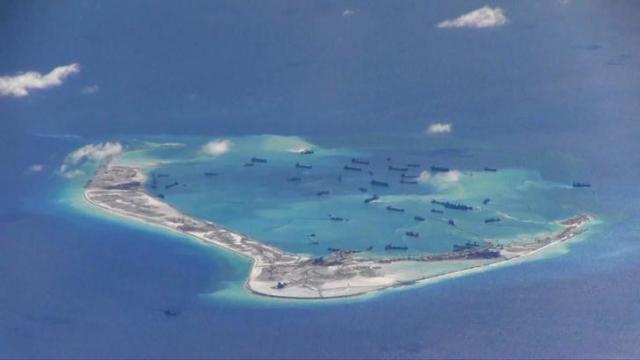
Chinese dredging vessels are purportedly seen in the waters around Mischief Reef in the disputed Spratly Islands in the South China Sea in this still image from video taken by a P-8A Poseidon surveillance aircraft provided by the United States Navy May 21, 2015. REUTERS/U.S. Navy/Handout via Reuters

Người Việt ở Đức tuần hành phản đối quân sự hóa Biển Đông

VE – Bất chấp thời tiết giá lạnh, đông đảo người Việt ở Frankfurt, Đức, mang theo quốc kỳ và biểu ngữ phản đối những động thái gây hấn gần đây của Trung Quốc trên Biển Đông.

Hôm qua, trước Tổng lãnh sự quán Trung Quốc tại thành phố Frankfurt đã diễn ra cuộc biểu tình của bà con người Việt và bạn bè quốc tế nhằm yêu cầu Trung Quốc chấm dứt ngay các hoạt động xây dựng và chiếm đóng trái phép tại Biển Đông.

Tiếp tục đọc “Người Việt ở Đức tuần hành phản đối quân sự hóa Biển Đông”