Why the US and China battle for influence in South America

South China Morning Post – 9-3-2025

US President Donald Trump has made South America a priority for his administration, citing concerns about China’s growing influence in the region. Through Beijing’s Belt and Road Initiative, China has invested heavily in major projects in the region, particularly related to lithium reserves, transport and energy infrastructure. As a result, China has replaced the US as South America’s main trading partner over the past two decades. Early into his second term, Trump attempted to strong-arm control back in the US’ favour by threatening to seize the Panama Canal away from China’s growing influence. However, experts suggest his methods will not be enough to turn the momentum, as China’s flexible business approach and significant investments have reshaped the continent’s landscape.

Vietnam targets Chinese dolls over South China Sea ‘map’

South China Morning Post – 20-3-2025

Vietnam is stepping up inspections of a line of children’s toys over concerns that imagery on the face of one product resembles a map China uses to stake its claim to disputed areas in the South China Sea. The investigation was launched after local media reported that a version of widely sold Baby Three toys, many of which are made in China, featured a design that was viewed as similar to Beijing’s maritime map.

Impact of Trump 2.0 on Southeast Asia’s Energy Geopolitics

Fulcrum.sg Published 3 Mar 2025 Mirza Sadaqat Huda

Trump’s rent-seeking foreign policy pertaining to energy and critical minerals will force Southeast Asian countries to do what they least desire: making a choice between China and the US.

The Trump administration’s insular and rent-seeking foreign policy will significantly alter the geopolitics of energy transition in Southeast Asia. This will manifest in two ways. First, the potential cessation of US involvement in the region’s energy sector will heighten fears of China’s dominance in energy infrastructure projects — including the ASEAN Power Grid (APG). Second, Trump’s intentions of using critical minerals as a bargaining chip for providing military assistance, if applied to the ASEAN region, will impact the regional vision for sustainable mineral development.

The shutting down of the United States Agency for International Development (USAID), an important player in the energy sector, will intensify existing fears of China’s dominance in electricity transmission and generation. As shown in Table 1, China provided approximately US$534 million in aid to the region’s energy sector in 2022, accounting for more than a quarter of the total share. Comparatively, the US provided only US$23.7 million, or 1 per cent of total energy-related aid to Southeast Asia. In addition, the China Southern Power Grid Company and State Grid Corporation of China own and operate significant portions of the national grids in Laos and the Philippines, respectively.

China Leads in Energy Aid

Table 1 Energy-related aid to Southeast Asia 2022 (excerpt) (USD, in %)

Donor Amount Contribution
China 534 million 26
ADB 368 million 18
Germany 274 million 13
Canada 231 million 11
South Korea 211 million 10
Japan 167 million 8
World Bank 90.0 million 4
EU Institutions 42.3 million 2
France 42.2 million 2
AIIB 34.8 million 2
United States 23.7 million 1

The table is modified from Lowy Institute’s (2024) Southeast Asia Aid Map.

Tiếp tục đọc “Impact of Trump 2.0 on Southeast Asia’s Energy Geopolitics”

Fruits of spoil: Laos’ forests disappearing as fruit farms flourish (2 parts)

Fruits of spoil: Laos’ forests disappearing as fruit farms flourish

Mekong eyes – 16 December 2024 at 9:27 (Updated on 16 December 2024 at 15:40)

The country’s improved railway connectivity facilitates fruit exports to China but has also sparked a boom in foreign-owned banana and durian farms, leading to forest clearance

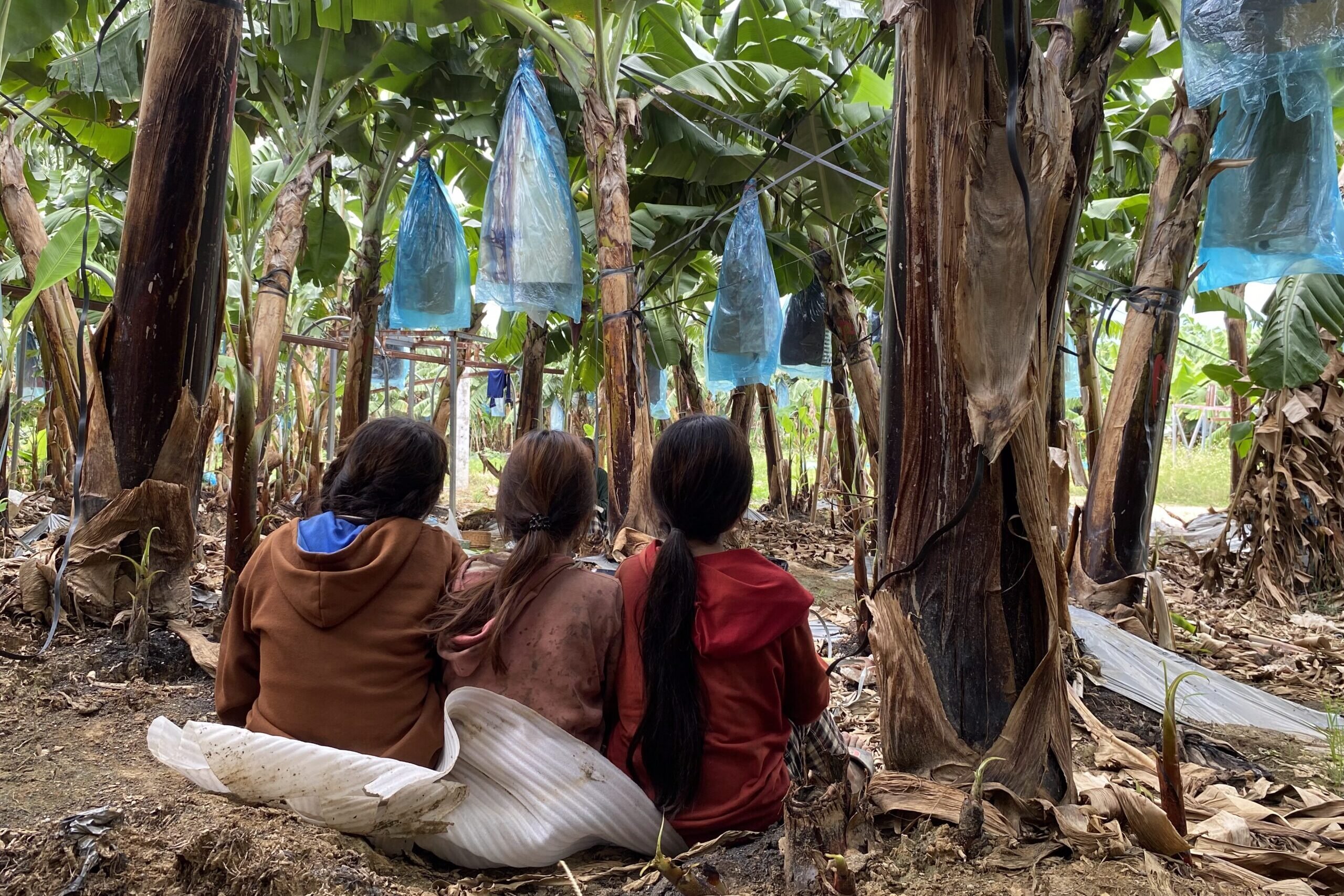
A Chinese-owned banana plantation on land that was once forested, located in Attapeu province, southern Laos, in August 2024.

The report was produced with support from the Pulitzer Center’s Rainforest Investigations Network (RIN) and Internews’ Earth Journalism Network as part of the “Ground Truths” collaborative reporting project on soils. 

ATTAPEU, LAOS — The new high-speed railway has enabled faster fruit exports from Laos to China, attracting more investment in large-scale plantations. However, this growth has come at the cost of deforestation.

Bananas and the “king of tropical fruit” – durians – are very popular in China, but they typically ripen within a few days of harvesting.

However, that problem was resolved with the launch of the Laos-China Railway in 2021, which has enabled landlocked Laos to deliver its fruit quickly to China’s 1.4 billion consumers.

Tiếp tục đọc “Fruits of spoil: Laos’ forests disappearing as fruit farms flourish (2 parts)”

Tóm tắt tình hình Biển Đông năm 2024

Nghiên cứu Quốc tế – 03/02/2025 – 17:24

Những diễn biến lớn ở Biển Đông trong năm 2024 không báo hiệu điều tốt lành cho năm 2025.

Nguồn: Carl Thayer, “The State of the South China Sea: Coercion at Sea, Slow Progress on a Code of Conduct,” The Diplomat, 27/01/2025

Biên dịch: Nguyễn Thị Kim Phụng

Có bốn diễn biến chính định hình môi trường an ninh ở Biển Đông năm 2024: (1) Trung Quốc gia tăng hành vi cưỡng ép đối với tàu thuyền và máy bay của hải quân Philippines; (2) Philippines thông qua chiến lược phòng thủ biển mới; (3) Việt Nam tăng cường hoạt động xây dựng tại quần đảo Trường Sa; và (4) đàm phán về Bộ Quy tắc Ứng xử (COC) tiến triển chậm chạp.
Tiếp tục đọc “Tóm tắt tình hình Biển Đông năm 2024”

What’s happening in Myanmar?


Al Jazeera English
– 1- 2- 2025

Myanmar’s military regime is under pressure, four years after it seized back power in a coup. The military has lost significant territory and a patchwork of anti-military groups now control different parts of the country. What’s happening? Who are the groups fighting against the military? And could the regime actually fall? #AJStartHere with Sandra Gathmann explains

Tiếp tục đọc “What’s happening in Myanmar?”

How China built the world’s longest high-speed railway

South China Morning Post – 12-10-2024

China has the world’s longest high-speed railway. It only took about 20 years for the country to develop the 45,000km (28,000-mile) network. Known as an “infrastructure monster”, it is an example of the sort of development that has benefited China’s political system. The country also exports railway technology as a key part of the Belt and Road Initiative, the central government’s plan to link economies into a China-centred trading network. However, the rapid development of the high-speed transport system has also raised some important concerns.

How the Taliban is attracting Chinese tourists

South China Morning Post – 9-11-2024

More travellers are visiting an unusual destination – Afghanistan. Since 2021, the war-torn nation has seen tourism rise more than 900 per cent. Some attribute the change to official data reporting a sharp drop in violence and increased flight connections from major cities like Dubai. Most foreign visitors are from China, reportedly because of proximity and relative ease of obtaining tourist visas. The tourism buzz has undoubtedly brought economic benefits, but others worry the nation’s efforts to draw visitors amount to propaganda hiding the dark side of Taliban rule.

Hong Kong in the Greater Bay Area: Can Pearl of the Orient regain its shine?

CNA Insider – 2-7-2024

Slowing growth, weak investor confidence and brain drain – Hong Kong, the Pearl of the Orient, may be losing its lustre. Could its future lie in the Greater Bay Area, an economic integration project joining the Special Administrative Region to Guangdong and Macau?

Over the next decade, greater transport, administrative and economic links will tie Hong Kong inextricably to Southern China. But will Hong Kong find opportunity or obsolescence in the Greater Bay Area? And with around two decades till the end of “One Country Two Systems” in 2047, is the Greater Bay Area a way to assimilate Hong Kong with the Mainland?

Tiếp tục đọc “Hong Kong in the Greater Bay Area: Can Pearl of the Orient regain its shine?”

China 5: Tensions at APEC 2024, PLA Navy in Hong Kong, videos inspire farmers

Center for Chna Analysis
View this email in your browser.
The latest on what’s happening in China from Asia Society Policy Institute’s Center for China Analysis.

THIS WEEK:
U.S.-China tensions at APEC 2024, PLA Navy flexes muscles in Hong Kong, videos boost agrotechnology, overtures to overseas Chinese, and Beijing updates dual-use export control list


People walk by the entrance of the Lima Convention Center, part of the government complex where the Asia-Pacific Economic Cooperation Summit took place, in Lima, Peru. (Photo by Cris Bouroncle / AFP via Getty Images)

Tiếp tục đọc “China 5: Tensions at APEC 2024, PLA Navy in Hong Kong, videos inspire farmers”

China’s Increased Investment in Vietnam: Opportunities and Challenges

Published 13 Nov 2024

Le Hong Hiep

Chinese investments in Vietnam have surged. But they bring not only opportunities but also challenges for the latter.

Since the US–China trade war started in 2017, Vietnam has become an increasingly popular choice for multinational corporations (MNCs) seeking to diversify their supply chains away from China to mitigate geopolitical risks. According to the General Statistics Office (GSO) of Vietnam, foreign investors pledged to invest a total of US$248.3 billion in 19,701 projects in the country (see Figure 1) for the 2017-2023 period. This amount accounts for a staggering 52.8 per cent of Vietnam’s cumulative registered foreign direct investment (FDI) since the country adopted economic reforms in the late 1980s. This trend has continued in 2024, with the country recording a remarkable US$27.26 billion in new registered FDI by the end of October.

Tiếp tục đọc “China’s Increased Investment in Vietnam: Opportunities and Challenges”

China pursues new frontiers as it marks 75 years since founding of PRC

CNA Insider – 26-9-2024

75 years since the founding of the People’s Republic of China, the once impoverished and underdeveloped nation has transformed itself to become the world’s second-largest economy. From revolutionary beginnings to breaking new frontiers, China has charted a path of modernisation as it seeks to create opportunities to build common prosperity. CNA Correspondent looks at how China navigates economic headwinds and a turbulent geopolitical landscape as it pursues high quality development.

0:00 Introduction

0:37 The rise of Changsha in Central China Plan

5:33 EV maker BYD in Changsha

8:12 Shenzhen connectivity key to GBA plan

12:23 China’s manufacturing hub of Dongguan

13:50 Emerging industries in Qianhai

15:48 China driving AI development

18:43 AI race between the US and China

21:07 China produces most entry-level AI talents

Is China silencing artists in Australia? – 2 parts

Is China silencing artists in Australia? | 101 East Documentary

Al Jazeera – 26-8-2024

In the past two decades, Chinese contemporary art has taken the world by storm. But under Xi Jinping, many claim it has become a weapon for propaganda and that those who push political boundaries, face intimidation and censorship – even far away in Australia. Now artists are calling out China’s influence in the arts. In the first of a two-part investigation, 101 East asks: Is China silencing artists in Australia? Tiếp tục đọc “Is China silencing artists in Australia? – 2 parts”

China 5 this week

Asia Society Policy Institute’s Center for China Analysis.THIS WEEK: China 5
Electric vehicle sales pass milestone, Huawei challenges Apple’s iPhone 16, new college textbook features Xi Jinping Thought on national security, Congress launches “China week” with key bills, and the wrath of Super Typhoon Yagi

An electric car charging station in China. Photo by MASTER via Getty Images.1. Electric Vehicle Sales Pass Milestone

What Happened: More than one million electric vehicles were sold in China during August, as battery-powered and plug-in hybrid models accounted for nearly 54% of all vehicle sales and demand for internal combustion engine cars continued to fall.
Tiếp tục đọc “China 5 this week”

China confirms natural gas find in South China Sea

South China Morning Post – 9-8-2024

China announced the discovery of a major natural gas field in the South China Sea on August 7, 2024. Named Lingshui 36-1, the site is said to be the world’s first “ultra-shallow gas field in ultra-deep waters”. Located southeast of China’s southern island of Hainan, the field lies around 1,500 metres below the sea surface. Its discovery is expected to boost energy security for China, the world’s-largest natural gas importer. But developing oil and gas resources in the South China Sea could raise tensions among rival claimants to parts of the disputed waters.