Summary: Researchers using China’s “artificial sun” fusion reactor have broken through a long-standing density barrier in fusion plasma. The experiment confirmed that plasma can remain stable even at extreme densities if its interaction with the reactor walls is carefully controlled. This finding removes a major obstacle that has slowed progress toward fusion ignition. The advance could help future fusion reactors produce more power
China’s “artificial sun” fusion reactor has crossed a critical plasma density threshold that scientists once thought was unreachable. The result brings fusion ignition closer than ever. Credit: Shutterstock
Scientists working with China’s fully superconducting Experimental Advanced Superconducting Tokamak (EAST) have successfully reached a long-theorized “density-free regime” in fusion plasma experiments. In this state, the plasma remains stable even when its density rises far beyond traditional limits. The results, published in Science Advances on January 1, shed new light on how one of fusion energy’s most stubborn physical barriers might finally be overcome on the road to ignition.
Visions of planting walls of trees to block the expansion of the desert have long been promoted but never realized. The green wall myth persists today even though it is premised on outdated understandings of desertification. We review the history of the idea of green walls and focus on two sets of contemporary initiatives to assess their outcomes: peri-Saharan programs (Algeria’s Green Dam and Great Green Wall in sub-Saharan Africa) and China’s Three Norths Shelterbelt Program. This review reveals a mixed record of technical success with low rates of the establishment of monocultures of fast-growing trees vulnerable to disease. While there is evidence for reduced wind erosion in some areas, afforestation is also associated with reduced soil moisture and lowering of water tables. Social impacts include increased water scarcity for people and livestock in some cases, and resource enclosures that particularly work against pastoralist livelihoods.
Green walls refer to continuous bands of planted trees stretching across single or multiple countries in dryland regions. As socioecological projects, green walls invoke powerfully attractive images of maintaining life over the assumed sterility of the desert through human ingenuity and effort. A wall of planted trees is envisioned to hold back an expansionary desert from degrading the productivity of the lands behind the wall. Despite the persistent discursive power of this image, its scientific foundation rests on now discredited understandings of desertification.1Desertification, scientifically understood as land degradation due to human mismanagement, is less a regional phenomenon across a broad front than a highly localized phenomenon in areas of greater and more persistent human pressures. The power of the green wall vision is illustrated by its persistent use in promotions of a diverse array of dryland afforestation initiatives with different afforestation patterns (e.g., shelterbelts, scattered woodlots and larger afforested blocks, and agroforestry) and goals (ecological rehabilitation, carbon sequestration, and improved climate resilience). In short, green wall rhetoric mobilizes support and empowers certain actors rather than describing actual dryland afforestation practices.2This article focuses on the vision, practices, and effects of these programs.
This review was written during a period of global enthusiasm for trees and mobilization for mass afforestation, with the World Economic Forum’s Trillion Trees initiative the most prominent example (https://www.1t.org/) but also a wide range of other afforestation efforts across the globe (3). While the arborocentrism of this moment has a long history (see below), concerns about climate change and an interest in increasing the sequestration of industrial carbon has led to a rapid rise of tree planting initiatives. The world’s drylands could be seen as “empty” and thus important “untapped” landscapes to store carbon. Through a consideration of the empirical record of green wall programs, this article outlines reasons to be cautious. Trees are often not suited for the arid zones where they are planted and, even if they are established, may have negative ecological and social impacts (4). By ignoring the need for ecological and social monitoring of afforestation impacts, green wall enthusiasm has often worked to hide the mixed record of these initiatives.
CNA More than half of Chinese adults are overweight or obese, a potential ticking timebomb for the country’s healthcare sector. So, last March, China announced greater efforts to tackle rising obesity rates, with health authorities rolling out a nationwide weight management campaign during the annual ‘Two Sessions’ meeting.
How did China go from food scarcity two generations ago to rapid weight gain now? What does diet, lifestyle and education have to do with it? As beating obesity becomes a national priority, can China beat the bulge?
If you’ve been following travel trends this year, you might have noticed something interesting: social media feeds are filling up with foreigners riding Chinese high-speed trains, walking through ancient towns, and paying for everything with their phones—in China.
China’s Tourism Explodes in 2025: 100% More Visitors, and Here’s Why
If you’ve been following travel trends this year, you might have noticed something interesting: social media feeds are filling up with foreigners riding Chinese high-speed trains, walking through ancient towns, and paying for everything with their phones—in China.
According to data from the Chinese online travel platform Ctrip, inbound tourism to China surged by over 100% in 2025 compared to last year. And it’s not just about more arrivals—spending is up sharply, with U.S. tourist expenditure growing 50% and French visitors’ spending jumping an astonishing 160%.
I suggest you visit China. It reversed my preconception. I am from Norway, North Europe. A rather modern and advanced society.
On my first visit to the US over 20 years ago, I was surprised at how backward and old fashioned it was. Movies had let me to believe it was the epitome of modern society. I visited several states on the East/South-East. Very backwards digitally. Terrible infrastructure. Unwalkable. Dirty. Hard to find quality restaurants outside of big cities. Dead city centres in medium sized cities.
CNA Few countries are better prepared against China threatening their rare earth supplies than Japan, says David Fickling for Bloomberg Opinion.
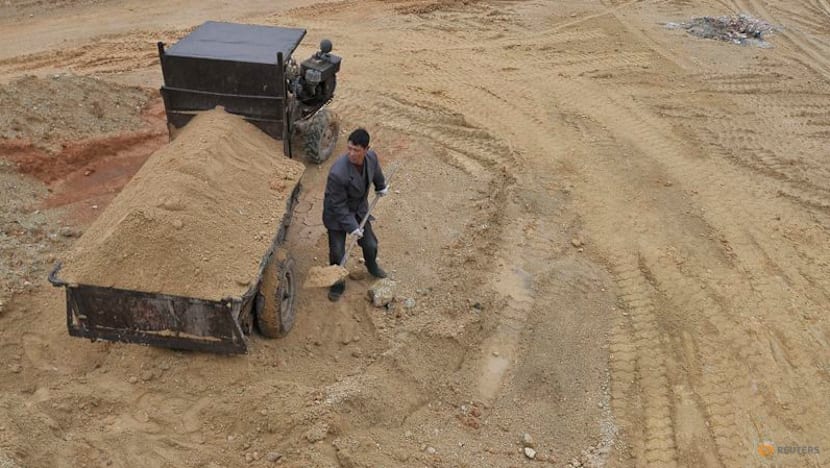
A labourer works at a site of a rare earth metals mine at Nancheng county, Jiangxi province, China, on Mar 14, 2012. (File photo: Reuters)
David Fickling 09 Jan 2026 05:59AM(Updated: 09 Jan 2026 09:30AM)
SYDNEY: To a hammer, every problem is a nail. If your most potent means of geopolitical leverage is threatening supplies of high-strength magnets, rare earth elements will always be the solution.
The most obvious victim of this threat will be rare earth magnets made with the elements neodymium and praseodymium, and increasingly spiced up with rarer samarium, dysprosium and terbium. They’re used everywhere from charging cables to the switchgear in wind turbines to motors powering electric vehicles, missile guidance systems and aircraft flaps.
Satellite analysis has identified 517 suspected riverbank mines in Laos, many likely illegal, with clusters along key Mekong tributaries, raising fears of widespread, unmonitored contamination.
Officials in Attapeu province confirmed illegal mining remains pervasive despite crackdowns, with most operations missing from official records and many linked to Vietnamese or Chinese supply chains.
The mining surge, including gold and rare earth extraction, poses major risks to ecosystems and communities in the Mekong Basin, where water testing capacity is weak and signs of declining fish populations and polluted rivers are emerging.
Researchers say Mekong countries must coordinate regionally and engage China, the main importer of the region’s mining output, while strengthening enforcement and environmental oversight to address a rapidly expanding, largely unregulated mining sector.
Bất chấp sức ép từ thuế nhập khẩu của Mỹ, Trung Quốc vẫn thặng dư 1.000 tỷ USD chỉ trong 11 tháng – kỷ lục chưa quốc gia nào đạt được.
Một năm trước, ông Donald Trump tái đắc cử Tổng thống Mỹ. Lo ngại cuộc chiến thương mại mới diễn ra, các hãng sản xuất Trung Quốc gấp rút đẩy mạnh xuất khẩu. Trong chiến dịch tranh cử, ông Trump tuyên bố sẽ áp thêm thuế nhập khẩu lên hàng hóa Trung Quốc, nhằm thu hẹp thâm hụt thương mại ngày càng lớn của Mỹ.
Một năm sau, Tổng thống Mỹ thực hiện đúng cam kết. Nhưng Trung Quốc cũng đã chuyển hướng chiến lược, và thậm chí còn xuất khẩu nhiều hơn.
On Oct. 13 of this year, the PRC state media outlet CPNN, reported that China is pulling ahead in advanced nuclear power technology development with the launch of the large-scale production “Hualong One” (also known as HPR1000). As it develops, China not only aims to tackle the transmission bottleneck in the south, but also to export to countries like Pakistan as the PRC’s “business card” to the world.
China’s dual goals of localization and export orientation have long defined its nuclear strategy. Led by state-owned giants such as the China National Nuclear Corporation (CNNC), Beijing has invested heavily in domestic innovation while aggressively expanding into overseas markets. Beijing has sought to expand its reactor sales to markets such as Argentina and the United Kingdom, while also securing control over upstream uranium resources. CNNC’s 2019 acquisition of Namibia’s Rössing Uranium Mine, one of the world’s largest open-pit uranium operations, underscored China’s growing dominance across the nuclear value.
Beijing’s policy support for state-owned enterprises has enabled it to build a vertically integrated nuclear industry, driving rapid advances in small modular reactors (SMRs), fourth-generation technologies, and nuclear fusion research (the Artificial Sun). Furthermore, intensifying US–China competition is reshaping global nuclear exports and deepening the geopolitical risks of dependence on Chinese nuclear systems.
It’s been called the world’s stinkiest fruit. But it’s deeply beloved by many.
Durian is a pungent, prickly fruit from Southeast Asia that has fascinated foreigners for centuries, and China is no exception.
China buys most of the world’s durian exports, a surge spurred over the past decade by social media and growing trade ties with durian-producing countries.
Both locals and Chinese are seeking to expand the booming durian industry across Southeast Asia.
But the prospect of high profits has also ignited tensions, resulting in land disputes and environmental concerns.
Having placed artificial intelligence at the centre of its own economic strategy, China is driving efforts to create an international system to govern the technology’s use.
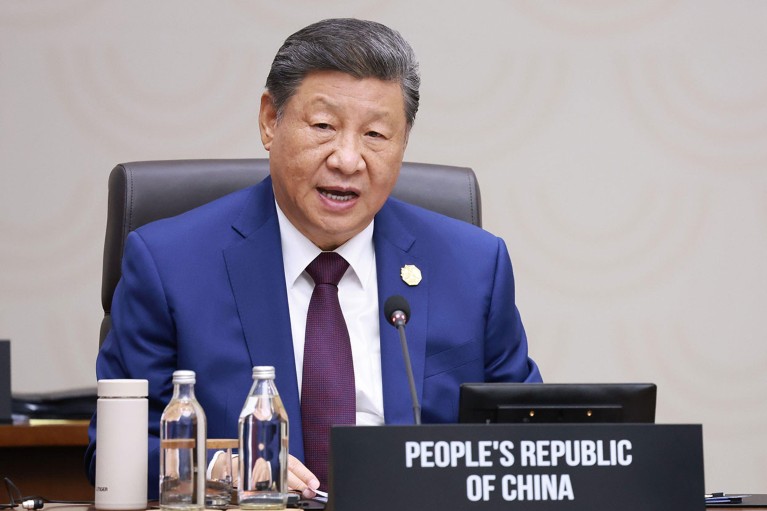
Chinese president Xi Jinping speaking at the 2025 Asia-Pacific Economic Cooperation meeting in Gyeongju, South Korea.Credit: Yonhap via AP/Alamy
Trung Quốc là 1 trong 4 nền văn minh cổ nhất thế giới, bắt nguồn từ lưu vực của hai con sông: Hoàng Hà và Trường Giang. Trải qua hơn 5.000 năm, văn minh Trung Hoa đã phát triển trở thành một trong số nền văn minh rực rỡ nhất thế giới trong thời cổ đại và trung đại, đặc trưng bởi hệ thống triết học thâm sâu (trong đó có Nho giáo, Đạo giáo và thuyết Âm dương ngũ hành), các thành tựu khoa học kỹ thuật (phát minh ra giấy, la bàn, thuốc súng, địa chấn kế, kỹ thuật in ấn…), hoạt động giao thương xuyên châu Á (Con đường tơ lụa) và những đô thị có quy mô dân số và trình độ kiến trúc hàng đầu thế giới vào thời trung cổ.
Video tóm tắt toàn bộ chiều dài lịch sử trung quốc, chi tiết & đầy đủ trong 10 tiếng, qua các thời kỳ: thời cổ đại, triều Hạ, triều Thương, triều Chu, thời kỳ xuân thu – chiến quốc, triều Tần, thời kỳ hán – sở tranh hùng, triều Hán, thời kỳ Tam Quốc, triều Tấn, thời kỳ Nam Bắc triều, triều Tùy, triều Đường, thời kỳ ngũ đại thập quốc, triều Tống, triều Nguyên, triều Minh, triều Thanh, Trung Hoa Dân Quốc, và CHND Trung Hoa.





 CVD
CVD 