Nuclear Power in China

world-nuclear.org

(Updated January 2023)

  • The impetus for nuclear power in China is increasingly due to air pollution from coal-fired plants.
  • China’s policy is to have a closed nuclear fuel cycle.
  • China has become largely self-sufficient in reactor design and construction, as well as other aspects of the fuel cycle, but is making full use of western technology while adapting and improving it.
  • Relative to the rest of the world, a major strength is the nuclear supply chain.
  • China’s policy is to ‘go global’ with exporting nuclear technology including heavy components in the supply chain.

Operable Reactors : 53,150 MWe

Reactors Under Construction: 21,867 MWe

Reactors Shutdown: 0 MWe

Electricity sector

Total generation (in 2019): 7541 TWh

Generation mix: 4899 TWh (65%) coal; 1304 TWh (17%) hydro; 406 TWh (5%) wind; 348 TWh (5%) nuclear; 226 TWh (3%) natural gas; 225 TWh (3%) solar; 121 (2%) biofuels & waste.

Import/export balance: 4.4 TWh net export (17.2 TWh imports; 21.7 TWh exports)

Total consumption: 6568 TWh

Per capita consumption: c. 4700 kWh in 2019

Source: International Energy Agency and The World Bank. Data for year 2019

Most of mainland China’s electricity is produced from fossil fuels, predominantly coal – 69% in 2019. Wind and solar capacity in 2019 was 21% of total installed generating capacity, but delivering under 9% of the electricity.

Rapid growth in demand has given rise to power shortages, and the reliance on fossil fuels has led to much air pollution. The economic loss due to pollution is put by the World Bank at almost 6% of GDP,1 and the new leadership from March 2013 prioritized this.* Chronic and widespread smog in the east of the country is attributed to coal burning.

* Official measurements of fine particles in the air measuring less than 2.5 micrometres, which pose the greatest health risk, rose to a record 993 micrograms per cubic metre in Beijing on 12 January 2013, compared with World Health Organization guidelines of no higher than 25.

The International Energy Agency (IEA) notes that since 2012, China has been the country with the largest installed power capacity, and it has increased this by 85% since then to reach 2011 GWe in 2019, about a quarter of global capacity.

In August 2013 the State Council said that China should reduce its carbon emissions by 40-45% by 2020 from 2005 levels, and would aim to boost renewable energy to 15% of its total primary energy consumption by 2020. In 2012 China was the world’s largest source of carbon emissions – 2626 MtC (9.64 Gt CO2), and its increment that year comprised about 70% of the world total increase. In March 2014 the Premier said that the government was declaring “war on pollution” and would accelerate closing coal-fired power stations.
Tiếp tục đọc “Nuclear Power in China”

China’s Failed Covid Vaccine Nationalism

Beijing rejected foreign mRNA shots, putting its citizens at greater risk.

WSJ.com

The disaster of China’s zero-Covid policy has many contributors, starting with the Communist Party’s need for political control. One of the byproducts of that control that deserves more attention is Beijing’s vaccine nationalism, and President Xi Jinping’s decision not to offer China’s 1.4 billion citizens access to Western-made mRNA Covid vaccines.

Months into the pandemic, as vaccine manufacturers around the world began their race to develop the shots, countries including Canada and the U.S. signed contracts with multiple vaccine suppliers. The fastest and best would be deployed. But China let Communist nationalism drive its procurement decisions and rejected foreign vaccines.

That decision is still haunting the Chinese public. China’s homegrown vaccines—including Sinovac and Sinopharm—are much less effective against Covid than are the mRNA shots created by Pfizer-BioNTech and Moderna. Sinovac was much less effective initially against symptomatic Covid—only about 50%—compared with more than 90% for the mRNA vaccines.

Tiếp tục đọc “China’s Failed Covid Vaccine Nationalism”

Philippines orders strengthened military presence after ‘Chinese activities’ near islands

Reuters – December 22, 20226:12 PM GMT+7

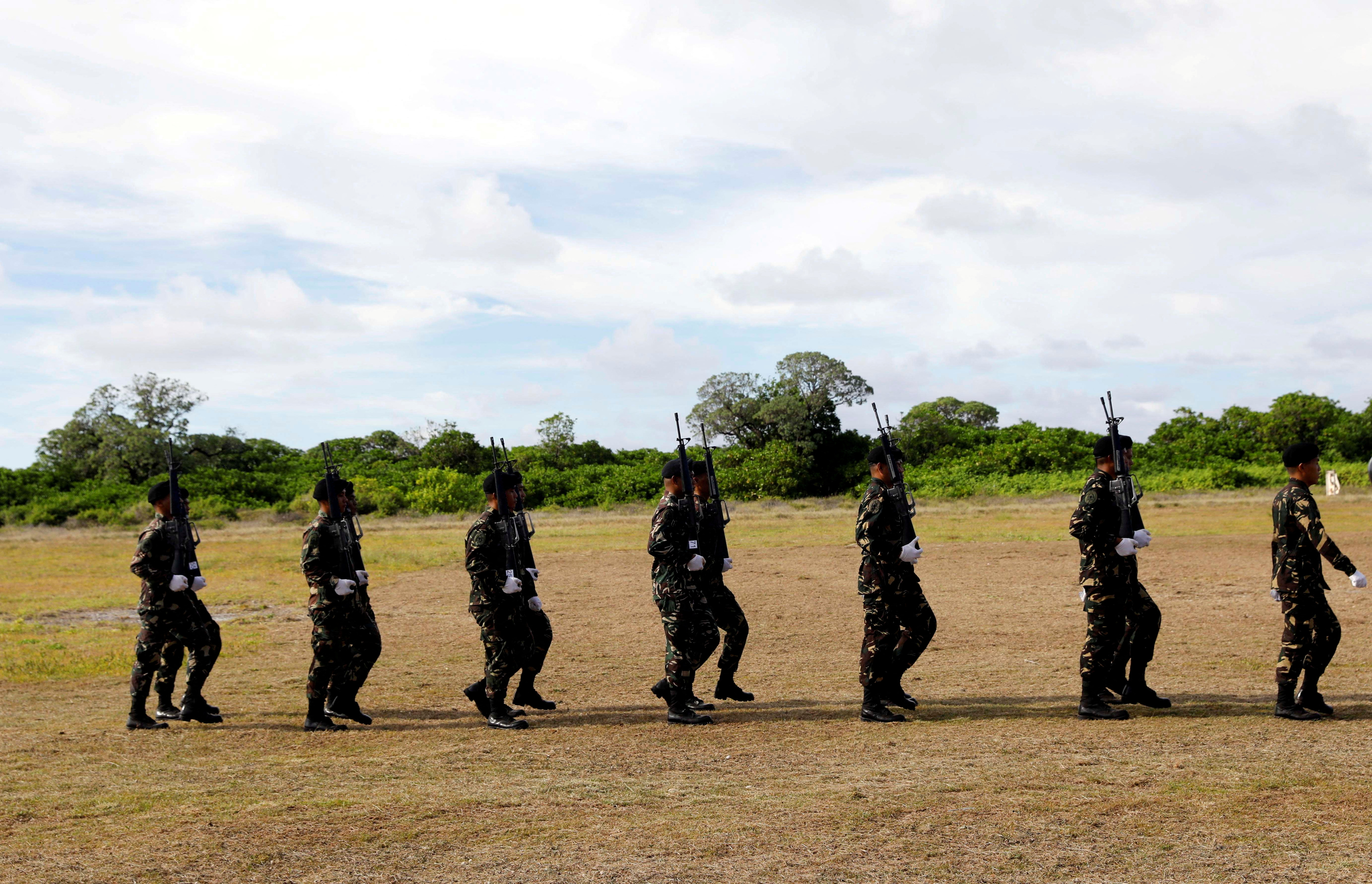
Filipino soldiers march in Thitu island
Filipino soldiers march in Philippine occupied Thitu island in disputed South China Sea, April 21, 2017. REUTERS/Erik De Castro

MANILA, Dec 22 (Reuters) – The Philippines’ defence ministry on Thursday ordered the military to strengthen its presence in the South China Sea after monitoring “Chinese activities” in disputed waters close to a strategic Philippine-held island.

The ministry did not specify what activities those were and its statement follows a report this week of Chinese construction on four uninhabited features in the disputed Spratly islands, news that Beijing has dismissed as “unfounded”.

Tiếp tục đọc “Philippines orders strengthened military presence after ‘Chinese activities’ near islands”

New Zealand is done with speaking softly to China

Wellington’s shift to a firmer stance on Chinese abuses unlikely to go further

asia.nikkei.com

December 21, 2022 05:00 JST

Jacinda Ardern and Xi Jinping shake hands in Beijing in April 2019: New Zealand is finally waking up to the reality of the potential geostrategic threat posed by China.   © Reuters

Derek Grossman is a senior defense analyst at the think tank RAND Corp. in Santa Monica, California and adjunct professor in the practice of political science and international relations at the University of Southern California. He formerly served as an intelligence adviser at the Pentagon.

During her meeting with Xi Jinping on the sidelines of the Asia-Pacific Economic Cooperation leaders’ summit last month in Bangkok, New Zealand Prime Minister Jacinda Ardern expressed interest in continued cooperation, but also pressed the Chinese president on controversial issues, including Xinjiang, Hong Kong, the South China Sea and the Taiwan Strait.

The meeting was the clearest sign yet that Wellington has adopted a harder line on Beijing. This will be good news for allies who have questioned whether New Zealand has been the weak link in collective approaches to countering China. But Wellington’s increasingly hard-line stance could antagonize Beijing, risking what has heretofore been a productive partnership.

For years, Wellington has assiduously tried to keep its political and economic interactions with Beijing separate.

Tiếp tục đọc “New Zealand is done with speaking softly to China”

South China Sea: Taiwan’s live-fire drills irked Vietnam. Was Beijing the real target?

  • Taiwan’s recent military exercises near Taiping Island, which Vietnam claims, were ‘illegal’ and a ‘serious’ territorial violation, Hanoi fumed
  • But observers say the drills were aimed more at Beijing, as Taipei fears its far-flung islands could be easy pickings for mainland China’s military
Maria Siow

Maria Siow

scmp – Published: 8:30am, 11 Dec, 2022

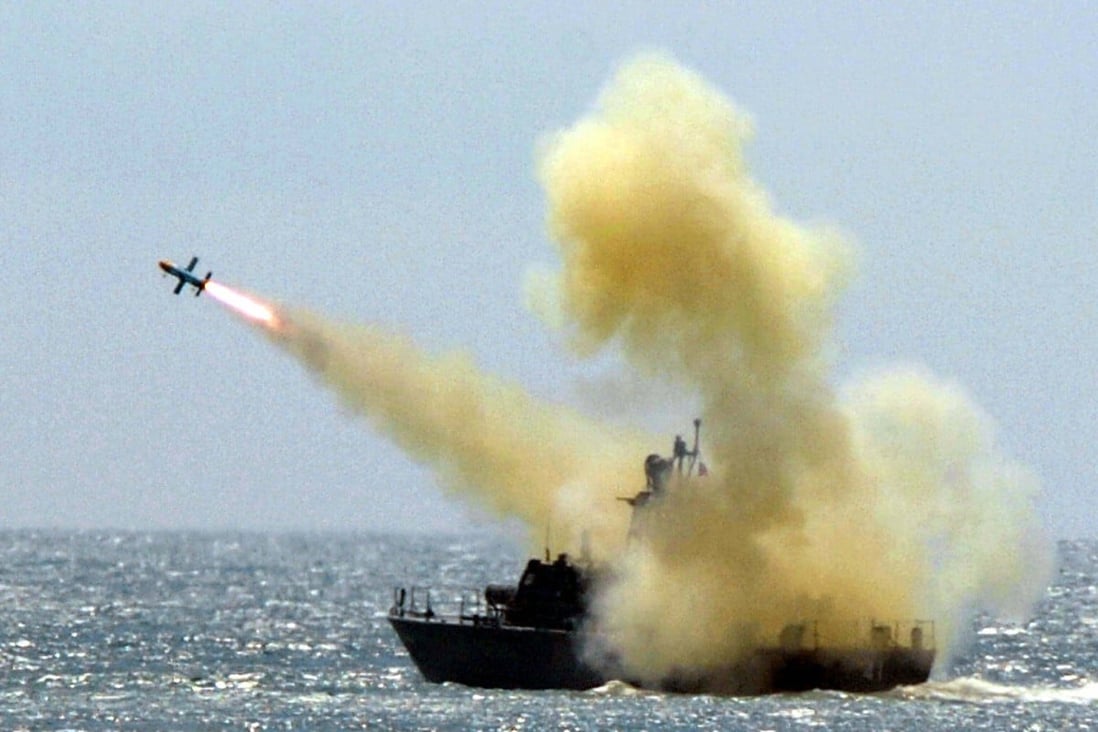
A Taiwanese patrol boat fires a ship-to-ship missile during a military drill in 2006. Vietnam slammed Taiwan’s recent live-fire exercises near Taiping Island as “illegal”. Photo: AFP

A Taiwanese patrol boat fires a ship-to-ship missile during a military drill in 2006. Vietnam slammed Taiwan’s recent live-fire exercises near Taiping Island as “illegal”. Photo: AFP

Vietnam was quick to voice its displeasure this month at Taiwanese military drills near a South China Sea island that both claim, but analysts say the incident speaks more to Taipei’s anxiety for its outlying islands’ continued security than the state of its relations with Hanoi.

Tiếp tục đọc “South China Sea: Taiwan’s live-fire drills irked Vietnam. Was Beijing the real target?”

The Chinese entrepreneurs chasing an Afghan ‘gold rush’

The Chinese entrepreneurs chasing an Afghan ‘gold rush’ | 101 East Documentary

Al Jazeera English – 24 thg 11, 2022

When the Taliban returned to power in August 2021, most foreigners and multinational companies had already packed up and left Afghanistan.

Going against the stream of foreigners fleeing the country was a group looking for “once-in-a-lifetime” opportunities: Chinese entrepreneurs.

Despite the ongoing unrest, an economic crisis and United Nations’ concerns over human rights, more Chinese citizens are joining the country’s “gold rush”. Once a small minority, Chinese nationals now make up Afghanistan’s biggest group of expatriates.

With exclusive access to leading Chinese investors, 101 East investigates their growing influence across Afghanistan’s business and media sectors.

Xi Jinping’s ’37-year plan’ for Taiwan reunification

Attacks on the mind and a looming crisis

nikkei – Nov. 1, 2022

The administration of Taiwan’s President Tsai Ing-wen is wary of a Chinese attack launched from the nearby provinces of Fujian and Guangdong. This September photo shows piles to prevent Chinese ships from landing on the island of Kinmen, just off the mainland.

With the Chinese Communist Party’s 20th National Congress now finished, President Xi Jinping is closer than ever to becoming a leader on a par with founding father Mao Zedong. His third term as party leader will be the final stage of the “Great China” project, an initiative fraught with contradictions. This series will examine the next five years by unpacking China’s perspective and logic.

Tiếp tục đọc “Xi Jinping’s ’37-year plan’ for Taiwan reunification”

China Announces New ASEAN Belt & Road Initiative Projects Centered Around Cambodia

The Phnom Penh-Bavet Highway which will ultimately link the Cambodian and Vietnamese capital cities

aseanbriefing.com

The 2022 ASEAN summit took place at the Cambodian capital Phnom Penh, this past weekend, with China as an official guest. At the event, Chinese Premier Li Keqiang announced Beijing’s approval of Chinese investment in significant infrastructure projects in the ASEAN region.  

Among these is a US$1.6 billion expressway to be built from Phnom Penh to Bavet, at the Cambodian-Vietnamese border, and financial support for a rail link between Phnom Penh, Bangkok, and Vientiane, Laos, from which a high-speed rail link has already been constructed into China. 

Tiếp tục đọc “China Announces New ASEAN Belt & Road Initiative Projects Centered Around Cambodia”

Tự lực tự cường và chip bán dẫn

NGUYỄN TRUNG DÂN 10/11/2022 07:49 GMT+7

TTCTSau gần 10 năm, cuộc đua trong lĩnh vực phát triển và sản xuất chip bán dẫn của Trung Quốc đã thành bại ra sao

Tự lực tự cường và chip bán dẫn - Ảnh 1.

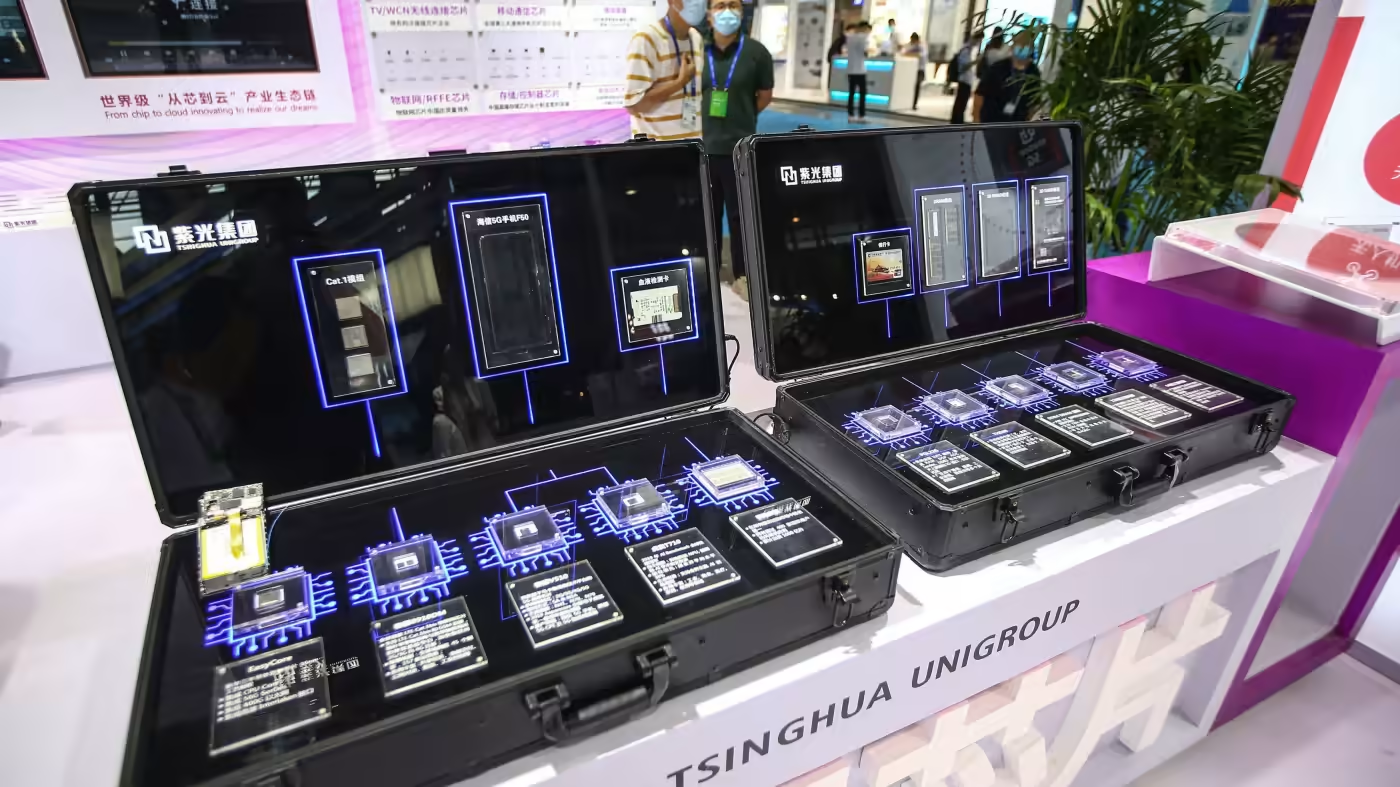
Triển lãm chip của Tsinghua Unigroup. Ảnh: AFP

Sau gần 10 năm, cuộc đua trong lĩnh vực phát triển và sản xuất chip bán dẫn của Trung Quốc đã thành bại ra sao, và con đường sắp tới sẽ thế nào, khi Tổng bí thư Tập Cận Bình lại vừa kêu gọi đất nước của ông “phải giành chiến thắng trong cuộc chiến công nghệ cốt lõi”?

Năm 2020, Trung Quốc chi 350 tỉ USD cho nhập khẩu chip bán dẫn, trong khi tiền nhập dầu mỏ chỉ có 200 tỉ USD, theo số liệu hải quan. 

Việc Trung Quốc, vốn cung cấp cho thế giới hầu như tất cả các mặt hàng từ lao động thủ công rẻ tiền cho đến cả các mặt hàng công nghệ cao, là nước nhập khẩu dầu mỏ và nhiên liệu lớn nhất thế giới không có gì lạ. 

Song phải chi nhập chip nhiều hơn mua dầu thì đáng chú ý, nhất là khi tính đến 2021 các chính sách chạy đua trong lĩnh vực phát triển và sản xuất chip của nước này đã đi được hơn 7 năm.

Tiếp tục đọc “Tự lực tự cường và chip bán dẫn”

Ông Vương Hỗ Ninh và nền tảng lý luận của Trung Quốc

H. MINH 03/11/2022 09:47 GMT+7

TTCTTrang chủ của Tân Hoa xã ngày 24-10 tràn ngập hình ảnh và tin tức về Đại hội lần thứ 20 của Đảng Cộng sản Trung Quốc (ĐCSTQ), với hình ảnh Tổng bí thư vừa đắc cử Tập Cận Bình chiếm những vị trí áp đảo và trang trọng nhất.

Ông Vương Hỗ Ninh và nền tảng lý luận của Trung Quốc - Ảnh 1.

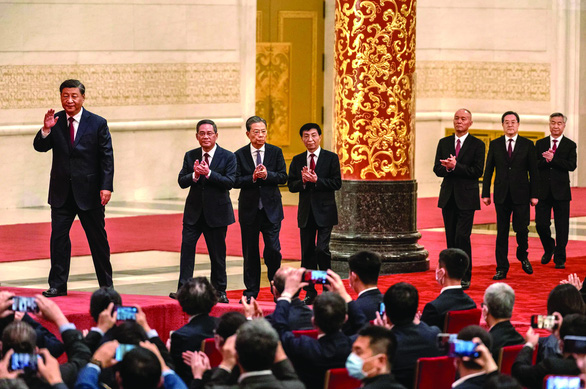
Thường vụ Bộ Chính trị ĐCSTQ ra mắt Đại hội 20, từ trái sang là các ông: Tập Cận Bình, Lý Cường, Triệu Lạc Tế, Vương Hỗ Ninh, Thái Kỳ, Đinh Tiết Tường và Lý Hi. Ảnh: Reuters

Trước đó một ngày, bài xã luận “Chung Hoa Luận”, tức do lãnh đạo cao nhất của Tân Hoa xã trực tiếp chấp bút, tựa đề: “Bảo đảm cơ bản những thắng lợi mới trên hành trình mới” đã điểm lại một loạt thành tựu phát triển của Trung Quốc trong 10 năm qua. Bài xã luận tất nhiên không quên đề cập vấn đề quan trọng nhất của Đại hội lần này. Khẩu hiệu chính trị “hai xác lập” – được ĐCSTQ thông qua từ năm 2018 – lại được nhấn mạnh: (1) xác lập vị trí hạt nhân của đồng chí Tập Cận Bình trong Trung ương Đảng; và (2) xác lập vai trò trọng tâm của tư tưởng Tập Cận Bình về chủ nghĩa xã hội đặc sắc Trung Quốc thời đại mới.

Tiếp tục đọc “Ông Vương Hỗ Ninh và nền tảng lý luận của Trung Quốc”

Home away from home: The untold story of Canada’s ‘Little Tibet’

Al Jazeera English – 27 thg 10, 2022

Tucked away within Toronto’s inner city is a small enclave known as “Little Tibet”.

Located in the Parkdale neighbourhood, the restaurants here are famous for delicious Tibetan dumplings known as momos.

Parkdale is also home to one of the largest concentrations of Tibetans outside Asia, stemming from the 1970s when Tibetan refugees flocked to Canada. The community has thrived here, establishing Little Tibet’s reputation as a food mecca and setting up a cultural centre.

But today, rapid gentrification and Toronto’s sky-high rents threaten the area’s unique social fabric. Amid China’s increasing global influence, the Tibetan community is striving to hold on to its past and maintain its traditions in an adopted land.

Explore Little Tibet and meet an immigrant community working to preserve its identity in this episode of A Sense of Community, a four-part series about unique neighbourhoods around the world and the challenges they face.

Vietnam’s wood trade under pressure from logging, Ukraine war

nikkei Murky origins plague furniture sector coming down from COVID-fueled buying spree

A company displays lumber in Vietnam, whose wood products industry is grappling with risks ranging from the Ukraine war to fake forest certificates and U.S. trade probes. (Photo by Lien Hoang)

LIEN HOANG, Nikkei staff writerOctober 28, 2022 16:08 JST

HO CHI MINH CITY — Reputational risks are piling up for a Vietnamese lumber industry already beset by a falloff in demand from the heights of the pandemic.

One of the world’s biggest wood and furniture exporters, Vietnam enjoyed a surge in orders when overseas buyers spent COVID lockdowns renovating their home offices and kitchens.

But the Southeast Asian country faces accusations of importing Chinese goods for re-export with “Made in Vietnam” labels since the onset of the China-U.S. tariff war in 2018. Now an actual war in Ukraine is stoking concern that sanctioned products from Russia may be routed through Vietnam, which maintains a neutral stance on the conflict between Kyiv and Moscow, as it does with Beijing and Washington. A third concern, about logging of fuel wood, has added to the pressure.

Tiếp tục đọc “Vietnam’s wood trade under pressure from logging, Ukraine war”

Vietnam won’t be pressured into joining U.S.-led Cold War against China

peoplesworld – October 28, 2022 11:24 AM CDT  BY AMIAD HOROWITZ

Vietnam won’t be pressured into joining U.S.-led Cold War against China

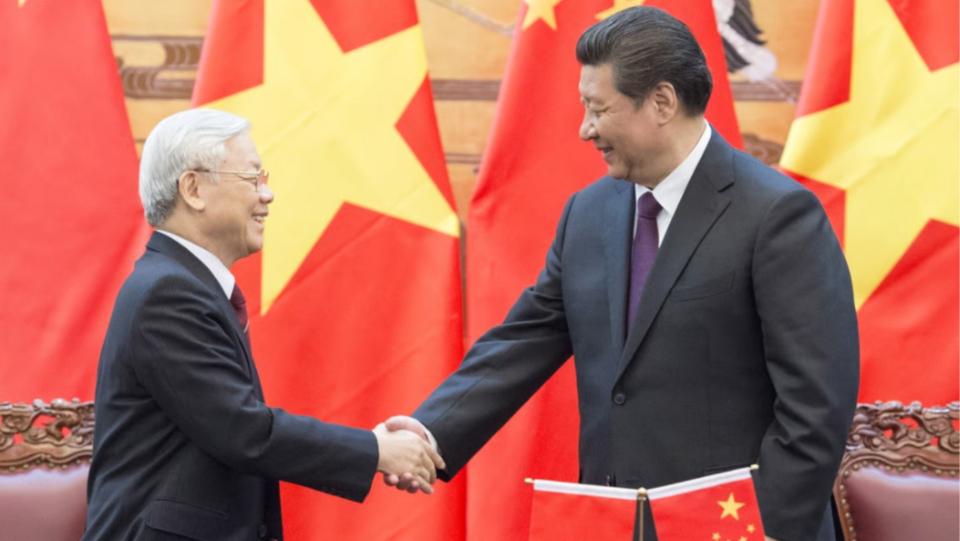
Communist Party of Vietnam leader Nguyen Phu Trong, left, meets with China’s Communist Party leader Xi Jinping in Beijing in 2015. | Xinhua

HANOI—The Socialist Republic of Vietnam will not be coerced into joining the United States-led effort aimed at isolating China and provoking conflict as part of its Cold War 2.0 foreign policy.

That’s a major message expected to come out of the upcoming visit to China by Nguyen Phu Trong, General Secretary of the Communist Party of Vietnam. Trong will travel to China to pay an official visit to the newly re-elected Communist Party of China leader Xi Jinping. Trong will be one of the first world leaders to visit China since the closing the 20th National Congress of the Communist Party of China, earlier this month.

Tiếp tục đọc “Vietnam won’t be pressured into joining U.S.-led Cold War against China”

China’s corporate debts

See more: STATE-OWNED FIRMS BEHIND CHINA’S CORPORATE DEBT

qz.com

Published October 28, 2021Last updated July 21, 2022

China has a massive amount of corporate debt. At $27 trillion, it boasts a debt-to-GDP ratio of 159%, almost 60% higher than the global rate and nearly twice that of the US, according to research published this month by S&P Global Ratings.

“China’s growth has been largely driven by two contours: One is credit, and the other is carbon,” says Eunice Tan, one of the report’s lead authors and head of credit research for S&P Global Ratings’ Asia-Pacific region.

Beijing now wants to tame both those economic engines—credit and carbon—while maintaining stability and control, and while continuing to hit GDP growth targets. On the carbon front, it has released a high-level policy framework outlining a path to peaking carbon emissions by 2030. On the credit front, the central bank has sought to tame debt in the property sector and shield banks from exposure to troubled developers.

Tiếp tục đọc “China’s corporate debts”

China-indebted Laos way more broke than advertised

asiatimes.com

World Bank predicts public debt will swell to 95% of GDP by year’s end while ‘hidden debts’ to China likely take the figure north of 120%

By DAVID HUTTOCTOBER 14, 2022

Laos will be hard-pressed to meet its external debt obligations. Photo: Faceboo

Laos’ public debt could climb to nearly 95% of GDP by the end of 2022, making it one of the most heavily indebted and mostly likely to default nations in Asia, according to World Bank estimates published this month

Significantly, the World Bank’s already dire debt figures do not encompass all of the small Southeast Asian nation’s liabilities.

Asia Times’ reporting and analysis show that Laos’ total debt, including other publicly guaranteed liabilities not included in headline figures, could take the state’s total financial obligations well over 100% of GDP for the first time ever this year. And that’s only the debt officially recognized by the Lao government.

Tiếp tục đọc “China-indebted Laos way more broke than advertised”