The United States has denied Chinese claims that a US destroyer was driven out from waters around the contested Paracel Islands after it “illegally” entered the area.
China’s state media described the US ship as having trespassed in “Chinese territorial waters”.
The US Navy on Thursday disputed the PLA statement, saying the destroyer was conducting “routine operations” in the South China Sea and was not expelled by Chinese ships.
Al Jazeera’s Katrina Yu joins us live from Beijing to give us the latest updates.
In 2021, there were roughly 30 million more men than women in China, and a study estimates that there are over 62 million “missing” women—females who would be alive without gender discrimination. This gap may become a factor contributing to social instability.
For centuries, China boasted the largest population of any country, giving it significant global heft. That is changing as China’s population shrinks and ages at a faster rate than almost any other country. In 2022, China’s population dropped for the first time in decades, and in 2023 India surpassed China to become the world’s most populous nation. China’s changing demographics pose major, prolonged challenges for the country and its leaders. China has for decades reaped the economic dividends that came with having a young workforce to fuel China’s emergence as a global industrial powerhouse. Now, the number of Chinese retirees will soon skyrocket, reducing the size of China’s workforce and putting pressure on China’s social safety net and healthcare system.
China’s population grew at a breakneck pace during the mid-twentieth century, swelling nearly 50 percent between 1950 and 1970. Driven by fears of the extraordinary challenges of effectively governing a rapidly expanding population, the Chinese government began to institute population control measures in the 1970s. The “later, longer, fewer” (晚稀少) campaign, which was initiated in 1973, raised the legal age of marriage to 23 for women and 25 for men, encouraged at least a three-year period between births, and limited births to two children. Those who did not adhere to the new regulations faced penalties. This policy proved successful. Between 1970 and 1980, China’s fertility rate (the number of births per woman) plummeted from 6.1 to 2.7.https://datawrapper.dwcdn.net/8tnj5/1/SHARE
Friendship between China and Arab states dates back to ancient times. Over two thousand years ago, land and maritime Silk Roads already linked the Chinese and Arab nations. In the long stretches of history, peace and cooperation, openness and inclusiveness, learning from each other, mutual benefit and win-win results have always been the main theme of exchanges between China and Arab countries.
The founding of the People’s Republic of China and the independence of Arab countries created a new era for China-Arab friendly exchanges. From 1956 to 1990, China established diplomatic relations with all 22 Arab countries. China firmly supports Arab national liberation movement, firmly supports Arab countries’ struggle to uphold sovereignty and territorial integrity, pursue and safeguard national interests, and combat external interference and aggression, and firmly supports Arab countries’ cause of developing the national economy and building up the countries. Arab countries have given China strong support in restoring its lawful seat at the United Nations and on issues like the Taiwan question.
The study’s main finding is that Taiwan’s fall would have devastating consequences for the United States and many countries in the region and beyond. Regardless of how it happens (without or despite US/allied intervention), Taiwan’s fall to the PRC would be earth shattering. The PRC could eclipse US power and influence in the region once and for all. Taiwan’s fall could lead to the advent of a Pax Sinica where Beijing and its allies would pursue their interests much more aggressively and with complete impunity. Nuclear proliferation in several parts of the Indo-Pacific could also be the net result of Taiwan’s fall, leading to much more dangerous regional and international security environments. To several authors, it would thus be necessary to build an Asian equivalent to the North Atlantic Treaty Organization to prevent PRC adventurism and ultimately retake Taiwan.
Accordingly, the United States, its allies, and others should take major action—rapidly—to prevent such a development. In particular, the United States should lead an effort to strengthen collective deterrence and defense in the Indo-Pacific; this is especially important in the aftermath of the Russian invasion of Ukraine, which has shown territory takeovers still happen in the twenty-first century. The United States should also give serious consideration to establishing region-wide nuclear sharing arrangements; at a minimum, it should jumpstart research to examine the benefits, costs, and risks that such arrangements would bring to the Indo-Pacific security architecture, as well as assess the opportunities and challenges that such a development would present.
MANILA – The Philippines has filed 10 diplomatic protests against China over alleged “violations” in the South China Sea barely two months into 2023, underscoring renewed tensions between the two nations over the disputed waters.
These form part of the 77 diplomatic protests filed against China under President Ferdinand Marcos Jr, the Philippines’ Department of Foreign Affairs said in a statement on Monday.
The issue of security bears on the well-being of people of all countries, the lofty cause of world peace and development, and the future of humanity.
Today, our world, our times and history are changing in ways like never before, and the international community is confronted with multiple risks and challenges rarely seen before. Regional security hotspots keep flaring up, local conflicts and turbulence occur frequently, the COVID-19 pandemic persists, unilateralism and protectionism have risen significantly, and traditional and non-traditional security threats are entwined. The deficits in peace, development, security and governance are growing, and the world is once again at a crossroads in history.
China’s post-pandemic charm offensive with Europe was supposed to shift into overdrive this past week.
Instead, a visit by China’s top diplomat, Wang Yi, showed just how challenging it will be for Beijing to get its relationship with Europe back on track, at a time when China’s ties with Russia appear to be deepening and those with Washington are sinking to new depths.
Wang’s appearance at the Munich Security Conference, sandwiched between trips to Paris, Rome, Budapest, and Moscow, was the clearest illustration to date of the diplomatic dilemma China faces as it emerges from three years of self-imposed COVID isolation, the last of which clouded by the war in Ukraine.
TTCT – Dù là đồng minh có hiệp ước của nhau và vừa thắt chặt thêm tình hữu nghị về quân sự, quan hệ Mỹ – Philippines thật ra không phải lúc nào cũng bằng phẳng.
Khi tôi đến thăm Subic Bay năm 1998, khu chế xuất vừa hoạt động và hãng xưởng còn lưa thưa. Đây là khu miễn thuế, ra vào phải qua kiểm soát hải quan, chỗ mua sắm chỉ có vài hàng quán mới mở và loãng khách với một khu phức hợp và ba rạp phim.
Cả khu còn do quân đội Philippines quản lý, hoang vắng với những nhà kho tiền chế và bungalow quân đội Mỹ bỏ lại nằm bắt bụi từ 1992.
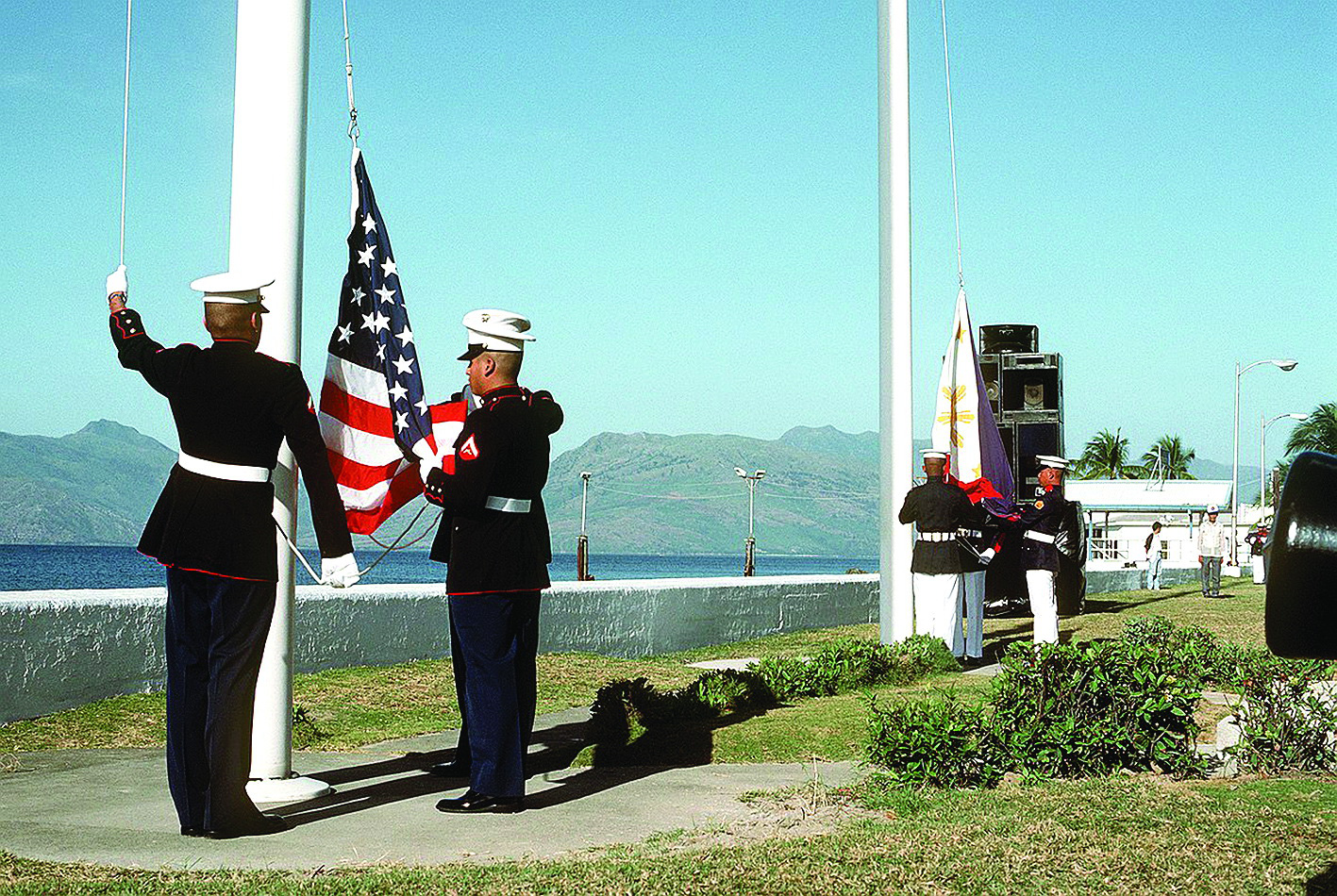
Lễ hạ cờ Mỹ và thượng cờ Philippines ở căn cứ Subic Bay ngày 24-11-1992. Ảnh: Wikipedia
As China’s economy moved away from state planning and policymakers introduced market reforms in the 1980s and 1990s, many observers expected that in addition to promoting the growth of the Chinese economy, privatization would also have substantial political implications. Most importantly, it was thought that the rise of the private sector could lead to the establishment of an independent business class that would seek to defend its interests, both in the short term through greater policy lobbying and over the longer term by pushing for institutionalized political change, including democratization. The actual economic and political trajectory of China’s private sector has been more complicated and has been a central area of contestation for economic and political power between firms and the Chinese party-state. Although Chinese companies have pushed to have greater autonomy, they have also faced immense pressure to adapt and cede authority in order to survive and grow.
When the Taliban returned to power in August 2021, most foreigners and multinational companies had already packed up and left Afghanistan.
Going against the stream of foreigners fleeing the country was a group looking for “once-in-a-lifetime” opportunities: Chinese entrepreneurs.
Despite the ongoing unrest, an economic crisis and United Nations’ concerns over human rights, more Chinese citizens are joining the country’s “gold rush”. Once a small minority, Chinese nationals now make up Afghanistan’s biggest group of expatriates.
With exclusive access to leading Chinese investors, 101 East investigates their growing influence across Afghanistan’s business and media sectors.
The Chinese entrepreneurs chasing an Afghan ‘gold rush’ | 101 East Documentary
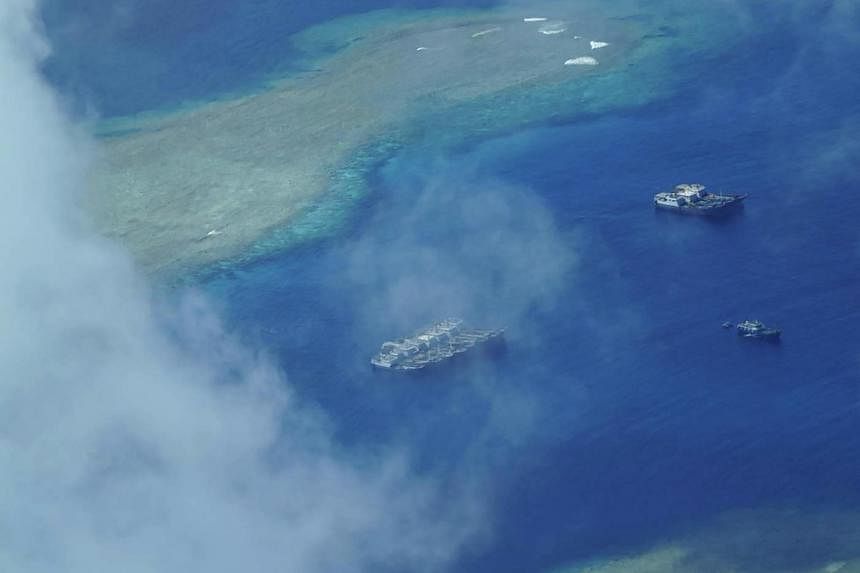
China’s coast guard presence in the South China Sea is more robust than ever. An analysis of automatic identification system (AIS) data from commercial provider MarineTraffic shows that the China Coast Guard (CCG) maintained near-daily patrols at key features across the South China Sea in 2022. Together with the ubiquitous presence of its maritime militia, China’s constant coast guard patrols show Beijing’s determination to assert control over the vast maritime zone within its claimed nine-dash line.
China Coast Guard Patrols in the South China Sea 2022
AMTI analyzed AIS data from the year 2022 across the five features most frequented by Chinese patrols: Second Thomas Shoal, Luconia Shoals, Scarborough Shoal, Vanguard Bank, and Thitu Island. Comparison with data from 2020 shows that the number of calendar days that a CCG vessel patrolled near these features increased across the board.
The number of days the CCG patrolled at Vanguard Bank, a major site of Vietnamese oil and gas development that has seen standoffs between Chinese and Vietnamese law enforcement in years past, more than doubled, increasing from 142 days in 2020 to 310 days in 2022. Days patrolled at Second Thomas Shoal, where the Philippines maintains a precarious garrison aboard the BRP Sierra Madre, increased from 232 days to 279; those at Luconia Shoals, near important Malaysian oil and gas operations, from 279 to 316; and at Scarborough Shoal, traditionally fished and administered by the Philippines, from 287 to 344. Data on the reefs surrounding Philippine-held Thitu Island was not collected in previous analyses, but CCG vessels were on site 208 days over the past year. At some features, especially Scarborough Shoal, multiple CCG vessels were present simultaneously. Observed patrols across all five features amounted to 1,703 ship-days in total.
PacNet #7 – Dealing with Increased Chinese Aggressiveness – PART ONE
The following are some of the key findings and recommendations from the August 2022 US-Taiwan Deterrence and Defense Dialogue. PacNet 7 provides a summary of the dialogue. The full report, with expanded key findings and recommendations can be found here.
Taiwan is under attack by the People’s Republic of China (PRC) politically, economically, psychologically, and militarily—the latter through more aggressive Chinese People’s Liberation Army (PLA) gray zone military operations short of actual direct conflict. This multidimensional threat requires a multidimensional response in ways that complement and enhance military deterrence. PRC behavior represents a global—and not just a Taiwan or US—problem which demands a global response.
DUISBURG, Germany — Suad Durakovic, the owner of a truck driving school on the outskirts of the western German city of Duisburg, made it into Chinese newspapers in 2019 by testifying that Beijing’s Belt and Road Initiative had triggered a local logistics industry boom.
Today, his business benefits from a shortage of qualified truckers, but not because of China’s global infrastructure development strategy.
“The Silk Road has not developed for us,” Durakovic told Nikkei Asia. “First it was COVID, then it was the Ukraine war, so the boom is no longer about Silk Road logistics.”
Duisburg, a city of half a million people, is located in Germany’s industrial heartland at the junction of the Rhine and Ruhr rivers. A downturn in the country’s steel and coal industries in the 1990s and early 2000s battered its economy.
But the city found a savior in Chinese President Xi Jinping, who visited Duisburg in 2014 to officially make its inland port Europe’s main Belt and Road hub. While this fueled anticipation of a new heyday, recent events suggest the prospects are dimming.
Much of this stems from the Ukraine war and Germany’s awkward relationship with China.
Chancellor Olaf Scholz was the first European leader to visit Beijing since Xi secured a third term as party leader at the Communist Party Congress in October. But German attitudes have soured recently over China’s cozy relationship with Russia, Taiwan and human rights, as well as its growing trade deficit with the world’s second-biggest economy.
For many citizens, the American dream has been downsized. In recent decades, the United States has ceased to be the world’s workshop and become increasingly reliant on importing goods from abroad. Since 1998, the widening U.S. trade deficit has cost the country five million well-paying manufacturing jobs and led to the closure of nearly 70,000 factories. Small towns have been hollowed out and communities destroyed. Society has grown more unequal as wealth has been concentrated in major coastal cities and former industrial regions have been abandoned. As it has become harder for Americans without a college degree to reach the middle class, the withering of social mobility has stoked anger, resentment, and distrust. The loss of manufacturing has hurt not only the economy but also American democracy.






 CVD
CVD 