NZ – Chiến thương mại Mỹ – Trung làm nảy sinh một hiện tượng rất lạ: giới trí thức cả hai nước đều đang phê phán mạnh, không phải chính sách của nước đối thủ, mà phê phán thẳng chính sách của chính phủ nước họ.
Ở Mỹ thì quá rõ vì hầu như ngày nào cũng có bài báo nhắm vào một góc cạnh nào đó trong chính sách ngoại thương của Tổng thống Donald Trump để chê bai, cười cợt. Từ Trung Quốc chúng ta ít có thông tin hơn nhưng một bài phân tích sâu trên tờ Nikkei Asian Review vào hôm 7/8 hé lộ cho thấy ông Tập Cận Bình cũng chịu nhiều phê phán không kém ông Trump. Tiếp tục đọc “Chiến thương mại Mỹ – Trung: Bụt chùa nhà không thiêng ở cả 2 nước”→
Theo VASEP, cuộc chiến thương mại Mỹ – Trung có thể tạo ra cơ hội cho Việt Nam tăng xuất khẩu tôm vào Mỹ.
Chiến tranh thương mại Mỹ – Trung có thể là cơ hội cho tôm và cá tra Việt.
Từ đầu tháng 7, cuộc chiến thương mại Mỹ-Trung chính thức bắt đầu khi Mỹ tuyên bố áp thuế nhập khẩu (NK) 25% lên 800 mặt hàng có tổng kim ngạch 34 tỷ USD từ Trung Quốc. Đáp lại, Trung Quốc tuyên bố áp thuế tương tự lên 545 mặt hàng NK từ Mỹ, bao gồm nông sản, ô tô và hải sản.
TTCT – Tình hình Biển Đông đang thay đổi chóng vánh và dồn dập, kèm theo những “bình luận” trích từ nhiều nguồn dễ gây ngộ nhận tương quan “nhân quả”. Các sự kiện trên Biển Đông liên quan gì tới cuộc tập trận RIMPAC và những động thái mới của Mỹ? Các dữ kiện sẽ cho phép nhận chân tình hình.
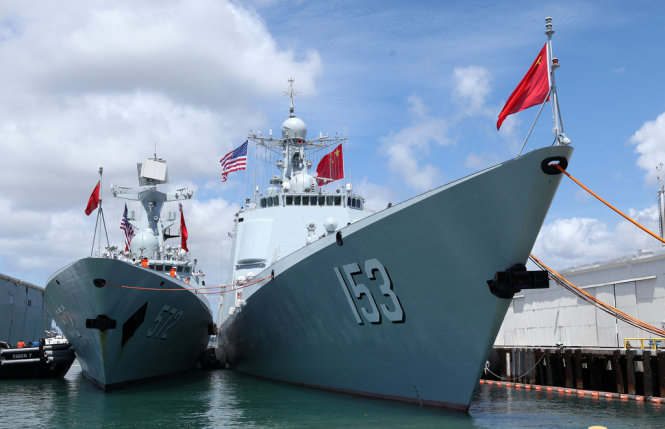
Tàu chiến Trung Quốc tham gia cuộc tập trận RIMPAC 2016. Ảnh: Asia News
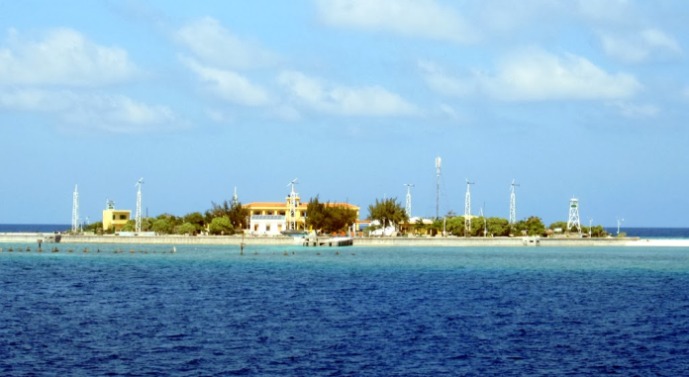
“Chúng tôi có bằng chứng mạnh mẽ rằng Trung Quốc đã triển khai các tên lửa đối hạm, đối không, cùng các thiết bị nhiễu sóng tại các thực thể tranh chấp ở khu vực Trường Sa của Biển Đông. Việc Trung Quốc vừa cho hạ cánh máy bay ném bom trên đảo Phú Lâm cũng đã làm căng thẳng nổi lên” – người phát ngôn Bộ Quốc phòng Mỹ loan báo hôm 23-5. Tiếp tục đọc “Từ biển Đông đến RIMPAC”→
TTO – Trong bối cảnh “nhiệt độ” trên bán đảo Triều Tiên hạ một cách đột ngột, Mỹ bắt đầu bắn đi các tín hiệu không thể nhầm lẫn về sự trở lại ở Biển Đông.
Động thái của Mỹ được giới quan sát mô tả là loạt pháo đầu tiên mở màn chiến lược quốc phòng mới của Tổng thống Donald Trump, trong đó xác định Trung Quốc là “đối thủ chiến lược”.
Reuters – China and Vietnam have reached agreement on managing their dispute in the South China Sea through friendly talks, a senior Chinese diplomat said on Friday, following an ugly spat over the summer between the two communist neighbours.
China’s Foreign Minister Wang Yi (L) poses for photo with Vietnam’s Deputy Prime Minister and Foreign Minister Pham Binh Minh before their meeting at the Government Office in Hanoi, Vietnam November 2, 2017. REUTERS/Kham
Wynn Resorts Chairman and CEO Steve Wynn speaks at the Global Gaming Expo 2014 at The Venetian Las Vegas on September 30, 2014 in Las Vegas, Nevada. (Ethan Miller/Getty Images)
New revelations about the Chinese government’s attempt to forcibly repatriate a Chinese fugitive show an assertive Beijing benefitting from a U.S. administration at odds with itself. But who is that American casino mogul who has apparently become the Chinese government’s backchannel to the White House? It turns out he’s a businessman beholden to Beijing and willing to press their case in the corridors of power in Washington — and he has just the ticket. Tiếp tục đọc “The Chinese Have Cracked the Code for Communicating With Trump”→
Quan hệ tam giác Trung Quốc – ASEAN – Nhật Bản có vai trò quan trọng trong việc thiết lập cục diện quan hệ quốc tế ở khu vực Đông Á. Trong mức độ nhất định, cấu trúc quan hệ này đang trực tiếp thúc đẩy và quyết định chiều hướng vận động của tiến trình hợp tác phát triển khu vực. Bài viết vận dụng phương pháp phân tích quan hệ “Tam giác chiến lược” để tìm hiểu quan hệ tương hỗ giữa Trung Quốc, ASEAN và Nhật Bản, qua đó đưa ra những khả năng và triển vọng về mô hình nhất thể hóa Đông Á trong tương lai. Tiếp tục đọc “Biến đổi trong quan hệ tam giác Trung Quốc – ASEAN – Nhật Bản với triển vọng nhất thể hóa Đông Á”→
Vox_Since 2014, China has been building islands in the middle of the South China Sea. What were once underwater reefs are now sandy islands complete with airfields, roads, buildings, and missile systems. In less than two years, China has turned seven reefs into seven military bases in the South China Sea, one of the most contentious bodies of water in the world.
href=””>United Nations Law of the Seas, which says a country’s territory extends 200 miles off its shores, an area called the exclusive economic zone, or EEZ. Any trade or resources that fall in a country’s EEZ belong to that country; they’re its sovereign territory. Any area that is not in an EEZ is considered international waters and subject to UN maritime law, meaning it’s shared by everyone. Every country in the region, which includes Malaysia, the Philippines, Brunei, and Vietnam, bases its claim to the South China Sea on the UN’s EEZ laws — except China.
China argues it has a historical claim to the South China Sea, dating back to naval expeditions in the 15th century. After World War II, the Japanese Empire lost control of the South China Sea, and China took advantage of the moment to reclaim it. On maps, it started drawing a dashed line that encompassed most of the South China Sea. This line became its official claim and is known today as the Nine-Dash Line, because it always has nine dashes. In 1973, when the UN law established EEZs, China reaffirmed its Nine-Dash Line, refusing to clarify the line’s boundaries and rejecting other countries’ claims.
Since then, tensions have built around who rightfully owns the South China Sea. The dispute has centered on the Spratly Islands, an archipelago at the heart of the South China Sea. Currently, China, Malaysia, the Philippines, and Vietnam claim some part of the Spratly Island chain. They’ve asserted their claims by putting small buildings, ports, and even some people on what are essentially rocks in the middle of the ocean.
But the Spratlys are very important, because whichever country can successfully claim themcan extend its EEZ to include them, thus gaining miles of precious sovereign territory. This is why China began building up islands in 2014. By turning these rocks into military bases, the Chinese are now able to support hundreds of ships, bolstering their presence in the region. They are using fishing boats, surveillance ships, and navy destroyers to set up blockades around other countries’ islands and defend their own. This is all done very cautiously and in small steps in order to avoid sparking a wider conflict.
Since China began building islands, the disputes have not become violent.But tensions are building in the region. As China deploys more of its military to the Spratlys, other countries are getting nervous and building up their own islands. It’s a complex situation that will continue to gain international attention, for better or for worse.
TTCT – Cuộc họp cấp ngoại trưởng ASEAN (AMM) năm nay, và tiếp theo đó là Diễn đàn khu vực ASEAN (ARF), đã diễn ra trong bầu không khí đầy tranh cãi, phản ánh cục diện thế sự ngày nay. Các văn kiện chính, trên bề nổi, phản ánh xu thế đó. Song, trong chiều sâu, lại phản ánh một sự đồng thuận nhất định.
Bộ trưởng Ngoại giao Trung Quốc Vương Nghị. Philstar.com bình luận rằng với Bắc Kinh, COC đi kèm những điều kiện “mơ hồ và không công bằng”.-Ảnh: rappler.com
Nếu so sánh ARF lần thứ nhất hồi năm 1994 tại Bangkok, mà Việt Nam tham dự với tư cách quan sát viên, với ARF năm nay tại Manila, rõ ràng diễn đàn năm nay quá ư là “gay cấn”. Những biến chuyển của chính trường thế giới đã đặt ra những thách thức mới so với cách đây 23 năm. Tiếp tục đọc “HỘI NGHỊ ASEAN: Đằng sau những câu chữ”→
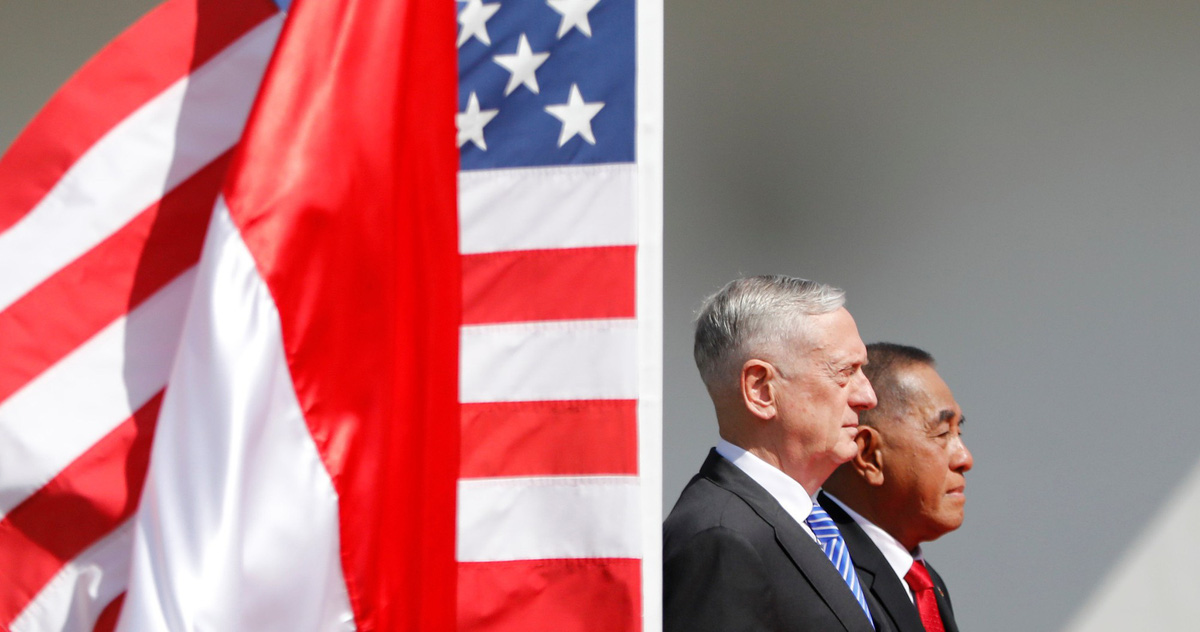
During the recent meeting between Vietnamese Defense Minister Ngo Xuan Lich and his US counterpart James Mattis, the two defense leaders agreed to deepen mutual military cooperation. Speaking to Sputnik Grigory Lokshin explained what lies at the heart of US-Vietnamese rapprochement.
Tại Biển Đông, có lẽ ai cũng thấy hai lực lớn kèn cựa nhau là Mỹ và Trung Quốc. Các nước khác thì có vẻ ấm ấm lạnh lạnh, không quá quan tâm đến vấn đề. Kampuchia thì có vẻ thiên hẳn về TQ. Phi Luật Tân là nước chống TQ mạnh nhất, nay đã đổi chiều. Chỉ VN là còn đứng trong thế cứng cựa với TQ, tiếp tục mời mọc các công ty của các nước đầu tư vào các lô biển để thăm dò và khai thác dầu hoặc khí đốt, tiếp tục lên tiếng chống đối mỗi khi TQ tuyên bố gì hay làm gì ở Biển Đông, trong khi vẫn cố gắng giữ liên hệ ngoại giao tốt với TQ trong những lãnh vực khác, và vẫn giữ ngoại giao thân thiện với Mỹ. Tiếp tục đọc “Biển Đông: Mỹ, Trung quốc, và Việt Nam”→
TTCT– Thứ sáu 21-7 vừa rồi, Jared Dummitt và Eliot Kim, hai nghiên cứu sinh của Trường Luật Harvard, đã đăng một bài trên website luật học lawfareblog.com có tựa đề “khác lạ”: “Chiến tranh vì biển: Hãy quen dần với điều đó trên Biển Đông”.
Tàu sân bay tự đóng đầu tiên của Trung Quốc (chưa đặt tên) được hạ thủy ngoài khơi thành phố cảng Đại Liên tháng 4-2017.-Ảnh: The New York Times
Hai tác giả bắt đầu bằng câu chuyện: “Tuần này, hải quân và không quân Trung Quốc đã thực hiện các hoạt động mở rộng – trong số đó có một số vụ là chưa từng có trước đó ở trong và xung quanh lãnh hải của Nhật Bản, Đài Loan và Mỹ. Bắc Kinh đã tỏ rõ giọng điệu thách thức khi dấy lên những dấu hỏi về tính thích đáng của các hoạt động này”. Tiếp tục đọc “Tự do hàng hải của nước lớn”→





 CVD
CVD 