China plans to build the world’s largest dam – but what does this mean for India and Bangladesh downstream?

theconversation.com

Published: April 8, 2025 5.33pm BST

Author Mehebub SahanaLeverhulme Early Career Fellow, Geography, University of Manchester

China recently approved the construction of the world’s largest hydropower dam, across the Yarlung Tsangpo river in Tibet. When fully up and running, it will be the world’s largest power plant – by some distance.

Yet many are worried the dam will displace local people and cause huge environmental disruption. This is particularly the case in the downstream nations of India and Bangladesh, where that same river is known as the Brahmaputra.

The proposed dam highlights some of the geopolitical issues raised by rivers that cross international borders. Who owns the river itself, and who has the right to use its water? Do countries have obligations not to pollute shared rivers, or to keep their shipping lanes open? And when a drop of rain falls on a mountain, do farmers in a different country thousands of miles downstream have a claim to use it? Ultimately, we still don’t know enough about these questions of river rights and ownership to settle disputes easily.

The Yarlung Tsangpo begins on the Tibetan Plateau, in a region sometimes referred to as the world’s third pole as its glaciers contain the largest stores of ice outside of the Arctic and Antarctica. A series of huge rivers tumble down from the plateau and spread across south and south-east Asia. Well over a billion people depend on them, from Pakistan to Vietnam.

Tiếp tục đọc “China plans to build the world’s largest dam – but what does this mean for India and Bangladesh downstream?”

Maldives ‘thoát Ấn’ hay cuộc cạnh tranh ảnh hưởng của các nước lớn ở Nam Á

VOV – Thứ Tư, 11:47, 17/01/2024

Trong một động thái đáng chú ý ở khu vực Nam Á, Maldives yêu cầu Ấn Độ rút binh sĩ đang đồn trú tại nước này trước ngày 15/3.

Maldives là quốc đảo nhỏ ở khu vực Nam Á, vốn phụ thuộc đáng kể vào nước láng giềng Ấn Độ về nguồn cung lương thực, xây dựng hạ tầng và công nghệ. Tuy nhiên mối quan hệ này gần đây xuất hiện dấu hiệu căng thẳng.

Tổng thống Maldives Mohamed Muizzu. Ảnh: AP
 

Trong khi đó, trong chuyến thăm Trung Quốc hồi tuần trước của Tổng thống Maldives, hai bên nhất trí nâng cấp lên “quan hệ đối tác hợp tác chiến lược toàn diện”. Các nhà phân tích cho rằng động thái của Maldives phản ánh phần nào sự chuyển hướng chính sách của một số quốc gia ở Nam Á trước cuộc cạnh tranh ảnh hưởng giữa các nước lớn.

Tiếp tục đọc “Maldives ‘thoát Ấn’ hay cuộc cạnh tranh ảnh hưởng của các nước lớn ở Nam Á”

When titans clash 2 (3 parts)

US-China: Is A New NATO Emerging In Asia? | When Titans Clash 2 – Part 1/3 | CNA Documentary

CNA Insider – 29-4-2022

As the Ukraine crisis unfolds, China accuses the US of creating an Indo-Pacific version of NATO, and warns of a “Ukraine style tragedy” for Asia. On the other hand, countries like Japan, Philippines, India, Australia and South Korea, seek closer ties to the US as concerns emerge over China’s actions. Could Asia witness a war in the years ahead? Tiếp tục đọc “When titans clash 2 (3 parts)”

China’s plan for the ‘world’s riskiest’ mega dam high in the Himalayas

As China seeks to meet its targets of becoming carbon neutral by 2060, it is turning its sights to some of the wildest reaches of the Tibetan Plateau where it plans to build a hydropower plant so ambitious that it could produce three times as much power as Three Gorges.

Experts believe it could be the riskiest mega structure ever built. Not only is the location prone to massive landslides and some of the most powerful earthquakes ever recorded, it’s also precariously close to the disputed border between India and China. Meaning any major project could further escalate discontent in a tense territorial dispute between the world’s two most populous countries.

The history of China’s territorial disputes

Explained: the history of China’s territorial disputes

South China Morning Post – 29-8-2020

China shares over 22,000 kilometres (13,670 miles) of border with 14 countries, but Beijing has disputes with many of its neighbours over where some of these international lines are drawn. The various territorial claims, citing history, politics and geography, have resulted in clashes and occasionally, outright military confrontations. Land borders aside, China also says its territory includes nearly all of the South China Sea, despite competing claims to parts of those waters made by many Southeast Asian countries. As tensions rise between China and the United States, Beijing has adopted a more aggressive attitude, pledging to defend China’s “sovereignty and territorial integrity.”

The New 14th BRICS Summit Declaration (Brazil, Russia, India, China, and South Africa)

 Jun 28, 2022 Posted by Silk Road Briefing Written by Chris Devonshire-Ellis

By Chris Devonshire-Ellis   

While the G7 group of nations (Canada, France, Germany, Italy, Japan, the United Kingdom, and the United States together with the European Union) has been meeting in Germany, the BRICS nations (Brazil, Russia, India, China, and South Africa) have been meeting in China for the 14th Summit. The contrasts could not be more different – one the grouping of mainly white, powerful Western nations, representing contemporary global leadership, the other a grouping of globally powerful emerging markets wanting a larger say in the developing world. The BRICS nations differ from the G7 in two main factors, most notably in the populations they serve – 3 billion as opposed to the G7’s 987 million (including the EU), and GDP, where the G7’s GDP is currently US$33.93 trillion and the BRICS about US$23.5 trillion.

Western economists as a result tend to talk up the G7’s role in global financial strength however the growth rates of both the G7 and BRICS predicted by the IMF suggest that the latter could be responsible for 50% of all global trade by the 2030’s. This means that paying attention to the BRICS consensus leads to some direction over how the global economy is likely to change over the next decade.

At present, the G7 appear determined to continue with the existing world order, which China and Russia in particular view as ‘unipolar’, meaning centered around the United States and directed by whatever US foreign, global and domestic policies are at the time. Both countries (and others) are looking for a more inclusive role in global affairs as befits their status. China for example is the world’s second largest economy, and India the fifth. Yet neither have the percentage say in global financial institutions such as the World Bank and IMF they would like – hence the development of alternative policy banks such as the Asian Infrastructure Investment Bank and the BRICS own New Development Bank. There are also accusations that global institutions such as the United Nations (based in New York) has begun to be too influenced by Washington’s policies than global ones. Calls for reform are increasingly being heard.

Tiếp tục đọc “The New 14th BRICS Summit Declaration (Brazil, Russia, India, China, and South Africa)”

India’s ‘neutrality’ on the Ukraine conflict could hurt it in the long run

New Delhi has been silent on Russia’s actions in Ukraine so far.

thediplomat – By Sudha Ramachandran – February 25, 2022

India’s ‘Neutrality’ on the Ukraine Conflict Could Hurt It in the Long Run
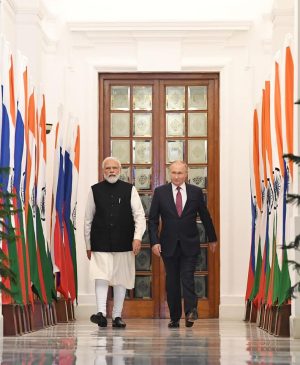
India’s Prime Minister Narendra Modi with Russian President Vladirmir Putin during the summit in New Delhi, India on December 6, 2021.Credit: Facebook/ Ministry of External Affairs, India

Russia’s invasion of Ukraine on February 24 has put India in a particularly difficult spot. Since the conflict between Moscow and the U.S. over Ukraine began escalating late last year, India has avoided taking sides. But with Moscow’s invasion of Ukraine, that cautious approach will become increasingly untenable for New Delhi. It could hurt India’s interests in the long-run.

Tiếp tục đọc “India’s ‘neutrality’ on the Ukraine conflict could hurt it in the long run”

India tests new French fighter jets in skies near China border

Sept. 22, 2020 CNA

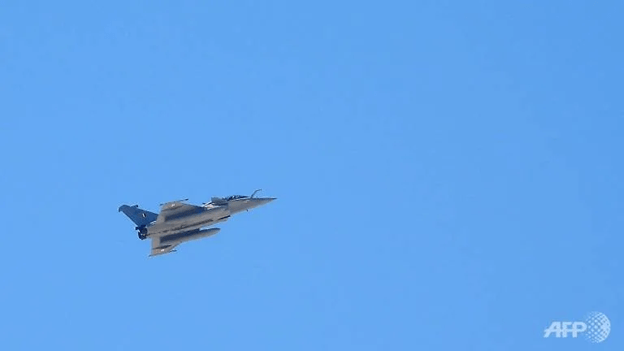
An Indian Air Force Rafale jet flies over Leh, the main city in the contested Ladakh region on the border with China. (Photo: AFP/Mohd Arhaan ARCHER)

NEW DELHI: India’s new French Rafale jets have flown “familiarisation” flights above the border region contested with China where a deadly clash between soldiers from the nuclear-armed neighbours took place in June, an official told AFP on Monday (Sep 21).

Tiếp tục đọc “India tests new French fighter jets in skies near China border”

Ấn Độ đã dạy cho doanh nghiệp Trung Quốc một ‘bài học đau đớn’

5/09/2020  07:32  GMT+7 vietnamnet

Lệnh cấm hàng loạt ứng dụng Trung Quốc tại Ấn Độ đã giúp các doanh nghiệp trong nước phát triển và mở đường cho những gã khổng lồ công nghệ của Mỹ.  

Trung Quốc ngầm xác nhận tham gia vụ bán TikTok tại MỹMỹ sẽ cấm thêm nhiều ứng dụng Trung Quốc sau TikTok, WeChatTrung Quốc ra ứng dụng đối phó tin giả

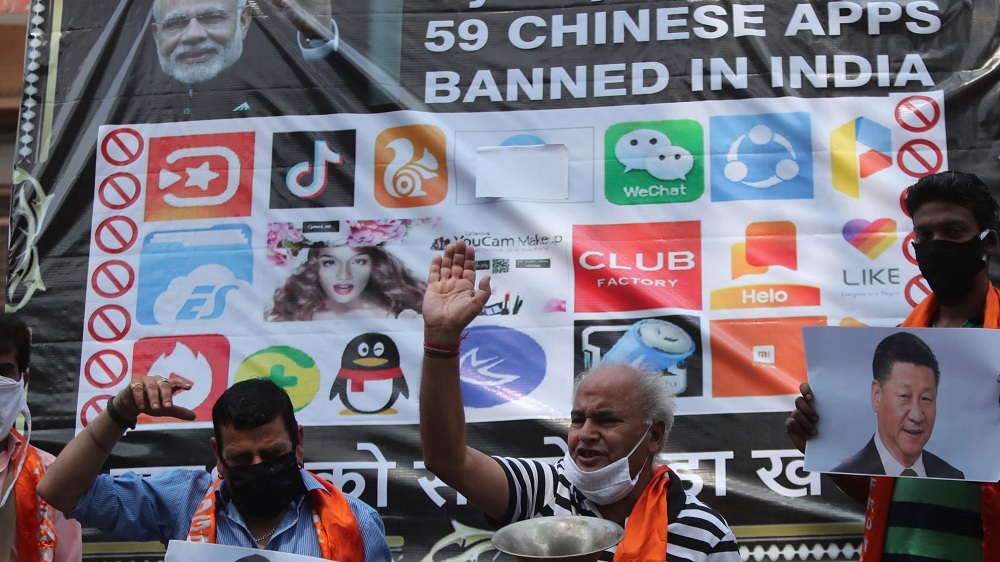
Biểu tình phản đối công nghệ Trung Quốc hôm 1/7 tại Ấn Độ. Ảnh: AP

Hôm 2/9, Ấn Độ tiếp tục cấm 118 ứng dụng Trung Quốc, trong đó có các tựa game lớn của Tencent và NetEase và dịch vụ của Baidu, Alibaba. Bộ Điện tử và Công nghệ thông tin nước này cho rằng các ứng dụng tham gia vào hoạt động gây phương hại đến chủ quyền và tính toàn vẹn của đất nước. Nhà chức trách cũng cáo buộc các dịch vụ gửi dữ liệu công dân sang máy chủ đặt ngoài Ấn Độ.

Tiếp tục đọc “Ấn Độ đã dạy cho doanh nghiệp Trung Quốc một ‘bài học đau đớn’”

Xung đột Trung – Ấn: Vì sao không ai muốn lên giọng?

  • SÁNG ÁNH
  • 27.06.2020, 05:36

TTCT – Dư luận Trung Quốc hiện đang được hướng sang tranh chấp quần đảo không người ở Senkaku/Điếu Ngư với Nhật Bản ở biển Hoa Đông. Khán giả xem phim võ hiệp và quyền thuật Trung Hoa đều rõ tâm tình này. Từ Lý Tiểu Long đến thầy ông là Diệp Vấn chỉ dành những chiêu độc nhất cho người Nhật, chứ chẳng thấy tỉ thí với võ sư người Ấn bao giờ

Xung đột Trung - Ấn: Vì sao không ai muốn lên giọng?
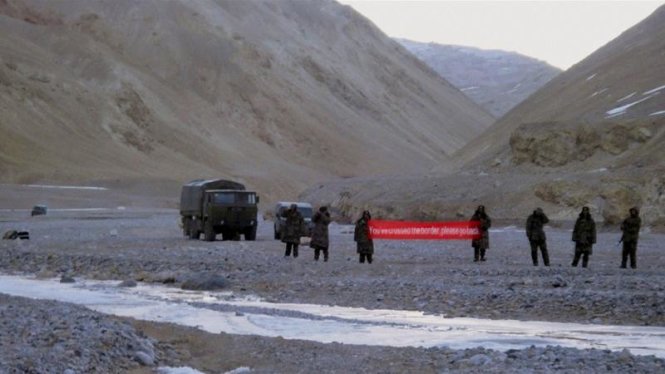
Trung Quốc và Ấn cáo buộc lẫn nhau về chuyện quân đôi bên nào vượt qua biên giới ở Ladakh trước. (Ảnh: AP)

Tiếp tục đọc “Xung đột Trung – Ấn: Vì sao không ai muốn lên giọng?”

Hạ nguồn Mekong trong cơn khát vô tận của Bắc Kinh

VNExpressGần hai mươi triệu người Việt Nam phụ thuộc vào nước ở hạ nguồn sông Mekong. Nhưng thượng nguồn bị kiểm soát bởi một quốc gia có cơn khát vô tận.

“Chúng không chết nhưng cũng không lớn nổi”, Hủ nói, ném lại những con tôm bé hơn ngón tay út xuống hồ. Đó là lần thả lưới thứ ba trong ngày, mới có vài con tôm vướng lưới.

Như nhiều nông dân khác ở Đồng bằng sông Cửu Long, Trần Văn Hủ đã từng chuyển đổi từ hai vụ lúa sang một vụ lúa một vụ tôm, rồi cuối cùng chuyển hẳn sang quảng canh tôm. Đất nhiễm mặn, cây lúa cho năng suất thấp. Nước ngọt ngày càng khan hiếm mà cây lúa lại tiêu tốn nhiều nước. Tiếp tục đọc “Hạ nguồn Mekong trong cơn khát vô tận của Bắc Kinh”

Vũ khí hạt nhân – 7 kỳ

***

Siêu bom hạt nhân thế hệ mới là cái gì?

02/08/2017 14:16 GMT+7

TTO – Đầu tháng 7-2017, Viện Nghiên cứu hòa bình quốc tế Stockholm đã cảnh báo tình hình hiện đại hóa vũ khí hạt nhân vẫn tiếp tục diễn ra trên thế giới.

Mỹ bắn thử tên lửa đạn đạo liên lục địa Minuteman III đêm 26-4-2017 - Ảnh: Không quân Mỹ
Mỹ bắn thử tên lửa đạn đạo liên lục địa Minuteman III đêm 26-4-2017 – Ảnh: Không quân Mỹ

Không có quốc gia sở hữu vũ khí hạt nhân nào sẵn sàng từ bỏ kho vũ khí hạt nhân trong tương lai gần. Các nước đều tiếp tục phát triển hoặc triển khai thêm các hệ thống vũ khí mới hoặc tuyên bố sẽ làm như thế
Chuyên viên Shannon Kile (Viện Nghiên cứu hòa bình quốc tế Stockholm)

Chín nước gồm năm nước thường trực Hội đồng Bảo an Liên Hiệp Quốc và Ấn Độ, Pakistan, Israel, Triều Tiên đang sở hữu 14.935 đầu đạn hạt nhân, trong đó đã triển khai 4.150 đầu đạn. Tiếp tục đọc “Vũ khí hạt nhân – 7 kỳ”

China says it hopes India learns lesson from border standoff

August 30
BEIJING — China’s foreign minister said Wednesday he hopes India can “learn lessons” from a recently resolved border standoff and avoid such occurrences in the future, as the leaders of the two Asian giants prepare to meet next week for a summit in southeastern China.

Wang Yi’s remarks came after the countries agreed Monday to pull back their troops from a disputed Himalayan plateau where China, India and Bhutan meet.

“We’re hoping that their side will learn lessons from this incident and prevent some of the things from happening again. We hope that through the efforts of both sides we will maintain healthy and stable relations,” Wang said. Tiếp tục đọc “China says it hopes India learns lesson from border standoff”