Where Beijing once celebrated its manufacturing and export prowess, it now openly discusses the need to curb “involution”. This is a dramatic departure from its previous stance, says Enodo Economics’ Diana Choyleva.
People browse in electric car showrooms located on the 5th floor in a popular shopping mall in Beijing on Jul 21, 2025. (Photo: CNA/Hu Chushi)
LONDON: For years, Beijing dismissed Western concerns about Chinese overcapacity as protectionist rhetoric. When the United States and European Union complained about cheap Chinese exports flooding global markets, China’s response was predictable: These were simply competitive advantages in a free market economy.
That narrative has now fundamentally shifted. In a remarkable policy U-turn, China has not only started acknowledging the overcapacity problem but is treating it as a national priority that requires urgent intervention.
While there have been signs of this narrative change for a while, the clearest signal of this messaging transformation came through recently on China’s own policy channels.
In July, the Communist Party’s leading journal Qiushi warned that “disorderly competition has destroyed entire industry ecology”. This wasn’t diplomatic language about market dynamics – it was an admission that destructive competition had reached crisis proportions.
Whether by choice or circumstance, China is looking inward for its economic growth.
President Xi Jinping wants Chinese consumers to spend their way to growth, buying up domestically made goods. At the same time, the government will invest more in “New Productive Forces” – A.I, Green Tech and Advanced Computing – all for the goal of moving up the value chain and shedding China’s reliance on foreign technology.
In this period of “de-coupling” and trade wars, Beijing might have little choice but to become more self-sufficient. Yet, an overly inward-looking and nationalistic China could discourage foreign investors. Are domestic consumption and production enough to jumpstart China’s sputtering economy?
Defaults by Chinese borrowers have surged to a record high since the outbreak of the coronavirus pandemic, highlighting the depth of the country’s economic downturn and the obstacles to a full recovery.
A total of 8.54mn people, most of them between the ages of 18 and 59, are officially blacklisted by authorities after missing payments on everything from home mortgages to business loans, according to local courts. That figure, equivalent to about 1 per cent of working-age Chinese adults, is up from 5.7mn defaulters in early 2020, as pandemic lockdowns and other restrictions hobbled economic growth and gutted household incomes.
The soaring number of defaulters will add to the difficulty of shoring up consumer confidence in China, the world’s second largest economy and a crucial source of global demand. It also throws a spotlight on the country’s lack of personal bankruptcy laws that might soften the financial and social impact of soaring debt.
Under Chinese law, blacklisted defaulters are blocked from a range of economic activities, including purchasing aeroplane tickets and making payments through mobile apps such as Alipay and WeChat Pay, representing a further drag on an economy plagued by a property sector slowdown and lagging consumer confidence. The blacklisting process is triggered after a borrower is sued by creditors, such as banks, and then misses a subsequent payment deadline.
“The runaway increase in defaulters is a product of not only cyclical but also structural problems,” said Dan Wang, chief economist at Hang Seng Bank China. “The situation may get worse before it gets better.” The personal debt crisis follows a borrowing spree by Chinese consumers. Household debt as a percentage of gross domestic product almost doubled over the past decade to 64 per cent in September, according to the National Institution for Finance and Development, a Beijing-based think-tank. But mounting financial obligations have become increasingly unmanageable as wage growth has stalled or turned negative in the midst of the economic malaise.
As a growing number of cash-strapped Chinese consumers have struggled to make ends meet, many have stopped paying their bills. More Chinese residents are also struggling for work: youth unemployment hit a record 21.3 per cent in June, prompting authorities to stop reporting the data. “I will pay my Rmb28,000 ($4,000) credit card balance when I have a job,” said John Wang, a Shanghai-based office worker who defaulted on his payments after being laid off in May. “I don’t know when that will happen.” China Merchants Bank said this month that bad loans from credit card payments that were 90 days overdue had increased 26 per cent in 2022 from the year before.
(KTSG) – Tốc độ tăng giá nhà luôn gần như gấp đôi tốc độ tăng trưởng thu nhập bình quân đầu người của Trung Quốc trong vòng 20 năm qua, nó cũng tăng gấp tám lần mức độ tăng trưởng của đô thị hóa. Nhưng khi các chính sách siết chặt tài chính với tên gọi “ba lằn ranh đỏ” được công bố vào năm 2021, cộng với thời gian dài phong tỏa để thực hiện chính sách zero-Covid, các trục trặc đã xuất hiện. Rất nhanh chóng, phản ứng domino xảy ra giữa các công ty bất động sản và lan sang ngân hàng bóng mờ (shadow banking).
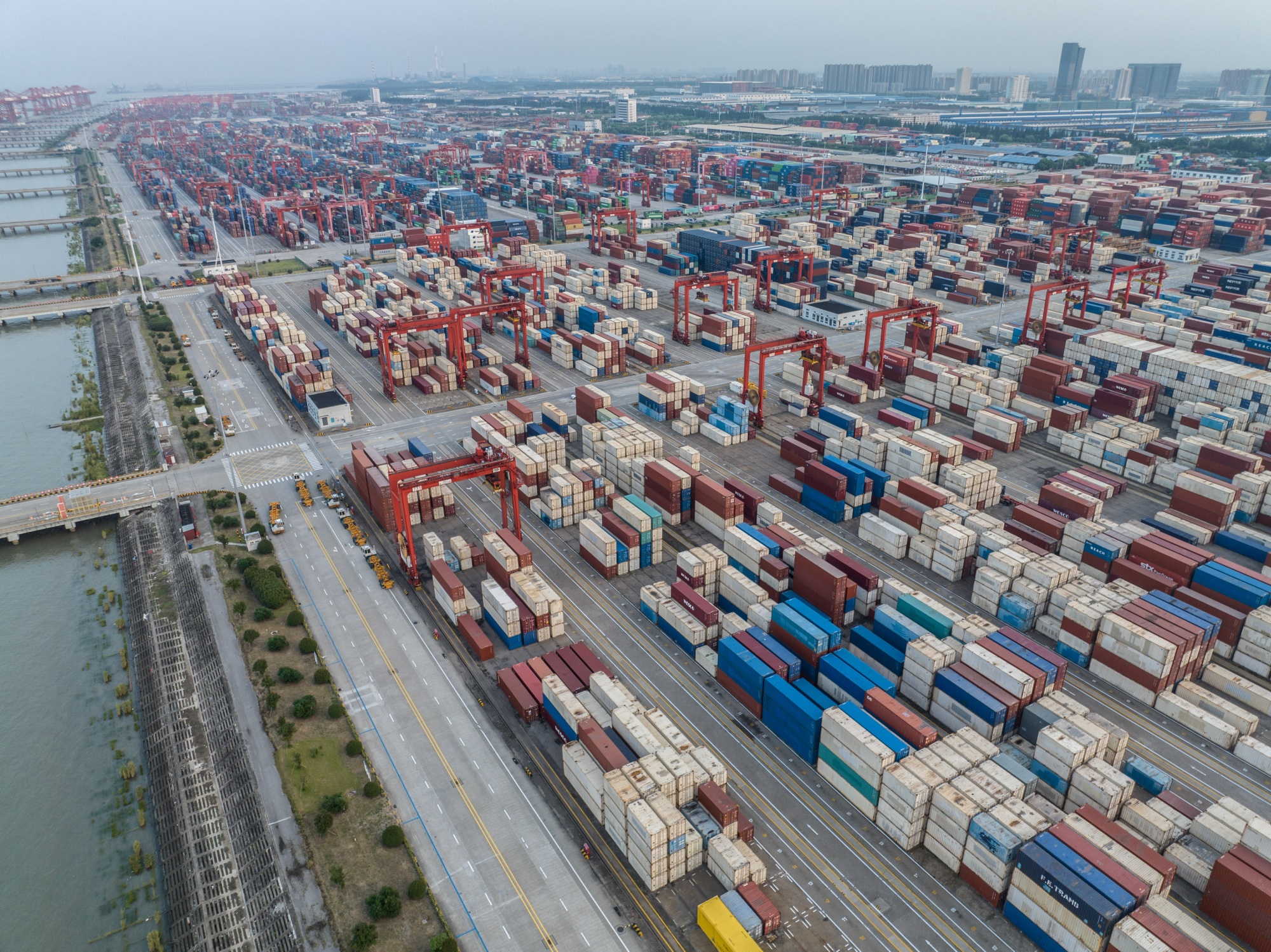
Shipping containers in China’s Jiangsu Province. The economic slowdown in recent months is sounding alarm bells across the world.Bloomberg
Today, I’ll tell you all you need to know about the slowdown in the world’s second-biggest economy.
If I had to use one word to describe the current situation, it would be fragile. The economic data we’ve gotten over the past few months have largely painted a gloomy picture. Chinese households are spending less than expected and saving more instead. Businesses are borrowing and investing at a reduced pace. And while the overall jobs situation has been stable, unemployment among the country’s youth has jumped so much that Beijing decided to stop releasing the data.
As downbeat as all that is, it is important to note the economy is not crashing. Economists are still expecting Chinese gross domestic product to grow 5.1% this year, 4.5% next year and 4.6% in 2025. By comparison, the US is forecast to grow 2% this year, 0.9% next year and 1.9% in 2025.
China’s economy showed further signs of weakness in May. Industrial output and retail sales both missed forecasts. Beijing is expected to increase its efforts to boost the economy to try to shore up its post-COVID-19 recovery.
Al Jazeera’s Katrina Yu reports from Beijing, China.
An opinion piece in Bloomberg titled ‘Trying to Replace China’s Supply Chains? Don’t Bother?’, published March 1, 2023, claims that ‘Vietnamese factories were supposed to save globalization’ but that they cannot. This is incorrect and here’s why, writes Dezan Shira and Associates, Head of Business Intelligence, Pritesh Samuel.
Vietnam’s factories were never supposed to save globalization. They offer businesses an alternate location for manufacturing – in line with a China+1 strategy that myriad companies now pursue due to rising costs in China.
Globalization is shaped by several factors, including geopolitics, national interests of governments, regional trade and investment initiatives, public policymaking directives by key trade bodies, and so on. It cannot be trivialized into the assumption that a single country can save it.
China’s advanced supply chain and supplier network, driven by the government’s long-term national policies, make it a manufacturing giant. At present, no single country, including Vietnam, can fully replace China’s manufacturing capacity.
Evergrande: the end of China’s property boom | FT Film
Financial Times – 10-3-2022
The rapid expansion of China’s property sector was powered by a great migration from the farms to the cities – and built on cheap credit. The FT tells the story of Evergrande, the most indebted property developer in the world, which now stands on the brink of collapse. It’s a story that changes the outlook for China’s position as the locomotive of global economic growth. But is this China’s Lehman Brothers moment? Read more at https://on.ft.com/3tNHO0j
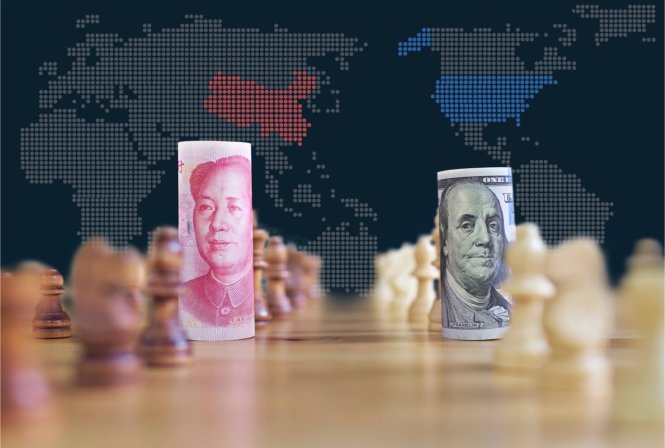
TTCT – Trong bối cảnh cuộc chiến tranh thương mại do Mỹ khởi phát đang lên đến cao trào sau khi Tổng thống Donald Trump áp thêm 10% thuế lên lượng hàng hóa Trung Quốc trị giá 300 tỉ USD có hiệu lực từ 1-9 tới, đã xuất hiện cáo buộc Bắc Kinh đáp trả bằng “lưỡi gươm và lá chắn” quen thuộc của họ: hạ giá đồng nhân dân tệ.
Ảnh: Bitcoin.com
Keith Bliss, phó chủ tịch cấp cao Cuttone & Co., phân tích trên Yahoo News: “Trung Quốc hiểu khá rõ cách thức họ điều chỉnh đồng tiền để có được những thứ nhất định. Họ nghĩ là họ có trong tay đòn bẩy. Có thể mô tả là họ dùng đồng nhân dân tệ cả như thanh gươm và lá chắn. Tiếp tục đọc “Vì sao chiến tranh tiền tệ nguy hiểm hơn thương chiến”→
* China factory activity remains in contraction territory
Japan, Vietnam PMI slumps as China slowdown hits
* South Korean exports contract at steepest pace in nearly 3 yrs
* Weak readings add pressure on central banks, China, for stimulus
By Leika Kihara
TOKYO, March 1 (Reuters) – Weak demand in China and growing global fallout from the Sino-U.S. trade war took a heavier toll on factories across much of Asia in February, business surveys showed on Friday.
Activity in China’s vast manufacturing sector contracted for the third straight month, pointing to more strains on its major trading partners and raising questions over whether Beijing needs to do more to stabilise the slowing economy.
(TBKTSG Online) – Đi một vòng quanh đặc khu kinh tế Tân Hải ở Thiên Tân, cách Bắc Kinh một giờ chạy xe hơi, bạn sẽ thấy những tòa nhà chưa hoàn chỉnh nằm kế những tòa nhà dang dở khác, những mặt tiền trống rỗng với nước sơn đen gạch chéo cửa ra vào.
TS. Phạm Sỹ Thành (*)Thứ Bảy, 2/12/2017, 09:06 Để giải quyết gánh nặng dư thừa sản lượng và tỷ lệ nợ gia tăng của các doanh nghiệp trong nước, Trung Quốc đã đẩy mạnh các sáng kiến kinh tế đối ngoại, thúc giục các nước phối hợp với Trung Quốc để xây dựng các mô hình hợp tác kinh tế chưa từng có tiền lệ. Ảnh: Internet
(TBKTSG) – Theo một báo cáo của J.P. Morgan tháng 9-2017, tổng nợ của Trung Quốc tương đương 289% GDP, tức là khoảng 30.000 tỉ đô la Mỹ, tăng gần 30 điểm phần trăm so với năm 2015 (260% GDP). Điều đáng nói là sau các chính sách kích thích kinh tế để chống chọi với khủng hoảng tài chính toàn cầu, tỷ lệ này đã tăng gấp đôi chỉ trong vòng chín năm (năm 2008 là 141,3% GDP), bằng với mức tăng trưởng kinh tế. Ngân hàng đầu tư đa quốc gia Goldman Sachs cho rằng sẽ mất khoảng nửa thập kỷ để ổn định tỷ lệ này. Hãng S&P Global Ratings hôm 29-9-2017 cảnh báo tổng nợ Trung Quốc có thể tăng đến 46.000 tỉ đô la Mỹ vào năm 2021.
19 Aug 2017 06:32PM (Updated: 19 Aug 2017 06:40PM)
BEIJING: China is to restrict foreign investments in sports clubs, real estate and entertainment and is banning investment in pornography and “unauthorised” military technology.
The new rules were announced Friday (Aug 18) by the government which had previously encouraged overseas spending sprees, but then warned late last year of “irrational” acquisitions amid fears that powerful conglomerates were racking up dangerous debt levels. Tiếp tục đọc “China cracks down on foreign spending sprees”→
Friday 13 January 2017 13.19 EST Last modified on Friday 13 January 2017 17.17 EST
China suffered a sharp drop in exports last year and there are fears its trading position will weaken further in 2017 with repercussions for the global economy if Donald Trump’s protectionist policies prompt a trade war.
Bài dịch dưới đây là một Chương trong quyển sách nhan đề Bá Chủ: Kế Hoạch Của Trung Quốc Để Thống Trị Á Châu và Thế Giới, xuất bản năm 2000, và được Dân Biểu Quốc Hội Hoa Kỳ Dana Rohrabacher đánh giá là “có giá trị hơn cả các sự thuyết trình của Cơ Quan Tình Báo Trung Ương (CIA)”. Tiếp tục đọc “Bản đồ thế giới của bá quyền Trung Quốc”→





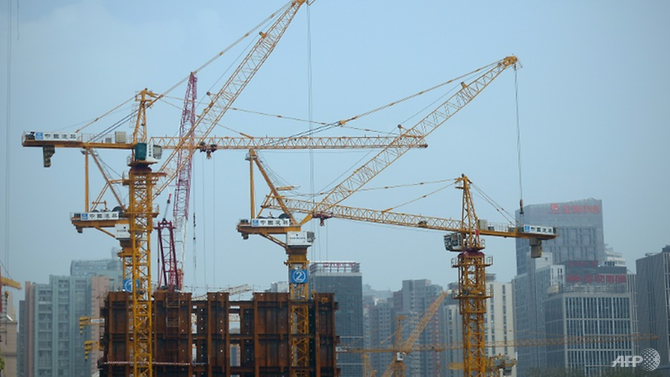
 Để giải quyết gánh nặng dư thừa sản lượng và tỷ lệ nợ gia tăng của các doanh nghiệp trong nước, Trung Quốc đã đẩy mạnh các sáng kiến kinh tế đối ngoại, thúc giục các nước phối hợp với Trung Quốc để xây dựng các mô hình hợp tác kinh tế chưa từng có tiền lệ. Ảnh: Internet

_-_IMG_1104.jpg)
 CVD
CVD 