Hồng Anh |

Ảnh: Griffith University.
Conversations on Vietnam Development

Hồng Anh |
As hydropower hits problems, China plans renewable energy for region
 Chinese investment is fueling a construction boom in Cambodia, but it is also bringing headaches. (Photo by Akira Kodaka)
Hun Sen, ruler for 33 years, faces little opposition in upcoming election
PHNOM PENH/SIHANOUKVILLE, Cambodia — As boom-mounted cameras swept the horizon, a drone hovered above more than 50,000 party faithful who had begun streaming noisily through the Cambodian capital well before dawn, dressed in white shirts and caps, and waving blue flags.
The modern technology captured an old and familiar scene: the unshakable Cambodian People’s Party elite out in strength ahead of a controversial general election that most observers believe lacks a credible opposition. The main Cambodian National Rescue Party was dissolved by Supreme Court order, and its leader Kem Sokha is in prison.
Kicking off the campaign for this month’s election was the longest-serving prime minister in the Asia-Pacific region: Hun Sen, the 65-year-old party chairman. Singers performed rousing favorites, monks dispensed petals and blessings, and troupes of dancers — apsaras, rowers and ducklings — softened up the crowd. At 7:15am, Hun Sen began reading from a prepared text and did not stop for 70 minutes. He was interrupted only once by a brief, almost auspicious sprinkling of rain. Tiếp tục đọc “Cambodians wary as Chinese investment transforms their country”

A stretch of railroad is shown under construction in Vientiane’s Na Xaythong district in an undated photo.
Thousands of Lao families ordered from their land and homes to make way for a high-speed railway linking the country with China are still waiting for compensation promised by their government though construction has surged ahead, sources in the country say.
Plans now call for work on the railway to end in 2021, with Chinese companies promising completion by that date despite the challenges of boring tunnels in mountainous areas of the country’s north.
Landlocked Laos expects the railroad to lower the cost of exports and consumer goods while boosting socioeconomic development in the impoverished nation of nearly 7 million people.
Under Lao Decree 84 issued in April 2016, Lao citizens losing land to development projects must be compensated for lost property and income, with project owners guaranteeing that living conditions for those displaced will be at least as good as they were before the project began.
In Chaengsavang village in the Na Xaythong district of the capital Vientiane, meanwhile, construction crews have measured and staked out the railroad’s proposed route and begun to build, though no one has spoken yet to affected households about compensation, a local resident recently told RFA’s Lao Service Tiếp tục đọc “Lao Citizens Displaced by China-Linked Railroad Project Still Not Paid For Losses”
Download the Report from CSIS
Download from CVD
China unveiled the concept for the Twenty-First Century Maritime Silk Road (MSR) in 2013 as a development strategy to boost infrastructure connectivity throughout Southeast Asia, Oceania, the Indian Ocean, and East Africa. The MSR is the maritime complement to the Silk Road Economic Belt, which focuses on infrastructure development across Central Asia. Together these initiatives form the One Belt One Road (OBOR) initiative designed to enhance China’s influence across Asia. Tiếp tục đọc “China’s Maritime Silk Road: Strategic and Economic Implications for the Indo-Pacific Region”
Belated compensation for over 4,000 affected families involves opaque assessments
MARWAAN MACAN-MARKAR, Asia regional correspondent

Upgrading Southeast Asia’s dilapidated rail infrastructure comes with social costs. © Reuters
BANGKOK — Some 4,000 families in Laos affected by a China-Laos high-speed rail link, begun in 2016 as part of China’s Belt and Road Initiative, are to receive compensation, but the amounts involved and timing are unclear.
Channelled through new accounts at Banque Pour Le Commerce Exterieur Lao Public, the communist country’s largest state-owned bank, payments will be made to farmers who sustained crop damage, and to those with “residential properties surrendered to the government,” according to the Lao News Agency, the official mouthpiece of the one-party state. Tiếp tục đọc “China’s Belt and Road rail project stirs discontent in Laos”
03/02/2018 09:47 GMT+7
TTO – Công trình thai nghén hơn 3 thế kỷ của Thái Lan đang nhận được sự hậu thuẫn rất lớn từ các cường quốc, đặc biệt bài toán tài chính có thể được giải quyết bởi “túi tiền không đáy” từ sáng kiến Vành đai – con đường của Trung Quốc.

Thái Lan và Trung Quốc đã ký biên bản ghi nhớ về kênh đào Kra, nhưng chính quyền hai bên đều không xác nhận việc này – Ảnh: Maritime News
Chúng ta ngày nay chưa tiến gần hơn (đến việc xây dựng kênh đào) so với cách đây 340 năm. Nhưng vì người dân và đất nước, đây là lúc thích hợp để bắt đầu
Tướng Pongthep Thesprateep (chủ tịch Hiệp hội Kênh đào Thái Lan)
Tiếp tục đọc “Trung Quốc ra sức vận động đào siêu kênh Kra xuyên Thái Lan”
TTO – Căn cứ quân sự Trung Quốc ở nước ngoài tại Djibouti sẽ là cái đầu tiên trong chuỗi các căn cứ sẽ xây dựng để bảo vệ lợi ích kinh tế của các công ty Trung Quốc.

Xe bọc thép Trung Quốc tham gia tập trận bắn đạn thật ở Djibouti tháng trước – Ảnh chụp màn hình SCMP
Khi binh sĩ Trung Quốc bắn những phát đạn tượng trưng đầu tiên tại căn cứ quân sự Djibouti cách đây hơn 2 tháng, đó cũng là những phát đạn cảnh báo cho thế giới rằng theo chân quá trình tranh giành lợi ích toàn cầu của Bắc Kinh sẽ là một quân đội hùng mạnh ở nước ngoài đủ sức để đảm bảo mọi thứ diễn ra êm đẹp. Tiếp tục đọc “Trung Quốc nổ súng ở châu Phi báo hiệu ra biển lớn”

(TBKTSG) – Gần đây ngày càng có nhiều quốc gia ở Đông Nam Á và Nam Á rơi vào bẫy nợ của Trung Quốc: vì không trả được nợ mà phải nhượng đất nhượng biển, hoặc làm theo những yêu cầu chính trị và ngoại giao của Bắc Kinh. Với đại dự án “Một vành đai, một con đường” (BRI – Bell and Road Initiative) đi qua nhiều nước mà Chủ tịch Trung Quốc Tập Cận Bình đang ra sức quảng bá, dự đoán sẽ có thêm nhiều nước mắc vào chiếc bẫy này.
Câu chuyện Sri Lanka
Tháng 12 năm ngoái, Chính phủ Sri Lanka phải cho một doanh nghiệp nhà nước Trung Quốc thuê hải cảng Hambantota trên bờ Ấn Độ Dương 99 năm để “cấn trừ” bớt khoản nợ mà nước này đã vay để phát triển khu vực hẻo lánh này. Tiếp tục đọc “Chiến lược “ngoại giao bẫy nợ” của Trung Quốc”
TĐH: We don’t hear discussion on the VNese media about this China-pushed five-year development plan at all. I wonder if Vietnam will have a public discussion about this plan, or whoever attending the LMC summit will just simply approve the plan on behalf of Vietnam?
scmp: Five-year development plan, including construction of hydropower dams, is expected to top agenda at Mekong River nations’ conference in Cambodia

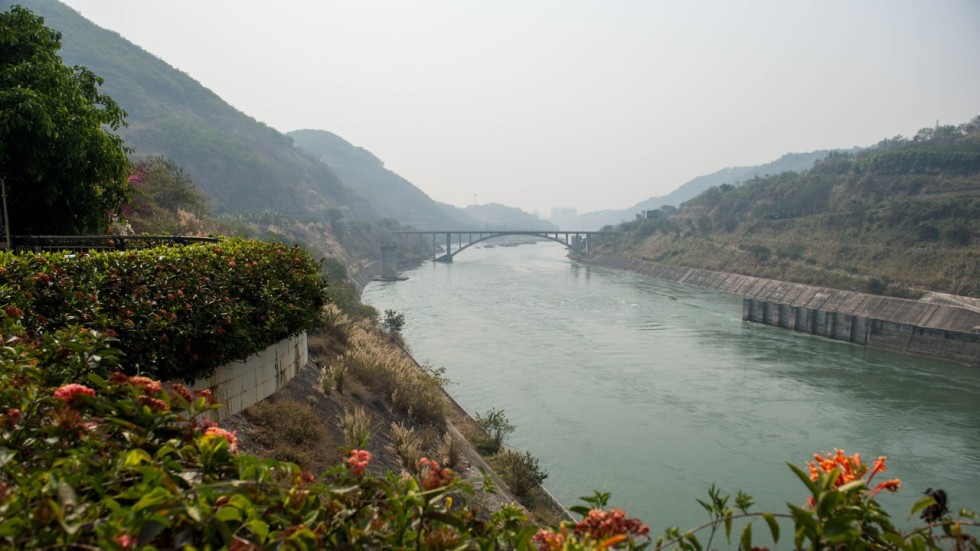
When China and the leaders of nations along the Mekong River meet on Wednesday at the Lancang-Mekong Cooperation summit in Cambodia, a top item will be mapping out a five-year development plan that would include building hydropower dams and other projects for the region – pointing to its importance in China’s ambitious belt and road infrastructure plan.
Concern is growing that the potential for causing ecological damage will make the Mekong a flashpoint for China and Southeast Asia’s territorial disputes – effectively creating a new South China Sea.
China pledges billions to Mekong River countries in bid to boost influence and repair reputation
Amid the backdrop of the river’s importance in connecting Europe through Southeast Asia and beyond in the grand infrastructure programme launched by President Xi Jinping, Chinese delegation leader Premier Li Keqiang will be looking to bolster China’s influence in the Mekong region as he faces his counterparts from Cambodia, Vietnam, Thailand, Laos and Myanmar.
Here are five key things to know about the summit and the significance of the Mekong River:
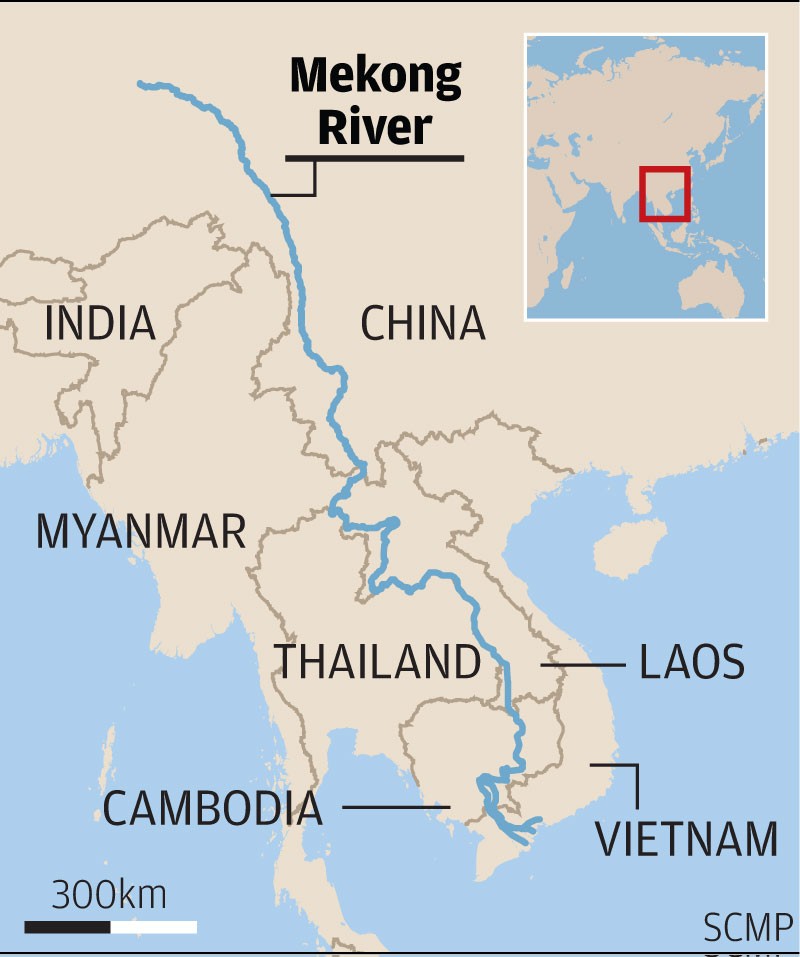
1. The river’s significance for China and Southeast Asia
Tiếp tục đọc “Five things to know about the Lancang-Mekong Cooperation summit”
The Beijing-led Lancang-Mekong Cooperation mechanism was set up to help ease tensions over development projects, but environmental groups are yet to be convinced
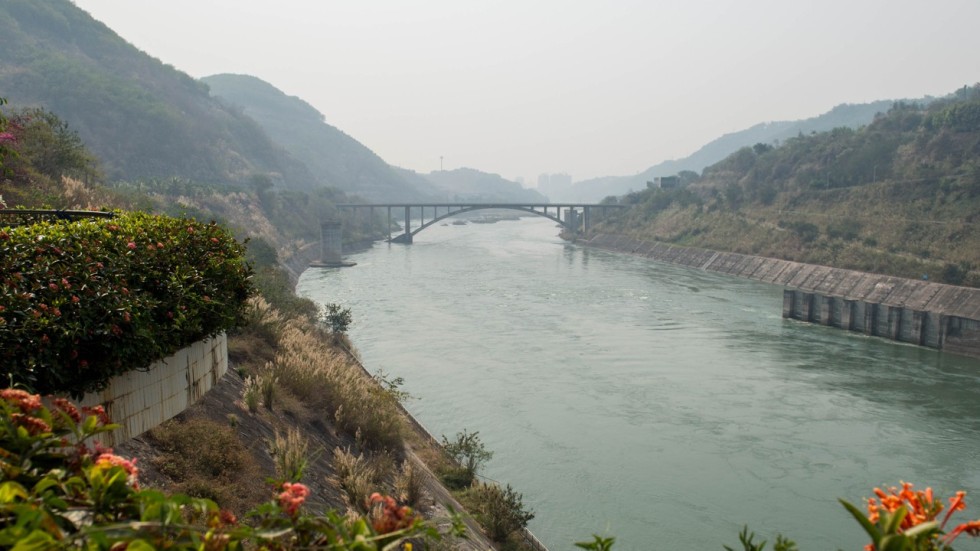

Foreign ministers from the six countries through which the Mekong flows met in southwestern China last month to approve a draft of a five-year development plan for the river. But as state leaders prepare to finalise the proposal at a meeting in Cambodia later this month, environmental groups have expressed concern over what it could mean for Southeast Asia’s longest waterway.
Tiếp tục đọc “Is Mekong River set to become the new South China Sea for regional disputes?”
 Ảnh minh họa : Một con kênh tại huyện Long Phú, tỉnh Sóc Trăng, châu thổ sông Mêkông cạn khô nước. Ảnh chụp ngày 08/03/2016. STR / AFP
Trong hai ngày 10-11/01/2018, hội nghị thượng đỉnh cơ chế Hợp Tác Lan Thương – Mêkông lần thứ 2 sẽ mở ra tại Phnom Penh, thủ đô Cam Bốt. Nhân dịp này, nhật báo Hồng Kông South China Morning Post, trong số ra ngày 03/01, đã phân tích thêm về cơ chế hợp tác do Trung Quốc chủ xướng, trên danh nghĩa là để góp phần giảm bớt căng thẳng đến từ các đề án trên sông Mêkông, nhưng đã bị các nhà bảo vệ môi sinh hết sức hoài nghi. Bài viết không ngần ngại đặt thành tựa câu hỏi : «Phải chăng sông Mêkông sắp trở thành một Biển Đông mới trong tranh chấp khu vực? Is Mekong River set to become the new South China Sea for regional disputes?».
Tiếp tục đọc “Sông Mêkông: Một Biển Đông mới trong tranh chấp Trung Quốc-ASEAN ?”
Disagreements over costs and land procurement are adding years to schedules
YUKAKO ONO, Nikkei staff writer

Officials attend the groundbreaking ceremony of the rail project linking Bangkok and Nakhon Ratchasima, on Dec. 21 in Nakhon Ratchasima, Thailand. (Photo by Yukako Ono).
NAKHON RATCHASIMA, Thailand Exports of high-speed railway systems by China to Southeast Asian nations are lagging behind schedule due to problems over cost sharing and delays in land procurement.
A China-led project in Thailand is finally about to get underway, two years after a groundbreaking ceremony for a part of the route. But the outlook for connecting the line with China’s planned pan-Asian railway network is still dim.
The situation is a matter of concern to China as high-speed railway exports represent a core of the Belt and Road Initiative to reinforce its relations with neighboring countries through infrastructure projects.

The Thai government on Dec. 21 held a groundbreaking ceremony for a 250km, 179 billion baht ($5.46 billion) high-speed rail project linking Bangkok and the northeastern Thai province of Nakhon Ratchasima. Tiếp tục đọc “China’s high-speed train plans in Southeast Asia stumble”
 |
| Prime Minister Nguyễn Xuân Phúc (right) receives General Secretary of the Communist Party of China (CPC) and President Xi Jinping in the central city of Đà Nẵng on November 11. — VNA/VNS Photo |
During a meeting with General Secretary of the Communist Party of China (CPC) and President Xi Jinping in Đà Nẵng on November 11, PM Phúc applauded the Chinese leader’s State visit to Việt Nam and his attendance at the APEC Economic Leaders’ Meeting in the central city. Tiếp tục đọc “PM: Việt Nam attaches importance to relations with China”
Trong quan hệ Việt Trung, chúng ta thường nghe các “câu vè” và khẩu hiệu tóm tắt các chiến lược và dự án kinh tế chính trị. Hiểu các câu vè và khẩu hiệu này sẽ giúp ta hiểu hơn về liên hệ Việt Trung.
Phương châm 16 chữ (tiếng Trung: 十六字方针) (thập lục tự phương châm) là đoạn văn:
Sơn thủy tương liên
Lý tưởng tương thông
Văn hóa tương đồng
Vận mệnh tương quan Tiếp tục đọc “Vài khái niệm căn bản trong liên hệ Việt Trung: “16 chữ vàng, 4 tốt” – “Hai hành lang, một vành đai” – “Một vành đai, một con đường””


 CVD
CVD 