It has been two years since President Marcos Jr won the Philippines’ Presidential race, and tensions are high in the South China Sea. Each day brings new confrontations between Chinese and Filipino vessels in the disputed waters. In a departure from his predecessor, President Duterte’s stance, President Marcos Jr has had a tumultuous relationship with China. From cancelling BRI projects to brinkmanship in the South China Sea, relations between Manila and Beijing have deteriorated. At the same time, the Philippines draws closer to the US, potentially changing the complexion of US-China rivalry in the Indo-Pacific. As each side assert their claims, are we one miscalculation away from armed conflict?
Vietnam says it is ready to hold discussions with the Philippines regarding Manila’s claims to an extended continental shelf in the South China Sea. Philippine assertions overlap with those from China and Vietnam. While clashes between Beijing and Manila have been high profile and sometimes violent, the Philippines and Vietnam have relied on diplomacy to settle their dispute. Buena Bernal reports.
Việt Nam giới thiệu Viện trưởng Viện Biển Đông Nguyễn Thị Lan Anh ứng cử vào vị trí thẩm phán Tòa án Quốc tế về Luật Biển (ITLOS) nhiệm kỳ 2026-2035.
Thứ trưởng thường trực Bộ Ngoại giao Nguyễn Minh Vũ cho biết thông tin trên tại sự kiện thuộc khuôn khổ Hội nghị các nước thành viên Công ước Liên Hợp Quốc về Luật Biển (UNCLOS) lần thứ 34 ở New York.
Đây là lần đầu tiên Việt Nam giới thiệu ứng viên thẩm phán ITLOS. Tòa án bao gồm 21 thẩm phán, được bầu chọn trong số những người có uy tín cao và năng lực cao nhất, được công nhận trong lĩnh vực luật biển. Phó giáo sư, Tiến sĩ Nguyễn Thị Lan Anh hiện là Viện trưởng Viện Biển Đông thuộc Học viện Ngoại giao.
Mỹ, Nhật Bản, Australia và Philippines đã tổ chức cuộc tập trận chung chính thức đầu tiên ở Biển Đông hôm 7/4. Các nhà lãnh đạo Mỹ, Nhật Bản, Philippines cũng đã tổ chức hội nghị thượng đỉnh 3 bên đầu tiên tại Washington vào ngày 11/4 và dự kiến sẽ công bố lịch tuần tra chung ở Biển Đông trong năm nay.
Theo báo cáo, cuộc tập trận này nhằm duy trì trật tự quốc tế, tự do hàng hải và hàng không trong khu vực Ấn Độ Dương – Thái Bình Dương, đồng thời sẽ giúp tăng cường khả năng tương tác của 4 nước trên các phương diện lý thuyết, chiến thuật và kỹ năng. Theo tin tổng hợp từ các nguồn tin như Bộ Quốc phòng Philippines và Đại sứ quán Nhật Bản tại Philippines, các yếu tố cơ bản của cuộc tập trận lần này gây được sự chú ý và có vẻ được thiết kế một cách cẩn thận.
Gần đây Philippines hai lần đưa người đổ bộ lên rạn san hô Hoài Ân trên quần đảo Trường Sa của Việt Nam. Sự việc đó đã làm căng thẳng với TQ leo thang khi phía TQ dùng cả trực thăng đến thổi gió mạnh để ngăn chặn.
The 5901 vessel by the Chinese Coast Guard. Photo courtesy of CAP
Vietnam strongly opposes acts of violations of its sovereignty over Vanguard Bank, the foreign ministry said Thursday.
“The Vanguard Bank is a part of Vietnam’s continental shelf, established in accordance with the United Nations Convention on the Law of the Sea (UNCLOS),” said spokeswoman for the Ministry of Foreign Affairs Pham Thu Hang in a Thursday press meet.
She was responding to inquiries about China sending its coast guard vessel to the area recently.
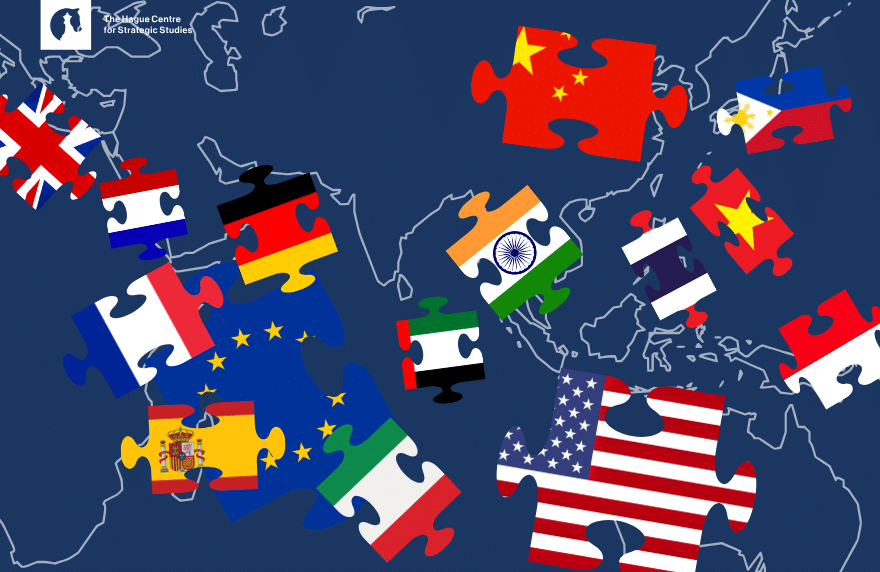
How should Europe strengthen its engagement with the Indo-Pacific? While the continent is highly dependent on trade from the region, it has limited capabilities to protect its interests in the face of growing Sino-American competition. This new HCSS report by Paul van Hooft, Benedetta Girardi and Alisa Hoenig examines how European states can engage in the Indo-Pacific by deepening cooperation with regional powers.
The Indo-Pacific comprises many actors, which are positioned along key chokepoints and share geopolitical and geoeconomic interests in protecting crucial sea lines of communication with Europe. This report does two things to establish pathways for deeper European engagement with Indo-Pacific states:
Based on relevance for maritime security and political affinity with European countries, it assesses the suitability of regional states as partners. Besides the usual suspects Australia, Japan and South Korea, it identifies an “inbetweener” group of countries, with whom cooperation can be fruitful but is not guaranteed, and states with whom engagement is unlikely to yield beneficial results.
It then zooms in on the “inbetweeners” to determine pathways for deepening ties. By comparing bilateral relations between different European and Indo-Pacific states along security, trade and investment, and capacity-building and infrastructure, the authors identify relative strengths and weaknesses of European states. Finally, they also contrast Europe’s involvement with that of China and the United States.
Based on the analysis, the report recommends to strengthen European collaboration with more ambivalent Indo-Pacific states, with a focus on trade and investment and capacity-building in the short- to medium-term.
The research for and production of this report has been conducted within the PROGRESS research framework agreement. Responsibility for the contents and for the opinions expressed, rests solely with the authors and does not constitute, nor should be construed as, an endorsement by the Netherlands Ministries of Foreign Affairs and Defence.
The organization warns that escalating attacks on ships in the Red Sea are adding strain to shipping routes already hit by conflict and climate change.
The UN’s trade and development body, UNCTAD, has raised profound concerns over escalating disruptions to global trade.
It says that recent attacks on ships in the Red Sea, combined with geopolitical tensions affecting shipping in the Black Sea and the impacts of climate change on the Panama Canal, have given rise to a complex crisis affecting key trade routes.
UNCTAD’s head of trade logistics, Jan Hoffmann, outlined the organization’s detailed analysis of the situation at the UN’s daily press briefing on 26 January. He underlined maritime transport’s critical role in international trade, noting that it is responsible for approximately 80% of the global movement of goods.
Disruptions in the Black Sea and Panama and Suez Canals
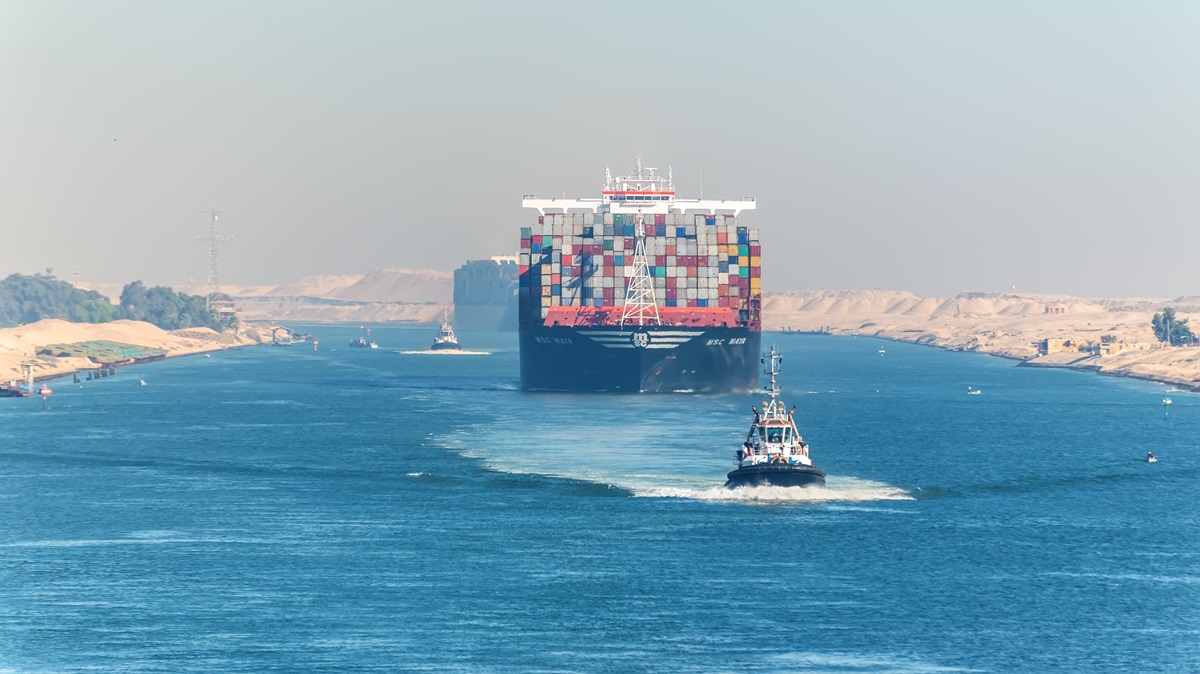
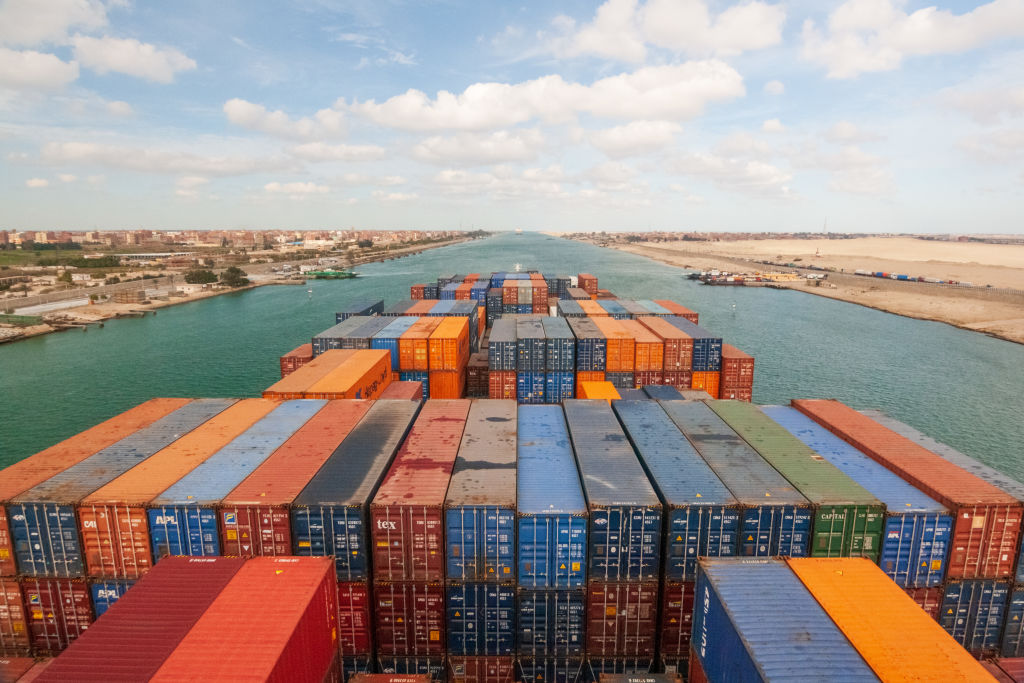
The Suez Canal, a critical waterway connecting the Mediterranean Sea to the Red Sea, handled approximately 12% to 15% of global trade in 2023. UNCTAD estimates that the trade volume going through the Suez Canal decreased by 42% over the last two months.
Red Sea crisis: Suez Canal traffic plummets
Suez Danal, daily transits, 28-day rolling average, 2016–23 January 2024, Index, Average=100201620172018201920202021202220232024020406080100120140160180200
The ongoing conflict in Ukraine has also triggered substantial shifts in oil and grain trades, reshaping established trade patterns.
Meanwhile, the Panama Canal, another key artery for global trade, is grappling with a severe drought that has diminished water levels, resulting in a staggering 36% reduction in total transits over the past month compared to a year ago.
The countries’ opposing ideologies amid clashing sovereignty claims could lead to years of militarisation and confrontation in the region if not contained, analysts warn
Manila has been boosting defence ties with various countries with the aim of building ‘collective deterrence’ in the event of conflict in the region
The recent trading of barbs between China and the Philippines over ideological differences highlights the “perennial mistrust” between the two neighbours, experts say, noting that their disparate approaches to democracy and authoritarianism are likely to further escalate tensions in the South China Sea.
The Blue Security Program engages with and facilitates high quality research on issues of critical maritime security across the Indo-Pacific.
Bringing together leading regional experts in politics, international law and strategic studies, Blue Security focuses on three key pillars of maritime security: order, law and power.
Blue Security is a collaboration between La Trobe Asia, Griffith Asia Institute (GAI), University of New South Wales Canberra (ADFA), University of Western Australia’s Defence and Security Institute (DSI), United States Studies Centre at the University of Sydney and the Asia-Pacific Development, Diplomacy & Defence Dialogue (AP4D). It produces working papers, commentaries, and scholarly publications related to maritime security for audiences across the Indo-Pacific.
Released today, the annual Piracy and Armed Robbery Report of the ICC International Maritime Bureau (IMB) raises concern over the first successful Somali based hijacking since 2017.
The IMB annual report recorded 120 incidents of maritime piracy and armed robbery against ships in 2023 compared to 115 in 2022. It reveals that 105 vessels were boarded, nine attempted attacks, four vessels hijacked and two fired upon.
Where the number of 2023 reported incidents has slightly increased compared to 2022, the IMB urges caution for crew safety as the number of crew taken hostage and kidnapped increased from 41 to 73 and from two to 14 in 2022 and 2023 respectively. A further 10 crew were threatened, four injured and one assaulted in 2023.
Alarming first successful hijacking off Somalia since 2017
On 14 December 2023, the report recorded the first successful hijacking of a vessel off the coast of Somalia since 2017.
Though the 100 incidents in 2023 increased by 19 per cent over 2022, these were small-time robberies, with theft of items such as nominal value wires, brass ship products, engine spares and scraps, Regional Cooperation Agreement on Combating Piracy and Armed Robbery, says executive director
PTI Singapore Published 09.01.24, 06:06 PM
Representational picture.File picture
No report of piracy incidents occurred on the Asian high seas but 99 actual incidents and one attempted armed robbery against ships occurred in Southeast Asian waters in 2023, a Singapore based maritime organisation reported said on Tuesday.
Though the 100 incidents in 2023 increased by 19 per cent over 2022, these were small-time robberies, with theft of items such as nominal value wires, brass ship products, engine spares and scraps, Regional Cooperation Agreement on Combating Piracy and Armed Robbery (ReCAAP) executive director Krishnaswamy Natarajan said at the annual press conference.
Such incidents were five in India in 2023, the same as those in 2022, while Bangladesh and Malaysia reported one incident each, compared to five and two incidents in 2022, respectively.
Reviewing the year, Natarajan pointed out that the increase in incidents occurred in Indonesia, the Philippines, the Straits of Malacca and Singapore (SOMS), Thailand and Vietnam.
Of concern was the occurrence of incidents in SOMS with 63 incidents compared to 55 incidents in 2022, said the former Director General of Indian Coast Guard.
In the Sulu-Celebes Seas, there was no report of the abduction of crew for ransom by the Abu Sayyaf Group (ASG), which was achieved through the concerted efforts of the Philippine and Malaysian authorities, he highlighted.
As part of the Centre’s continuous efforts to ensure that the evolving needs of the shipping industry are met, the ReCAAP Information Sharing Centre (ISC) launched various initiatives in 2023, to keep the shipping community abreast of the latest piracy and ARAS situation in Asia and to facilitate ship masters in the timely reporting of incidents to the nearest coastal State.
The initiatives include the launch of the ReCAAP Data Visualisation Map and Panel (Re-VAMP) — an interactive dashboard to enable the viewing and analytics of past and current incidents of piracy and ARAS in Asia.
The initiative also includes the production of a poster containing the guidelines and updated contact details of law enforcement agencies of the littoral States of the SOMS; and engagement of the shipping industry through various events including conferences, forums and shipping dialogue sessions, he elaborated.
Except for the headline, this story has not been edited by The Telegraph Online staff and has been published from a syndicated feed.
The maritime militia fleet is the vanguard of Beijing’s strategy to reshape the geopolitical landscape in the region, experts say, with its blue-hulled ships a frequent sight at territorial standoffs in the South China Sea.
The maritime militia is considered by analysts to be China’s third sea force alongside its navy and coast guard. The Chinese government maintains the fleet is little more than a group of patriotic fishermen.
Dubbed “little blue men” by Andrew Erickson, professor of strategy at the U.S. Naval War College’s China Maritime Studies Institute, the ships regularly join China’s coast guard in blockades against supply missions to a Philippine military outpost at the Spratly Islands’ Second Thomas Shoal, including the most recent tense showdown on December 10. A blockading militia ship was involved in a collision with a Philippine coast guard boat in October, and Manila accused another of using a sonic weapon against a fisheries bureau convoy on December 9.
Gregory Brew is a historian of international energy, U.S. foreign policy, the Cold War, U.S.-Iranian relations, and modern Iran. He is currently an Analyst at Eurasia Group.
After two months, the crisis in the Middle East is poised to seriously disrupt the global economy as well as regional stability—thanks to the Houthis, a rebel Shi’a group in Yemen, and their successful effort to disrupt shipping through the Red Sea.
While attacks by the Houthis on commercial shipping began on November 19, they escalated last week, with the Yemeni rebels firing anti-ship ballistic missiles at several passing ships and hitting one (the first time such a weapon has ever been used successfully). As none of the ships were bound for Israel or owned by Israeli companies, the attacks signaled the Houthis were stepping up their efforts to pressure local commerce as a way to force Israel to suspend its campaign in Gaza.
The National Task Force West Philippine Sea (NTFWPS) vehemently condemns the illegal and aggressive actions carried out by the Chinese Coast Guard and Chinese Maritime Militia against the civilian Bureau of Fisheries and Aquatic Resources (BFAR) vessels Datu Sanday, Datu Bankaw, and Datu Tamblot today during a regular BFAR humanitarian and support mission of providing oil subsidy and grocery packs to over 30 Filipino fishing vessels near Bajo De Masinloc in the West Philippine Sea. As of this reporting the mission is on-going. Tiếp tục đọc “STATEMENT OF THE NATIONAL TASK FORCE FOR THE WEST PHILIPPINE SEA”→






 CVD
CVD 