What’s Behind Europe’s Skyrocketing Power Prices

bloomberg.com

Europe’s energy ambitions are clear: to shift to a low-carbon future by remaking its power generating and distribution systems. But the present situation is an expensive mess. A global supply crunch for natural gas, bottlenecks for renewable energy and wind speeds in the North Sea among the slowest in 20 years, idling turbines, have contributed to soaring electricity prices. As winter approaches, governments are preparing to intervene if needed in volatile energy markets to keep homes warm and factories running.

1. What’s the problem here?

Energy prices skyrocketed as economies emerge from the pandemic — boosting demand just as supplies are falling short. Coal plants have been shuttered, gas stockpiles are low and the continent’s increasing reliance on renewable sources of energy is exposing its vulnerability. Even with mild weather in September, gas and electricity prices were breaking records across the continent and in the U.K. Italy’s Ecological Transition Minister Roberto Cingolani said he expected power prices to increase by 40% in the third quarter. In the U.K., CF Industries Holdings Inc., a major fertilizer producer, shut two plants, and Norwegian ammonia manufacturer Yara International ASA curbed its European production because of high fuel costs, as the crunch started to hit industrial companies.

Tiếp tục đọc “What’s Behind Europe’s Skyrocketing Power Prices”

‘Here to stay’: Indo-Pacific Quad leaders to meet at White House

First in-person leader meet of US, Japan, India and Australia grouping signals ‘durability’ despite differences.

The so-called 'Quad' grouping will hold its first in-person leaders meeting on Friday [File: Kiyoshi Ota/Reuters]
The so-called ‘Quad’ grouping will hold its first in-person leaders meeting on Friday [File: Kiyoshi Ota/Reuters]

By Joseph Stepansky 23 Sep 2021, Al Jazeera

The leaders of the United States, Japan, India and Australia will meet on Friday for their first in-person person summit of the Indo-Pacific Quadrilateral Security Dialogue, or so-called “Quad” grouping.

The informal arrangement, with the countries first working together in response to the 2004 Indian Ocean earthquake and tsunami, has increasingly solidified since 2017. It has been fuelled by consecutive US administration’s policies towards China, and aided in no small part by individual tensions between Tokyo, Canberra, New Delhi with Beijing.KEEP READINGUS to join Australia, India, Japan in first-ever Quad summitWhat is the Quad and can it counter China’s rise?Quad goals: US, Indo-Pacific allies to up India’s vaccine outputCan the Quad effectively counter China’s influence?

Tiếp tục đọc “‘Here to stay’: Indo-Pacific Quad leaders to meet at White House”

What are the regional reactions to the new US-UK-Australia security pact?

By Mike Yeo Saturday, Sep 18 Defenseews

(fpm/Getty Images)

MELBOURNE, Australia — China has lashed out at plans by Australia to forge a closer alliance with the United States and the United Kingdom, which includes the sharing of nuclear-powered submarine technology. But other Indo-Pacific nations are reacting more cautiously.

Speaking during a news conference, Chinese Foreign Ministry spokesman Zhao Lijian said the nuclear-powered submarine cooperation “has seriously undermined regional peace and stability, intensified the arms race and undermined international nonproliferation efforts.”

Tiếp tục đọc “What are the regional reactions to the new US-UK-Australia security pact?”

US, UK and Australia announce Indo-Pacific defense partnership

DW

The US and UK will share nuclear-powered submarine technology with Australia as part of the new three-way defensive alliance. The move comes amid tense relations with China.

The leaders of Australia, the UK, and the US announced the formation of a new Indo-Pacific security alliance on Wednesday, which will include the sharing of nuclear-powered submarine technology.

The partnership will see the three countries share technology to improve their defensive capabilities, including cyber security, artificial intelligence and underwater systems.

Tiếp tục đọc “US, UK and Australia announce Indo-Pacific defense partnership”

Treasured maps show Paracels and Spratlys belong to Việt Nam

VNN –  September, 13/2021 – 08:30|

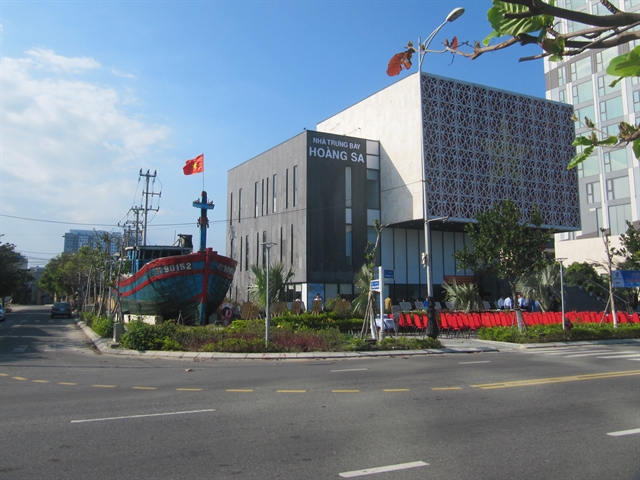
Hoàng Sa Museum in Đà Nẵng keeps and exhibits over 400 documents, photos and ancient maps of the Hoàng Sa Islands of Việt Nam. All the maps clearly show the southernmost point of China stops at Hainan Island. VNS Photo Công Thành 

The Hoàng Sa Museum, on the coast of Sơn Trà peninsula, Ðà Nẵng City, is a unique site preserving documents and other artefacts about Việt Nam’s sovereignty over the Hoàng Sa (Paracel) and Trường Sa (Spratly) archipelagos.

The museum displays over 400 maps, documents and photos, of which 150 are ancient maps showing the country’s sovereignty over the two archipelagos from the 16th to 19th century.

Tiếp tục đọc “Treasured maps show Paracels and Spratlys belong to Việt Nam”

Ba điểm đáng chú ý trong Luật An toàn giao thông hàng hải mới của Trung Quốc

Nghiên cứu Biển Đông – 12/09/2021 – 16:51

Trong bối cảnh Luật Hải cảnh mới có hiệu lực đầu năm nay vẫn còn chưa hết gây tranh cãi, các quốc gia xung quanh lại nhanh chóng phải đặt tiếp câu hỏi: Luật 9/2021 có điểm gì mới? Bắc Kinh sẽ áp dụng Luật này như thế nào và ở đâu?

Ba điểm đáng chú ý trong Luật An toàn giao thông hàng hải mới của Trung Quốc

Tác giả: Hoàng Lan

Ngày 1/9/2021, Luật An toàn giao thông hàng hải của Trung Quốc chính thức có hiệu lực (sau đây gọi là Luật 9/2021). Từ 53 điều với 3.539 ký tự trong bản Luật năm 1983 (sửa đổi năm 2016), Luật 9/2021 có độ dài gấp gần 6 lần với 18.322 ký tự và 122 điều khoản quy định những nội dung chi tiết trong việc quản lý và giám sát tàu thuyền trong vùng biển mà Trung Quốc gọi là khu vực thuộc “quyền tài phán” của nước này. Trong bối cảnh Luật Hải cảnh mới có hiệu lực đầu năm nay vẫn còn chưa hết gây tranh cãi, các quốc gia xung quanh lại nhanh chóng phải đặt tiếp câu hỏi: Luật 9/2021 có điểm gì mới? Bắc Kinh sẽ áp dụng Luật này như thế nào và ở đâu?

Tiếp tục đọc “Ba điểm đáng chú ý trong Luật An toàn giao thông hàng hải mới của Trung Quốc”

Cuộc xâm chiếm bằng tên gọi của Trung Quốc trên Biển Đông

THỜI ĐẠI 07/09/2021 – 10:30

Sau khi dùng vũ lực đánh chiếm quần đảo Hoàng Sa và một phần quần đảo Trường Sa, Trung Quốc dùng nhiều biện pháp trong đó có việc đặt, đổi tên các thực thể nhằm hợp thức hóa hành vi chiếm đóng trái luật pháp quốc tế của mình.

Cuộc xâm chiếm bằng tên gọi của Trung Quốc trên Biển Đông
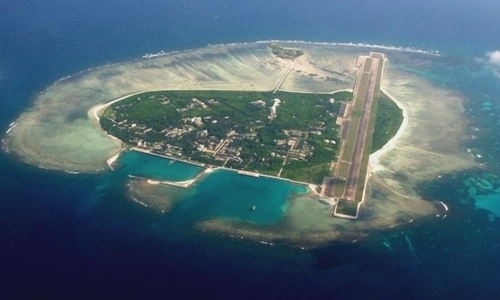
Đảo Phú Lâm thuộc quần đảo Hoàng Sa của Việt Nam đang bị Trung Quốc chiếm đóng trái phép

Tác giả: TS Trần Công Trục.

Theo Tân Hoa Xã dẫn thông tin từ Sở Quy hoạch và Phát triển đô thị nông thôn tỉnh Hải Nam, Trung Quốc thực hiện dự án gắn thẻ tên có quy mô bao trùm các loài thực vật trên hơn 10 đảo và rạn san hô trong quần đảo Hoàng Sa, bao gồm đảo Duy Mộng, đảo Cây, và đảo Hữu Nhật.

Việc đặt, sửa đổi, bổ sung các tên gọi cho các thực thể địa lý và các loài động thực vật đang tồn tại ở quần đảo Hoàng Sa và quần đảo Trường Sa là một việc làm được Trung Quốc tổ chức thực hiện nhiều lần kể từ khi họ sử dụng vũ lực để xâm chiếm quần đảo Hoàng Sa và một phần quần đảo Trường Sa vào những thời điểm khác nhau.

Cùng với nhiều hoạt động khác, đây là việc làm của Trung Quốc nhằm hiện thực hóa yêu sách chủ quyền đối với quần đảo Hoàng Sa và quần đảo Trường Sa của Việt Nam, cũng như đối với hầu hết Biển Đông theo yêu sách đường “lưỡi bò” phi lý. Đây cũng được coi là một trong những mũi tiến công xâm chiếm Biển Đông, thậm chí có người gọi đây là một cuộc “xâm lược bằng tên gọi” không kém phần nguy hiểm do Trung Quốc đã nhiều lần tổ chức thực hiện.

Tiếp tục đọc “Cuộc xâm chiếm bằng tên gọi của Trung Quốc trên Biển Đông”

Geopolitical standoff in South China Sea leads to environmental fallout

mongabay.com

by Leilani Chavez on 12 August 2021

  • Satellite images show significant growth in the occurrence of algal blooms in contested areas in the South China Sea.
  • Images suggest that these algal blooms or phytoplankton overgrowth are linked to the presence of vessels anchored in the area and to island-building activities in the region.
  • While satellite images help give a preview of the ecological state of the South China Sea, on-site observations are necessary to validate the findings, experts say.
  • Decades of territorial and maritime disputes, however, have limited the conduct of studies and dissuaded the establishment of conservation zones in the South China Sea.

Tiếp tục đọc “Geopolitical standoff in South China Sea leads to environmental fallout”

How Beijing’s New Maritime Rules in the South China Sea Will Affect India and Others


China’s new maritime law – in which foreign vessels will have to submit details to Chinese authorities when transiting through its ‘territorial waters’ – has now come into force.

How Beijing’s New Maritime Rules in the South China Sea Will Affect India and Others

FILE PHOTO: Chinese dredging vessels are purportedly seen in the waters around Mischief Reef in the disputed Spratly Islands in the South China Sea in this still image from video taken by a P-8A Poseidon surveillance aircraft provided by the United States Navy May 21, 2015. U.S. Navy/Handout via Reuters/File Photo

Manoj Joshi

Manoj Joshi The Wire Powered by DIPLOMACYSOUTH ASIA 16 HOURS AGO

In a classic manoeuvre of what is called “lawfare”, China announced a new set of maritime regulations last week that require ships carrying certain types of cargo to provide detailed information to the Chinese authorities when transiting through Chinese “territorial waters”.

Though such demands by littoral states are not unusual, it does not take a genius to understand that this particular move is part of an ongoing Chinese project to establish its jurisdiction over the South China Sea by using Chinese laws and regulation. Neither is the use of “lawfare” to project a country’s goals. The US routinely uses what is called a “long-arm jurisdiction” to claim global authority of its laws and regulations as part of its exercise of projecting power.

Tiếp tục đọc “How Beijing’s New Maritime Rules in the South China Sea Will Affect India and Others”

The long arm of China’s new maritime law risks causing conflict in far-off waters

Analysis by Brad Lendon and Steve George, CNN

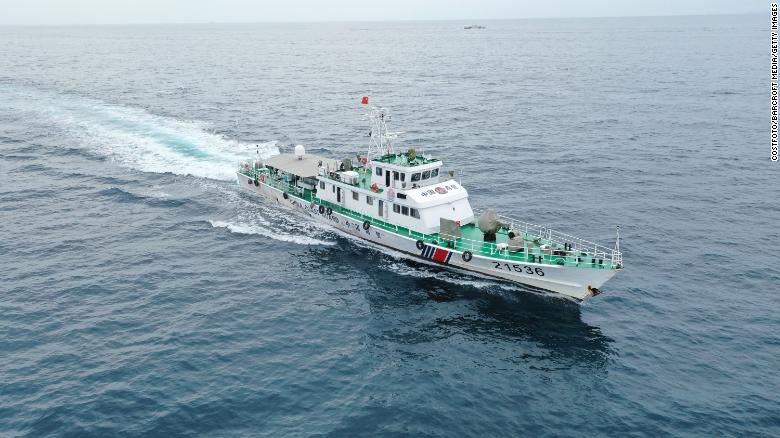
Updated 0843 GMT (1643 HKT) September 3, 2021A Chinese Coast Guard taskforce advances at full speed in Zhanjiang, Guangdong Province in China on August 13.A Chinese Coast Guard taskforce advances at full speed in Zhanjiang, Guangdong Province in China on August 13.

A version of this story appeared in CNN’s Meanwhile in China newsletter, a three-times-a-week update exploring what you need to know about the country’s rise and how it impacts the world. Sign up here.

Hong Kong (CNN)Beijing wants foreign vessels to give notice before entering “Chinese territorial waters,” providing maritime authorities with detailed information — including the ship’s name, call sign, current position, next port of call and estimated time of arrival.It may sound like a reasonable enough request, especially if the ship is carrying hazardous goods, that is until you consider what constitutes “Chinese territorial waters.”Beijing asserts sovereignty over vast swathes of the South China Sea, under its widely contested and far-reaching nine-dash line, as well as disputed islands in the East China Sea.

Tiếp tục đọc “The long arm of China’s new maritime law risks causing conflict in far-off waters”

Maritime Traffic Safety Law of the People’s Republic of China (2021 revision)

Document Number : Order No. 79 of the President of the People’s Republic of China
Area of Law : Maritime Transport
Level of Authority : Laws
Date issued : 04-29-2021
Effective Date : 09-01-2021
Issuing Authority : Standing Committee of the National People’s Congress
Status : Not Yet Effective

Order of the President of the People’s Republic of China (No. 79)


The Maritime Traffic Safety Law of the People’s Republic of China , as revised and adopted at the
28th session of the Standing Committee of the Thirteenth National People’s Congress of the People’s
Republic of China on April 29, 2021, is hereby issued, and shall come into force on September 1,
2021.

Xi Jinping, President of the People’s Republic of China
April 29, 2021

Maritime Traffic Safety Law of the People’s Republic of China
(Adopted at the Second Session of the Standing Committee of the Sixth National People’s Congress
on September 2, 1983; amended in accordance with the Decision of the Standing Committee of the
National People’s Congress on Amending Twelve Laws Including the Foreign Trade Law of the
People’s Republic of China at the 24th Session of the Standing Committee of the Twelfth National
People’s Congress on November 7, 2016; and revised at the 28th session of the Standing Committee
of the Thirteenth National People’s Congress on April 29, 2021.

Read the full text of the law here >>

Trung Quốc giở trò cắt lát salami để độc chiếm Biển Đông

Thanh niên – Ngô Minh Trí – 01/09/2021 – 16:00

Phối hợp tàu cá dân binh, sức mạnh quân sự, lực lượng chấp pháp như hải cảnh, Trung Quốc tự đặt ra các quy định để dần dần thâu tóm Biển Đông.

Trung Quốc giở trò cắt lát salami để độc chiếm Biển Đông | Thế giới | Thanh  Niên
Các tàu hải cảnh Trung Quốc trong vụ uy hiếp tàu cá Việt Nam /ẢNH: NGƯ DÂN CUNG CẤP

Như Thanh Niên đã thông tin, từ hôm nay (1.9), chính quyền Trung Quốc áp dụng quy định mới về an toàn hàng hải. Theo đó, người điều khiển các loại tàu thuyền như tàu có thể lặn, tàu chạy bằng năng lượng hạt nhân, tàu chở vật liệu phóng xạ, tàu chở hóa chất, khí hóa lỏng… đều phải khai báo khi hoạt động ở “lãnh hải” mà Bắc Kinh tuyên bố chủ quyền.

Tiếp tục đọc “Trung Quốc giở trò cắt lát salami để độc chiếm Biển Đông”

Biển Đông: “Coi giò coi cẳng” những gương mặt khác

SÁNG ÁNH 21/7/2020 19:07 GMT+7

TTCT Các quốc gia Đông Nam Á xung quanh khu vực Biển Đông đều đã chuẩn bị cho một tương lai mới, dự kiến sẽ bất trắc hơn.

Theo Công ty tài chính PricewaterhouseCoopers thì năm 2030, 5 cường quốc đứng đầu thế giới về kinh tế sẽ xếp hạng như sau: Trung Quốc, Hoa Kỳ, Ấn Độ và Nhật Bản là 4 nước đầu. Đây là chuyện dễ hiểu. Nước thứ 6 là Nga. Vậy nước thứ 5 là nước nào? Anh hay Đức? Pháp hay Brazil, Mexico? Hàn Quốc? Năm 2030, nếu mọi chuyện đúng dự đoán, cường quốc kinh tế hạng 5 thế giới sẽ là Indonesia.

Trong khi chờ đợi ngày vinh quang xa vời ấy, hiện tính GDP theo mãi lực tương đương (PPP) thì Indonesia mới đứng hàng thứ 7 (IMF 2019). Tính theo danh nghĩa thì Indonesia hàng 16 với GDP là 1.210 tỉ đôla, hơn 4 lần Việt Nam. 

Tiếp tục đọc “Biển Đông: “Coi giò coi cẳng” những gương mặt khác”