Đại sứ Bùi Thế Giang: Nhiều nước mạnh, giàu, phát triển hơn Việt Nam vẫn chưa trở lại được HĐBA LHQ

DVTừng là Phó Trưởng Phái đoàn Đại diện Thường trực Việt Nam tại Liên Hợp Quốc (LHQ) từ cuối 2007 đến đầu 2012, trong đó có 2 năm 2008 & 2009 là Phó Đại diện Việt Nam tại Hội đồng Bảo an (HĐBA) LHQ, đến giờ Đại sứ Bùi Thế Giang vẫn giữ thói quen theo dõi lịch làm việc hàng ngày của HĐBA LHQ. Với nhiều người, những sự kiện Việt Nam tham gia chỉ là một dòng tin, nhưng Đại sứ Bùi Thế Giang phân tích với cái nhìn của người trong cuộc.

Tiếp tục đọc “Đại sứ Bùi Thế Giang: Nhiều nước mạnh, giàu, phát triển hơn Việt Nam vẫn chưa trở lại được HĐBA LHQ”

CSIS: Nhiều tàu hút cát để xây cảng nước sâu tại căn cứ Ream của Campuchia

Thanh Niên – Đông A –  22/01/2022 – 15:07

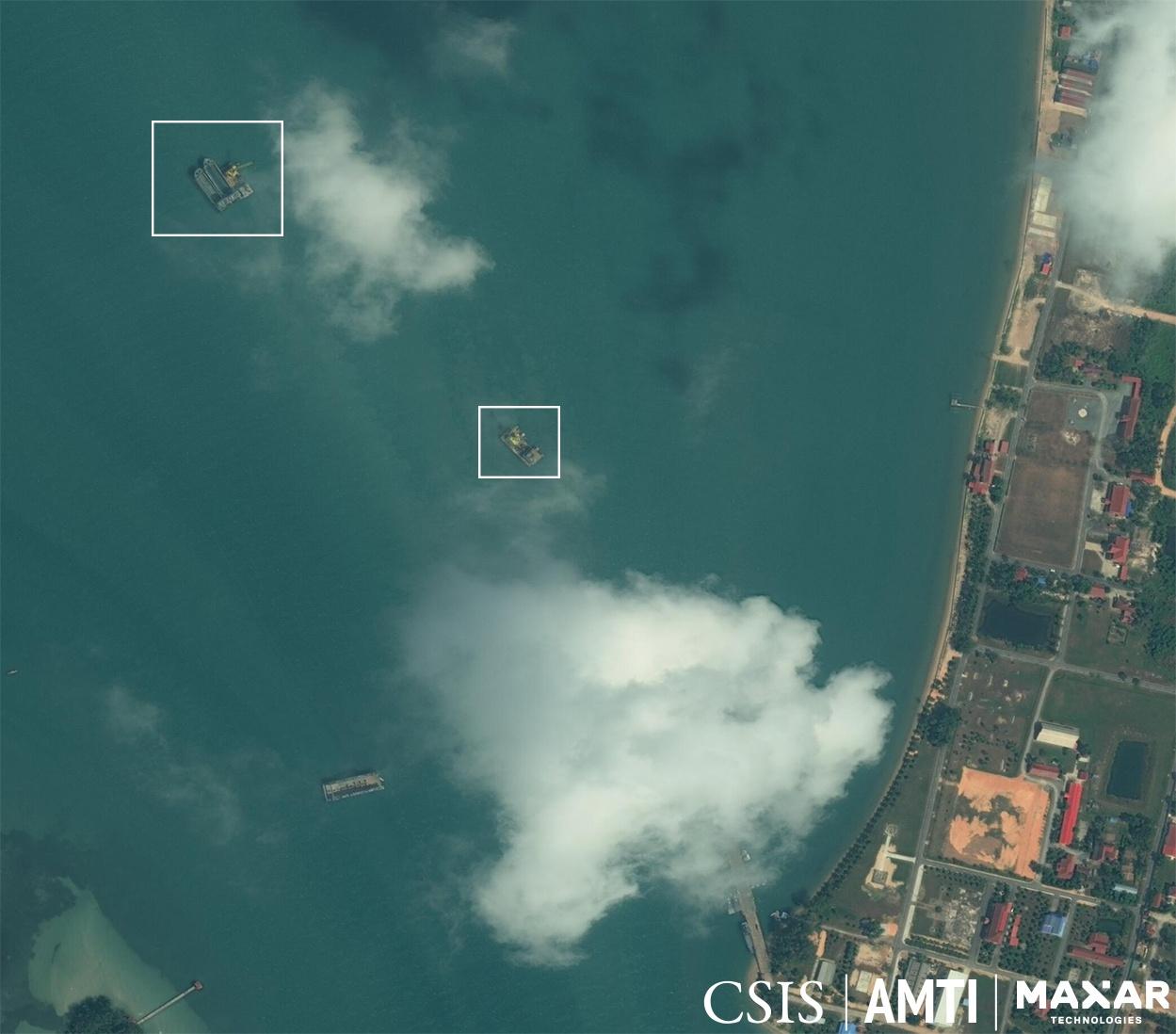
Trung tâm Nghiên cứu Chiến lược và Quốc tế (CSIS) ở Mỹ ngày 21.1 cho biết nhiều tàu hút cát đã được phát hiện ngoài khơi căn cứ hải quân Ream của Campuchia.

CSIS: Nhiều tàu hút cát để xây cảng nước sâu tại căn cứ Ream của Campuchia - ảnh 1
Ảnh vệ tinh ngày 16.1 cho thấy tàu hút cát hoạt động ngoài khơi căn cứ Ream của CampuchiaCHỤP MÀN HÌNH TWITTER

Reuters dẫn lại báo cáo Trung tâm Nghiên cứu Chiến lược và Quốc tế (CSIS) tại Mỹ đưa ra ngày 21.1 cho biết các tàu hút cát đã xuất hiện gần căn cứ Ream trong những bức ảnh chính phủ Campuchia công bố tháng này và ảnh vệ tinh thương mại.

Tiếp tục đọc “CSIS: Nhiều tàu hút cát để xây cảng nước sâu tại căn cứ Ream của Campuchia”

19-1: Hướng về Hoàng Sa, máu thịt của Tổ quốc

PLO – Tân Việt – 19/01/2022 – 16:53

Đòi công lý cho Hoàng Sa là điều rất chính đáng và được đặt ra thường xuyên, đòi hỏi sự chung tay góp sức của mỗi người dân Việt Nam.

Ngày này 48 năm trước (19-1-1974), Trung Quốc (TQ) đã dùng vũ lực chiếm đóng trái phép quần đảo Hoàng Sa của Việt Nam (VN). Nhân sự kiện này, báo Pháp Luật TP.HCM có cuộc trao đổi với ông Võ Ngọc Đồng, Giám đốc Sở Nội vụ TP Đà Nẵng kiêm Chủ tịch UBND huyện Hoàng Sa.

Chủ tịch huyện Hoàng Sa nói: “Ngày này, cả nước hướng về Hoàng Sa như cuộc hành hương về lòng yêu nước và nỗi nhớ về một vùng lãnh thổ đang bị TQ chiếm đóng”.

19-1: Hướng về Hoàng Sa, máu thịt của Tổ quốc - ảnh 1
Ông Võ Ngọc Đồng, Giám đốc Sở Nội vụ TP Đà Nẵng kiêm Chủ tịch UBND huyện Hoàng Sa.

Tiếp tục đọc “19-1: Hướng về Hoàng Sa, máu thịt của Tổ quốc”

The Looming Environmental Catastrophe in the South China Sea

Heated maritime and territorial disputes conceal the severe damage being done beneath the waves.

thediplomat.com

By Murray Hiebert January 14, 2022   

Much of the focus on the South China Sea over the past decade has centered around the nationalistic territorial disputes between China and four Southeast Asian claimants and a geopolitical tussle between China and the United States over freedom of navigation in the contested waters. What is going on beneath the surface of the sea – overfishing, destruction of coral reefs, climate change, plastics pollution, ocean acidification – is equally threatening and may have a longer-term impact on the survivability of the sea with its rich fishing beds, potential gas and oil reserves, and bustling sea lanes.

Tiếp tục đọc “The Looming Environmental Catastrophe in the South China Sea”

CONCEPTUALIZATION OF “MARITIME SECURITY” IN SOUTHEAST ASIA: CONVERGENCE AND DIVERGENCE


PUBLISHED: DECEMBER 15, 2021 CSIS

“Maritime Security” has emerged as a central concept in Southeast Asia’s policy lexicon. However, as is the case in much of the world, the term’s precise meaning is not consistently clear. Which challenges and state activities should be categorized as maritime security and which should be considered elements of another domain is generally ambiguous. This ambiguity can be useful to leaders seeking to build unity of action among government agencies with overlapping maritime policy mandates and to diplomats seeking to rely on euphemistic qualities to support flexible political narratives that minimize the risks associated with security dilemmas.  However such linguistic polysemy only works for so long and introduces risk. Left unclarified, terms will develop assumed meanings. For example, many Southeast Asians regard contemporary American talk about maritime security as a thin veil for something better understood as “Great Power Competition at Sea.” Therefore, even the most benign initiatives are factored into regional calculations aimed at balancing between external powers. Within the region, it is also possible for lexical disconnects to lead to problematic misinterpretations of policy intent and diplomatic signals.

Recognizing that understanding the varied conceptualizations of maritime security is an academic puzzle with real-world practical implications in Southeast Asia, the S. Rajaratnam School of International Studies convened a roundtable of experts to take stock of regional maritime security definitions. These specialists surveyed national policy documents and policymaker discourse to assess how maritime security is defined, used, and conceptualized in seven key Southeast Asian coastal states (the Philippines, Vietnam, Brunei, Malaysia, Indonesia, Singapore, and Thailand), ASEAN as a multinational institution, and the Quad members (Australia, Japan, India, and the United States). This stocktaking enabled the team to identify and discuss the significance of the convergences and divergences. Noting the transnational nature of discourse, the phrase “Southeast Asian conceptualizations” was adopted as a shorthand.  This does not specifically mean usage by Southeast Asian individuals or the region’s national governments but refers to the security-related discourse taking place in the region.  While the primary goal of the project was to improve communication by providing common reference points, the project also discovered findings of practical policy importance.

Discussions of each country’s conceptualization of maritime security and the implications of the term’s varying definitions across the region are available in the following 14 article series:

Evolving Conceptualizations of Maritime Security in Southeast Asia by John Bradford

The Philippines’ Conceptualizations of Maritime Security by Jay Batongbacal

Vietnam’s Conceptualizations of Maritime Security by Nguyen Nam Duong

Brunei Darussalam’s Conceptualizations of Maritime Security by Asyura Salleh

Malaysia’s Conceptualizations of Maritime Security by Tharishini Krishnan

Indonesia’s Conceptualizations of Maritime Security by Gilang Kembara

Singapore’s Conceptualization of Maritime Security by YingHui Lee

Thailand’s Conceptualizations of Maritime Security by Somjade Kongrawd

ASEAN Conceptualizations of Maritime Security by Dita Liliansa

Australia’s Conceptualization of Maritime Security by David Letts

India’s Conceptualization of Maritime Security by Prakash Gopal

Japan’s Conceptualization of Maritime Security by Kentaro Furuya

The United States’ Conceptualization of Maritime Security by Blake Herzinger

Maritime Security Conceptualizations in Southeast Asia: The Implications of Convergence and Divergence by John Bradford

Tiểu đa phương ASEAN ở Biển Đông

TT – 17/01/2022 – 15:56

Cục diện cấu trúc an ninh ở Biển Đông dường như đã tiến triển sang một giai đoạn mới khi Indonesia, nơi đặt trụ sở của tổ chức ASEAN, quyết định thúc đẩy các hoạt động hợp tác an ninh hàng hải mang tính đa phương với các quốc gia trong khu vực.

Tiểu đa phương ASEAN ở Biển Đông - Ảnh 1.

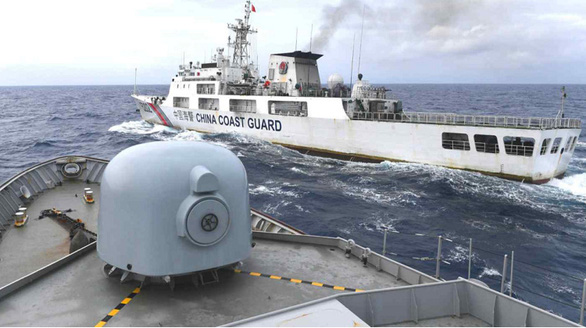
Một tàu hải cảnh Trung Quốc được nhìn từ tàu hải quân Indonesia đang trong cuộc tuần tra ở khu vực Biển Bắc Natuna – Ảnh: REUTERS

Điều này cũng trùng hợp với căng thẳng gần đây giữa Indonesia với Trung Quốc ở khu vực ngoài khơi quần đảo Natuna thuộc chủ quyền Indonesia.

Tiếp tục đọc “Tiểu đa phương ASEAN ở Biển Đông”

Mỹ đi loạt bước rắn với TQ về Biển Đông ngay đầu 2022

PLO 14/01/2022 – 05:42

Mỹ đi loạt bước rắn với Trung Quốc về Biển Đông ngay đầu năm 2022 khi cùng lúc công bố báo cáo bác yêu sách chủ quyền của Bắc Kinh ở Biển Đông và điều hai nhóm tàu sân bay tới vùng biển này.

Mỹ đi loạt bước rắn với TQ về Biển Đông ngay đầu 2022 - ảnh 1
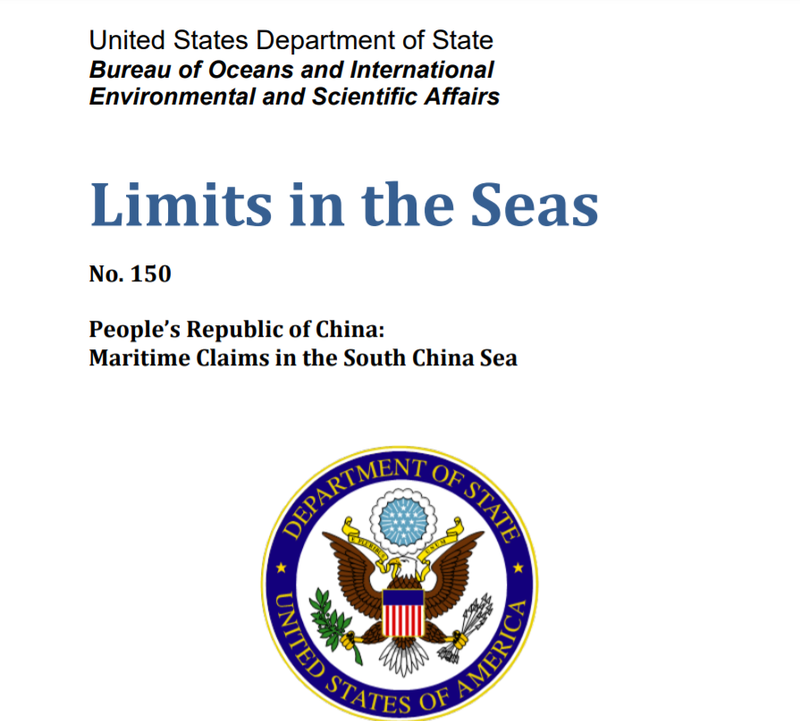
Báo cáo  “Limits in the Seas” (Giới hạn trên các vùng biển) của Mỹ.

Năm 2021 khép lại với sự kiện Tổng thống Mỹ Joe Biden ban hành Đạo luật Ủy quyền Quốc phòng (NDAA) vào ngày 27-12. Theo đó, Mỹ sẽ chi 770 tỉ USD cho chi tiêu quốc phòng, trong đó dành 7,1 tỉ USD cho chiến lược chống Trung Quốc ở khu vực Ấn Độ Dương – Thái Bình Dương.  Có lẽ đây là bước chuẩn bị cho một năm 2022 đầy căng thẳng giữa hai siêu cường ở khu vực Ấn Độ Dương – Thái Bình Dương, mà một trong những trọng tâm là ở Biển Đông.

Chưa đầy nửa tháng đầu của năm 2022, Mỹ đã có những động thái quyết liệt thách thức yêu sách chủ quyền phi pháp của Trung Quốc ở Biển Đông.

Tiếp tục đọc “Mỹ đi loạt bước rắn với TQ về Biển Đông ngay đầu 2022”

US Department of State – Republic of China: Maritime Claims in the South China Sea

Download full report >>

Executive Summary

This study examines the maritime claims of the People’s Republic of China (PRC) in the SouthChina Sea. The PRC’s expansive maritime claims in the South China Sea are inconsistent with international law as reflected in the 1982 United Nations Convention on the Law of the Sea (“Convention”).

The PRC asserts four categories of maritime claims* in the South China Sea:

• Sovereignty claims over maritime features. The PRC claims “sovereignty” over more than one hundred features in the South China Sea that are submerged below the sea surface at high tide and are beyond the lawful limits of any State’s territorial sea. Such claims areinconsistent with international law, under which such features are not subject to a lawfulsovereignty claim or capable of generating maritime zones such as a territorial sea.

• Straight baselines. The PRC has either drawn, or asserts the right to draw, “straight baselines” that enclose the islands, waters, and submerged features within vast areas of ocean space in the South China Sea. None of the four “island groups” claimed by the PRCin the South China Sea (“Dongsha Qundao,” “Xisha Qundao,” “Zhongsha Qundao,” and“Nansha Qundao”) meet the geographic criteria for using straight baselines under the Convention. Additionally, there is no separate body of customary international law that supports the PRC position that it may enclose entire island groups within straight baselines.

• Maritime zones. The PRC asserts claims to internal waters, a territorial sea, an exclusive economic zone, and a continental shelf that are based on treating each claimed South China Sea island group “as a whole.” This is not permitted by international law. The seaward extent of maritime zones must be measured from lawfully established baselines, which are normally the low-water line along the coast. Within its claimed maritime zones, the PRC also makes numerous jurisdictional claims that are inconsistent with international law.

• Historic rights. The PRC asserts that it has “historic rights” in the South China Sea. Thisclaim has no legal basis and is asserted by the PRC without specificity as to the nature orgeographic extent of the “historic rights” claimed.

The overall effect of these maritime claims is that the PRC unlawfully claims sovereignty or someform of exclusive jurisdiction over most of the South China Sea. These claims gravely underminethe rule of law in the oceans and numerous universally-recognized provisions of international lawreflected in the Convention. For this reason, the United States and numerous other States haverejected these claims in favor of the rules-based international maritime order within the SouthChina Sea and worldwide.

* Islands in the South China Sea over which the PRC claims sovereignty are also claimed by other States. This studyexamines only the maritime claims asserted by the PRC and does not examine the merits of sovereignty claims toislands in the South China Sea asserted by the PRC or other States. The United States takes no position as to whichcountry has sovereignty over the islands in the South China Sea, which is not a matter governed by the law of the sea.

Limits in the Seas

US DEPARTMENT OF STATE

OFFICE OF OCEAN AND POLAR AFFAIRS

This series, issued by the Office of Ocean and Polar Affairs, Bureau of Oceans and International Environmental and Scientific Affairs in the Department of State, aims to examine coastal States’ maritime claims and/or boundaries, and assess their consistency with international law.  The studies represent the views of the United States Government only on the specific matters discussed therein and do not necessarily reflect an acceptance of the limits claimed.

Tiếp tục đọc “Limits in the Seas”

Mỹ Á – cửa ngõ tiến ra đại dương – Kỳ cuối: Biển cá sinh sôi, làng chài mới ấm no

21/12/2021 12:44 GMT+7

TTONgười Mỹ Á có thể không có thuyền to máy nghìn mã lực như những làng chài khác, nhưng họ có niềm tự hào khi bao đời nay nói không với giã cào. Họ vẫn ‘chung thủy’ với lưới vây, lưới cảng, lưới rút để bảo vệ biển, giữ gìn cho đàn cá sinh sôi…

Mỹ Á - cửa ngõ tiến ra đại dương - Kỳ cuối: Biển cá sinh sôi, làng chài mới ấm no - Ảnh 1.

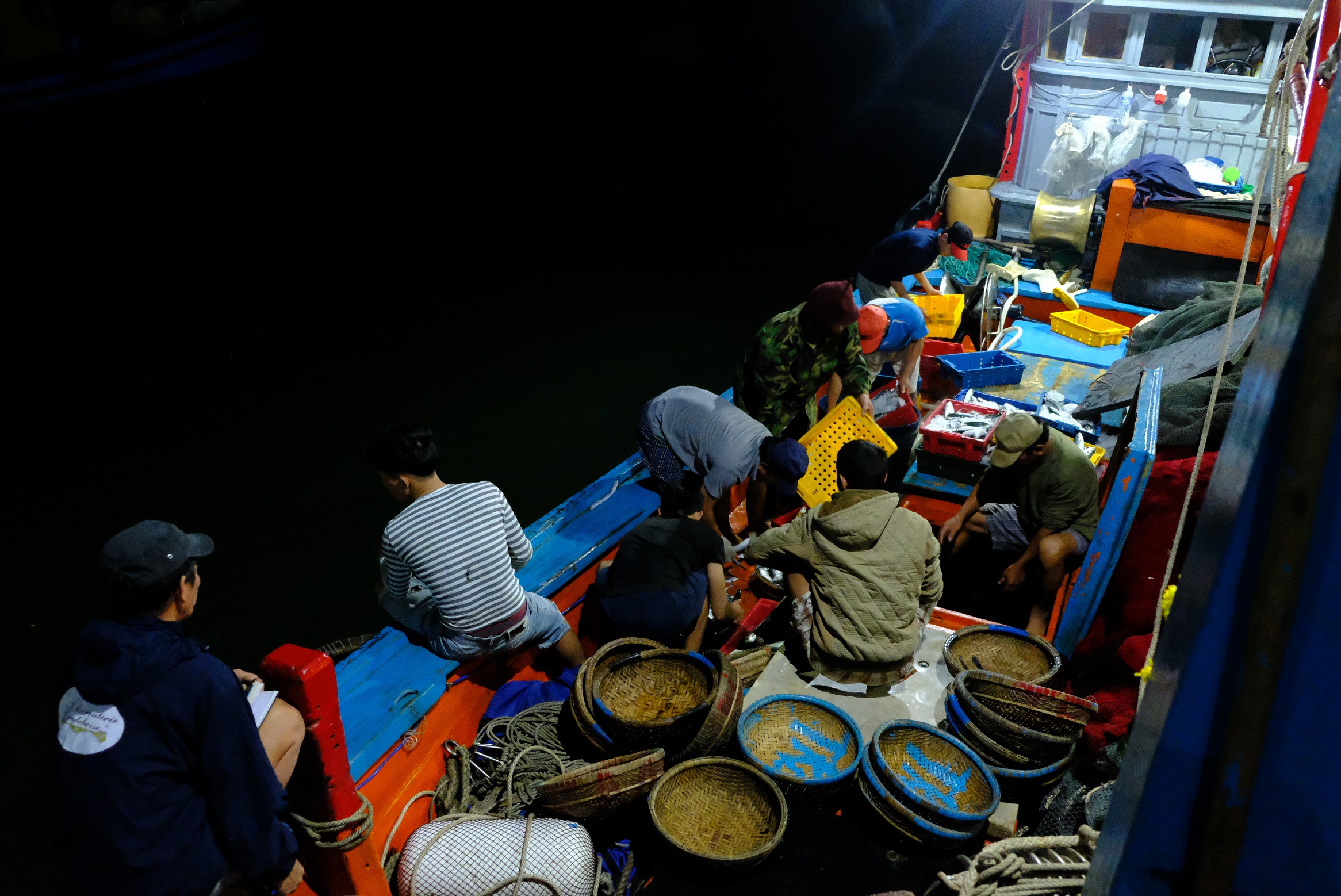
Bao đời ngư dân Mỹ Á vẫn giữ lời thề không bắt cá con – Ảnh: TRẦN MAI

Ông Nguyễn Xết, vạn trưởng làng Hải Tân (phường Phổ Quang, thị xã Đức Phổ, Quảng Ngãi), bảo rằng làng không giàu sụ nhưng cuộc sống vẫn no đủ từ biển.

“Cái nghề ngư dân Mỹ Á đang làm không tận diệt thủy sản. Chúng tôi chỉ đánh bắt những đàn cá lớn. Cá nhỏ chúng tôi không bắt” – ông Xết tự hào.

Tiếp tục đọc “Mỹ Á – cửa ngõ tiến ra đại dương – Kỳ cuối: Biển cá sinh sôi, làng chài mới ấm no”

Kỳ 2: Rối loạn bên trong sẽ thua bên ngoài

Nguyên Thứ trưởng Bộ Quốc phòng Nguyễn Chí Vịnh và nguyên Giám đốc Học viện Quốc phòng Võ Tiến Trung:

ANTGCT – 10:06 16/12/2021

Người Việt Nam có thể nhân nhượng việc A, việc B, việc C nhưng không bao giờ nhân nhượng chủ quyền cả. Chúng ta phải vận động nhân dân hiểu rõ bảo vệ biển đảo là trách nhiệm và nghĩa vụ của người dân, từ đó tạo ra thế trận lòng dân và thế trận chiến tranh nhân dân trên biển…

Kỳ 2: Rối loạn bên trong sẽ thua bên ngoài -0

Tiếp tục đọc “Kỳ 2: Rối loạn bên trong sẽ thua bên ngoài”

First German warship in almost two decades enters South China Sea

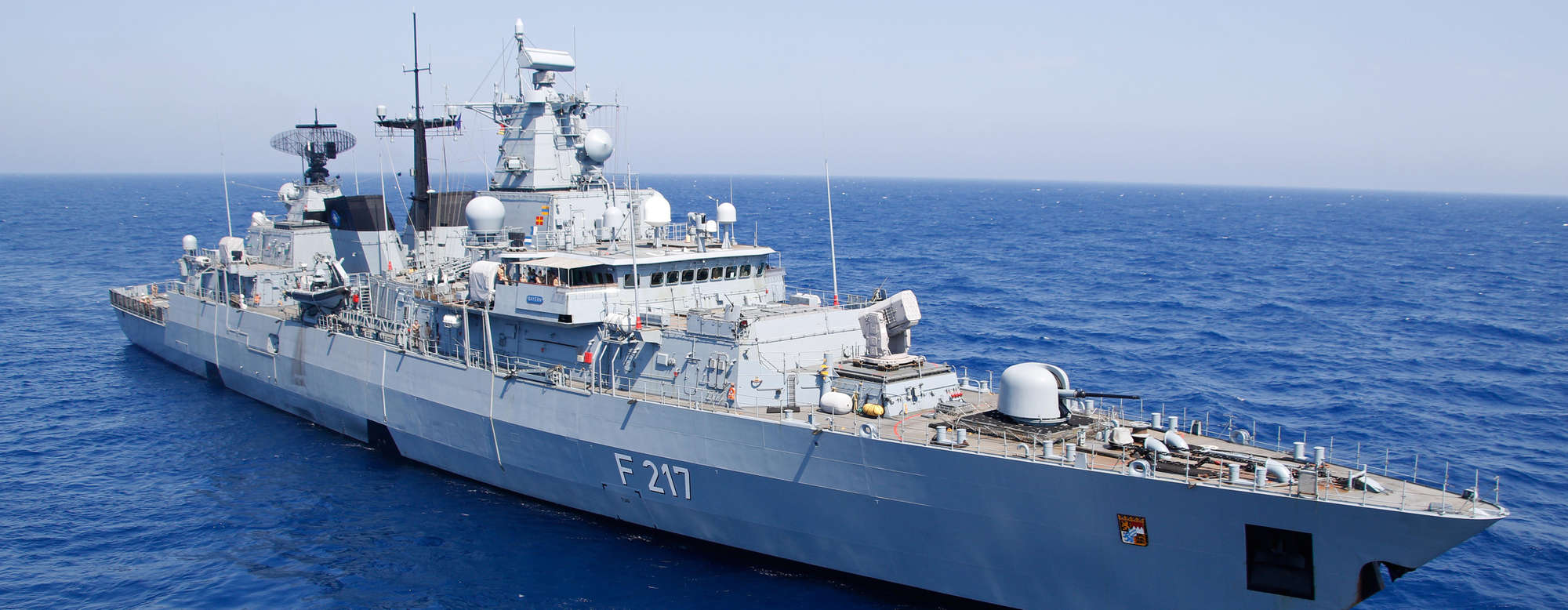
BERLIN, Dec 15 (Reuters) – A German warship sailed into the South China Sea on Wednesday for the first time in almost 20 years, a move that sees Berlin joining other Western nations in expanding its military presence in the region amid growing alarm over China’s territorial ambitions.

German Navy Departs For First South China Sea Patrol In Decades

China claims almost the entire South China Sea as its own, despite an international tribunal ruling that Beijing has no legal basis for these claims, and has built military outposts on artificial islands in the waters that contain gas fields and rich fishing.

Tiếp tục đọc “First German warship in almost two decades enters South China Sea”

Vietnam gets fresh opportunity to help shape international law

VNE – December 9, 2021 | 07:41 am GMT+7

Nguyen Hong Thao, Diplomat

A Vietnamese naval soldier stands guard at Thuyen Chai island in the Spratly archipelago, 2013. Photo by Reuters

Vietnam has won a second term on the International Law Commission (ILC), indicating the international community’s trust in its capacity to resolve common challenges.

In the Asia region, most of the positions in ILC were already estimated to be occupied in the election this year, therefore 45 candidates had to fight to get the remaining one to two seats.

With 145 of the 191 votes cast, Vietnam polled the highest number after India, Thailand and Japan and more than China, South Korea, Mongolia, and Cyprus.

Tiếp tục đọc “Vietnam gets fresh opportunity to help shape international law”

Has Washington’s Policy Toward Taiwan Crossed the Rubicon?

December 10, 2021  by Paul Heer, The National Interest

Testimony from officials in the State Department and Defense Department this week included subtle but important shifts in the U.S. policy toward Taiwan

The ground shifted under Washington’s policy toward Taiwan on December 8, a shift no less seismic for being subtle and semantic. During a hearing of the Senate Foreign Relations Committee, Assistant Secretary of Defense for Indo-Pacific Security Affairs Ely Ratner asserted that Taiwan is “a critical node within the first island chain (in the Western Pacific), anchoring a network of U.S. allies and partners … that is critical to the region’s security and critical to the defense of vital U.S. interests in the Indo-Pacific.”

Tiếp tục đọc “Has Washington’s Policy Toward Taiwan Crossed the Rubicon?”

Ngoại giao đa phương và cân bằng

H.MINH 5/12/2021 6:35 GMT+7

TTCTGần như ngay khi Thủ tướng Việt Nam Phạm Minh Chính rời Nhật Bản, kết thúc tốt đẹp chuyến thăm chính thức nước này, chuyên cơ chở Chủ tịch nước Nguyễn Xuân Phúc đã hạ cánh xuống Geneva, Thụy Sĩ vào sáng 26-11, mở đầu một vòng ngoại giao quan trọng khác.

Giống như nhiều lĩnh vực khác, công tác ngoại giao cũng gặp nhiều trở ngại trong năm 2021 vừa qua vì đại dịch COVID-19, nhưng càng về cuối năm, hoạt động đối ngoại của VN lại càng tấp nập.

Chủ tịch nước Nguyễn Xuân Phúc trong chuyến thăm Thụy Sĩ. Ảnh: VNA

Tiếp tục đọc “Ngoại giao đa phương và cân bằng”