Beijing ‘installs missiles’ on South China Sea islands

rappler.com

The US network CNBC reports, citing sources close to US intelligence, the Chinese army installed anti-ship and air-to-air defenses on outposts also claimed by Vietnam and the Philippines over the last 30 days

Published 12:00 AM, May 04, 2018

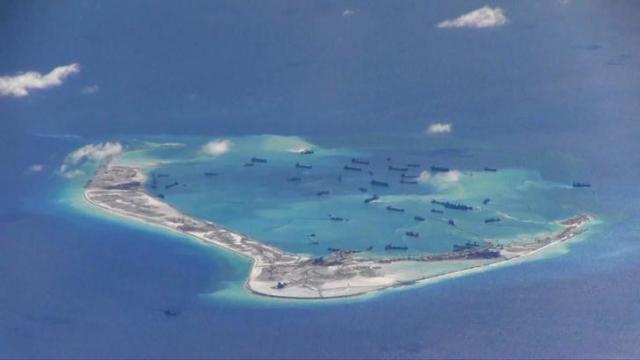
DISPUTED. This 2016 file photo shows a portion of the disputed Mischief Reef in the South China Sea where there are Chinese facilities.

DISPUTED. This 2016 file photo shows a portion of the disputed Mischief Reef in the South China Sea where there are Chinese facilities.

BEIJING, China – Beijing Thursday, May 3, reasserted its right to build “defense” facilities in the disputed South China Sea, but declined to confirm reports it had installed new missiles on artificial islands it has built in the region.

The Chinese army installed anti-ship and air-to-air defenses on outposts also claimed by Vietnam and the Philippines over the last 30 days, US network CNBC reported Wednesday, citing sources close to US intelligence. Tiếp tục đọc “Beijing ‘installs missiles’ on South China Sea islands”

The South China Sea fell off Trump’s radar, but he may have to pay attention in 2018

nationalpost

China claims nearly all of the South China Sea. In 2016, an international tribunal ruled against those claims, but the finding has largely been ignored

In this Nov. 9 file photo, U.S. President Donald Trump, right, chats with Chinese President Xi Jinping during a welcome ceremony at the Great Hall of the People in Beijing.Andy Wong / AP

Focused on North Korea and evidently enamoured of President Xi Jinping, the voluble U.S. president said relatively little as China continued to build on disputed islands, rocks and reefs.

A recent Chinese report hailed progress in the South China Sea last year, noting construction totalling 290,000 square metres, or 72 acres. That included work on hangars, missile shelters and large radar and and sensor arrays, according to satellite images reviewed by the Asia Maritime Transparency Initiative, a U.S. think tank. Tiếp tục đọc “The South China Sea fell off Trump’s radar, but he may have to pay attention in 2018”

While focus is on North Korea, China continues South China Sea buildup: Think tank

channelnewsasia
 
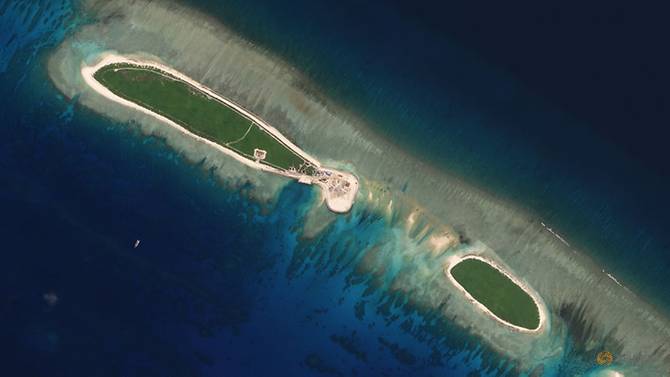
Satellite photo shows Chinese-controlled North Island, part of the Paracel Islands group in the South China Sea, on Sep 29, 2017. (Photo: Planet Labs/Handout via Reuters)

WASHINGTON: While attention in Asia has been distracted by the North Korean nuclear crisis in the past year, China has continued to install high-frequency radar and other facilities that can be used for military purposes on its man-made islands in the South China Sea, a US think tank said on Thursday (Dec 14).

Chinese activity has involved work on facilities covering 29 hectares of the Spratly and Paracel islands, territory contested with several other Asian nations, according to the Asia Maritime Transparency Initiative of Washington’s Center for Strategic and International Studies. The report cited satellite images. Tiếp tục đọc “While focus is on North Korea, China continues South China Sea buildup: Think tank”

Rodrigo Duterte to US: Why did you not send the armada?

AlJareeza

Philippine president takes US to task over its refusal to challenge China on its South China Sea activities.

Duterte met with US Ambassador Sung Kim in his hometown of Davao on Monday [RTVM/Presidential Communications]

Philippine President Rodrigo Duterte says he confronted the American ambassador about the US’ inaction in stopping China’s construction of man-made islands that are now at the heart of a regional dispute in the South China Sea.

“Why did you not send the armada of the 7th Fleet,” the straight-talking president said he told US Ambassador Sung Kim. Tiếp tục đọc “Rodrigo Duterte to US: Why did you not send the armada?”

China begins new work on disputed South China Sea island

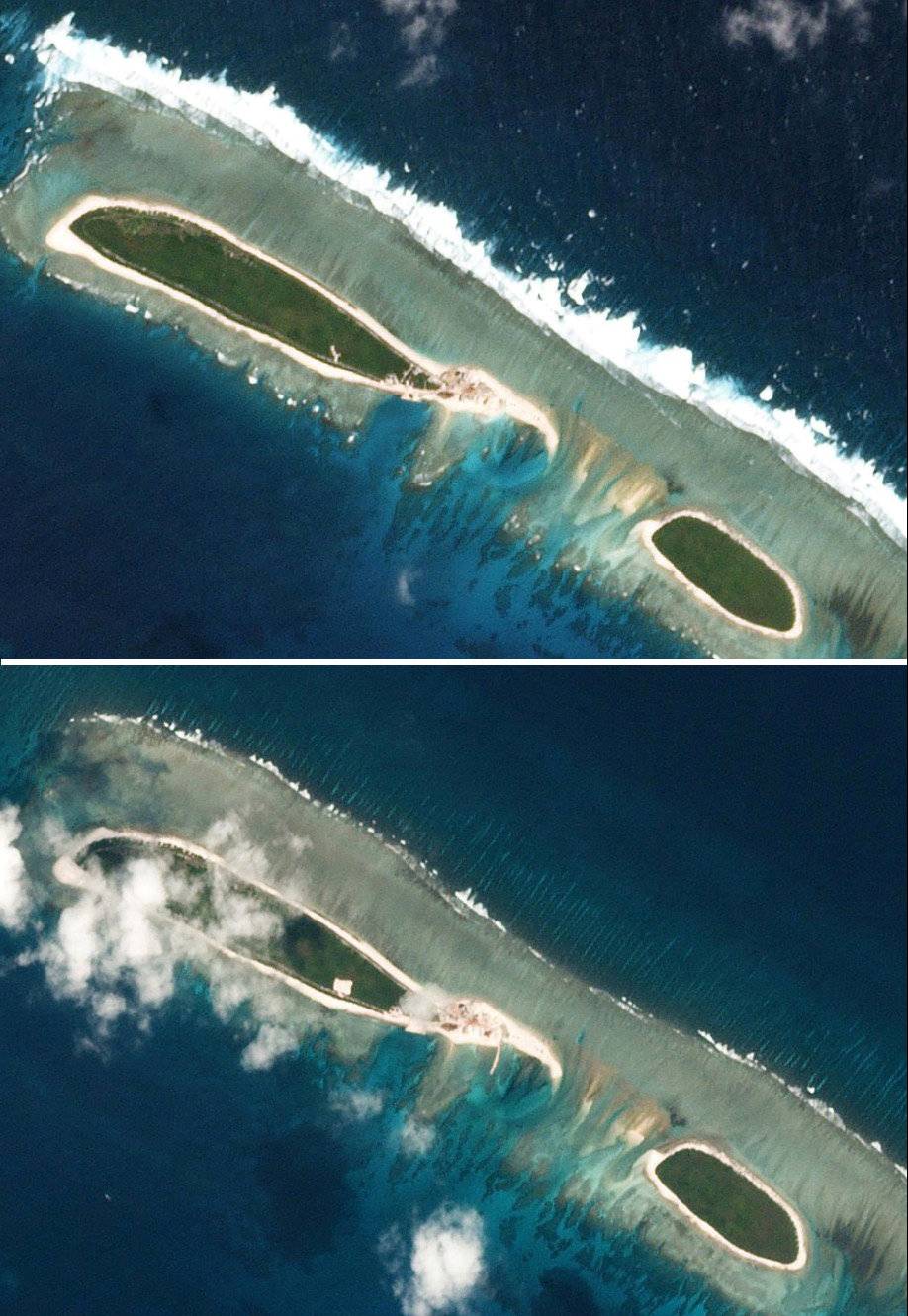
A combination of satellite photos shows Chinese-controlled North Island, part of the Paracel group in the South China Sea, on Feb. 15 (top) and on March 6. Reuters

japan times

Reuters Mar 15, 2017

China has started fresh construction work in the disputed South China Sea, new satellite images show, a sign that Beijing is continuing to strengthen its military reach across the vital trade waterway.

Regional military attaches and experts believe the work shows China’s determination to build up its network of reefs and islets, even if it is seeking to avoid a fresh confrontation with the new administration of U.S. President Donald Trump. Tiếp tục đọc “China begins new work on disputed South China Sea island”

ASEAN unsettled by China weapon systems, tension in South China Sea

The region’s foreign ministers were unanimous in their concern over China’s militarisation of its artificial islands, but were confident a framework for a code of maritime conduct could be agreed with Beijing by June, Philippine Foreign Secretary Perfecto Yasay said.

Yasay did not say what developments provoked the concern, but said the 10-member Association of Southeast Asian Nations (ASEAN) hoped China and the United States would ensure peace and stability.

He said demilitarisation would be a key component of any ASEAN-China code of conduct, but it was too soon to say whether Beijing’s dismantling of its weapons installations would be a prerequisite.

“The ASEAN members have been unanimous in their expression of concern about what they see as a militarisation of the region,” Yasay told reporters after a ministers’ retreat on the Philippine island of Boracay.

Referring to China’s manmade islands in the Spratly archipelago, Yasay said ASEAN countries had “noticed, very unsettlingly, that China has installed weapons systems in these facilities that they have established, and they have expressed strong concern about this.”

With the Philippines chairing the bloc this year, Yasay’s comments signal a rare, firm position by a grouping that often struggles to achieve consensus, due to its contrasting opinions on how to respond to China’s assertiveness.

ASEAN’s statements of concern often avoid mentioning China by name. Much is at stake from upsetting China, as ASEAN members, to varying extents, are under its influence and need its trade, investment and tourists.

TRUMP UNCERTAINTY

Regional geopolitics has become more uncertain since the election of U.S. President Donald Trump, particularly over his administration’s role in a region strongly courted by Washington during the “pivot” of predecessor Barack Obama.

Friction between the United States and China over trade and territory under Trump has fuelled worry that the South China Sea could become a flashpoint.

China claims most of the waters, through which about US$5 trillion (£4.02 trillion) in ship-borne trade passes every year. Brunei, Malaysia, the Philippines, Taiwan and Vietnam also have claims.

China on Friday completed war games with an aircraft carrier that unnerved neighbours. A day later the U.S. navy said its aircraft carrier strike group had started routine patrols in the South China Sea, a step China had warned against.

Yasay said ASEAN nations recognised policies under Trump were still evolving, but hoped they could be unveiled within a few months to provide a “more concrete and clearer picture”, especially regarding China.

“We do not know the complete picture of what this foreign policy might be, insofar as its relationship with China is concerned. We’re, however, hopeful that the policy that would come out will be positive.”

Asked if China was committed to a set of rules on the South China Sea, he said Beijing had shown it was keen.

But all parties should ensure that the code, which has made little progress since the idea was agreed in 2002, needed to be legally “binding and enforceable”, Yasay added.

(Additional reporting by Enrico Dela Cruz and Manolo Serapio Jr; Writing by Martin Petty; Editing by Clarence Fernandez)

Philippines filed diplomatic protest over South China Sea buildup: Minister

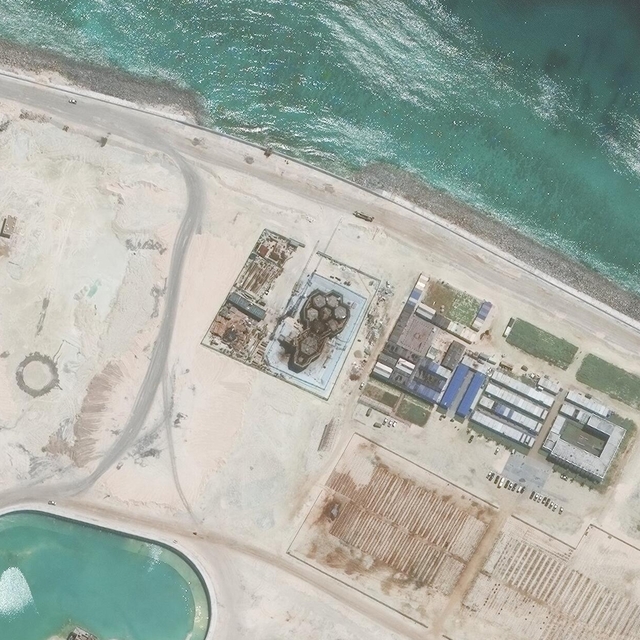
MANILA: The Philippines has filed a diplomatic protest with China, its foreign minister said on Monday, over Beijing’s installation last year of anti-aircraft and anti-missile systems on its manmade islands in the disputed South China Sea.

The protest note was sent to the Chinese embassy in December, after confirmation of a report from the US-based Center for Strategic and International Studies about a weapons buildup on seven artificial islands in the Spratlys. Tiếp tục đọc “Philippines filed diplomatic protest over South China Sea buildup: Minister”

New Photos Cast Doubt on China’s Vow Not to Militarize Disputed Islands

Tiếp tục đọc “New Photos Cast Doubt on China’s Vow Not to Militarize Disputed Islands”

Quy mô của nhà chứa máy bay quân sự Trung Quốc xây ở Trường Sa

Thứ ba, 9/8/2016 | 09:23 GMT+7 vnexpress
Chia sẻ bài viết lên facebook Chia sẻ bài viết lên twitter Chia sẻ bài viết lên google+ |

Hình ảnh vệ tinh mới cho thấy Trung Quốc tiếp tục xây các nhà chứa máy bay đủ lớn cho bất kỳ loại chiến đấu cơ nào trên ba đá ở Trường Sa.

Ảnh chụp đá Chữ Thập từ vệ tinh ngày 3/6. Ảnh: CSIS.

Ảnh chụp đá Chữ Thập từ vệ tinh ngày 3/6. Ảnh: CSIS.

Chủ tịch Trung Quốc Tập Cận Bình trong cuộc gặp với Tổng thống Mỹ Barack Obama tại Nhà Trắng tháng 9/2015 đã trấn an Mỹ rằng “Trung Quốc không có ý định theo đuổi quân sự hóa”, ở Trường Sa.

Tiếp tục đọc “Quy mô của nhà chứa máy bay quân sự Trung Quốc xây ở Trường Sa”

Tension Heats Up Over the South China Sea, Shows No Signs of Cooling

CHINA-UNREST-XINJIANG
One of the Spratly Islands, where there is more than meets the eye.

The South China Sea has long fomented a diplomatic row between China and its neighbors, including Brunei, Malaysia, the Philippines, Taiwan and Vietnam. All of these countries have staked claim to the 14 islands and underwater formations that lie between China’s south coast, Southeast Asia, the island of Borneo and the Philippine archipelago. Tiếp tục đọc “Tension Heats Up Over the South China Sea, Shows No Signs of Cooling”

CSIS: Asia Maritime Transparency Initiative, March 22, 2016

Exploring Itu Aba: A Virtual Tour of a South China Sea Islet

On January 23, AMTI Director Gregory Poling and Ambassador José Abeto Zaide, now with the Manila Bulletin, became the first foreigners to visit Itu Aba (Taiping Dao in Chinese)—the only feature in the Spratly Islands occupied by Taiwan. They accompanied a delegation of Taiwanese experts and officials, including the ministers of foreign affairs, mainland affairs, and environmental protection. President Ma Ying-jeou made his first visit to the island five days later. Using the graphic below, you can explore each location the group visited. And even more images and video follow.

Itu Aba has a lot of attention lately thanks to its inclusion in Manila’s arbitration case against Beijing’s South China Sea claims. The Philippines’ legal team has argued that Itu Aba cannot sustain human habitation and is therefore legally a “rock,” entitled to only a 12-nautical-mile territorial sea, and not an “island,” which would generate an exclusive economic zone and continental shelf. Manila believes that if Itu Aba—the largest naturally formed feature in the Spratly Islands—is not an island, then none of the Spratlys are. Taipei has insisted Itu Aba is an island, and the debate has focused on details such as the availability of drinkable water and arable soil.

For more on the debate, listen to recent AMTI podcasts with Paul Reichler, lead counsel for the Philippines, and Shen Lyu-Shun, Taiwan’s representative to the United States, or read “Is There Drinkable Water and Topsoil on Itu Aba?” by Yann-huei Song.

Read on…

  Tiếp tục đọc “CSIS: Asia Maritime Transparency Initiative, March 22, 2016”

Exclusive: U.S. sees new Chinese activity around South China Sea shoal

Chinese dredging vessels are purportedly seen in the waters around Mischief Reef in the disputed Spratly Islands in the South China Sea in this still image from video taken by a P-8A Poseidon surveillance aircraft provided by the United States Navy May 21, 2015. REUTERS/U.S. Navy/Handout via Reuters

Việt Nam cảnh báo tình trạng quân sự hoá Biển Đông đặc biệt lo ngại

Thứ năm, 25/2/2016 | 17:06 GMT+7

Việt Nam hôm nay phản đối mạnh mẽ Trung Quốc xâm phạm chủ quyền của Việt Nam, đồng thời khẳng định tình trạng quân sự hoá Biển Đông đặc biệt đáng lo ngại.
toan-tinh-cua-trung-quoc-khi-dua-ten-lua-den-hoang-sa-2

Hai khẩu đội tên lửa HQ-9 bố trí trên bờ biển đảo Phú Lâm được vệ tinh phát hiện vào tuần trước. Ảnh: Fox News

Tiếp tục đọc “Việt Nam cảnh báo tình trạng quân sự hoá Biển Đông đặc biệt lo ngại”

ICAO sửa bản đồ vùng thông báo bay Tam Á theo yêu cầu của Việt Nam

VNExpress Thứ sáu, 29/1/2016 | 22:34 GMT+7

ICAO sửa bản đồ vùng thông báo bay Tam Á theo yêu cầu của Việt Nam

Tổ chức hàng không dân dụng quốc tế (ICAO) đã sửa bản đồ vùng thông báo bay có nội dung không phù hợp, ảnh hưởng đến chủ quyền của Việt Nam với hai quần đảo Trường Sa và Hoàng Sa, sau khi Việt Nam trao công hàm phản đối.
Vùng thông báo bay Hồ Chí Minh (màu xanh).

Vùng thông báo bay Hồ Chí Minh (màu xanh).

Theo thông cáo của Bộ Ngoại giao Việt Nam phát hôm nay, đại diện Đại sứ quán Việt Nam tại Canada hôm 22/1 gặp Chủ tịch Hội đồng và Tổng Thư ký Tổ chức hàng không dân dụng quốc tế (ICAO) tại trụ sở của tổ chức ở thành phố Montreal.

Đại diện Việt Nam đã trực tiếp trao công hàm ngày 15/1 của Đại sứ quán, khẳng định chủ quyền của Việt Nam đối với hai quần đảo Hoàng Sa và Trường Sa.

Đồng thời, Việt Nam phản đối việc tổ chức này đăng tải bản đồ hàng không về Vùng thông báo bay (FIR) Tam Á nói riêng và FIR trong khu vực Biển Đông nói chung có những nội dung không phù hợp và ảnh hưởng chủ quyền của Việt Nam đối với hai quần đảo Hoàng Sa và Trường Sa.

Việt Nam “đề nghị ICAO chỉnh sửa lại bản đồ hàng không về FIR Tam Á và các thông tin liên quan cho phù hợp”, thông cáo cho biết.

Theo Cục Hàng không dân dụng Việt Nam, hiện trên trang web của ICAO, bản đồ Hàng không về FIR Tam Á và các thông tin liên quan đã được chỉnh sửa lại theo yêu cầu của phía Việt Nam. Ngày 27/1, Chủ tịch Hội đồng ICAO cũng đã có thư gửi Cục Hàng không dân dụng về vấn đề này.

Đại diện Đại sứ quán cũng bày tỏ quan ngại việc Trung Quốc tiến hành các chuyến bay ra đá Chữ Thập trong thời gian vừa qua đã không chỉ xâm phạm chủ quyền của Việt Nam đối với quần đảo Trường Sa mà còn vi phạm nghiêm trọng các quy định và chuẩn mực về an toàn bay của ICAO trong khu vực FIR Hồ Chí Minh do Việt Nam quản lý.

Trọng Giáp