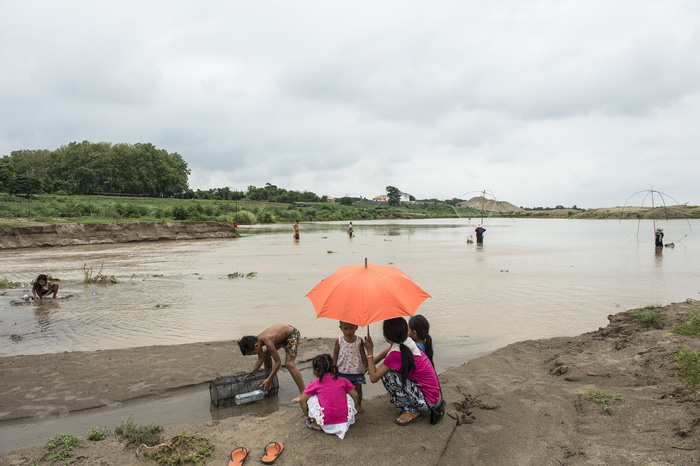
Fighting climate change with bioenergy may do ‘more harm than good’

Mongabay.com

  • A new study finds land-use like grazing and managing forests for resource extraction may have released more carbon than previously thought. Its results indicate the world’s terrestrial vegetation is currently sequestering less than half its full carbon-storage potential.
  • Of that missing half, the researchers discovered 42 to 47 percent is attributed to land uses that don’t technically change the vegetation cover type. The researchers say that climate change mitigation strategies often focus on reducing intensive land-use like deforestation, with less-intensive uses that don’t change cover type largely overlooked and under-researched.
  • One of these less-intensive uses is managing forests for biomass energy production. Many countries are trying to replace fossil fuels with biomass energy in-line with international climate agreements like the Paris Accord.
  • The researchers warn that strategies developed under the assumption that producing biomass energy doesn’t come at a carbon cost could harm efforts to fight climate change. They urge that in addition to stopping deforestation, the protection of forest functions, like carbon stocks, should be moved more into focus when it comes to land-use and climate change planning.

As nations try to stem emissions to keep the world from warming more than 2 degrees Celsius in line with their commitments towards the Paris Accord, replacing fossil fuels with renewable alternatives is widely seen as a big step in the right direction. A major source of energy oft-extolled as renewable is biomass from trees, which are usually harvested from managed forests either established on land that has already been deforested or planted where forests didn’t naturally grow. But a new study finds land-use like managing forests for biomass production may come at a much higher carbon cost than previously thought.
Tiếp tục đọc “Fighting climate change with bioenergy may do ‘more harm than good’”

Impacts of 25 years of groundwater extraction on subsidence in the Mekong delta, Vietnam

IOPscience

Many major river deltas in the world are subsiding and consequently become increasingly vulnerable to flooding and storm surges, salinization and permanent inundation. For the Mekong Delta, annual subsidence rates up to several centimetres have been reported. Excessive groundwater extraction is suggested as the main driver. As groundwater levels drop, subsidence is induced through aquifer compaction. Over the past 25 years, groundwater exploitation has increased dramatically, transforming the delta from an almost undisturbed hydrogeological state to a situation with increasing aquifer depletion. Yet the exact contribution of groundwater exploitation to subsidence in the Mekong delta has remained unknown. In this study we deployed a delta-wide modelling approach, comprising a 3D hydrogeological model with an integrated subsidence module. This provides a quantitative spatially-explicit assessment of groundwater extraction-induced subsidence for the entire Mekong delta since the start of widespread overexploitation of the groundwater reserves. We find that subsidence related to groundwater extraction has gradually increased in the past decades with highest sinking rates at present. During the past 25 years, the delta sank on average ~18 cm as a consequence of groundwater withdrawal. Current average subsidence rates due to groundwater extraction in our best estimate model amount to 1.1 cm yr−1, with areas subsiding over 2.5 cm yr−1, outpacing global sea level rise almost by an order of magnitude. Given the increasing trends in groundwater demand in the delta, the current rates are likely to increase in the near future.

Read full article here

Climate change is triggering a migrant crisis in Vietnam

Theconversation

The Vietnamese Mekong Delta is one of Earth’s most agriculturally productive regions and is of global importance for its exports of rice, shrimp, and fruit. The 18m inhabitants of this low-lying river delta are also some of the world’s most vulnerable to climate change. Over the last ten years around 1.7m people have migrated out of its vast expanse of fields, rivers and canals while only 700,000 have arrived.

On a global level migration to urban areas remains as high as ever: one person in every 200 moves from rural areas to the city every year. Against this backdrop it is difficult to attribute migration to individual causes, not least because it can be challenging to find people who have left a region in order to ask why they went and because every local context is unique. But the high net rate of migration away from Mekong Delta provinces is more than double the national average, and even higher in its most climate-vulnerable areas. This implies that there is something else – probably climate-related – going on here. Tiếp tục đọc “Climate change is triggering a migrant crisis in Vietnam”

Five things to know about the Lancang-Mekong Cooperation summit

TĐH: We don’t hear discussion on the VNese media about this China-pushed five-year development plan at all. I wonder if Vietnam will have a public discussion about this plan, or whoever attending the LMC summit will just simply approve the plan on behalf of Vietnam?


scmp: Five-year development plan, including construction of hydropower dams, is expected to top agenda at Mekong River nations’ conference in Cambodia

PUBLISHED : Tuesday, 09 January, 2018, 8:03am
UPDATED : Tuesday, 09 January, 2018, 2:57pm

When China and the leaders of nations along the Mekong River meet on Wednesday at the Lancang-Mekong Cooperation summit in Cambodia, a top item will be mapping out a five-year development plan that would include building hydropower dams and other projects for the region – pointing to its importance in China’s ambitious belt and road infrastructure plan.

But while the cooperation mechanism was created to help ease tension over development projects, environmentalists remain unsatisfied.

Concern is growing that the potential for causing ecological damage will make the Mekong a flashpoint for China and Southeast Asia’s territorial disputes – effectively creating a new South China Sea.

Amid the backdrop of the river’s importance in connecting Europe through Southeast Asia and beyond in the grand infrastructure programme launched by President Xi Jinping, Chinese delegation leader Premier Li Keqiang will be looking to bolster China’s influence in the Mekong region as he faces his counterparts from Cambodia, Vietnam, Thailand, Laos and Myanmar.

Here are five key things to know about the summit and the significance of the Mekong River:

1. The river’s significance for China and Southeast Asia

Tiếp tục đọc “Five things to know about the Lancang-Mekong Cooperation summit”

Critical Issues to Watch in 2018

Reprint |    |  Print | 

ipsnews_Martin Khor is Executive Director of the South Centre, a think tank for developing countries, based in Geneva

More than 480 billion plastic bottles were sold in the world in 2016, in 2018 we can expect international cooperation to reduce the use of plastic and how to treat plastic waste. Credit: Athar Parvaiz/IPS

PENANG, Malaysia, Jan 2 2018 (IPS) – Another new year has dawned, and on a world facing serious disruption on many fronts.  What are the trends and issues to watch out for in 2018?

One obvious answer is to anticipate how Donald Trump, the most unorthodox of American Presidents, will continue to upset the world order.  But more about that later.

Just as importantly as politics, we are now in the midst of several social and environmental trends that have important long-lasting effects.  Some are on the verge of reaching a tipping point, where a long-term trend produces critical and sometimes irreversible events. We may see some of that in 2018.
Tiếp tục đọc “Critical Issues to Watch in 2018”

Hiệu quả của một hệ thống giáo dục

English: UNESCO Education system education

Một hệ thống giáo dục chất lượng được khái niệm hoá trong khung khổ phân tích/dự đoán Chất lượng Giáo dục phổ cập (UNESCO General Education Quality Analysis/Diagnosis Framework (GEQAF) ) là một hệ thống mà chất lượng giáo dục được cung cấp công bằng và hiệu quả. Do đó, cách thức phân bổ, quản lý và sử dụng nguồn lực ở các cấp độ khác nhau của hệ thống giáo dục là yếu tố quan trọng, mang tính quyết định cho một hệ thống giáo dục chất lượng. Việc cải thiện hiệu quả nguồn lực giáo dục có thể giúp giải phóng nguồn lực đáng kể để giải quyết các vấn đề về chất lượng giáo dục. Có nhiều bằng chứng cho thấy trong nhiều trường hợp, nhiều nguồn lực hơn không có nghĩa là kết quả tốt hơn về chất lượng giáo dục và kết quả học tập (xem: Resources and student achievement). Ngành giáo dục cần tiết kiệm nguồn lực nội bộ bằng cách giảm các biện pháp thiếu hiệu quả trước khi đưa ra giải pháp tăng nguồn lực cho ngành. Tiếp tục đọc “Hiệu quả của một hệ thống giáo dục”

Tranh luận về hiệu quả hệ thống giáo dục, nhưng đừng dựa vào đó để xếp hạng các quốc gia

English: Debate education efficiency, but don’t rank countries on it

Gần đây trên thế giới có một sự bùng nổ việc quan tâm đến tính hiệu quả của hệ thống giáo dục, phần lớn từ những nghiên cứu quốc tế so sánh về trình độ của của rất nhiều khảo sát từ học sinh ở nhiều nước khác nhau.

Những so sánh được thực hiện qua các nghiên cứu này như chương trình đánh giá học sinh sinh viên quốc tế (PISA) của tổ chức Hợp tác  và Phát triển Kinh tế hay qua những bài kiểm tra quốc tế về trình độ toán học và đọc hiểu, đã trở thành một yếu tố quan trọng trong việc hoạch định chính sách giáo dục trên toàn thế giới.

Đương nhiên, việc những đứa trẻ làm toán tốt hay đọc giỏi như thế nào trong các bài kiểm tra không chỉ là khía cạnh quan trọng duy nhất của một  hệ thống giáo dục. Trong môi trường bị ràng buộc về tài nguyên, thì chi phí giáo dục hợp lý là điều không thể bỏ qua. Theo đó, một báo cáo mới được thực hiện, giải pháp cho giáo dục mang tên GEMS, một chi nhánh tư vấn ở Luân Đôn của công ty GEMS Education có trụ sở tại Dubai điều hành các trường học trên toàn thế giới, chắc chắn sẽ gây tranh cãi xung quanh tính hiệu quả của các hệ thống giáo dục. Tuy nhiên xếp hạng như vậy thực sự rất có vấn đề. Tiếp tục đọc “Tranh luận về hiệu quả hệ thống giáo dục, nhưng đừng dựa vào đó để xếp hạng các quốc gia”

Ice Loss and the Polar Vortex: How a Warming Arctic Fuels Cold Snaps

insideclimatenews_The loss of sea ice may be weakening the polar vortex, allowing cold blasts to dip south from the Arctic, across North America, Europe and Russia, a new study says.
A strong versus weakened polar vortex. Credit: NOAA

A strong polar vortex (left, from December 2013) is centered over the Arctic. A weakened polar vortex (right, from January 2014) allows cold air to dip farther south. Credit: NOAA

When winter sets in, “polar vortex” becomes one of the most dreaded phrases in the Northern Hemisphere. It’s enough to send shivers even before the first blast of bitter cold arrives.

New research shows that some northern regions have been getting hit with these extreme cold spells more frequently over the past four decades, even as the planet as a whole has warmed. While it may seem counterintuitive, the scientists believe these bitter cold snaps are connected to the warming of the Arctic and the effects that that warming is having on the winds of the stratospheric polar vortex, high above the Earth’s surface.

Here’s what scientists involved in the research think is happening: The evidence is clear that the Arctic has been warming faster than the rest of the planet. That warming is reducing the amount of Arctic sea ice, allowing more heat to escape from the ocean. The scientists think that the ocean energy that is being released is causing a weakening of the polar vortex winds over the Arctic, which normally keep cold air centered over the polar region. That weakening is then allowing cold polar air to slip southward more often.

Tiếp tục đọc “Ice Loss and the Polar Vortex: How a Warming Arctic Fuels Cold Snaps”

Multiple Mekong forums risk igniting rivalry

ASEAN+ January 03, 2018 01:00

THE NATION 

LEADERS FROM six riparian states along the Mekong River will be busy this year as meetings on many cooperation schemes in the region are scheduled in a situaton that observers have said is overlapping.

 The youngest forum, the Lancang-Mekong Cooperation (LMC), will call its second summit meeting next Wednesday in Phnom Penh to endorse a five-year action plan (2018-2022) regarding its cooperation projects.

Its participants – six counties in the Mekong basin comprising China, Myanmar, Laos, Thailand, Cambodia and Vietnam – have all been involved in many cooperation schemes over the past decades.
Tiếp tục đọc “Multiple Mekong forums risk igniting rivalry”

Thu hút công chúng quan tâm đến các nghiên cứu khoa học – A practical guide to Public engagement to scientific findings

Ngày nay, thu hút công chúng quan tâm đến các kết quả nghiên cứu khoa học  cần được khích lệ trong giới nghiên cứu, Tài liệu này sẽ đưa ra những chỉ dẫn hữu ích để viết các dự án có tác động thực tiễn. Năm bước chính của chỉ dẫn sẽ giúp các nhà nghiên cứu truyền thông với công chúng các nghiên cứu khoa học của mình: Giới hạn, thu hút cộng đồng, lên kế hoạch, thử nghiệm và phổ biến

Tải tài liệu tại đây PDF downloadable here.

Nowadays, public engagement is highly encouraged among researchers. In this guide, you will find useful tips on how to plan and write your next project so it has a real impact. Five steps will guide you in communicating your research: Scoping, Involving people, Planning, User-testing and Dissemination.

PDF downloadable here.

Giật mình số thanh thiếu niên phá thai năm 2016

Bài liên quan

Luật cho phép phá thai là tiếp tay với tội giết người và tạo bất ổn xã hội

Giáo dục giới tính ở Việt Nam: nhà thờ và nhà nước gửi thông điệp hỗn hợp<

Kế hoạch hoá gia đình ở Việt Nam: Hươu đang chạy

Bộ Y tế đề xuất cho phép phá thai từ 12 đến 22 tuần tuổi

Kiếm nhiều tiền đứng ở đâu trong giá trị sống cá nhân và giá trị của xã hội

Một người bạn mình vừa đưa lên facebook thông tin về một khảo sát (trong hình) của BBC Media Action năm 2013.

Câu hỏi là: Trong các giá trị trong cuộc sống được đưa ra ở đây, giá trị nào là quan trọng nhất đối với bạn?

1. Kiếm càng nhiểu tiền càng tốt
2. Hoà đồng với những người xung quanh
3. Được nói lên ý kiến mà bản thân quan tâm
4. Được láng giềng tôn trọng
5. Học hỏi những điều mới
6. Thích được đi du lịch

Kết quả khảo sát trong tổng số 3486 người, thì có một nửa 50% trả lời lựa chọn số 1 Kiếm càng nhiểu tiền càng tốt là quan trọng nhất. Tiếp tục đọc “Kiếm nhiều tiền đứng ở đâu trong giá trị sống cá nhân và giá trị của xã hội”

Việt Nam học được gì từ giáo dục STEM (Khoa học-công nghệ-kỹ thuật-toán học)?

Dân trí Trong khoảng hai thập niên gần đây, Giáo dục STEM đã trở nên phổ biến ở Mỹ và một số nước trên thế giới. Vậy giáo dục STEM là gì? Điểm mạnh và điểm hạn chế? Chúng ta học được gì từ giáo dục STEM, đặc biệt trong bối cảnh xây dựng Chương trình giáo dục phổ thông mới?
 >> Bộ GD&ĐT khuyến khích các trường đưa môn học STEM vào giảng dạy
 >> Chuyện giáo dục Bồ Đào Nha “lột xác” nhờ STEM qua con mắt GS. John Vũ

Cùng với thuật ngữ “Cách mạng công nghiệp lần thứ tư” và “Giáo dục 4.0”, STEM dường như đã trở thành một thuật ngữ thời thượng. Trong bối cảnh như thế, có hai câu hỏi bản chất cần giải quyết:

Thứ nhất, Giáo dục STEM là gì? Điểm mạnh và điểm hạn chế? Tiếp tục đọc “Việt Nam học được gì từ giáo dục STEM (Khoa học-công nghệ-kỹ thuật-toán học)?”