
Chuyên mục: Biến đổi khí hậu – Climate change
Opinion: Energy importers must consider true ‘sustainability’ of Laos hydropower
Proponents describe regional power grids as a way to promote economic growth, energy security and renewables in Southeast Asia, but this might come at a heavy cost

Lat Tha Hae temple in Luang Prabang province, Laos, half submerged by the Nam Ou 1 hydropower dam (Image: Ton Ka/China Dialogue)
the third pole – August 23, 2022
On 23 June 2022, the import of 100 megawatts (MW) of hydropower from Laos to Singapore through Thailand and Malaysia was hailed as a historic milestone. Part of a pilot project known as the Lao PDR-Thailand-Malaysia-Singapore Power Integration Project (LTMS-PIP), this event represented Singapore’s first ever import of renewable energy, and also the first instance of cross-border electricity trade involving four countries from the Association of Southeast Asian Nations (ASEAN).
However, this development takes place amid rising concerns for the ecological future of the transboundary Mekong River and the millions of people who depend on it. A 2018 study by the Mekong River Commission concluded that further hydropower development on the river would negatively affect ecosystems, and would reduce soil fertility, rice production, fish yields and food security, while increasing poverty in the river basin.
Tiếp tục đọc “Opinion: Energy importers must consider true ‘sustainability’ of Laos hydropower”
In the Mekong Basin, an ‘unnecessary’ dam poses an outsized threat

- A dam being built in Laos near the border with Cambodia imperils downstream communities and the Mekong ecosystem as a whole, experts and affected community members say.
- The Sekong A dam will close off the Sekong River by the end of this year, restricting its water flow, blocking vital sediment from reaching the Mekong Delta in Vietnam, and cutting off migration routes for a range of fish species.
- Experts say the energy to be generated by the dam — 86 megawatts — doesn’t justify the negative impacts, calling it “an absolutely unnecessary project.”
- This story was supported by the Pulitzer Center’s Rainforest Investigations Network where Gerald Flynn is a fellow.
Tiếp tục đọc “In the Mekong Basin, an ‘unnecessary’ dam poses an outsized threat”
Vietnam loses sacred cranes after habitat change

In 2020 and 2022, no sarus cranes were spotted in Cham Trim National Park. PHOTO: Nguyen Van Hung
mekongeye – By Tran Nguyen
19 September 2022 at 8:05 (Updated on 22 September 2022 at 17:13)
A vulnerable bird that usually migrated to the wetlands of the Mekong Delta has become a rare visitor to the area
DONG THAP, VIETNAM – Twenty years ago, Nguyen Van Liet took scientists to the wetlands near his hometown of Tram Chim on Vietnam’s Mekong Delta to find sarus cranes, a vulnerable bird species according to the IUCN Red List, native to Southeast Asia, South Asia and Australia.
“We had to go very early so the cranes wouldn’t know it,” Liet said of the expedition, which aimed to study the crane’s movements using a navigation device. “After sedating them, attaching tracking devices to their legs, the crew found shelter to wait for them to wake up and leave safely.”
Memories of those trips will forever be a source of pride for the 58-year-old. His efforts, no matter how humble, have contributed to helping Tram Chim become known worldwide as a place to preserve this rare crane species, which are world’s tallest flying birds.
Tiếp tục đọc “Vietnam loses sacred cranes after habitat change”
Hợp tác cấp vùng về thương mại điện năng
IUCN – 06 Th12, 2022
Trong lúc việc phát triển và mở rộng năng lượng mặt trời và gió sẽ là yếu tố quan trọng giúp Việt Nam giảm tiêu thụ than và đáp ứng yêu cầu trong lộ trình thực hiện các cam kết tại COP26, thì việc tăng cường nhập khẩu điện từ các nước láng giềng là một giải pháp bổ sung. Trong Kế hoạch Phát triển Điện lực 8 của Việt Nam (PDP 8) ban hành tháng 4 năm 2022 đã đưa ra dự đoán lượng điện nhập khẩu sẽ tăng từ 572 MW vào năm 2020 lên khoảng 4.000 MW vào năm 2025.
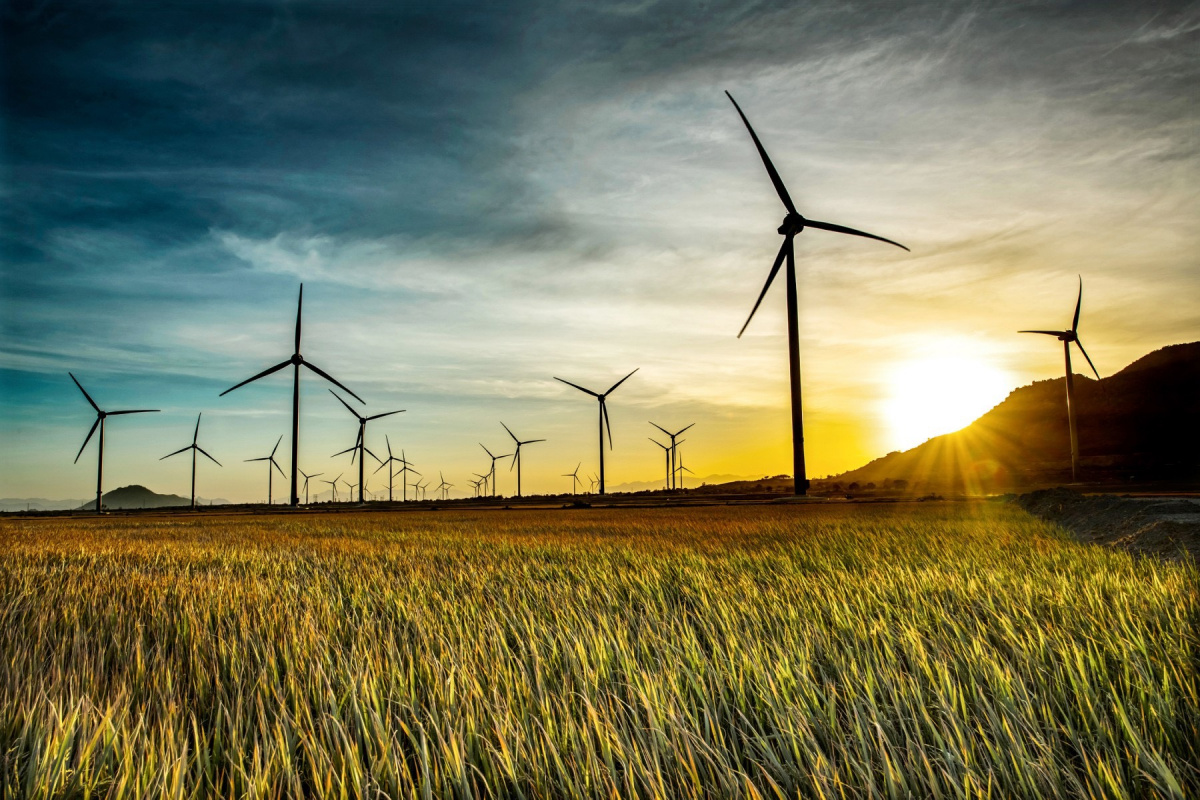
Photo: A solar project invested by Trung Nam Group © Trung Nam Group
Tương lai thì nguồn điện nhập khẩu vào Việt Nam phần lớn sẽ đến từ CHDCND Lào và có thể từ Campuchia. Tuy nhiên, cách thức Việt Nam tham gia thương mại điện năng với các nước láng giềng này sẽ có ảnh hưởng trực tiếp đến việc phát triển các dự án phát điện ở các quốc gia này. Phần lớn nguồn điện năng mà Việt Nam nhập khẩu từ CHDCND Lào đến từ các đập thủy điện và các đập này có thể có tác động tiêu cực đáng kể cho Việt Nam.
What Is “Loss and Damage” from Climate Change? 8 Key Questions, Answered
The planet has already warmed by 1.1 degrees C (2 degrees F) due to human-induced climate change. Millions of people today are facing the real-life consequences of higher temperatures, rising seas, fiercer storms and unpredictable rainfall. Rapidly reducing emissions is essential to limit temperature rise and secure a safer future for us all, as is making major investments to protect communities from severe impacts that will continue to worsen.
Yet collective efforts to curb greenhouse gas emissions and adapt are currently not enough to tackle the speed and scale of climate impacts, meaning that some losses and damages from climate change are inevitable. How countries handle these losses and damages has been a key issue at UN climate negotiations and beyond.
Here, we provide an explainer on the concept of loss and damage and what’s needed to address it:
1) What Is Loss and Damage?
“Loss and damage” is a general term used in UN climate negotiations to refer to the consequences of climate change that go beyond what people can adapt to, or when options exist but a community doesn’t have the resources to access or utilize them. This could include the loss of coastal heritage sites due to rising sea levels, or the loss of homes and lives during extreme floods.
Tiếp tục đọc “What Is “Loss and Damage” from Climate Change? 8 Key Questions, Answered”
Những chuyến ly hương của người già Đồng bằng Sông Cửu Long
Tiasang – – Võ Kiều Bảo Uyên, Nhung Nguyễn
Những biến đổi về môi trường, khí hậu đã đẩy người lớn tuổi ở Đồng bằng Sông Cửu Long (ĐBSCL) phải rời quê tìm đường mưu sinh.

Chuyến rời quê đầu tiên trong đời bà Nguyễn Thị Áp* là khi bà đã bước qua tuổi 63. Sáng sớm một ngày tháng Bảy, người phụ nữ tóc bạc trắng xách giỏ quần áo, một mình ra lộ bắt xe đi khỏi quê nhà Chợ Mới, An Giang, tỉnh thượng nguồn ĐBSCL đến Thành phố Hồ Chí Minh (TP.HCM). Không chỉ mưu sinh, với bà, đó còn là một cuộc chạy trốn.
Khoản nợ hơn 100 triệu đồng tích tụ “từ ngày còn mần lúa”, lãi chồng lãi, cùng bệnh tim của người chồng đã đẩy bà Áp – gần như cả đời chỉ quen ruộng vườn – đến đô thị xa lạ tìm kiếm việc làm. Đích đến ban đầu trong kế hoạch của bà là Bình Dương, khu công nghiệp lớn nhất nước, nhưng những hàng xóm đi trước rỉ tai rằng nơi ấy chỉ có việc cho người trẻ. Cuối cùng, theo lời họ hàng chỉ, bà đặt cược vào TPHCM, nơi sẵn công việc làm thuê qua ngày.
“Ruộng đã bán. Con cái có gia đình riêng, và cũng khổ. Dì ở lại [quê] hết đời cũng không thể trả hết nợ”, bà Áp nói, không quên dặn người phỏng vấn giấu danh tính vì sợ chủ nợ nhận ra.
Tiếp tục đọc “Những chuyến ly hương của người già Đồng bằng Sông Cửu Long”
Public Investment at a time of uncertainty
UNDP presentation at Viet Nam Economic Forum
Earthquakes Triggered by Dams
Exposing the Hidden Dangers of Dam-Induced Earthquakes
Earthquakes can be induced by dams. Globally, there are over 100 identified cases of earthquakes that scientists believe were triggered by reservoirs (see Gupta 2002). The most serious case may be the 7.9-magnitude Sichuan earthquake in May 2008, which killed an estimated 80,000 people and has been linked to the construction of the Zipingpu Dam.
How Do Dams Trigger Earthquakes?
In a paper prepared for the World Commission on Dams, Dr. V. P Jauhari wrote the following about this phenomenon, known as Reservoir-Induced Seismicity (RIS): “The most widely accepted explanation of how dams cause earthquakes is related to the extra water pressure created in the micro-cracks and fissures in the ground under and near a reservoir. When the pressure of the water in the rocks increases, it acts to lubricate faults which are already under tectonic strain, but are prevented from slipping by the friction of the rock surfaces.”
Given that every dam site has unique geological characteristics, it is not possible to accurately predict when and where earthquakes will occur. However, the International Commission on Large Dams recommends that RIS should be considered for reservoirs deeper than 100 meters.
What Are Some Characteristics of RIS?
A leading scholar on this topic, Harsh K. Gupta, summarized his findings on RIS worldwide in 2002:
- Depth of the reservoir is the most important factor, but the volume of water also plays a significant role in triggering earthquakes.
- RIS can be immediately noticed during filling periods of reservoirs.
- RIS can happen immediately after the filling of a reservoir or after a certain time lag.
Many dams are being built in seismically active regions, including the Himalayas, Southwest China, Iran, Turkey, and Chile (see map). International Rivers calls for a moratorium on the construction of high dams in earthquake-prone areas.
Click here for the factsheet on RIS worldwide.
Problems With Big Dams
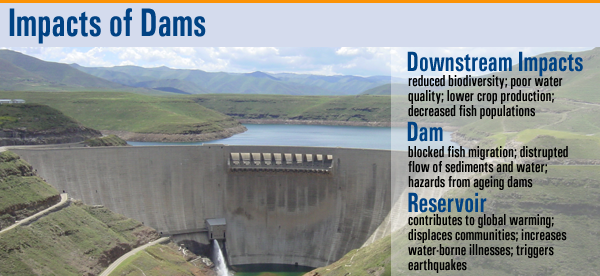
By 2015, the dam industry had choked more than half of the Earth’s major rivers with some 57,000 large dams. The consequences of this massive engineering program have been devastating. The world’s large dams have wiped out species; flooded huge areas of wetlands, forests and farmlands; and displaced tens of millions of people.
Courtesy of James Syvitski at Colorado University, who produced the video with Bob Stallard of the USGS and Albert Kettner at CSDMS. Data from Alex de Sherbinin (CIESIN, University of Colorado), and Bernhard Lehner (Department of Geography, McGill University).
The “one-size-fits-all” approach to meeting the world’s water and energy needs is also outdated: better solutions exist. While not every dam causes huge problems, cumulatively the world’s large dams have replumbed rivers in a massive experiment that has left the planet’s freshwaters in far worse shape than any other major ecosystem type, including tropical rainforests. In response, dam-affected communities in many parts of the world are working to resolve the legacies of poorly planned dams. Elsewhere (and especially in North America), communities are starting to take down dams that have outlived their usefulness, as part of a broader river restoration movement.
Dam Basics
- Frequently Asked Questions
- Watch We All Live Downstream for a visual introduction to dams, rivers and people.
- Read 10 Things You Should Know About Dams
- Read “Greenwashing Hydropower“: The Problems with Big Dams.
- Watch Hydropower: Not As Clean As You Think for an introduction to why big dams are not the answer to our changing climate.
Fact sheets:
- Damned Rivers, Damned Lives: The case against large dams
- A Crisis of Mismanagement: Real solutions to the world’s water problems
- Beyond Hydropower: Energy options for the 21st century
- Warming the Earth: Hydropower threatens efforts to curb climate change
- The Coming Storm: Preparing for a warming water world
Political declaration on establishing the Just Energy Transition Partnership with Viet Nam
Published 14 December 2022
- The Governments of the Socialist Republic of Viet Nam, together with the International Partners Group, consisting of the European Union, the United Kingdom of Great Britain and Northern Ireland, the United States of America, Japan, the Federal Republic of Germany, the Republic of France, the Italian Republic, Canada, the Kingdom of Denmark and the Kingdom of Norway;
- Recognising the need to accelerate action towards the objectives and long-term goals of the United Nations Framework Convention on Climate Change (UNFCCC) and the Paris Agreement, including through the implementation of the Glasgow Climate Pact, to minimise the worst adverse impacts of climate change for countries, people and the environment;
- Noting that limiting global warming to 1.5°C to mitigate the worst adverse impacts of climate change requires rapid, deep and sustained reductions in global greenhouse gas emissions, including reducing global carbon dioxide emissions by 45% by 2030 relative to the 2010 level and to net zero around mid-century as well as deep reductions in other greenhouse gas emissions, emphasising climate change adaptation and achieving net zero emissions as an opportunity for sustainable development;
- Recognising that for Viet Nam, as an independent, sovereign and fast developing lower middle income country heavily affected by the impacts of climate change, it will be key to embrace the opportunities brought about by the fast decreasing cost of renewable energies as an opportunity for sustainable development and to tackle related challenges such as poverty, inequality and unemployment, which are exacerbated by the impact of the COVID-19 pandemic and climate change, and that vulnerable groups and some important economic sectors may be impacted by the energy transition, including thermal electricity generation, coal mining, heavy industry and transport;
- Recognising the need for new, predictable, long-term and sustainable support from partner countries, multilateral organisations and investors in finance, technology and capacity building for Viet Nam to exploit fully the opportunities of the transition in accordance with the national framework of public debt and external debt management to contribute significantly to the implementation of the NDC of Viet Nam, its commitment to reach to net zero greenhouse gas emissions by 2050 and its development orientation to become a high-income developed country by 2045; Tiếp tục đọc “Political declaration on establishing the Just Energy Transition Partnership with Viet Nam”
The Mekong Delta is drowning in ‘sand debt’ – it urgently needs a sand budget
With data on the flow of sand from the upstream Mekong and the amount being extracted, scientists can now calculate how much sand can be mined without further harm to Vietnam’s Mekong Delta
<img src="https://www.thethirdpole.net/content/uploads/2022/12/Dredged-sand-transported-in-Mekong-Delta_Alamy_HFPKCG-scaled.jpg" alt="
Dredged sand is transported in the Mekong Delta, Vietnam. The Mekong Delta is sinking due to unsustainable sand mining and the impacts of upstream dams. (Image: Josef Kubes / Alamy)
“>Dredged sand is transported in the Mekong Delta, Vietnam. The Mekong Delta is sinking due to unsustainable sand mining and the impacts of upstream dams. (Image: Josef Kubes / Alamy)
December 7, 2022
Many people will be familiar with the dread when your income no longer covers your expenses; when you’ve exhausted your savings and are sinking ever deeper into debt. In the Mekong Delta, a similar downward spiral is happening. But it’s not the delta’s finances that are draining away – it’s the sand that sustains it. Not its economic stability that is being undermined, but its very foundations.
The Mekong is literally drowning in ‘sand debt’: far more sand is being removed than is being replenished. Without a budget setting out how much sand can be extracted sustainably, this debt will turn into disaster.
If you only look at the headline figures, all seems well with Vietnam’s Mekong Delta and the connected Dong Nai Delta – home to a combined 40 million people, growing cities, thriving economies, and a major regional rice bowl and seafood source. But a closer look reveals some real cause for alarm. The Mekong Delta is sinking. Saltwater is intruding ever further inland. The water table is dropping. All these come with significant costs to communities and nature, as infrastructure, livelihoods and the survival of species are negatively affected.
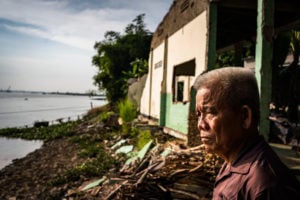
RECOMMENDEDAs the Mekong delta washes away, homes and highways are being lost
Tiếp tục đọc “The Mekong Delta is drowning in ‘sand debt’ – it urgently needs a sand budget”
As climate changes, Mekong farmers try floating rice
mekongeye.com
Mekong Delta farmers turn to indigenous rice strain to counter unpredictable floods as upstream dams affect water flow
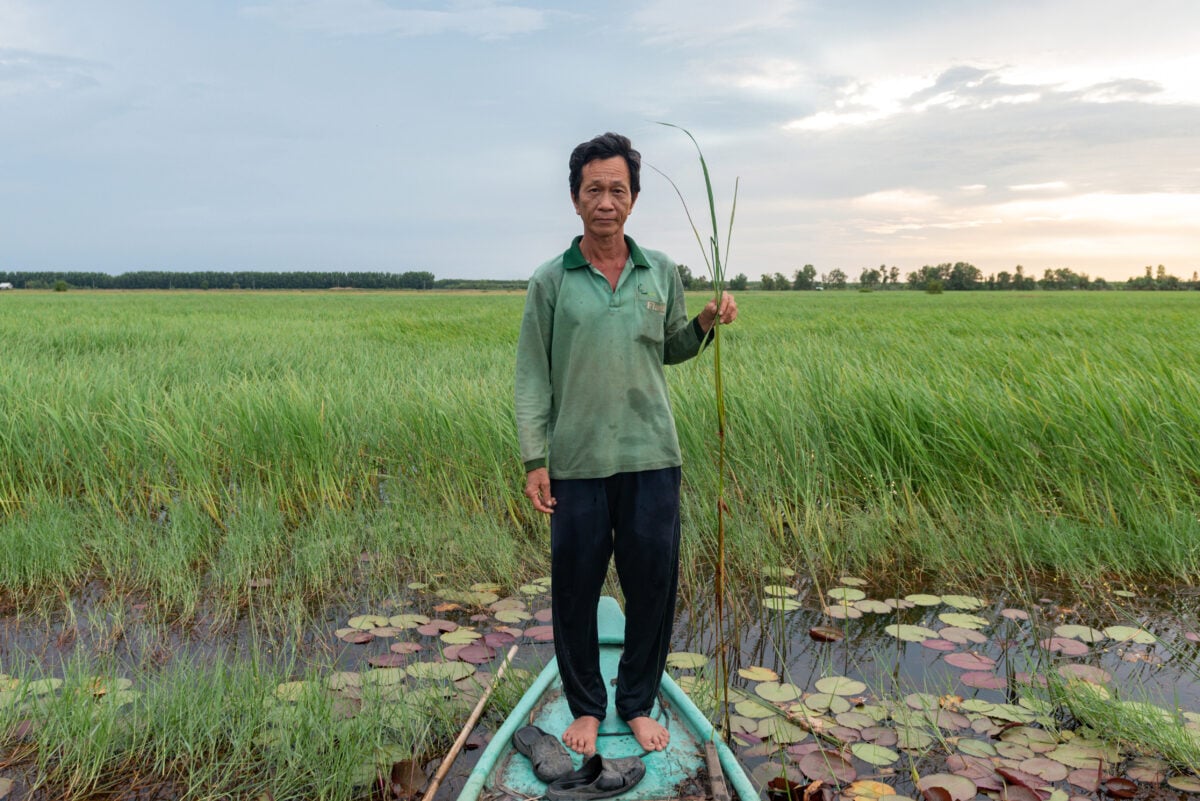
Farmer Bui Bich Tien, 52, holds a floating rice plant that grows taller than himself in his fields during the floating season in Vinh An hamlet, An Giang province, Vietnam. PHOTO: Thanh Hue
AN GIANG, VIETNAM – Before the first August rain of the flood season in Vietnam’s Mekong Delta, Bui Bich Tien started planting rice seedlings. Over the next six months, as the annual floods from upstream inundated his farmland in Vinh An hamlet, Tri Ton district in An Giang province, the rice grew with and above the rising water level.
This is no ordinary rice variety. Known as floating or deep-water rice, as the water level rises, the rice plants outgrow it, reaching up to three meters tall. It was once a staple, feeding farmers across five Mekong countries.
Tien, 52, is one of the few farmers to continue this tradition. He has been growing this species since he inherited 1.5 hectares of land in 1999.
Tiếp tục đọc “As climate changes, Mekong farmers try floating rice”
Charting a path for Vietnam to achieve its net-zero goals
By harnessing opportunities across sectors—particularly in power—Vietnam could potentially accelerate decarbonization to achieve net-zero emissions by 2050.
Vietnam is more exposed to climate risk than nearly any other country in the world. By some estimates, it is one of the top five countries likely to be most affected by climate change.1 Barring adaptation and mitigation measures, the country could face severe social and economic consequences.
Stakeholders across the country understand this reality and have begun making pledges and announcing policies aimed at reducing greenhouse-gas (GHG) emissions. At the UN Climate Change Conference in Glasgow (COP26) in 2021, Prime Minister Pham Minh Chinh announced the country’s commitment to phase out coal power generation by the 2040s and achieve net-zero carbon emissions by 2050. Most recently, in its National Strategy on Climate Change, Vietnam announced a 43.5 percent emissions-reduction target by 2030, sector-specific emissions targets for 2030 and 2050, and qualitative suggestions for achieving these goals.2
While these are praiseworthy goals, they are unlikely to propel Vietnam to net-zero emissions by 2050 on their own. Carrying out that mission will require more detailed and specific actions. To sketch out one possible scenario for Vietnam to achieve its climate ambitions, we conducted a bottom-up analysis of the country’s key economic sectors and the required emissions trajectory. Carefully focused and aggressive actions to reduce emissions across sectors of the economy, especially in power, could put Vietnam on a path to potentially achieve net-zero emissions by 2050.
This transition won’t be easy. Vietnam faces structural challenges, and the transition will require considerable investment—as well as significant mindset and operational changes. Nonetheless, by building on existing efforts and engaging across sectors, Vietnam could realize its commitments and help keep global warming below key thresholds.
Such actions would also improve health outcomes, provide access to new sustainable value pools, and grow GDP.
The net-zero imperative and progress to date
Tiếp tục đọc “Charting a path for Vietnam to achieve its net-zero goals”
Làng sạt lở thôi sợ sạt lở
13/10/2022 10:38 GMT+7
TTO – Nhìn con nước cuồn cuộn đổ về, ký ức chạy “hà bá” của người dân Triêm Tây lại ùa về. Nhưng 15 năm nay, từ khi biết cách chung sống thuận tự nhiên, cảnh nơm nớp sợ sạt lở đã không còn dù mỗi năm nơi đây vẫn bị nhiều trận nước lụt.
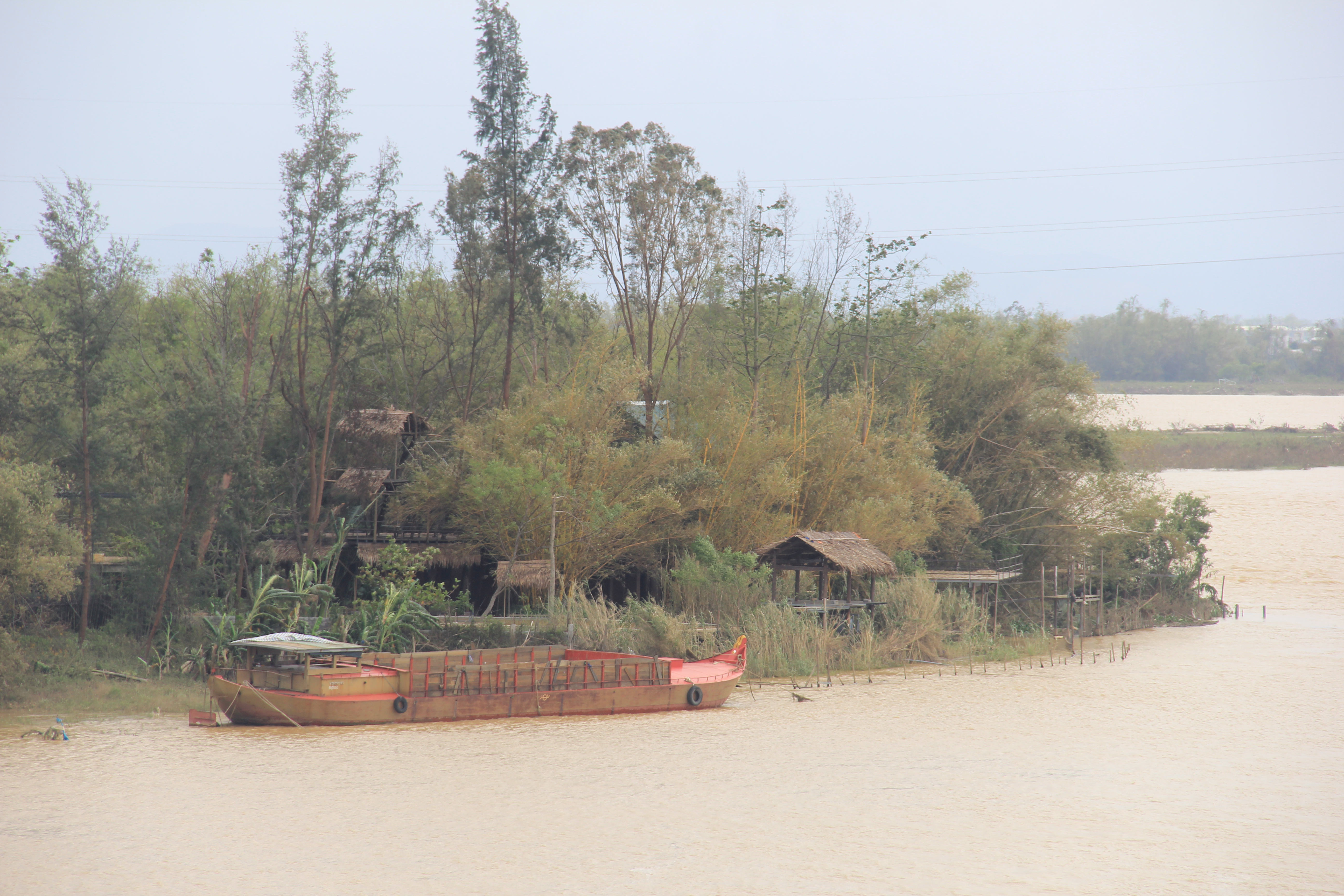
Những dự án du lịch về thôn Triêm Tây đã “tự tin” ra sát sông Thu Bồn khi áp dụng kè thuận tự nhiên – Ảnh: TRƯỜNG TRUNG
“Mang vào kẻo đạp gai, vít. Uốn ván thì khổ”, quăng cho khách đôi ủng, bà Huỳnh Thị Tài (67 tuổi, thôn Triêm Tây, xã Điện Phương, thị xã Điện Bàn, tỉnh Quảng Nam) dẫn đi lội bùn.
Đây đã là lần thứ hai trong tháng, người dân vùng đất ngã ba cuối sông Thu Bồn dọn lụt với tâm thế bình thản.
Nước và người đồng bằng sông Cửu Long: 25 câu chuyện từ những con số

DV – Thiên nhiên ưu đãi cho đồng bằng sông Cửu Long (ĐBSCL) đất đai màu mỡ, nước ngọt dồi dào, là những thế mạnh để phát triển nông nghiệp và thủy sản. Nơi đây trở thành khu vực có ý nghĩa quan trọng đối với an ninh lương thực và an ninh kinh tế của nước ta. Nhưng trong những năm vừa qua, do nhiều yếu tố gây ảnh hưởng đến môi trường sống, người dân vùng ĐBSCL phải thay đổi tập quán canh tác lúa và hoa màu, đánh bắt và nuôi trồng thủy sản, thậm chí chuyển đổi nghề nghiệp và nơi ở.
Trong bài báo sau đây, chúng tôi phân tích dữ liệu về nông nghiệp, thủy điện, xâm nhập mặn, lượng mưa, thu nhập, tỷ lệ việc làm và tỷ lệ người di cư ở ĐBSCL trong hơn 20 năm qua, nhằm mang lại bức tranh toàn cảnh về những thay đổi trong điều kiện canh tác nông, ngư nghiệp ở vùng ĐBSCL, giải thích vì sao có sự sụt giảm trong diện tích trồng lúa và sản lượng thủy sản, và phải làm gì để thích ứng với sự thay đổi này, mang lại cuộc sống ổn định cho người dân.

Tiếp tục đọc “Nước và người đồng bằng sông Cửu Long: 25 câu chuyện từ những con số”
 CVD
CVD 
