Forest elephant extinction would exacerbate climate change. That’s according to a new study in Nature Geoscience which links feeding by elephants with an increase in the amount of carbon that forests are able to store.
The bad news is that African forest elephants – smaller and more vulnerable relatives of the better known African bush elephant – are fast going extinct. If we allow their ongoing extermination to continue, we will be also worsening climate change. The good news is that if we protect and conserve these elephants, we will simultaneously fight climate change.
Elephants are fascinating animals, and I have studied them for more than 15 years. They are intelligent, sentient, and highly social. But their single most remarkable feature is their size. Evolutionarily, elephants gambled on becoming massive enough to deter predators like lions and tigers.
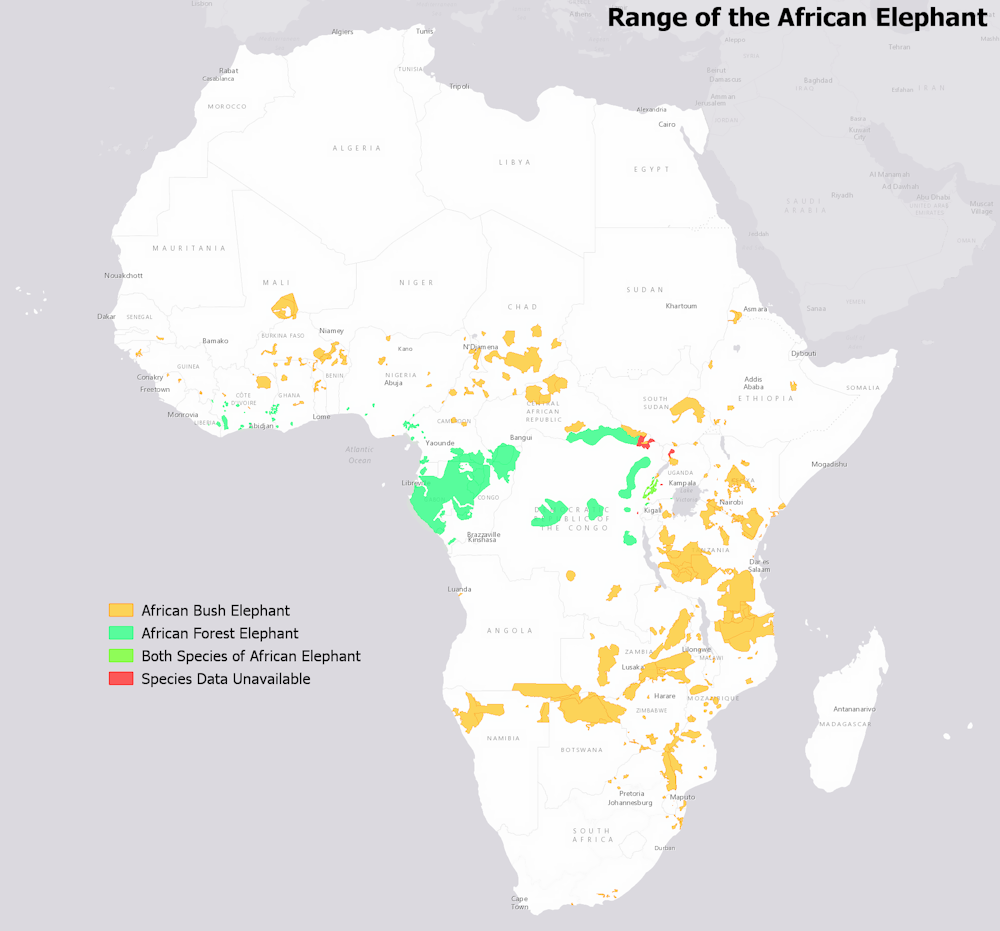
African forest elephant range is highlighted in light green. The largest surviving population is in Gabon, on the coast of central Africa. IUCN / u/DarreToBe, CC BY-SA
In exchange, they became slaves to their appetite. Elephants need huge amounts of food everyday, something like 5-10% of their body mass. A typical three-tonne female could eat 200 kg of plant material in one day. Her family may need to consume more than a tonne of food per day.
Our mission is to share knowledge and inform decisions.
ZHENGZHOU, China, April 20 (Reuters) – Severe power shortages in China’s southwestern Yunnan province are likely to cut aluminium production in the country’s fourth-largest producing province, analysts and producers said, but weak demand will cap price rises.
Yunnan, which accounts for about 12% of China’s aluminium capacity, has forced electrolytic aluminium producers to reduce their power usage since September last year after unusually low rainfall reduced hydropower generation.
Hydropower generates about 80% of the province’s electricity, and had attracted investment by energy-intensive aluminium smelters keen to lower their emissions.
The output of the metal in Yunnan jumped by 37% in 2022 from the prior year to 4.2 million tonnes.
Now, however, about 2 million tonnes of capacity, or 20% of the provincial total, is offline, Li Jiahui, an analyst at consultancy Shanghai Metals Market, told a conference in Zhengzhou.
Average rainfall in Yunnan during the first quarter of 2023 was 60% lower than the same period in typical years, the provincial government’s emergency management department said.
Beneath our feet, remarkable networks of fungal filaments stretch out in all directions. These mycorrhizal fungi live in partnership with plants, offering nutrients, water and protection from pests in exchange for carbon-rich sugars.
How much bigger? These microscopic filaments take up the equivalent of more than a third (36%) of the world’s annual carbon emissions from fossil fuels – every year.
As we search for ways to slow or stop the climate crisis, we often look to familiar solutions: cutting fossil fuel use, switching to renewables and restoring forests. This research shows we need to look down too, into our soils.
This shows how mycorrhizal fungi (fine white filaments) connect to plant root systems (yellow) and out into the soil. Scivit/Wikipedia
This fungi-plant partnership is 400 million years old
Mycorrhizal fungi are hard to spot, but their effects are startling. They thread networks of microscopic filaments through the soil and into the roots of almost every plant on earth.
But this is no hostile takeover. They’ve been partnering with plants for more than 400 million years. The length of these complex relationships has given them a vital role in our ecosystems.
Kinhtedothi – Tình trạng cắt điện luân phiên tại các địa phương đang khiến hoạt động sản xuất, kinh doanh của doanh nghiệp đảo lộn, ngưng trệ, chi phí đội lên cao… Để đảm bảo duy trì sản xuất, doanh nghiệp mong muốn ngành điện có phương án cân đối nguồn điện ưu tiên cho những ngành đặc thù.
Sản xuất ngưng trệ, đội chi phí
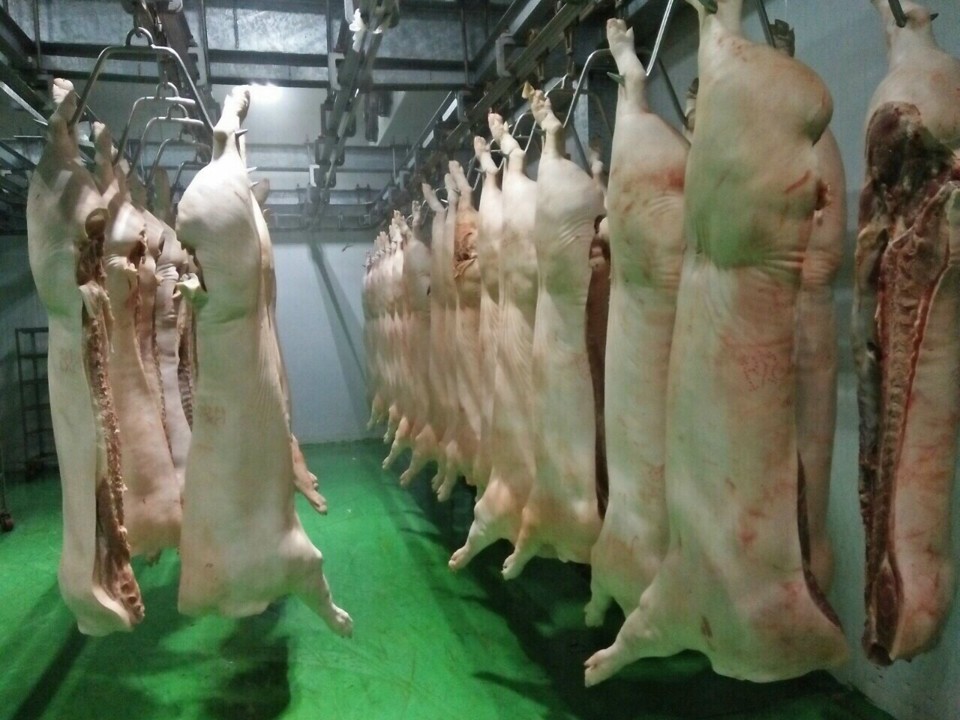
Những ngày này, anh Nguyễn Văn Chữ – Chủ tịch chuỗi thực phẩm sạch Organic Green như ngồi trên đống lửa khi nhìn vào lịch cắt điện luân phiên dày đặc. Bởi doanh nghiệp của anh hoạt động trong lĩnh vực sản xuất, chế biến và kinh doanh thực phẩm sạch, vì vậy nguồn điện rất cần cho các kho bảo quản thực phẩm tươi sống.
Anh Chữ chia sẻ, mặc dù cơ sở đã trang bị máy phát điện nhưng chỉ đủ duy trì một số hoạt động cơ bản và khu văn phòng, không đảm bảo được hệ thống cấp đông, bảo quản sản phẩm. Nếu mất điện lâu, doanh nghiệp có thiệt hại tới hàng chục tỷ đồng. Bởi mặt hàng thực phẩm tươi sống cần được bảo quản trong nhiệt độ thấp, nếu không được bảo quản sẽ bị giã đông và ảnh hưởng chất lượng.
Kho bảo quản thực phẩm tại chuỗi thực phẩm Organic Green
Ngoài ra, cũng vì mất điện, nên nhà máy sản xuất thức ăn chăn nuôi của doanh nghiệp này cũng phải tạm dừng hoạt động. Ngừng hoạt động khiến công ty không đủ hàng giao cho các đại lý. “Lịch cắt điện không phải chỉ luân phiên 1-2 tiếng, mà cắt cả ngày cả đêm, nên ảnh hưởng nghiêm trọng đến hoạt động sản xuất kinh doanh của Công ty” – anh Chữ bức xúc.
Hydroelectric reservoirs’ water levels are lower than annual averages, according to a May 10 report from Vietnam Electricity Group (EVN), and 10 are either close to or under the ‘dead level’.
Current water levels at Lai Chau hydroelectric reservoir. (Photo: kinhtedothi.vn)
Hanoi (VNS/VNA) – Hydroelectric reservoirs‘ water levels are lower than annual averages, according to a May 10 report from Vietnam Electricity Group (EVN), and 10 are either close to or under the ‘dead level’.
During the monitoring of the national electricity system in April and early May, prolonged intense heat waves across a wide area led to a significant increase in electricity consumption.
Even though the early May heatwave in the northern region only lasted a few days, it resulted in very high levels of power capacity and electricity consumption throughout the country.
For instance, the total power consumption on May 6, albeit a Saturday, reached 43,300 megawatts, while the total energy consumption reached 895 million kilowatts per hour (kWh).
Forecast for the upcoming months of May, June, and July indicates that the northern region will enter the peak period of hot weather, resulting in an increasing trend of electricity consumption, surpassing the planned operation of the national power system approved by the Ministry of Industry and Trade.
Meanwhile, the hydrological situation of reservoirs in recent months has experienced unfavourable fluctuations, significantly lower than the multi-year average.
Many hydropower reservoirs across the country are facing water shortages, with several hydropower reservoirs in the central and southern regions experiencing low water levels.
According to the EVN, 10 are close or under the “dead level”, which means that the total consumption is under 4,500 megawatts.
These reservoirs are Lai Chau, Tri An, Ialy, Ban Chat, Huoi Quang, Trung Son, Buon Kuop, Buon Tua Srah, Srepok 3, and Song Ba Ha.
The remaining electricity production in the entire system is 4.5 billion kWh, which is 1.6 billion kWh lower than the planned amount and 4.1 billion kWh lower than the same period in 2022.
According to the forecast by the National Centre for Hydro-Meteorological Forecasting (NCHMF), as El Nino is expected to occur in the later months of 2023, there will be higher temperatures and lower rainfall compared to the multi-year average, which will further contribute to a decreasing trend in water inflow to reservoirs during the second half of the year.
To deal with this situation, EVN asked its customers to tighten energy-saving consumption, especially in the noon and evening hours.
EVN recommends putting air conditioners at a reasonable level, between 26 to 27 degrees Celsius, and avoiding using multiple high-capacity electrical devices simultaneously./.
Long power cuts made life harder for residents and enterprises in suburban areas of Hanoi amid the scorching weather on Saturday.
Residents sought ways to escape the heatwave while many enterprises suspended their operations during the blackouts.
In particular, part of Lai Yen Commune, Hoai Duc District suffered a power outage, causing many enterprises and business establishments to close.
The Trung Yen gas station in the Lai Yen Industrial Cluster in the namesake commune erected the ‘out of gasoline’ sign from the early morning until afternoon on Saturday due to the power cut.
Hue, a chef in the Lai Yen Industrial Cluster, said it was extremely hot during power cuts and she could not prepare meals for workers.
Two ventilation fans, an evaporative cooler, and an industrial fan are normally needed while she is cooking.
“I cannot cook without electricity. I have to buy noodles for workers. After the meal, they cannot do anything [as there is no power],” she complained.
In Japanese folklore there are both toilet gods and toilet demons. The toilet gods are household deities, the toilet demons are water demons. Let’s look at the gods first, then the demons.
Toilet Gods
There is only very limited livestock on Japan farms. Human waste has traditionally been collected in cesspits and used as fertilizer. This meant that there was a risk of falling into a cesspit and possibly drowning. Protection was needed against this dreadful fate. Also, since the collected waste was used for fertilizer, the toilet was connected with fertility in general.
The kawaya no-kami or toilet god was asked for help. Special rituals at the new year asked for the kawaya no-kami to bring a good harvest. Keeping the toilet clean was thought to lead to more attractive children.
The specific name and rituals associated with the toilet god vary with location. The name is Takagamisama around Nagano, Setchinsan in Hiroshima, Kamu-taka on Ishigaki Island, Sechinbisan in Ōita, and Usshimasama in Ehime. In some places the family sit in front of the toilet on a straw mat and eat a rice cake, in other places they would put an offering of food into the toilet.
In far northern Japan the Ainu people believed that their toilet god, the Rukar Kamuy, would be the first deity to provide help in times of danger. The Rukar Kamuy is one of many Kamuy or household gods. There is Apasamn Kamuy the husband and wife god and goddess who keep evil spirits out of the house entrance. Cisepannokianpa Kamuy and Cisepennokianpa Kamuy, the husband and wife god and goddess of the eaves of the roof, protect the house from earthquakes and typhoons. Cisekor Kamuy, a male god, sits in the east corner of the house and watches over everything. He is the husband of Apehuci Kamuy, the goddess of fire. Colpep Kamuy is the god of containers, thanks are given to this god when containers are retired.
Để các dự án năng lượng tái tạo được sớm phát lên lưới, trách nhiệm không chỉ nằm ở EVN mà còn của Bộ Công Thương, UBND các tỉnh và nhất là các chủ đầu tư.
Được mở đường, nhà đầu tư vẫn lừng khừng
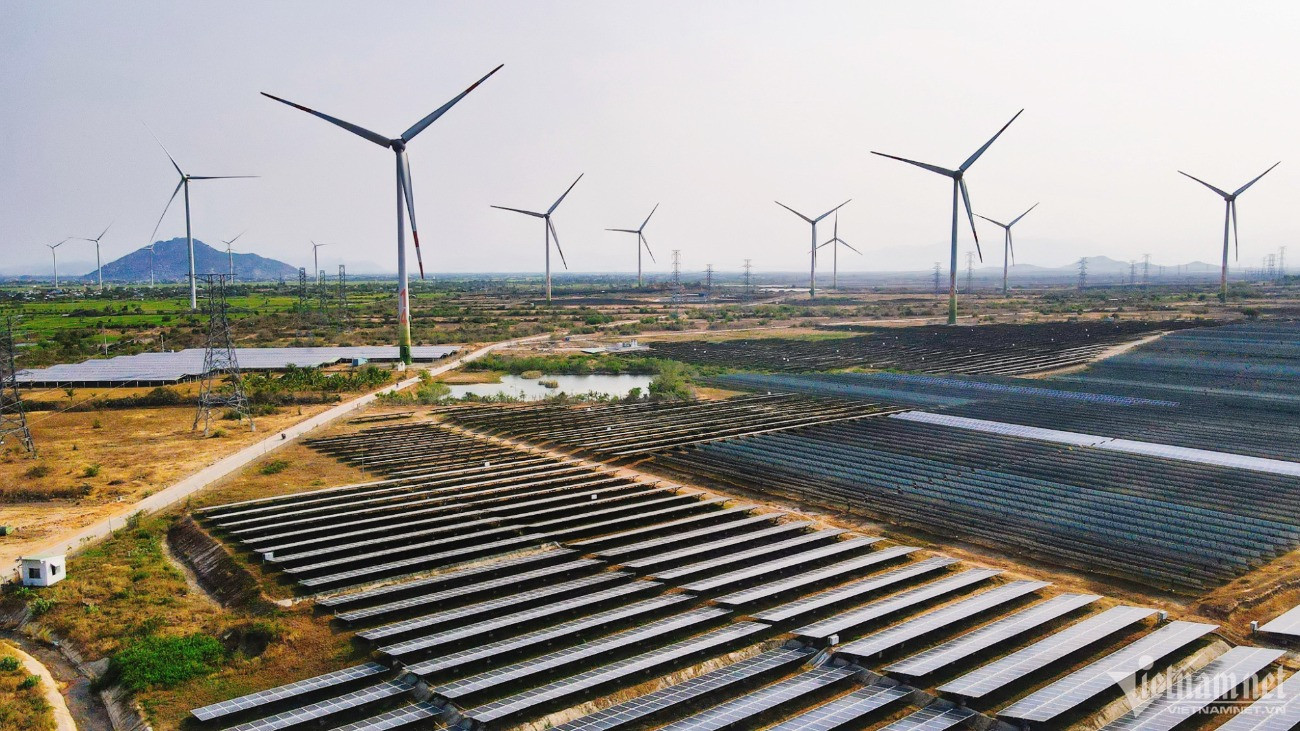
Đến nay có 85 dự án điện tái tạo (gồm 8 dự án điện mặt trời và 77 dự án điện gió), với tổng công suất hơn 4.700MW đã và đang đầu tư, xây dựng và lỡ hẹn giá ưu đãi vì giá FiT cho điện gió kết thúc vào tháng 31/10/2021 và điện mặt trời kết thúc vào tháng 12/2020.
Nhiều dự án điện gió, điện mặt trời lỡ hẹn giá FiT. Ảnh: Thạch Thảo
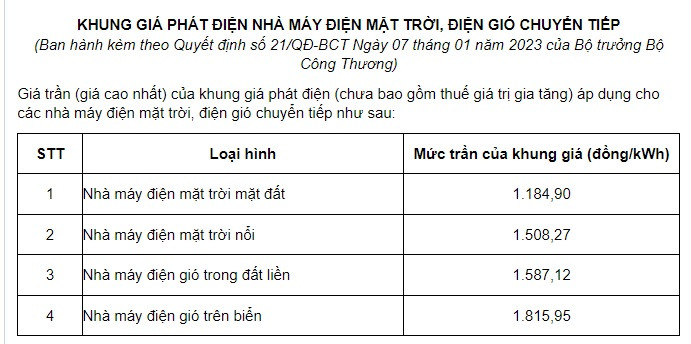
Mãi đến ngày 7/1/2023, Bộ trưởng Công Thương mới ban hành quyết định về khung giá phát điện nhà máy điện mặt trời, điện gió chuyển tiếp. Sự chậm trễ này rõ ràng có phần trách nhiệm của Bộ Công Thương.
Nhưng từ đó đến giữa tháng 5/2023, rất ít chủ đầu tư gửi hồ sơ đàm phán đến Công ty mua bán điện thuộc EVN (EPTC) vì nhà đầu tư “chê” mức giá đó là quá thấp.
Căn cứ mức giá trần này, mỗi kWh điện mặt trời mặt đất có giá tạm tính là 592,45 đồng; điện mặt trời nổi là 754,13 đồng; điện gió trong đất liền là 793,56 đồng; điện gió trên biển là 907,97 đồng.
Nationally Determined Contributions, or NDCs, are countries’ self-defined national climate pledges under the Paris Agreement, detailing what they will do to help meet the global goal to pursue 1.5°C, adapt to climate impacts and ensure sufficient finance to support these efforts.
NDCs represent short- to medium-term plans and are required to be updated every five years with increasingly higher ambition, based on each country’s capabilities and capacities.
Concrete progress is already being made towards achievement of the Paris Agreement, particularly in developing countries. For example, pledges from African countries are more robust than the global average in terms of explaining how targets will be achieved.
NDCs represent politically backed commitments by countries. If used right, they could be our way out of tackling the world’s current crises – not just the climate crisis, but other systemic problems like biodiversity loss and energy security as well.
What are Nationally Determined Contributions and where do they come from?
The legally binding international treaty, which was adopted in 2015 by all 196 Parties to the UN Climate Convention in Paris, established universal global goals endorsed by all countries. Primarily, this includes ensuring global average temperature rise is held well below 2°C above pre-industrial levels and pursuing efforts to limit the increase to 1.5°C. It also includes an aim to increase the ability to adapt to climate impacts, and make finance flows consistent with country needs to achieve these goals.
Humans are taking colossal risks with the future of civilization and everything that lives on Earth, a new study published in the journal Nature shows. Developed by an international science commission engaging more than 40 researchers from across the globe, the scientists deliver the first quantification of safe and just Earth system boundaries on a global and local level for several biophysical processes and systems that regulate the state of the Earth system.
For the first time, safety and justice for humanity on Earth is assessed and quantified for the same control variables regulating life support and Earth stability. Justice, assessed based on avoiding significant harm to people across the world, tightens the Earth system boundaries, providing even less available space for humans on Earth. This is extremely challenging, as the Earth Commission concludes that numerous of the safe boundaries are already crossed today.
“We are in the Anthropocene, putting the stability and resilience of the entire planet at risk. This is why, for the first time, we present quantifiable numbers and a solid scientific foundation to assess the state of our planetary health not only in terms of Earth System stability and resilience but also in terms of human wellbeing and equity / justice.” said Prof. Johan Rockström, Earth Commission Co-Chair, lead author and Director of the Potsdam Institute for Climate Impact Research.
“Justice is a necessity for humanity to live within planetary limits. This is a conclusion seen across the scientific community in multiple heavyweight environmental assessments. It is not a political choice. Overwhelming evidence shows that a just and equitable approach is essential to planetary stability. We cannot have a biophysically safe planet without justice. This includes setting just targets to prevent significant harm and guarantee access to resources to people and for as well as just transformations to achieve those targets” said co-author Prof. Joyeeta Gupta, Co-Chair of the Earth Commission, Professor of Environment and Development in the Global South at the University of Amsterdam and Professor of Law and Policy in Water Resources and Environment at IHE Delft Institute for Water Education.
The stability and resilience of the Earth system and human well-being are inseparably linked1,2,3, yet their interdependencies are generally under-recognized; consequently, they are often treated independently4,5. Here, we use modelling and literature assessment to quantify safe and just Earth system boundaries (ESBs) for climate, the biosphere, water and nutrient cycles, and aerosols at global and subglobal scales. We propose ESBs for maintaining the resilience and stability of the Earth system (safe ESBs) and minimizing exposure to significant harm to humans from Earth system change (a necessary but not sufficient condition for justice)4. The stricter of the safe or just boundaries sets the integrated safe and just ESB. Our findings show that justice considerations constrain the integrated ESBs more than safety considerations for climate and atmospheric aerosol loading. Seven of eight globally quantified safe and just ESBs and at least two regional safe and just ESBs in over half of global land area are already exceeded. We propose that our assessment provides a quantitative foundation for safeguarding the global commons for all people now and into the future.
HANOI (Reuters) -Vietnam aims to cut its rice exports to 4 million tonnes a year by 2030, the government said in a document detailing its rice export strategy, down from 7.1 million tonnes last year.Slideshow ( 2 images )Vietnam is the world’s third-largest rice exporter, after India and Thailand.
The move is aimed at “boosting the exports of high-quality rice, ensuring domestic food security, protecting the environment and adapting to climate change,” according to the government document, dated May 26 and reviewed by Reuters.
Rice export revenue will fall to $2.62 billion a year by 2030, down from $3.45 billion in 2022, the document said.
“Although Vietnam’s rice farming area is shrinking due to climate change and some farmers are switching to growing other crops and raising shrimp, the strategy appears to be too aggressive,” a rice trader based in Ho Chi Minh City said on Saturday.
A controversial legal process known as investor-state dispute settlements (ISDS) is making it difficult for governments to mobilize finance for ambitious climate action.
When assets are protected by international investment treaties, like the Energy Charter Treaty, legal claims can be brought against countries by investors who feel they are negatively impacted by government policies. For example, Italy was recently ordered to pay UK-based oil/gas company Rockhopper more than €190 million for the Italian government’s refusal to grant an offshore oil concession. A May 2022 study in Science found potential ISDS claims globally could total as much as $340 billion.
Five young people whose resolve was hardened by floods and wildfires recently took their governments to the European Court of Human Rights (ECHR). Their claim concerns each country’s membership of an obscure treaty they argue makes climate action impossible by protecting fossil fuel investors.
The energy charter treaty has 52 signatory countries which are mostly EU states but include the UK and Japan. The claimants are suing 12 of them including France, Germany and the UK – all countries in which energy companies are using the treaty to sue governments over policies that interfere with fossil fuel extraction. For example, the German company RWE is suing the Netherlands for €1.4 billion (£1.2 billion) because it plans to phase out coal.
The claimants aim to force their countries to exit the treaty and are supported by the Global Legal Action Network, a campaign group with an ongoing case against 33 European countries they accuse of delaying action on climate change. The prospects for the current application going to a hearing at the ECHR look good. But how simple is it to prise countries from the influence of this treaty?
A World Energy Outlook Special Report on the Oil and Gas Industry and COP28
Today, oil and gas operations account for around 15% of total energy-related emissions globally, the equivalent of 5.1 billion tonnes of greenhouse gas emissions. In the International Energy Agency’s Net Zero Emissions by 2050 Scenario, the emissions intensity of these activities falls by 50% by the end of the decade. Combined with the reductions in oil and gas consumption in this scenario, this results in a 60% reduction in emissions from oil and gas operations to 2030.
Fortunately, oil and gas producers have a clear opportunity to address the problem of emissions from their activities through a series of ready-to-implement and costeffective measures. These include tackling methane emissions, eliminating all non-emergency flaring, electrifying upstream facilities with low-emissions electricity, equipping oil and gas processes with carbon capture, utilisation and storage technologies, and expanding the use of hydrogen from low-emissions electrolysis in refineries.
Upfront investments totalling USD 600 billion would be required to halve the emissions intensity of oil and gas operations globally by 2030. This is only a fraction of the record windfall income that oil and gas producers accrued in 2022 – a year of soaring energy prices amid a global energy crisis. This report aims to inform discussions on these issues in the run-up to the COP28 Climate Change Conference in Dubai in November and is part of a broader World Energy Outlook special report to be released later in 2023 focusing on the role of the oil and gas industry in net zero transitions.
One year in the next five will almost certainly be the hottest on record and there’s a two-in-three chance a single year will cross the crucial 1.5℃ global warming threshold, an alarming new report by the World Meteorological Organization predicts.
The report, known as the Global Annual to Decadal Climate Update, warns if humanity fails to reduce greenhouse gas emissions to net zero, increasingly worse heat records will tumble beyond this decade.
So what is driving the bleak outlook for the next five years? An expected El Niño, on top of the overall global warming trend, will likely push the global temperature to record levels.
Has the Paris Agreement already failed if the global average temperature exceeds the 1.5℃ threshold in one of the next five years? No, but it will be a stark warning of what’s in store if we don’t quickly reduce emissions to net zero.
One year in the next five will almost certainly be the hottest on record, bringing more heatwaves like this boy experienced in Britain around the time the last record was set. Andy Rain/EPA
The World Meteorological Organization update says there is a 98% chance at least one of the next five years will be the hottest on record. And there’s a 66% chance of at least one year over the 1.5℃ threshold.




 We believe in the free flow of information
 CVD
CVD 