Almost exactly 10 years ago, a remarkable thing happened in a conference hall on the outskirts of Paris: After years of bitter negotiations, the leaders of nearly every country agreed to try to slow down global warming in an effort to head off its most devastating effects.
The core idea was that countries would set their own targets to reduce their climate pollution in ways that made sense for them. Rich, industrialized nations were expected to go fastest and to help lower-income countries pay for the changes they needed to cope with climate hazards.
So, has anything changed over those 10 years? Actually, yes. Quite a bit, for the better and the worse. For one thing, every country remains committed to the Paris Agreement, except one. That’s the United States.
Aproject of the Center for Climate and Security (CCS). Please read important information on this project’s scope, methodology, limitations, and citation guidelines below.
This map is based on a dataset regularly updated by CCS staff, based on publicly available information, tracking the date, location, actors, and circumstances of military deployments to climate-related hazards.
Researchers, journalists, academics, government officials, or members of the public are encouraged to contribute to this effort by entering information and sourcing on such incidents here, which CCS uses to supplement its own tracking in updating this map.
The dataset starts in June 2022 and was last updated 30 September, 2025.
Scope and Definitions
This project tracks the deployment of military and paramilitary personnel and equipment in response to natural hazards exacerbated by climate change, worldwide.
This includes all hazard types that climate change is known to make more likely or intense–such as heatwaves, flooding, drought, extreme precipitation, and storms and hurricanes—even if a scientific study has not yet quantified the role of climate change in a particular incident. Natural disasters largely unrelated to climate change, such as earthquakes or volcanoes, are excluded. Entries include direct deployment of military forces, the use of other armed paramilitaries, and the lending of military personnel or equipment to civil authorities, but does not include purely civilian disaster response.
Similarly, military deployments in response to challenges indirectly contributed to by climate change (such as migration or civil unrest) are not included, nor are deployments related to energy security or the energy transition.
Limitations
Users should be aware of limitations in this project, especially in comprehensiveness and precision. Because of the project’s scope, data access issues, and English-language focus, this page probably misses some incidents that fit the project’s criteria, especially in locations under-covered in English-language media and/or with opaque militaries. CCS logs incidents based on approximate start date and displays incidents by month, and logs incidents by the most precise location feasible based on available information and the geographic scope of the hazard. Finally, this project does not distinguish military deployments or hazards by magnitude – users should click through to underlying sources to learn more about the size of a given incident.
Citation
This data may be freely cited by academics, researchers, or journalists, crediting The Center for Climate and Security.
Columbia Climate School identifies 65 ‘Red Zone’ nations across four separate climate scenarios.
43 nations in Sub-Saharan Africa, eight in Latin America and the Caribbean, six in Asia-Pacific, six in the Middle East, and two in Europe are most at-risk.
With support from The Rockefeller Foundation, the “Climate Finance Vulnerability Index” aims to help close the gap between risk assessments and funding allocations.
People swim in the lagoon in Funafuti, Tuvalu, on November 28, 2019. Mario Tama/Getty ImagesSydney, AustraliaCNN —
More than a third of the population of Tuvalu has applied to move to Australia, under a landmark visa scheme designed to help people escape rising sea levels.
The island nation – roughly halfway between Hawaii and Australia – is home to about 10,000 people, according to the latest government statistics, living across a clutch of tiny islets and atolls in the South Pacific.
On June 16, Australia opened a roughly one-month application window for what it says is a one-of-a-kind visa offering necessitated by climate change. Under the new scheme, Australia will accept 280 visa winners from a random ballot between July and January 2026. The Tuvaluans will get permanent residency on arrival in Australia, with the right to work and access public healthcare and education.
More than 4,000 people have applied under the scheme, according to official figures seen by CNN.
“The opening of the Falepili Mobility Pathway delivers on our shared vision for mobility with dignity, by providing Tuvaluans the opportunity to live, study and work in Australia as climate impacts worsen,” Australian Foreign Minister Penny Wong said in a statement.
CNN has reached out to the Tuvalu government.
According to Tuvalu’s Prime Minister Feleti Teo, more than half of Tuvalu will be regularly inundated by tidal surges by 2050. By 2100, 90% of his nation will be regularly under water, he says.
Fongafale, the nation’s capital, is the largest and most populated islet in Tuvalu’s main atoll, Funafuti. It has a runway-like strip of land just 65 feet (20 meters) wide in some places.
“You can put yourself in my situation, as the prime minister of Tuvalu, contemplating development, contemplating services for the basic needs of our people, and at the same time being presented with a very confronting and disturbing forecast,” Teo told the United Nations Oceans Conference this month in Nice, France.
The world is warming despite natural fluctuations from the El Niño cycle.
In 2024, the world was around 1.5°C warmer than it was in pre-industrial times.1 You can see this in the chart below, which shows average warming relative to average temperatures from 1861 to 1890.2
Temperatures, as defined by “climate”, are based on temperatures over longer periods of time — typically 20-to-30-year averages — rather than single-year data points. But even when based on longer-term averages, the world has still warmed by around 1.3°C.3
But you’ll also notice, in the chart, that temperatures haven’t increased linearly. There are spikes and dips along the long-run trend.
Many of these short-term fluctuations are caused by “ENSO” — the El Niño-Southern Oscillation — a natural climate cycle caused by changes in wind patterns and sea surface temperatures in the Pacific Ocean.
While it’s caused by patterns in the Pacific Ocean and most strongly affects countries in the tropics, it also impacts global temperatures and climate.
There are two key phases of this cycle: the La Niña phase, which tends to cause cooler global temperatures, and the El Niño phase, which brings hotter conditions. The world cycles between El Niño and La Niña phases every two to seven years.4 There are also “neutral” periods between these phases where the world is not in either extreme.
The zig-zag trend of global temperatures becomes understandable when you are taking the phases of the ENSO cycles into account. In the chart below, we see the data on global temperatures5, but the line is now colored by the ENSO phase at that time.6
The El Niño (warm phase) is shown in orange and red, and the La Niña (cold phase) is shown in blue.
You can see that temperatures often reach a short-term peak during warm El Niño years before falling back slightly as the world moves into La Niña years, shown in blue.
A U.S. Army CH-47 Chinook helicopter assigned to the 25th Infantry Division delivers essential medical supplies and logistical equipment for the Lahaina National Guard Role I facility, supporting Maui County authorities to provide immediate security, safety, and well-being to those affected by the wildfires to ensure unwavering support for the community of Maui and first responders. (U.S. Army photo by Spc. Abreanna Goodrich)
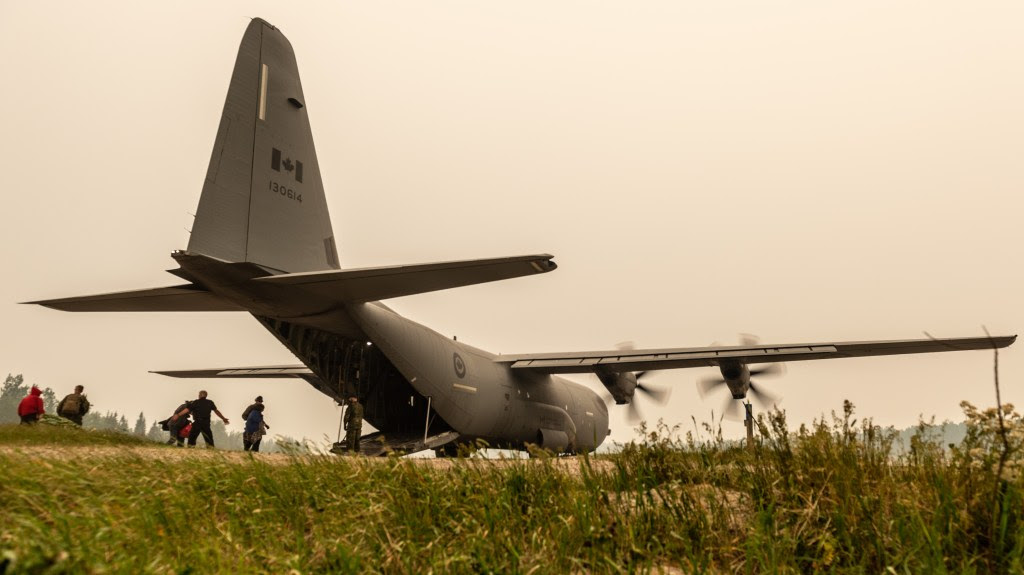
Since June 2022, MiRCH has identified military deployments for floods, storms, droughts, heat, wildfires, and other hazards on every continent, involving the armed services of 68 countries. With the growing severity and frequency of climate hazards, the scale of some MiRCH incidents have been immense, placing enormous pressure on defense forces to provide assistance. For instance, wildfires in Canada burned through a record high of more than 45 million acres in 2023 requiring the Canadian Armed Forces to engage in firefighting for over 100 days. Meanwhile, extreme precipitation and flooding in Libya, East Africa, and elsewhere have displaced millions of people, resulting in the deployment of thousands of military personnel.
The pace and breadth of climate hazards present additional challenges to militaries worldwide. MiRCH has recorded 10 countries where their armed services responded to more than one climate hazard in the same month. In December 2023, India’s southern state of Tamil Nadu was still recovering from the damage caused by Cyclone Michaung when intense rainfall later in the month led to severe flooding in the region again, prompting the Indian Armed Forces to amplify their recovery efforts. Additionally, although defense forces continue to widely perform more traditional disaster relief duties, such as providing logistical support, conducting search and rescue operations, evacuating affected areas, and delivering critical aid and supplies, they are also being deployed for missions beyond these roles. For example, the Swiss army has airlifted water to thousands of livestock during water shortages, the West Virginia National Guard conducted aerial firefighting for the first time, and Indonesia ordered the military to assist farmers in planting rice since drought has reduced production of the staple crop.
Record high temperatures, combined with a strong El Niño event, contributed to unprecedented extreme weather events that required military responses in 2023, from the first Category-5 storm in recorded history to make landfall in the Mexican Pacific to Canada’s historic fire season. As global temperatures continue to rise, climate hazards are projected to further intensify, placing an even greater demand on armed services to provide relief in the future. In the near term, extreme weather events in the next few months could be particularly severe as the current El Niño is expected to continue at least until April.
High Demand Poses Readiness Questions for Militaries
The global stocktake is a critical turning point in our battle against the escalating climate crisis – a moment to take a long, hard look at the state of our planet and chart a better course for the future.
“The global stocktake is an ambition exercise. It’s an accountability exercise. It’s an acceleration exercise,” said UN Climate Change Executive Secretary Simon Stiell. “It’s an exercise that is intended to make sure every Party is holding up their end of the bargain, knows where they need to go next and how rapidly they need to move to fulfill the goals of the Paris Agreement.”
The COP28 Climate Change Conference in Dubai this year is a unique opportunity for the oil and gas industry to show it’s serious about tackling climate change.
At a time when the impacts of climate change are increasingly being felt worldwide, oil and gas producers need to secure a new social license to operate. The world needs to see meaningful changes in the operations of both international and national oil companies, with clear and responsible strategies for bringing down their emissions rapidly.
By harnessing opportunities across sectors—particularly in power—Vietnam could potentially accelerate decarbonization to achieve net-zero emissions by 2050.
Vietnam is more exposed to climate risk than nearly any other country in the world. By some estimates, it is one of the top five countries likely to be most affected by climate change.1 Barring adaptation and mitigation measures, the country could face severe social and economic consequences.
Stakeholders across the country understand this reality and have begun making pledges and announcing policies aimed at reducing greenhouse-gas (GHG) emissions. At the UN Climate Change Conference in Glasgow (COP26) in 2021, Prime Minister Pham Minh Chinh announced the country’s commitment to phase out coal power generation by the 2040s and achieve net-zero carbon emissions by 2050. Most recently, in its National Strategy on Climate Change, Vietnam announced a 43.5 percent emissions-reduction target by 2030, sector-specific emissions targets for 2030 and 2050, and qualitative suggestions for achieving these goals.2
While these are praiseworthy goals, they are unlikely to propel Vietnam to net-zero emissions by 2050 on their own. Carrying out that mission will require more detailed and specific actions. To sketch out one possible scenario for Vietnam to achieve its climate ambitions, we conducted a bottom-up analysis of the country’s key economic sectors and the required emissions trajectory. Carefully focused and aggressive actions to reduce emissions across sectors of the economy, especially in power, could put Vietnam on a path to potentially achieve net-zero emissions by 2050.
This transition won’t be easy. Vietnam faces structural challenges, and the transition will require considerable investment—as well as significant mindset and operational changes. Nonetheless, by building on existing efforts and engaging across sectors, Vietnam could realize its commitments and help keep global warming below key thresholds.
Such actions would also improve health outcomes, provide access to new sustainable value pools, and grow GDP.
Floods, droughts, tropical storms, and heat waves are severely testing the resilience of a region with a lot of vulnerable people.
Two people on a makeshift raft during flooding in Pakistan. People make their way along a waterlogged street in a residential area after a heavy monsoon rainfall in Hyderabad, Pakistan, on Aug. 24. AKRAM SHAHID/AFP VIA GETTY IMAGES
AUGUST 24, 2022, 5:07 PM
High temperatures, frequent droughts, torrential rains, and other extreme weather events this summer have throttled Asia, forced industries to shut down, slowed global business, disrupted food supplies, and upended the lives of ordinary people living in some of the world’s most populous countries and densely packed cities.
For months, countries across the Asia-Pacific have been experiencing a mix of heavier rains and higher temperatures, creating unpredictable weather patterns. When the rains aren’t falling a lot—as in Pakistan, where eight monsoon cycles have left thousands of people homeless—they aren’t falling at all, causing energy shortages as droughts have seriously restricted access to hydroelectric power. Record-breaking temperatures in China, for example, have sparked intense wildfires in the country’s center and dried up rivers that cities bank on to power industries and homes.
when it comes to the Paris Agreement and climate action; namely that when individuals change their behaviour by consuming differently they can drive industries to change, as those industries are then caught between a ‘greening’ consumer demand and international and governmental policies focusing on climate action.
Back in the 1980s, everyone was talking about the hole in the ozone layer, so what happened, and what can the international agreement to ban CFCs teach us about the importance of multilateral cooperation when it comes to climate action?
What exactly is the ozone layer?
The ozone layer is the part of the Earth’s atmosphere that protects the planet from ultraviolet radiation. It’s found in the Stratosphere which is around 10-50km above the surface of the earth. Think of it as a layer of sunscreen that protects us from all manner of harmful rays. Without it, life on Earth would be extremely unpleasant.
Vietnam is increasingly seeing its development affected by climate change and now faces critical questions about how to respond. The Vietnam Country Climate and Development Report proposes that Vietnam shift its development paradigm by incorporating two critical pathways – resilient pathway and decarbonizing pathway – that will help the country balance its development goals with increasing climate risks.
After more than two decades of steady growth, Vietnam has set an ambitious goal of reaching high-income status by 2045. It has been recognized in the 2021-2030 Socioeconomic Development Strategy that the country’s economic transformation will greatly depend on better management of natural capital – the extensive stocks of agricultural, forest, and mineral resources that have helped drive development.
The newest report from the Intergovernmental Panel on Climate Change (IPCC) paints a troubling picture: Climate change is already impacting every corner of the world, and much more severe impacts are in store if we fail to halve greenhouse gas emissions this decade and immediately scale up adaptation.
Following on the first installment of the IPCC’s Sixth Assessment Report, Working Group II’s contribution, released on February 28, 2022, draws from 34,000 studies and involved 270 authors from 67 countries. It provides one of the most comprehensive examinations of the intensifying impacts of climate change and future risks, particularly for resource-poor countries and marginalized communities. The 2022 IPCC report also details which climate adaptation approaches are most effective and feasible, as well as which groups of people and ecosystems are most vulnerable.
UN Secretary-General Antonio Guterres called the report “an atlas of human suffering and a damning indictment of failed climate leadership.
Here are six takeaways from the report:
1. Climate impacts are already more widespread and severe than expected.
Climate change is already causing widespread disruption in every region in the world with just 1.1 degrees C (2 degrees F) of warming.
Transformations must occur across every sector at far faster pace than recent trends to keep the window open to achieve the Paris Agreement’s goal to limit global warming to 1.5°C, according to this Systems Change Lab report authored by the UN High-Level Climate Champions, Climate Action Tracker, ClimateWorks Foundation, Bezos Earth Fund and World Resources Institute.
Limiting global warming to 1.5°C requires far-reaching transformations across power generation, buildings, industry, transport, land use, coastal zone management, and agriculture, as well as the immediate scale-up of technological carbon removal and climate finance. This report translates these transitions into 40 targets for 2030 and 2050, with measurable indicators.
The effects of ‘weird weather’ were already being felt in the 1960s, but scientists linking fossil fuels with climate change were dismissed as prophets of doomby Alice BellMon 5 Jul 2021 06.00 BST
In August 1974, the CIA produced a study on “climatological research as it pertains to intelligence problems”. The diagnosis was dramatic. It warned of the emergence of a new era of weird weather, leading to political unrest and mass migration (which, in turn, would cause more unrest). The new era the agency imagined wasn’t necessarily one of hotter temperatures; the CIA had heard from scientists warning of global cooling as well as warming. But the direction in which the thermometer was travelling wasn’t their immediate concern; it was the political impact. They knew that the so-called “little ice age”, a series of cold snaps between, roughly, 1350 and 1850, had brought not only drought and famine, but also war – and so could these new climatic changes.
“The climate change began in 1960,” the report’s first page informs us, “but no one, including the climatologists, recognised it.” Crop failures in the Soviet Union and India in the early 1960s had been attributed to standard unlucky weather. The US shipped grain to India and the Soviets killed off livestock to eat, “and premier Nikita Khrushchev was quietly deposed”.
But, the report argued, the world ignored this warning, as the global population continued to grow and states made massive investments in energy, technology and medicine.




 CVD
CVD 