Climate Finance in Southeast Asia: Trends and Opportunities

fulcrum.sg

PUBLISHED 11 FEB 2022

Qiu Jiahui

MELINDA MARTINUS|QIU JIAHUI

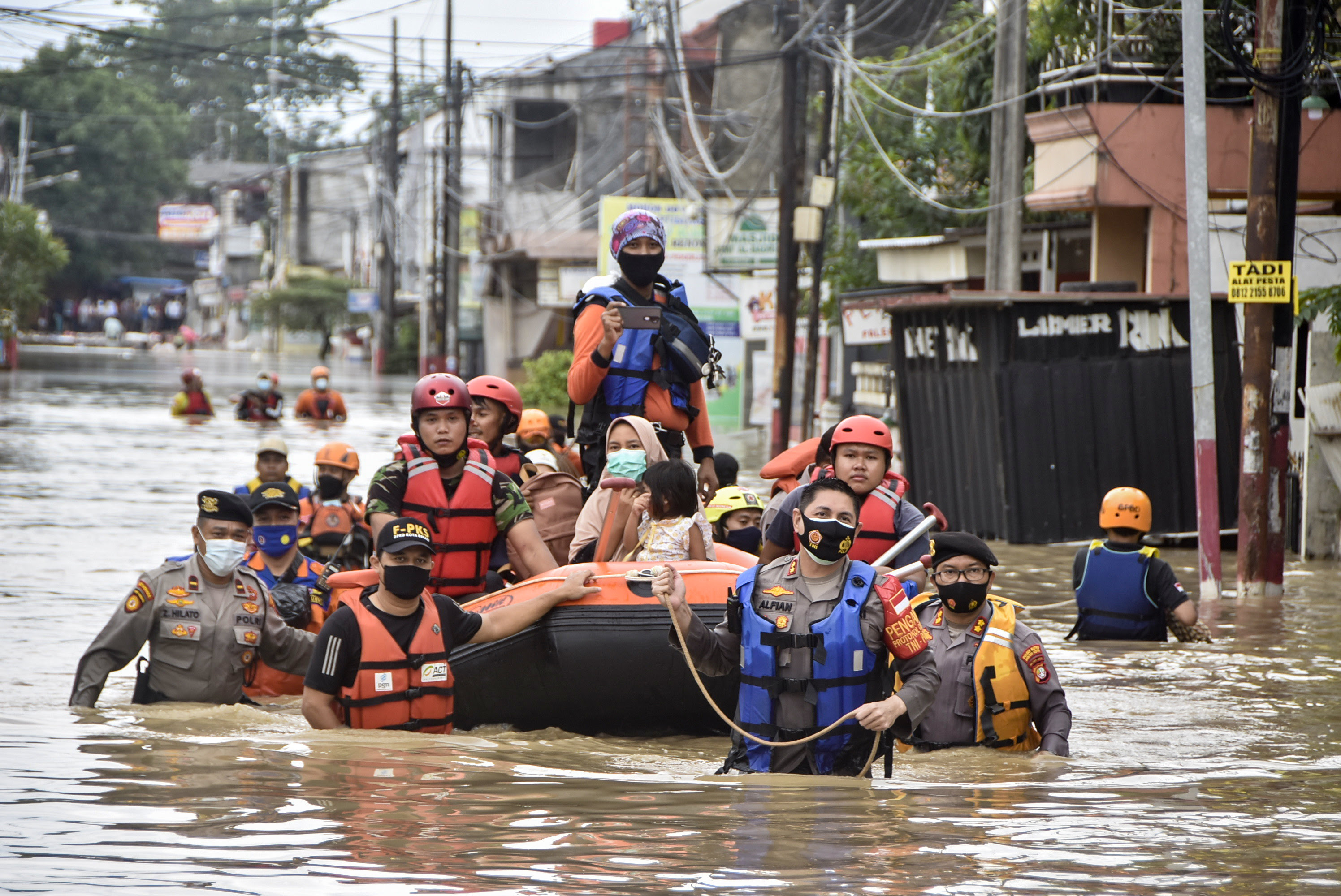
The Covid-19 crisis has stalled the delivery of much-needed climate finance to developing countries. For Southeast Asia, a region frequently cited as being one of the most vulnerable regions threatened by climate change, the broken promise of climate finance is highly disappointing.

INTRODUCTION

Climate finance has been one of the most contentious issues in global climate politics. At the 2009 United Nations Climate Change Conference (COP 15), developed countries committed to mobilising by 2020 US$100 billion climate finance annually to assist vulnerable countries. The pledge has been key to building trust between states to limit global warming to well below 2 degrees Celsius, as specified in the Paris Agreement.

Tiếp tục đọc “Climate Finance in Southeast Asia: Trends and Opportunities”

2022 State of Southeast Asia Survey: Diverse Perspectives and Hard Realities

fulcrum.sg

PUBLISHED 16 FEB 2022

TERENCE CHONG

The US has gained ground against China in the contest for regional influence in Southeast Asia, according to the latest State of Southeast Asia Survey. ASEAN continues to be seen as ineffective in the eyes of respondents; at the same time, they are willing to give it credit when it is due.

The United States is gaining significant ground against China in the battle to win friends and influence countries, with respondents across Southeast Asia confident that Washington would be able to lead on issues such as championing free trade and upholding the rules-based regional order. 

A fresh reading of The State of Southeast Asia Survey also showed that pressing issues — the Covid-19 pandemic, unemployment and economic retraction as well as climate change – continue to be prioritised by respondents. In their view, however, ASEAN is seen as too slow and ineffective to cope with rapid developments.

Tiếp tục đọc “2022 State of Southeast Asia Survey: Diverse Perspectives and Hard Realities”

FACT SHEET: Indo-Pacific Strategy of the United States

FEBRUARY 11, 2022•SPEECHES AND REMARKS

“We envision an Indo-Pacific that is open, connected, prosperous, resilient, and secure—and we are ready to work together with each of you to achieve it.”
President Joe Biden
            East Asia Summit
October 27, 2021

The Biden-Harris Administration has made historic strides to restore American leadership in the Indo-Pacific and adapt its role for the 21st century. In the last year, the United States has modernized its longstanding alliances, strengthened emerging partnerships, and forged innovative links among them to meet urgent challenges, from competition with China to climate change to the pandemic. It has done so at a time when allies and partners around the world are increasingly enhancing their own engagement in the Indo-Pacific; and when there is broad, bipartisan agreement in the U.S. Congress that the United States must, too. This convergence in commitment to the region, across oceans and across political-party lines, reflects an undeniable reality: the Indo-Pacific is the most dynamic region in the world, and its future affects people everywhere.

That reality is the basis of the Indo-Pacific Strategy of the United States. This strategy outlines President Biden’s vision to more firmly anchor the United States in the Indo-Pacific and strengthen the region in the process. Its central focus is sustained and creative collaboration with allies, partners, and institutions, within the region and beyond it.

The United States will pursue an Indo-Pacific region that is:

Tiếp tục đọc “FACT SHEET: Indo-Pacific Strategy of the United States”

The State of Conflict and Violence in Asia 2021

DOWNLOAD >>

The second edition of The Asia Foundation’s State of Conflict and Violence in Asia explores recent events and patterns of events through regional assessments and country-specific overviews. In particular, this report addresses contemporary concerns over political polarization and identity-based tensions. Following the overview chapter, three keynote essays featuring regional experts offer closer assessments of recent conflict trends. Ten concise country summaries then present greater detail. The data draws from a range of primary and secondary sources, including country-level and regional datasets on violence and conflict, academic analyses, reporting on contemporary events, and other research conducted by The Asia Foundation.

POSTED OCTOBER 20, 2021

RELATED PROGRAMS:Conflict and Fragile Conditions

All publications »

ASEAN and the new geopolitics of the Indo-Pacific

29 December 2021 Author: Amitav Acharya, American University

eastasiaforum.org

Southeast Asia is no stranger to strategic competition. But its ‘new geopolitics’ is different from those that existed during the Cold War.

China Premier Li Keqiang attends Southeast Asian leaders virtual summit Tuesday 26 October 2021 without Myanmar military leader Min Aung Hlaing after its top general failure of Myanmar's army to adhere to a peace road map it had agreed with the southeast Asian bloc following the coup in February.

In fighting communism, the United States extended its security umbrella to the region. This gave ASEAN members breathing space and allowed them to focus on economic growth and domestic stability. It also stimulated unity among Indonesia, Malaysia, Singapore, Thailand and the Philippines due to fear of being entangled in great power intervention. Aid and investment from Japan, a US ally and Asia’s then fastest rising economy, helped industrialise several Southeast Asian countries.

Now, China has displaced Japan as Asia’s largest economy and ASEAN’s largest trade partner. China’s GDP today is more than five times that of ASEAN’s combined. It spends five times more on defence. Unlike the Soviet Union, China is Southeast Asia’s immediate neighbour — a dragon breathing down its neck.

Tiếp tục đọc “ASEAN and the new geopolitics of the Indo-Pacific”

Mặt trái của du lịch: Liệu Đông Nam Á có thể cứu vãn các kho báu tự nhiên?

BVR&MT – 07/05/2019

Từ Thái Lan đến Bali, khách du lịch – phần lớn đến từ Trung Quốc và các nền kinh tế đang phát triển nhanh chóng khác – đang gia tăng chóng mặt, đẩy các hệ sinh thái nhạy cảm đến điểm tan vỡ.

Một số quốc gia đang cố gắng kiểm soát sự bùng nổ, chẳng hạn như đóng cửa một vài điểm đến phổ biến để các khu vực bị thiệt hại được chữa lành.

Vịnh Maya ở Thái Lan thu hút 5.000 khách du lịch mỗi ngày trước khi chính phủ đóng cửa khu vực để hệ sinh thái phục hồi (Ảnh: Shutterstock)

Tiếp tục đọc “Mặt trái của du lịch: Liệu Đông Nam Á có thể cứu vãn các kho báu tự nhiên?”

Southeast Asia risks stumbling toward a South American future

asia.nikkei.com

Current trajectory suggests region will struggle to escape middle-income trap

William Bratton November 28, 2021 05:00 JST

Workers arrange blades at an assembly line in Rayong province, east of Bangkok, in April 2016: many of the necessary ingredients for productivity-led development are missing across much of  Southeast Asia.   © Reuters

William Bratton is author of “China’s Rise, Asia’s Decline.” He was previously head of equity research, Asia-Pacific, at HSBC.

It is easy to forget that it was South America, not Asia, that was once seen as the world’s emerging economic hot spot.

Many of the region’s countries were relatively prosperous in the first half of the 20th century. Argentina, for example, was then one of the world’s richest countries. They also achieved impressive growth rates in the immediate aftermath of World War II.

But South America has fallen far since those halcyon days. The region’s combined gross domestic product, in constant dollar terms, was 22% of the U.S.’s in 1980 but just 17% in 2020. This relative decline is even more stark on a per capita basis. Brazil’s GDP per capita was 22% of the U.S.’s in 1980 but only 14% in 2020, while Mexico’s fell from 25% to 15% over the same period.

Tiếp tục đọc “Southeast Asia risks stumbling toward a South American future”

India and Vietnam will define the future of Asia: Kurt Campbell

Japan to host next Quad summit in 2022, U.S. Indo-Pacific coordinator says

asia.nikkei.com

Kurt Campbell, the U.S. National Security Council Indo-Pacific coordinator speaks at the United States Institute of Peace on Nov. 19. (Screenshot)KEN MORIYASU, Nikkei Asia chief desk editorNovember 20, 2021 03:20 JST

NEW YORK — U.S. President Joe Biden’s administration views India and Vietnam as key countries to strengthen relations with, his Indo-Pacific point man said Friday.

India will be a key fulcrum player on the global stage in the 21st century, and successive American administrations have been united in that assessment, said Kurt Campbell, the National Security Council’s coordinator for the Indo-Pacific, at an event hosted by the Washington-based United States Institute of Peace.

“I’m very bullish about the future with India. I think we all recognize that the critical, crucial member in the Quad is India,” Campbell said, referring to the Quadrilateral Security Dialogue among the U.S., Japan, India and Australia.

->

Security Challenges of Climate Change in Southeast Asia

Photo: REZAS/AFP/Getty Images
by Murray Hiebert (Senior Associate, Southeast Asia Program) and Danielle Fallin (Program Coordinator and Research Assistant, Southeast Asia Program)

A 1.5-degree Celsius increase in global warming poses an immediate threat to Southeast Asia’s economic, political, and health security. Mitigating the effects of climate change is key to the United States’ goal to secure a free, open, and prosperous Indo-Pacific.

Southeast Asia will be one of the world’s most vulnerable regions to climate change unless countries make dramatic cuts in greenhouse gas pollution. According to a 2018 report from the Intergovernmental Panel on Climate Change, a global warming increase of 1.5 degrees Celsius (2.4 degrees Fahrenheit) will cause rising seas, dangerous flooding, and changing rain patterns leading to violent typhoons and drought. Global warming poses a threat to food security, hobbles economic growth, prompts political instability, and catalyzes pandemics. In extreme cases, it can create an environment conducive to terrorist activities.

Tiếp tục đọc “Security Challenges of Climate Change in Southeast Asia”

Overcoming the Tragedy of TPP

September 28, 2021

In common parlance today, the word “tragedy” is used to describe any ill fortune that befalls a person or group: a destructive earthquake, a fatal shooting, the death of a family member from disease. But to the ancient Greeks, tragedy involved an element of human error (hamartia), not just external circumstance. On this measure, the saga of the United States and the Trans-Pacific Partnership (TPP) would have given Sophocles enough material for an epic to rival Oedipus Rex.

From the start, TPP was marked by tragic irony—with China always in a supporting role. The George W. Bush administration notified Congress of its intent to negotiate a high-standard trade agreement with Asia-Pacific partners on September 22, 2008—one week into a global financial crisis that would severely undermine U.S. economic leadership and embolden Beijing. While quick to embrace TPP and successful in concluding an agreement among the parties, President Barack Obama fatally delayed pushing for trade promotion authority from Congress in 2014—choosing instead to name the chairman of the relevant Senate committee, Max Baucus, as his ambassador to China. And in one of his first, catastrophic acts as president, Donald Trump withdrew the United States from the unratified TPP—not understanding that it was one of the most powerful tools he had to compete with his nemesis, China.

Tiếp tục đọc “Overcoming the Tragedy of TPP”

EU Strategy for Cooperation in the Indo-Pacific


SOTEU BannerOn 19 April 2021, the Council adopted conclusions on an EU Strategy for cooperation in the Indo-Pacific [1]. As a follow-up to the Council conclusions, the Commission and the High Representative presented a Joint Communication on the EU’s Indo-Pacific Strategy on 16 September 2021.

Why an EU Strategy for cooperation in the Indo-Pacific?

The Indo-Pacific region is increasingly becoming strategically important for the EU. The region’s growing economic, demographic, and political weight makes it a key player in shaping the international order and in addressing global challenges.

The EU and the Indo-Pacific are highly interconnected. The EU is already the top investor, the leading development cooperation partner and one of the biggest trading partners in the Indo-Pacific region. Together, the Indo-Pacific and Europe hold over 70% of the global trade in goods and services, as well as over 60% of foreign direct investment flows.

Tiếp tục đọc “EU Strategy for Cooperation in the Indo-Pacific”

Mười điều rút ra từ sự ra đời của Liên minh AUKUS

Nghiên cứu quốc tế –

Tác giả: Hoàng Anh Tuấn

Hiệp định Đối tác tăng cường an ninh ba bên giữa Mỹ, Anh và Australia (AUKUS) có phiên âm khá thú vị (ô kis) – “Hôn nhau cái nào” – đến mức Tổng thống Biden cũng cảm thấy thích thú khi phát âm tên liên minh mới trong bài diễn văn đánh dấu sự ra đời của AUKUS.

Tuy nhiên, việc thành lập AUKUS thì hoàn toàn nghiêm túc, chẳng “lãng mạn” chút nào, và là kết quả của những nỗ lực thương lượng không ngừng nghỉ trong nhiều tháng trước đó của quan chức cấp cao 3 nước, trước khi AUKUS chính thức ra đời ngày 15/9/2021 vừa qua.

Tạm thời có thể rút ra 10 nhận xét nhanh từ sự ra đời của AUKUS như sau:

Tiếp tục đọc “Mười điều rút ra từ sự ra đời của Liên minh AUKUS”

Why Aukus is welcome in the Indo-Pacific

America’s efforts to strengthen deterrence of China are gathering momentum
GIDEON RACHMAN

James Ferguson illustration of Gideon Rachman column ‘Why Aukus is welcome in the Indo-Pacific’

© James Ferguson

The Australia-UK-US security pact — Aukus — has been greeted with rage in China and France. But more significant than the flamboyant anger in Beijing and Paris are the countries that are quietly applauding the agreement.

The many Indo-Pacific nations that are worried by China’s increasing belligerence look to America, not France, to balance Chinese power. Japan and India, the two largest economies in the region outside China, have welcomed Aukus. Later this week, the White House will host a summit meeting of the leaders of the Quad — the US, India, Japan and Australia. Week by week, the US is visibly strengthening its network of security relationships across the Indo-Pacific.

Tiếp tục đọc “Why Aukus is welcome in the Indo-Pacific”

What are the regional reactions to the new US-UK-Australia security pact?

By Mike Yeo Saturday, Sep 18 Defenseews

(fpm/Getty Images)

MELBOURNE, Australia — China has lashed out at plans by Australia to forge a closer alliance with the United States and the United Kingdom, which includes the sharing of nuclear-powered submarine technology. But other Indo-Pacific nations are reacting more cautiously.

Speaking during a news conference, Chinese Foreign Ministry spokesman Zhao Lijian said the nuclear-powered submarine cooperation “has seriously undermined regional peace and stability, intensified the arms race and undermined international nonproliferation efforts.”

Tiếp tục đọc “What are the regional reactions to the new US-UK-Australia security pact?”

US, UK and Australia announce Indo-Pacific defense partnership

DW

The US and UK will share nuclear-powered submarine technology with Australia as part of the new three-way defensive alliance. The move comes amid tense relations with China.

The leaders of Australia, the UK, and the US announced the formation of a new Indo-Pacific security alliance on Wednesday, which will include the sharing of nuclear-powered submarine technology.

The partnership will see the three countries share technology to improve their defensive capabilities, including cyber security, artificial intelligence and underwater systems.

Tiếp tục đọc “US, UK and Australia announce Indo-Pacific defense partnership”