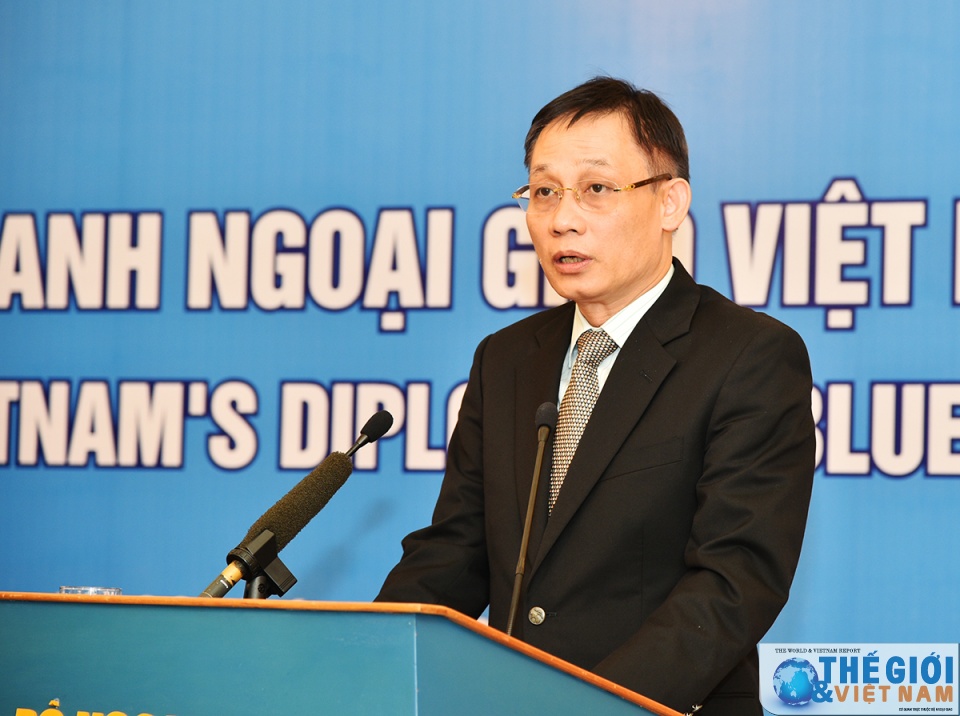
Công bố “Sách Xanh Ngoại giao Việt Nam năm 2015”

BQT – 12:12 | 22/09/2016

Đây là lần đầu tiên, Bộ Ngoại giao công bố Sách Xanh về Ngoại giao Việt Nam nhằm giới thiệu chính sách đối ngoại của Việt Nam, những thành tựu nổi bật về đối ngoại Việt Nam trong năm 2015.

Obama’s legacy in South-east Asia

Nov 8 marks the close of a tumultuous presidential election campaign in the United States. As the end of incumbent President Barack Obama’s administration nears, six scholars working with the ISEAS – Yusof Ishak Institute evaluate the Obama legacy in South-east Asia, and examine challenges for the incoming administration. In the first of this two-part series written for The Straits Times, we feature perspectives on Indonesia, Malaysia and the Philippines. Tomorrow, we will publish viewpoints on Thailand and Vietnam, as well as an assessment of US engagement with Asean.

The friendliest US president to Asean

Tang Siew Mun, Senior fellow and head of the Asean Studies Centre

President Barack Obama is held in high regard in the region, especially in Indonesia, where he lived from 1967-71. Undoubtedly the most South-east Asia-friendly president, he has visited all but one state during his term of office. He would have completed the full “Asean circuit” if not for the cancelled visit to Brunei in 2013 to attend to the pressing business of averting the looming shutdown of the US government. Tiếp tục đọc “Obama’s legacy in South-east Asia”

US-Asean relations: From rebalance to reset?

President Obama putting his hands together before bowing at the end of his address on the sidelines of the Asean Summit in Vientiane, Laos, in September. While his presidency has seen significant engagement with the 10-nation bloc, much could change, thanks to the uncertainty of his succession. PHOTO: REUTERS

In the second of a two-part series, scholars from the Iseas -Yusof Ishak Institute evaluate the legacy of outgoing US President Barack Obama in South-east Asia, and look to the challenges for the incoming administration after the Nov 8 presidential election.

On Friday, we featured perspectives on Indonesia, Malaysia and the Philippines.

Today, we offer viewpoints on Thailand, Vietnam, and US engagement with Asean. Tiếp tục đọc “US-Asean relations: From rebalance to reset?”

It’s not just Trump casting political cloud over Asean


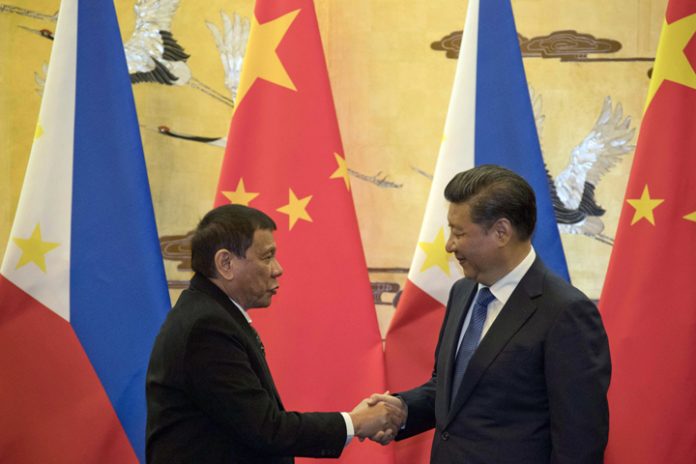
duterte-xi-jinpingIn Photo: President Duterte (left) and Chinese President Xi Jinping shake hands after a signing ceremony in Beijing on October 20.

Donald Trump’s protectionist policies aside, rising political risk in Southeast Asia is casting a shadow over economies that have been a driver of global growth in recent years.

Foreign investors pulled out of Thailand stocks at the fastest pace this year in October. The Philippine peso has sunk close to levels last traded during the global financial crisis. Malaysia’s currency is also in a funk. Tiếp tục đọc “It’s not just Trump casting political cloud over Asean”

On Duterte’s heels, Malaysia is the next Asian country to embrace China


Who are the future consumers of South-East Asia?

Weforum_As business leaders convene for the Kuala Lumpur meeting of the World Economic Forum, they have many uncertainties to ponder, from the trajectory of China’s economy to whether the new ASEAN Economic Community (AEC) launched at the start of the year will vault South-East Asia up to a new level of economic dynamism.

Demographics and the granularity of growth needs to be part of their thinking. The question today is not so much where to find entire growth markets, but which specific demographic groups have the most potential?

Radical demographic shifts are transforming consumer markets around the world. In the past, market growth was fuelled largely by expanding populations; today, incomes are the force to reckon with.
Tiếp tục đọc “Who are the future consumers of South-East Asia?”

Duterte’s Flip-Flop Into Bed With China Is a Disaster for the United States

FP

Duterte’s Flip-Flop Into Bed With China Is a Disaster for the United States

International relations theorists of a “realist” persuasion like to claim that states are rational actors pursuing their strategic interests in an anarchic world where power alone matters. Ideology and domestic politics do not much concern these thinkers; they believe that a nation’s foreign policy is much more likely to be shaped by factors such as geography, demography, and economics. Tiếp tục đọc “Duterte’s Flip-Flop Into Bed With China Is a Disaster for the United States”

The Philippines, China, the U.S., and ASEAN in 2017

Asia Foundation October 19, 2016
By Steven Rood

avarabannerpicfinal

The Philippines will serve as ASEAN Chair in 2017, at which time ASEAN will mark its 50th anniversary. Having successfully served as host of APEC in 2015, the country has demonstrated that facilitating massive, significant international events is well within its capability—thus observers’ attention can focus on substance instead of administrative details. And there is considerable attention directed to the Philippines at the moment, not least because of the outspoken new president, Rodrigo Duterte. Tiếp tục đọc “The Philippines, China, the U.S., and ASEAN in 2017”

Thị trường thép thế giới: Tương lai không sáng sủa

Huỳnh Hoa – Thứ Bảy,  17/9/2016, 11:00 (GMT+7)

Một nhà máy thép tại Đường Sơn, Hà Bắc, Trung Quốc đã đóng cửa và chuyển đi nơi khác vì thua lỗ. Ảnh: GettyImages
(TBKTSG) – Lần đầu tiên trong lịch sử, biến động của một mặt hàng (thép) lại trở thành đề tài nổi bật tại một hội nghị thượng đỉnh, vốn chỉ thảo luận những vấn đề hết sức vĩ mô: hội nghị G-20 tại Hàng Châu, Trung Quốc vừa diễn ra cuối tuần trước.

Tiếp tục đọc “Thị trường thép thế giới: Tương lai không sáng sủa”

RCEP, TPP – Trò chơi kéo co của Mỹ và Trung Quốc

SGGP – Chủ nhật, 27/10/2013, 07:30 (GMT+7)

Châu Á – Thái Bình Dương được xem là tương lai của thế kỷ 21 vì những lợi thế về vị trí chiến lược, sự năng động, nguồn vốn, nguồn nhân lực… Với cái mác tương lai ấy, riêng về góc độ kinh tế, khu vực đang hưởng lợi từ việc thu hút đầu tư nước ngoài, nhưng vùng này đang “đau đầu” vì mình giống như sợi dây trong trò chơi kéo co giữa các nước lớn trong khu vực.
Tiếp tục đọc “RCEP, TPP – Trò chơi kéo co của Mỹ và Trung Quốc”

Explaining President Obama’s Rebalance Strategy

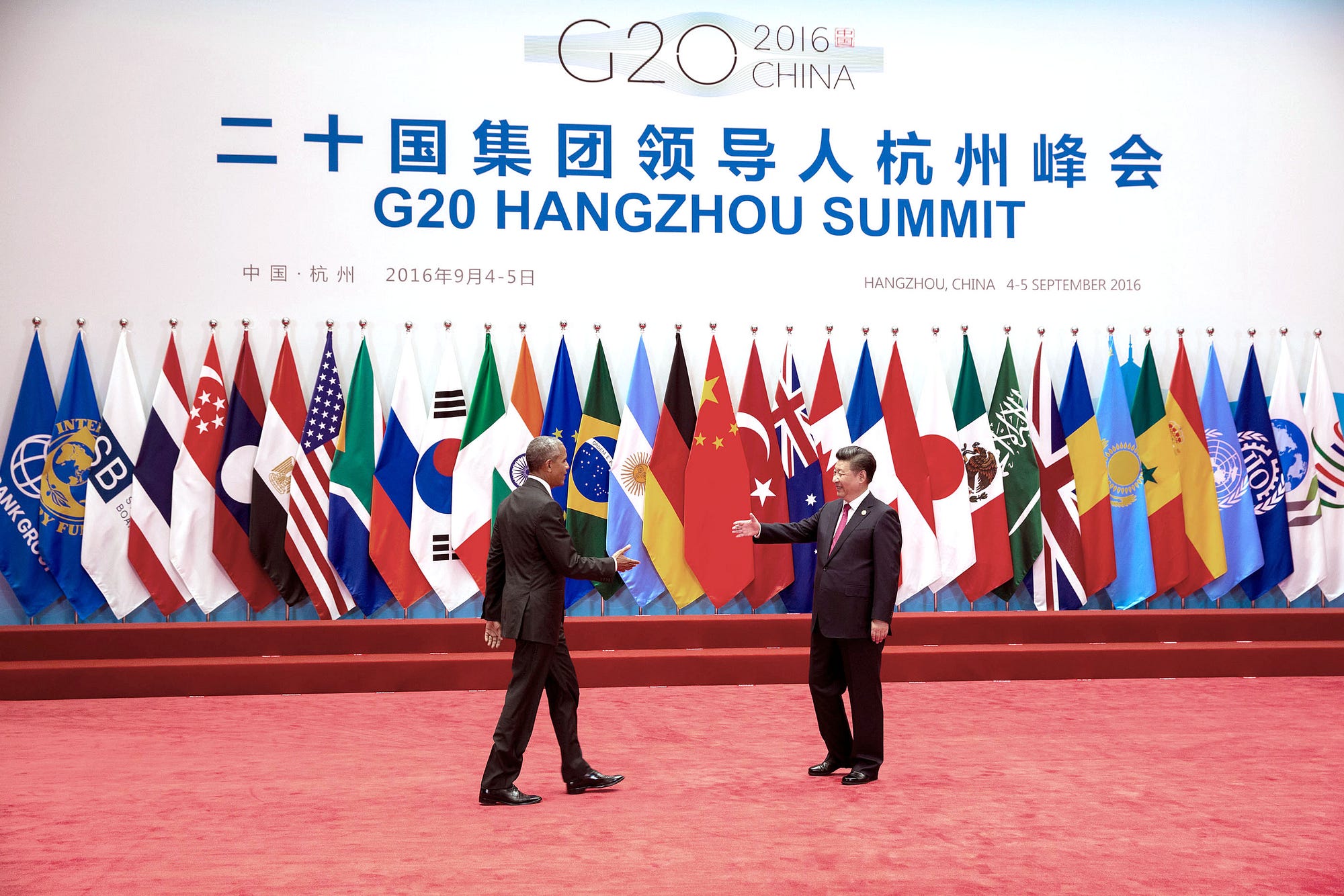
Chinese President Xi Jinping greets President Barack Obama upon arrival for the G20 Summit at the Hangzhou International Expo Center in Hangzhou, China, Sept. 4, 2016. (Official White House Photo by Pete Souza)

Explaining President Obama’s Rebalance Strategy

By Ambassador Susan Rice, National Security Advisor

In January of 2009, American foreign policy was largely defined by the horrific aftermath of the September 11th attacks, two ground wars in the Middle East, and the worst financial crisis in decades, with the global economy, by many measures, on a worse trajectory than in 1929.

Tiếp tục đọc “Explaining President Obama’s Rebalance Strategy”

Urban water pumping raises arsenic risk in Southeast Asia

River water is now flowing into aquifers through highly contaminated sediments

Mason Stahl tests arsenic concentrations in slow-moving water along the edge of the Red River near Hanoi, Vietnam.

High concentrations of arsenic are making their way from the Red River into aquifers near Hanoi, Vietnam, a new study shows. Mason Stahl tests water at the river’s edge where sediment is being deposited. Photo: Courtesy of Mason Stahl

ldeo.columbia.edu – Large-scale groundwater pumping is opening doors for dangerously high levels of arsenic to enter some of Southeast Asia’s aquifers, with water now seeping in through riverbeds with arsenic concentrations more than 100 times the limits of safety, according to a new study from scientists at Columbia University’s Lamont-Doherty Earth Observatory, MIT, and Hanoi University of Science. Tiếp tục đọc “Urban water pumping raises arsenic risk in Southeast Asia”

Nông dân trẻ từ Việt Nam, Myanmar và Thái Lan yêu cầu chính phủ các nước và hội đồng ASEAN lắng nghe tiếng nói của các hộ nông nghiệp nhỏ

AA – Friday, August 19, 2016 – 18:07

Ngày 29/7/2016, tại Bangkok, Thái Lan, nam và nữ nông dân trẻ đến từ Việt Nam, Myanmar và Thái Lan đã tham gia Hội thảo cấp khu vực cùng với tổ chức ActionAid và Mạng lưới An ninh Lương thực Châu Á. Tiếp tục đọc “Nông dân trẻ từ Việt Nam, Myanmar và Thái Lan yêu cầu chính phủ các nước và hội đồng ASEAN lắng nghe tiếng nói của các hộ nông nghiệp nhỏ”