South Koreans still eat a million dogs a year, but changing attitudes have cut demand


Click here to see video clip >>

Just 25 miles from the Olympics, the painful sight of Korea’s dog meat trade is laid bare. USA TODAY Sports

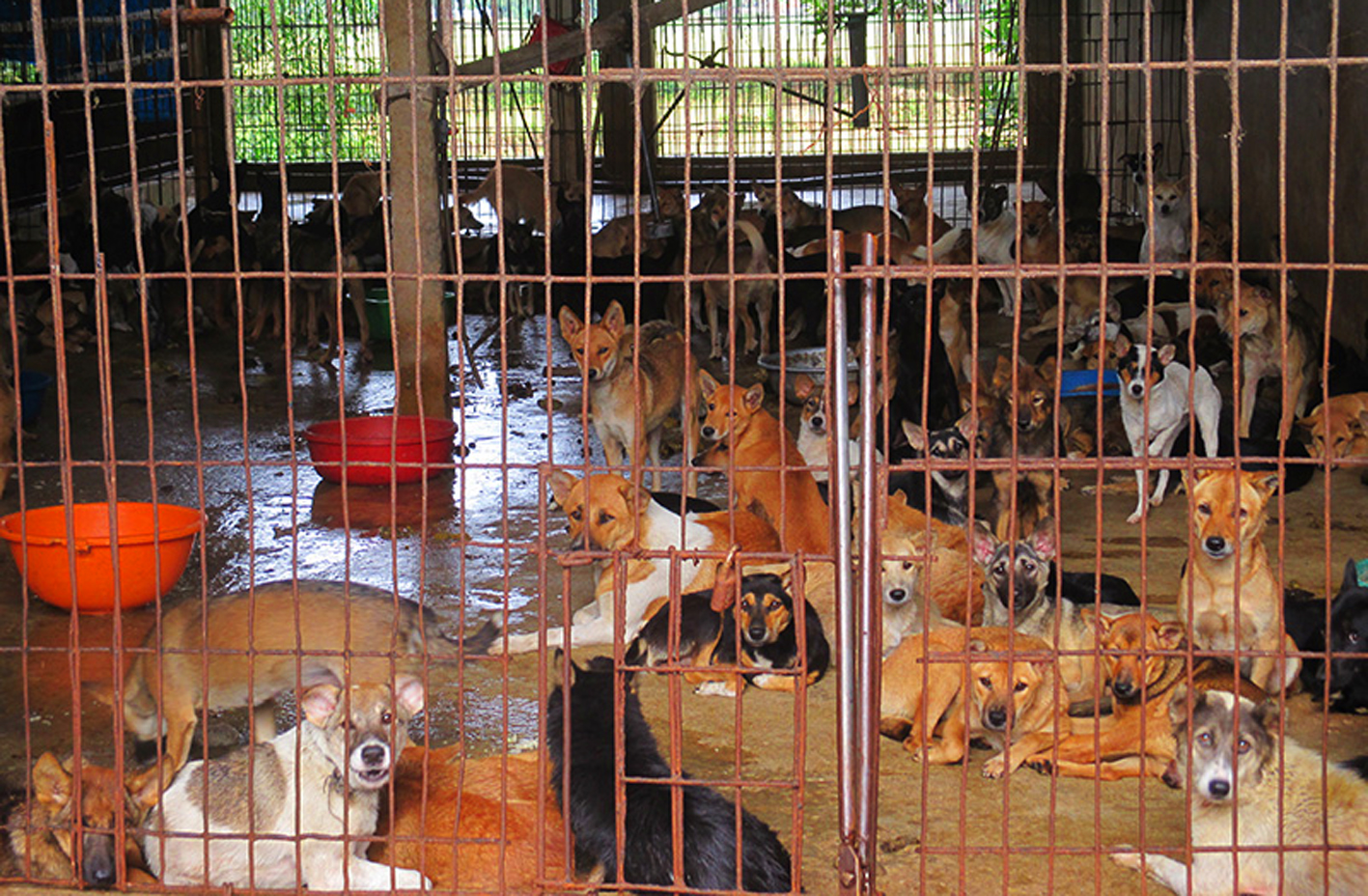
HONGSEONG, South Korea – Jasmine, Hector, Winnie and dozens more like them barked, whined and paced in their cages. Most were undernourished, with patchy and matted fur, and shivered in the biting cold of a February day.

Some cowered in meager scraps of hay as humans approached while others forced paws and damp snouts between rusty iron bars, eager for any sort of contact.

Scenes like this can still be found at thousands of farms all over South Korea, where dogs are bred in wretched settings as both pets, and as meat, for a controversial industry that consumes up to a million dogs a year, according to Korean Animal Rights Advocates, a Seoul-based non-profit group. Tiếp tục đọc “South Koreans still eat a million dogs a year, but changing attitudes have cut demand”

Phóng sự 3 kỳ “Chuyện chó thời nay”

  • Kỳ I – Khi chó chỉ là “cầy tơ”
  • Kỳ II – Giã từ thịt chó
  • Kỳ III – Nơi chó là… bé cưng

***

Hoàng Thiên Nga

Chả có thời nào như bây giờ: nghề thịt chó đang phát đạt rầm rộ bỗng chựng phắt lại ở khắp các quốc gia. Chủ trương vận động toàn dân không ăn thịt chó vừa ra đời đã được nhiều người hoan nghênh nhiệt liệt! Còn ở các trại chó cưng, chó cảnh, nông trại chó thì khỏi nói, chó được trân quý như vua!

Kỳ I – Khi chó chỉ là “cầy tơ”

          Theo ước tính của các tổ chức bảo vệ động vật, và Liên minh bảo vệ chó Châu Á, thì Việt Nam đứng đầu Đông Nam Á về sở thích ăn thịt chó, với khoảng 5 triệu con chó bị xẻ thịt mỗi năm.

Chó bị nhốt để giết thịt-Ảnh của Liên minh bảo vệ chó châu Á

Tiếp tục đọc “Phóng sự 3 kỳ “Chuyện chó thời nay””

Exclusive: Illegal Tiger Trade Fed by ‘Tiger Farms,’ New Evidence Reveals

National Geographic

A shocking video and new intelligence suggest that legal and illegal captive tiger facilities fuel Asia’s tiger trafficking—with brutal efficiency.

Fewer than 4,000 tigers remain in the wild, but more than 8,000 are held in captive facilities in Asia. Investigations have shown that many of these facilities breed and slaughter tigers for the illegal trade.

PHOTOGRAPH BY DARIO PIGNATELLI, GETT

IN THE LIVING room of a house at the end of a narrow country road in central Vietnam, a little way off the main highway, the skeleton of a tiger was laid out on the floor—the only complete one they had for sale, the man told the pair of visitors.

It was an attractive offer for someone looking to make tiger bone wine, a coveted brew made from bones soaked in rice wine, but what the visitors were interested in were the live tigers.
Tiếp tục đọc “Exclusive: Illegal Tiger Trade Fed by ‘Tiger Farms,’ New Evidence Reveals”

Humans Are Driving Other Mammals to Become More Nocturnal

Scientific American

The shift could change which prey animals hunt or make it harder to find food

Humans Are Driving Other Mammals to Become More Nocturnal
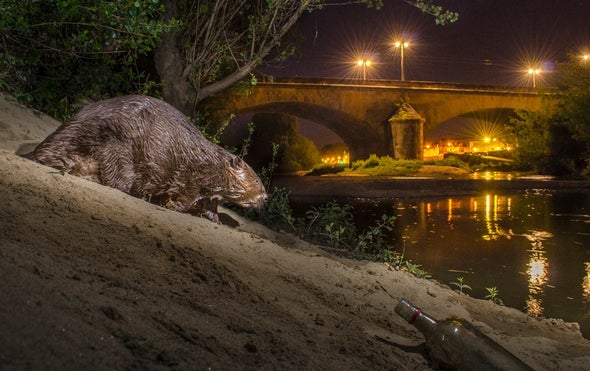
European beaver (Castor fiber) in the middle of a  French city, Orléans. Credit: Laurent Geslin

Humans dominate the animal world. Whether hunting or competing for limited space and resources, we are the planet’s superpredator. Other animals seem to understand this, avoiding people if they can help it. But as the human population expands, it is getting harder for other creatures to find somewhere to hide during the day. Now new findings indicate mammals around the world have come up with another strategy: They are becoming nocturnal. Exactly what this bizarre shift means for the future of individual species—and entire ecosystems—is unknown. Tiếp tục đọc “Humans Are Driving Other Mammals to Become More Nocturnal”

Using artificial intelligence to investigate illegal wildlife trade on social media

Sciencedaily.com

Date:March 12, 2018 Source:University of Helsinki

FULL STORY

These are Southern white rhinoceros (Ceratotherium simum simum) in an undisclosed protected area in South Africa.
Credit: Enrico Di Minin

Illegal wildlife trade is one of the biggest threats to biodiversity conservation and is currently expanding to social media. This is a worrisome trend, given the ease of access and popularity of social media. Efficient monitoring of illegal wildlife trade on social media is therefore crucial for conserving biodiversity.

In a new article published in the journal Conservation Biology, scientists from the University of Helsinki, Digital Geography Lab, argue that methods from artificial intelligence can be used to help monitor the illegal wildlife trade on social media. Tiếp tục đọc “Using artificial intelligence to investigate illegal wildlife trade on social media”

Peru protects one of world’s last great untouched forests

Inhabitat

In collaboration with local and international conservation groups, the Peruvian government has established Yaguas National Park in the country’s far eastern territory to permanently protect millions of acres of pristine rainforest. “This is a place where the forest stretches to the horizon,” Corine Vriesendorp, a conservation ecologist at The Field Museum in Chicago, told the New York Times. “This is one of the last great intact forests on the globe.” The forest is so massive that the clouds which form above it may impact precipitation in the Western United States while many unique species of animals and plants are found only in Yaguas. The National Park designation also protects land inhabited by several tribes of indigenous peoples.


Tiếp tục đọc “Peru protects one of world’s last great untouched forests”

Photographer Spends Years Taking Photos Of Endangered Animals, They’re Heartbreakingly Beautiful

animalchannel.co


When you think of ‘endangered species,’ what do you think of? Maybe a tiger or a polar bear? But, what about a saiga or a white-bellied pangolin?

Sadly, there are now 41,415 on the ‘red list,’ and approximately 16,306 of them are endangered and threatened with extinction. British photographer Tim Flach was on a mission to capture as many photos of these endangered species as possible. The results are heartbreakingly beautiful.

After spending two years tracking down these elusive species, Flach created a body of work fittingly titled Endangered. His photos offer us a rare glimpse into the lives of these gorgeous, threatened creatures.

Flach’s stunning photos are a reminder for us to have respect for Mother Nature and all of its inhabitants. Before you know it, these unique, wonderful animals will no longer be sharing this planet with us.

1. Philippine Eagle

 Share

Tiếp tục đọc “Photographer Spends Years Taking Photos Of Endangered Animals, They’re Heartbreakingly Beautiful”

Lack of care leads to elephant rampages

Last update 11:34 | 12/01/2018
VietNamNet Bridge – For centuries, residents in Phuc Son Commune, central province of Nghe An have lived comfortably with wild elephants, but as bamboo forests – the main diet of many elephants – are replaced with industrial trees, things are changing. Many elephant herds are now finding it difficult to find enough food to survive. 
Pu Mat National Park, wild elephants, Vietnam economy, Vietnamnet bridge, English news about Vietnam, Vietnam news, news about Vietnam, English news, Vietnamnet news, latest news on Vietnam, Vietnam
Elephants at the Pu Mat National Park in the central province of Nghe An. Many elephant herds in the province are now finding it difficult to find enough food to survive. — Photo: baonghean.vn

Last October, six wild elephants went on a rampage in a commune village and destroyed family crops.

The family called neighbours for help to chase the elephants away. However, the wild beasts refused to go until they had destroyed two hectares of acacias and other trees. Tiếp tục đọc “Lack of care leads to elephant rampages”

What’s the kindest way to kill a lobster?

Last update 14:10 | 12/01/2018
“Lobster is one of those rare foods that you cook from a live state,” the recipe says.
“Quickly plunge lobsters head-first into the boiling water… Boil for 15 minutes,” the recipe then instructs.
It’s the tried-and-trusted method for many of us with any experience of cooking lobster – and there are dozens of similar recipes online.

But on Wednesday Switzerland banned the practice and ordered that lobsters be stunned before being despatched to our plates to avoid unnecessary suffering in the kitchen.

It comes amid growing scientific evidence that lobsters – and other invertebrates, such as crayfish and crabs – are able to feel pain. Tiếp tục đọc “What’s the kindest way to kill a lobster?”

The 2017 comedy wildlife photography awards

Guardian

Những bức ảnh động vật hoang dã đẹp nhất năm 2017

vnexpress Thứ năm, 21/9/2017 | 09:23 GMT+7

Bảo tàng Lịch sử Tự nhiên Anh chọn ra những bức ảnh đẹp nhất trong vòng chung kết cuộc thi ảnh về động vật hoang dã năm 2017.

More than 6,000 South Africa lion skeletons exported to Southeast Asia

Lions stand by a large ruler during photo-call for the annual weigh-in at London Zoo. File picture: REUTERS/NEIL HALL

businesslive.co.za_Lions stand by a large ruler during photo-call for the annual weigh-in at London Zoo. File picture: REUTERS/NEIL HALL

More than 6‚000 lion skeletons have been exported from SA to Southeast Asia in the last decade. The bones come mainly from lions killed in canned hunting — animals bred in captivity and shot by paying hunters — according to research led by a University of the Witwatersrand (Wits) academic.

More than half the lion skeletons‚ skulls‚ claws and teeth exported by SA go to Laos‚ with the rest going to Vietnam and Thailand‚ says Vivienne Williams of Wits.
Tiếp tục đọc “More than 6,000 South Africa lion skeletons exported to Southeast Asia”

Tại sao voi không bao giờ quên

It’s a common saying that elephants never forget. But the more we learn about elephants, the more it appears that their impressive memory is only one aspect of an incredible intelligence that makes them some of the most social, creative, and benevolent creatures on Earth. Alex Gendler takes us into the incredible, unforgettable mind of an elephant.