86 percent of Covid patients in HCMC hospitals are vaccinated: survey – 86% ca nhiễm tại TP HCM đã tiêm vaccine

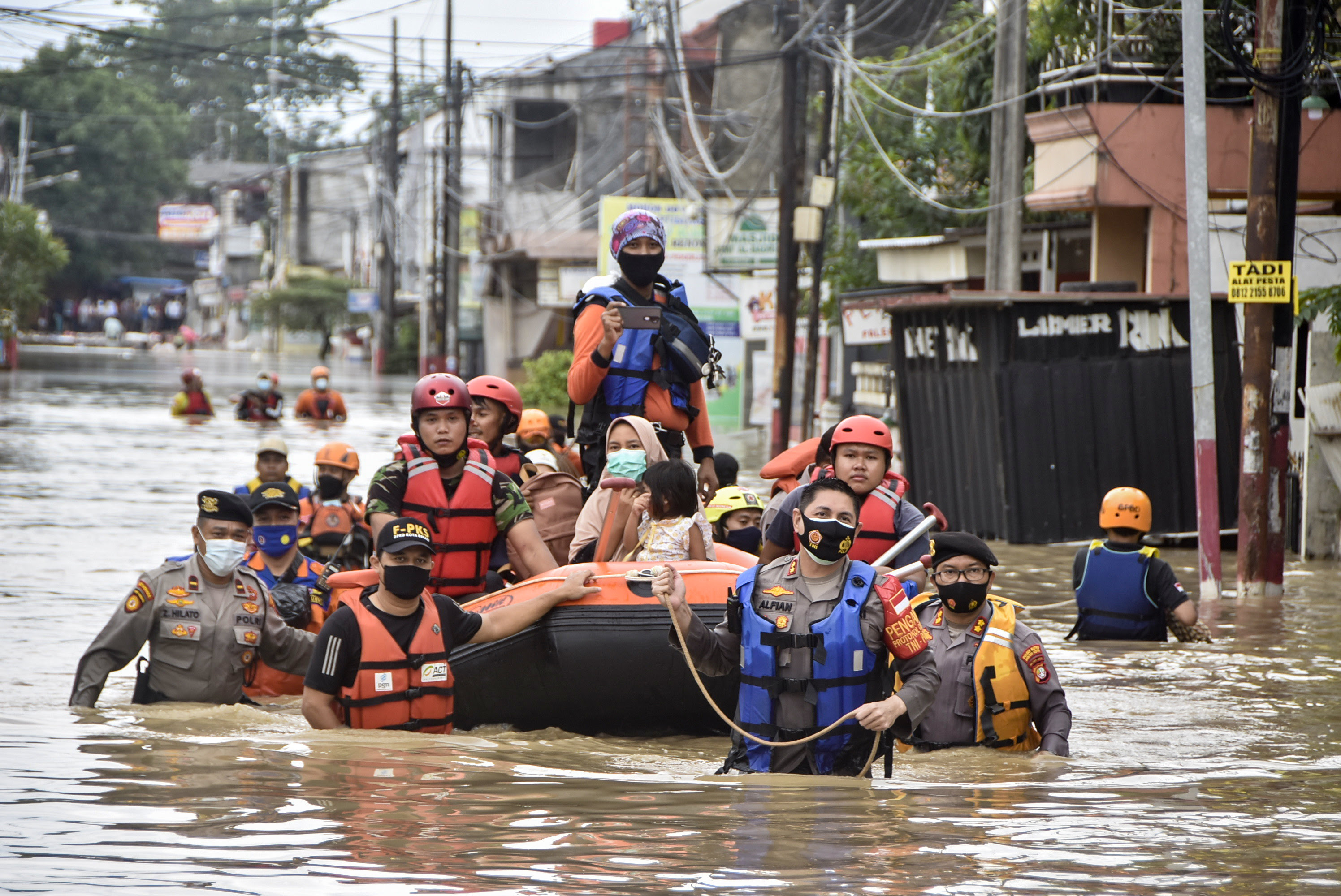
By Thu Anh   November 5, 2021 | 09:33 am GMT+786 percent of Covid patients in HCMC hospitals are vaccinated: surveyA doctor takes care of a coronavirus patient in HCMC’s Thu Duc City. Photo by VnExpress/Quynh TranAround 86 percent of people hospitalized with Covid-19 in HCMC have been vaccinated at least once, a survey by its Department of Health found.

The survey began on Tuesday at hospitals, deputy director of the city Department of Health, Nguyen Van Vinh Chau, said.

Of the remaining 14 percent, 90 percent are children under 18, and were found mostly at industrial parks and quarantine zones around the city, he said.

Tiếp tục đọc “86 percent of Covid patients in HCMC hospitals are vaccinated: survey – 86% ca nhiễm tại TP HCM đã tiêm vaccine”

What Will Drive China to War?

The Atlantic

A cold war is already under way. The question is whether Washington can deter Beijing from initiating a hot one.By Michael Beckley and Hal Brands

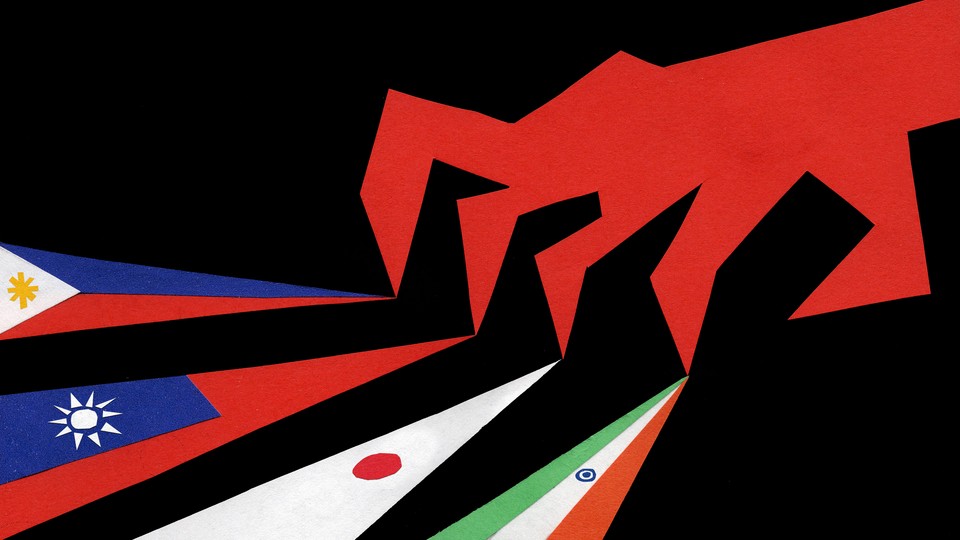
A hand reaches out to grab various flags.
Ben Hickey

NOVEMBER 1, 2021SHARE

About the authors: Michael Beckley is a Jeane Kirkpatrick Visiting Fellow at the American Enterprise Institute, where his research focuses on U.S.-China competition, and is an associate professor at Tufts University. Hal Brands is a senior fellow at the American Enterprise Institute, where he studies US foreign policy and defense strategy, and is the Henry A. Kissinger Distinguished Professor of Global Affairs at the Johns Hopkins School of Advanced International Studies.

President xi jinping declared in July that those who get in the way of China’s ascent will have their “heads bashed bloody against a Great Wall of steel.” The People’s Liberation Army Navy is churning out ships at a rate not seen since World War II, as Beijing issues threats against Taiwan and other neighbors. Top Pentagon officials have warned that China could start a military conflict in the Taiwan Strait or other geopolitical hot spots sometime this decade.

Analysts and officials in Washington are fretting over worsening tensions between the United States and China and the risks to the world of two superpowers once again clashing rather than cooperating. President Joe Biden has said that America “is not seeking a new cold war.” But that is the wrong way to look at U.S.-China relations. A cold war with Beijing is already under way. The right question, instead, is whether America can deter China from initiating a hot one.

MAKE YOUR INBOX MORE INTERESTING

Each weekday evening, get an overview of the day’s biggest news, along with fascinating ideas, images, and people.Email Address (required)Sign Up

THANKS FOR SIGNING UP!

Beijing is a remarkably ambitious revanchist power, one determined to make China whole again by “reuniting” Taiwan with the mainland, turning the East and South China Seas into Chinese lakes, and grabbing regional primacy as a stepping-stone to global power. It is also increasingly encircled, and faces growing resistance on many fronts—just the sort of scenario that has led it to lash out in the past.

The historical record since the founding of the People’s Republic of China in 1949 is clear: When confronted by a mounting threat to its geopolitical interests, Beijing does not wait to be attacked; it shoots first to gain the advantage of surprise.

Continue on The Atlantic >>

Trung quốc: Tan cuộc trỗi dậy – China Is a Declining Power—and That’s the Problem

Original English version >>

Gs.Ts. Hal Brands, ĐH Johns Hopkins
Gs.Ts. Michael Beckley, ĐH Turfs,

24/9/2021, Foreign Policy (Mỹ)

Lời người dịch: Ngày 24/9/2015, giáo sư Graham Allison, thuộc Đại học Havard, dùng cụm từ “Bẫy Thucydides”, để nói đến tiềm năng xảy ra chiến tranh giữa một thế lực đương vị và một thế lực đang lên, như Sparta đã lâm chiến với Athens thời cổ Hy Lap, theo sử gia Thucydides.

Từ đó đến nay, “Bẫy Thucydides” đã thường xuyên được dùng để chỉ tiềm năng xảy ra chiến tranh giữa Mỹ và Trung Quốc – một siêu cường đương vị, đại diện cho hiện trạng, và một siêu cường đang lên, muốn thay đổi hiện trạng.

Nhưng đúng sáu năm sau, đến ngày 24/9/2021 vừa qua, trên tạp chí Foreign Policy (Mỹ), hai tác giả Hal Brands, giáo sư Đại học Johns Hopkins, và Michael Beckley, giáo sư Đại học Turfs, cho rằng, nhận định về Bẫy Thucydides của Allison là “sai lầm”. Cả hai cũng là tác giả bài báo được dịch ở đây.

Trong bài báo đăng ngày 24/9, hai giáo sư cho rằng một siêu cường “đang lên” không nguy hiểm bằng một siêu cường “đã lên tới đỉnh” và bắt đầu xuống. Vì khi đang lên, họ cần bình ổn để hùng mạnh hơn nữa, như Đặng Tiểu Bình từng muốn giấu mình chờ thời. Còn khi các điều kiện giúp phát triển thần tốc không còn, suy thoái trầm trọng kéo dài, cộng thêm đông đảo đối thủ hợp lực chống mình, thì đó là lúc siêu cường trở nên rất nguy hiểm, vì họ có thể liều lĩnh để cứu vãn tình thế, trước khi quá trễ, như Đức và Nhật đã từng gây chiến để thoát hiểm, thời Thế Chiến II. Và xét về tiềm lực, thì không phải Mỹ, mà Trung Quốc mới là siêu cường đã lên tới đỉnh và có vẻ rất khó chấp nhận kết quả đau thương của viễn cảnh suy tàn cận kề.

Tiếp tục đọc “Trung quốc: Tan cuộc trỗi dậy – China Is a Declining Power—and That’s the Problem”

EXCLUSIVE China looks to lock in U.S. LNG as energy crunch raises concerns

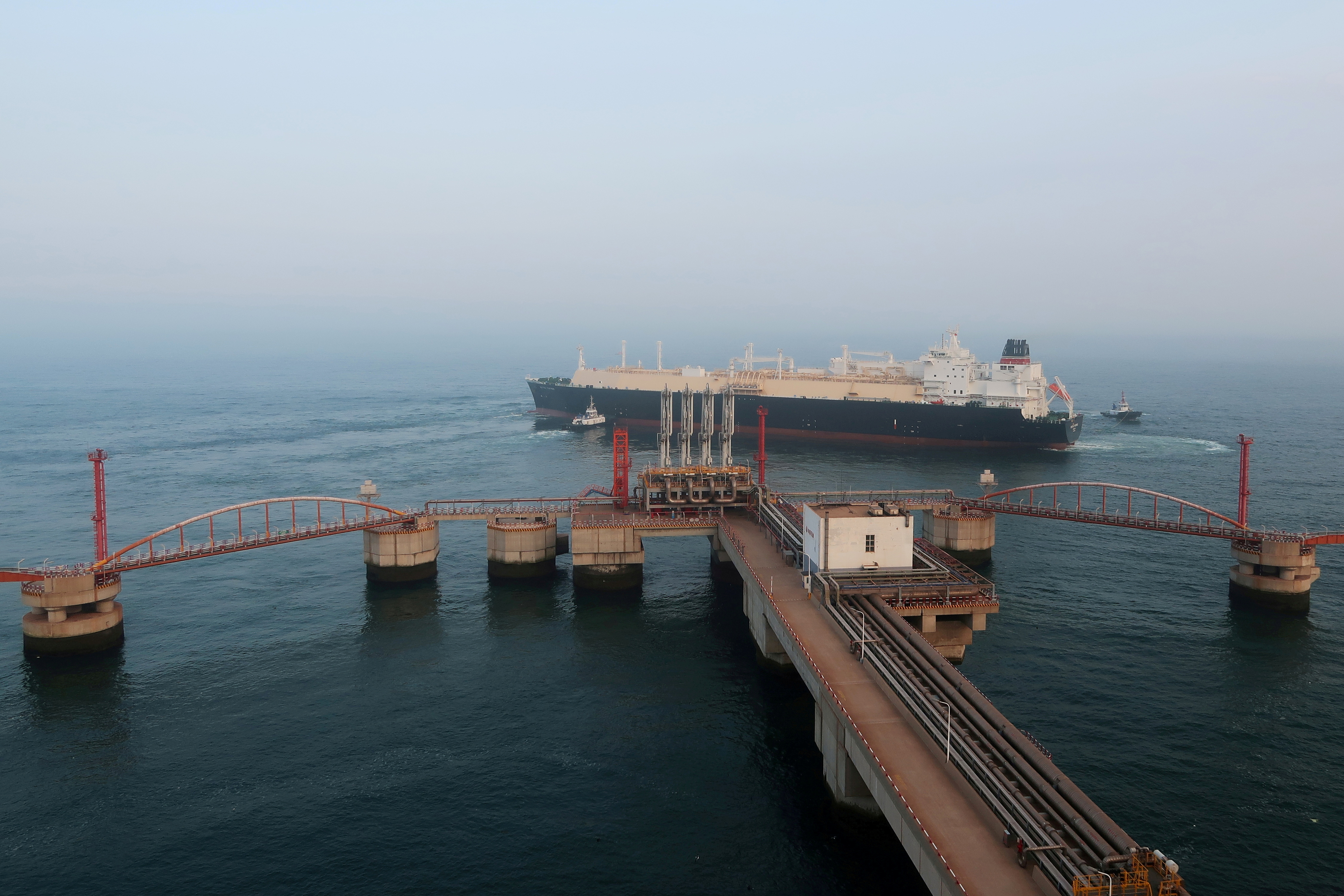
A liquified natural gas (LNG) tanker leaves the dock after discharge at PetroChina's receiving terminal in Dalian, Liaoning province, China July 16, 2018.  REUTERS/Chen Aizhu//File Photo

Reuters

A liquified natural gas (LNG) tanker leaves the dock after discharge at PetroChina’s receiving terminal in Dalian, Liaoning province, China July 16, 2018. REUTERS/Chen Aizhu//File Photo

SINGAPORE/NEW YORK, Oct 15 (Reuters) – Major Chinese energy companies are in advanced talks with U.S. exporters to secure long-term liquefied natural gas (LNG)supplies, as soaring gas prices and domestic power shortages heighten concerns about the country’s fuel security, several sources said.

Tiếp tục đọc “EXCLUSIVE China looks to lock in U.S. LNG as energy crunch raises concerns”

How heads (of state) roll

Transparency International


15/10/2021

In January it was already clear that 2021 was going to be a rough year for some unscrupulous heads of state. 

Now 35 leaders find themselves in hot water for reportedly offshoring their wealth through anonymous companies. The Czech Prime Minister Andrej Babiš – whose party narrowly lost last week’s parliamentary election – may have been the Pandora Papers’ first political casualty but likely not the last.  

In Chile, the Pandora Papers have caused a political earthquake a month before the general election as new details about the offshore business dealings of President Sebastián Piñera have emerged.
 

Chilean President Sebastian Piñera. Image: Matias Baglietto / Shutterstock

This week, a group of parliamentarians initiated impeachment proceedings against President Piñera over his role in a controversial 2010 mining deal. This comes on top of last week’s announcement that the public prosecutor’s office will investigate the President for corruption and tax-related offences.  

Thanks to the Pandora Papers investigation, we now know that in December 2010, nine months into his first presidential term, Piñera’s family sold their stake in the Dominga mining project to a close friend and business partner, Alberto Délano. The leaked documents reportedly show that the parties signed two contracts: one in Chile for US$14 million and another in the British Virgin Islands for US$138 million.  

The prosecutors now say the second contract signed in the British Virgin Islands was not previously disclosed when the Dominga deal was under a judicial investigation in 2017. Perhaps as a result, Piñera was acquitted. 

What’s more, the leaked documents show that the amount was to be paid in three instalments and that the third payment came with an alarming condition: the government cannot strengthen environmental protections in the


Dominga mining operations area.
 
Protest against the mining company Dominga. Image: altus_viaj / Shutterstock

The allegation that the President assured a personal friend and business partner that the proposed mining area would not be designated as a nature reserve – thereby advancing his own financial interests – points to possible misconduct and regulatory capture.  

The role of anonymous companies in cross-border corruption and money laundering is well-established. But as this case shows, secretive corporate structures can also enable private interests to capture policy- and decision-making and cause further harm to the environment.  

What more evidence do we need before making it impossible for public officials and businesspeople to hide behind anonymous shell companies?  

Several countries in Latin America have committed to or have already taken steps towards creating beneficial ownership registers, which would help prevent such abuses. Our colleagues at Chile Transparente are urging the Chilean government to follow suit.  

We remain convinced that a new global standard that requires public registers of beneficial ownership is urgently needed. 

Next week, the Financial Action Task Force (FATF) will convene for a plenary to discuss possible revisions to the standard on company ownership, among other things. We know that proposals like ours will generate heated debates – but we’re staying optimistic. Should the FATF heed civil society’s repeated calls, the revised standard would also prompt the Chilean government to finally take action.  

We’ll be watching the outcomes of these deliberations very closely. If the FATF’s voting members needed yet another nudge, the Pandora Papers should be it. What do you think? Let us know @anticorruption.


RECOMMENDED READING

Pandora Papers: 10 countries that urgently need to act From Lebanon to Nigeria, from Australia to the United Kingdom, Transparency International chapters call on national governments to act upon the findings of the Pandora Papers.


What the global standard on company ownership should look like: Five key fixes  The global fight against corruption, tax evasion and corporate secrecy cannot be won as long as the corrupt and criminals can hide behind anonymous company structures in even one country. The Financial Action Task Force members are now finally open to suggestions on the ways to revise the global standard on beneficial ownership transparency.
 

When company ownership information is out in the open: How public registers advance anti-corruption Cases from the United Kingdom and the European Union show that beneficial ownership registers represent a trove of information for investigators, media and civil society. Beneficial ownership registers are the tool that allows them to lift the veil of opacity and connect the dots. The release of the Pandora Papers further strengthens the case for public beneficial ownership registers to become the norm everywhere. 

1.5-mln enterprise target unfeasible: legislative economy committee

By Anh Minh   October 13, 2021 | 12:46 pm GMT+7 VNExpress1.5-mln enterprise target unfeasible: legislative economy committeeA worker manufactures face masks at a factory in Hanoi. Photo by VnExpress/Ngoc Thanh

The government’s target of having 1.5 million enterprises by 2025 seems unattainable, National Assembly’s Committee on Economy has said.

The government’s plan to restructure the economy in 2021-25 includes a target of 60,000-70,000 small- and medium-sized enterprises by that year, and the private sector contributing some 55 percent of GDP.

Tiếp tục đọc “1.5-mln enterprise target unfeasible: legislative economy committee”

Investment in coal-fired power to dry up as world seeks to go green

By Anh Minh   October 13, 2021 | 12:33 pm GMT+7 VNExpressInvestment in coal-fired power to dry up as world seeks to go greenWorkers fix electric cables in District 1, Ho Chi Minh City. Photo by VnExpress/Thanh Nguyen
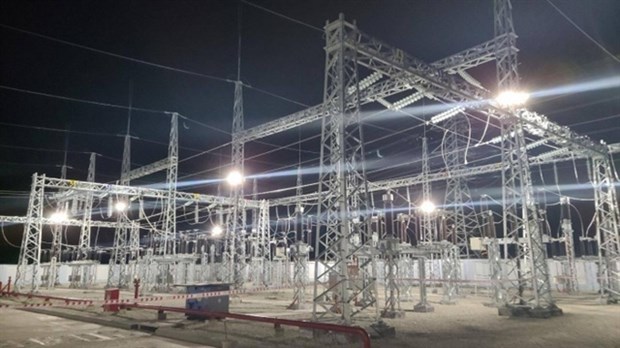

Vietnam will find it hard to mobilize foreign funding for coal-fired electricity plants because many nations have vowed to step up environmental protection.

Most of the investments in coal-fired electricity plants in Vietnam in 2015-21 came from China, South Korea and Japan, but the three countries have now pledged to stop investing in such power stations, Mark Hutchinson, chairman of the Southeast Asia Task Force, Global Wind Energy Council (GWEC) Asia, said at an online conference on finance for energy projects on Monday.

Tiếp tục đọc “Investment in coal-fired power to dry up as world seeks to go green”

In Global Energy Crisis, Anti-Nuclear Chickens Come Home to Roost

In virtually every country that has closed nuclear plants, clean electricity has been replaced with dirty power.

By Ted Nordhaus

OCTOBER 8, 2021, 5:18 PM

The cooling tower at the Mülheim-Kärlich nuclear power plant collapses during a controlled demolition near Koblenz, Germany, on Aug. 9, 2019. The plant was shut down on Sept. 9, 1988. THOMAS FREY/DPA/AFP VIA GETTY IMAGES

For years, the proponents of wind and solar energy have promised us a green future with electricity too cheap to meter, new energy infrastructure with little environmental impact on the land, and deep cuts in carbon emissions. But despite the rapid growth of renewable energy, that future has yet to materialize. Instead, many of the places that are furthest along in transitioning to renewable energy are today facing a crisis of power shortages, sky-high electricity prices, and flat or rising carbon emissions.

In California, Gov. Gavin Newsom has ordered companies owning backup diesel generators to operate them nonstop when electricity demand is high in order to avoid rolling blackouts. In Britain, exploding natural gas prices have shuttered factories, bankrupted power companies, and threaten to cause food shortages. Germany, meanwhile, is set for the biggest jump in greenhouse emissions in 30 years due to surging use of coal for power generation, which the country depends on to back up weather-dependent wind and solar energy and fill the hole left by its shuttered nuclear plants.

The proximate cause of all these crises has been surging natural gas prices as the world recovers from the COVID-19 pandemic. But the underlying problem is that despite huge bets on renewable energy over the last several decades, California, Britain, and Germany have chosen fossil fuels over carbon-free nuclear energy to backstop their electrical systems.

Read more on Foreign Policy >>

First three wind-power plants put into use in Soc Trang province

vietnamnet

First three wind-power plants put into use in Soc Trang province hinh anh 1

Three wind power plants in Mekong Delta province of Soc Trang have been connected to the national grid.

Vo Van Chieu, director of the provincial Department of Industry and Trade, said the Southern Power Corporation has put into operation the first three wind power plants in the province with a total capacity of 90MW.

All three factories, including Lac Hoa, Quoc Vinh and Wind power plant No 7, are located in Vinh Chau town.

Each plant has six turbines and can supply electricity to the national grid with an average annual output of about 93 million to 108 million kWh per year.

Soc Trang has around 72km of coast with constant strong winds, suitable for generating power.

The province plans to have 20 wind power plants in all with a total capacity of 1,435MW.

Wind-power plant projects play an important role in the socio-economic development of Soc Trang province. The projects are expected to attract other investors and develop the local industry./.

Security Challenges of Climate Change in Southeast Asia

Photo: REZAS/AFP/Getty Images
by Murray Hiebert (Senior Associate, Southeast Asia Program) and Danielle Fallin (Program Coordinator and Research Assistant, Southeast Asia Program)

A 1.5-degree Celsius increase in global warming poses an immediate threat to Southeast Asia’s economic, political, and health security. Mitigating the effects of climate change is key to the United States’ goal to secure a free, open, and prosperous Indo-Pacific.

Southeast Asia will be one of the world’s most vulnerable regions to climate change unless countries make dramatic cuts in greenhouse gas pollution. According to a 2018 report from the Intergovernmental Panel on Climate Change, a global warming increase of 1.5 degrees Celsius (2.4 degrees Fahrenheit) will cause rising seas, dangerous flooding, and changing rain patterns leading to violent typhoons and drought. Global warming poses a threat to food security, hobbles economic growth, prompts political instability, and catalyzes pandemics. In extreme cases, it can create an environment conducive to terrorist activities.

Tiếp tục đọc “Security Challenges of Climate Change in Southeast Asia”

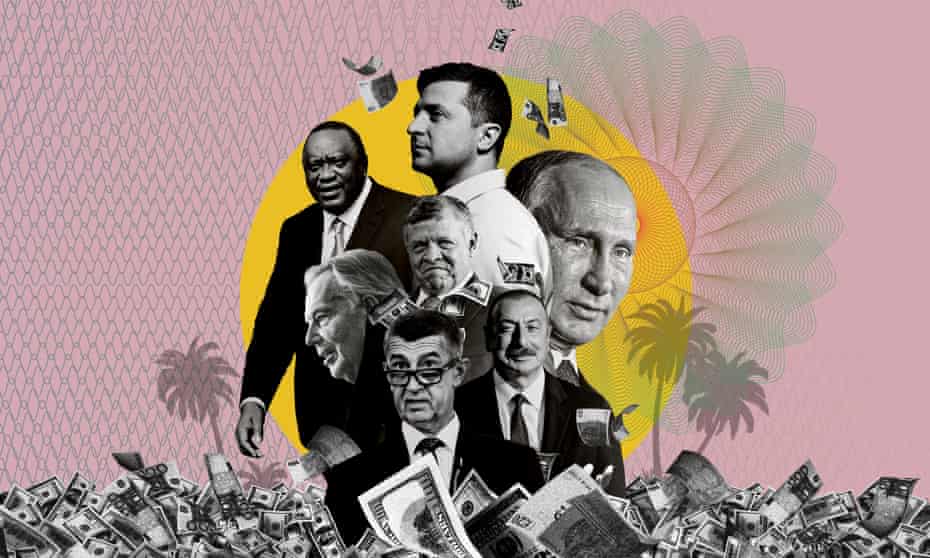
Pandora papers: biggest ever leak of offshore data exposes financial secrets of rich and powerful

The Guardian

Pandora Papers illustraion
The Pandora papers reveal the inner workings of what is a shadow financial world, providing a rare window into the hidden operations of a global offshore economy. Illustration: Guardian Design

Millions of documents reveal offshore deals and assets of more than 100 billionaires, 30 world leaders and 300 public officials

The secret deals and hidden assets of some of the world’s richest and most powerful people have been revealed in the biggest trove of leaked offshore data in history.

Tiếp tục đọc “Pandora papers: biggest ever leak of offshore data exposes financial secrets of rich and powerful”

IEEFA: Defying global financial trends, Vietnam pivots back to coal power

Bản tiếng Việt >>

Thu Vu and Press Release September 29, 2021

Latest draft power development plan puts clean energy transition at risk by sacrificing renewables for more coal

29 September (IEEFA Vietnam): In the lead up to the United Nations Climate Change Conference COP26, President Xi Jinping recently declared that China will no longer build new coal-fired power projects abroad. Despite limited details, the ramifications of China’s coal exit strategy for coal-centric developing economies like Vietnam could be immense.

The ramifications of China’s coal exit for coal-centric developing economies could be immense

Before President Xi’s announcement, Vietnam’s latest draft Power Development Master Plan 8 (PDP8) was released, and in a surprising shift, proposed to raise the installed capacity target for coal-fired power by 3 gigawatts (GW) to 40GW by 2030, with an additional (and final) 10GW to be deployed by 2035.

Tiếp tục đọc “IEEFA: Defying global financial trends, Vietnam pivots back to coal power”

Beijing more than just a ‘worse violator’ in S China Sea

Three Vietnamese academics take strong issue with a recent Asia Times op-ed

By TRAN HUU DUY MINHHOANG THI NGOC ANH And NGUYEN HAI DUYEN

SEPTEMBER 28, 2021

Chinese fishing vessels set sail for the Spratly Islands. Photo: AFP

In an article recently published by Asia Times, Mark Valencia claims that China is not the only wrongdoer in the South China Sea but Vietnam is as well. This view misinterprets the policy of China in the South China Sea.

China has not only violated the maritime rights of other states but also systemically rejects the United Nations Convention on the Law of the Sea.

China maintains maritime claims that are clearly inconsistent with UNCLOS. It denies the awards of the South China Sea Arbitration, which are final and binding. It utilizes the advantages of a more powerful country to realize aggressively its unlawful maritime claims in the South China Sea and to disturb the normal and lawful exploitation of other states’ resources in their maritime zones.

Tiếp tục đọc “Beijing more than just a ‘worse violator’ in S China Sea”

Overcoming the Tragedy of TPP

September 28, 2021

In common parlance today, the word “tragedy” is used to describe any ill fortune that befalls a person or group: a destructive earthquake, a fatal shooting, the death of a family member from disease. But to the ancient Greeks, tragedy involved an element of human error (hamartia), not just external circumstance. On this measure, the saga of the United States and the Trans-Pacific Partnership (TPP) would have given Sophocles enough material for an epic to rival Oedipus Rex.

From the start, TPP was marked by tragic irony—with China always in a supporting role. The George W. Bush administration notified Congress of its intent to negotiate a high-standard trade agreement with Asia-Pacific partners on September 22, 2008—one week into a global financial crisis that would severely undermine U.S. economic leadership and embolden Beijing. While quick to embrace TPP and successful in concluding an agreement among the parties, President Barack Obama fatally delayed pushing for trade promotion authority from Congress in 2014—choosing instead to name the chairman of the relevant Senate committee, Max Baucus, as his ambassador to China. And in one of his first, catastrophic acts as president, Donald Trump withdrew the United States from the unratified TPP—not understanding that it was one of the most powerful tools he had to compete with his nemesis, China.

Tiếp tục đọc “Overcoming the Tragedy of TPP”