MARCH 26, 2022• WhiteHouse
The Royal Castle in Warsaw
Warsaw, Poland
6:16 P.M. CET
Tiếp tục đọc “Remarks by President Biden on the United Efforts of the Free World to Support the People of Ukraine”Conversations on Vietnam Development

MARCH 26, 2022• WhiteHouse
The Royal Castle in Warsaw
Warsaw, Poland
6:16 P.M. CET
Tiếp tục đọc “Remarks by President Biden on the United Efforts of the Free World to Support the People of Ukraine”MARCH 24, 2022• STATEMENTS AND RELEASES
MARCH 24, 2022
NATO Headquarters
Brussels, Belgium
6:32 P.M. CET
THE PRESIDENT: Good evening, everyone. With all the press that’s here, you must be getting very tired. Am I the 16th or 17th? At any rate, all kidding aside, thank you for taking the time.
I — today marks one month since Russia began its carnage in Ukraine, the brutal invasion of Ukraine. And we held a NATO summit the very next day. At that time, my overwhelming objective, wanting that summit, was to have absolute unity on three key important issues among our NATO and European allies.
First was to support Ukraine with military and humanitarian assistance.
Second was to impose the most significant — the most significant sanctions — economic sanction regime ever, in order to cripple Putin’s economy and punish him for his actions.
Third was to fortify the eastern flank of our NATO Allies, who were obviously very, very concerned and somewhat at — worried what would happen.
Tiếp tục đọc “Remarks by President Biden in Press Conference in NATO Headquarters (Brussels, Belgium)”PRESS STATEMENT
ANTONY J. BLINKEN, SECRETARY OF STATE
MARCH 23, 2022
Since launching his unprovoked and unjust war of choice, Russian President Vladimir Putin has unleashed unrelenting violence that has caused death and destruction across Ukraine. We’ve seen numerous credible reports of indiscriminate attacks and attacks deliberately targeting civilians, as well as other atrocities. Russia’s forces have destroyed apartment buildings, schools, hospitals, critical infrastructure, civilian vehicles, shopping centers, and ambulances, leaving thousands of innocent civilians killed or wounded. Many of the sites Russia’s forces have hit have been clearly identifiable as in-use by civilians. This includes the Mariupol maternity hospital, as the UN Office of the High Commissioner for Human Rights expressly noted in a March 11 report. It also includes a strike that hit a Mariupol theater, clearly marked with the word “дети” — Russian for “children” — in huge letters visible from the sky. Putin’s forces used these same tactics in Grozny, Chechnya, and Aleppo, Syria, where they intensified their bombardment of cities to break the will of the people. Their attempt to do so in Ukraine has again shocked the world and, as President Zelenskyy has soberly attested, “bathed the people of Ukraine in blood and tears.”
Every day that Russia’s forces continue their brutal attacks, the number of innocent civilians killed and wounded, including women and children, climbs. As of March 22, officials in besieged Mariupol said that more than 2,400 civilians had been killed in that city alone. Not including the Mariupol devastation, the United Nations has officially confirmed more than 2,500 civilian casualties, including dead and wounded, and emphasizes the actual toll is likely higher.
Tiếp tục đọc “War Crimes in Ukraine”Geneva Conventions of 1949 and Additional Protocols, and their Commentaries
Geneva Convention (I) on Wounded and Sick in Armed Forces in the Field,1949 and its commentary
12.08.1949
12.08.1949
Geneva Convention (III) on Prisoners of War, 1949 and its commentary
12.08.1949
Geneva Convention (IV) on Civilians, 1949 and its commentary
12.08.1949
Additional Protocol (I) to the Geneva Conventions, 1977 and its commentary
08.06.1977
Annex (I) AP (I), as amended in 1993 and its commentary
30.11.1993
Annex (I) AP (I), 1977 and its commentary
08.06.1977
Annex (II) AP (I), 1977 and its commentary
08.06.1977
Additional Protocol (II) to the Geneva Conventions, 1977 and its commentary
08.06.1977
Additional Protocol (III) to the Geneva Conventions, 2005 and its commentary
08.12.2005
Inernational Committee of the Red Cross
The Geneva Conventions and their Additional Protocols are international treaties that contain the most important rules limiting the barbarity of war. They protect people who do not take part in the fighting (civilians, medics, aid workers) and those who can no longer fight (wounded, sick and shipwrecked troops, prisoners of war).
The Geneva Conventions and their Additional Protocols are at the core of international humanitarian law, the body of international law that regulates the conduct of armed conflict and seeks to limit its effects. They specifically protect people who are not taking part in the hostilities (civilians, health workers and aid workers) and those who are no longer participating in the hostilities, such as wounded, sick and shipwrecked soldiers and prisoners of war. The Conventions and their Protocols call for measures to be taken to prevent or put an end to all breaches. They contain stringent rules to deal with what are known as “grave breaches“. Those responsible for grave breaches must be sought, tried or extradited, whatever nationality they may hold.
Tiếp tục đọc “War crimes – The Geneva Conventions of 1949 and their Additional Protocols on war crimes”United Nations: Office of Genocide Prevention and the Resposibility to Protect
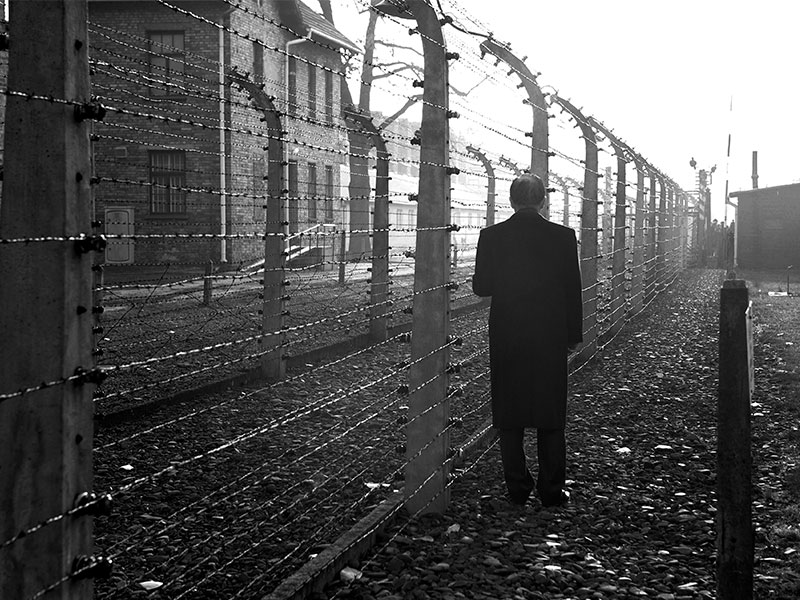
The word “genocide” was first coined by Polish lawyer Raphäel Lemkin in 1944 in his book Axis Rule in Occupied Europe. It consists of the Greek prefix genos, meaning race or tribe, and the Latin suffix cide, meaning killing. Lemkin developed the term partly in response to the Nazi policies of systematic murder of Jewish people during the Holocaust, but also in response to previous instances in history of targeted actions aimed at the destruction of particular groups of people. Later on, Raphäel Lemkin led the campaign to have genocide recognised and codified as an international crime. Tiếp tục đọc “Genocide, Crimes against Humanity, War Crimes, Ethnic Cleansing”
January 2, 2012 by Lichtenberg, Holybooks.com

The Sacred Books of the East is an enormous project undertaken by Max Müller and various authors from 1879 and 1910. The group’s work was published by Oxford University Press and to this day many of the translations are the only ones existing or the most precise. These translations might be some of the most important literature in one collection the world has ever seen. It is not possible to buy the complete set of these works, but Google Books and Microsoft have done an effort to scan them all from library sources since they are now in the Public Domain. Please keep in mind that these volumes are huge, some of the files are more than 50 MB and have up to 3.000 pages. In total, The Sacred Books of the East are more than a hundred thousand pages. The books are now in the Public Domain and available here for free download in their complete length.
The Sacred Books of the East is an enormous project undertaken by Max Müller and various authors from 1879 and 1910.
Written by: Various oriental scholars, edited by Max Müller
Published by: Oxford University Press
Available in: Ebook
Download them here as PDF-files:
Read the Court’s full text here >>
The full text of the operative clause of the Order reads as follows:
“For these reasons,
THE COURT,
Indicates the following provisional measures:
(1) By thirteen votes to two,
The Russian Federation shall immediately suspend the military operations that it commenced on 24 February 2022 in the territory of Ukraine;
IN FAVOUR: President Donoghue; Judges Tomka, Abraham, Bennouna, Yusuf, Sebutinde, Bhandari, Robinson, Salam, Iwasawa, Nolte, Charlesworth; Judge ad hoc Daudet;
AGAINST: Vice-President Gevorgian; Judge Xue;
(2) By thirteen votes to two,
The Russian Federation shall ensure that any military or irregular armed unitswhich may be directed or supported by it, as well as any organizations and persons which may be subject to its control or direction, take no steps in furtherance of the military operations referred to in point (1) above;
IN FAVOUR: President Donoghue; Judges Tomka, Abraham, Bennouna, Yusuf, Sebutinde, Bhandari, Robinson, Salam, Iwasawa, Nolte, Charlesworth; Judge ad hoc Daudet;
AGAINST: Vice-President Gevorgian; Judge Xue;
(3) Unanimously,
Both Parties shall refrain from any action which might aggravate or extend the dispute before the Court or make it more difficult to resolve.”
Further readings:
Convention on the Prevention and Punishment of the Crime of
Genocide
Published 17th March 2022 CNN

Credit: Foster + Partners
Written byJacqui Palumbo, CNN
One of the UK’s largest architecture firms has unveiled plans for a verdant new “city within a city” in Vietnam.
The new 290-acre (about half a square mile) district will be built around a long “spine” of trees and greenery in the country’s biggest metropolis, Ho Chi Minh City, according to architects Foster + Partners.
Called “The Global City,” the project includes high- and low-rise residential buildings, public housing and villas, in addition to schools, a shopping mall and medical facilities. Flanked by two waterways, the community will comprise five different neighborhoods connected by a central park and boulevard, as well as a series of pedestrian bridges.
Tiếp tục đọc “Architects reveal ambitious plan for ‘city within a city’ in Vietnam”Analysis by Simone McCarthy, CNN
Updated 1005 GMT (1805 HKT) March 16, 2022
Hong Kong (CNN)In a year when all Xi Jinping craved was for things to be stable, 2022 is shaping up to be anything but.
After years of careful preparation, the Chinese leader is expected to step into an almost unprecedented third term at the helm of the country and its Communist Party this fall.
But instead of a smooth ride, dual crises are threatening to upend the status-quo, with China’s largest outbreak of Covid-19 in two years emerging at home while overseas, Russia embarks on a brutal, widely denounced invasion of Ukraine.
Tiếp tục đọc “This was supposed to be Xi Jinping’s big year. Instead, he’s dealing with Covid and war”