Quad Joint Leaders’ Statement

MAY 24, 2022•STATEMENTS AND RELEASES The White House

Today, we – Prime Minister Anthony Albanese of Australia, Prime Minister Narendra Modi of India, Prime Minister Fumio Kishida of Japan, and President Joe Biden of the United States – convene in Tokyo to renew our steadfast commitment to a free and open Indo-Pacific that is inclusive and resilient.

Just over one year ago, Leaders met for the first time. Today in Tokyo, we convene for our fourth meeting, and our second in person, to demonstrate, at a time of profound global challenge, that the Quad is a force for good, committed to bringing tangible benefits to the region. In our first year of cooperation, we established the Quad’s dedication to a positive and practical agenda; in our second year, we are committed to deliver on this promise, making the region more resilient for the 21st century.

Tiếp tục đọc “Quad Joint Leaders’ Statement”

‘Looty’ project launches digital art heists to reclaim African artifacts

Previous

'Looty' project launches digital art heists to reclaim African artifacts
View of a computer-rendered image, with an added design to a looted artwork from Nigeria, that now resides in a British museum, with project’s aim to give part of its non-fungible token (NFT) sale proceeds to fund young African artists, in this handout obtained May 23, 2022. Looty Art/Handout via REUTERS
'Looty' project launches digital art heists to reclaim African artifacts
Screenshot of the design process on an image of a looted artwork from Nigeria, that now resides in a British museum, with project’s aim to give part of its non-fungible token (NFT) sale proceeds to fund young African artists, in this handout obtained May 23, 2022. Looty Art/Handout via REUTERS

Tiếp tục đọc “‘Looty’ project launches digital art heists to reclaim African artifacts”

Tired of being ‘fetishized and invisible,’ Asian artists are changing the narrative

Published 24th May 2022 CNN

Credit: Courtesy of Chelsea Ryoko Wong, Jessica Silverman, San Francisco, and Jeffrey Deitch, New York

Tired of being ‘fetishized and invisible,’ Asian artists are changing the narrative

SHARE

Written byAnn Binlot, CNN

In much of Western art, Asian women have often appeared as one-dimensional characters — sometimes seen as meek and docile, and at other times hypersexualized and exoticized. But such portrayals fail to show individuals coming from a myriad of cultural backgrounds, their identities rooted in distinctly different countries and histories.

“Wonder Women,” a new exhibition at the Jeffrey Deitch gallery in New York, seeks to counter stereotypical representations made by outsiders, presenting works by Asian American and diasporic women and non-binary artists “portraying themselves or their family members as heroes in their own ways,” explained show curator Kathy Huang.

“I had always grappled with ideas of being both fetishized and invisible in pop culture and visual culture,” said Huang, adding that she drew inspiration from the 1981 poem “Wonder Woman” by Genny Lim.

“In the poem, the narrator is observing the different lives of Asian women,” she explained. “That’s something that I had wondered myself … because I have my individual experience as a Chinese American woman, but there were so many other experiences that I don’t know about.”

Tiếp tục đọc “Tired of being ‘fetishized and invisible,’ Asian artists are changing the narrative”

Japan-U.S. Joint Leaders’ Statement: Strengthening the Free and Open International Order 


MAY 23, 2022•STATEMENTS AND RELEASES The White House

Today, Japan and the United States affirm a partnership that is stronger and deeper than at any time in its history. Guided by our shared values; anchored by our common commitment to democracy and the rule of law; inspired by the innovation and technological dynamism of our economies; and rooted in the deep people-to-people ties between our countries, the Japan-U.S relationship is the cornerstone of a free and open Indo-Pacific region.

It is in this spirit that Prime Minister of Japan KISHIDA Fumio welcomed Joseph R. Biden, Jr to Japan in his first visit as President of the United States. President Biden commended Prime Minister Kishida’s global leadership, including in the Japan-Australia-India-U.S. (Quad) Summit meeting.

Tiếp tục đọc “Japan-U.S. Joint Leaders’ Statement: Strengthening the Free and Open International Order “

Biden’s new trade deal is based on two big ideas: moving away from neoliberalism and containing China.

May 23, 2022
By David Leonhardt, New York Times newsletter

President Biden in Japan.Doug Mills/The New York Times
Biden in Asia
The politics of trade policy have become toxic in the U.S.
For decades, the mainstream of both the Democratic and Republican parties favored expanding trade between the U.S. and other countries. Greater globalization, these politicians promised, would increase economic growth — and with the bounty from that growth, the country could compensate any workers who suffered from increased trade. But it didn’t work out that way.
Tiếp tục đọc “Biden’s new trade deal is based on two big ideas: moving away from neoliberalism and containing China.”

What a Nobel laureate’s take on Donald Trump reveals about today

Opinion by Jane Greenway Carr

Updated 1734 GMT (0134 HKT) May 22, 2022, CNN

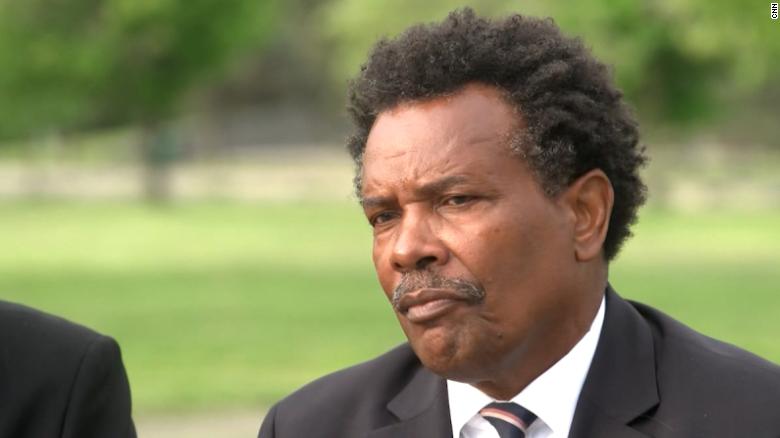
'It is White supremacy': CNN speaks to son of Buffalo massacre victim

(CNN) Shortly after Donald Trump was elected President of the United States, Nobel laureate Toni Morrison wrote in The New Yorker: “Unlike any nation in Europe, the United States holds whiteness as the unifying force. Here, for many people, the definition of ‘Americanness’ is color.” Reflecting on efforts — largely by White men — to define themselves by sustaining that poisonous definition, Morrison argues that those “who are prepared to abandon their humanity out of fear of black men and women, suggest the true horror of lost status.”

Tiếp tục đọc “What a Nobel laureate’s take on Donald Trump reveals about today”

How Haiti became the poorest country in the Americas

May 22, 2022

Good morning. The Times reveals how Haiti became the poorest country in the Americas.


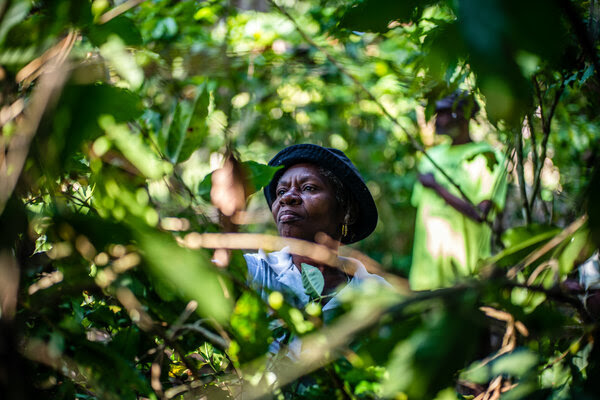
Adrienne Present harvesting coffee beans in Haiti.Federico Rios for The New York Times

Catherine Porter, New Yorl Times newsletter

Haiti is one of the poorest countries in the world, and a new Times investigative series explores why. One stunning detail: France demanded reparations from Haitians it once enslaved. That debt hamstrung Haiti’s economy for decades — and kept it from building even basic social services, like sewage and electricity.

The series is based on more than a year of reporting, troves of centuries-old documents and an analysis of financial records. I spoke to my colleague Catherine Porter, one of the four reporters who led the project, about what they found.

Why tell Haiti’s story now?

I’ve been covering Haiti since the earthquake in 2010, and returned dozens of times. Any journalist that spends time in Haiti continually confronts the same question: Why are things so bad here?

Tiếp tục đọc “How Haiti became the poorest country in the Americas”

Hints of a new North Korea nuclear strategy

Download Document

MEDIA QUERIES

Georgette Almeida
Executive Assistant

 (808) 521-6745

Hints of a new North Korea nuclear strategy

An earlier version of this article appeared in The Japan Times.

For more from this author, visit his recent chapter of Comparative Connections.

Make no mistake: North Korea leader Kim Jong Un truly believes he needs nuclear weapons.

For years, that need reflected a single objective: the protection and maintenance of his regime. A nuclear arsenal was a defensive tool—a deterrent—to ensure that no foreign power would attack his country and end the Cold War division of the Korean Peninsula. Kim’s rationale for possessing nuclear weapons seems to be shifting and his rhetoric and accompanying military developments indicate a new focus—the acquisition of a war-fighting capability.

Tiếp tục đọc “Hints of a new North Korea nuclear strategy”

IEEFA experts trace the fallout from Russia’s invasion of Ukraine on global liquefied natural gas markets

IEEFA

Prices expected to continue to be high, but LNG may be pricing itself out of global markets

May 20, 2022 (IEEFA)—The fallout from the Russian invasion of Ukraine has disrupted the world’s liquefied natural gas (LNG) market, driving prices to record levels while likely positioning the industry for a significant downturn as emerging Asian markets are priced out of the market, according to a panel of IEEFA experts.

IEEFA’s analysts find that the disruption in the LNG markets has been truly global. Russia, which faces a series of international sanctions, is the world’s second-largest natural gas producer, its third-largest oil producer, and its sixth-largest coal producer. In addition, Russia provides Europe with more than one-third of its gas supply.

Tiếp tục đọc “IEEFA experts trace the fallout from Russia’s invasion of Ukraine on global liquefied natural gas markets”

United Nations chief lays out plan to jumpstart renewables transition

IEEFA

The UN secretary-general, António Guterres, has issued a stark warning concerning the “dismal litany of humanity’s failure to tackle climate disruption” in a speech in which he set out “five critical actions to jumpstart the renewable energy transition”.

Speaking at the launch of the World Meteorological Organisation’s State of the Global Climate 2021 Report, Guterres described the global energy system as “broken” and “bringing us ever closer to climate catastrophe”. He called on the world to “end fossil fuel pollution and accelerate the renewable energy transition, before we incinerate our only home”.

Tiếp tục đọc “United Nations chief lays out plan to jumpstart renewables transition”

NATO Expansion? That’s (Maybe) Gonna Be a No From Turkey, Dawg

Foreign Policy situation report,May 19, 2022

After months of flirting with it, Finland and Sweden have finally decided they want to tie the knot with NATO and join the military alliance. (Thanks again, Russian President Vladimir Putin.) The two countries are meeting with U.S. President Joe Biden on Thursday morning.

Joining NATO, however, isn’t a simple process, even for two developed democracies with strong militaries that seem like just the right fit for the alliance.

It takes unanimous consent from all 30 NATO members, ratified by votes in parliaments (and in the United States’ case, the Senate) across Europe and North America.

Tiếp tục đọc “NATO Expansion? That’s (Maybe) Gonna Be a No From Turkey, Dawg”

Kỷ luật quan chức UB Chứng khoán nhà nước: ‘Đại phẫu’ để không thành ‘ung nhọt’ đe dọa thị trường

19/05/2022 18:00 GMT+7

TTO – Xung quanh việc kỷ luật loạt quan chức Ủy ban Chứng khoán nhà nước, ý kiến của các chuyên gia, đại biểu Quốc hội đều bày tỏ đồng tình, và cho rằng đây chính là cuộc ‘đại phẫu’ rất cần thiết để thị trường chứng khoán phát triển lành mạnh.

Kỷ luật quan chức UB Chứng khoán nhà nước: Đại phẫu để không thành ung nhọt đe dọa thị trường - Ảnh 1.

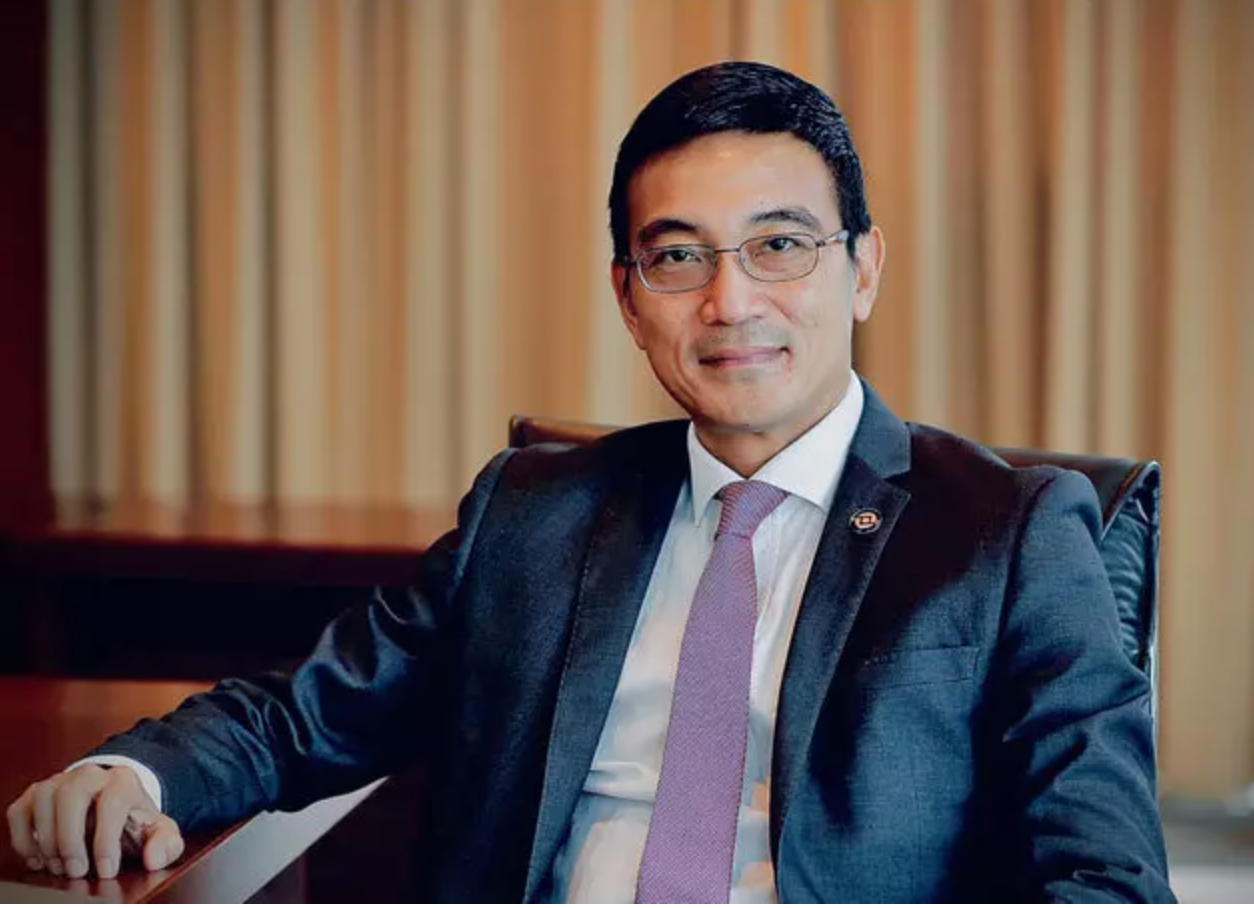
Ông Lê Hải Trà, tổng giám đốc Sở Giao dịch chứng khoán TP.HCM, đã bị khai trừ Đảng – Ảnh: HOSE

Ủy ban Kiểm tra Trung ương đã quyết định khai trừ khỏi Đảng ông Lê Hải Trà, tổng giám đốc Sở Giao dịch chứng khoán TP.HCM (HOSE), và cách tất cả các chức vụ trong Đảng đối với ông Trần Văn Dũng, chủ tịch Ủy ban Chứng khoán nhà nước.

Ngoài ra, Ủy ban Kiểm tra Trung ương còn kỷ luật cảnh cáo các ông: Vũ Bằng, nguyên chủ tịch Ủy ban Chứng khoán nhà nước; Nguyễn Thành Long, bí thư Đảng ủy Sở Giao dịch chứng khoán Hà Nội, chủ tịch hội đồng thành viên Sở Giao dịch chứng khoán Việt Nam; Nguyễn Sơn, bí thư Đảng ủy, chủ tịch hội đồng quản trị Trung tâm Lưu ký chứng khoán Việt Nam.

Tiếp tục đọc “Kỷ luật quan chức UB Chứng khoán nhà nước: ‘Đại phẫu’ để không thành ‘ung nhọt’ đe dọa thị trường”

WHITE HOUSE FACT SHEET: U.S.-ASEAN Special Summit in Washington, DC 

MAY 12, 2022•STATEMENTS AND RELEASES

President Biden will welcome the leaders of the Association of Southeast Nations (ASEAN) for a historic U.S.-ASEAN Special Summit, held for the first time in Washington D.C. and at the White House, to re-affirm the United States’ enduring commitment to Southeast Asia and underscore the importance of U.S.-ASEAN cooperation in ensuring security, prosperity, and respect for human rights.  

Over many years, the United States has steadily deepened our partnership with Southeast Asia. The United States has provided over $12.1 billion in development, economic, health, and security assistance to Southeast Asian allies and partners since 2002 and over that same period of time, the United States has provided over $1.4 billion in humanitarian assistance, including life-saving disaster assistance, emergency food aid, and support to refugees throughout Southeast Asia. Building on our long-standing commitment to this critical region, the Biden-Harris Administration’s FY 2023 Budget Request included over $800 million in bilateral assistance for ASEAN partners and over $25 million to deepen relations with ASEAN and enhance ASEAN’s capacity to tackle pressing regional challenges. 

The United States and Southeast Asia also benefit from our far-reaching commercial and trade ties. ASEAN represents the world’s fourth largest market and the United States is ASEAN’s largest source of foreign direct investment, while our two-way trade amounted to over $360 billion in 2020. 

U.S.-ASEAN relations are ultimately anchored in the special friendship shared by our combined one billion people. Our ongoing commitment to deepening people-to-people ties is marked by 7000 programs at 83 American Spaces in ASEAN countries, the Young Southeast Asian Leaders Initiative’s 155,000 alumni, and the connections forged through nearly 6 million U.S. visas, including student visas, granted to Southeast Asian travelers since 2010.

At the annual U.S.-ASEAN Summit in October 2021, President Biden announced an unprecedented investment of up to $102 million in U.S.-ASEAN relations, significantly expanding our cooperation on health, climate, science and innovation, trade facilitation, education, and more. Today, the United States and ASEAN will inaugurate a new era of partnership, guided by the complementary objectives of the Indo-Pacific Strategy of the United States and the ASEAN Outlook on the Indo-Pacific. In that spirit, President Biden is announcing over $150 million in initiatives which we expect will mobilize billions more in private financing that will deepen U.S.-ASEAN relations, strengthen ASEAN centrality, and expand our common capacity to achieve our shared objectives.

ACCELERATING CLIMATE ACTION, SUSTAINABLE DEVELOPMENT, AND INCLUSIVE PROSPERITY

In support of U.S.-ASEAN Climate Futures and U.S.-ASEAN Economic Futures, the United States and ASEAN will raise our collective climate ambition while working together to support implementation of the Master Plan on ASEAN Connectivity 2025.  We will help meet the region’s enormous infrastructure needs in a sustainable manner that accelerates the clean energy transition, helps the region to achieve a path to net zero emissions by mid-century, and drives inclusive, broad-based prosperity.

Tiếp tục đọc “WHITE HOUSE FACT SHEET: U.S.-ASEAN Special Summit in Washington, DC “

Prime Minister Pham Minh Chinh ahead of U.S.-ASEAN Summit – Toàn văn bài phát biểu của Thủ tướng Phạm Minh Chính tại CSIS Hoa Kỳ

May 11, 2022 CSIS

John J. Hamre: My name is John Hamre and I want to welcome all of you. This is a largest group we’ve had at CSIS in two years. And it’s great to have you here. I want to say a special thank you to the Prime Minister. We are honored to have him here. We have been privileged to have hosted several very important previous leaders in Vietnam. Back in 2015, we had the secretary general of the Communist Party. That was Nguyen Phu Trong. That was in 2015. In 2013, we had President Truong who was here with us. And so today it’s a real privilege to have Prime Minister Pham.

You know, it was just very interesting because today I had a meeting with my Board of Trustees and we spent much of the morning talking about the remarkable changes that are going on in the world today, especially in Asia. You know, the aftershocks of COVID, the kind of difficulties with supply chains, companies wanting to see more reliability in supply chains, and in almost every part of the conversation one country came up. And it was Vietnam. Everybody said, Vietnam is an important new partner here. But there was also an additional sentence, which is: Vietnam is being held back because it doesn’t have the infrastructure that it needs to become this leading partner in global supply chains. And so I think there’s an agenda that America and Vietnam could be working on.

Tiếp tục đọc “Prime Minister Pham Minh Chinh ahead of U.S.-ASEAN Summit – Toàn văn bài phát biểu của Thủ tướng Phạm Minh Chính tại CSIS Hoa Kỳ”