Social media is rife with skin-whitening products. But little is being done to regulate the market

CNN

Skin-lightening products have exploded in their availability on major social media platforms where there are few rules about how they are promoted or sold. With some products containing potentially toxic ingredients, consumers could be at risk.

Written by:Jacqui Palumbo, CNN
Editors: Meera Senthilingam, Eliza Anyangwe; Illustrations: Kathy Kim; Data journalist: Carlotta Dotta; Researchers: Elizabeth Yee, Jacqui Palumbo

Updated 20th June 2022

Editor’s note: This story is part of ‘White lies‘, a series by CNN’s As Equals investigating skin whitening practices worldwide to expose the underlying drivers of colorism, the industry that profits from it and the cost to individuals and communities. For information about how CNN As Equals is funded and more, check out our FAQs.

Once primarily sold in markets and beauty stores, skin-lightening products have exploded in their availability online and today, they are pervasive on every major social media platform.

On Facebook and Instagram, vendors hawk creams and serums that promise lighter skin yet offer scant information about the products themselves, while on YouTube and TikTok you can find thousands of tutorials by people promoting potent products or home remedies without qualifications that support their claims. On TikTok alone, the hashtag #skinwhitening has over 254 million views, while #skinlightening has another 62 million.

“Social media has become the most powerful tool right now for the sale of skin-lightening products,” says Dr. Anita Benson, Nigeria-based dermatologist and founder of the Embrace Melanin Initiative to combat colorism and harmful skin-lightening practices in Africa.

Tiếp tục đọc “Social media is rife with skin-whitening products. But little is being done to regulate the market”

‘Day Zero’: This city is counting down the days until its water taps run dry

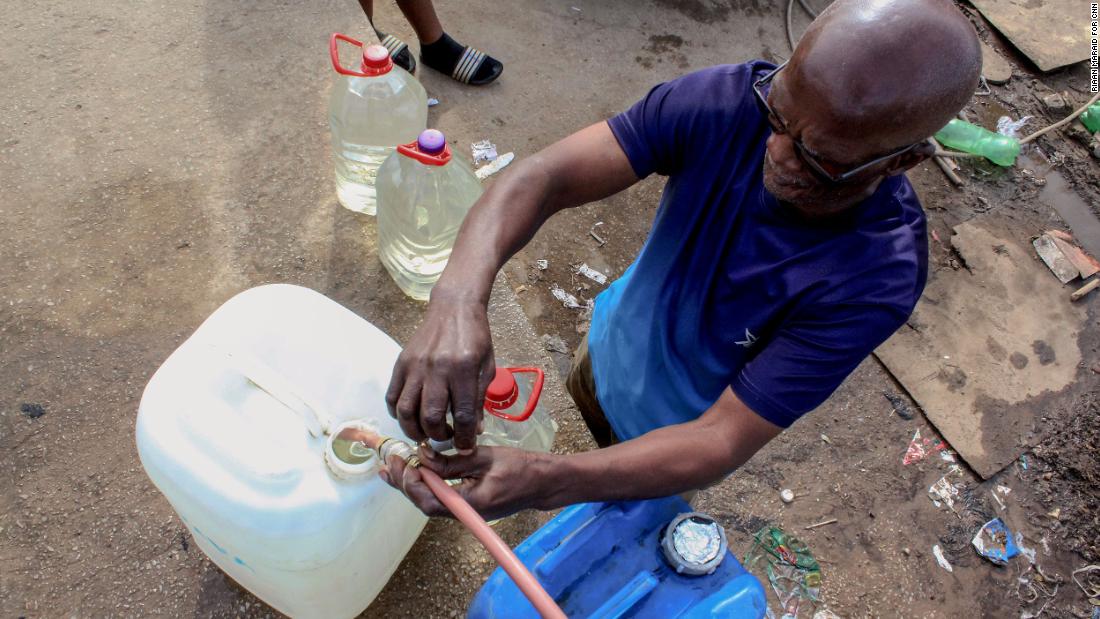
Leonard Matana. 69, filling up a plastic container with water at a communal tap in the township of Kwanobuhle in South Africa.

Leonard Matana. 69, filling up a plastic container with water at a communal tap in the township of Kwanobuhle in South Africa.

By Riaan Marais for CNN and Derek Van Dam, CNN
Photographs by Samantha Reinders and Riaan Marais for CNN

Updated 0055 GMT (0855 HKT) June 21, 2022

(CNN)Every day, Morris Malambile loads his wheelbarrow full of empty plastic containers and pushes it from his home to the nearest running tap. It’s much further than the usual walk to the kitchen sink — just a little under a mile away — but it’s not the distance that bothers him.

It’s the bumpy road — which runs between tightly packed shanty dwellings and beige public-funded houses — that makes balancing containers filled with 70 liters of water on his return a pain.

“Home feels far when you are pushing 70 kilograms of water in a wheelbarrow,” said the 49-year-old resident from the impoverished South African township of Kwanobuhle.

Tiếp tục đọc “‘Day Zero’: This city is counting down the days until its water taps run dry”

Human Rights NGOs: “Quis custodiet ipsos custodes?”

Council on Foreign Ralations, Pressure Points June 20, 2022

by Elliott Abrams

How much reliance should be placed on the major international human rights NGOs? Can they be trusted to work without bias? How are they governed?

These are subjects I discussed recently in a short paper done for the Council on Foreign Relations’ Diamonstein-Spielvogel Project on the Future of Democracy. It is entitled Human Rights NGOs: “Quis custodiet ipsos custodes?” and can be found here.
Tiếp tục đọc “Human Rights NGOs: “Quis custodiet ipsos custodes?””

Security and Economic Challenges for Taiwan in Cross-Strait Relations

Home » Security and Economic Challenges for Taiwan in Cross-Strait Relations

Taiwan

Security and Economic Challenges for Taiwan in Cross-Strait Relations

Chien-pin Li is Professor of Political Science and Dean of the College of Humanities and Social Sciences at Sam Houston State University. Before his current position, he taught at Kennesaw State University for 26 years, and was a founding member of the China Research Center. He received his Ph.D. in Political Science from the University of Iowa and was an Associate Research Fellow at Academia Sinica (Taipei, Taiwan), a Senior Fellow at the Atlantic Council of the United States (Washington, D.C.) and a Research Fellow at the Pacific Cultural Foundation (Taipei, Taiwan). His teaching and research interests focus on East Asian political economy, including trade disputes, trade negotiations, and regional integration. He is the author of Rising East Asia: The Quest for Governance, Prosperity, and Security (2020) and has published articles in Asian Survey, Pacific Review, Issues & Studies, International Studies Quarterly, and other journals. 

More articles by the Author »

Print Friendly, PDF & Email

The security and economic landscape in the Indo-Pacific is increasingly difficult to navigate. While trade agreements such as the Comprehensive and Progressive Agreement for Trans-Pacific Partnership, the successor to the Trans-Pacific Partnership or TPP, and the Regional Comprehensive Economic Partnership signal an interest to cooperate in a region full of economic vibrancy, competition and rivalry between great powers cast significant uncertainty over the peace and stability in the region. The paradoxical trends in economic and security affairs are particularly evident in cross-Strait relations between Taiwan and China.

Tiếp tục đọc “Security and Economic Challenges for Taiwan in Cross-Strait Relations”

What next? Ukraine’s allies divided over Russia endgame

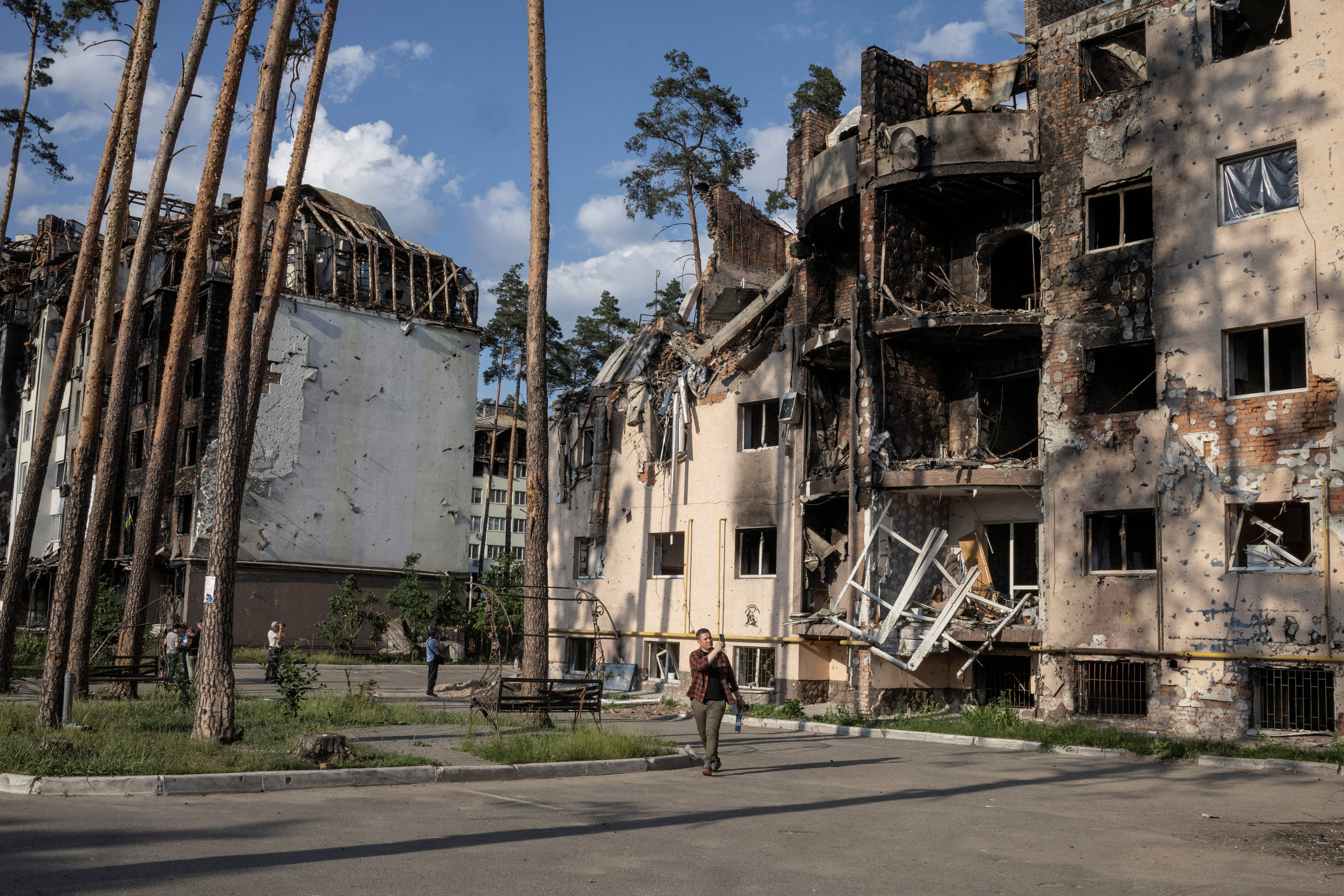
People look at destroyed buildings in Irpin, outside Kyiv, as Russia's attacks on Ukraine continues
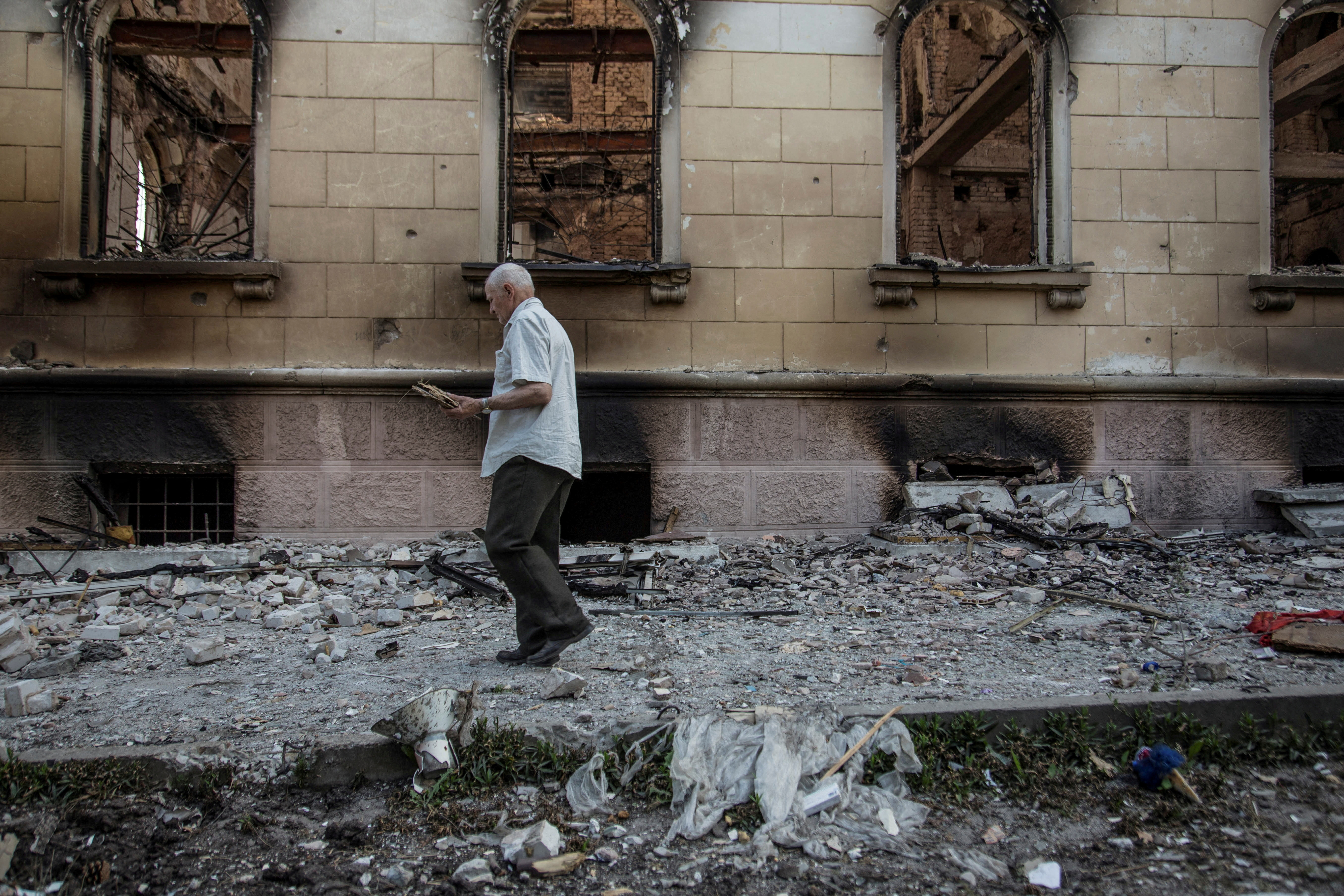
Russia's attack on Ukraine continues, in Lysychansk

1/3

People look at destroyed buildings in Irpin, outside Kyiv, as Russia’s attacks on Ukraine continues, June 9, 2022. REUTERS/Marko Djurica/File Photo

Reuters

PARIS/BERLIN/WASHINGTON, June 13 (Reuters) – Is it better to engage with Russian President Vladimir Putin over his invasion of Ukraine or to isolate him? Should Kyiv make concessions to end the war, or would that embolden the Kremlin? Are ramped up sanctions on Russia worth the collateral damage?

These are some of the questions testing the international alliance that swiftly rallied around Ukraine in the days after the Russian invasion but that, three months into the war, is straining, officials and diplomats told Reuters.

Tiếp tục đọc “What next? Ukraine’s allies divided over Russia endgame”

China’s Threat of Force in the Taiwan Strait

By Raul “Pete” PedrozoTuesday, September 29, 2020, 9:16 AM lawfareblog

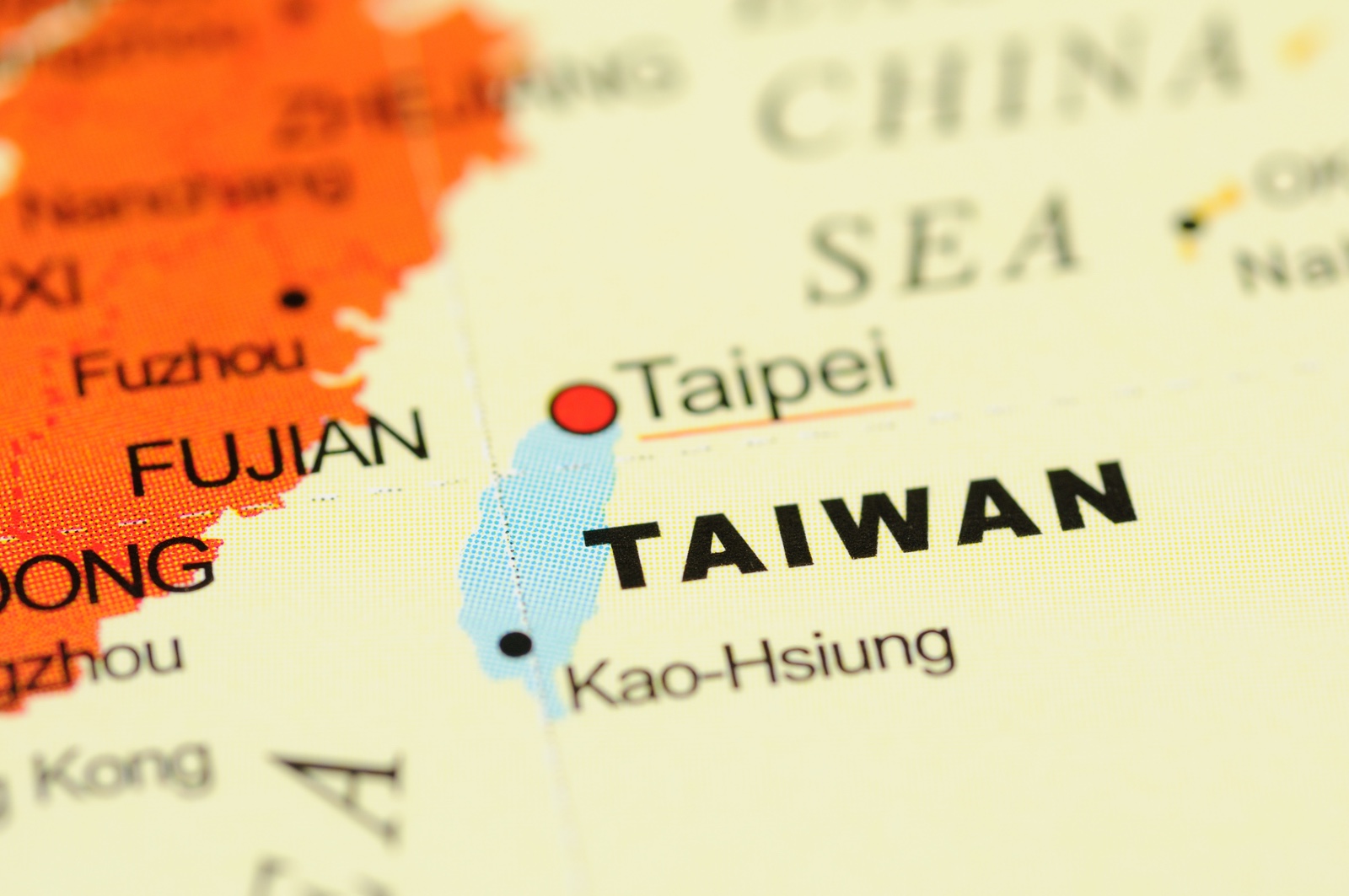
A view of Taiwan’s Kaohsiung Harbor, which faces the Taiwan Strait. (Flick/Formosa Wandering, https://flic.kr/p/9aCnHR; CC BY-NC 2.0, https://creativecommons.org/licenses/by-nc/2.0/)

Raul "Pete" Pedrozo

Captain Raul (Pete) Pedrozo, U.S. Navy (Ret.), is the Howard S. Levie Chair on the Law of Armed Conflict and Professor of International Law in the Stockton Center for International Law at the U.S. Naval War College. He was a Peer Reviewer for the International Committee of the Red Cross Commentary of 2017 on the Convention (II) for the Amelioration of the Condition of Wounded, Sick and Shipwrecked Members Of the Armed Forces at Sea (1949) and is currently one of two U.S. representative to the International Group of Experts for the San Remo Manual on the Law Applicable to Armed Conflicts at Sea, produced by the International Institute of Humanitarian Law. Prior to his retirement from the Navy he served as the senior legal advisor to Commander, U.S. Pacific Command and was a Special Assistant to the Under Secretary of Defense for Policy, Office of the Secretary of Defense. Pedrozo is co-author of the forthcoming, “Emerging Technology and the Law of the Sea” (Oxford University Press).

________

On Sept. 18 and 19, People’s Liberation Army combat aircraft on 40 occasions intentionally crossed the median line in the Taiwan Strait that separates mainland China from the island of Taiwan. Taiwan President Tsai Ing-wen immediately condemned the provocation as a “threat of force.”

The center line in the Taiwan Strait (also known as the median line, middle line or Davis Line, named after Brig. Gen. Benjamin Davis, commander of Task Force 13 in Taipei and famed commander of the World War II Tuskegee Airmen) has its origins in the 1954 U.S.-Taiwan Mutual Defense Treaty. The treaty was one link in the chain of U.S. collective defense arrangements in the Western Pacific—which included agreements with the Republic of the Philippines, Australia, New Zealand, Japan and the Republic of Korea—designed to resist further communist subversive activities directed against their territorial integrity and political stability. Pursuant to Article V of the Mutual Defense Treaty, an armed attack in the treaty area, which included Taiwan and the Pescadores (or Penghu) Islands, directed against the territory of either party would be considered a danger “to its own peace and safety” and each party “would act to meet the common danger in accordance with its constitutional processes.” An addendum to the treaty established a buffer zone into which U.S. aircraft were not allowed to enter.

Tiếp tục đọc “China’s Threat of Force in the Taiwan Strait”

‘This could happen to any of us’: Graphic video of men stomping on a woman’s head shakes China to the core 

‘This could happen to any of us’: Graphic video of men stomping on a woman’s head shakes China to the core

View In BrowserCNNNectar Gan 

‘This could happen to any of us’: Graphic video of men stomping on a woman’s head shakes China to the core ----------

Tata, a 34-year-old in the Chinese city of Chengdu, was scrolling through her social media feed at her office desk on Friday afternoon when she came upon a harrowing video that shook her to the core. 

In surveillance footage, three women are shown sharing a meal in a barbeque restaurant when a man approaches their table and places his hand on the back of one of the women. The woman pushes him away, but the man refuses to back off and reaches out again for her face. As she pushes away his hand, the man slaps her and pushes her to the ground as she struggles to fend him off. 

Her friends try to help her, but they too are attacked by the man and his friends, who rush into the restaurant as the violence breaks out. The group of men then drag the first woman through the door by her hair, smashing her with bottles and chairs and repeatedly stomping on her head as she lays on the sidewalk, her clothes stained with blood. 

The video was so graphic and the assault so savage that Tata had to pause it midway. “Immediately I was filled with outrage and horror. I could totally empathize with her — the terror she must have felt in that moment,” she said, asking to only be referred to by her English name. “

And this could happen to any of us.” The shock and anger reverberated widely as the video spread like wildfire on Chinese social media. By the evening, the attack — which took place around 2:40 a.m. Friday in the northern city of Tangshan — had ignited a nationwide uproar, drawing hundreds of millions of views and dominating online discussions throughout the weekend. Many were appalled that a woman was so brutally beaten simply because she rejected a man’s sexual harassment. Others lashed out at the police for failing to take action until the incident went viral. 

Following the outcry, the Tangshan police issued a statement Friday saying they had identified the suspects and were “sparing no effort” to arrest them. By Saturday afternoon, all nine suspects involved in the assault had been apprehended, the police said, including four who had fled about 600 miles (965 kilometers) south to Jiangsu province. 

Two women were hospitalized with non-life-threatening injuries and were in stable condition, according to police. 

The attack also rekindled debate about violence against women and gender inequality in China, which critics contend remains a highly patriarchal society with pervasive misogyny despite growing awareness of gender issues among young women. “What happened at the Tangshan barbecue restaurant was not an isolated social incident, but part of systemic gender violence. We need to … acknowledge that we still live in an environment that supports, encourages, and drives men to engage in gender-based violence against women,” said a widely shared social media article. 

In recent years, a series of incidents of horrific violence against women have sparked outrage. Last year, a Tibetan vlogger died after her ex-husband set her on fire while she was live-streaming to her fans on social media. The ex-husband was sentenced to death in October. 

Earlier this year, a mother of eight was shown in a video chained by her neck in a shed in rural Jiangsu province. After repeated initial denials, authorities eventually admitted that she was a victim of human trafficking. “Of course we should take legal action to punish individual attackers and perpetrators. But without addressing systemic gender oppression, without changing the social norms that promote machismo and encourage violence, we’re just going to continue our anger in the next incident,” the social media article said. 

But such discussions did not appear to sit well with the Chinese government, which has long cracked down on China’s feminist movement by arresting and silencing activists and censoring online debates. The article, which was published on WeChat, along with other social media posts about gender issues, have been scrubbed from the internet. Weibo, China’s Twitter-like platform, said in a statement Saturday that it had blocked 992 accounts for breaches including “deliberately provoking gender confrontation” when discussing the Tangshan attack. Weibo’s official account shared some of the posts from the users they blocked, which included violent and derogatory language towards Chinese women. Other censored Weibo posts captured by CNN, however, were from users voicing concerns about violence against women and urging people to “keep speaking up.” Some state media reports initially downplayed the man’s act of sexual harassment as “trying to strike up a conversation,” drawing backlash from female readers. Authorities and state media have sought to portray the attack as an isolated event, shifting the focus away from gender issues to local gang violence.

Five of the suspects had criminal records, ranging from offenses of illegal detainment to intentional harming of others, according to state-run China National Radio. On Sunday, Tangshan authorities launched a two-week campaign to crack down on organized crime. 

Lv Pin, a prominent Chinese feminist now based in New York, said by detaching the Tangshan attack from the lens of gender, the Chinese government is distancing itself from the responsibility it should take for failing to address the problems of gender inequality and violence in society. “When we talk about systematic problems, the responsibility should lie with the government. But now, the government is using its crackdown (on organized crime) to shore up its legitimacy. This type of campaign-style crackdown will not address the problem of gender violence,” she said. Feng Yuan, the founder of Beijing-based women’s rights advocacy group Equality, said to eliminate systematic gender violence, China should start with incorporating more content about gender equality in education. “It is not only about teaching kids slogans and abstract concepts, but showing them how to apply them in real life — such as showing mutual respect for one another,” she said. Law enforcement should also shed its passivity when it comes to dealing with cases involving gender violence, Feng said. “In many domestic violence cases, the police response was often perfunctory, while a large number of sexual assault cases were easily dismissed on the ground that there was not enough evidence,” she said. The relatively light punishment for gender violence has also failed to deter transgressors.

Following the Tangshan attack, social media users recirculated state media reports on a similar incident that took place in 2020. In eastern Zhejiang province, a 25-year-old woman was beaten by a group of men till she passed out at a restaurant after she rejected a man’s sexual harassment. She was hospitalized for 15 days, while the men were detained for 10 to 13 days. No further charges were brought. Tata, the office worker in Chengdu, said the attack on the female diners in Tangshan showed that gender violence can happen to anyone. “Chinese women have long suffered from victim shaming in gender violence, but the girls who were assaulted in Tangshan are ‘perfect’ victims. They did not go out alone and they were not scantily clad,” she said, referring to accusations that are often leveled at victims of sexual assault in China. “All they did was try to protect themselves and their friends. But even though they did everything right, they were still subjected to such brutal violence — that’s what scares many of us.”Nectar Gan is China Reporter for CNN International in Hong Kong. She covers the changes taking place in China, and their impact on the world.
Tiếp tục đọc “‘This could happen to any of us’: Graphic video of men stomping on a woman’s head shakes China to the core “

China Alarms US With Private Warnings to Avoid Taiwan Strait

  • China officials dispute strait is international waters: person
  • Defense chiefs clashed over Taiwan at Singapore security forum

Shangri-La Defense Talks Focus on TaiwanUnmuteShangri-La Defense Talks Focus on Taiwan

By Peter Martin, Bloomberg.com

18:01 GMT+7, 12 tháng 6, 2022Updated on

Chinese military officials in recent months have repeatedly asserted that the Taiwan Strait isn’t international waters during meetings with US counterparts, according to a person familiar with the situation, generating concern within the Biden administration. 

The statement disputing the US view of international law has been delivered to the American government by Chinese officials on multiple occasions and at multiple levels, the person said. The US and key allies say much of the strait constitutes international waters, and they routinely send naval vessels through the waterway as part of freedom of navigation exercises. 

Tiếp tục đọc “China Alarms US With Private Warnings to Avoid Taiwan Strait”

A Transactional Mindset Won’t Win in the Indo-Pacific

June 10, 2022 Matthew P. Goodman, Senior Vice President for Economics, CSIS

Responding to widespread criticism of the Biden administration’s paltry offer of funding for Southeast Asian partners at a recent summit, a wise friend offered a colorful metaphor: “If we’re dating and I sense that you’re being transactional, then I want you to take me to the best restaurant in town and get the priciest bottle of wine. If you want a long-term relationship, buy me a cheap bottle of Chianti and we can sit on the roof and watch the sunset.”

My friend is right: no amount of money will win hearts and minds in the vital Indo-Pacific region unless it comes with a credible demonstration of long-term commitment to the region.

Tiếp tục đọc “A Transactional Mindset Won’t Win in the Indo-Pacific”

America’s Rise to Power, With Michael Mandelbaum

The President’s Inbox

Michael Mandelbaum, Christian A. Herter professor emeritus of American foreign policy at Johns Hopkins University, sits down with James M. Lindsay to discuss the continuities and changes in U.S. foreign policy over the last two and a half centuries.

June 7, 2022 — 35:53 min

Host

James M. Lindsay

Senior Vice President, Director of Studies, and Maurice R. Greenberg Chair Full Bio

@JamesMLindsay

Subscribe

Apple Podcasts

Spotify

Google Podcasts

Stitcher

Episode Guests

Michael Mandenbaum

Show Notes

Michael Mandelbaum, Christian A. Herter professor emeritus of American foreign policy at Johns Hopkins University, sits down with James M. Lindsay to discuss the continuities and changes in U.S. foreign policy over the last two and a half centuries.

Books Mentioned on the Podcast

Michael Mandelbaum, The Four Ages of American Foreign Policy: Weak Power, Great Power, Superpower, Hyperpower (2022)

Michael Mandelbaum, The Rise and Fall of Peace on Earth (2019)

Unpacking the IPEF: Biden’s First Big Trade Play

The Joe Biden administration has unveiled its Indo-Pacific Economic Framework, but it doesn’t look like a traditional trade deal and could end up falling short of its ambitions.  

Article by Inu Manak, Council on Foreign Relations

Last updated June 8, 2022 3:39 pm (EST)

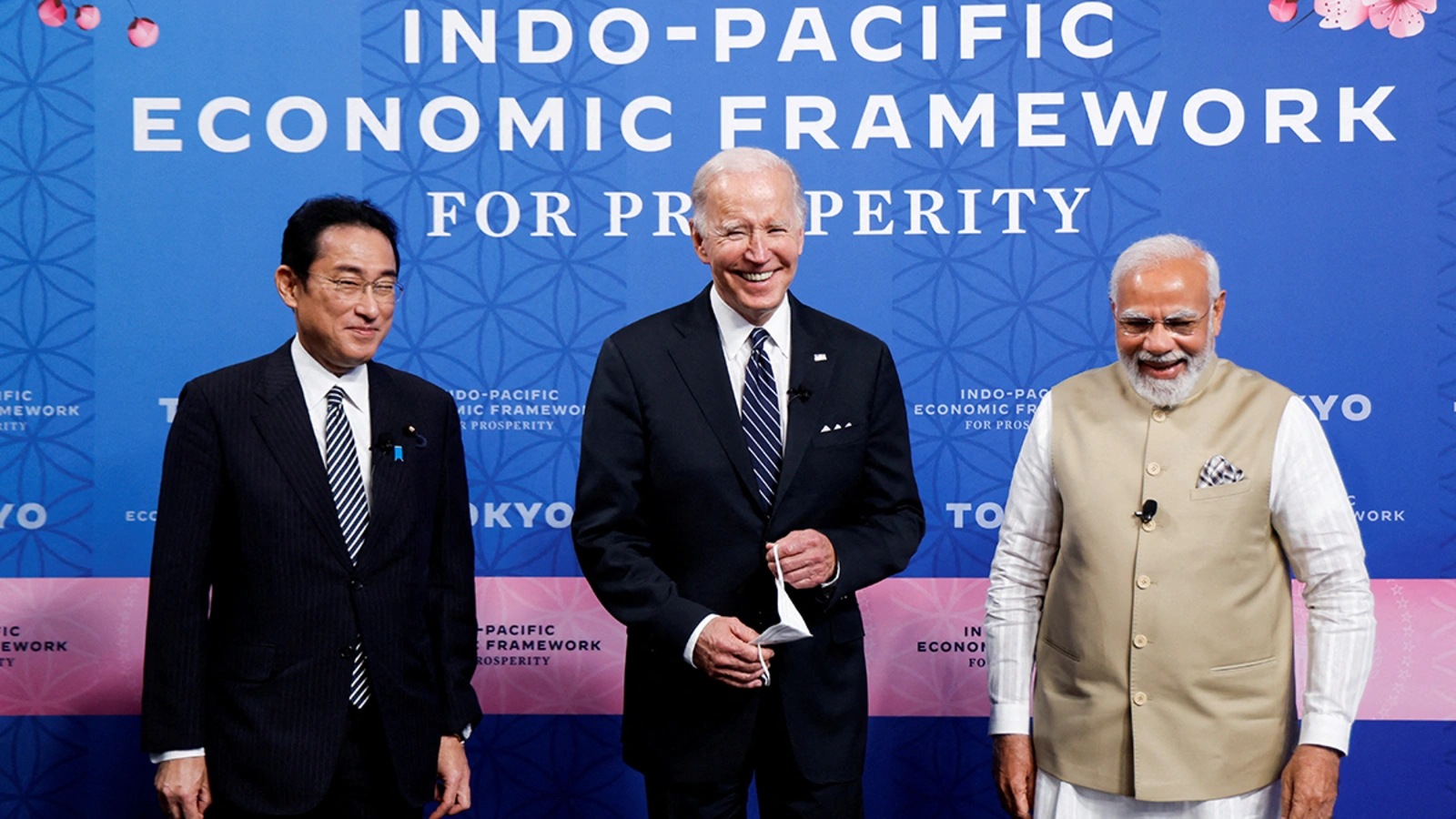
From left to right, Japanese Prime Minister Fumio Kishida, U.S. President Joe Biden, and Indian Prime Minister Narendra Modi attend the Indo-Pacific Economic Framework (IPEF) launch event in Tokyo in May 2022.
From left to right, Japanese Prime Minister Fumio Kishida, U.S. President Joe Biden, and Indian Prime Minister Narendra Modi attend the Indo-Pacific Economic Framework (IPEF) launch event in Tokyo in May 2022. Jonathan Ernst/Reuters

In late May, the Joe Biden administration launched its first major trade initiative: the Indo-Pacific Economic Framework (IPEF). The IPEF is billed as an effort to expand U.S. economic leadership in the Indo-Pacific region. This was also the objective of the Trans-Pacific Partnership (TPP), a trade deal that was negotiated during the Barack Obama administration. But President Donald Trump withdrew from the TPP in 2017, and the Biden administration has made clear that it does not intend to reenter that trade pact, which is now renamed the Comprehensive and Progressive Agreement for Trans-Pacific Partnership, or CPTPP.

Tiếp tục đọc “Unpacking the IPEF: Biden’s First Big Trade Play”

The World Health Assembly Takes Steps Toward Global Health Reforms

Countries began to reshape global health governance but left themselves room to change course

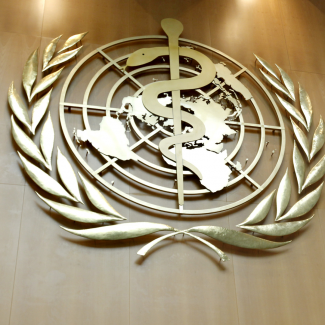
Gold-colored World Health Organization (WHO) logo mounted on a brown paneled wall at the United Nations headquarters, Geneva, Switzerland.

World Health Organization (WHO) logo, United Nations headquarters, Geneva, Switzerland. REUTERS/Denis Balibouse/File Photo

by David P. Fidler June 3, 2022 thinkglobalhealth.org

The annual meeting of the World Health Assembly (WHA) concluded on May 28. At the gathering, member states of the World Health Organization (WHO) made many decisions, some of which stood out as potential turning points for global health. The WHA did not ignore COVID-19, but member states primarily grappled with challenges that the pandemic created and that must be addressed beyond COVID-19. However, member states demonstrated as much caution as resolution in some of the most prominent decisions taken. This wariness creates uncertainty about the importance of these decisions as the WHO labors to put global health governance on more solid post-pandemic footing.

Tiếp tục đọc “The World Health Assembly Takes Steps Toward Global Health Reforms”

The Fourth Industrial Revolution: a seductive idea requiring critical engagement

Published: June 8, 2022 2.58pm BST The Conversation

Authors

  1. Ruth Castel-Branco, Research Manager, University of the Witwatersrand
  2. Hannah J. Dawson, Senior Researcher, Southern Centre for Inequality Studies, University of the Witwatersrand

Disclosure statement

The authors do not work for, consult, own shares in or receive funding from any company or organisation that would benefit from this article, and have disclosed no relevant affiliations beyond their academic appointment.

Partners

University of the Witwatersrand provides support as a hosting partner of The Conversation AFRICA.

View all partners

CC BY NDWe believe in the free flow of information
Republish our articles for free, online or in print, under Creative Commons licence.

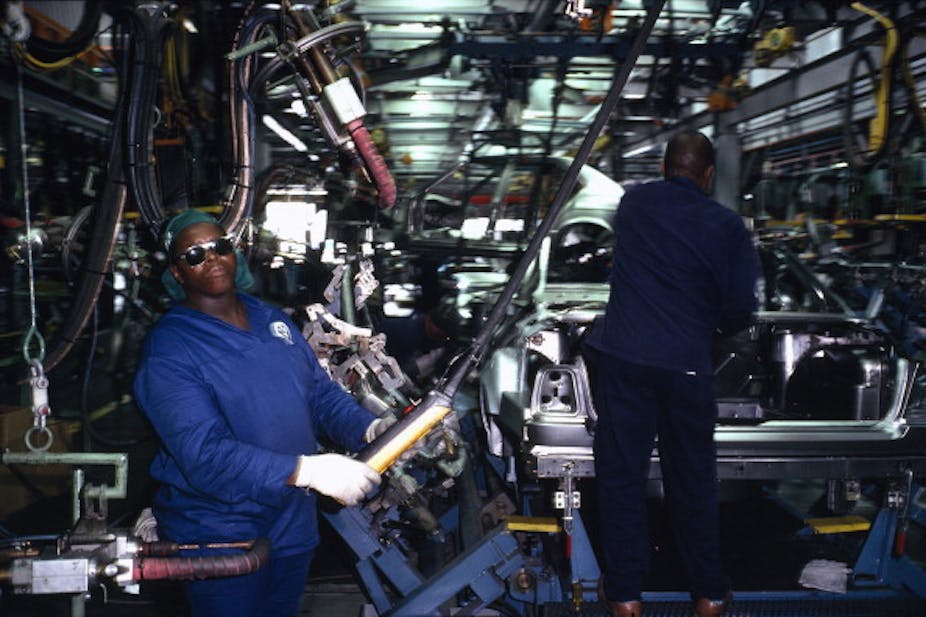
Technological innovation can indeed be beneficial for the working class. Photo by JNS/Gamma-Rapho via Getty Images

Narrative frames are fundamental to unifying ideologies. They frame what is possible and impossible, which ideas can be accepted and which must be rejected. In her book, Digital Democracy, Analogue Politics, storyteller and political analyst Nanjala Nyabola examines the framing of the Fourth Industrial Revolution narrative in this light.

Tiếp tục đọc “The Fourth Industrial Revolution: a seductive idea requiring critical engagement”

Singapore’s dengue ’emergency’ is a climate change omen for the world

By Heather Chen, CNN

Updated 0213 GMT (1013 HKT) June 7, 2022

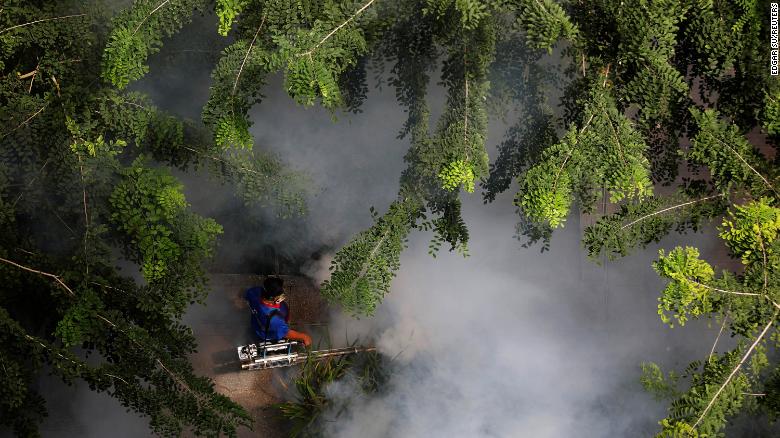
A worker fogs a housing estate for mosquitoes in Singapore on August 27, 2020.

A worker fogs a housing estate for mosquitoes in Singapore on August 27, 2020.

(CNN)Singapore says it is facing a dengue “emergency” as it grapples with an outbreak of the seasonal disease that has come unusually early this year.

The Southeast Asian city-state has already exceeded 11,000 cases — far beyond the 5,258 it reported throughout 2021 — and that was before June 1, when its peak dengue season traditionally begins.

Experts are warning that it’s a grim figure not only for Singapore — whose tropical climate is a natural breeding ground for the Aedes mosquitoes that carry the virus — but also for the rest of the world. That’s because changes in the global climate mean such outbreaks are likely to become more common and widespread in the coming years.

Tiếp tục đọc “Singapore’s dengue ’emergency’ is a climate change omen for the world”

Ông Nguyễn Thanh Long và Chu Ngọc Anh bị khai trừ Đảng

VNexpress

Ban Chấp hành Trung ương quyết định khai trừ Đảng với Bộ trưởng Y tế Nguyễn Thanh Long và Chủ tịch UBND TP Hà Nội Chu Ngọc Anh.

Tại cuộc họp bất thường chiều 6/6, Trung ương cũng yêu cầu các cơ quan chức năng “khẩn trương xem xét, xử lý kỷ luật về hành chính theo đúng quy định đối với cá nhân đã bị kỷ luật đảng”.

Bộ trưởng Y tế Nguyễn Thanh Long tại phiên họp tổ ở Quốc hội, ngày 26/5. Ảnh: Hoàng Phong
Bộ trưởng Y tế Nguyễn Thanh Long tại phiên họp tổ ở Quốc hội, ngày 26/5. Ảnh: Hoàng Phong

Hôm 4/6, Bộ Chính trị đề nghị Ban chấp hành Trung ương xem xét, kỷ luật ông Nguyễn Thanh Long (Ủy viên Trung ương Đảng, Bí thư Ban cán sự đảng, Bộ trưởng Y tế) và ông Chu Ngọc Anh (Ủy viên Trung ương Đảng, Phó bí thư Thành ủy, Bí thư Ban cán sự đảng, Chủ tịch UBND TP Hà Nội, nguyên Bí thư Ban cán sự đảng, nguyên Bộ trưởng Khoa học và Công nghệ), sau kiến nghị của Ủy ban Kiểm tra Trung ương 18 ngày trước.

Tiếp tục đọc “Ông Nguyễn Thanh Long và Chu Ngọc Anh bị khai trừ Đảng”