I am an attorney in the Washington DC area, with a Doctor of Law in the US, attended the master program at the National School of Administration of Việt Nam, and graduated from Sài Gòn University Law School. I aso studied philosophy at the School of Letters in Sài Gòn.
.
I have worked as an anti-trust attorney for Federal Trade Commission and a litigator for a fortune-100 telecom company in Washington DC.
I have taught law courses for legal professionals in Việt Nam and still counsel VN government agencies on legal matters.
I have founded and managed businesses for me and my family, both law and non-law.
I have published many articles on national newspapers and radio stations in Việt Nam.
In 1989 I was one of the founding members of US-VN Trade Council, working to re-establish US-VN relationship.
Since the early 90's, I have established and managed VNFORUM and VNBIZ forum on VN-related matters; these forums are the subject of a PhD thesis by Dr. Caroline Valverde at UC-Berkeley and her book Transnationalizing Viet Nam.
I translate poetry and my translation of "A Request at Đồng Lộc Cemetery" is now engraved on a stone memorial at Đồng Lộc National Shrine in VN.
I study and teach the Bible and Buddhism. In 2009 I founded and still manage dotchuoinon.com on positive thinking and two other blogs on Buddhism.
In 2015 a group of friends and I founded website CVD - Conversations on Vietnam Development (cvdvn.net).
I study the art of leadership with many friends who are religious, business and government leaders from many countries.
I have written these books, published by Phu Nu Publishing House in Hanoi:
"Positive Thinking to Change Your Life", in Vietnamese (TƯ DUY TÍCH CỰC Thay Đổi Cuộc Sống) (Oct. 2011)
"10 Core Values for Success" (10 Giá trị cốt lõi của thành công) (Dec. 2013)
"Live a Life Worth Living" (Sống Một Cuộc Đời Đáng Sống) (Oct. 2023)
I practice Jiu Jitsu and Tai Chi for health, and play guitar as a hobby, usually accompanying my wife Trần Lê Túy Phượng, aka singer Linh Phượng.
Washington (CNN)The Trump administration is expected to soon approve another major weapons sale including drones to Taiwan, according to congressional and administration sources. The move comes as the US and Taiwan are strengthening ties and amid mounting tensions between Washington and Beijing.The US is preparing to sell seven packages of weapons systems to Taiwan, a congressional aide told CNN, saying it was unclear when the Congress would be formally notified about the sales, as is required by law.A US official said that the administration will soon formally approve a large sale of MQ-9B Reaper drones. The value of the drones and associated equipment and program support is estimated to be about $600 million.
The trip by Undersecretary of State Keith Krach reportedly to discuss new weapons sales comes amid heightened tensions between Taiwan and the much larger military on the mainland.
By Paul D. Shinkman, Senior Writer, National SecuritySept. 17, 2020, at 10:27 a.m.
China Threatens U.S. Over Taiwan Visit
Undersecretary of State Keith Krach exits a plane upon arrival at the air force base airport on Thursday, Sept. 17, 2020, in Taipei, Taiwan.(CENTRAL NEWS AGENCY POOL/AP)
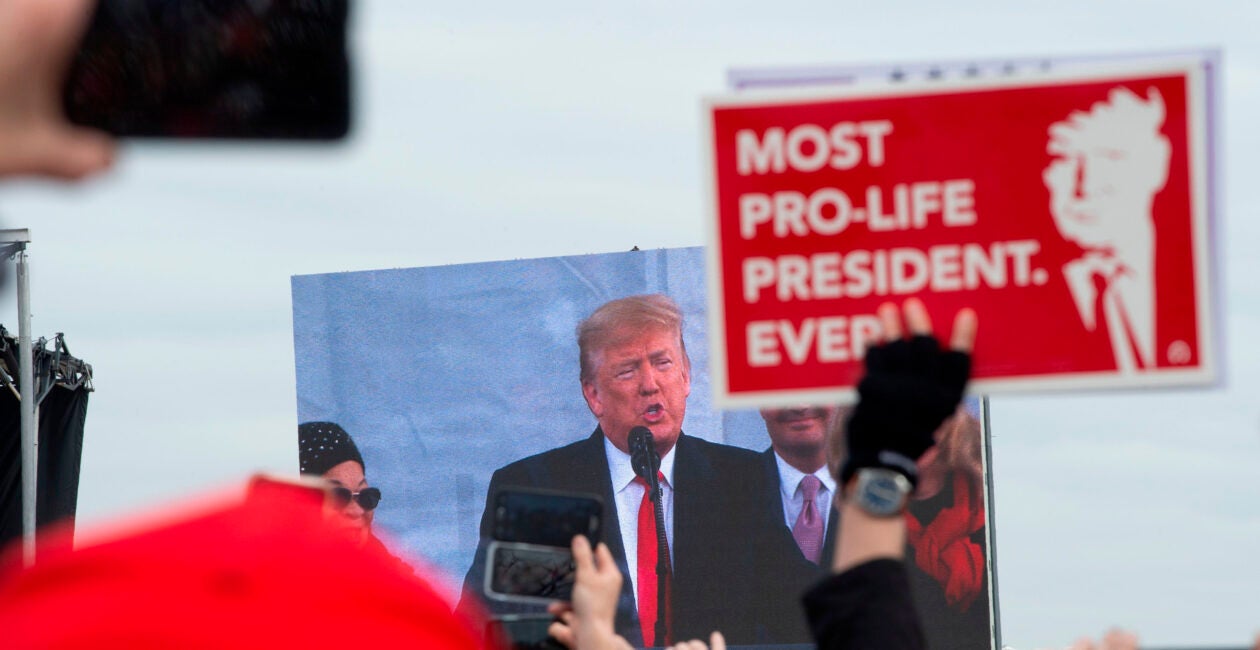
The Trump administration intends to expand a ban on use of U.S. tax dollars to pay for abortions abroad. Pictured: Pro-life activists cheer President Donald Trump as his image appears on a large screen during his speech Jan. 24 at the 47th annual March for Life in the nation’s capital. (Photo: Roberto Schmidt/AFP/Getty Images)
The Trump administration has proposed a rule to expand a ban on use of U.S. tax dollars to pay for abortions abroad so that it would include federal contracts and subcontracts that receive U.S. global health assistance.
File photo of Keith Krach, Under Secretary of State For Economic Growth, Energy and the Environment, and the latest high-ranking US official to visit Taiwan. (Photo: AFP/Riccardo Savi)
US federal prosecutors say the hackers worked to steal identities and video game technology, plant ransomware, and spy on Hong Kong activists. (Photo: AFP/Nicolas Asfouri)
WASHINGTON: The US Justice Department on Wednesday (Sep 16) announced charges against five Chinese nationals and two Malaysians who ran global hacking operations for at least six years to steal identities and video game technology, plant ransomware, and spy on Hong Kong activists.
US military forces fire a High Mobility Artillery Rocket System (HIMARS) rocket during the annual Philippines-US live fire amphibious landing exercise (PHIBLEX) at Crow Valley in Capas, Tarlac province, north of Manila, Philippines Oct 10, 2016. (Photo: REUTERS/Romeo Ranoco)
WASHINGTON: The United States plans to sell as many as seven major weapons systems, including mines, cruise missiles and drones to Taiwan, four people familiar with the discussions said, as the Trump administration ramps up pressure on China.
TAIPEI: Two Chinese anti-submarine aircraft flew into Taiwan’s air defence identification zone on Wednesday (Sep 16) and were warned to leave by Taiwan’s air force, the island’s defence ministry said on Thursday, the day a senior US official is due to arrive.
WASHINGTON: Secretary of Defense Mark Esper announced on Wednesday (Sep 16) an ambitious plan to expand the US Navy with a range of unmanned and autonomous ships, submarines and aircraft to confront the growing maritime challenge from China.
SYDNEY: Australia has named China in a court document as the foreign state under investigation by police in its first foreign interference investigation, though Beijing dismissed the allegation as an anti-China smear.
The launch of the Mekong-U.S. Partnership reflects the importance of the Mekong region to the United States. Our relationship with Mekong partner countries is an integral part of our Indo-Pacific vision and our strategic partnership with ASEAN. With more than $150 million in initial investments in regional programs, we will build on the good work of the Lower Mekong Initiative and the $3.5 billion in regional U.S. assistance during the last eleven years.
The Mekong-U.S. Partnership is committed to the autonomy, economic independence, good governance, and sustainable growth of Mekong partner countries. The United States has dedicated more than $52 million to fight COVID-19 in the region, building on more than twenty years of Mekong-U.S. cooperation on infectious diseases. We have supported economic growth with more than $1 billion to develop infrastructure in ASEAN countries through the U.S. International Development Finance Corporation (DFC), and plan to invest billions more in the coming years.
The Mekong-U.S. Partnership will also continue to strengthen water security and the work of the Mekong River Commission. It will include $55 million in planned new investments to help our Mekong partners combat transnational crime, including narcotrafficking and trafficking in persons, arms, and wildlife. It will also increase support for energy security and electricity sector development through Asia EDGE (Enhancing Development and Growth), the Japan-U.S.-Mekong Power Partnership (JUMMP), and the Japan-U.S. Strategic Energy Partnership (JUSEP). In all our efforts, the United States intends to work closely with partners like Japan, Australia, South Korea, India, and other good friends of the Mekong.
We need to be candid, however, about the challenges we face, including those from the Chinese Communist Party (CCP), which increasingly threatens the Mekong’s natural environments and economic autonomy.
The CCP’s unilateral decisions to withhold water upstream have exacerbated an historic drought. The United States stands with the region and the Mekong River Commission in calling for transparent data sharing. We encourage countries of the Mekong region to hold the CCP accountable to its pledge to share its water data. That data should be public. It should be released year-round. It should include water and water-related data, as well as land use, and dam construction and operation data. And it should be shared through the Mekong River Commission, the organization that serves the interests of Mekong-region countries, not those of Beijing.
We are also concerned about infrastructure-linked debt and the predatory and opaque business practices of Beijing’s state-owned actors, such as China Communications Construction Company. Concerning also is the boom in trafficking of persons, drugs, and wildlife, much of which emanates from organizations, companies, and special economic zones linked to the CCP.
Countries of the Mekong region have undergone an amazing journey in the last few decades. They deserve good partners. Through the Mekong-U.S. Partnership, we look forward to many more years of collaboration to ensure a peaceful, secure, and prosperous Mekong region.
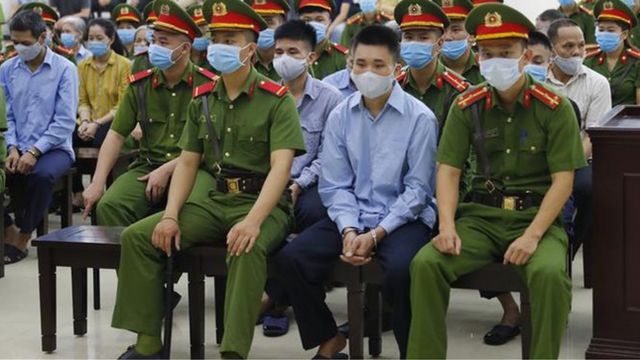
Phiên tòa xơ thẩm xử 29 người Đồng Tâm tháng 9/2020
Ngay sau khi Tòa án Nhân dân Tối cao TP Hà Nội tuyên án với 29 bị cáo Đồng Tâm trong phiên sơ thẩm ngày 14/9, Ân xá Quốc tế (Amnesty) và Tổ chức Theo dõi Nhân quyền (Human Rights Watch) đã lên tiếng bày tỏ quan điểm về sự việc.
Trong một văn bản gửi cho BBC News Tiếng Việt, tổ chức Ân xá Quốc tế nhận định rằng “Đây là một bản án vô nhân đạo sau một phiên tòa bất công trắng trợn”.
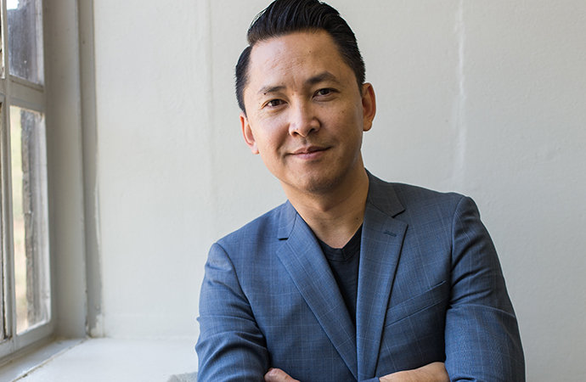
Vietnamese American author Nguyen Thanh Viet is seen in a photo uploaded to his personal website vietnguyen.info.
Vietnamese American 2016 Pulitzer winner Nguyen Thanh Viet has been selected as the newest member of the Pulitzer Prize Board, according to an announcement on the award’s official website.
The selection was announced on September 8.
“It’s an honor to join the #Pulitzer Board, especially as its first Vietnamese American and Asian American member,” Viet wrote in a tweet on September 9.
“As someone fortunate enough to be a recipient of the prize, I know the impact that the prize has on a writer’s career and on the perceptions of readers. I’m delighted to join in the Board’s crucial work,” Viet told the Pulitzer.
French photographer Pierre Dieulefils documented Vietnamese landmarks like Saigon Notre Dame Cathedral, Ha Long Bay and Ban Gioc Waterfall in the late 19th century.
The 2.29-kilometer Long Bien Bridge, which connects the downtown district of Hoan Kiem with Long Bien District, was built between 1898 and 1902 by the French during their colonial rule. It was initially called Doumer Bridge after Paul Doumer, a French governor-general of Indochina. At the time of construction it was one of the world’s longest bridges. After the country’s liberation it was renamed Long Bien Bridge. Pierre Dieulefils was a soldier in Indochina before returning to Vietnam in 1888 to follow his passion for photography. A total 261 of his photos, taken across Vietnam, were printed in the book “Beautiful and Magnificent Indochina” released last August.
An aerial view of Nam Dinh Town’s center. The town is now capital of Nam Dinh Province in northern Vietnam, nearly 90 km from Hanoi.
Ha Long Bay more than a century ago. In 1994, the bay in the northern province of Quang Ninh was recognized by UNESCO as a world natural heritage, earning it global fame.
Ban Gioc is considered Vietnam’s most beautiful waterfall, one of the largest natural waterfalls in Southeast Asia, and also the fourth largest in the world amongst those located on an international border. Ban Gioc Waterfall is in Trung Khanh District of Cao Bang Province on the border with China, around 340 km (225 miles) to the north of Hanoi.
The area outside the Hue Imperial Citadel in Hue Town, central Vietnam. The relic was built under the reigns of Kings Gia Long and Minh Mang, to the north of Huong (Perfume) River. It combines traditional Vietnamese architecture, the eastern philosophy of yin and yang, and Western military architecture. Gia Long was the first emperor (ruling 1802-1820) of the Nguyen Dynasty, Vietnam’s last royal family (1802-1945), while Minh Mang was the second emperor (ruling 1820-1841).
Mossy stone steps at Thieu Tri Mausoleum, the tomb of Emperor Thieu Tri, the third Nguyen Dynasty king (ruling 1841-1847). This area is now part of the Hue Monuments Complex recognized by UNESCO as a world cultural heritage in 1993. Today, the mausoleum is located in Cu Chanh Village of Huong Thuy Town in Hue.
Ninedynastic urns stand in front of The Mieu Temple in the Hue Imperial Citadel. Construction on these nine urns started in 1835 and completed in 1837 under the reign of King Minh Mang. Each urn was decorated with 17 bas-reliefs and named in accordance with the posthumous titles of Nguyen emperors worshipped at The Mieu Temple.
Binh Loi Bridge in Saigon. Stretching 276 m with six spans, Binh Loi was the first bridge to cross Saigon River and part of the initial phase of the Saigon-Nha Trang railway line. It was built by Levallois-Perret, a construction company formed out of the former Maison Eiffel, founded by legendary engineer Gustave Eiffel. Last June, the bridge was dismantled because of deterioration after more than 100 years.
Boats in front of a factory in Cho Lon area, formed between the 17th and 19th centuries when ethnic Chinese and their relatives settled here and built a bustling area. In the French colonial time, Cho Lon was a town distinct from Saigon. The two were combined in 1956. Currently, the Cho Lon area is in Saigon’s Districts 5 and 6.
The Saigon Notre Dame Cathedral did not have two bell towers when inaugurated in 1880. They were later added in 1985, to include a total of six large bronze bells, with two crosses at the top, 60.5 m above ground. Located in a tourist precinct that includes the historic Central Post Office in District 1, the 140-year-old cathedral is popular among foreign and local visitors, especially during holiday season.
Pierre Dieulefils (1862-1937) joined the army in 1883 and was later assigned to Indochina in 1885. Two years later, he was discharged and returned to France. In 1888, he returned to northern Vietnam and became a professional photographer and postcard publisher. In 1909, he gathered a set of photos on Indochina and published a photo book entitled “Indo-chine Pittoresque & Monumentale: Annam – Tonkin”. The work earned him a gold medal at the Brussels International Exposition of 1910.






 CVD
CVD 