Vietnam To Counter China With Asean Backing On Mekong River Region

Forbes.com

Vietnam took over the rotational chair of Asean, or the Association of Southeast Asian Nations, in January 2020, so it’ worth noting that Hanoi’s second foremost foreign policy priority after the South China Sea is reportedly the Mekong River region. While the South China Sea, where more than one-third of global shipping passes, is considered an overall Asean concern, the Mekong region is left to the five riparian countries in mainland Southeast Asia to deal with in view of China’s upstream hydropower dams that have led to frequent droughts and depleted fish stocks in downstream communities, especially in Cambodia and Vietnam.

Tiếp tục đọc “Vietnam To Counter China With Asean Backing On Mekong River Region”

How our planet became more urbanised than ever

europa.eu

Over three-quarters of the world’s population now live in urban areas, according to the JRC’s new Atlas of the Human Planet.

The Atlas will be officially launched on Monday at the 10th session of the World Urban Forum in Abu Dhabi.

With data spanning four decades and nearly 240 countries and territories, the Atlas shows how humans have settled on Earth and urbanised the planet.

From 1975-2015, the share of people living in urban areas has increased from 69% to 76%.

Across the globe, the number of countries and territories with less than 50% of total population living in urban areas has fallen from 48 in 1975 to 36 in 2015. Tiếp tục đọc “How our planet became more urbanised than ever”

Giá cho thuê mặt biển của Việt Nam còn thấp

(TBTCVN) – Trao đổi với phóng viên TBTCVN, TS. Dư Văn Toán – Viện Nghiên cứu Biển và Hải đảo Việt Nam cho rằng, đơn giá cho thuê biển theo quy định tại Thông tư liên tịch số 198/2015/TTLT-BTC-BTNMT là quá thấp. Giá thấp sẽ khiến ngân sách nhà nước bị thất thu khoản này.
trang 3
Mỗi năm 1 triệu km2 biển Việt Nam có giá trị kinh tế tự nhiên khoảng 1.571 tỷ USD.

* PV: Thông tư liên tịch 198/2015/TTLT-BTC-TNMT có quy định về giá thuê mặt biển, trong đó giá cao nhất là 7,5 triệu đồng/ha. Ông có nhận định gì về đơn giá này?
Tiếp tục đọc “Giá cho thuê mặt biển của Việt Nam còn thấp”

Fear? Cost? Fame? What’s turning on Asian businesses to renewable energy?

eco-business.com

What is the main the reason corporations are buying renewable energy? Cost saving? Compliance? The goodness of their hearts?

The first is obvious—savings. I have never seen any company adopt renewables purely out of altruism. There’s always a commercial angle. Owners of large real estate portfolios try to monetise their “rooftop assets”, other companies want to diversify their energy source, or simply adopt solar to hedge against rising energy costs.

Businesses hardly ever adopt renewable energy for altruistic reasons, but does that matter? In this interview with Eco-Business, Lionel Steinitz, CEO of LYS Energy, talks about why firms go green, and how Southeast Asia can unlock its solar potential.

Lionel Steinitz, the founder and chief executive of Singapore-based renewable energy firm LYS Energy Group, came to Singapore nearly 20 years ago and spent his first year in the city-state serving the French army.
Tiếp tục đọc “Fear? Cost? Fame? What’s turning on Asian businesses to renewable energy?”

United States and Vietnam Institutionalize Energy Partnership

United States Assistant Secretary for Energy Resources, Francis R. Fannon and Vietnamese Vice Minister Dang Hoang An of the Ministry of Industry and Trade signed a Memorandum of Understanding (MOU) memorializing a United States-Vietnam Comprehensive Partnership on Energy, September 30, in Washington, DC. Through this partnership, the United States and Vietnam have increased cooperation on energy through more frequent and direct correspondence between U.S. and Vietnamese energy officials at the policy and technical levels.
Tiếp tục đọc “United States and Vietnam Institutionalize Energy Partnership”

Bộ Công Thương Việt Nam và Bộ Ngoại giao Hoa Kỳ ký kết Bản ghi nhớ hợp tác (MOU) đối tác hợp tác năng lượng toàn diện

ERAV.vn

Chiều ngày 30/9/2019, tại trụ sở Bộ Ngoại giao, thủ đô Washington D.C., Hoa Kỳ, Bộ Công Thương Việt Nam và Bộ Ngoại giao Hoa Kỳ đã trao đổi Biên bản ghi nhớ Hợp tác (MOU) đối tác hợp tác năng lượng toàn diện. Buổi lễ diễn ra trước sự chứng kiến của Lãnh đạo các Bộ Ngoại giao, Bộ Năng lượng, Bộ Thương mại Hoa Kỳ và Bộ Công Thương Việt Nam, cũng như đại diện của nhiều Tập đoàn lớn của hai nước.

Với việc ký kết Biên bản ghi nhớ này, Việt Nam và Hoa Kỳ đã chính thức trở thành đối tác hợp tác năng lượng toàn diện. Đây cũng được kỳ vọng sẽ là dấu mốc quan trọng trong hợp tác năng lượng giữa Việt Nam và Hoa Kỳ, giúp mở ra một trang hợp tác mới, sâu sắc hơn và toàn diện hơn. Tiếp tục đọc “Bộ Công Thương Việt Nam và Bộ Ngoại giao Hoa Kỳ ký kết Bản ghi nhớ hợp tác (MOU) đối tác hợp tác năng lượng toàn diện”

Global energy storage market to surge to 15 GW by 2024

Tiếp tục đọc “Global energy storage market to surge to 15 GW by 2024”

Adopt Science-Based Climate Targets Or We’ll Divest, Says $6 Billion Fund

Bloomberg Quint

January 31 2020, 5:24 PM February 01 2020, 12:30 PM (Bloomberg) —

Liontrust Asset Management Plc is using its leverage as a shareholder to demand that companies set more ambitious targets for reducing their impact on the climate. The London-based firm, which has more than 5 billion pounds ($6.6 billion) in its sustainable investment funds, is telling the companies in those portfolios to adopt emissions targets in line with the Paris Agreement’s goals on limiting rising temperatures.

And it’s telling firms in fields from education to health care to work with organizations like the Science Based Targets initiative to lend rigor to their plans. Liontrust will use its weight in shareholder votes and the threat of divestment to persuade companies to reduce their carbon emissions to zero, according to a spokeswoman. “We are encouraging them to be bold and raise ambition, because we think that will ultimately make them more successful businesses in a low-carbon economy,” said Mike Appleby, an investment manager at Liontrust. Tiếp tục đọc “Adopt Science-Based Climate Targets Or We’ll Divest, Says $6 Billion Fund”

Experts say water release from Chinese dams too little to reach Vietnam

By Cuu Long   February 25, 2020 | 01:30 pm GMT+7

Even if China releases water from its hydropower dams on the Mekong River, it might not reach the Mekong Delta in Vietnam, experts warn.

A farmer in Long Phu District in the Mekong Delta Soc Trang Province holds rice plants that have all died because of drought, January 22, 2020. Photo by VnExpress/Huy Phong.

A farmer in Long Phu District in the Mekong Delta province of Soc Trang holds rice plants that have all died because of drought, January 22, 2020. Photo by VnExpress/Huy Phong.

Releasing water is a task China has to do periodically as its dams cannot keep holding back water, and given the increasing level of ice melt that raises sea level, it is a must for China to save its land from salt intrusion, Le Anh Tuan, deputy head of the Climate Change Institute at Can Tho University, said.

Tiếp tục đọc “Experts say water release from Chinese dams too little to reach Vietnam”

Offshore wind farms could power much of coastal China

Sciencedaily.com

February 21, 2020

Source: Harvard John A. Paulson School of Engineering and Applied Sciences

Summary:If China is to meet and exceed its Paris Climate Agreement goal by 2030, it’s going to need to find a way to increase its wind capacity. Researchers found that offshore wind could be a big part of the solution.

Under the Paris Climate Agreement, China committed to rely on renewable resources for 20 percent of its energy needs by 2030. Currently, the country is on track to double that commitment, aiming to hit 40 percent by the next decade. Wind power is critical to achieving that goal. Over the past 20 years, China’s wind power capacity has exploded from 0.3 gigawatts to 161 gigawatts.

But, in recent years, that growth has slowed and the hopes for China’s wind-powered future have dampened.

Why? Location, location, location. Tiếp tục đọc “Offshore wind farms could power much of coastal China”

Khơi nguồn năng lượng biển Việt Nam

Bộ TNMT

Việt Nam còn rất nhiều tiềm năng năng lượng biển chưa khai phá, cho một tương lai môi trường ít phát thải, giảm ô nhiễm…

Quyết tâm khơi nguồn năng lượng biển

Biến đổi khí hậu, phát thải nhà kính từ các hoạt động sản xuất đang khiến cho Việt Nam khó khăn hơn khi tiếp cận mục tiêu thiên niên kỷ là đảm bảo phát triển kinh tế trong môi trường mang tính bền vững. Một giải pháp hoàn hảo được không ít các chuyên gia, nhà khoa học khuyến nghị hiện nay chính là hãy tận dụng nguồn năng lượng tái tạo.
Tiếp tục đọc “Khơi nguồn năng lượng biển Việt Nam”

Banks need to take Belt and Road environmental risks seriously

China’s banks supporting BRI projects should apply environmental risk-management policies and oversight, says Divya Narain

Article image
Rice harvesting near Vientiane in Laos. The pillars will support the Nam Khone bridge, the longest on the China–Laos high-speed railway (Image: Surya Chuen / China Dialogue)

China’s Belt and Road Initiative (BRI) is intended to catalyse the economies of countries around the globe.

Yet BRI projects overlap some of the most ecologically fragile places on earth. The multi-trillion-dollar initiative – to build transcontinental networks of roads, railways and ports, studded with dams, mines, power plants, and solar and wind farms – has its environmental impacts. These include air and water pollution, soil contamination and erosion, habitat and wildlife loss. Tiếp tục đọc “Banks need to take Belt and Road environmental risks seriously”

Declining Renewable Costs Drive Focus on Energy Storage

NREL

Jan. 2, 2020

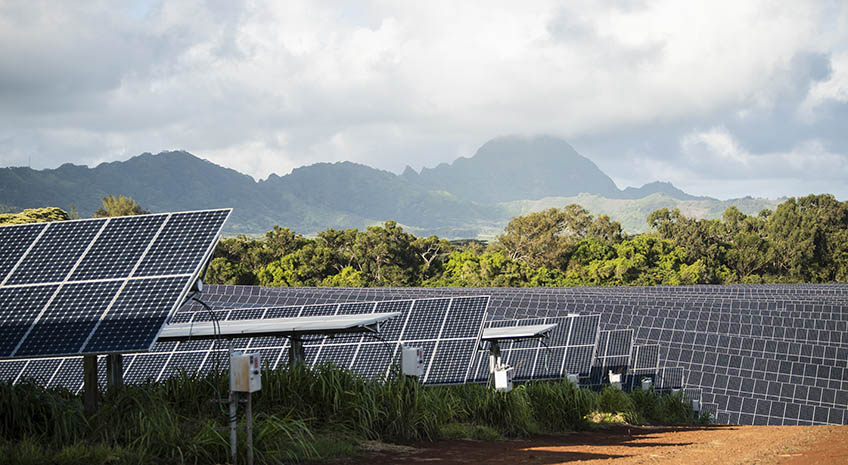
The AES Corporation, based in Virginia, installed the world’s largest solar-plus-storage system on the southern end of the Hawaiian island of Kauai. A scaled-down version was first tested at NREL. Photo by Dennis Schroeder, NREL

An oft-repeated refrain—the sun doesn’t always shine, and the wind doesn’t always blow—is sometimes seen as an impediment to renewable energy. But it’s also an impetus toward discovering the best ways to store that energy until it’s needed.

Declining costs in available technologies have propelled interest in energy storage forward like never before. The price of lithium-ion batteries has fallen by about 80% over the past five years, enabling the integration of storage into solar power systems. Today, nearly 18% of all electricity produced in the United States comes from renewable energy sources, such as hydropower and wind—a figure that is forecast to climb. And as communities and entire states push toward higher percentages of power from renewables, there’s no doubt storage will play an important role.

Compared with the same period a year earlier, the United States saw a 93% increase in the amount of storage deployed in the third quarter of 2019. By 2024, that number is expected to top 5.4 gigawatts, according to a forecast by market research firm Wood Mackenzie Power & Renewables. The market value is forecast to increase from $720 million today to $5.1 billion in 2024. Driving such growth is an increased focus on adding renewable energy sources to the nation’s grid. Tiếp tục đọc “Declining Renewable Costs Drive Focus on Energy Storage”