Tác giả: Đào Thu Hằng
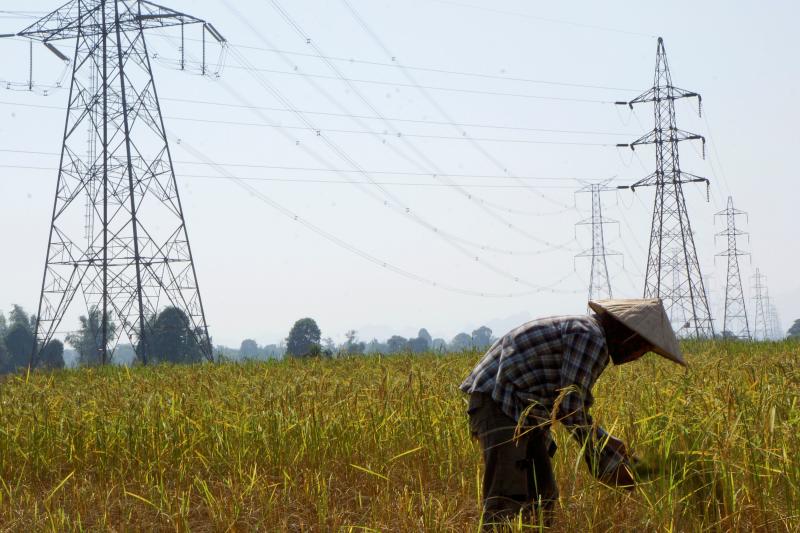
Thị trường điện cạnh tranh vẫn chậm tiến độ
Nguyễn HoàngThứ tư, 30/6/2021 | 07:59 GMT+7
Chính phủ yêu cầu Bộ Công Thương rà soát và trình lại Quy hoạch điện VIII trước ngày 15/6/2021, trong đó cần ưu tiên đẩy nhanh tiến độ thị trường điện cạnh tranh, đảm bảo sự tham gia công bằng của các nhà đầu tư và thu hút được nguồn lực xã hội để phát triển năng lượng.
Thị trường điện cạnh tranh đã được quy định trong Luật Điện lực (năm 2004) và Luật Điện lực sửa đổi (năm 2013), được cụ thể hóa trong Quyết định số 26/2006/QĐ-TTg ngày 26/1/2006 của Thủ tướng Chính phủ. Theo quyết định này, thị trường điện Việt Nam sẽ hình thành và phát triển theo ba cấp độ: phát điện cạnh tranh, bán buôn cạnh tranh và bán lẻ cạnh tranh.
Việt Nam đã có gần 20 năm nghiên cứu và thực hiện, nhưng thị trường phát điện cạnh tranh vẫn chưa có mô hình đúng theo nguyên tắc thị trường cạnh tranh: hiệu quả, lành mạnh và bình đẳng, không phân biệt đối xử giữa các đối tượng tham gia thị trường điện.
Why Investors Should Consider Vietnam’s Electric Vehicle Market
June 29, 2021 Posted byVietnam Briefing Written byPritesh Samuel Reading Time:6 minutes
- Vietnam’s electric vehicle market remains in its infancy, but there are plenty of opportunities as we are likely to see a paradigm shift from gasoline to electric-powered vehicles.
- With a rising population and an expanding middle class, consumers are increasingly aware of the environment, fuel efficiency, and increasing pollution levels in cities.
- Vietnam Briefing outlines the opportunities in Vietnam’s electric vehicle market despite the slow progress till date.
The electric vehicle market in Vietnam has not garnered as much attention compared to other countries in the region and globally, but this doesn’t mean that opportunities are not there. Electric vehicles are an irreversible trend and will be the future as governments move towards clean energy and consider the environment. This means that investors that are interested can set up the groundwork including production facilities, supply chains, and manpower to prepare for this future shift.
With a population of more than 96 million, about half of Vietnam’s population owns motorcycles, while car ownership is at a ratio of 23 per 1,000 people. Major cities such as Hanoi and Ho Chi Minh City are gridlocked with motorbikes on streets, alleys, and even sidewalks. This in turn has resulted in increased pollution and congestion. Hanoi and Ho Chi Minh City have ranked high in pollution levels globally several times. A poll by IQAir listed Vietnam as the 15th most polluted country in the world.
Tiếp tục đọc “Why Investors Should Consider Vietnam’s Electric Vehicle Market”
Lethal Autonomous Weapons Exist; They Must Be Banned
It may not be too late to put the evil “Slaughterbots” genie back in the bottle, if the world acts now
By Stuart Russell, Anthony Aguirre, Emilia Javorsky and Max Tegmark

This is a guest post. The views expressed here are solely those of the author and do not represent positions of IEEE Spectrum or the IEEE.
A chilling future that some had said might not arrive for many years to come is, in fact, already here. According to a recent UN report, a drone airstrike in Libya from the spring of 2020—made against Libyan National Army forces by Turkish-made STM Kargu-2 drones on behalf of Libya’s Government of National Accord—was conducted by weapons systems with no known humans “in the loop.”
Tiếp tục đọc “Lethal Autonomous Weapons Exist; They Must Be Banned”
Advancing human rights through trade
Why stronger human rights monitoring is needed and how to make it work
Political shifts, the impact of the COVID-19 pandemic, and the struggle for a shared vision of how to ‘build back better’, have reignited the debate about trade and human rights.
Although many trade agreements take human rights impacts into consideration, the monitoring systems that have emerged so far are not comprehensive. Without robust human rights monitoring, trading partners have little chance of ensuring that their counterparts are meeting their commitments.
While there are considerable structural, political and resource-related challenges to conducting more systematic and effective human rights monitoring, recent experiences in this field can help policymakers design more effective monitoring mechanisms for the future.
Giữa dịch Covid-19, gần 300 công nhân quét rác bị nợ lương nhiều tháng
25/06/2021 05:11 GMT+7
Gần 300 công nhân vệ sinh môi trường của Công ty Minh Quân (nay đổi tên là Tập đoàn Nam Từ Liêm) bị nợ lương nhiều tháng, rơi vào tình cảnh khốn khó giữa mùa Covid-19.
Chiều 23/6, một nhóm công nhân vệ sinh môi trường vẫn cặm cụi dọn dẹp rác dưới cái nắng như đổ lửa trong Khu liên cơ (quận Nam Từ Liêm, Hà Nội).
Chị Nguyễn Thị Phương là Tổ trưởng của Tổ vệ sinh có số lượng 80 công nhân cho hay, Công ty Minh Quân nợ lương gần 300 công nhân (từ tháng 6 đến tháng 12/2020). Hiện tại, công ty mới thanh toán được một phần sau khi người lao động đấu tranh ròng rã nhiều tháng.
“Đó là giai đoạn vô cùng khốn đốn của nhiều gia đình công nhân vệ sinh – nghề vất vả, khổ cực nhất mà không mấy ai muốn làm”, chị cho hay.
Tiếp tục đọc “Giữa dịch Covid-19, gần 300 công nhân quét rác bị nợ lương nhiều tháng”
2 in 5 schools around the world lacked basic handwashing facilities prior to COVID-19 pandemic — UNICEF, WHO
NEW YORK/GENEVA/HA NOI, 14 August 2020 – As schools worldwide seek to put in place safety measures that allow them to reopen, the latest data from the WHO/UNICEF Joint Monitoring Programme (JMP) reveals that 43 per cent of schools around the world lacked access to basic handwashing with soap and water in 2019 – a key condition for schools to be able to operate safely in the midst of the COVID-19 pandemic.
“Global school closures since the onset of the COVID-19 pandemic have presented an unprecedented challenge to children’s education and wellbeing,” said Henrietta Fore, UNICEF Executive Director. “We must prioritize children’s learning. This means making sure that schools are safe to reopen – including with access to hand hygiene, clean drinking water and safe sanitation.”
Students, parents concerned about school toilets
School toilets have been a concern for students for many years. And not only students, but teachers and cleaners are also complaining.
A ‘letter from a mother’ has spread on the internet and caught the attention of parents and students. The mother wrote that her son doesn’t want to go to school because the toilets are too dirty.

Parents, after reading the letter, realized that their children are also facing the same problem at school.
Tiếp tục đọc “Students, parents concerned about school toilets”
The Hilarious History of ‘OK’
The English language’s most successful export is a joke
Here’s a quiz: let’s say you’re setting off to see the world and aside from please and thank you in a smattering of languages you pretty much only know English. What is the one word that most of the people you encounter will also know?
That’s right. It’s OK.

Cool cool cool.
Yep. It’s very probably the most widely recognized word in the world. And its origin story is literally a joke.
‘Insanely cheap energy’: how solar power continues to shock the world
Australian smarts and Chinese industrial might made solar power the cheapest power humanity has seen – and no one saw it coming

Royce Kurmelovs@RoyceRk2Sat 24 Apr 2021 21.00 BST
Tiếp tục đọc “‘Insanely cheap energy’: how solar power continues to shock the world”
Vietnam – Markets blacklisted for selling counterfeit goods
The United States Trade Representative (USTR) office has blacklisted Vietnam’s well-known markets in its 2020 review, for reasons of counterfeiting goods. Dong Xuan Market in Hanoi and Ben Thanh Market in Ho Chi Minh City have been named on the USTR blacklist.
Markets blacklisted for selling counterfeit goods

Blatant counterfeiting
Ben Thanh Market, Dong Xuan Market and the e-commerce platform Shopee are on the USTR blacklist for selling counterfeited goods of unknown origin. For many years now, e-commerce platforms and online shops in Vietnam have long been criticized for selling counterfeited goods and pirated brand names. An online shopper looking to buy a Rolex watch on e-commerce platform Shopee can choose from many suppliers of the world-famous Swiss brand. Prices could range from just VND 250,000 to about VND 2 mn for a watch. It has never been so simple and easy to buy products of famous brands.
Tiếp tục đọc “Vietnam – Markets blacklisted for selling counterfeit goods”
Fake and low-quality goods: the biggest problem for e-commerce platforms
Counterfeit and poor-quality goods are the biggest obstacle that customers face on online shopping platforms.
Mr. Bao, a customer in Ho Chi Minh City, wanted to buy 2XU brand jogging pants. He ordered the pants on a popular e-commerce site for VND350,000 and after receiving the product, he found out that it was fake.
This sports pants advertised on an e-commerce site is cheaper than similar products sold at official stores. (Photo: H.D)
Tiếp tục đọc “Fake and low-quality goods: the biggest problem for e-commerce platforms”
Why the U.S. Doesn’t Dominate the Solar-Panel Industry Anymore
America invented silicon solar cells in the 1950s. It spent more on solar R&D than any other country in the 1980s. It lost its technological advantage anyway.

American researchers experimented with unconventional solar-energy designs, such as this thermoelectric panel. (Universal History Archive / Universal Images Group / Getty)
You wouldn’t know it today, but the silicon photovoltaic solar cell—the standard, black-and-copper solar panel you can find on suburban rooftops and solar farms—was born and raised in America.
The technology was invented here. In 1954, three American engineers at Bell Labs discovered that electrons flow freely through silicon wafers when they are exposed to sunlight.
It was deployed here. In 1958, the U.S. Navy bolted solar panels to Vanguard 1, the second American satellite in space.
And for a time, it was even made here. In the 1960s and ’70s, American companies dominated the global solar market and registered most solar patents. As late as 1978, American firms commanded 95 percent of the global solar market, Tiếp tục đọc “Why the U.S. Doesn’t Dominate the Solar-Panel Industry Anymore”
How to make biomedical research (and biosafety labs) less dangerous and more ethical, post-COVID-19
By Laura H. Kahn | June 8, 2021
Researchers wearing positive pressure personnel suits at a US National Institute of Allergy and Infectious Diseases biosafety level 4 lab. Credit: National Institute of Allergy and Infectious Diseases.
Our luck has run out. The worst pandemic in a century has killed over 3.7 million people globally. In the United States, almost 600,000 have lost their lives to COVID-19. Societies around the world have been, and many are continuing to be, devastated.
The debate regarding the origins of the virus continues with growing circumstantial evidence that the virus leaked from a laboratory. Knowing the origins of SARS-CoV-2 is important if we want to prevent this catastrophe from happening again.
Class Reflection Activities to Close Out a Tough Year
edutopia.org
After a challenging year of pandemic schooling, these activities help students reflect on what they’ve learned and look forward to what’s coming next.By Hoa P. NguyenJune 4, 2021
Was this school year “The Bestest, Most Funnest and Absolutely Wonderfulest School Year Ever” or “The Baddest, Most Awfulest, Absolutely Worstest School Year Ever?” Fourth graders at Nebo Elementary School in North Carolina are still deciding, says their reading teacher, Lori Brenneise.
Tasked with writing a five-paragraph, humorous essay about the epic last year, Brenneise’s students have come up with different reasons why they picked one answer over the other. For some, “every day is pajamas day” or “noisily slurping cereal through the first block, sleeping through second, and noisily slurping ramen through third” were the highlights of their year. For others, the year brought challenges like messing up a class recording by unmuting and shouting “CHICKEN WINGS!” or getting kicked out of Google Meet and having unsupervised time. The whole class may never forget when they all unmuted at once, screaming and scaring a student who was sleeping through a lesson.
Tiếp tục đọc “Class Reflection Activities to Close Out a Tough Year”